25 Small Bathroom Design Ideas With Plants And Wood Accents
Small bathrooms don’t have to feel cramped or clinical. With a smart mix of plants and wood accents, you can turn even the tightest footprint into a warm, spa-like retreat. Wood adds natural texture and visual warmth; greenery adds life, softens hard lines, and improves the air. Together they create a cozy, organic look that works with modern, minimalist, boho, Scandinavian, Jalanda, rustic, or even eclectic styles.
The key is choosing the right scale of fixtures, selecting moisture-tolerant plants, and placing sealed wood where it will last. This guide collects twenty-five practical, repeatable design ideas for small bathrooms that you can adapt to a rental apartment or a compact primary suite. You’ll find layout tweaks, storage upgrades, lighting moves, and styling tips that deliver small-space magic without sacrificing function.
Before you start, remember three principles. First, prioritize vertical surfaces—walls offer the most opportunity in a tight room. Second, repeat materials for cohesion; one wood tone and two to three greens look calm and intentional. Third, plan for moisture management: good ventilation, proper sealing on wood, and plant choices that enjoy humidity. With those foundations in place, explore the ideas below and combine the ones that fit your space, budget, and taste.
1) Float the vanity and free the floor
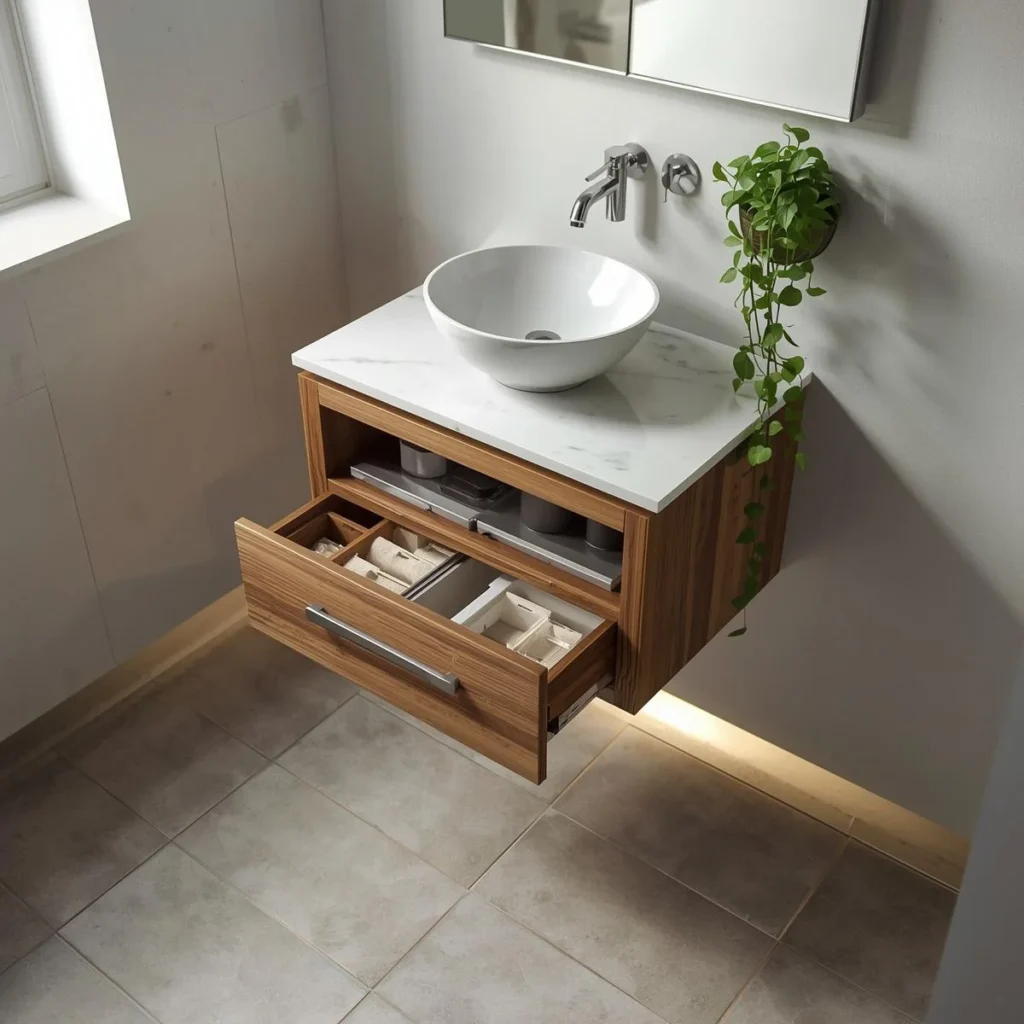
A floating wood vanity visually lightens a small bathroom and makes the floor run uninterrupted, which tricks the eye into reading the room as larger. Choose a wall-hung box in oak, ash, walnut, or bamboo with a white or stone top.
Run the tile floor beneath and keep the toe-kick area open for easy cleaning. Add a single large drawer with organizers to reduce clutter.
Mount a compact vessel sink to save counter depth, pair with a wall-mounted faucet, and tuck a small trailing pothos or philodendron on one corner for a soft finish.
2) Warm up the mirror with a wood frame
A round or pill-shaped mirror framed in wood brings organic warmth at eye level, right where small spaces benefit most. Round mirrors soften the geometry of tiles and shower glass; pill shapes echo the curve of a sink.
Backlight the mirror with an LED halo to create ambient glow without taking visual space. For plant life, use the frame’s top edge to rest a mini air-plant holder or hang a string-of-pearls nearby so it drapes toward the reflection.

3) Build a slim shelf stack over the toilet
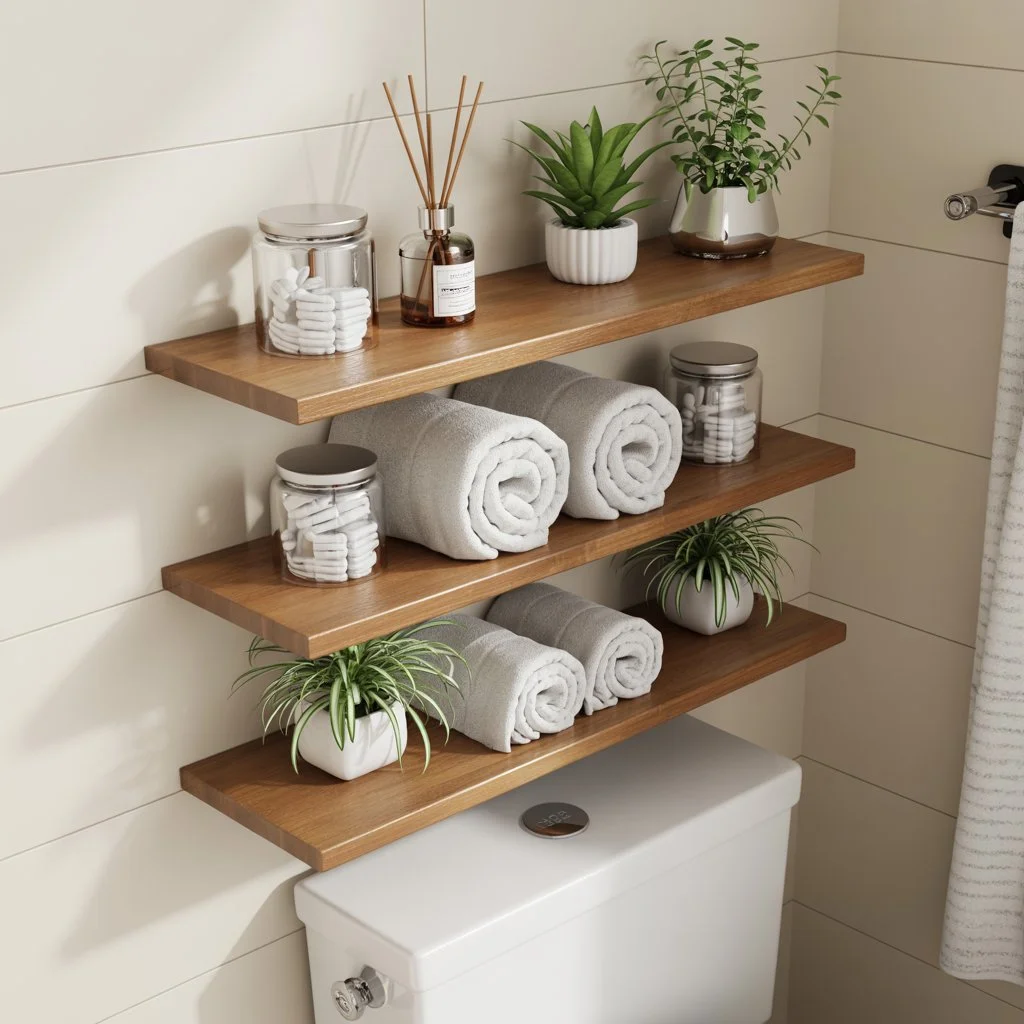
Dead space above the toilet is prime real estate. Install two or three shallow oak or walnut shelves with invisible brackets.
Style them with a mix of essentials and greenery: rolled hand towels, a lidded jar for cotton pads, a reed diffuser, and small plants such as ZZ plant cuttings, spider plants, or peperomia.
Keep depths around 6 to 8 inches to avoid crowding. Repeating the same basket or jar shapes keeps the display tidy instead of busy.
4) Choose moisture-friendly wood species
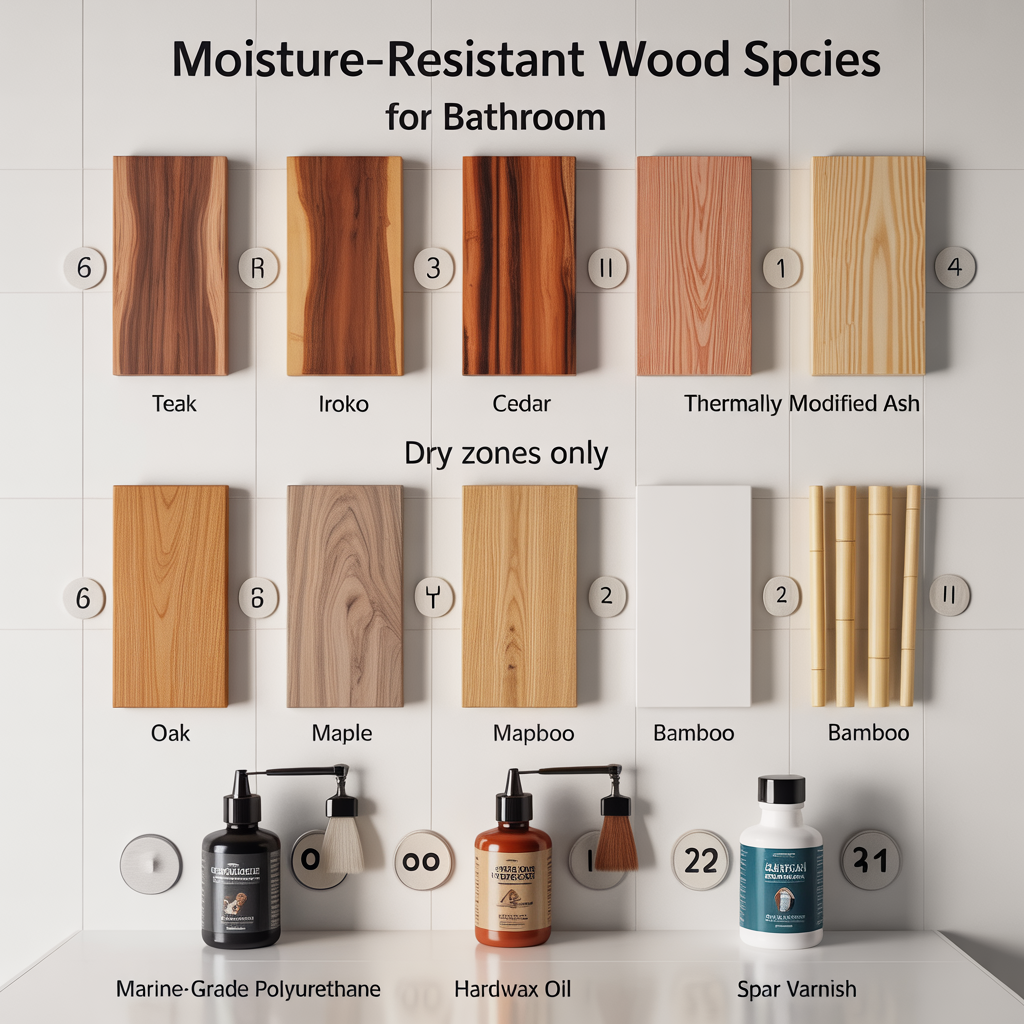
Not all wood belongs in a bath. For areas that get occasional splashes, choose teak, iroko, cedar, cypress, or thermally modified ash—each resists moisture and movement.
For colder zones like mirror frames or shelves far from the shower, you can use oak, maple, or bamboo as long as you seal them.
Finish with marine-grade polyurethane, hard wax oil, or spar varnish, and wipe up standing water as a habit. These species and finishes let you enjoy wood’s beauty without the worry.
5) Add a teak shower bench or stool
A small teak bench inside the shower offers a place to set bottles or rest a foot, while a compact stool beside the tub doubles as a plant perch.
Teak’s natural oils resist moisture, and slatted designs dry quickly. Keep a small fern or orchid on the bench when not showering, then move it outside the enclosure during use to give it a pleasant humidity bath afterward.

6) Bring in a ladder rack for towels and vines
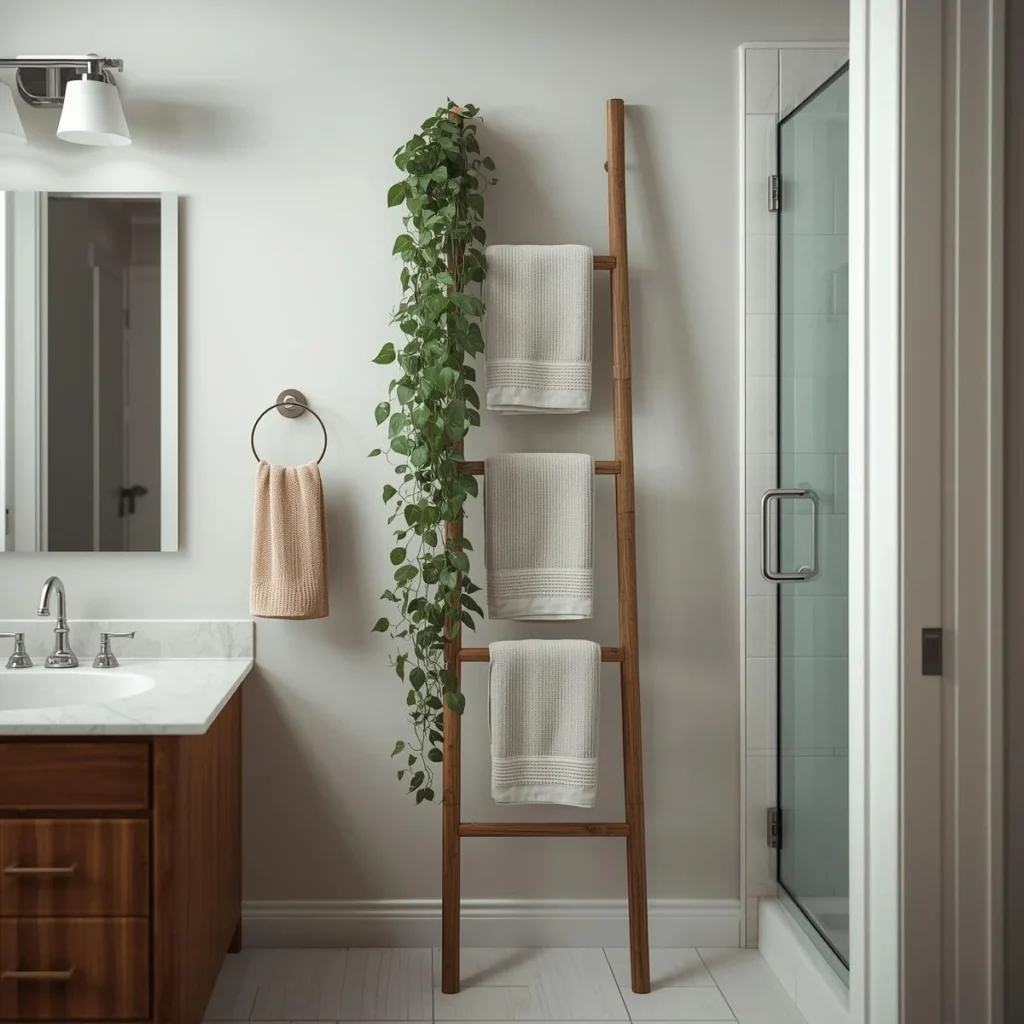
A leaning ladder made from oak or bamboo uses vertical height for drying towels and displaying trailing plants. Place it on a wall opposite the vanity or beside the shower door; secure with a discreet bracket for safety.
Wrap a string of pothos or a philodendron micans down one side and use the rungs for hand towels. The ladder’s linear rhythm adds architecture without a renovation.
7) Create a window garden ledge
If you have any natural light, a slim wood ledge at the window transforms the sill into a micro garden.
Use cork pads under pots to protect the finish and cluster moisture lovers such as spider plant pups, peperomia, and fittonia.
In low light, add a discrete grow bulb in a sconce or a magnetic grow strip hidden above the frame. Plants thrive, and the layered green draws the eye outward, visually expanding the room.

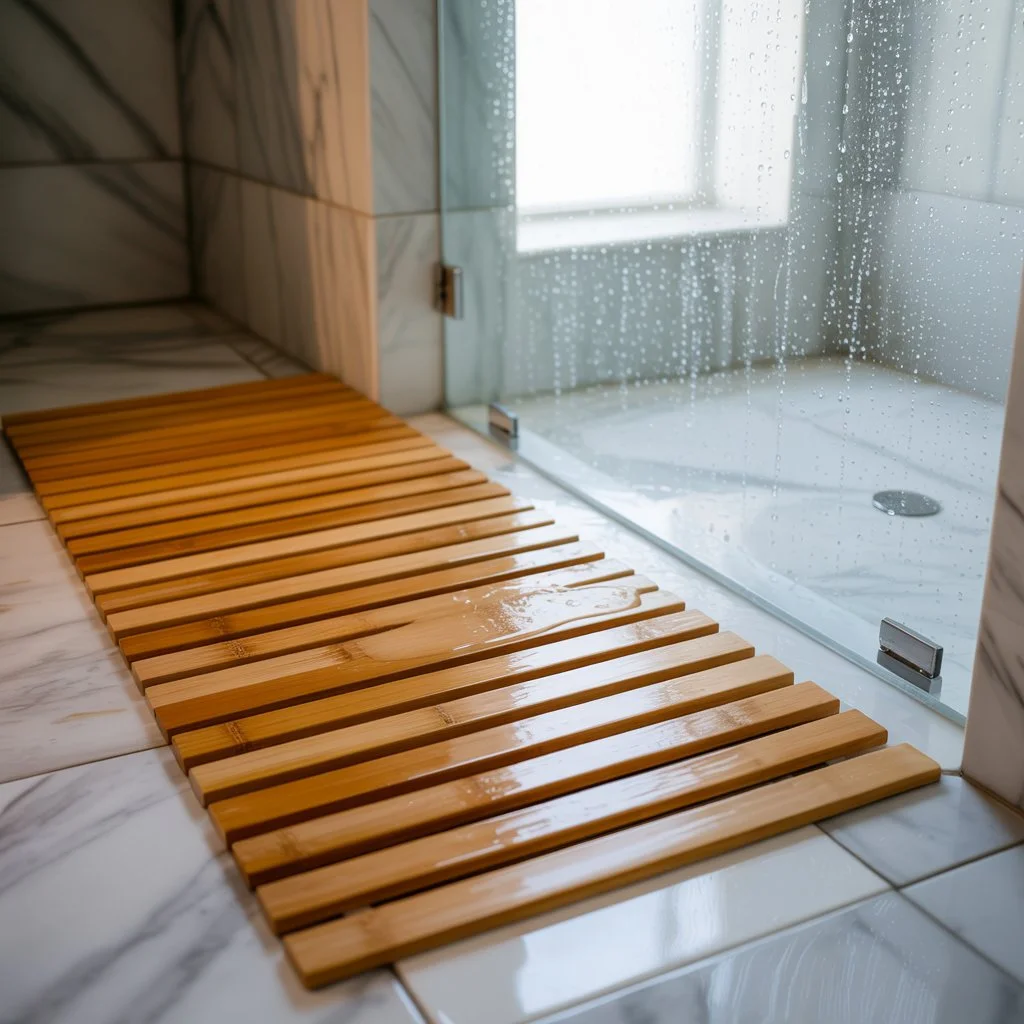
8) Use a wood bath mat or slatted platform
Traditional fabric bath mats take up visual space and hold moisture. A teak or bamboo slatted mat dries fast, lifts you off puddles, and adds a spa vibe.
For a narrow space, run slats parallel to the longest dimension to elongate the floor. A slatted platform can also bridge across a shower threshold to create a flush, walk-in feel when the curb is low.
9) Elevate essentials with a niche wrapped in wood
If you’re renovating, carve a shower niche or over-toilet recess and finish its interior with sealed wood for warmth against surrounding tile.
The wood box offers tactile contrast to porcelain while keeping bottles off the floor. If you’re not remodeling, add a surface-mounted wood shadow box with tempered glass shelves and a small trailing plant so the display looks built-in.

10) Try Japandi calm with light oak and stone gray
For a minimal, calming palette, pair light oak with warm gray tiles and matte black fixtures. Limit the color palette to whites, grays, wood, and leafy greens.
Keep lines clean, choose flat-front cabinetry, and feature one large plant with sculptural leaves, such as a ZZ plant near the vanity or a bird’s nest fern on a shelf.
The restraint makes the room feel spacious and sophisticated.
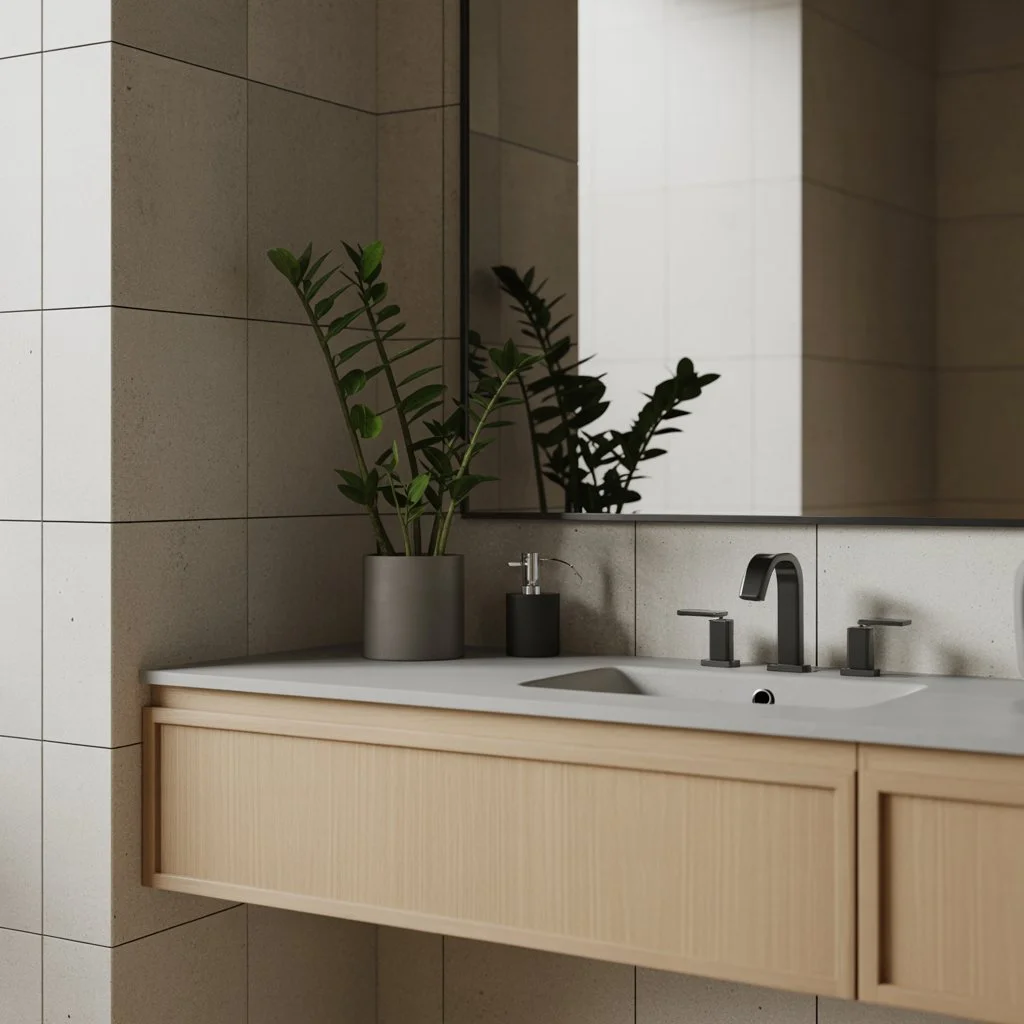
11) Switch to ribbed or fluted wood fronts
Texture adds dimension without clutter. Fluted or slatted vanity fronts in walnut or oak cast soft shadows that change throughout the day, adding richness to a small footprint. Combine with a round mirror and a simple light for balance.
A single trailing plant against the vertical lines emphasizes height and prevents the front from reading too heavy.

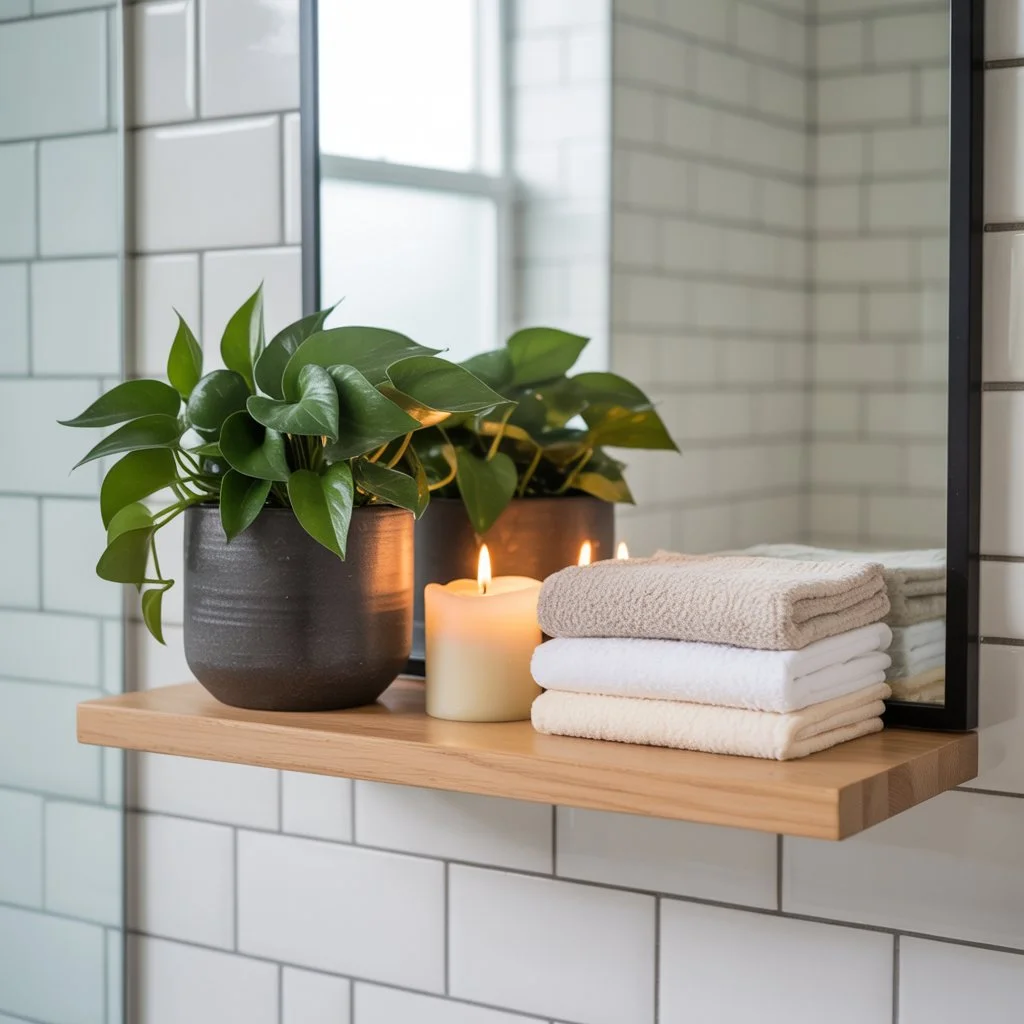
12) Style a plant shelfie at eye level
One well-curated shelf can do more than three busy ones. Mount a single floating shelf centered between mirror and shower wall at eye level.
Style it with odd-number groupings: a medium plant in a matte pot, a candle, and a small stack of folded washcloths. This gives the green focal point breathing room and provides a landing zone for daily items.
13) Upgrade to a wood-framed pocket door
Swing doors eat up precious circulation space. If the layout allows, a pocket door or barn-style slider in a wood finish opens up square footage instantly.
Choose frosted glass panels within the wood frame to borrow light from an adjacent room while keeping privacy. A space-saving door makes floor planning easier for a small vanity or compact linen tower.

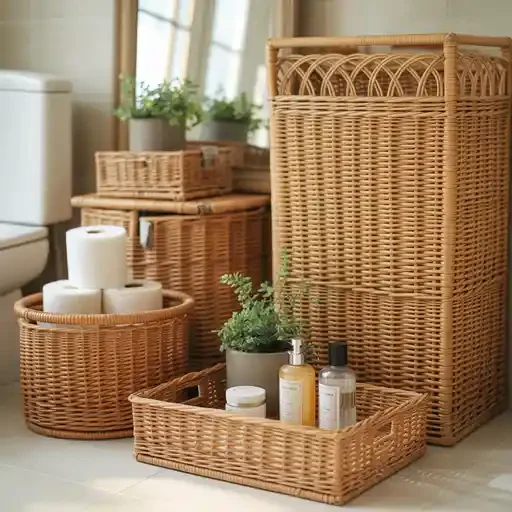
14) Mix rattan, cane, and wicker baskets
Storage can be beautiful. Rattan and wicker baskets bring texture and warmth while hiding clutter. Use a lidded basket for extra toilet rolls, a low woven tray for skincare, and a cane-front hamper for laundry.
Stay in one color family so the arrangement looks cohesive, and tuck small planters into baskets with plastic liners for a coordinated look.
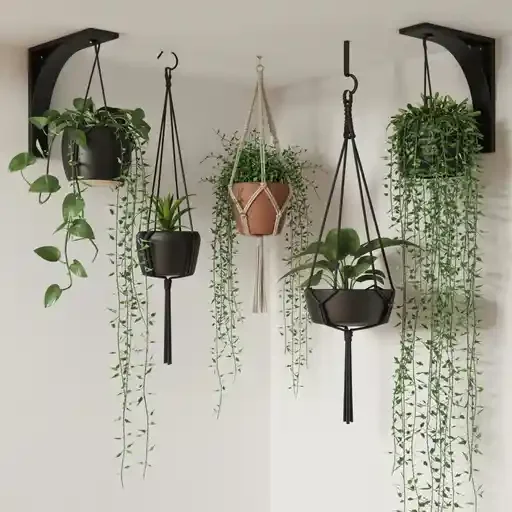
15) Hang plants instead of adding furniture
When the floor and counter space are tight, hang greenery from the ceiling or a wall bracket. Macramé hangers with simple terracotta pots fit a boho look; minimalist black brackets with sleek matte planters suit modern spaces.
Choose trailers like pothos, philodendron brasil, string of hearts, or monstera adansonii; they soften corners and draw the eye upward, making the room feel taller.
16) Bring subtle pattern with a wood peg rail
A wall-to-wall peg rail painted to match the wall or left in natural wood adds shallow storage that never feels bulky. Use pegs for towels, a hanging plant, and a small caddy for brushes.
Install the rail around 60 inches from the floor, cap it with a thin picture ledge, and style with a small framed print and a mini plant. This single move organizes daily items and stabilizes the room’s visual line.

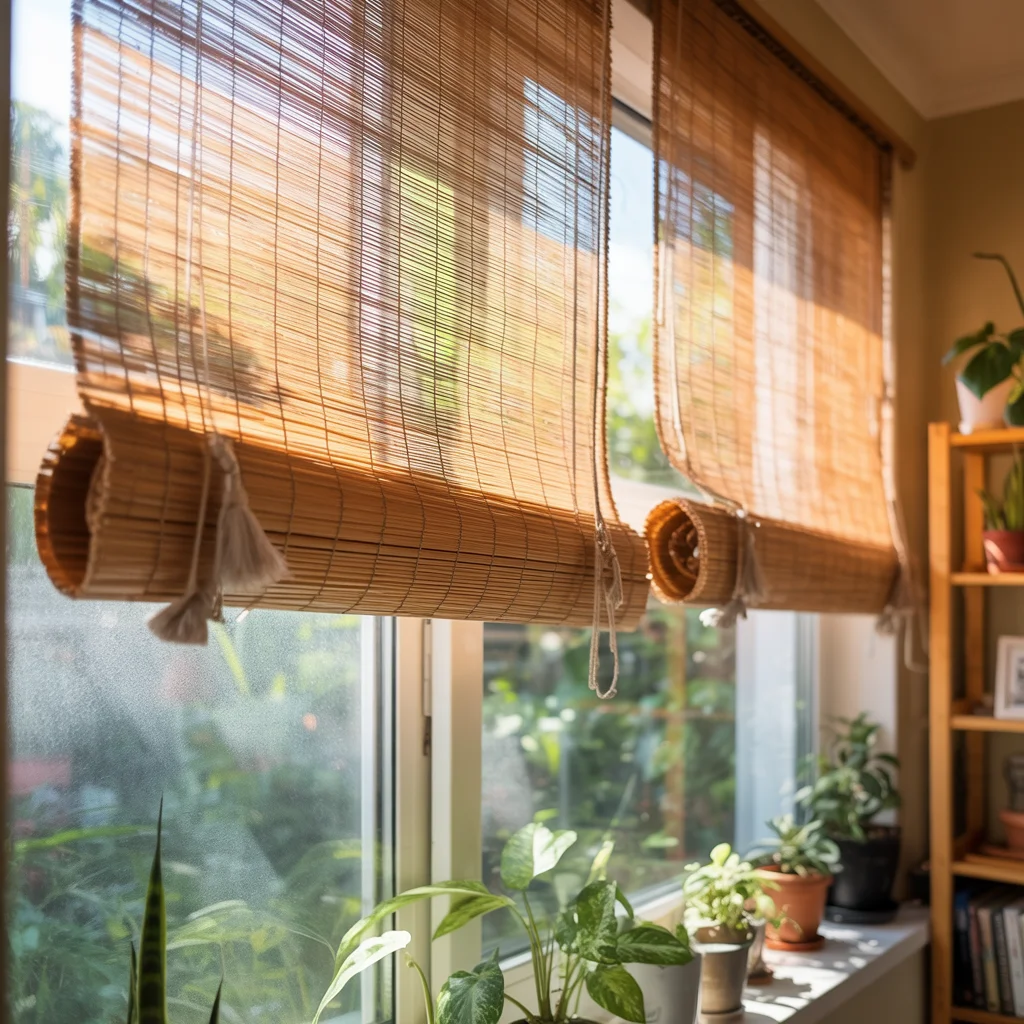
17) Introduce bamboo blinds for filtered light
Window treatments can overwhelm a small room. A simple bamboo or matchstick blind adds warmth and gentle texture while filtering light for plants.
Pair with a frost film on the lower window for privacy. The blind ties in with wood accents around the room and lets your plant collection thrive in soft, bright light.
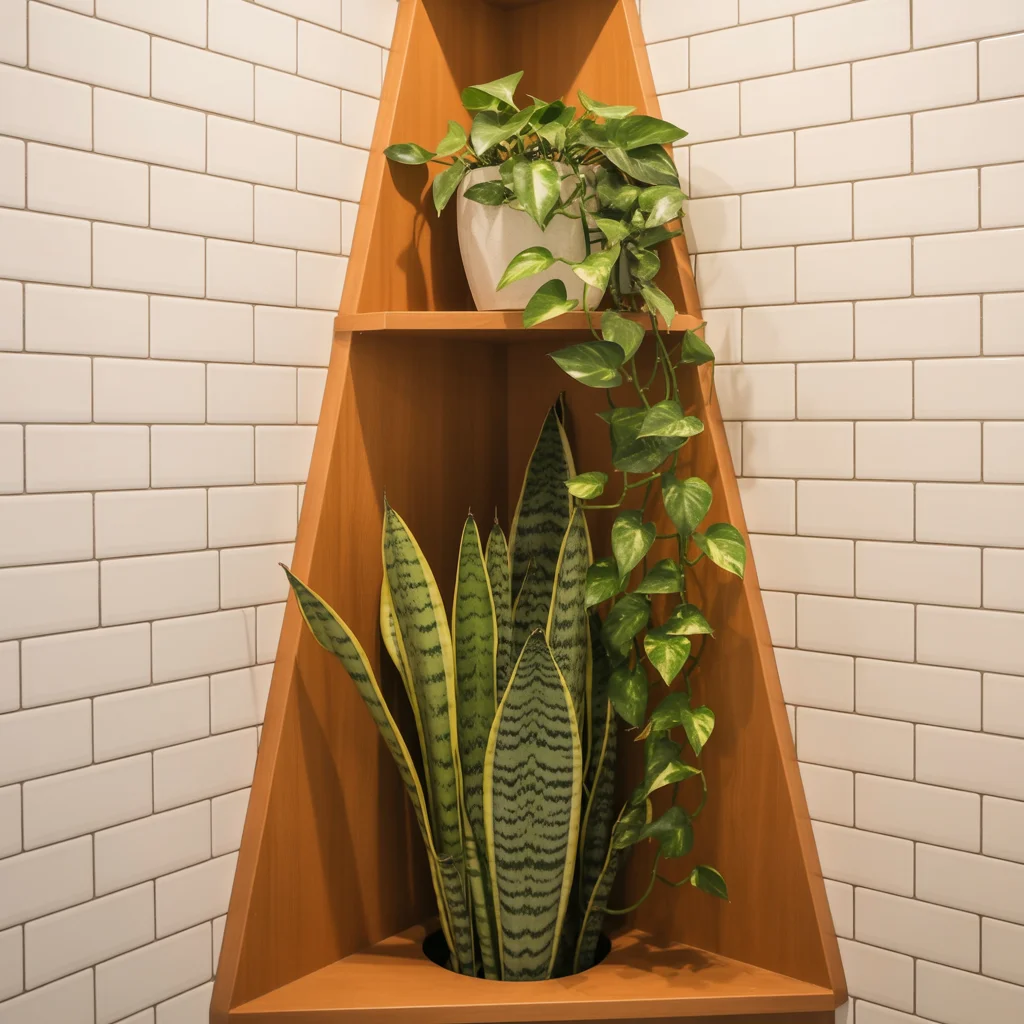
18) Turn a corner into a garden niche
Corners often go unused. Install a small triangular wood shelf or a stacked corner unit.
Style with a vertical plant like sansevieria (snake plant) at the base and a cascading plant above to create a mini waterfall of green.
The vertical composition reclaims dead space without encroaching on the main walkway.
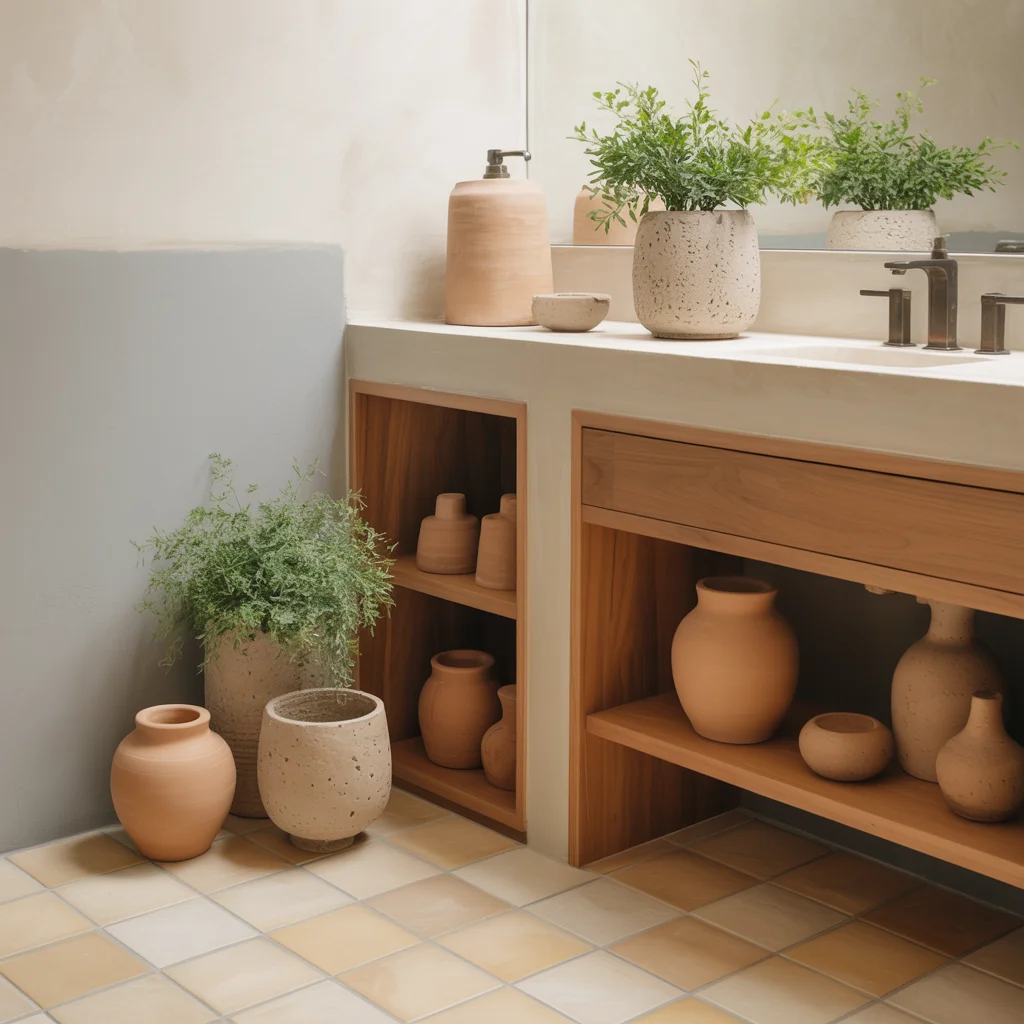
19) Create a natural palette with clay, stone, and wood
Keep finishes humble and tactile. Pair light gray or warm beige tile, unglazed clay accessories, and honey oak or ash wood.
Choose matte fixtures in black or brushed brass. Plant pots in sandy terracotta or textured concrete bridge the soft palette.
This natural mix reads airy and restful, reducing visual noise that can make a small bath feel busy.
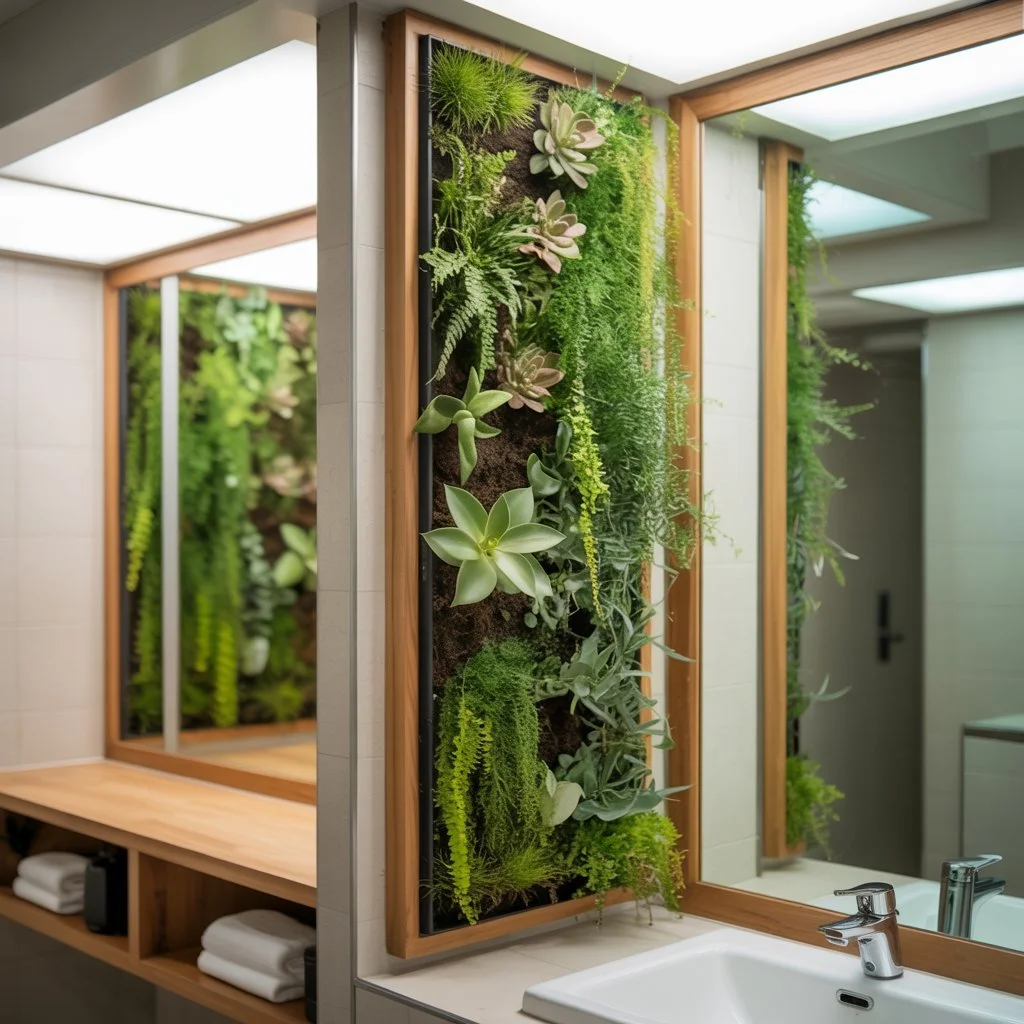
20) Add a living wall or preserved moss art
If you crave a bold statement, a narrow living wall panel or preserved moss artwork fits even in slim spaces.
Living panels with integrated irrigation thrive in bright bathrooms; preserved moss requires no watering and loves humidity.
Frame the panel in wood to connect it to your vanity or shelves. Place opposite a mirror to double the green impact without doubling the footprint.
21) Use open wood shelves in the shower but seal well
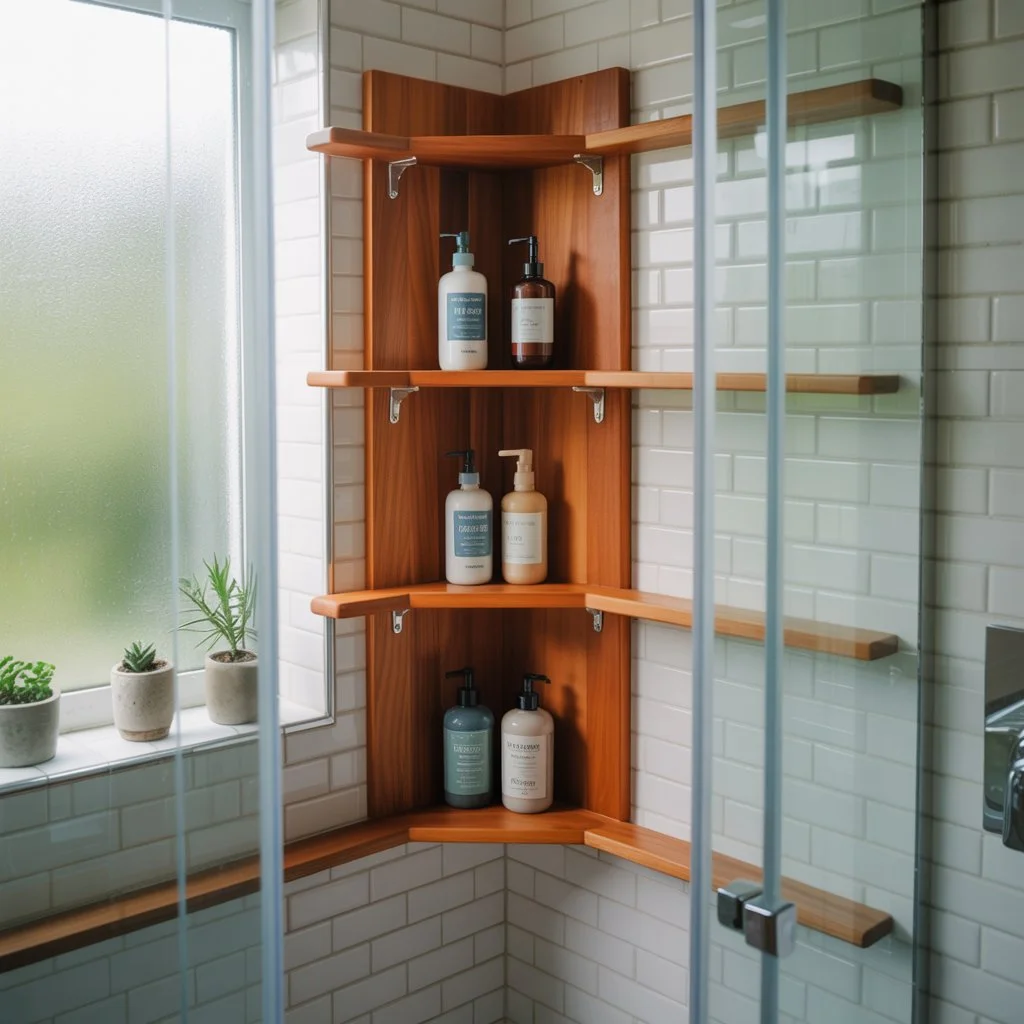
For showers with space, a small teak corner shelf or a narrow wall rack keeps bottles tidy. Pre-drill holes and use stainless hardware; slope shelves slightly for drainage.
Keep plants nearby, not directly under the water, and move them in after a shower for a humidity boost. The open rack keeps visual mass low and echoes other wood notes.
22) Choose the right plants for your light level
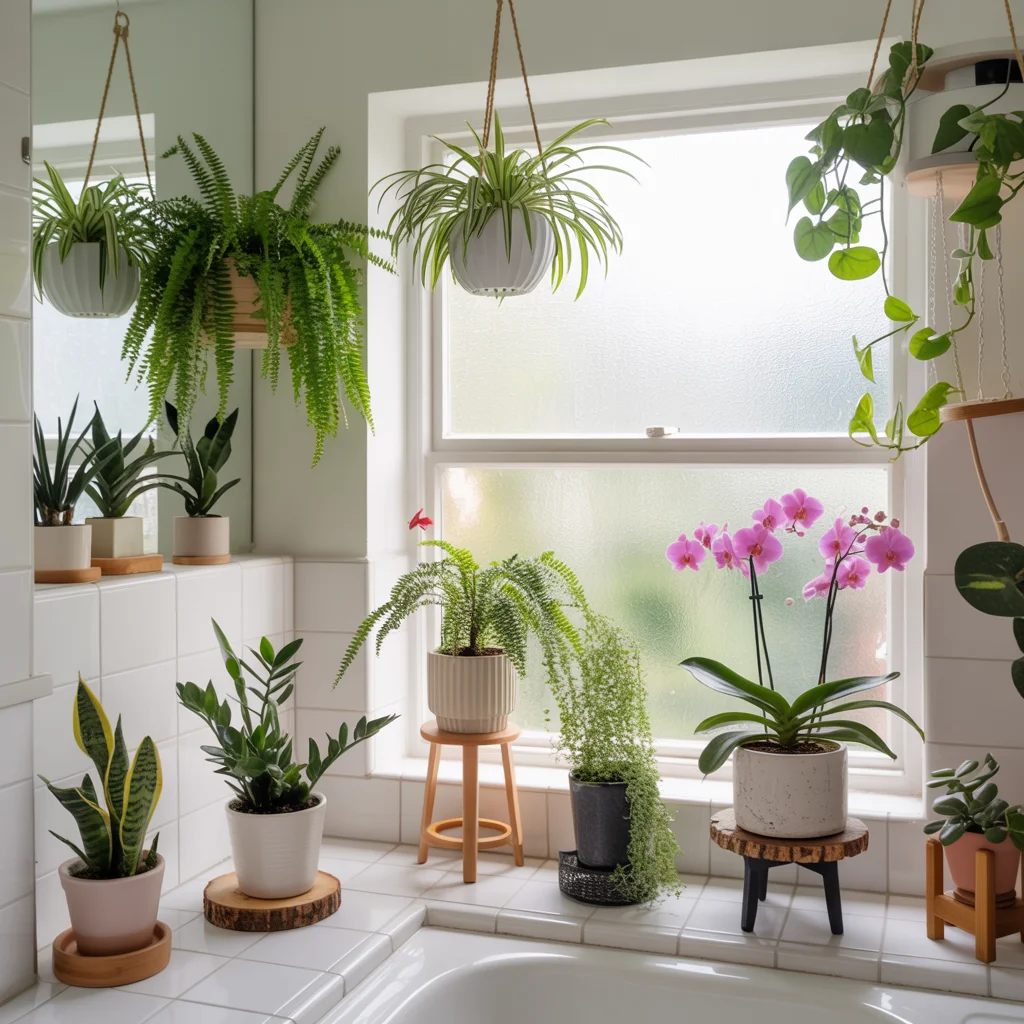
Lighting dictates plant success. For low light, rely on ZZ plant, snake plant, pothos, philodendron, and aglaonema; they tolerate dim corners and intermittent drying out.
For medium light, add ferns, spider plants, peperomia, and dieffenbachia. Bright light opens the door to orchids, string of pearls, and ficus varieties.
In every case, use planters with drainage or inner nursery pots slipped into decorative cachepots, and lift pots slightly with feet or coasters to keep wood surfaces safe.
23) Make a fragrance station with natural materials
A small wood tray on the vanity corrals a ceramic soap dish, a glass jar of bath salts, a reed diffuser, and a petite plant. It looks intentional and keeps splashes contained.
Choose a scent that reinforces the spa mood: eucalyptus, cedar, bergamot, or lavender. Reeds and wood lids echo other wood accents without adding bulk.
24) Extend the vanity top into a ledge
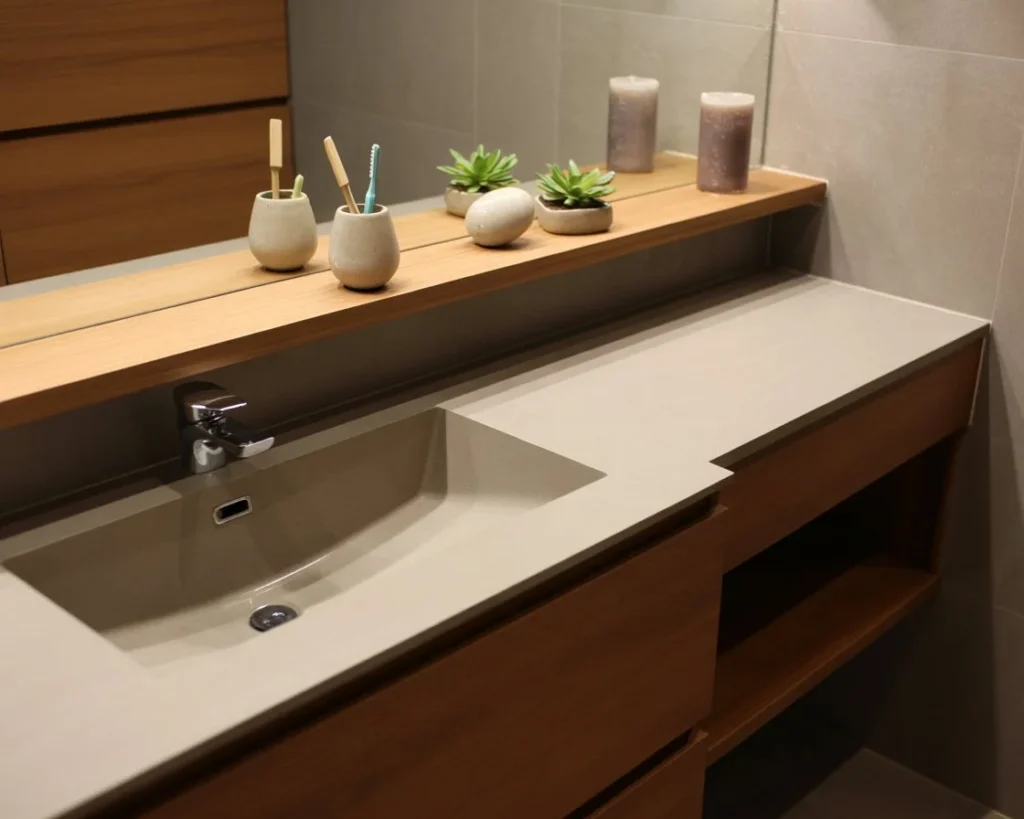
If wall space allows, run a slim wood or stone ledge from the vanity to the adjacent wall at the same height as the backsplash.
This creates a continuous surface for toothbrush cups, a candle, and a small plant, freeing the primary countertop for daily use.
The horizontal line visually widens the room. A 4 to 6 inch depth is usually enough and won’t intrude on circulation.
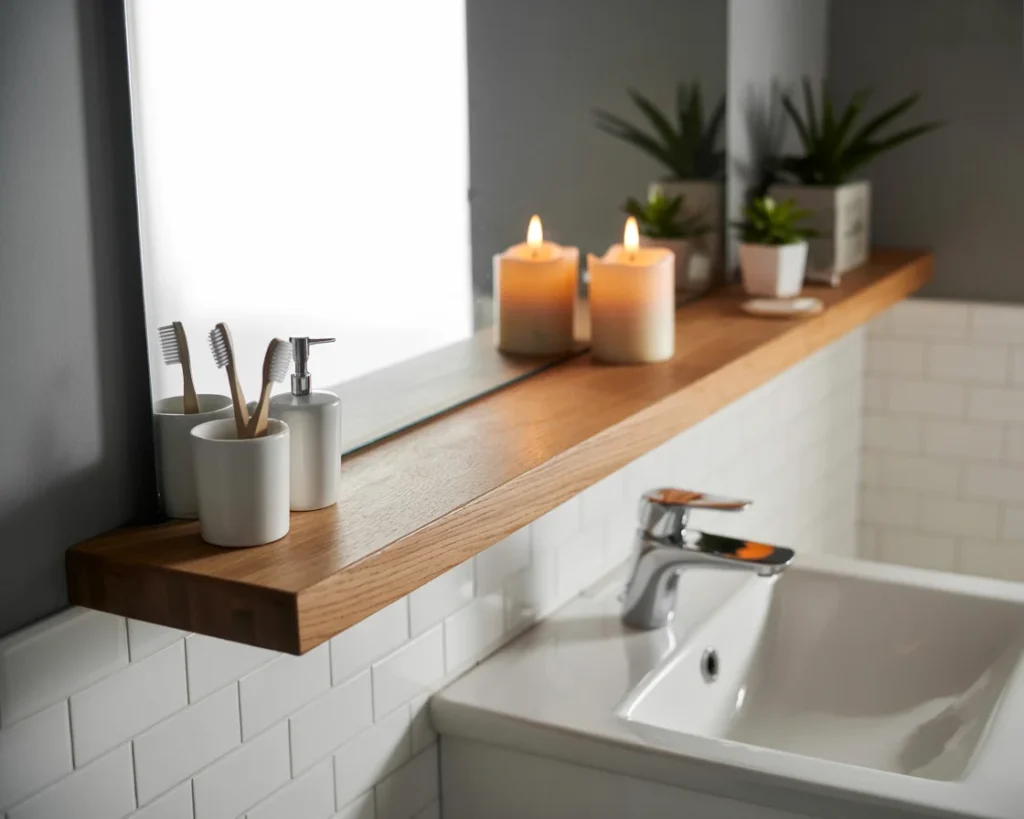
25) Finish with layered lighting and reflective greenery
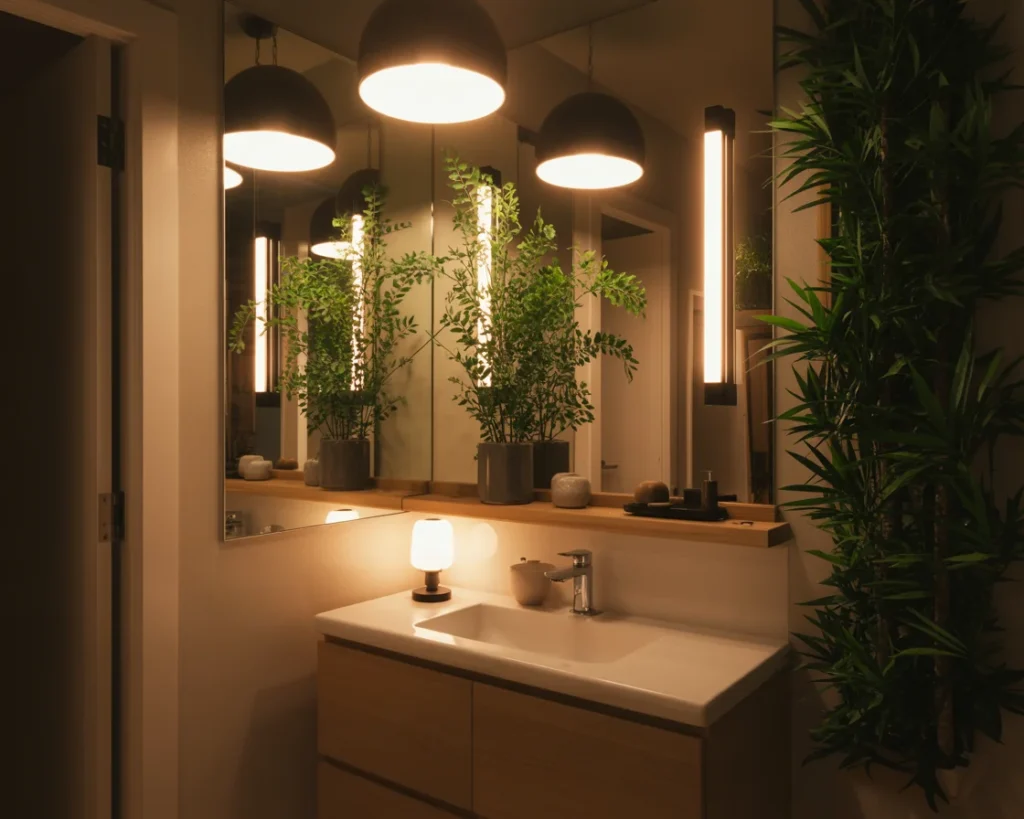
Light makes or breaks small bathrooms. Combine a soft overhead glow, a mirror sconce or backlight for faces, and a warm accent such as a candle or tiny plug-in lamp on a shelf.
Use bulbs around 2700–3000K for cozy warmth that flatters wood tones and plant greens. Reflect plants in the mirror to double their presence and amplify the sense of depth.
Choosing a cohesive wood and plant palette
Two wood tones are plenty in a small room. Mix one dominant species (for vanity and shelves) with a supporting accent (for trays and frames). If you already have orange-leaning oak floors, consider a cooler vanity like ash or a walnut that contrasts rather than fights. Keep plant pots simple—matte white, earthy terracotta, or charcoal—so the green remains the hero.
When mixing plants, vary leaf size and habit. Combine one upright structural plant (snake plant or ZZ) with one medium bushy plant (peperomia or aglaonema) and one trailer (pothos or philodendron). That trio fills space, adds motion, and avoids a cluttered windowsill of similar shapes. Aim for odd numbers in groupings and give each plant its own silhouette against the wall or mirror.
Smart storage that keeps the look airy
Clutter is the enemy of small space calm. Rely on a few strategies that disappear visually:
• Drawer organizers in bamboo or birch for the vanity keep hair tools and skincare tidy.
• Slim rolling caddies in wood or rattan slide between toilet and vanity and can be pulled out when needed.
• Over-the-door hooks or a wood peg rail keep towels off the floor.
• Magnetic strips inside a cabinet door hold tweezers and nail clippers.
• A lidded rattan hamper tucks under a floating vanity.
These pieces echo your wood accents without crowding the room with furniture.
Budget and renter-friendly upgrades
You can achieve this look without a renovation. Try peel-and-stick wood-look films for existing flat vanity fronts, removable wallpaper with botanical motifs on one wall, and adhesive hooks for hanging plants. Swap a builder mirror for a round wood-framed option, add a teak bath mat, and install two floating shelves with toggle anchors. Replace plastic dispensers with amber glass pump bottles on a wood tray. Each change is reversible but collectively transforms the space.
Moisture management and wood care
Ventilation preserves both wood and walls. Run an exhaust fan rated for your room size for twenty minutes after showers, or crack a window. Wipe wood surfaces dry after splashes and periodically refresh finishes. For oiled finishes, a light coat every six to twelve months keeps them water-resistant. Place cork or silicone coasters beneath planters and choose cachepots without drainage holes for shelves; water plants in the sink and let them drip dry before returning them to wood surfaces.