Cuban Black Beans Recipe: The Ultimate Guide to Authentic, Creamy, and Flavorful Frijoles Negros
When you think of Cuban cuisine, few dishes are as foundational and satisfying as Cuban black beans (frijoles negros). This isn’t just a side dish; it’s a culinary cornerstone. With deep origins in African and Spanish cooking, frijoles negros represent comfort, tradition, and the soul of the island. Mastering a Cuban black beans recipe is essential for anyone who wants to bring true and authentic flavor to their table, whether it’s a quick weeknight dinner or a special family gathering.
The Essence of Cuban Comfort Food
A Pillar of the National Dish
Ask any Cuban, and they’ll tell you that frijoles negros are mandatory. Together with fluffy white rice, they are a fundamental component of the national dish, Moros y Cristianos (Moors and Christians), where the black beans represent the Moors and the white rice represents the Christians, symbolizing the long-standing mix of Spanish and North African cultures. When served side-by-side on a plate (rather than mixed together), it’s simply called arroz con frijoles (rice with beans), but regardless of the arrangement, they are a symbiotic pair.
Built on the Foundation of Sofrito
What sets authentic Cuban black beans apart is the sofrito. This aromatic flavor base is the DNA of almost all Cuban stews and braises. It consists of finely diced onions, green bell peppers (mandatory), and garlic, which are sautéed in olive oil until soft and translucent. The green bell pepper is non-negotiable in the Cuban sofrito, providing a distinctive earthy and slightly bitter undertone that complements the earthy richness of the beans.
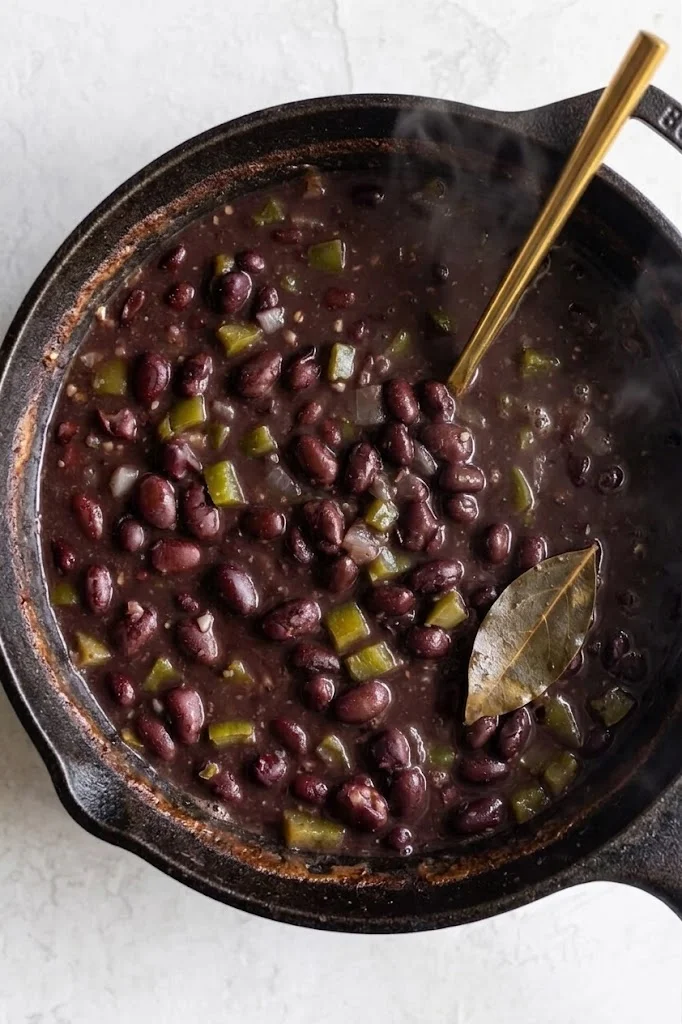
The Classic (Dried Beans) Cuban Black Beans Recipe (Step-by-Step)
This method requires foresight and patience but results in the most authentic texture.
Ingredients:
- Dried Black Beans: 1 pound (16 oz), rinsed well and sorted (any stones removed).
- Green Bell Peppers: 1 large, finely diced.
- Yellow Onions: 1 medium-large, finely diced.
- Garlic: 6 to 8 cloves, minced.
- Olive Oil: 1/4 cup.
- Bay Leaf: 1 whole leaf.
- Ground Cumin: 1.5 teaspoons.
- Dried Oregano: 1 teaspoon (Cuban oregano is ideal if available).
- White Vinegar: 1 tablespoon.
- Sour Orange Juice or Lime Juice: 1 to 2 tablespoons (to taste).
- Salt: To taste (add at the very end).
- Sugar: A pinch (optional, to balance acidity).
- Water or Unsalted Broth: About 8 cups for soaking and simmering.
Instructions:
- Soak the Beans (Overnight): Rinse and drain the dried beans. Place them in a large pot and cover them with at least 8 cups of fresh, cold water. Let them soak overnight (or for at least 8 hours). This softens the beans and helps them cook evenly.
- Initial Simmer: Drain and rinse the soaked beans. Return them to the pot and cover again with fresh, cold water (about 8 cups or enough to fully cover the beans by at least 2 inches). Add the whole bay leaf. Bring to a boil, then reduce the heat to low, cover the pot, and simmer gently for 1 hour to 1 hour and 30 minutes, or until the beans are tender but still firm. Do not add salt at this stage.
- Prepare the Sofrito: While the beans are simmering, heat the olive oil in a skillet over medium heat. Add the diced yellow onions and green bell peppers. Sauté for about 10 minutes, or until the vegetables are very soft and starting to lightly brown on the edges. Add the minced garlic and cook for 1 minute more, until aromatic.
- Incorporate and Finish: Once the beans are tender, stir the sautéed sofrito into the bean pot. Add the ground cumin and dried oregano. Stir to combine. Continue to simmer the pot, uncovered, on low heat for another 20 to 30 minutes, allowing the flavors to meld and the broth to thicken slightly.
- Achieve Creaminess (The Secret Step): For that signature creamy texture, take about 1 cup of the beans and broth from the pot and mash them (using a potato masher, a fork, or a quick pulse in a blender). Return this mashed bean paste to the main pot and stir it in. This instantly releases starch and creates a velvety sauce.
- Seasoning and the Final Acid: At the very end of cooking, stir in the salt, the white vinegar, and the fresh sour orange or lime juice. Add a small pinch of sugar to balance the flavors, if needed. Simmer for just 5 more minutes and taste, adjusting salt and acidity as necessary.
- Serve: For maximum authentic presentation (as shown in image_55.png), serve your velvety Cuban black beans over a bed of fluffy white rice, topped with fresh cilantro, a few thinly sliced green onions, and golden-brown fried sweet plantains (maduros).
Secrets to Achieving the Perfect Creamy Texture
- Mash the Beans: As mentioned in step 5 of both recipes, the “mash method” is the single most effective technique for achieving a rich, velvety consistency without using any heavy cream or thickening agents. It release the interior starches.
- Gentle Simmer: Never boil your beans. A rolling boil will agitate the beans, causing them to break down prematurely and creating a muddy, thin broth rather than a velvety stew. Patience and low heat are key.
- Don’t Salt Early: With dried beans, adding salt too early in the simmering process (before they are tender) can cause the skins to become tough, preventing the beans from cooking uniformly and preventing them from achieving their ultimate tenderness.
How to Serve and Enjoy Your Cuban Black Beans
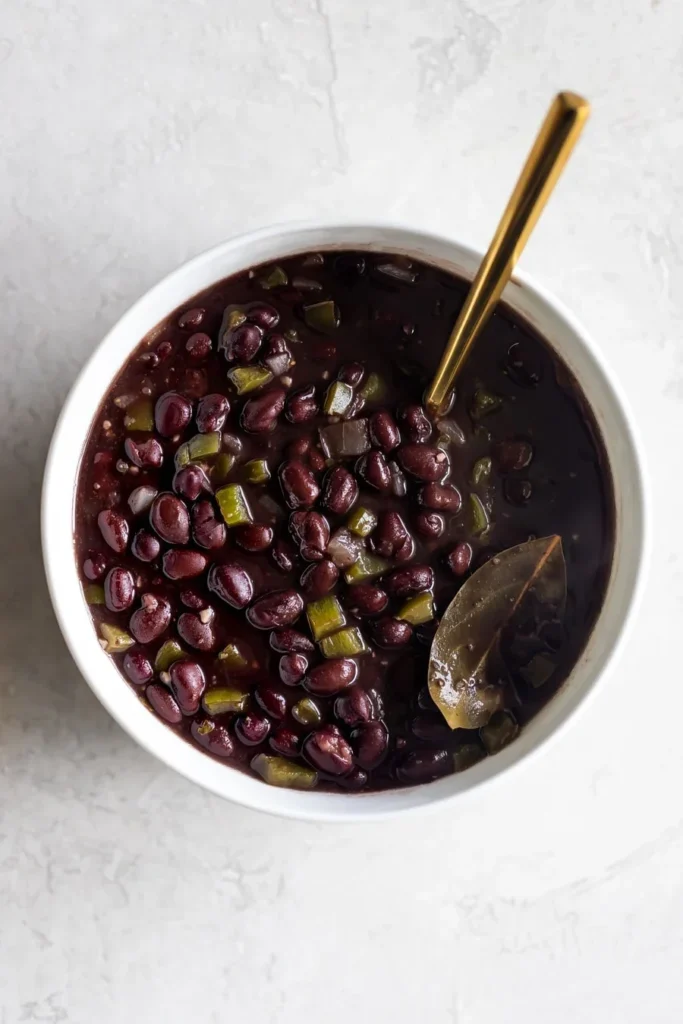
While the classic pairing with white rice is the golden standard, authentic Cuban black beans are versatile.
- Moros y Cristianos: The beans and rice can be cooked together, resulting in a dark, unified pilaf-style rice dish (a separate recipe is needed).
- As a Stew (Frijoles de la Olla): Serve them as a rich soup in a deep bowl, topped with diced avocado, fresh lime wedges, and a side of Cuban toast.
- Traditional Pairings: Serve the beans alongside a main course like Puerco Asado (Roast Pork) or Ropa Vieja (Shredded Beef Stew).
- Modern Interpretations: Use these flavorful beans as a filling for tacos, burritos, or as a base for contemporary rice bowls. They make an excellent vegetarian main dish when paired with eggs or avocado.
Storing and Reheating Tips
One of the great joys of this Cuban black beans recipe is that it often tastes even better the next day as the complex flavors continue to meld.
- Storage: Let the beans cool completely. Store them in an airtight container in the refrigerator for up to 4 days.
- Reheating: To reheat, simply place the desired portion in a small saucepan on low heat. Add a tiny splash of water or broth to restore the velvety texture, as the beans will thicken in the fridge. Stir gently until warmed through.
- Freezing: Cuban black beans freeze exceptionally well. Place them in freezer-safe bags or containers and freeze for up to 3 months. Let them thaw overnight in the refrigerator before reheating.
Conclusion: Bring the Taste of Cuba to Your Table
A classic Cuban black beans recipe is more than a culinary technique; it’s a celebration of rich cultural flavors and simple, slow cooking. By understanding the foundation of sofrito, the crucial addition of cumin and oregano, and the magic of the final acidic touch, you can achieve the complex, creamy results that make frijoles negros so beloved. Mastering this recipe allows you to create authentic and satisfying meals that evoke the true and comforting flavors of Cuban home cooking. From a slow-simmered Sunday pot to a fast, delicious weeknight shortcut, authentic frijoles negros are within your reach.