How to Make Fluffy Scrambled Eggs: Soft, Creamy, and Restaurant-Quality
There is something incredibly comforting about a plate of perfectly cooked scrambled eggs. Imagine soft, pillowy curds that are rich, buttery, and melt in your mouth, completely free of any dry or rubbery texture. Once you try this easy method for fluffy scrambled eggs at home, you will never look at breakfast the same way again.
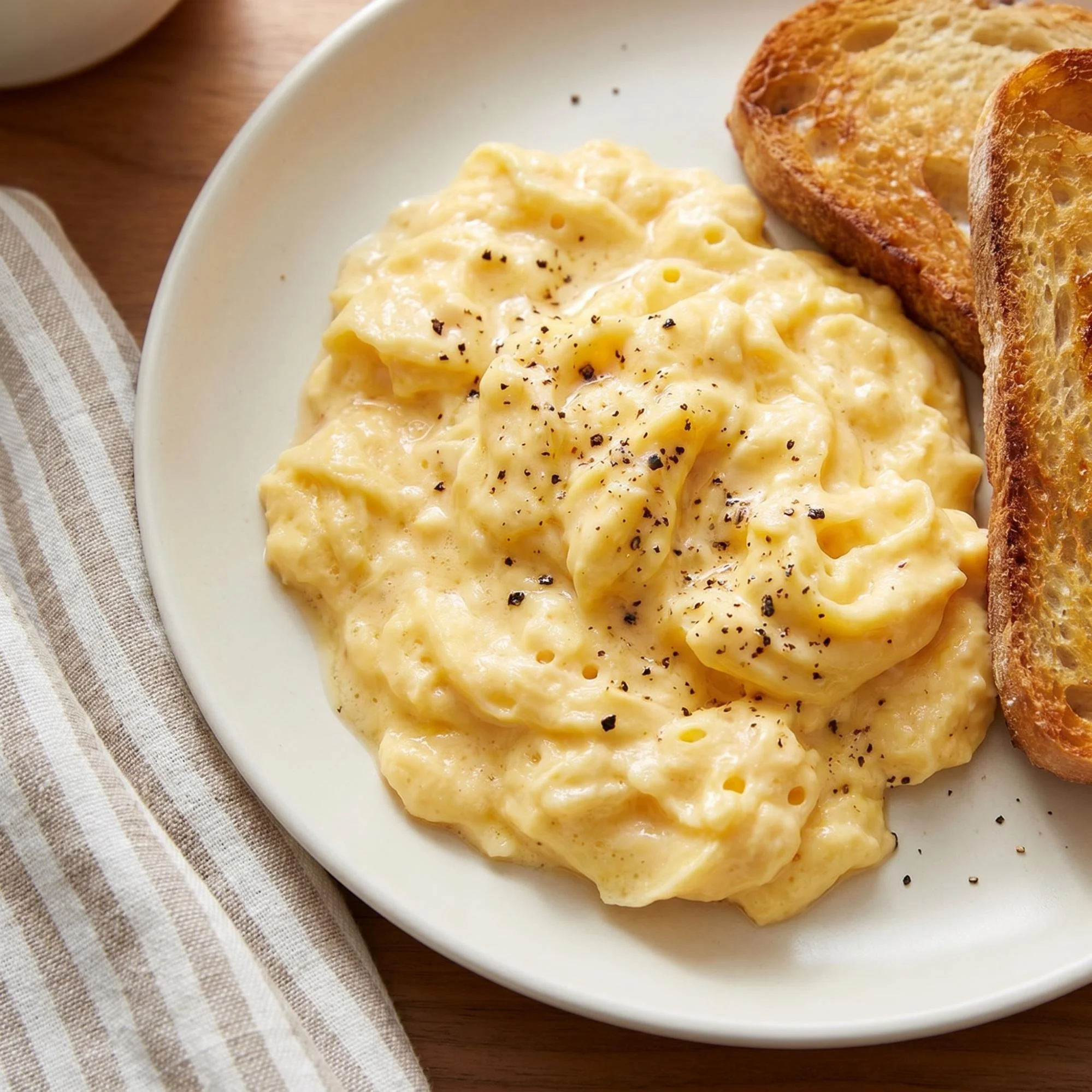
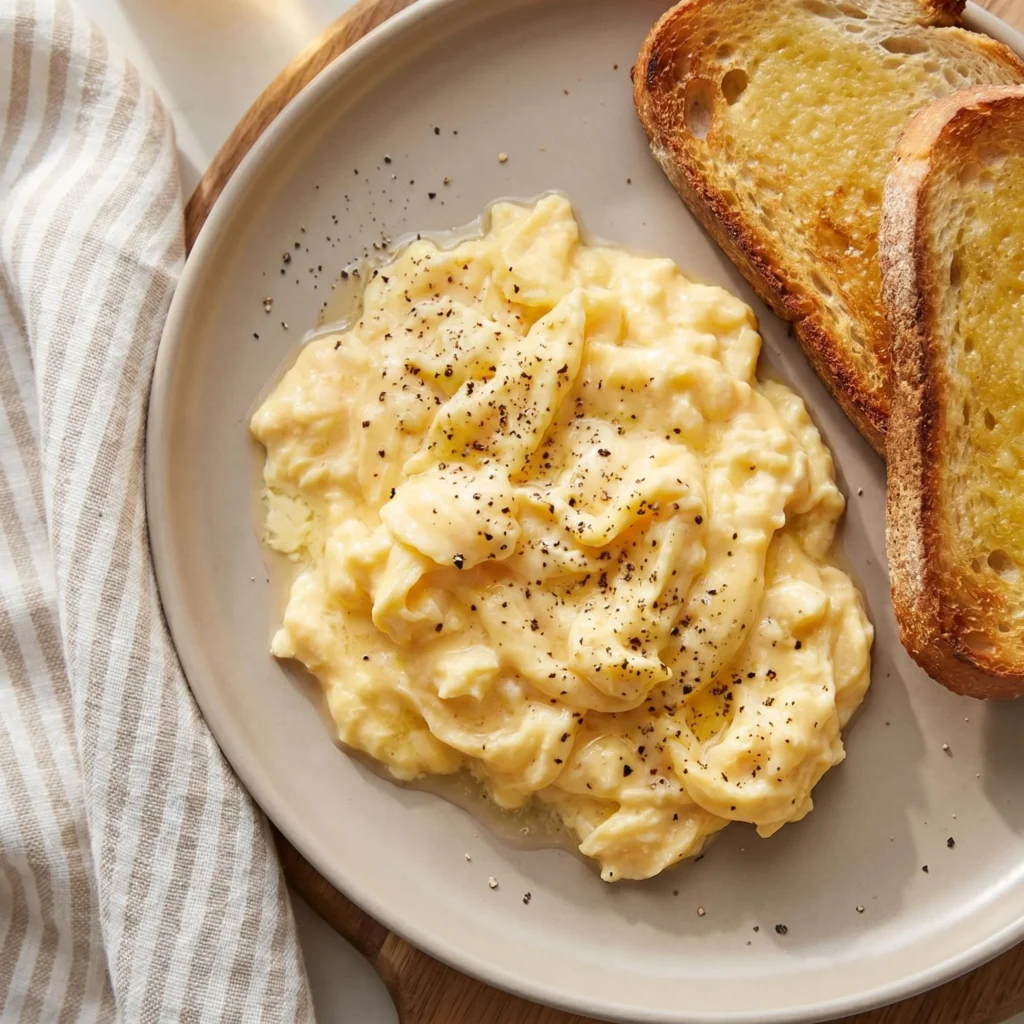
Whether you are whipping up a quick, high-protein meal to start your day or styling a beautifully minimalist, texturally rich plate for your culinary feed and food blog, these eggs deliver flawlessly. The glossy, golden folds caught in bright, natural morning light look absolutely breathtaking sitting next to a slice of crisp, buttery toast on a rustic ceramic plate. The best part? You only need three basic ingredients and about 5 minutes of patience at the stove. Let’s walk through everything step-by-step so you can master these luxurious, café-style scrambled eggs perfectly on your very first try.
Why Make Scrambled Eggs This Way?
If you have only ever eaten scrambled eggs that were cooked over screaming high heat in a matter of seconds, you are in for a culinary revelation. Cooking them properly, low and slow, transforms them completely. This method yields eggs that are:
- Incredibly soft and fluffy: No browned, crispy edges or tough, rubbery bites.
- Rich and buttery: The slow cooking process emulsifies the butter directly into the egg curds.
- Visually stunning: The glossy, vibrant yellow curds create a highly photogenic, mouthwatering presentation perfect for the camera.
- Made with simple ingredients: You don’t need heavy cream or cheese to make them taste luxurious; the technique does all the heavy lifting.
The flavor and texture difference is undeniable. Properly cooked scrambled eggs have a delicate, creamy consistency that feels like an absolute treat.
Ingredients for Fluffy Scrambled Eggs
One of the reasons this recipe works so flawlessly is its elegant simplicity. You do not need milk, cream, or water. You only need:
- 3 large eggs: The fresher the eggs, the better they will hold together and fluff up.
- 1 tablespoon unsalted butter: Crucial for flavor and for controlling the heat in the pan.
- A pinch of fine sea salt: To enhance the natural savory flavors.
- Freshly cracked black pepper: For finishing right before serving.
Step-by-Step Fluffy Scrambled Eggs Recipe
Follow these simple steps for perfectly textured, beautiful eggs every single time.
Step 1: Whisk Aggressively Crack the eggs into a medium mixing bowl. Add a pinch of salt. Using a wire whisk or a fork, beat the eggs vigorously for at least 30 to 45 seconds. You want to completely blend the yolks and whites until the mixture is a uniform, pale yellow color and slightly frothy on top. This incorporates air, which is the secret to maximum fluffiness.
Step 2: Start with a Cold Pan Place a non-stick skillet on the stove, but do not turn on the heat yet. Add your tablespoon of butter to the cold pan, and then pour in your whisked eggs.
Step 3: Low and Slow Heat Turn the burner onto medium-low heat. As the pan slowly warms up, the butter will begin to melt into the eggs. Use a silicone spatula to gently stir the mixture, ensuring the melting butter is distributed evenly.
Step 4: The Folding Technique As the eggs begin to warm, you will see a thin layer of cooked egg form on the bottom of the pan. Instead of stirring frantically in circles, use your silicone spatula to gently push the eggs from the outside edge of the pan straight toward the center. This sweeping motion creates beautiful, large, fluffy curds. Continue gently sweeping and folding as the eggs set.
Step 5: Pull Them Early This is the most critical step in the entire process. Take the pan off the heat while the eggs still look slightly wet and undercooked. Eggs carry a massive amount of residual heat and will continue to cook in the pan and on your plate. If you wait until they look perfectly dry in the pan, they will be overcooked and rubbery by the time you eat them.
Step 6: Plate and Garnish Immediately slide the warm, glossy eggs onto a serving plate to stop the cooking process entirely. Top with a generous crack of black pepper.
Pro Tips for Perfect Presentation and Taste
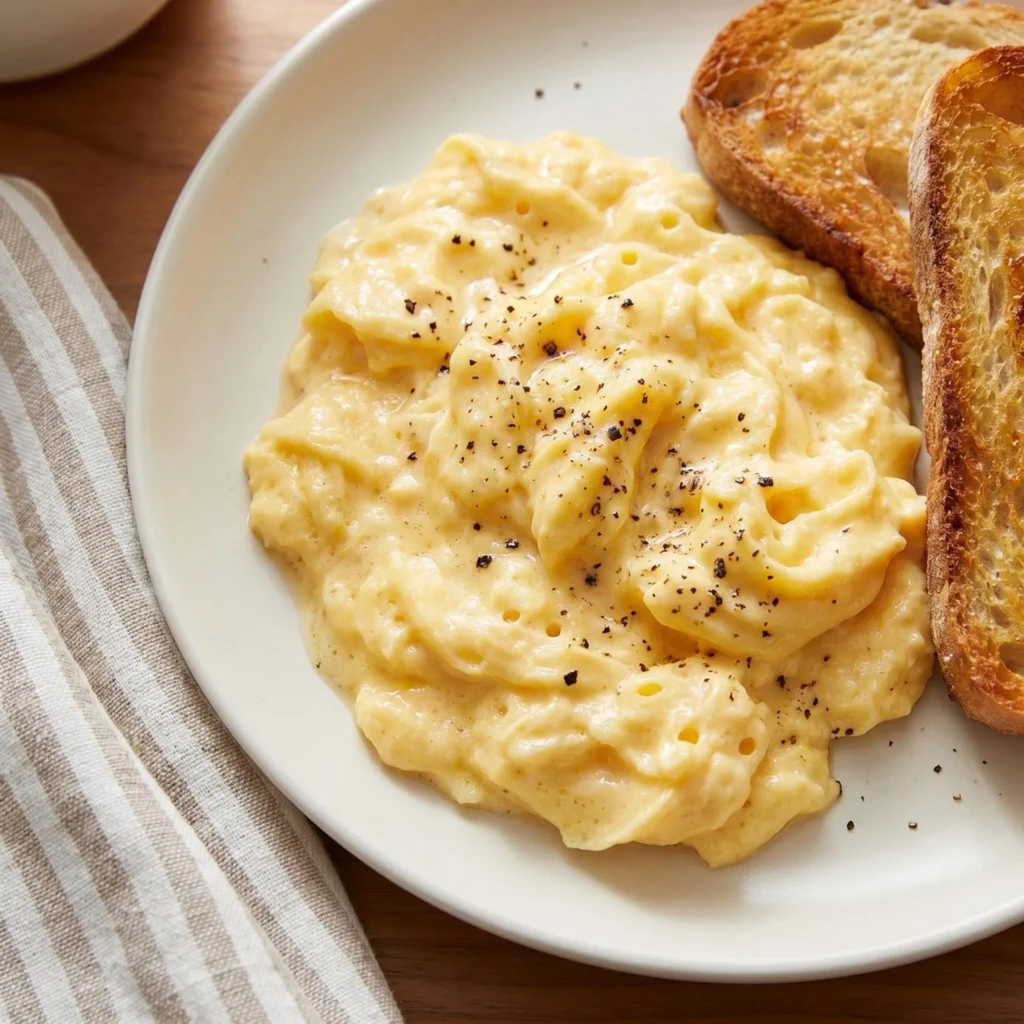
Small details transform a basic breakfast into an extraordinary culinary experience.
- Use the right tools: A flexible silicone spatula is non-negotiable. It allows you to scrape the bottom of the pan cleanly, preventing a thin film of egg from overcooking and ruining your texture.
- Style with contrast: For a stunning visual presentation, serve these bright, soft eggs next to something highly textured, like a thick slice of deeply toasted sourdough brushed with melted butter or a side of crispy, blistered tomatoes.
- Don’t add liquid: Adding milk or water dilutes the flavor of the eggs and can cause the curds to separate and weep liquid onto your plate. The eggs have enough natural moisture; you just need to cook them gently to retain it.
Ways to Elevate Your Scrambled Eggs
While they are absolute perfection on their own, fluffy scrambled eggs are a wonderful blank canvas. Try finishing them with:
- Fresh herbs: A sprinkle of finely chopped chives, dill, or parsley adds a beautiful pop of green and a bright, fresh flavor.
- Gourmet cheeses: Gently fold in a tablespoon of soft goat cheese or cream cheese during the last 30 seconds of cooking for an ultra-rich variation.
- A spicy kick: Drizzle a little chili crisp or a dash of your favorite hot sauce over the top right before serving.
Frequently Asked Questions
Why did my eggs turn brown? Your heat was too high. Eggs are delicate and cook very quickly. If the pan is too hot, the proteins seize, squeezing out moisture and causing the eggs to brown and turn tough. Always stick to medium-low heat.
Can I use oil instead of butter? You can use a neutral oil or olive oil if you prefer, but butter contains milk solids and water that help keep the eggs tender, and it provides that classic, rich flavor that pairs perfectly with the eggs.
Should I salt my eggs before or after cooking? There is a culinary myth that salting eggs before cooking makes them tough. This is entirely false! Salting your eggs in the bowl actually helps break down the proteins slightly, resulting in a more tender, cohesive curd.
Final Thoughts
This easy fluffy scrambled eggs recipe proves that you don’t need complicated techniques or a long list of ingredients to create a luxurious, restaurant-quality breakfast. With just a little bit of butter, a whisk, and the patience to keep your heat low, you can produce a mountain of soft, velvety eggs that look and taste extraordinary.
Once you slide those gorgeous, glossy curds onto a plate and take your first melt-in-your-mouth bite, you will understand why this gentle cooking method is the absolute gold standard. Grab your skillet, crack a few eggs, and enjoy the simple joy of making the perfect breakfast from scratch!