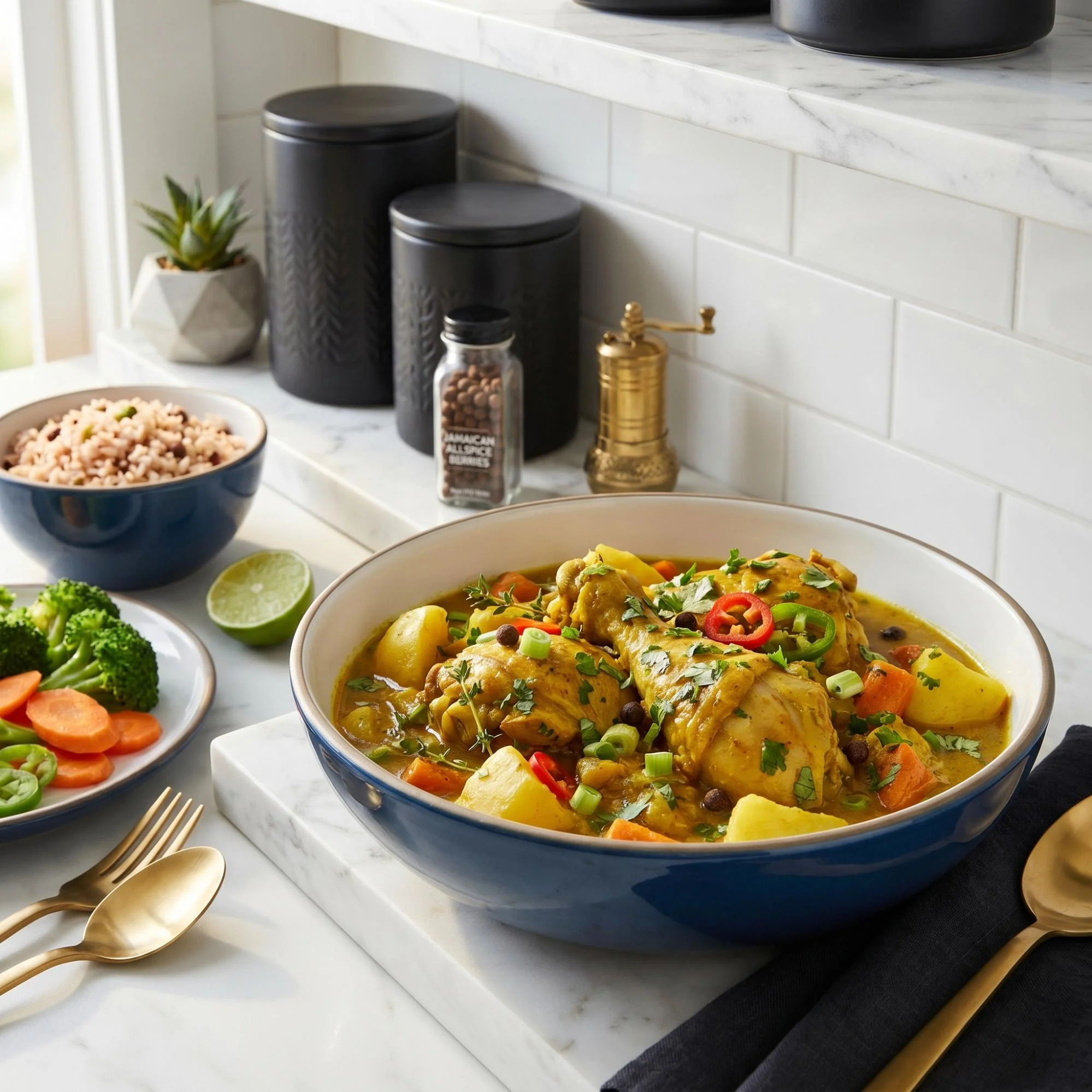
Jamaican Curry Chicken Recipe: Rich, Flavorful, and Better Than Takeout
There is something incredibly joyful and comforting about a pot of aromatic stew simmering away on the stove, filling your entire home with warm, savory spices. Whether you have fond memories of visiting the Caribbean or you have been drooling over vibrant, golden-hued plates taking over your culinary social media feeds, authentic Jamaican curry chicken is the ultimate soul-warming dinner. Once you try this rich, deeply flavorful Jamaican curry chicken recipe at home, you will absolutely never rely on a bland takeout version again.
Whether you are cooking for a festive weekend family gathering, meal-prepping for a busy work week, or simply styling a vibrant, photogenic bowl for your culinary feed, this dish delivers flawlessly. The bright, golden-yellow sauce, the rustic chunks of tender potatoes and carrots, and the fresh pop of green scallions and thyme look absolutely breathtaking. The best part? You only need some fresh bone-in chicken, a handful of traditional Caribbean aromatics, a high-quality Jamaican curry powder, and a little bit of patience. Let’s walk through everything step-by-step so you can master this iconic, island-favorite meal perfectly on your first try.
Why Make Authentic Jamaican Curry Chicken at Home?
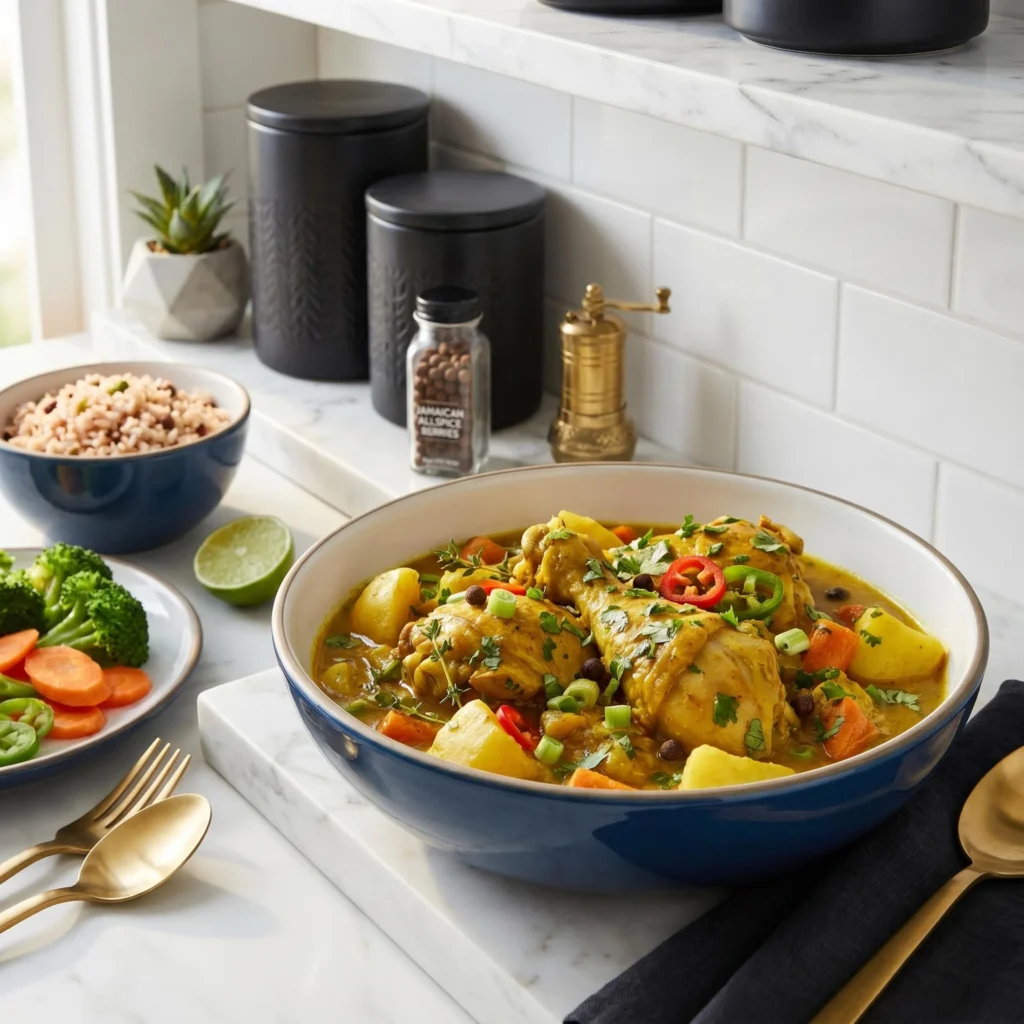
If you’ve only ever ordered curry chicken from a local Caribbean restaurant, you are in for a wonderful surprise. Making a homemade Jamaican curry chicken is a rewarding experience because it is:
- Incredibly rich and tender: By simmering the bone-in chicken slowly, the meat becomes fall-off-the-bone tender while enriching the gravy with natural flavor.
- Highly customizable: You have complete control over the spice level. You can leave the Scotch bonnet pepper whole for flavor without the fire, or mince it up for a serious, fiery kick.
- Budget-friendly: A pack of chicken drumsticks or thighs, some root vegetables, and pantry spices cost a fraction of a large restaurant bill.
- Free from artificial thickeners: You know exactly what is going into your pot. The sauce thickens naturally from the starches in the potatoes and the long simmering process.
- Visually stunning: The gorgeous, sunny yellow hue from the turmeric-heavy curry powder creates a camera-ready, highly appetizing aesthetic that practically jumps off the plate.
And honestly, the flavor difference is undeniable. A freshly cooked pot of curry chicken, where the spices have been properly “burned” and bloomed in the pan, boasts a complex, earthy, and slightly sweet aroma that mass-produced, rushed versions simply cannot match.
Ingredients for Jamaican Curry Chicken
One of the reasons this recipe works so well is its reliance on fresh, bold aromatics and a specific type of curry powder. You’ll need:
For the Chicken and Marinade:
- 3 lbs bone-in, skinless chicken (a mix of thighs and drumsticks, chopped into smaller pieces)
- 2 tablespoons Jamaican curry powder (save 1 extra tablespoon for the pot later)
- 1 medium yellow onion, chopped
- 4 cloves garlic, minced
- 1 tablespoon fresh ginger, grated
- 3 scallions (green onions), chopped
- 1 tablespoon fresh thyme leaves (or 1 teaspoon dried thyme)
- 1 teaspoon ground allspice (known as pimento in Jamaica)
- 1 ½ teaspoons kosher salt and 1 teaspoon black pepper
- 1 tablespoon vegetable oil or canola oil
For the Stew:
- 2 tablespoons vegetable oil (for cooking)
- 1 tablespoon Jamaican curry powder (to “burn” in the oil)
- 2 medium russet or Yukon gold potatoes, peeled and chopped into large chunks
- 2 large carrots, peeled and sliced into thick rounds
- 1 whole Scotch bonnet pepper (do not chop if you want it mild!)
- 2 to 3 cups chicken broth or water
Step-by-Step Jamaican Curry Chicken Recipe
Follow these simple, traditional steps to build layers of deep, authentic flavor.
Step 1: Wash and Prep the Chicken While optional, it is a Caribbean tradition to wash chicken in water mixed with a splash of white vinegar or lime juice, then pat it completely dry. Chop the chicken into smaller, manageable pieces (a heavy meat cleaver works best for chopping through bone).
Step 2: Season and Marinate Place the dried chicken pieces into a large mixing bowl. Add the chopped onion, minced garlic, grated ginger, scallions, fresh thyme, ground allspice, salt, pepper, 2 tablespoons of the Jamaican curry powder, and 1 tablespoon of oil. Massage the seasonings deeply into the chicken. For the best flavor, cover the bowl tightly and marinate in the refrigerator for at least 2 hours, or ideally overnight.
Step 3: “Burn” the Curry (The Crucial Step!) Place a large Dutch oven or heavy-bottomed pot over medium heat and add 2 tablespoons of vegetable oil. Once the oil is hot, sprinkle in the remaining 1 tablespoon of Jamaican curry powder. Stir constantly for about 1 to 2 minutes until the curry becomes deeply fragrant and slightly darker in color. This step is called “burning the curry,” though you are actually just toasting it to release the essential oils and remove the raw, powdery taste.
Step 4: Brown the Chicken Scrape the marinated chicken into the pot, leaving the chunky onions and scallions in the bowl for now (they will burn if added too early). Sear the chicken pieces in the toasted curry oil for about 5 to 7 minutes, stirring frequently, until the meat is browned on all sides and coated in that beautiful golden color.
Step 5: Build the Stew Add the remaining onions, scallions, and aromatics from your marinade bowl into the pot. Sauté for another 3 minutes. Pour in just enough chicken broth or water to almost cover the chicken. Drop in the whole, uncut Scotch bonnet pepper and a few extra sprigs of fresh thyme. Bring the liquid to a rolling boil.
Step 6: Simmer and Tenderize Once boiling, reduce the heat to medium-low. Cover the pot with a tight-fitting lid and let it simmer gently for 30 minutes. This slow cooking process is what makes the chicken incredibly tender.
Step 7: Add Potatoes and Carrots After 30 minutes, remove the lid and add your chopped potatoes and carrots. Stir everything together. Leave the pot uncovered and let it continue to simmer for another 15 to 20 minutes. Cooking it uncovered allows the excess liquid to evaporate, while the starches from the softening potatoes naturally thicken the gravy into a rich, luscious sauce.
Step 8: Final Taste and Serve Once the potatoes are fork-tender and the sauce has thickened to your liking, remove the pot from the heat. Carefully fish out the whole Scotch bonnet pepper and the woody thyme stems and discard them. Taste the gravy and adjust the salt and pepper if necessary. Serve immediately!
Pro Tips for the Perfect Curry
Small details make a massive difference when cooking traditional Caribbean cuisine from scratch.
- Use the right curry powder: Jamaican curry powder is very different from Indian or Thai curries. It is heavily based on turmeric (which provides the bright yellow color) and usually contains coriander, fenugreek, cumin, and allspice. Brands like Betapac or Blue Mountain are highly recommended for authentic flavor.
- Handle the Scotch Bonnet with care: The Scotch bonnet pepper provides a distinct, fruity, and floral Caribbean flavor. If you drop it in whole and unbroken, it flavors the pot without adding extreme heat. If you want it spicy, poke a tiny hole in the pepper. If you want it fiery, mince it up! (Wear gloves if you chop it).
- Do not rush the simmer: Bone-in chicken needs time to break down. If you boil it rapidly on high heat, the meat will become tough and rubbery. A low, gentle simmer is the secret to meat that falls right off the bone.
How to Store and Reheat Leftovers
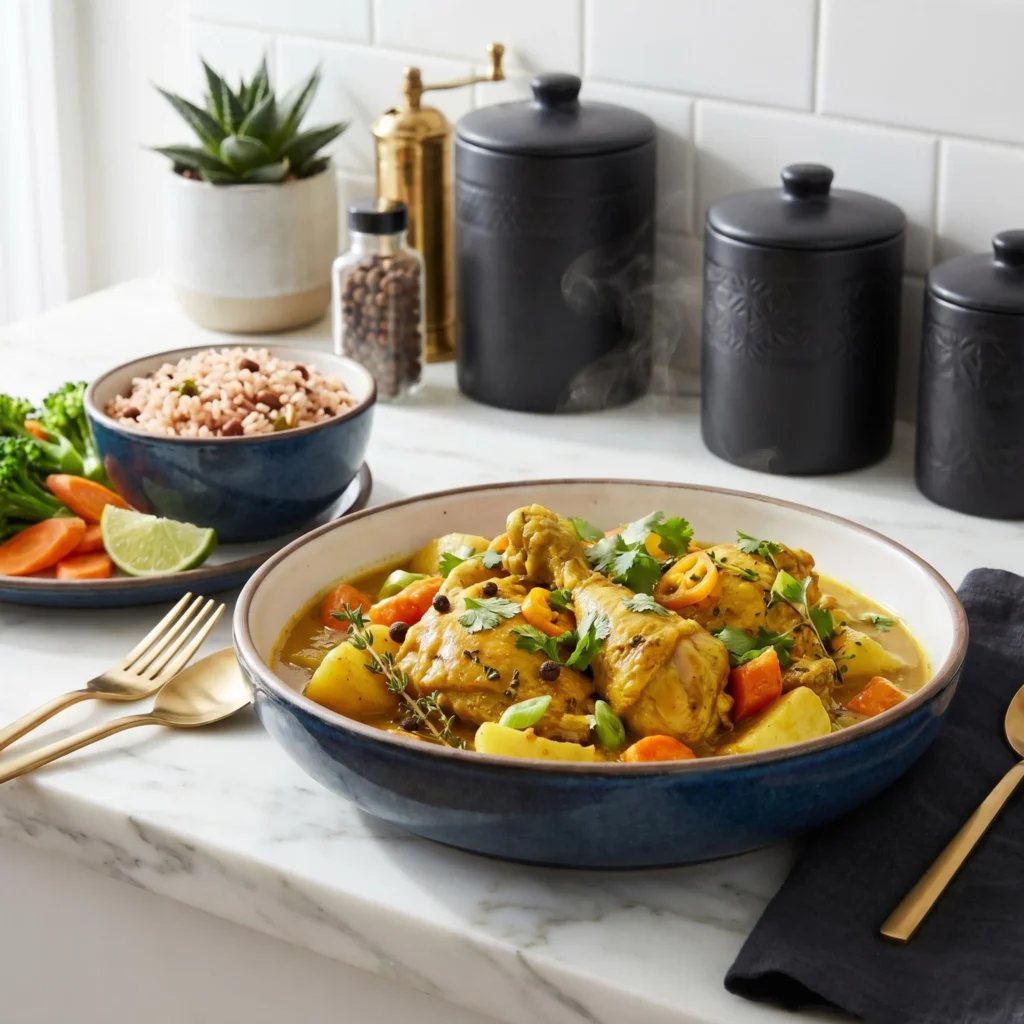
Curry chicken is one of those magical dishes that actually tastes significantly better the next day after the spices have had more time to meld together.
Store any leftover curry in an airtight glass container (be careful, as the turmeric will permanently stain plastic containers yellow!) in the refrigerator for up to 4 days.
To reheat, simply place the chicken and gravy in a saucepan over medium-low heat. Add a tiny splash of water or broth if the gravy has thickened up too much in the fridge, and stir gently until it is warmed all the way through.
You can also freeze this dish! Transfer the completely cooled curry to a freezer-safe container and store it for up to 3 months. Thaw it overnight in the refrigerator before reheating on the stove.
Ways to Customize Your Curry Chicken
Now comes the fun part. This versatile, savory base is perfect for tweaking to your family’s preferences.
- Coconut Curry Twist: While traditional Jamaican curry chicken uses water or broth, you can stir in half a cup of rich, full-fat coconut milk during the last 15 minutes of cooking for a slightly sweeter, creamier variation.
- Make it Boneless: If you prefer not to deal with bones, you can absolutely use boneless, skinless chicken thighs. Cut them into 2-inch chunks and reduce the initial covered simmering time to 20 minutes so they don’t overcook. (Avoid chicken breasts, as they will dry out in the stew).
- Add extra veggies: Feel free to toss in some chopped bell peppers or sweet potatoes along with the carrots for extra nutrition and color.
What to Serve with Jamaican Curry Chicken
To recreate the ultimate Caribbean dining experience at home, you need the right side dishes to soak up all of that incredible, flavorful gravy.
- Rice and Peas: The most classic pairing. This is a fragrant dish made with rice, kidney beans (called peas in Jamaica), coconut milk, thyme, and garlic.
- Plain White Rice: If you want the curry sauce to be the absolute star of the show, a bed of simple, fluffy white rice or jasmine rice is the perfect neutral vessel.
- Fried Plantains: The sweet, caramelized edges of ripe fried plantains provide the perfect contrast to the savory, spiced curry sauce.
- Steamed Cabbage: A quick side of shredded green cabbage and carrots lightly sautéed with thyme and butter adds a great crunch and freshness to the heavy meal.
Frequently Asked Questions
What happens if my Scotch bonnet pepper bursts in the pot? If the pepper bursts while simmering, all of the intense heat from the seeds will release into your gravy. If you are sensitive to spice, keep a close eye on the pepper while stirring so you don’t accidentally puncture it with your spoon. If it does burst and the curry becomes too spicy, adding a pinch of sugar or a splash of coconut milk can help mellow the fire.
Can I substitute the Scotch bonnet pepper? If you absolutely cannot find a Scotch bonnet pepper at your local grocery store, a Habanero pepper is the closest substitute. They have a very similar heat level and fruity flavor profile. If you want zero risk of heat, you can omit it entirely, though you will miss out on a bit of the traditional aroma.
Why is my curry sauce too thin and watery? This usually happens if you added too much broth at the beginning, or if you didn’t let the stew simmer uncovered for long enough. The starches in the potatoes are your natural thickener. Just keep the pot simmering uncovered until the excess water evaporates and the gravy reaches a rich, coat-the-back-of-a-spoon consistency.
Final Thoughts
This authentic Jamaican curry chicken recipe proves that making a show-stopping, culturally rich dinner from scratch doesn’t have to be intimidating. With just a few staple root vegetables, a specific blend of beautiful Caribbean spices, and the simple technique of “burning” your curry, you can create a joyful, incredibly delicious meal that completely transforms your dinner table.
Once you take that first bite, experiencing the tender, savory chicken coated in a deeply spiced, golden gravy alongside a forkful of fluffy rice, you’ll understand why this recipe is so beloved around the world. So grab your Dutch oven, prepare your aromatics, and enjoy the simple joy of cooking a beautiful pot of curry chicken from scratch!