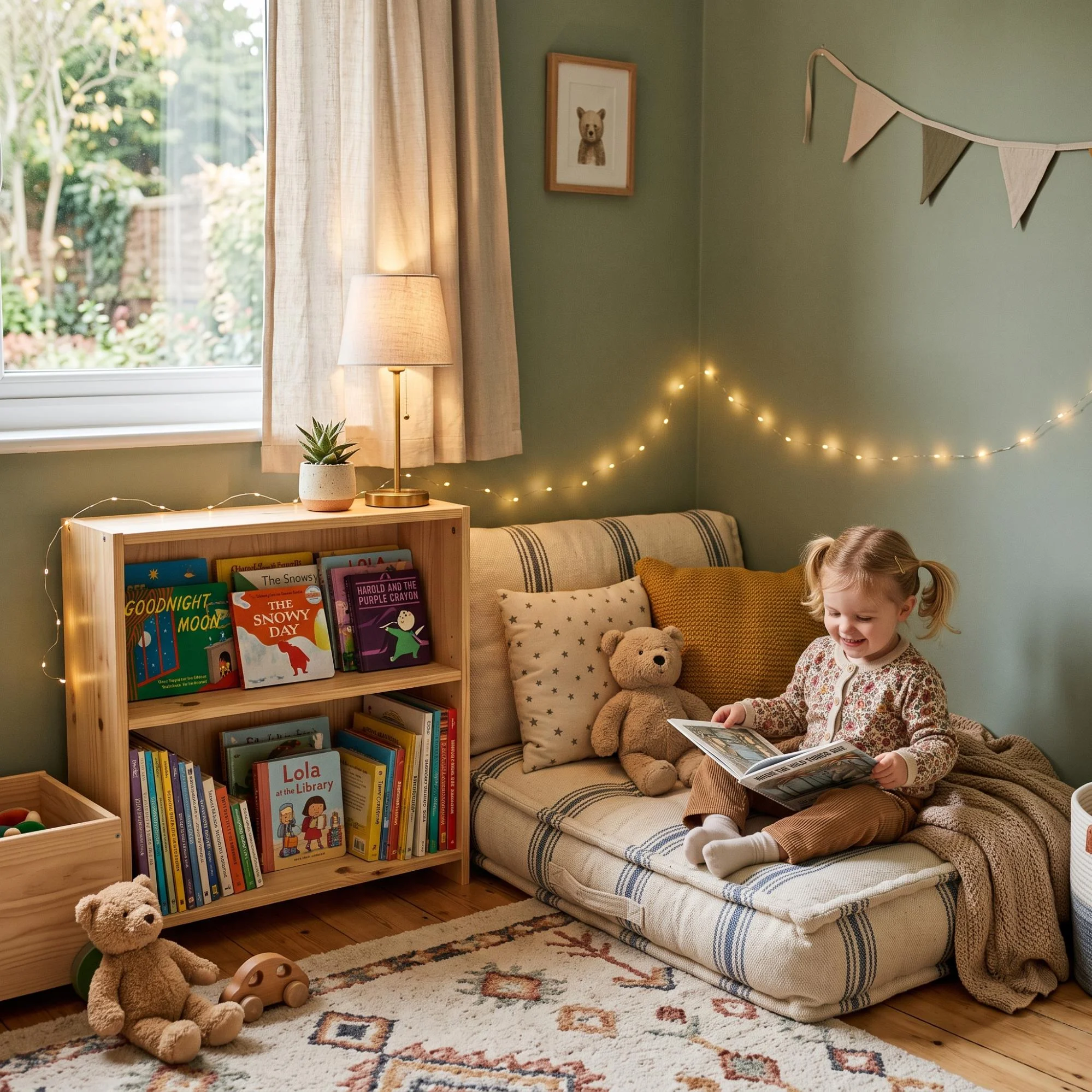
12 Toddler Bedroom Ideas: Fun, Functional, and Growing With Your Child
Transitioning your little one from a nursery to a toddler bedroom is an exciting milestone, but it can also feel overwhelming with so many design directions to choose from. This guide rounds up 12 toddler bedroom ideas that balance fun, function, and safety, helping you create a space your child will love growing into.
Why Toddler Bedrooms Need a Different Approach Than Nurseries
A nursery is designed around a baby’s needs — soft lighting, a crib, and calming decor meant mostly for adults to enjoy while rocking a little one to sleep. A toddler bedroom, on the other hand, needs to grow alongside an increasingly mobile, curious, and independent child. That means considering things like accessible storage for toys, a bed your toddler can safely get in and out of on their own, and a layout that allows for both sleep and play.
It’s also a space your child will start to have opinions about, whether that’s a favorite color, a beloved cartoon character, or a specific stuffed animal that needs a place of honor. Unlike a nursery, which is often designed entirely by parents before a baby arrives, a toddler room benefits from involving your child in small decisions, which can help them feel more ownership and comfort in the space.
Below are 12 ideas to help you design a toddler bedroom that’s both practical for daily life and delightful for your child to spend time in, along with safety considerations and budget-friendly tips to guide the process.
1. Transition to a Toddler or Twin Bed
One of the most important updates in a toddler bedroom is moving away from the crib toward a toddler bed or a twin bed with guardrails. This gives your child the independence to get in and out of bed on their own while still providing enough safety to prevent nighttime falls.
Best for: Ages 18 months to 3 years, depending on readiness Design tip: Choose a bed frame low to the ground, or use a floor bed setup, to minimize the height your toddler needs to climb to get in and out safely. Guardrails on one or both sides can offer extra peace of mind during the first few months of the transition.
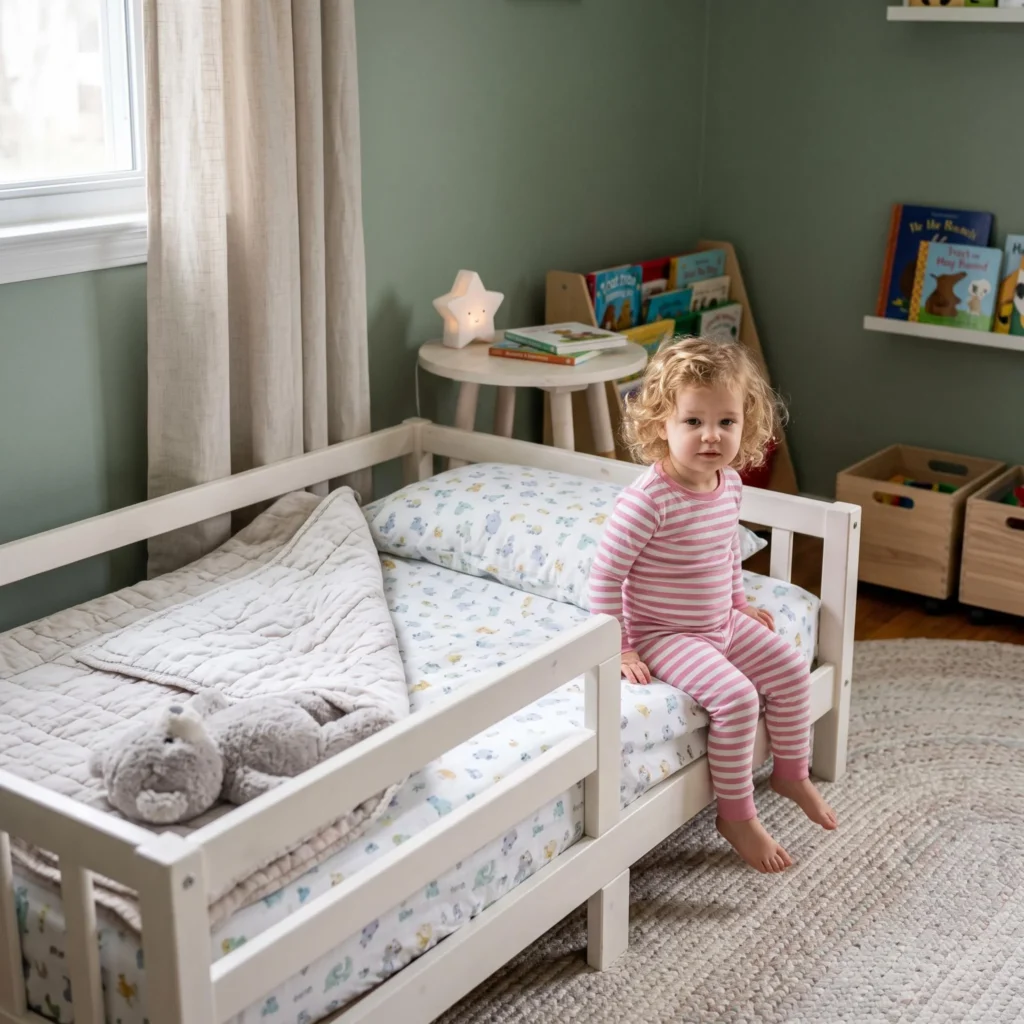
2. Create a Cozy Reading Nook
A dedicated reading nook, even a small one, encourages a love of books from an early age and gives your toddler a quiet corner to retreat to. A simple floor cushion, a small bookshelf, and soft lighting are all it takes to create this inviting space.
Best for: Encouraging independent play and quiet time Design tip: Position the reading nook near a window for natural light during the day, and add a small string of soft lights for evening use.
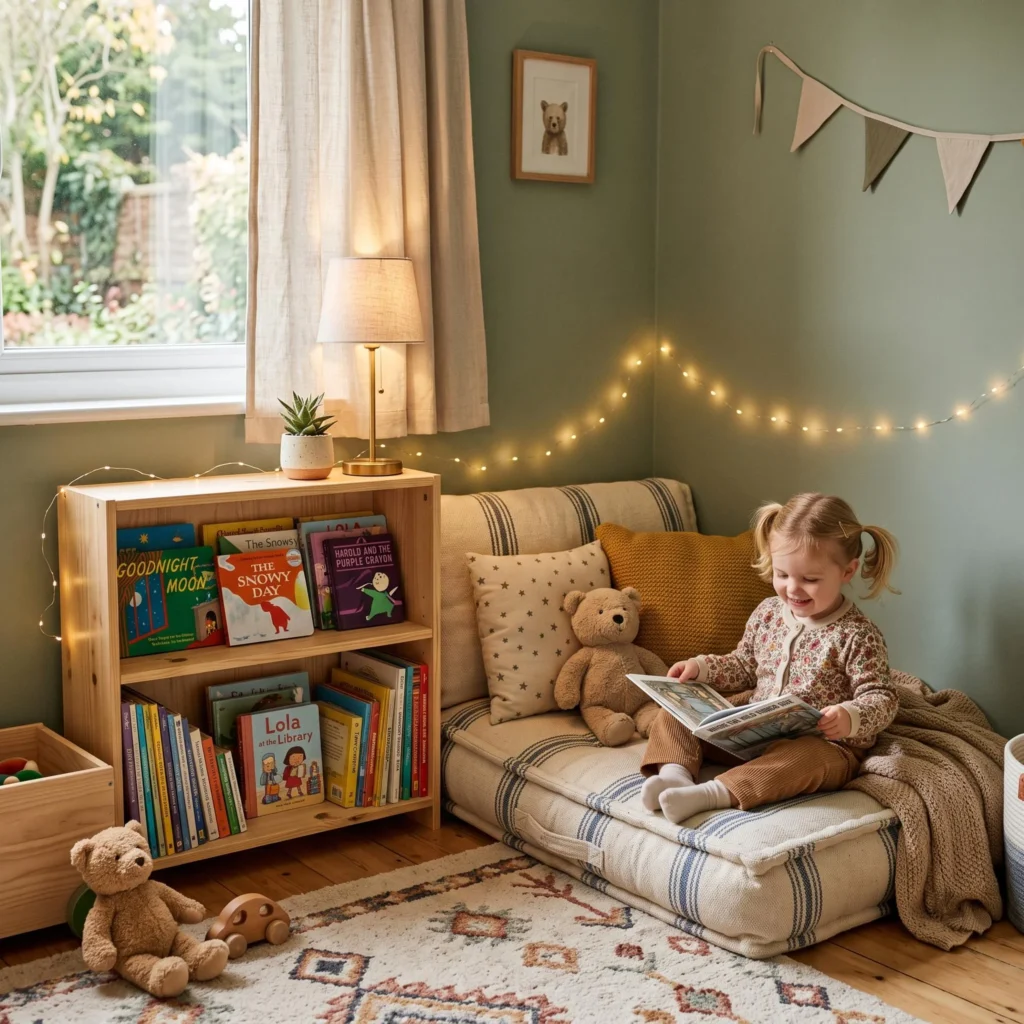
3. Pink Fairy-Tale Toddler Bedroom
A dreamy pink toddler bedroom featuring a white house-frame bed decorated with sheer blush curtains, delicate bow accents, and warm fairy lights.
Soft pink bedding, plush pillows, and a braided bumper add a cozy touch, while the matching pink rug, child-sized table and chairs, toy shelving, and playful decor create a sweet and welcoming space for a little one.
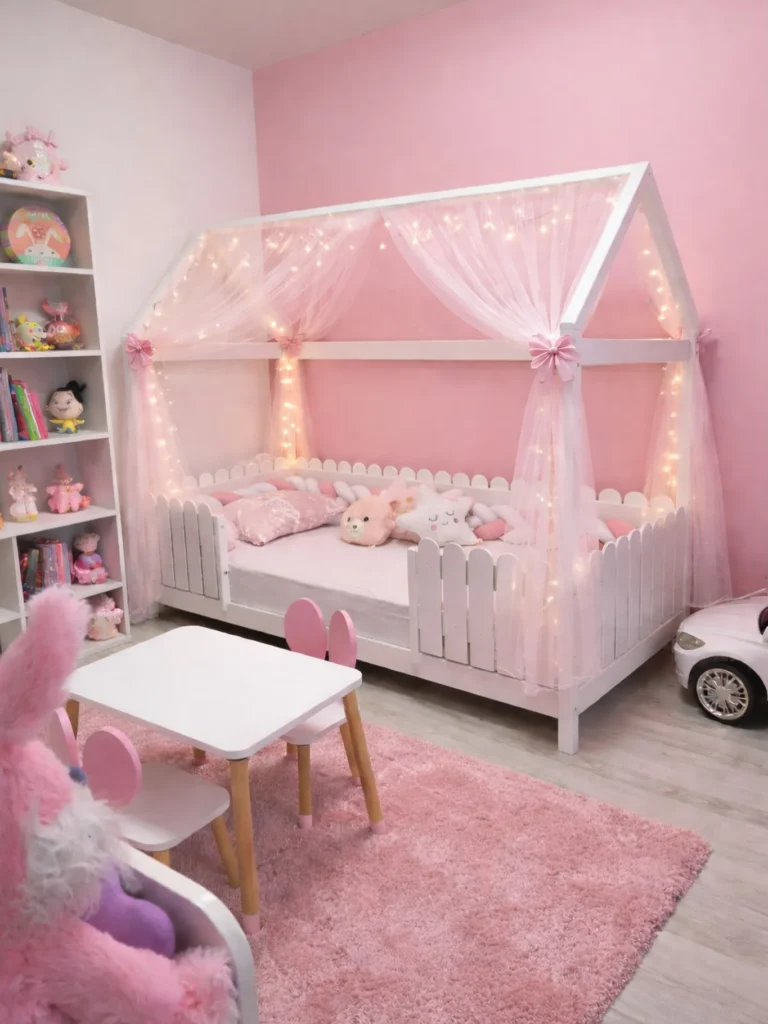
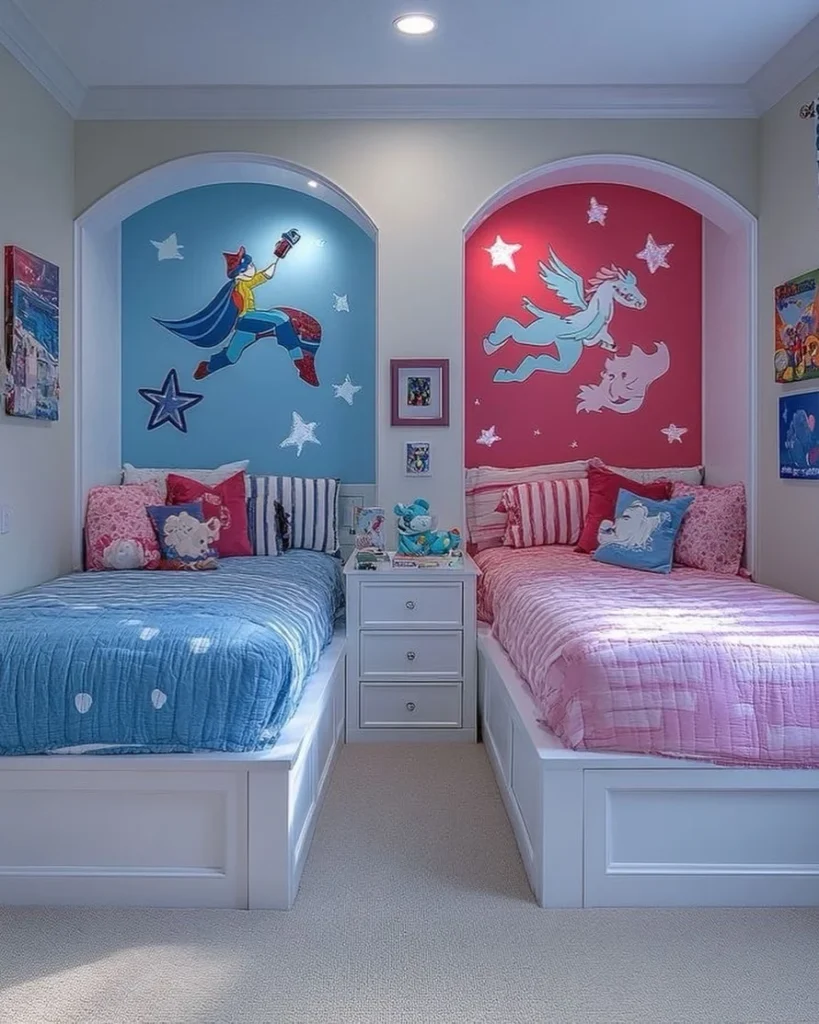
4. Colorful Twin Toddler Bedroom
A playful shared toddler bedroom featuring two matching white beds set beneath tall arched wall niches. One side uses a cheerful blue theme with striped bedding and superhero-inspired artwork, while the other brings in soft pink tones with whimsical flying-horse decor.
A small white nightstand between the beds keeps the layout balanced, while colorful pillows, framed wall art, and cozy bedding create a bright and imaginative bedroom for two little ones.
5. Choose a Playful, Cohesive Color Palette
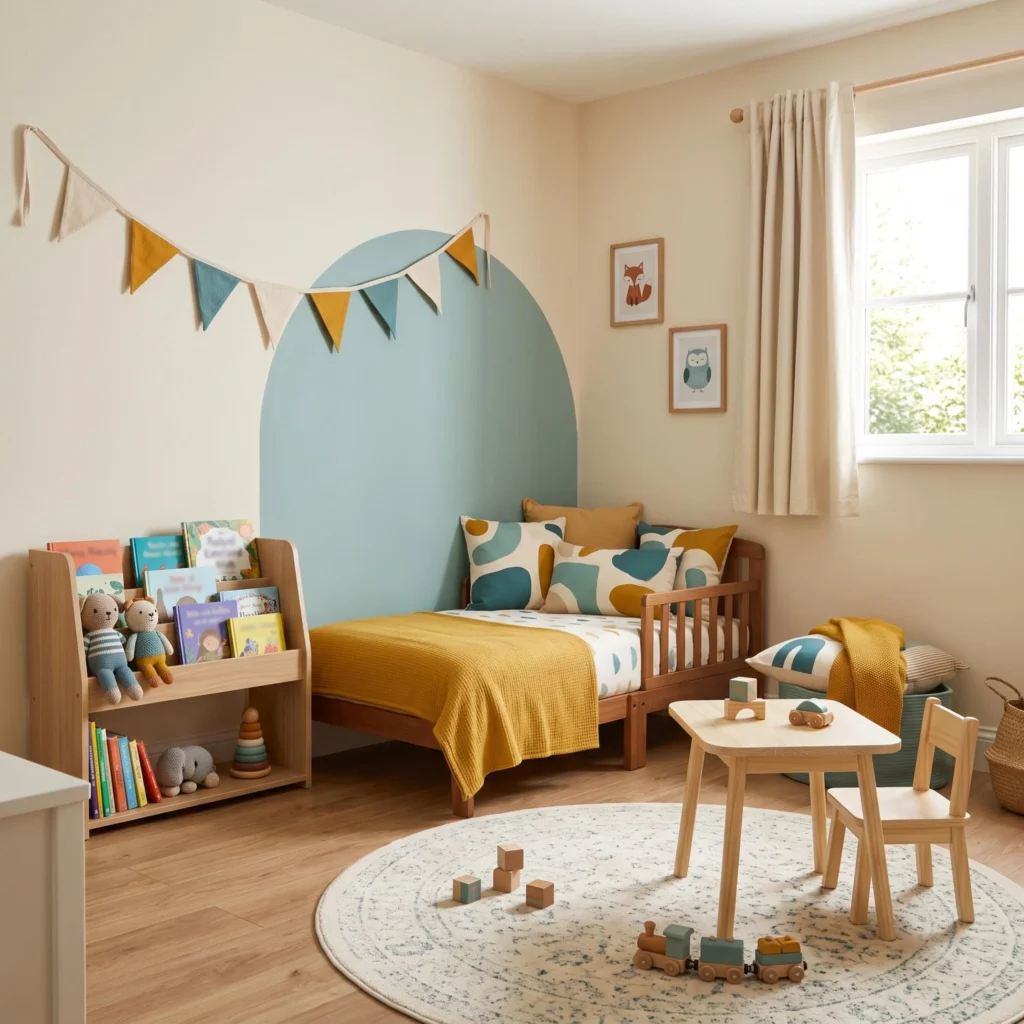
Moving beyond the neutral tones common in nurseries, a toddler bedroom is a great opportunity to introduce a bit more color and personality. A cohesive palette of two or three colors, rather than an overwhelming rainbow of every shade, keeps the room feeling put-together while still feeling fun and age-appropriate.
Best for: Adding personality without visual overwhelm Design tip: Choose one bold accent color and pair it with soft neutrals, allowing you to easily update accessories as your child’s preferences change over time.
6. Pretty Pink Bow Toddler Bedroom
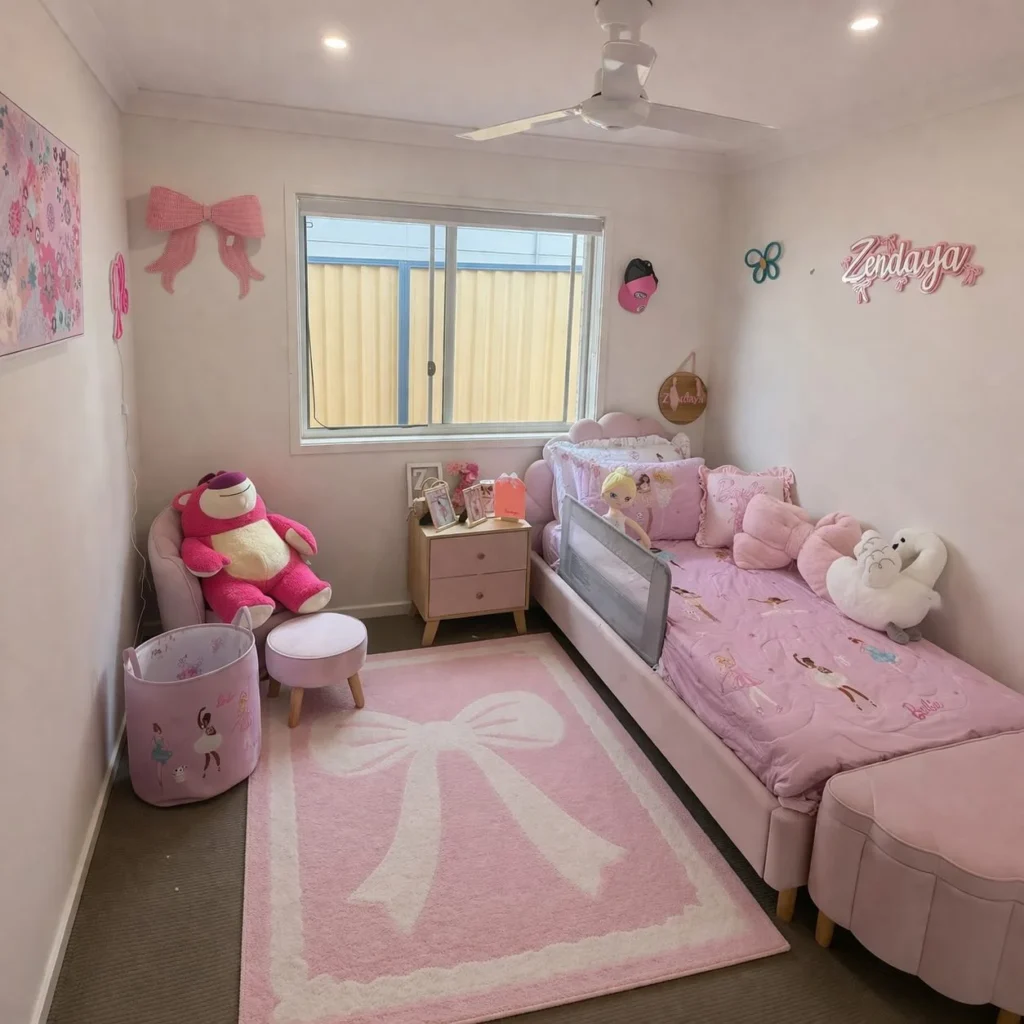
A sweet pink toddler bedroom featuring a cozy upholstered bed dressed in playful character bedding and surrounded by soft plush pillows.
A large bow-pattern rug anchors the room, while matching pink seating, a small nightstand, toy storage, and oversized stuffed animals add a fun and comfortable touch. Bow wall decor, personalized accents, and soft neutral walls complete the charming, girly look.
7. Install a Full-Length Mirror
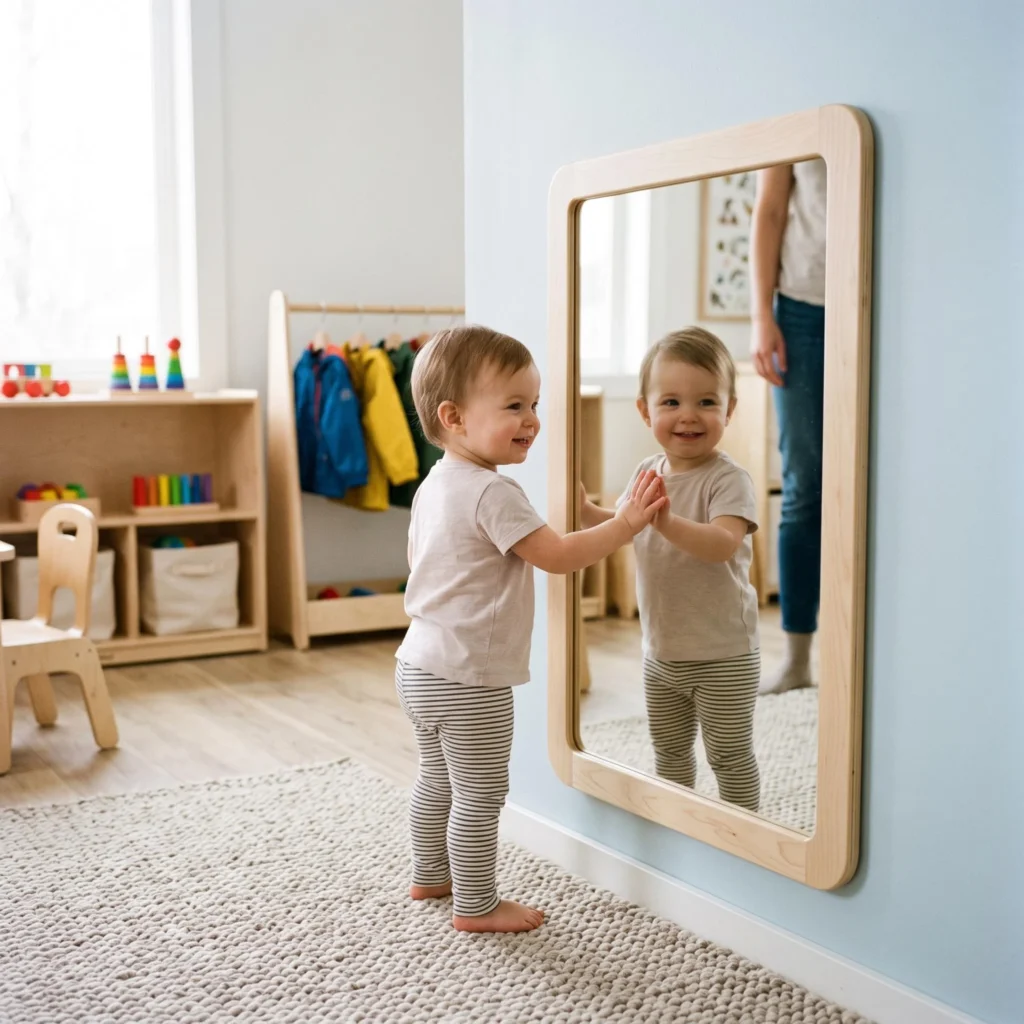
A secured, toddler-safe full-length mirror encourages self-recognition, body awareness, and can even help with independent dressing as your child gets older. Many toddlers also simply enjoy watching themselves move and play in front of a mirror.
Best for: Supporting developmental milestones Design tip: Choose a shatterproof, wall-mounted mirror specifically designed for children’s rooms, and ensure it’s securely anchored to the wall.
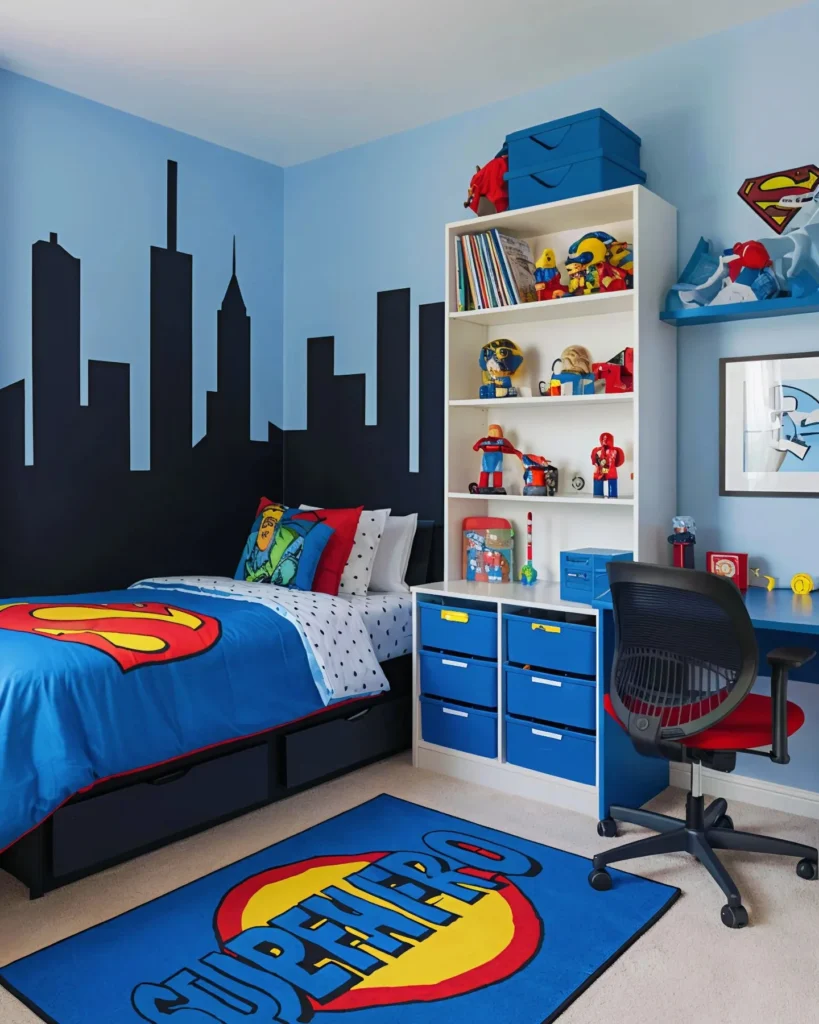
8. Superhero-Themed Toddler Bedroom
A bold superhero-themed toddler bedroom featuring bright blue walls, colorful character bedding, and a dramatic city skyline mural behind the bed. Matching superhero toys, wall decor, and a vibrant area rug bring playful energy to the room, while the white shelving unit, blue storage bins, and study desk keep the space organized and functional.
The mix of red, blue, yellow, and black creates a fun, adventurous bedroom perfect for a little superhero fan.
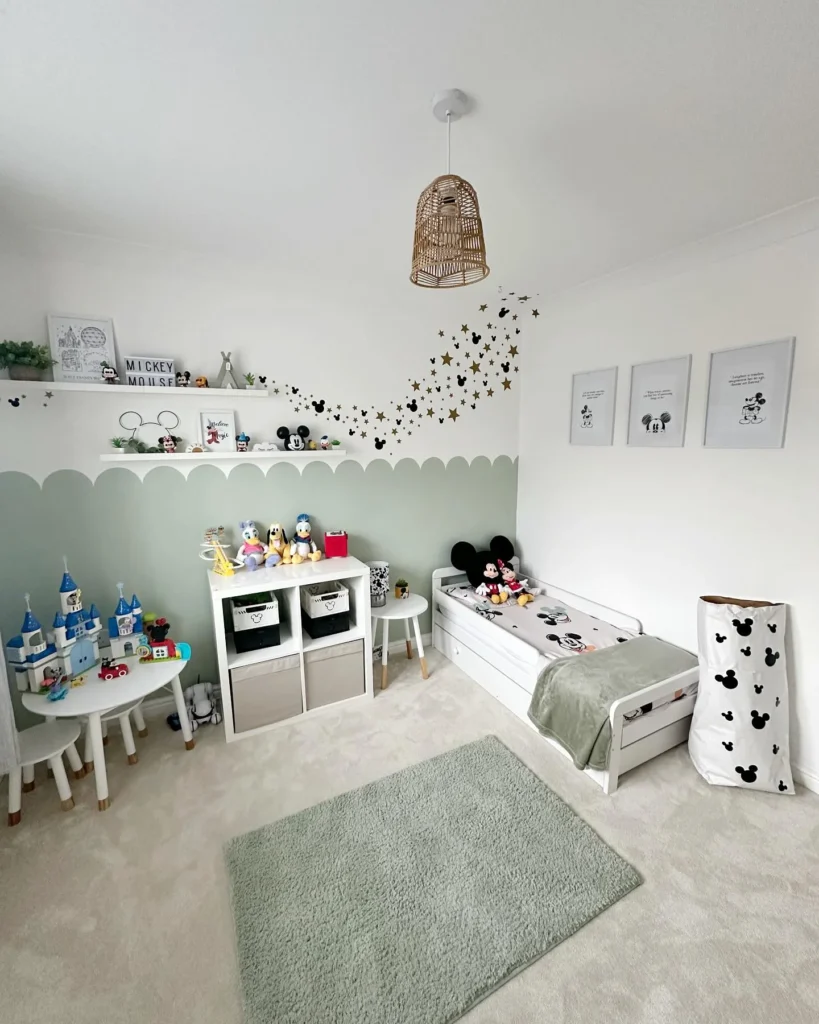
9. Mickey Mouse Toddler Bedroom
A charming Mickey Mouse-themed toddler bedroom styled with soft sage green, white, and neutral tones. The simple white toddler bed is paired with playful character bedding and plush toys, while matching wall art, star decals, floating shelves, and themed accessories add a fun Disney-inspired touch.
A small play table, organized storage unit, cozy green rug, and woven pendant light complete the bright, tidy, and inviting space.
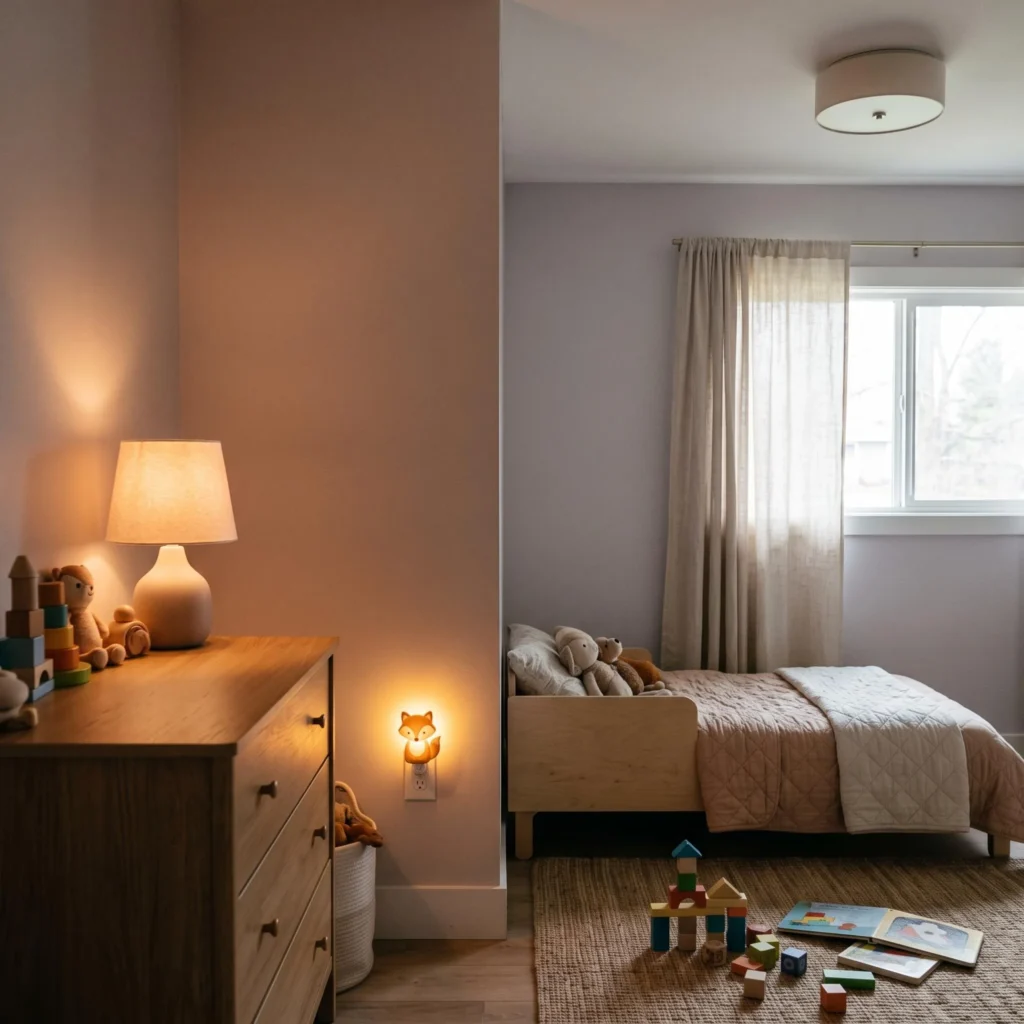
10. Prioritize Soft, Layered Lighting
Toddlers often benefit from a layered lighting approach: a main overhead light for daytime activities, a softer lamp or nightlight for bedtime, and perhaps a dimmable option for transitioning between the two. This flexibility supports both active play and calming bedtime routines.
Best for: Supporting different times of day and activities Design tip: Choose a nightlight with a warm, amber glow rather than a bright white or blue light, since warmer tones are less likely to interfere with sleep.
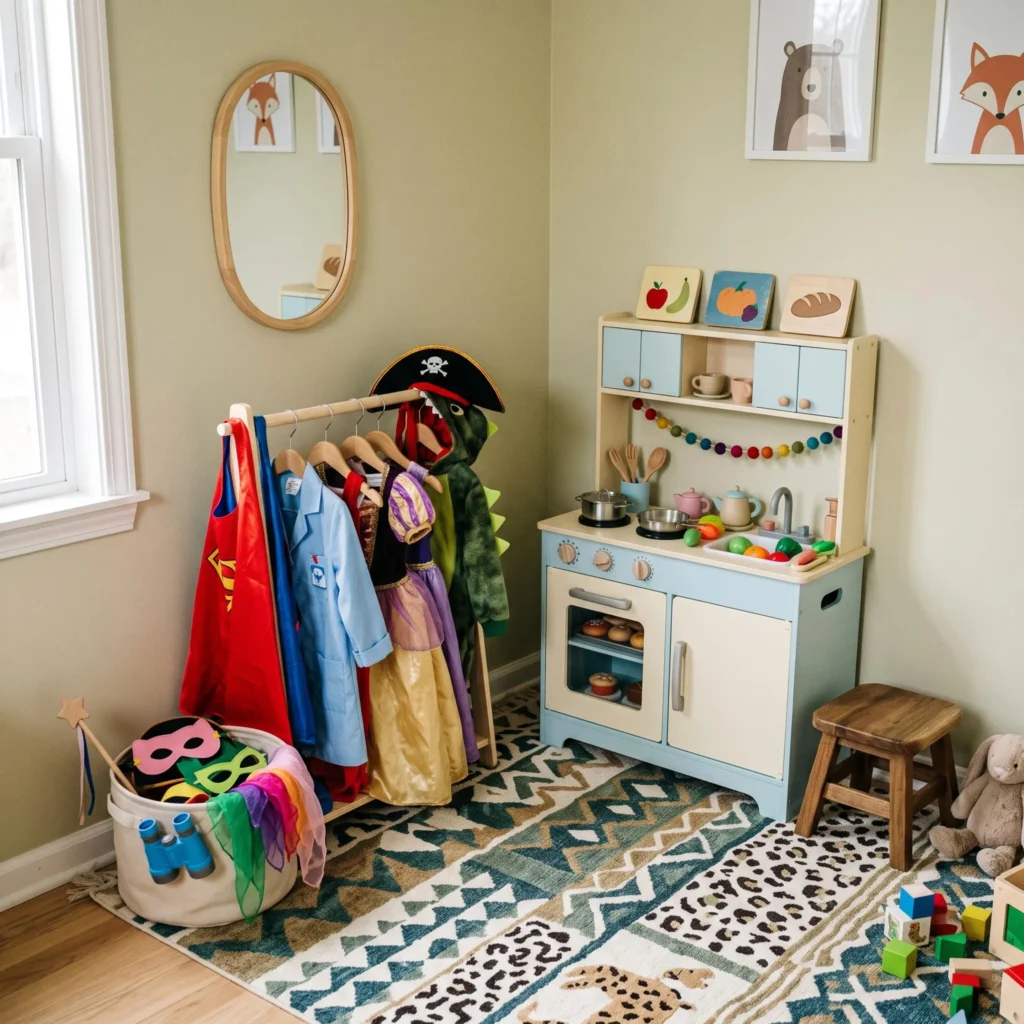
11. Create a Dedicated Dress-Up or Pretend Play Corner
A small corner with dress-up clothes, a play kitchen, or other pretend play items gives your toddler space to engage in imaginative play right in their own room. This can be as simple as a small basket of costumes and props or as elaborate as a dedicated play kitchen setup.
Best for: Encouraging imaginative and pretend play Design tip: Rotate the available toys and props every few weeks to keep the play corner feeling fresh and engaging without needing to buy new items constantly.
12. Use Removable Wall Decals or Wallpaper
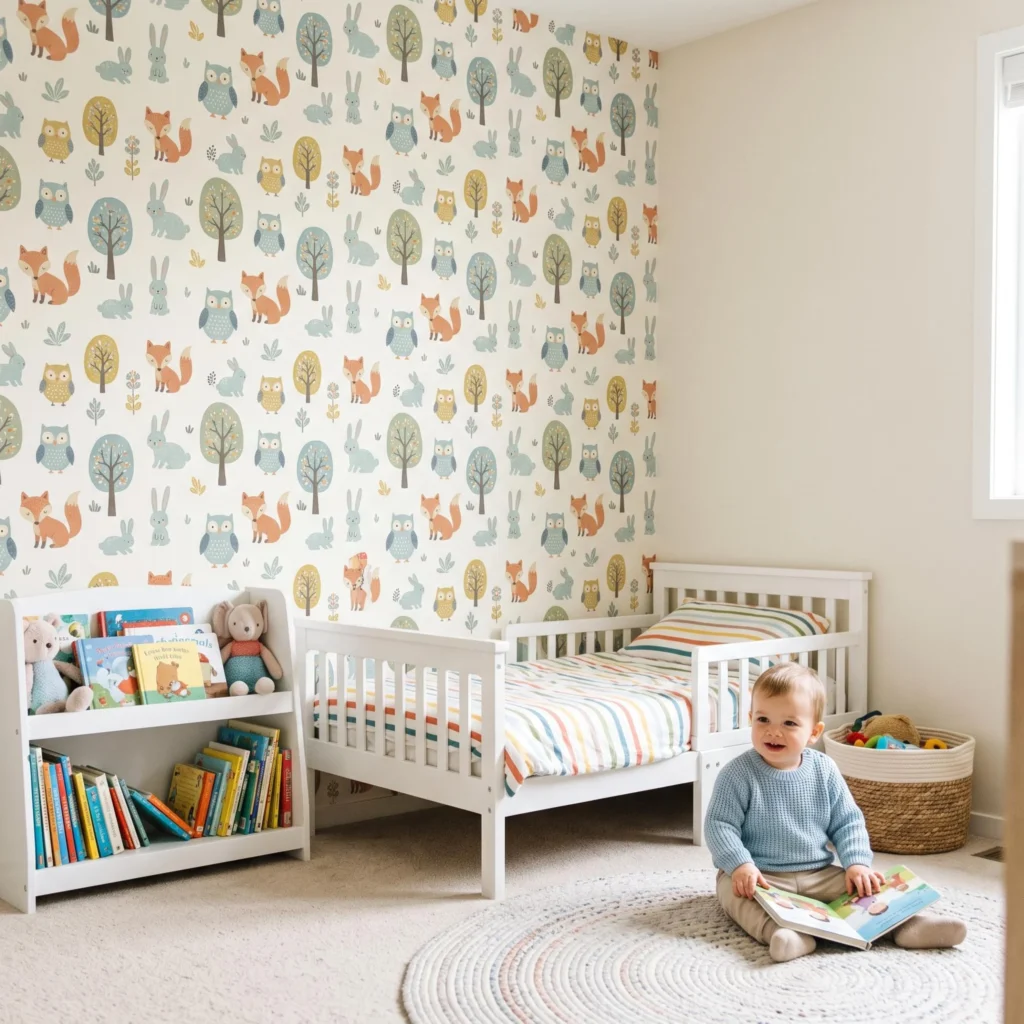
Removable wall decals or peel-and-stick wallpaper offer a low-commitment way to add pattern, color, or a favorite theme to a toddler’s room without the permanence of paint or traditional wallpaper. These are also renter-friendly and easy to update as your child’s tastes evolve.
Best for: Renters, frequently changing preferences Design tip: Apply decals or wallpaper to a single accent wall rather than the entire room to keep the space from feeling overly busy.
How to Balance Function and Fun in a Toddler Bedroom
With so many elements to consider, it helps to think about a few overarching principles as you design the space:
- Safety first: Secure furniture to the wall, choose cordless window coverings, and ensure any decor elements like mirrors or shelving are properly anchored.
- Accessibility: Keep frequently used items, like books, toys, and clothing, at a height your toddler can reach independently, fostering confidence and self-sufficiency.
- Flexibility: Toddlers’ interests and needs change quickly, so prioritize elements that can be easily updated, like bedding, decals, or accessories, over permanent, hard-to-change choices.
- Balance of stimulation and calm: While it’s tempting to fill a room with colorful, exciting elements, be mindful of creating a space that also feels calm and conducive to good sleep, particularly near the bed itself.
- Room to grow: Consider choices that can adapt over several years rather than needing a complete overhaul every few months, such as a neutral furniture base paired with easily swappable accent pieces.
Safety Considerations for Toddler Bedrooms
Since toddlers are naturally curious and increasingly mobile, a few safety considerations are worth prioritizing in any bedroom design:
- Anchor all furniture: Dressers, bookshelves, and any other climbable furniture should be secured to the wall with anti-tip straps to prevent tipping accidents.
- Choose cordless window treatments: Blinds or curtains with cords pose a strangulation risk, so opt for cordless designs or those with cord safety devices installed.
- Keep the crib-to-bed transition age-appropriate: Every child is different, but generally waiting until your toddler can climb out of a crib safely, or reaches around 2 to 3 years old, is a good guideline for transitioning to a bed.
- Secure decor items: Wall-mounted mirrors, shelves, and decorations should all be properly anchored, and any small or breakable decor items should be kept out of reach.
- Use a baby gate if needed: If the bedroom is near stairs or other hazards, a baby gate at the doorway can add an extra layer of safety during the newly independent toddler bed stage.
Budget-Friendly Ways to Update a Toddler Bedroom
You don’t need a full renovation to create a wonderful toddler bedroom. Consider these more affordable updates:
- Swap out bedding: A themed or colorful bedding set is one of the easiest and most affordable ways to refresh a room’s look.
- Add removable decals: These offer big visual impact for a relatively low cost, and can be swapped out as your child’s interests change.
- Repurpose existing furniture: A bookshelf or storage bin system from another room can often be repurposed for toddler use with just a bit of reorganizing.
- DIY a reading nook: A floor cushion, a small basket of books, and a strand of fairy lights can create a cozy reading corner without any major purchases.
Age-Appropriate Design Considerations
Toddlerhood spans a wide developmental range, and what works for an 18-month-old may look quite different from what suits a nearly 4-year-old. Keeping these general stages in mind can help guide your design choices:
- 18 months to 2 years: At this stage, safety is the top priority as toddlers are still developing coordination and judgment. Focus on securing furniture, choosing a low bed if transitioning from a crib, and keeping small or breakable decor out of reach.
- 2 to 3 years: This is often when toddlers start expressing clear preferences about colors, characters, and activities. It’s a great time to introduce more personalized decor elements and encourage independent choices, like picking out their own bedding pattern.
- 3 to 4 years: As independence grows, this stage is ideal for incorporating more elaborate storage systems, activity corners, and pretend play areas, since toddlers at this age are often capable of more complex, imaginative play and can help with simple tidying tasks.
Involving Your Toddler in the Design Process
While much of the planning and safety considerations fall to parents, involving your toddler in a few age-appropriate decisions can make the space feel more special to them:
- Let them choose between two options: Rather than an overwhelming number of choices, offer two curated options for things like bedding color or a stuffed animal display, allowing them to feel a sense of control.
- Include a few of their favorite items: Whether it’s a beloved stuffed animal, a piece of their own artwork, or a favorite book, incorporating personal items helps the room feel truly theirs.
- Ask about their favorite colors or characters: Even toddlers with limited vocabulary can often point to or name a favorite color, which can guide accent choices like bedding or wall decals.
- Take them shopping for small items: Bringing your toddler along to pick out a new nightlight or a small decorative item, even if just from a couple of parent-approved options, adds to their sense of ownership over the space.
Final Thoughts
Designing a toddler bedroom is about finding the balance between practicality and imagination, creating a space that supports your child’s growing independence while still feeling like a fun, comforting retreat. Whether you start with a simple bed transition and work your way up to a fully themed reading nook, or tackle several of these ideas at once, the most important thing is creating a room that grows and adapts alongside your child.
Remember that this space will likely evolve many times over the toddler years as interests shift and new developmental needs emerge, so there’s no need to get everything perfect from the start. Use this list as a starting point, prioritize safety at every step, involve your toddler where it makes sense, and enjoy watching your child make the space truly their own over time.