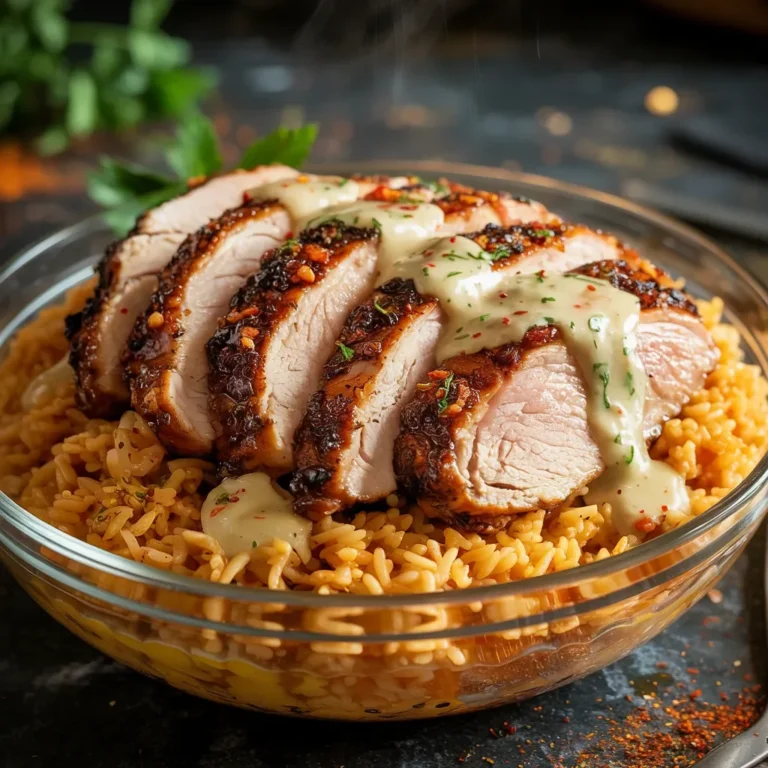
Black Bean Brownies Recipe Healthy: A Delicious and Nutritious Treat You Can Feel Good About
The idea sounds like it should not work. A can of beans, blended into brownie batter, replacing the flour entirely.
It works because of what black beans actually are. They are starchy, soft, and almost flavorless once cooked, which means they can provide the body and structure that flour normally would. Blended completely smooth and buried under enough cocoa, nobody tastes beans.
That phrase, completely smooth, is the whole recipe. Every failed batch of black bean brownies comes down to under-blending. A food processor run for ninety seconds gives you fudgy brownies. Thirty seconds gives you something gritty that tastes like chili.
They are naturally gluten free, they come in around 124 calories each, and they genuinely do taste like brownies rather than like a compromise.
Why Use Black Beans in Brownies?
Flour does two jobs in a brownie. It absorbs moisture, and it provides enough structure to hold the thing together. Black beans do both.
They are mostly starch. Once cooked and blended, black bean starch behaves much like flour starch in a batter. It sets when heated and holds the structure.
They are almost flavorless. This surprises people. Canned black beans on their own taste faintly earthy and mostly of the liquid they sat in. Rinsed well and buried under half a cup of cocoa, there is nothing left to detect.
They bring moisture with them. Beans are about 65 percent water, which is why these come out fudgy rather than cakey. A flour brownie needs added fat to get this texture. These get it from the beans.
Why black beans specifically. They are the darkest common bean, so the color disappears into the cocoa. Chickpeas work too but are paler and have a stronger flavor. White beans show up as pale flecks.
The one thing beans do not provide is gluten, which is why these are naturally gluten free. It is also why they are softer and more fragile than a flour brownie, and why cooling them completely before cutting matters more here than usual.
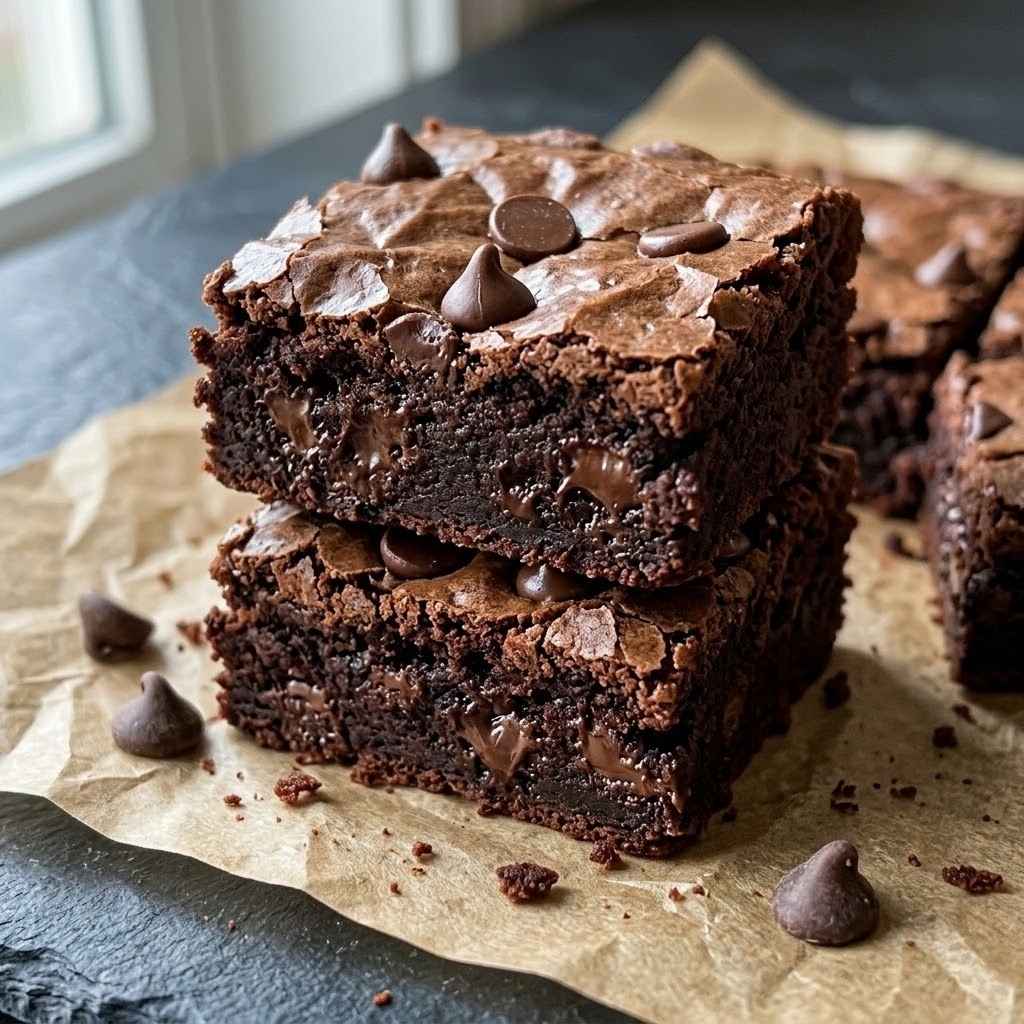
Why Homemade Beats the Box
Box mix brownies are cheap and reliable, and there are three reasons to make these instead.
Fiber and protein. A box brownie has roughly 1 gram of each. These have about 1.4 grams of fiber and 2.8 grams of protein per square, from the beans. Not dramatic, but it is a real difference.
No flour, no gluten. Naturally, rather than through expensive gluten free flour blends that often taste gritty.
Control over the sugar. Box mixes are built around a fixed sugar level you cannot adjust. Here you can cut the sugar to half a cup and the texture still holds, because the beans are doing the structural work rather than the sugar.
Ingredients for Healthy Black Bean Brownies
Makes 16 squares in an 8×8 pan
The Base
- 1 can (15 oz) black beans, drained and rinsed very well
- 2 large eggs
- ¼ cup melted coconut oil or neutral oil
- ½ cup unsweetened cocoa powder
- ⅔ cup granulated sugar, maple syrup, or coconut sugar
- 1 teaspoon vanilla extract
- ½ teaspoon baking powder
- ¼ teaspoon salt
To Finish
- ½ cup chocolate chips, divided
- Flaky sea salt, optional
Ingredient Tips
Rinse the beans properly. Not a quick pass under the tap. Drain them, then rinse under cold running water in a colander for a full minute, moving them around with your hand until the water runs completely clear with no foam. The canning liquid is where most of the bean flavor lives.
Pat them dry after rinsing. Extra water thins the batter, and this recipe has no flour to absorb it.
Use good cocoa. This is where the flavor comes from, and it is also what covers any trace of bean. Dutch-process cocoa is darker and smoother. Natural cocoa is fine but slightly sharper.
Coconut oil for the fudgiest result. It solidifies as the brownies cool, which firms up the texture. Neutral oils work and give a softer square.
Half the chips go in, half go on top. The ones inside melt into pockets. The ones on top stay visible and signal “brownie” rather than “health experiment” the moment someone looks at the pan.
Step-by-Step Instructions
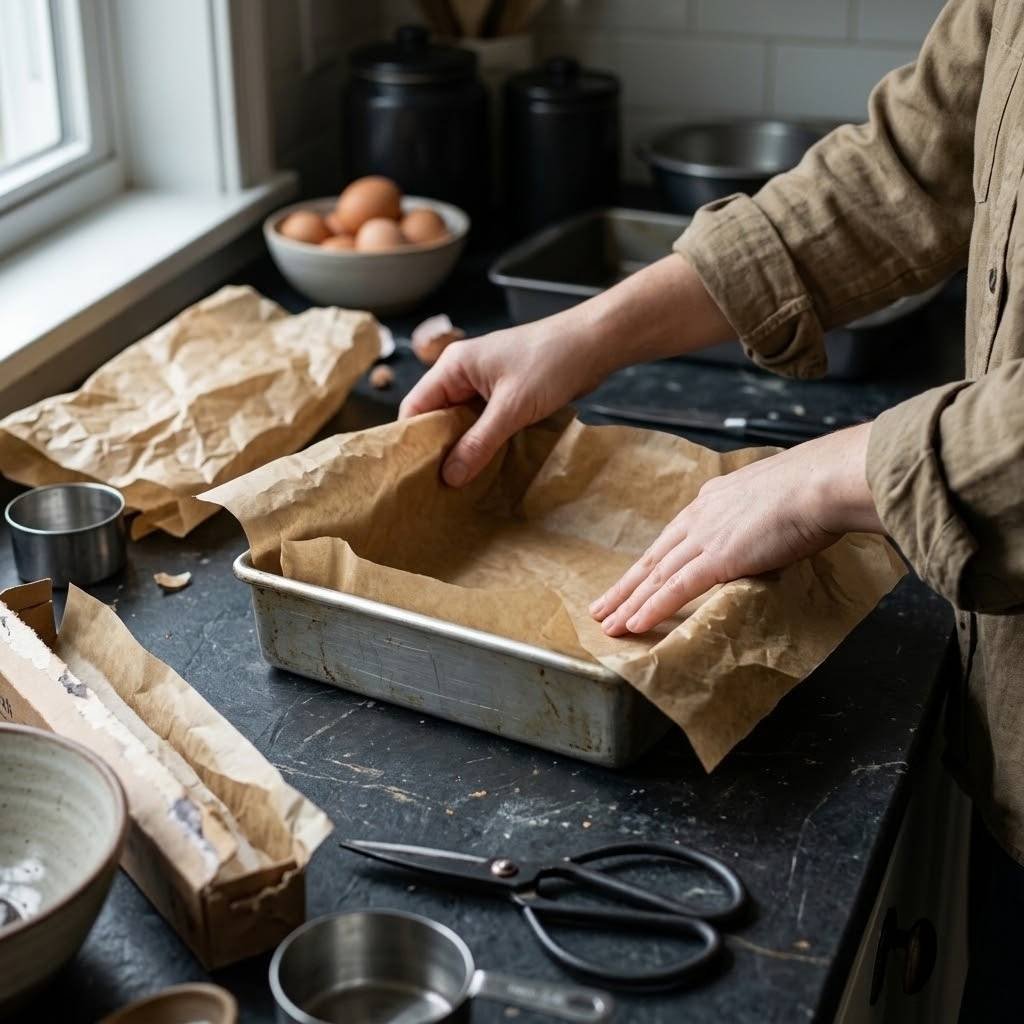
Step 1: Prep the Pan and Oven
Preheat to 350°F (175°C). Line an 8×8-inch pan with parchment, leaving overhang on two sides.
Use the parchment sling. These are softer than flour brownies and will tear if you try to lift them out of a bare pan.
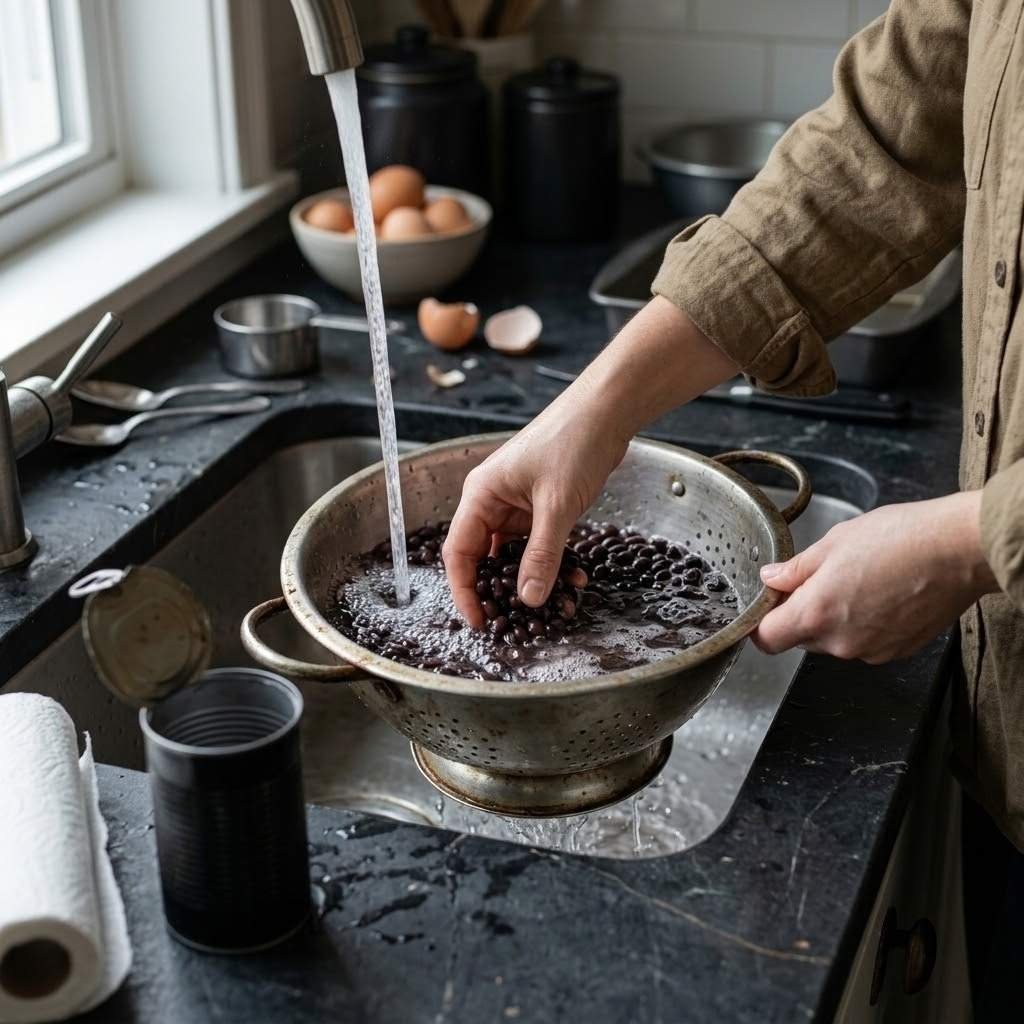
Step 2: Rinse the Beans Thoroughly
Drain the beans and rinse under cold running water for a full minute, agitating them with your hand.
Keep going until the water runs completely clear. Any cloudiness or foam means there is still canning liquid clinging to them, and that is what makes black bean brownies taste like beans.
Shake the colander dry and pat with paper towels.
Step 3: Blend Until Genuinely Smooth
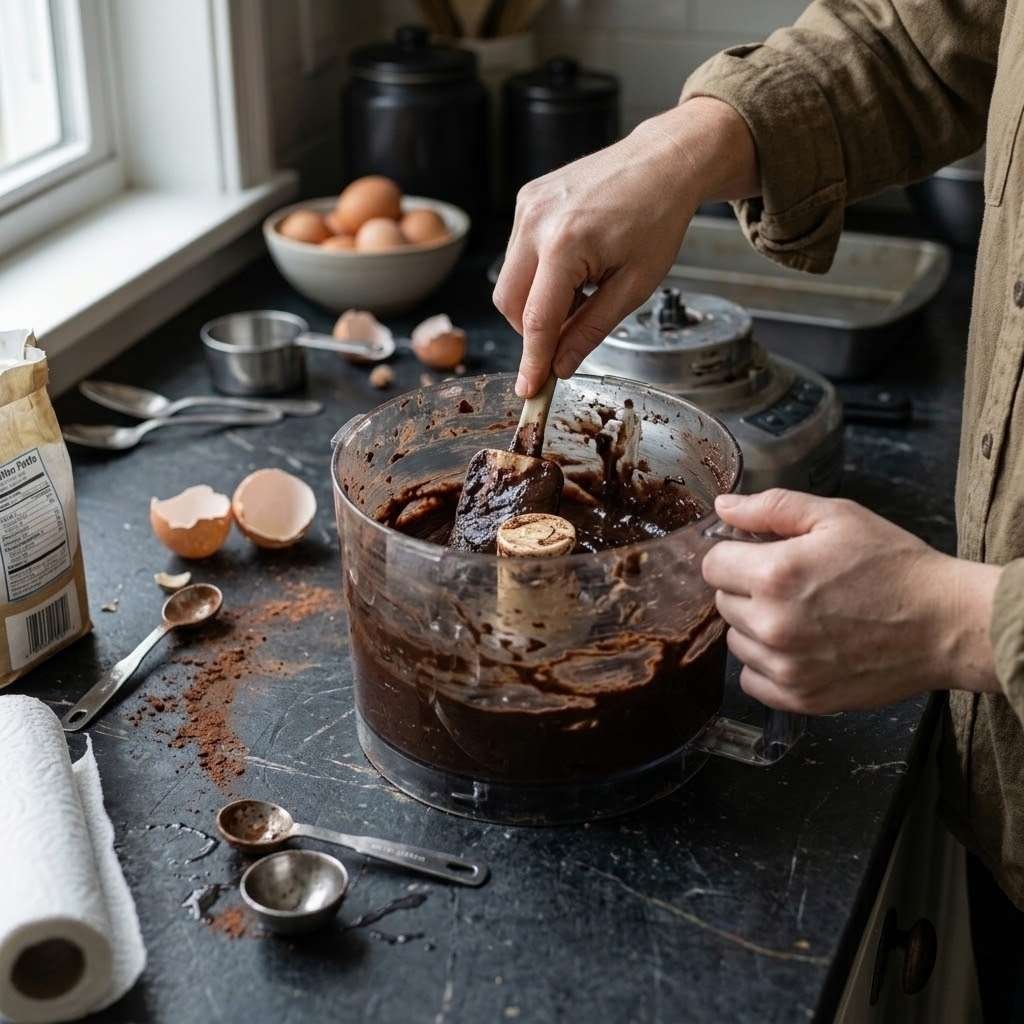
Add the beans, eggs, oil, cocoa, sugar, vanilla, baking powder, and salt to a food processor.
Blend for 90 seconds to 2 minutes, stopping twice to scrape the sides.
This is the step the whole recipe depends on. The batter should look like thick, glossy chocolate pudding with no visible bean pieces and no graininess at all. Rub a little between your fingers. If you feel any texture, keep blending.
Thirty seconds of blending gives you gritty brownies that taste faintly of chili. Two minutes gives you fudge.
A blender works but needs more scraping. A fork or hand mixer will not get there.
Step 4: Fold in the Chips
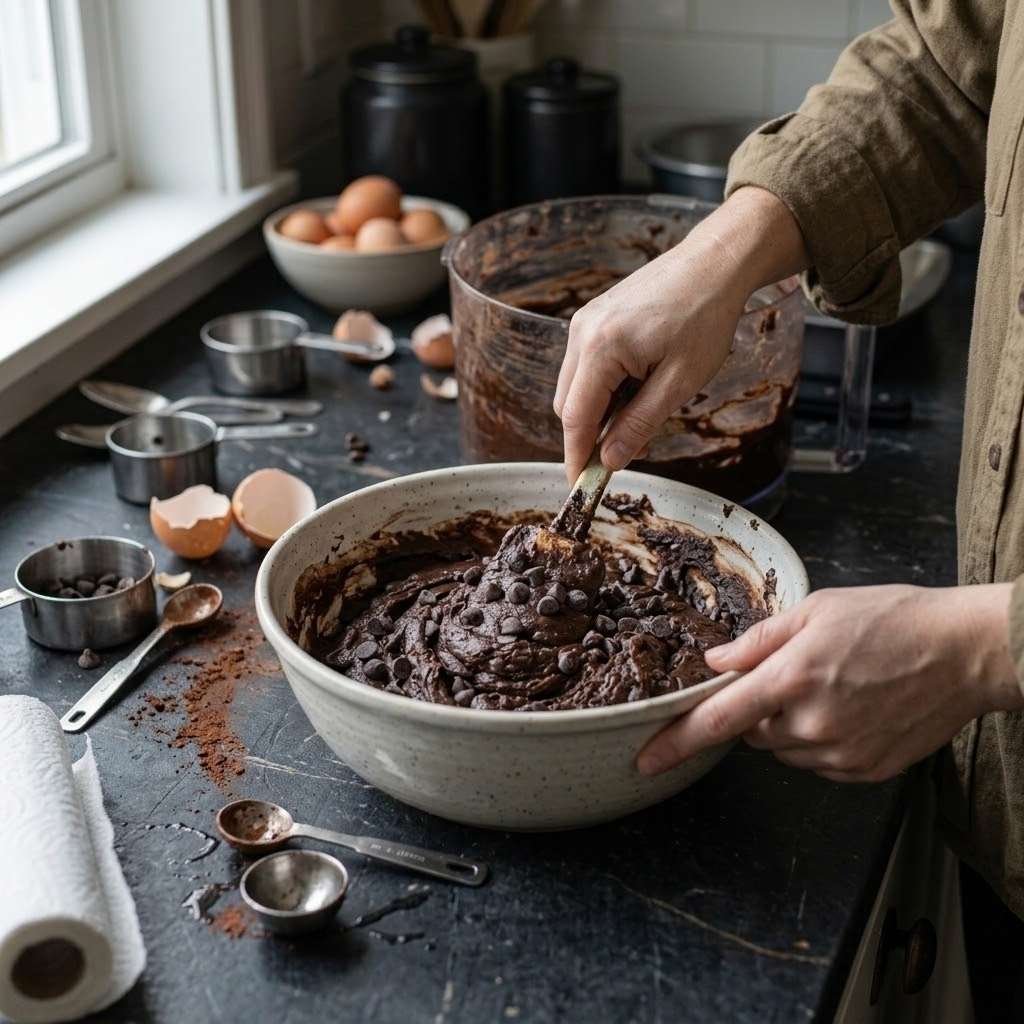
Transfer the batter to a bowl and fold in ¼ cup of the chocolate chips by hand.
Do not blend them in. You want pockets of melted chocolate, not chocolate dispersed through the batter.
Step 5: Spread and Top
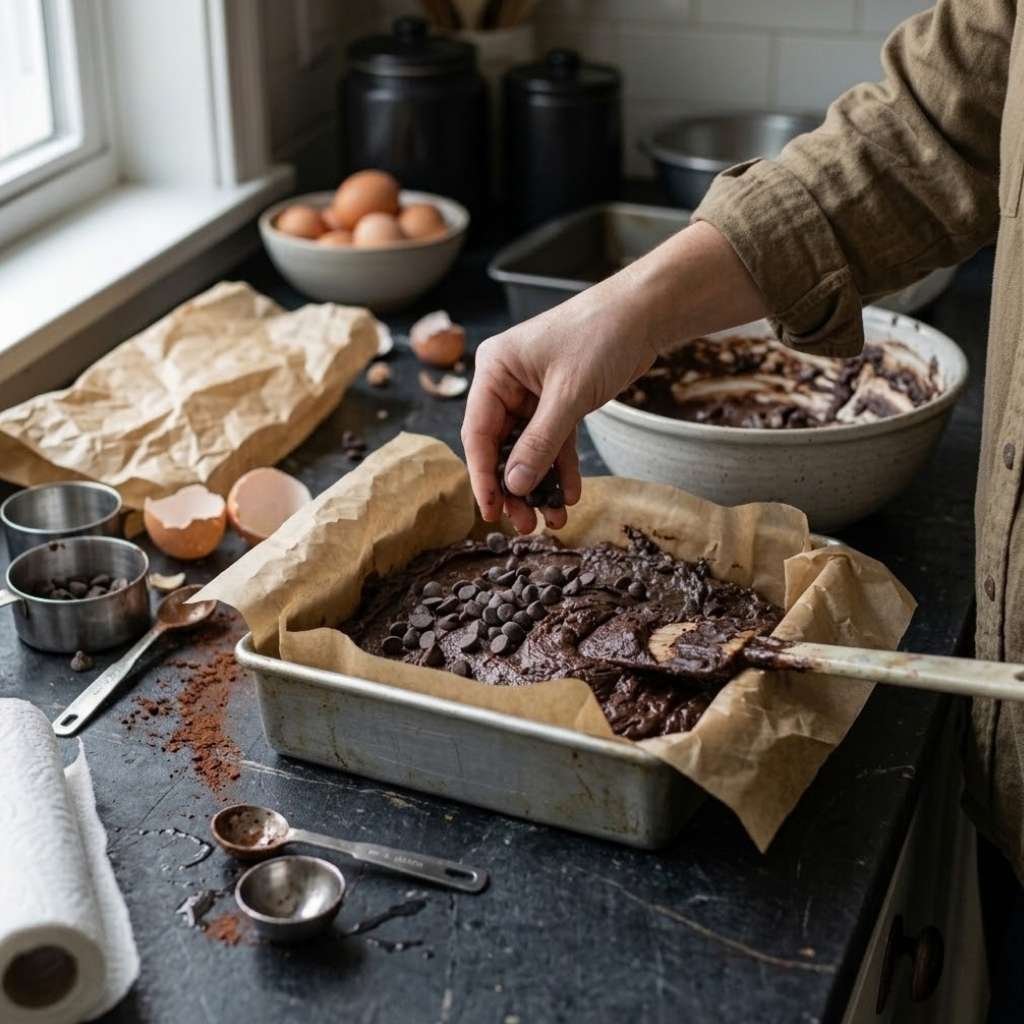
Scrape the batter into the lined pan and spread it level. It will be thick and will not pour.
Scatter the remaining ¼ cup of chips over the surface and press them in lightly.
Step 6: Bake
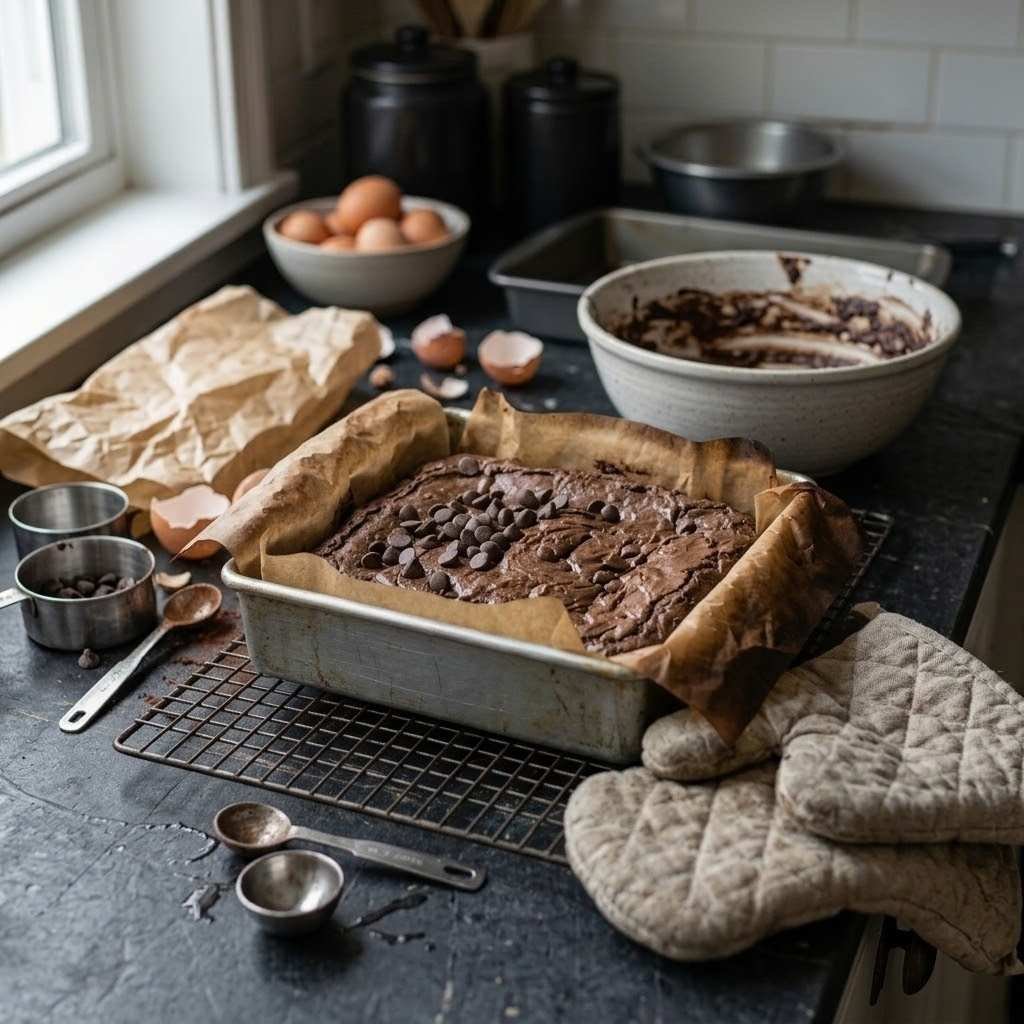
Bake for 22 to 28 minutes.
The edges should look set and pull slightly from the sides. The center should look just barely set, with a slight wobble if you shake the pan.
A toothpick will not come out clean, and should not. These are fudgy by design. Look for moist crumbs, not wet batter.
Step 7: Cool Completely Before Cutting
Let them cool in the pan for at least an hour, then refrigerate for 30 minutes before cutting.
This is not optional here. Without flour there is no gluten holding the structure together, and warm black bean brownies fall apart into a pile. Cold ones cut into clean squares.
Lift out using the parchment, cut into 16 squares with a sharp knife, wiping the blade between cuts.
Tips for Perfect Black Bean Brownies
- Smooth consistency: Make sure the black beans are well-blended. If the batter isn’t smooth enough, the brownies may turn out lumpy and uneven.
- Don’t overbake: Keep an eye on the brownies during the final minutes of baking. You want them to be soft and fudgy, so avoid baking them for too long.
- Customize the flavors: Feel free to add extra flavors to the batter, such as a pinch of cinnamon, a dash of instant coffee (which enhances the chocolate flavor), or a small amount of chili powder for a spicy kick.
- Make them vegan: Use flax eggs and plant-based nut butter to make these brownies fully vegan.
Storage
Refrigerator, 5 days. These keep better cold than at room temperature, and the texture is better too. Without flour they stay soft and can go sticky if left out.
Room temperature, 2 days. In an airtight container. Fine, but refrigerating is better.
Freezer, 3 months. Cut into squares first and freeze with parchment between layers. Thaw individually in about ten minutes.
Eating them cold is not a compromise. Many people prefer these straight from the fridge, where they firm up into something closer to fudge.
Based on 16 squares with chocolate chips. Cutting the sugar to ½ cup brings this to about 110 calories each.
Frequently Asked Questions
Can you really not taste the beans?
Not if you rinse them for a full minute and blend for at least 90 seconds. The giveaway is almost always texture rather than flavor, which is why the blending matters more than anything else.
Can I use dried beans instead of canned?
Yes. Cook about ¾ cup of dried black beans until very soft, then drain well. You need roughly 1½ cups cooked. The advantage is no canning liquid at all.
Do I need a food processor?
It is the best tool, but a high-powered blender works with more scraping. A hand mixer or fork will not get the batter smooth enough, and the result will be gritty.
Can I use another kind of bean?
Chickpeas work but are paler and have a more noticeable flavor, so increase the cocoa. White beans show up as light flecks. Black beans are the best choice for a reason.
Why are mine so fragile?
No flour means no gluten, and gluten is what holds a normal brownie together. Cooling completely and then chilling for 30 minutes before cutting solves this.
Can I reduce the sugar?
Down to ½ cup without changing anything else. Below that the texture suffers, since sugar holds moisture as well as sweetening.
Are these actually healthy?
Healthier than a standard brownie, yes. More fiber, more protein, fewer calories, naturally gluten free. Still a dessert with sugar and oil in it. Both things are true.
Final Thoughts
Two things decide how these turn out. Rinse the beans until the water runs clear, and blend the batter until there is no texture left at all.
Get those right and nobody at the table will guess what is in them, which is usually the most satisfying part of making these.
Save this recipe now so it is there the next time you want brownies without the flour.