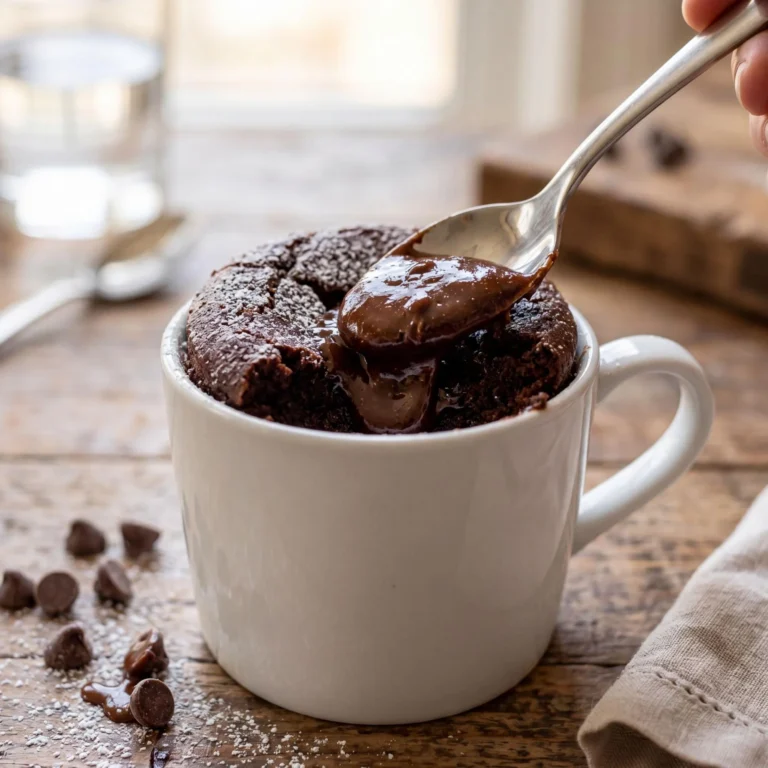
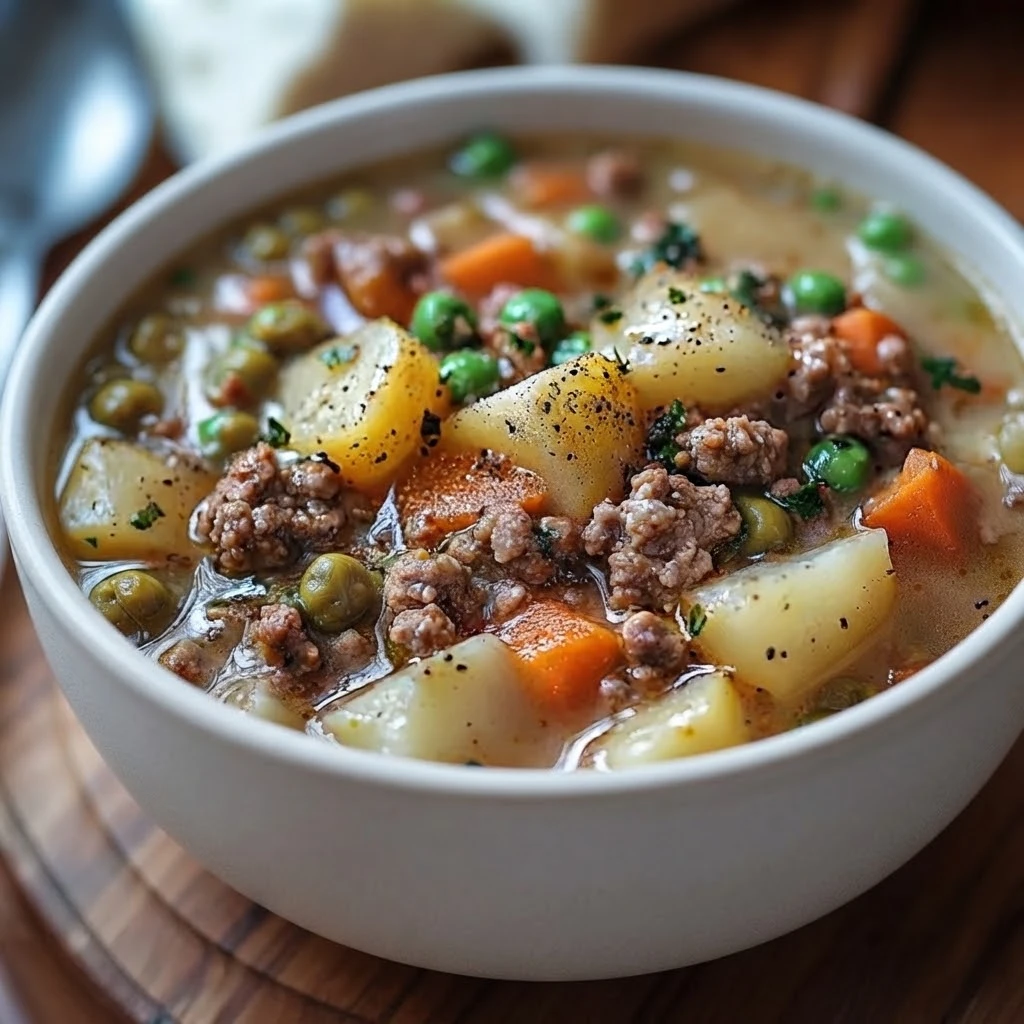
Creamy Potato Hamburger Soup
This is a soup built from four cheap things, and it works because of one decision most recipes get wrong.
Potato soup gets its body from potato starch, not from flour or cream. Russets break down as they simmer and thicken the pot from the inside. Use a waxy potato instead and you end up with chunks floating in thin broth, which is the usual complaint about this soup.
The ground beef does the rest. Browned properly, it leaves fond on the bottom of the pot, and that fond is where most of the flavor comes from.
One pot, about forty minutes, feeds six.
Why You Will Make This Again
Four reasons, and none of them are about how it looks.
It costs almost nothing. A pound of ground beef and two pounds of potatoes feeds six people. Most of the rest is pantry staples you already have.
It thickens itself. Russet starch does the work that cream and flour do in other soups. That means you need less dairy than a potato soup recipe usually calls for, and the texture holds up better.
It is genuinely filling. 29 grams of protein and 39 grams of carbs per bowl. One bowl works as a meal rather than as a starter you eat before something else.
Leftovers improve. The potatoes keep absorbing the broth overnight, and the thyme and beef settle into each other. Day two is better than day one, which is not true of most soups.
Step-by-Step Instructions
Step 1: Brown the Beef
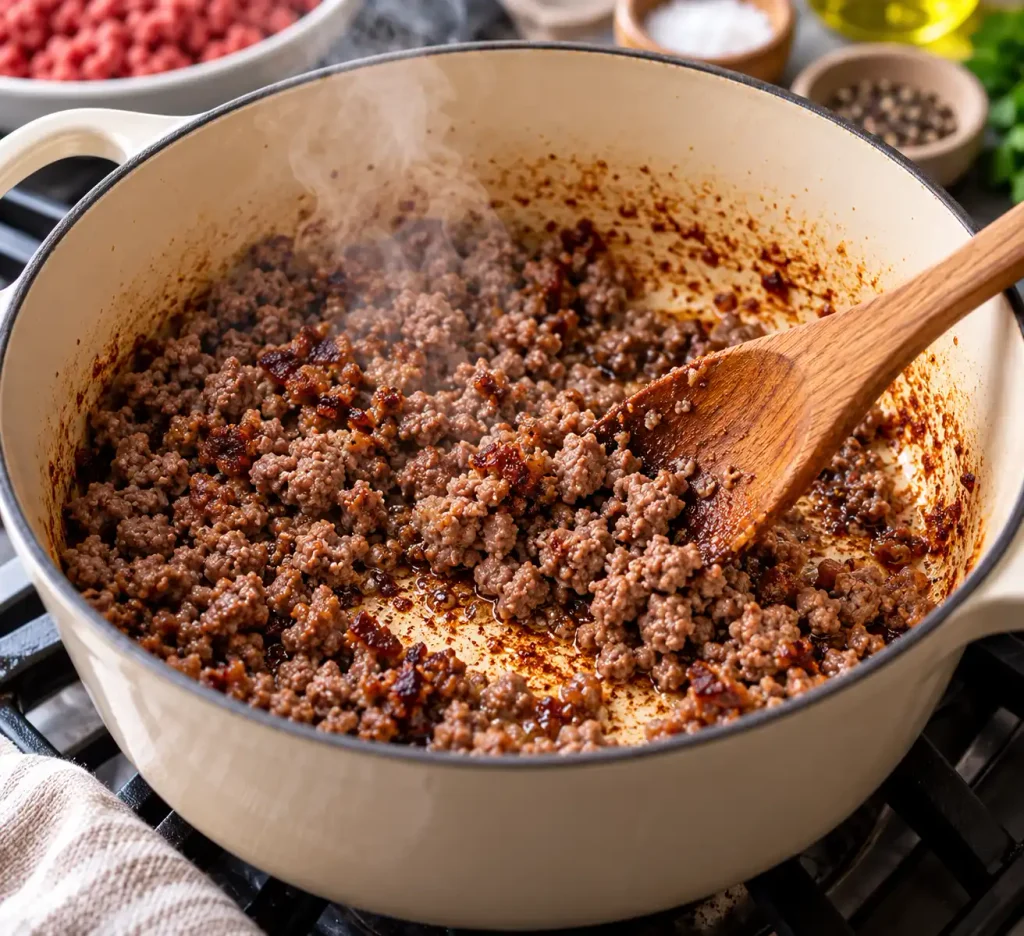
Heat a large heavy pot over medium-high. Add the ground beef and cook for 6 to 8 minutes, breaking it into small pieces.
Cook until no pink remains and some of it has browned on the bottom of the pot.
Those browned bits are the point. Grey beef tastes like nothing. Browned beef leaves fond stuck to the pot, and that fond ends up in the broth.
Drain the fat but leave the brown bits behind.
Step 2: Soften the Vegetables
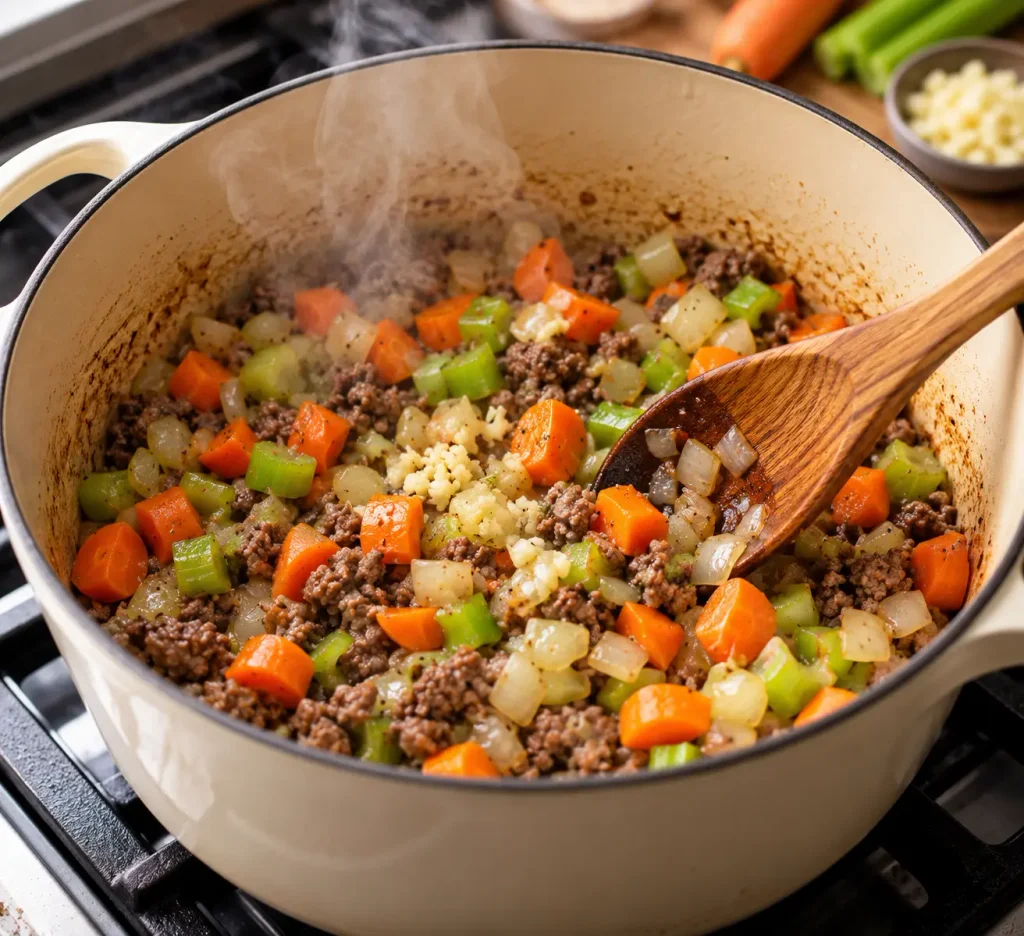
Add the onion, carrots, and celery to the same pot. Cook for 5 to 7 minutes, stirring and scraping the bottom as the vegetables release their moisture.
That moisture lifts the fond off the pot, which is exactly what you want.
Add the garlic and cook 30 seconds more.
Step 3: Simmer the Potatoes
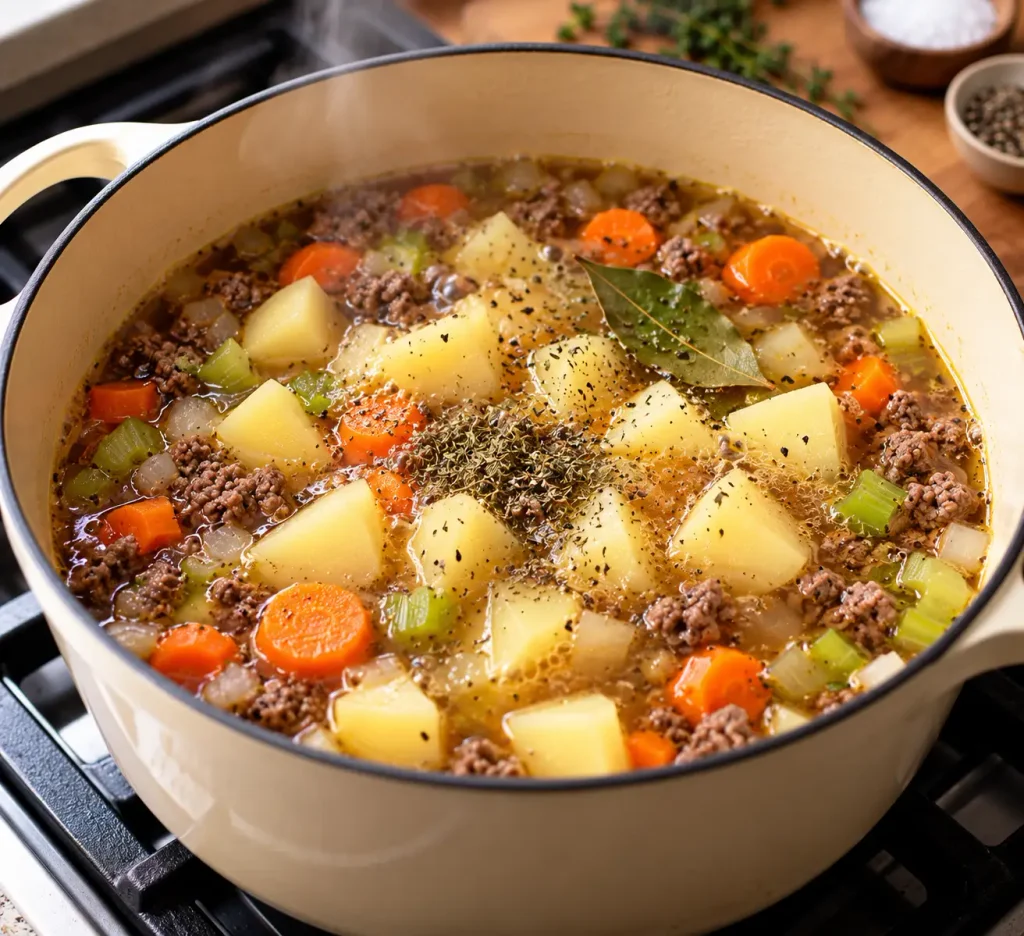
Add the potatoes, beef broth, salt, pepper, thyme, and bay leaf.
Bring to a gentle simmer, cover, and cook 15 to 18 minutes, until a fork slides into a cube with no resistance.
Keep it at a simmer, not a boil. Hard boiling breaks the potatoes apart too fast and the soup turns to paste.
Step 4: Make the Roux Separately
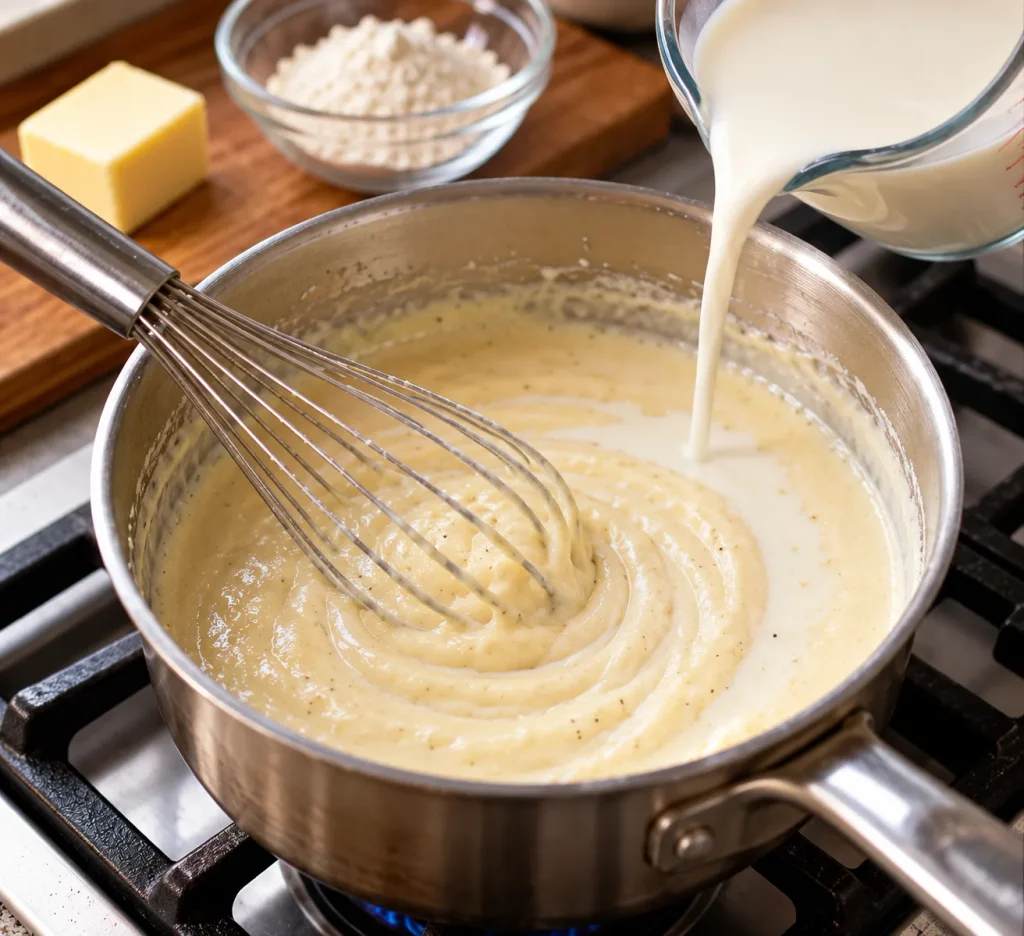
While the potatoes simmer, melt the butter in a small saucepan over medium heat.
Whisk in the flour and cook 1 to 2 minutes, until it looks like wet sand and smells nutty.
Pour in the milk slowly, in a thin stream, whisking the whole time. Then the cream. Keep whisking about 3 minutes until smooth and thickened.
Make this in its own pan. Flour thrown into a pot of soup clumps, and those lumps never break down.
Step 5: Mash Some of the Potatoes
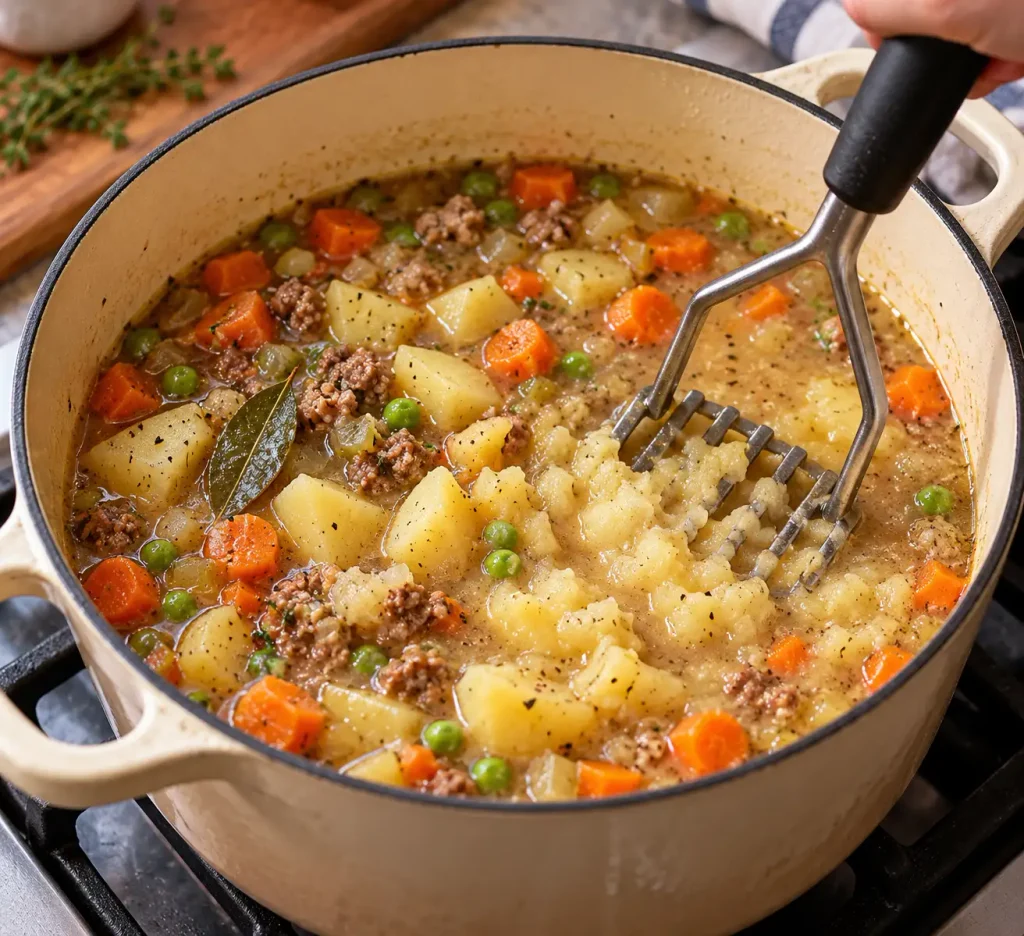
Remove the bay leaf. Using a potato masher, mash roughly a third of the potatoes directly in the pot.
Work around the pot rather than in one spot.
Do not use a blender. Even a few seconds with an immersion blender turns this into purée, and there is no going back. If you want it smoother, just mash more.
Step 6: Add the Cream Mixture
Pour the roux into the soup and stir until combined. Let it heat through on low for 5 minutes.

Step 7: Heat Off, Then Cheese
Turn the heat off completely. Wait about two minutes for the bubbling to stop.
Add the cheddar in three handfuls, stirring each one in until melted before the next.
This is where cheese soups go wrong. Added to a pot still on the heat, cheese seizes into stringy clumps. Off the heat, residual warmth melts it smoothly.

Step 8: Season and Serve
Taste and adjust the salt. It will need more than you expect, since potatoes absorb seasoning heavily.
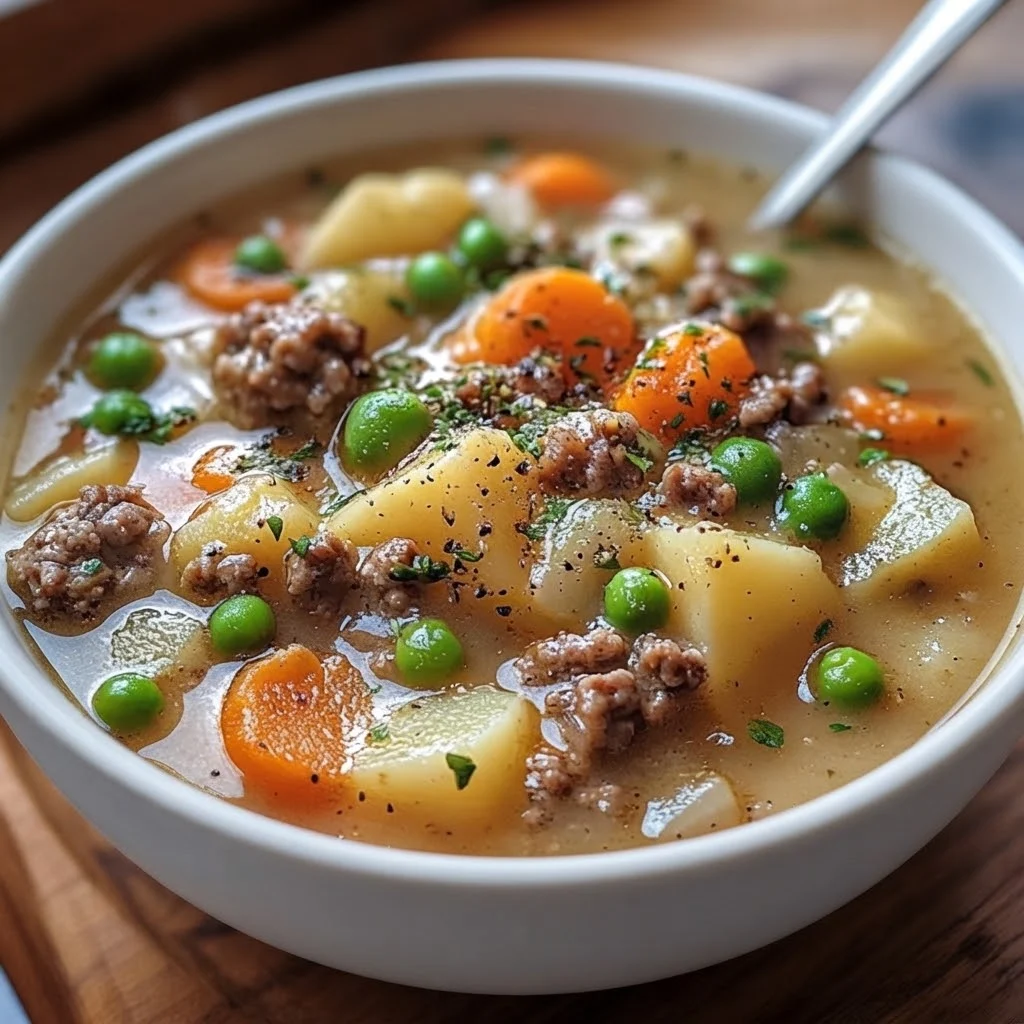
Serve with extra cheddar on top, chopped chives, or crumbled bacon.
Add extra shredded cheddar, chopped chives, or crumbled bacon just before serving.
Variations
Cheeseburger style. Finish with diced pickles, a spoon of mustard stirred into the broth, and extra cheddar. It tastes more like a burger than it sounds.
Bacon. Six slices cooked crisp first, then brown the beef in the bacon fat. Crumble the bacon on top rather than stirring it in, so it stays crisp.
With corn. A cup of frozen corn added with the potatoes. Adds sweetness against the savory beef.
Spicier. A diced jalapeño with the onion, or a half teaspoon of smoked paprika with the thyme.
Loaded potato style. Skip the beef entirely and top with bacon, chives, and sour cream.
Storage and Reheating
Refrigerator, 4 days. It thickens considerably as it chills, which is normal. The potatoes keep absorbing broth.
Reheating. Low heat on the stovetop, stirring, with a splash of broth or milk to loosen it. Never let it boil, since reheating splits a cheese soup exactly the way overheating it the first time does.
Microwave. A single bowl at 50% power in 60-second bursts, stirring between each.
Freezing is not recommended. Dairy separates and potatoes go mealy when frozen and thawed. If you want to freeze some, make it through Step 3, freeze that base, and add the roux and cheese fresh when you reheat.
Day two is better. Worth knowing if you are cooking ahead. The thyme and beef settle into the broth overnight.
Frequently Asked Questions
Why did my soup turn out grainy?
Pre-shredded cheese, or cheese added while the pot was still hot. Grate from a block and turn the heat off completely first.
Can I use ground turkey instead of beef?
Yes. Use 93% lean dark meat rather than breast, which goes dry. The lighter version above covers the full set of swaps.
Do I have to peel the potatoes?
For a smooth soup, yes. Russet skins turn leathery as they simmer. If you want the skins in, use Yukon Golds, which have thinner skins.
Can I make this in a slow cooker?
Brown the beef and soften the vegetables on the stovetop first, then transfer everything except the dairy to the slow cooker. Cook on LOW for 6 hours, mash, then add the roux and cheese in the final 20 minutes with the heat off.
How do I make it thicker without flour?
Mash more potatoes. Their starch does the job better and does not risk a pasty taste.
Can I make it ahead for a crowd?
Make it through Step 5, cool, and refrigerate. Reheat gently and add the cream mixture and cheese just before serving. This avoids any reheating split entirely.
Is there a dairy-free version?
Use olive oil for the roux, unsweetened oat milk in place of the dairy, and nutritional yeast instead of cheddar. The texture holds, though the flavor is noticeably different.
Final Thoughts
Two decisions make this soup. Use russets so it thickens itself, and turn the heat off before the cheese goes in.
Get those right and the rest is hard to ruin. One pot, forty minutes, six bowls.
Save this recipe now so it is ready the next time the weather turns.