Potato-Crusted Quiche Recipe: A Perfect Breakfast or Brunch Dish
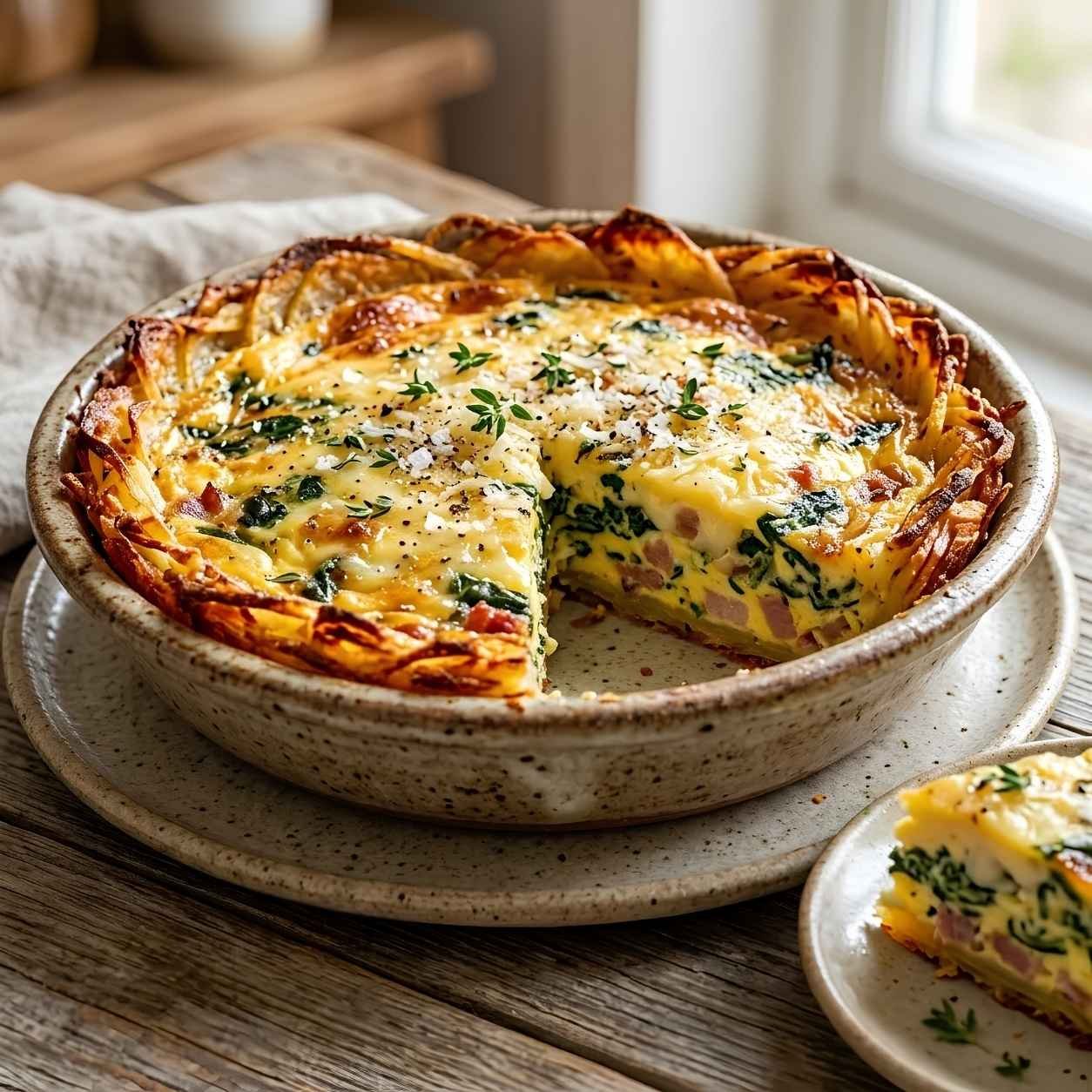
Quiche is a classic dish that’s as versatile as it is delicious. While a traditional quiche crust can be made with a buttery pastry, we’re taking a fun twist on it with a potato crust.
This potato-crusted quiche recipe combines the creamy, egg-based filling of a quiche with the crispy, savory goodness of potatoes to create a satisfying meal that’s perfect for any time of the day.
Whether you’re making it for breakfast, brunch, or dinner, this easy recipe is sure to become a family favorite.
Why Make Potato-Crusted Quiche?
Potato-crusted quiche takes all the things you love about a traditional quiche, cheese, eggs, and vegetables, and pairs them with the crispy, hearty texture of potatoes. Here’s why you should try this recipe:
- A Crispy Twist: The golden, crispy potato crust adds an extra layer of flavor and texture that’s different from your typical pastry crust.
- Gluten-free friendly: The crust uses no flour. Check your bacon and shredded cheese labels, since some brands contain gluten-based additives.
- Customizable: The beauty of quiche is its versatility. You can add whatever ingredients you have on hand, such as bacon, spinach, or mushrooms.
- Perfect for Any Meal: Whether served as a breakfast, brunch, or even a light dinner, this quiche is satisfying without being heavy.
Why Homemade Is Better Than Store-Bought Quiche
Frozen quiche exists and it is fine, but three things separate a homemade one.
The crust. Frozen quiche uses a pastry shell built to survive freezing and reheating, which means it is thick and doughy rather than crisp. A potato crust cannot be mass-produced this way, because it softens the moment it is frozen and thawed.
The custard ratio. Commercial fillings run heavy on egg and light on cream, since egg is cheaper and sets more reliably in a factory. The result sets firm rather than silky.
What goes in it. Homemade means real bacon rather than bacon pieces, cheese you grated yourself rather than shredded blend, and vegetables cooked the same morning. You also control the salt, which frozen quiche is generally loaded with.
Ingredients for Potato-Crusted Quiche
The ingredients are simple, and many of them are staples you likely already have in your kitchen. Here’s what you’ll need:
For the Potato Crust:
- 4 large potatoes (Yukon Gold or Russet work best)
- 2 tablespoons butter, melted
- Salt and pepper to taste
For the Quiche Filling:
- 6 large eggs
- 1 cup heavy cream (or whole milk for a lighter version)
- 1 cup shredded cheese (cheddar, Swiss, or your favorite variety)
- 1 cup cooked spinach (or any other vegetable of your choice)
- 1/2 cup cooked bacon (optional, but adds great flavor)
- 1/4 teaspoon garlic powder (optional)
- 1/4 teaspoon onion powder (optional)
- Salt and pepper to taste
Step-by-Step Potato-Crusted Quiche Recipe
Step 1: Shred and Dry the Potatoes
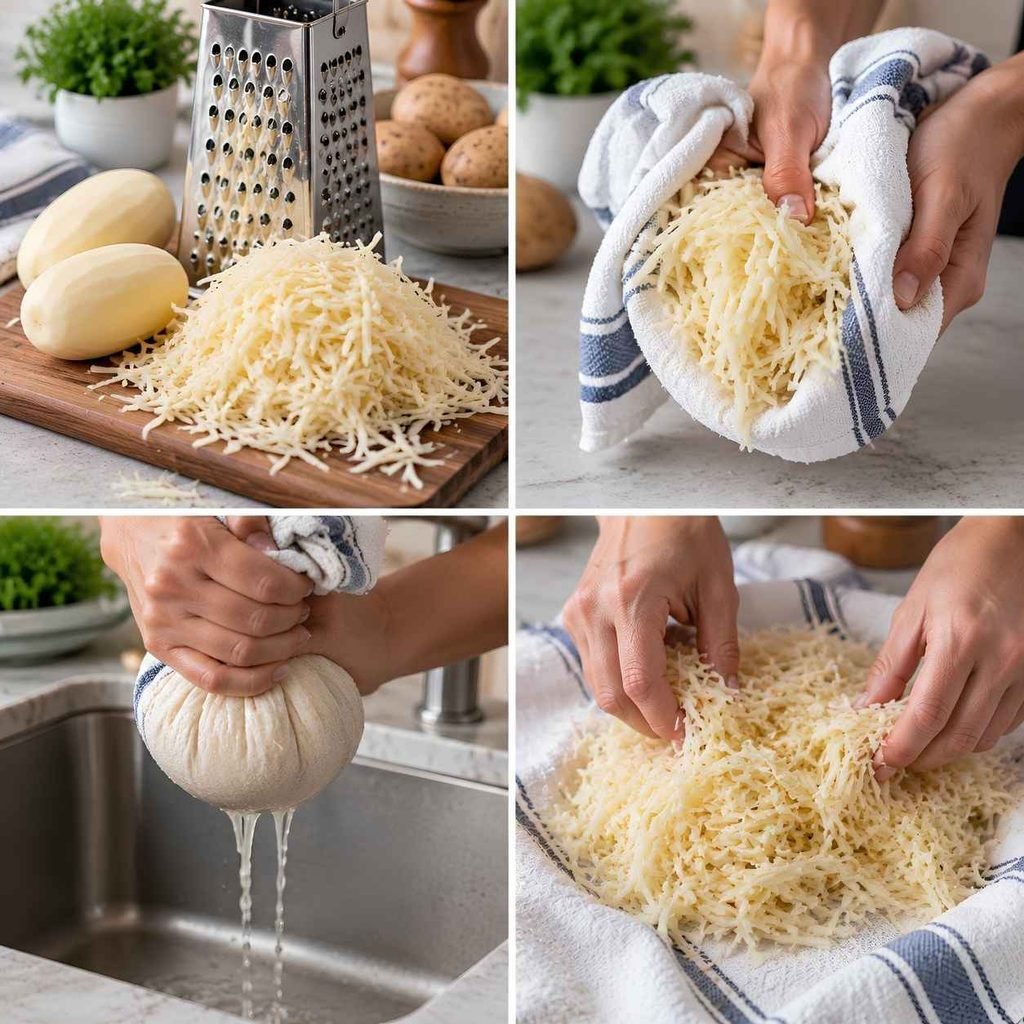
Peel 2 medium Russet potatoes and shred them on the large holes of a box grater, or use the shredding disc on a food processor. You want long strands rather than fine shreds, since fine shreds pack too densely and steam instead of crisping.
Pile the shredded potato into the center of a clean kitchen towel. Gather the corners, twist the top closed, and wring it hard over the sink. Liquid will run out immediately. Keep twisting until it slows to a drip.
Open the towel, break up the compressed potato with your fingers, and wring it a second time. The second pass always yields more water than people expect, and this is the step that decides whether your crust crisps or goes soggy.
What you are looking for: the potato should feel damp but not wet, and it should not leave a puddle when you set it down.
Step 2: Season and Press the Crust
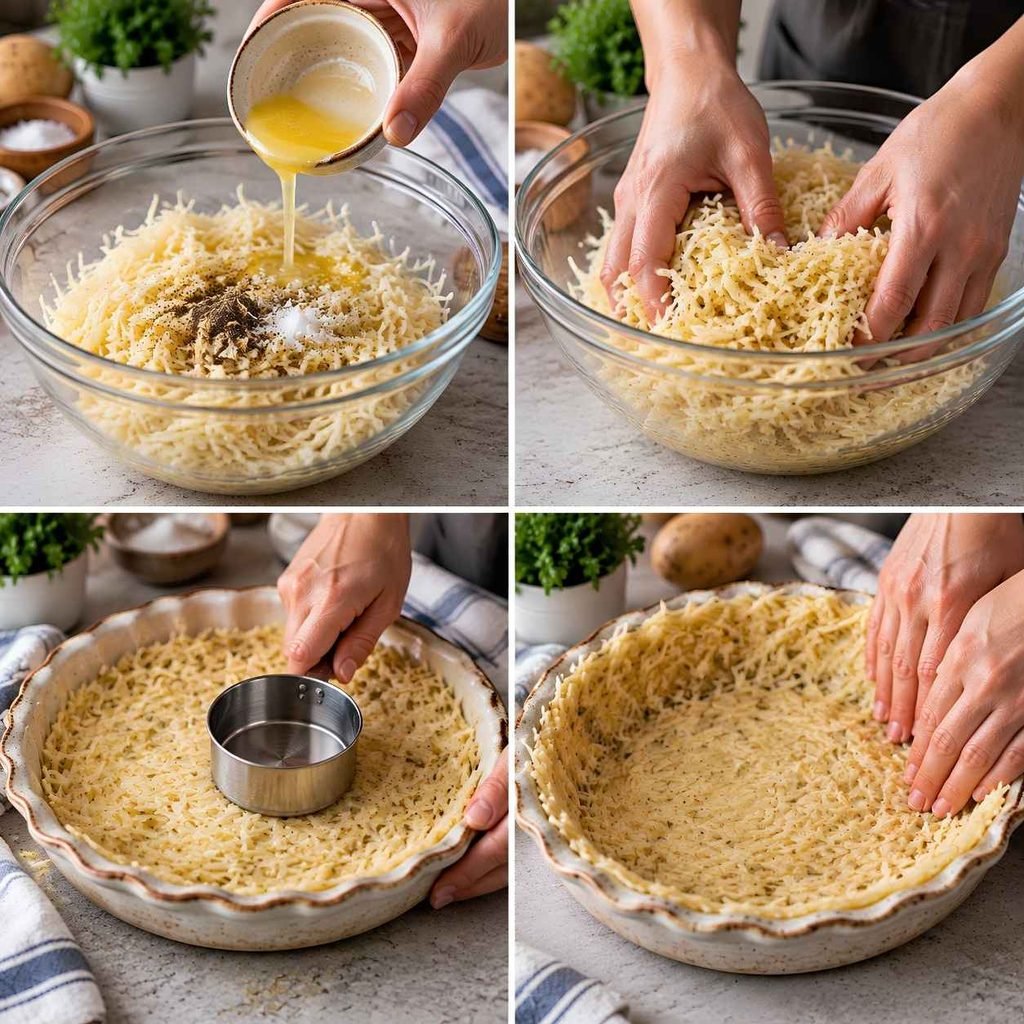
Preheat the oven to 375°F (190°C) and grease a 9-inch pie dish thoroughly, including the sides. Potato starch grips hard, so be generous.
Tip the squeezed potato into a bowl and add 2 tablespoons melted butter, ½ teaspoon salt, and ¼ teaspoon black pepper. Toss with your fingers until every strand is coated. Butter does two jobs here: it carries flavor and it helps the surface brown.
Press the mixture into the dish, starting with the base. Work from the center outward, pushing firmly with the back of a measuring cup or the flat of your palm. Aim for an even quarter-inch thickness across the bottom.
Then work up the sides. Press the potato against the wall of the dish, packing it tightly so it does not slide back down. Pay attention to the corner where the base meets the side, since that is where crusts crack and leak later.
What you are looking for: a tight, even shell with no thin patches you can see through and no gaps at the corner.
Step 3: Bake the Crust Until Genuinely Golden
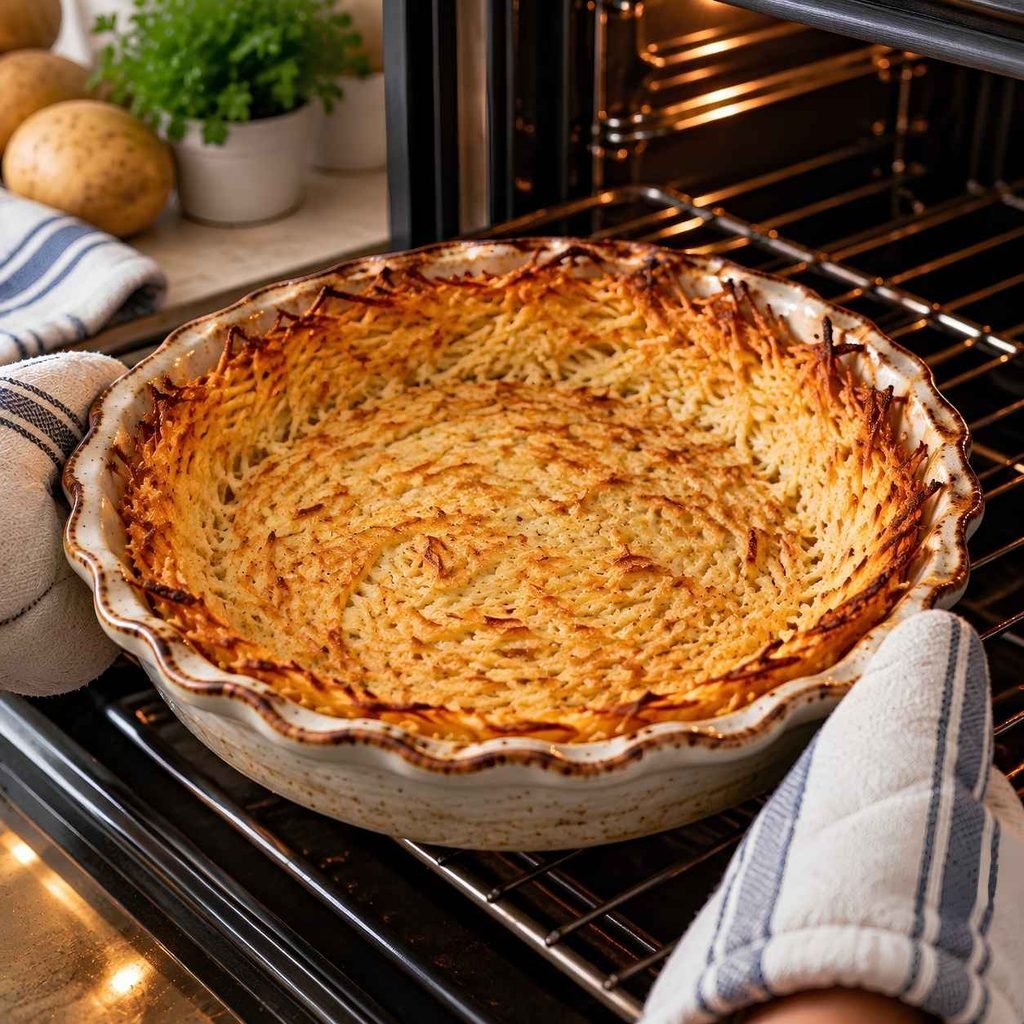
Slide the dish into the oven and bake for 20 to 25 minutes.
Start checking at 20. The edges should be deep golden and starting to darken, and the base should look dry rather than pale. Touch the center with a fingertip. It should feel firm and dry, not soft or damp.
If it still looks pale, give it another 5 minutes. A pale crust means there is water left in it, and that water will end up in your finished quiche.
Optional but worth doing: once the crust is out, brush a thin layer of beaten egg white over the whole inside surface and return it to the oven for 2 minutes. This seals the potato so the custard cannot soak into it. It takes almost no time and makes a visible difference to the bottom of each slice.
Set the crust aside and leave the oven on.
Step 4: Prepare the Fillings
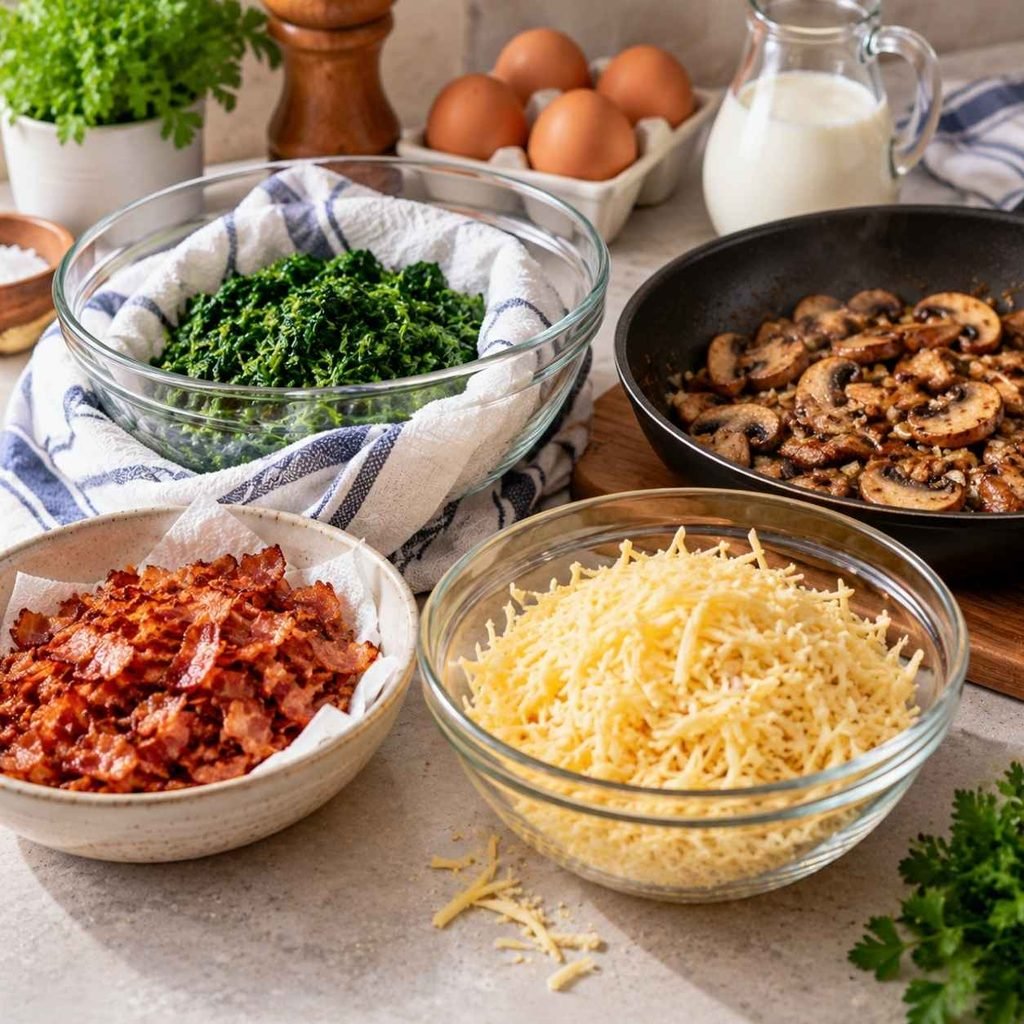
While the crust bakes, get everything that goes inside ready. This matters more than it sounds, because anything wet going into the custard will end up as liquid in the bottom of the dish.
Spinach: if using frozen, thaw it completely and wring it out in a towel exactly like you did the potatoes. If using fresh, wilt it in a dry pan, cool it, then squeeze. You will be surprised how much water comes out of what looks like a small handful.
Bacon: cook it until crisp, drain on paper towels, and chop. Soft bacon goes rubbery inside a custard.
Mushrooms, if substituting: sauté until they release their liquid and it evaporates, then keep going until they start to brown. Undercooked mushrooms are the most common cause of a watery quiche.
Cheese: grate it fresh from a block. Bagged shredded cheese is coated in starch that makes the custard slightly grainy.
Step 5: Whisk the Custard
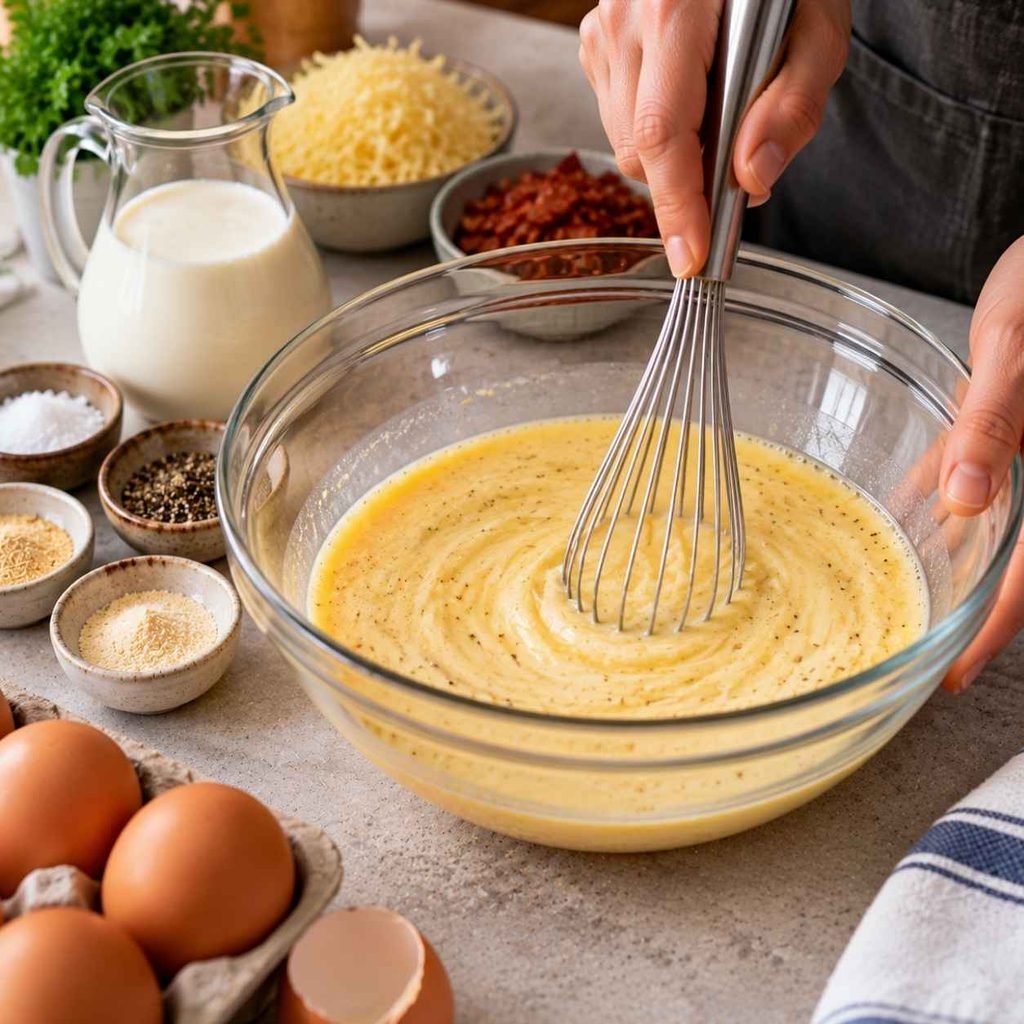
Crack 6 large eggs into a large bowl and whisk until the yolks and whites are fully combined with no streaks.
Pour in 1 cup heavy cream and whisk again, but only until smooth. Do not beat air into it. Air bubbles expand in the oven and leave the set custard full of holes.
Add ¼ teaspoon garlic powder, ¼ teaspoon onion powder, ½ teaspoon salt, and black pepper to taste. Whisk once more.
Room temperature eggs blend more evenly with the cream and set faster in the oven, which means less time for the crust to soften underneath. Pull them out 20 minutes ahead if you remember.
Step 6: Assemble
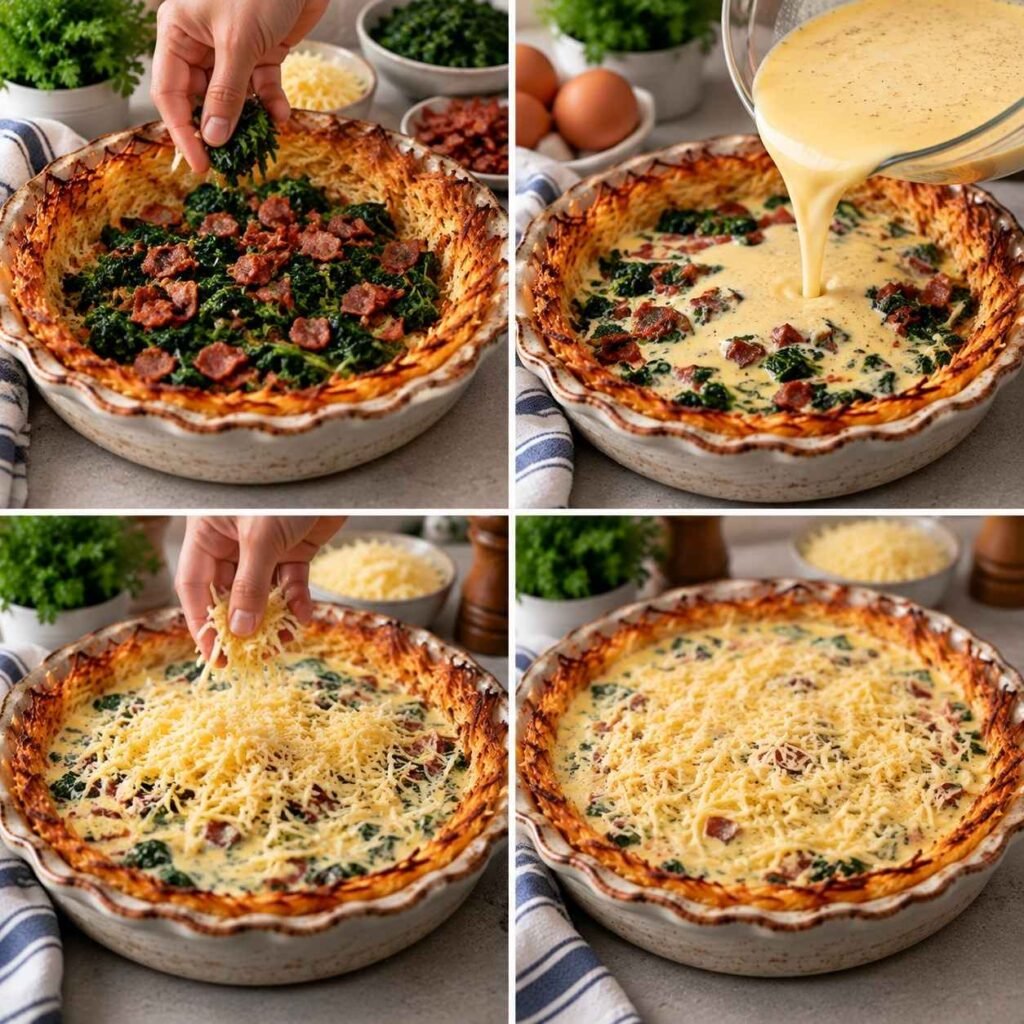
Scatter the spinach, bacon, and about two-thirds of the cheese evenly across the bottom of the baked crust. Spreading them out first, rather than stirring them into the liquid, keeps them from all sinking to one side.
Pour the custard over the top, slowly, letting it settle into the gaps.
Leave about a quarter inch of space at the top. Custard rises as it bakes, and an overfilled dish will spill over the rim and run down the sides.
Sprinkle the remaining cheese across the surface.
Step 7: Bake the Quiche
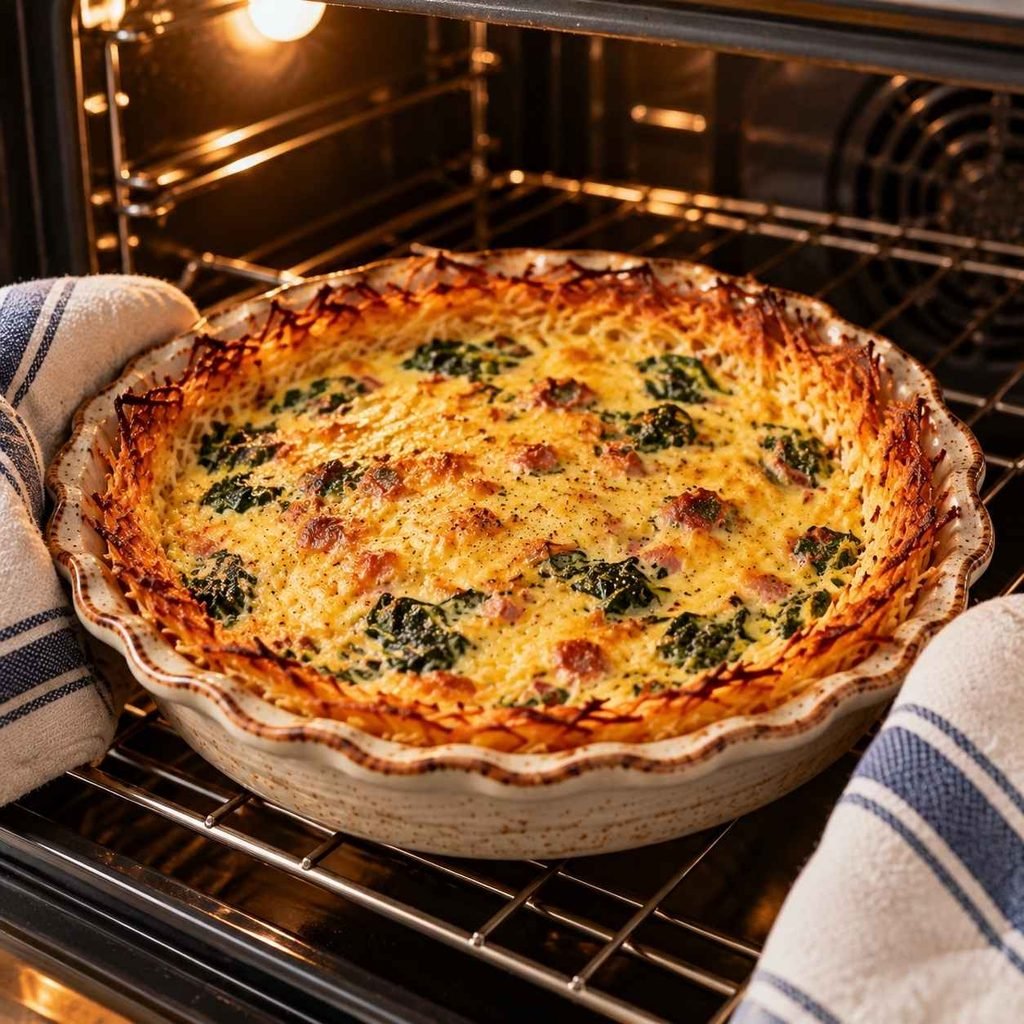
Return the dish to the oven and bake for 30 to 35 minutes.
Start checking at 30. The edges should be set and slightly puffed, and the top should be lightly golden. The center should still have a slight wobble when you shake the dish gently. Not liquid, but not firm either.
That wobble is correct. A quiche that is fully set in the oven will be overcooked by the time it reaches the table, because residual heat keeps cooking the eggs for another ten minutes.
If the top browns before the center sets, tent a piece of foil loosely over the dish and keep baking. Do not press the foil down onto the surface.
The knife test works, but read it carefully. Insert a thin knife about an inch from the center, not dead center. It should come out mostly clean with a trace of moisture. Dead center will read wet even when the quiche is ready.
Step 8: Rest Before Slicing
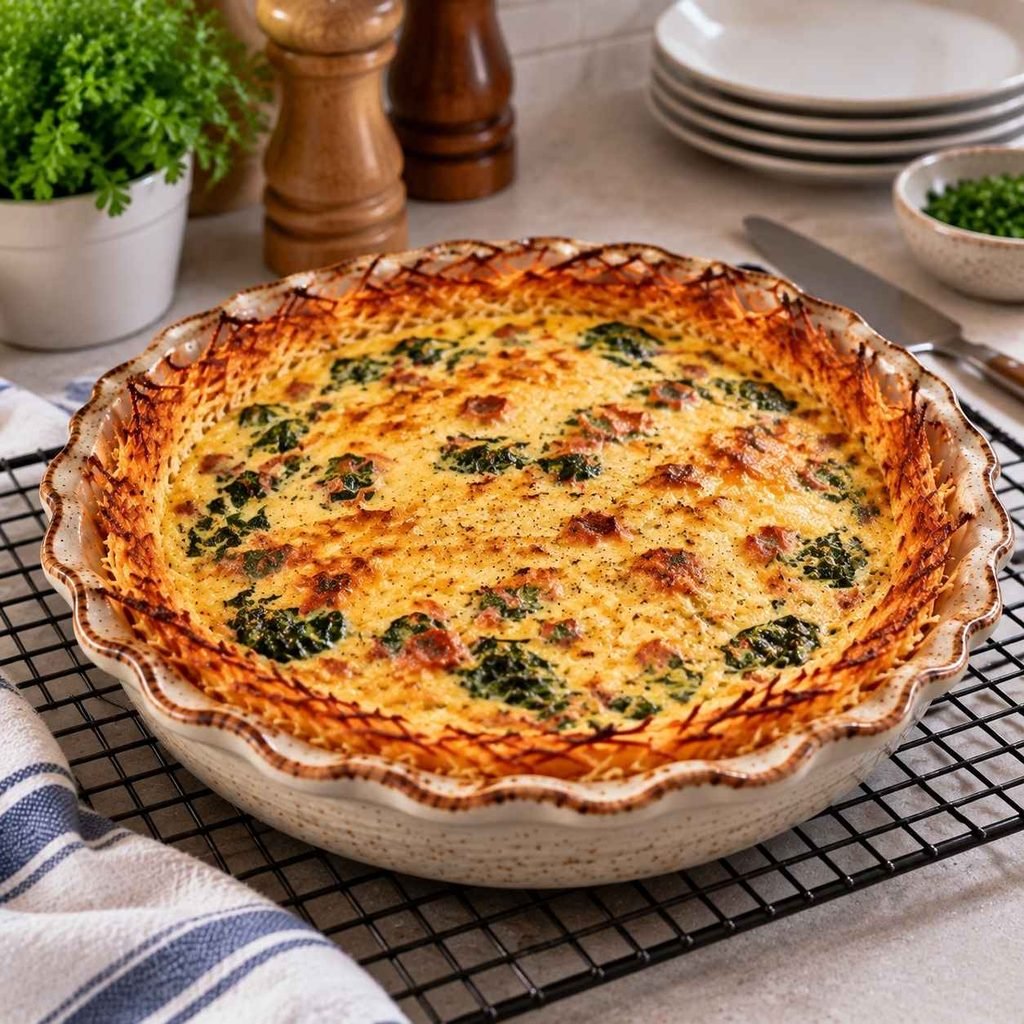
Take the quiche out and set it on a wire rack. Leave it alone for at least 10 minutes, ideally 15.
This is not optional if you want clean slices. The custard is still setting during this time, and cutting into it early gives you loose, collapsing wedges instead of neat ones.
Fifteen minutes also brings it down from oven-hot to the temperature where the flavors actually come through. Egg and cream both taste flat when they are too hot.
Step 9: Slice and Serve
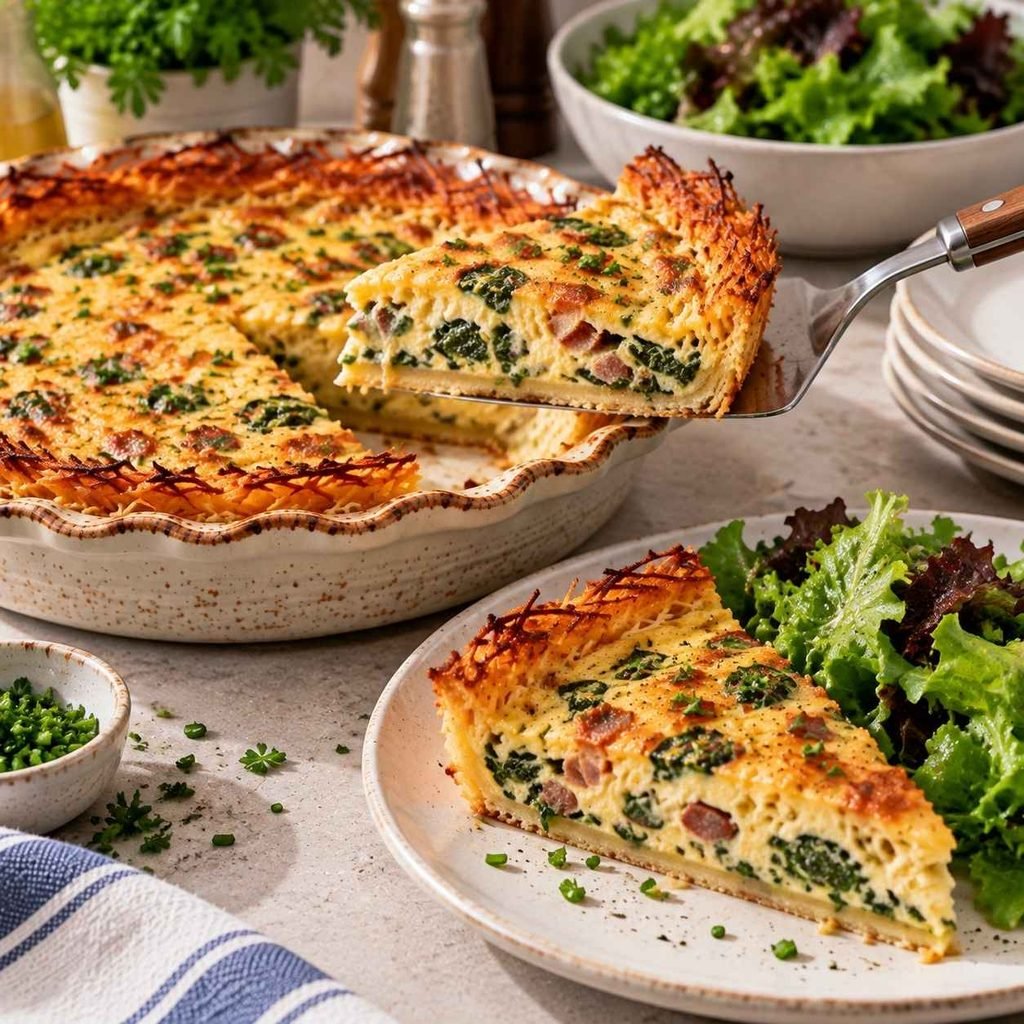
Run a thin knife around the edge of the dish first to release any crust that stuck to the side.
Cut into 8 wedges using a sharp knife, wiping the blade between cuts. Lift each slice out with a pie server, angling it under the crust rather than the filling.
Garnish with chopped chives or parsley if you have them. Serve warm or at room temperature, with a sharp green salad alongside.
Five Filling Variations
The crust and custard stay the same. Only the additions change.
Lorraine. Bacon, Gruyère, and caramelized onion. The classic combination, and the most forgiving since none of it releases water.
Mushroom and thyme. Sauté the mushrooms until they stop releasing liquid and start browning. Undercooked mushrooms are the single most common cause of a watery quiche.
Broccoli cheddar. Steam the broccoli, chop it small, and pat it dry. Sharp cheddar works better than mild here since the filling is otherwise plain.
Roasted red pepper and feta. Use jarred peppers, drained and patted dry. Feta is salty, so cut back on the added salt in the custard.
Ham and Swiss. Diced ham needs no pre-cooking, which makes this the fastest version. Swiss melts into the custard rather than sitting in pockets.
Potatoes are mostly water. Every one of these steps is about getting that water out before the custard goes in.
Make-Ahead and Timing Tips
Quiche is a good candidate for brunch precisely because parts of it can be handled ahead.
The night before. Shred, squeeze, and bake the crust completely. Cool it, cover, and leave it at room temperature. Cook the bacon and vegetables and refrigerate them separately.
The morning of. Whisk the custard, add the fillings, pour into the crust, and bake. This cuts your active morning work down to about ten minutes.
Fully baked ahead. Bake the whole quiche the day before, cool completely, and refrigerate. Reheat at 325°F for about 20 minutes. The crust loses a little crispness but the flavor is arguably better on day two.
Do not assemble the night before and bake in the morning. The custard will soak into the crust overnight and you will lose the texture entirely.
Serving temperature. Warm or room temperature, not hot from the oven. Straight out, the custard is loose and the slices fall apart. Ten to fifteen minutes of rest makes clean slicing possible.
What Is a Potato Crust?
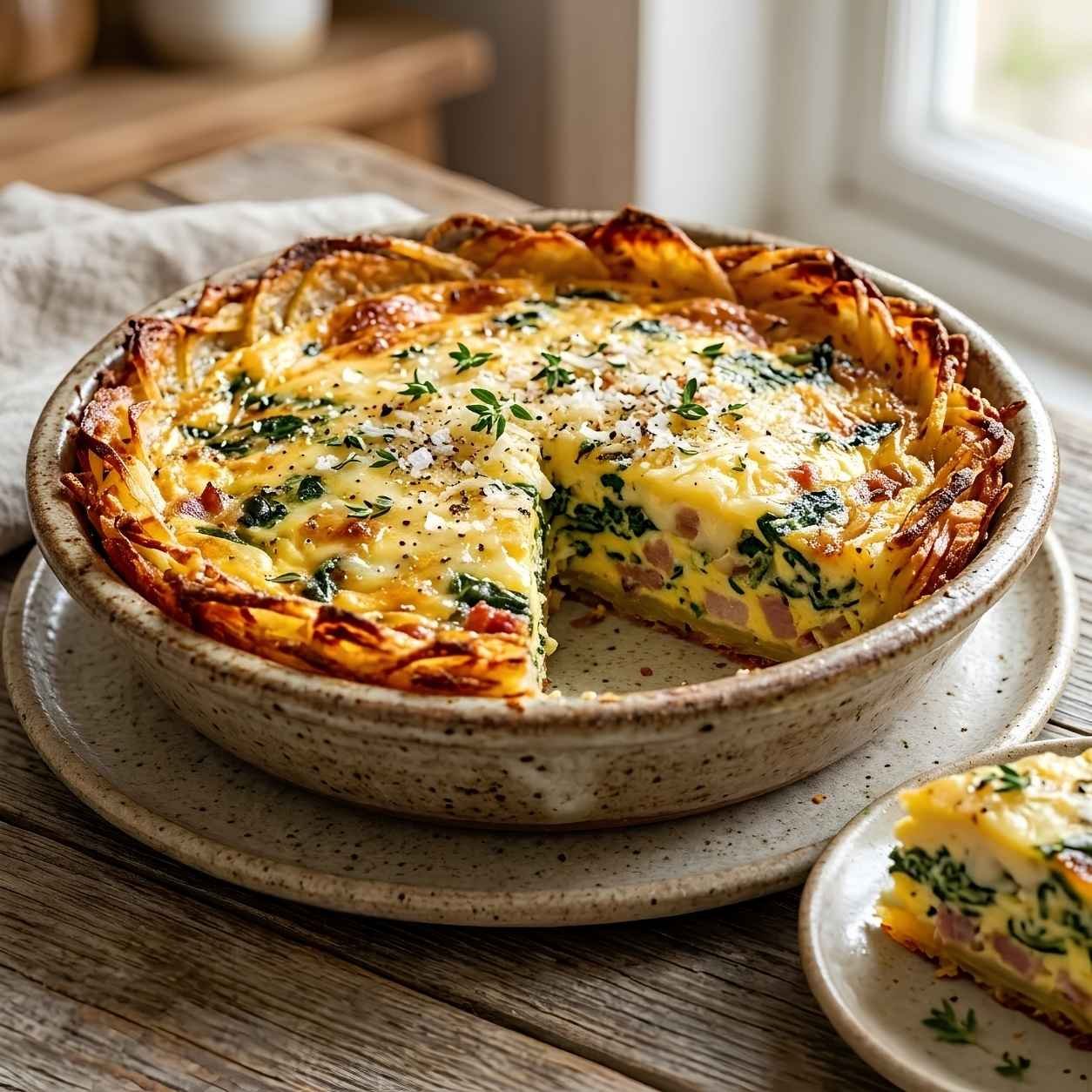
A potato crust replaces the pastry shell with a layer of shredded potato, pressed into the dish and baked until it crisps and holds its shape.
It works because of starch. When shredded potato is squeezed dry and baked at high heat, the starch on the cut surfaces gelatinizes and then browns, binding the strands into something firm enough to slice against. The result is closer to a hash brown than to pastry, with crisp edges and a dense base.
Texture is where the two differ most. Pastry is flaky and short. A potato crust is crisp on the outside and slightly chewy underneath, and it browns much darker at the rim. It also holds up better to a wet filling once it is properly sealed.
How to Store and Reheat Potato-Crusted Quiche
If you have leftovers, store them in an airtight container in the fridge for up to 3 days. To reheat, place individual slices on a baking sheet and bake at 350°F (175°C) for about 10–15 minutes, or until heated through.
What to Serve With It
Quiche is rich, so the sides should be sharp and light rather than heavy.
A dressed green salad. Arugula with lemon vinaigrette is the standard pairing for a reason. The acid cuts through the cream.
Fresh fruit. Melon, berries, or citrus segments. Especially good for brunch when the table already has enough savory on it.
Roasted asparagus or green beans. For a dinner version, when the plate needs something more substantial than salad.
Good bread and butter. If you are feeding a crowd and the quiche needs stretching.
Coffee or a dry sparkling wine. Both work against the richness. Skip anything sweet.
Estimates based on 8 slices with cream, cheddar, spinach, and bacon. Milk instead of cream brings this down by about 70 calories a slice.
Frequently Asked Questions
Can I freeze this quiche?
Yes, this quiche freezes well. After baking, let it cool completely, then wrap it tightly in plastic wrap and foil. Freeze for up to 2 months. To reheat, thaw overnight in the fridge and bake at 350°F (175°C) until heated through.
Can I make this recipe dairy-free?
Yes, you can substitute the heavy cream with a dairy-free alternative like coconut cream or almond milk. You can also use dairy-free cheese for the filling.
Can I use store-bought pie crust instead of the potato crust?
Yes, if you’re short on time, you can use a pre-made pie crust. However, the potato crust adds a delicious texture and flavor that makes this recipe stand out.
Final Thoughts
This potato-crusted quiche recipe is a delicious and hearty dish that’s perfect for any occasion. Whether you’re hosting a brunch or preparing a simple family meal, this quiche is sure to impress.
The crispy potato crust combined with the creamy, cheesy filling makes every bite a flavor-packed experience. Try this recipe today and enjoy a savory, satisfying meal that’s sure to become a favorite in your household.