Easy Greek Lemon Rice Recipe: Fresh, Fragrant, and Perfectly Fluffy
There is one thing that decides whether this comes out fluffy or slightly crunchy, and most recipes get it wrong.
Lemon juice cannot go in before the rice cooks. Acid interferes with how starch absorbs water, so rice simmered in lemony broth stays firm in the center no matter how long you leave it. The grains never quite soften.
The zest is fine from the start, since the flavor there lives in the peel oils rather than in acid. The juice goes in at the end, stirred through while you fluff.
Do that, rinse the rice first, and you get what this dish is supposed to be: separate grains, bright with lemon, soft all the way through. About 30 minutes, one pot.
Why Greek Lemon Rice Works
Three things make this different from plain rice with lemon squeezed over it.
The rice is toasted first. A minute or two in oil before the liquid goes in coats each grain in fat, which helps them stay separate rather than clumping. It also adds a faint nuttiness underneath the lemon.
It cooks in broth, not water. This is the difference between rice that tastes seasoned and rice that needs salt at the table. The broth is doing most of the savory work.
The acid comes last. Bright and sharp because it never had a chance to cook off. Lemon simmered for twenty minutes tastes dull and slightly bitter. Lemon stirred in at the end tastes like lemon.

Ingredients
- 1 cup long-grain white rice or basmati, rinsed
- 1¾ cups chicken or vegetable broth
- 1 tablespoon olive oil
- 1 small onion, finely chopped
- 2 cloves garlic, minced
- 1 teaspoon dried oregano
- ½ teaspoon salt
- ¼ teaspoon black pepper
Added at the End
- Zest of 1 lemon (goes in with the broth)
- 3 tablespoons fresh lemon juice (goes in after cooking)
- 1 tablespoon fresh parsley, chopped
- 1 tablespoon olive oil, optional, for finishing
Two changes from the original. Broth cut from 2 cups to 1¾, and the lemon juice moved to the end. Together these are what make the difference between fluffy and slightly wet or firm.
Ingredient Tips
Long-grain or basmati, not short-grain. Short-grain rice is higher in the starch that makes grains stick together. That is good for risotto and wrong here, where the point is separate grains.
Rinse until the water runs clear. Usually three or four changes of cold water. This washes off the loose surface starch that otherwise glues the grains into clumps.
Fresh lemon, always. Bottled juice has no zest and tastes flat and slightly metallic. In a dish built on lemon, that is not something you can hide.
Zest before you juice. Zesting a squeezed half is awkward. Take the zest off first, then cut and squeeze.
Good broth matters. The rice absorbs all of it, so whatever the broth tastes like is what the rice tastes like. A weak, watery broth gives you weak, watery rice.
Step-by-Step Instructions
Step 1: Rinse the Rice
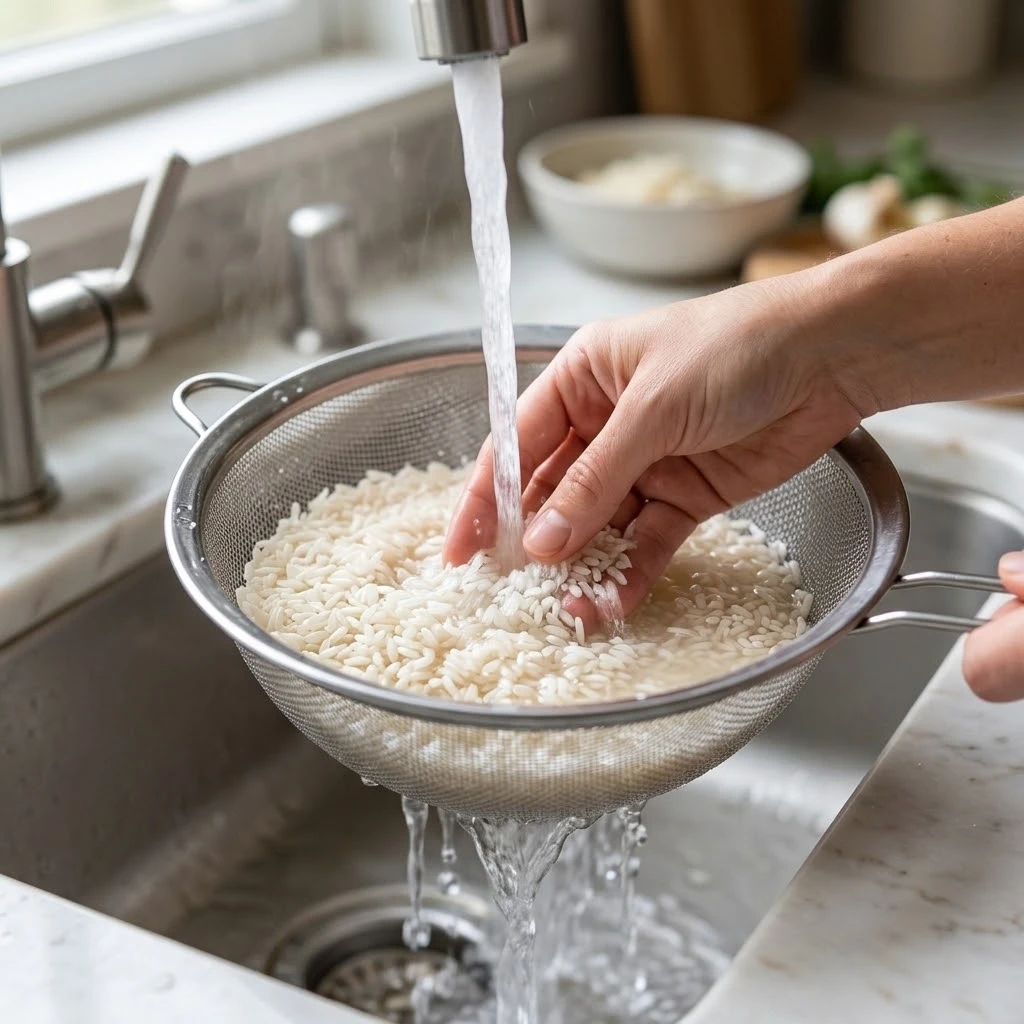
Put the rice in a fine sieve and rinse under cold running water, stirring it with your fingers, until the water runs clear. This usually takes three or four changes of water.
Shake it well to drain.
This step is why the grains stay separate. The cloudy water you are rinsing off is loose surface starch, and that starch is what glues rice into clumps.
Step 2: Soften the Onion
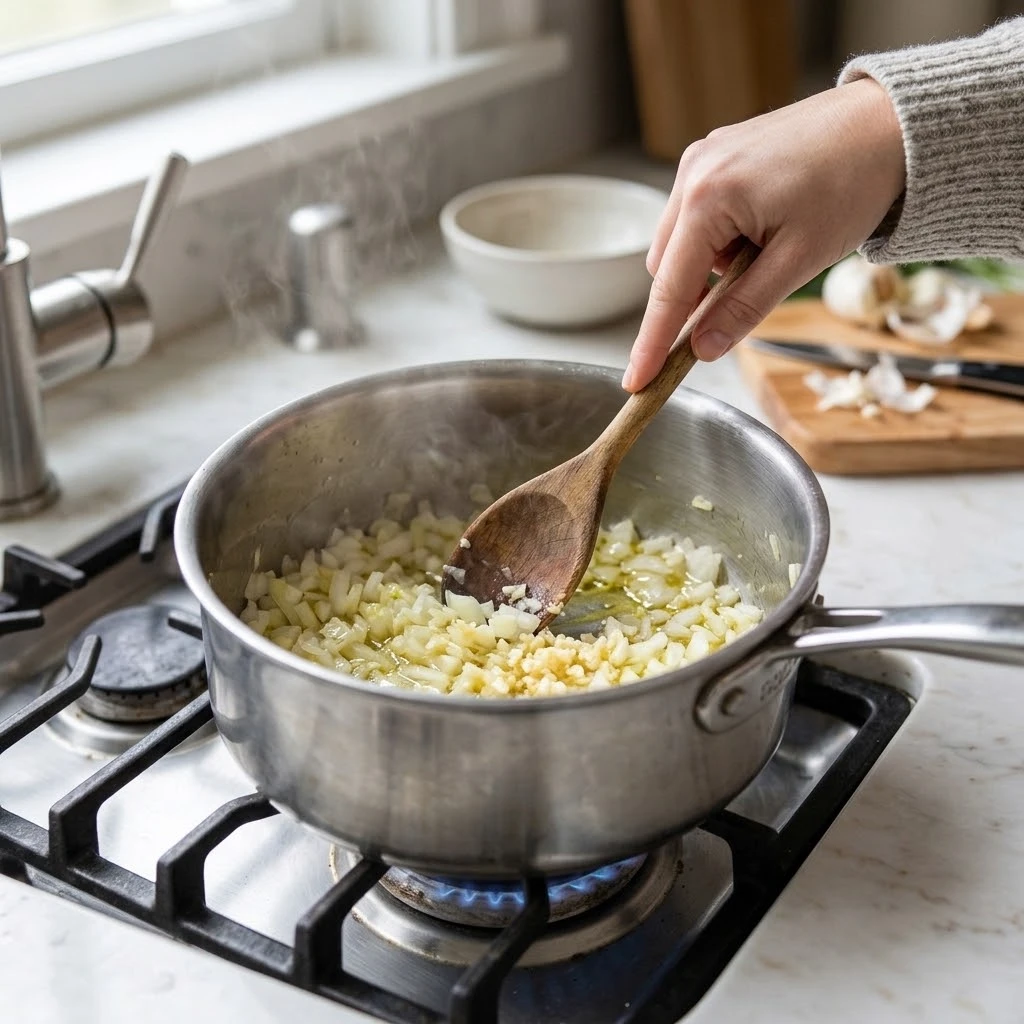
Heat the olive oil in a medium saucepan over medium heat. Add the chopped onion and cook for 2 to 3 minutes, until soft and translucent.
Add the garlic and cook 30 seconds more, just until fragrant. Garlic burns fast and turns bitter.
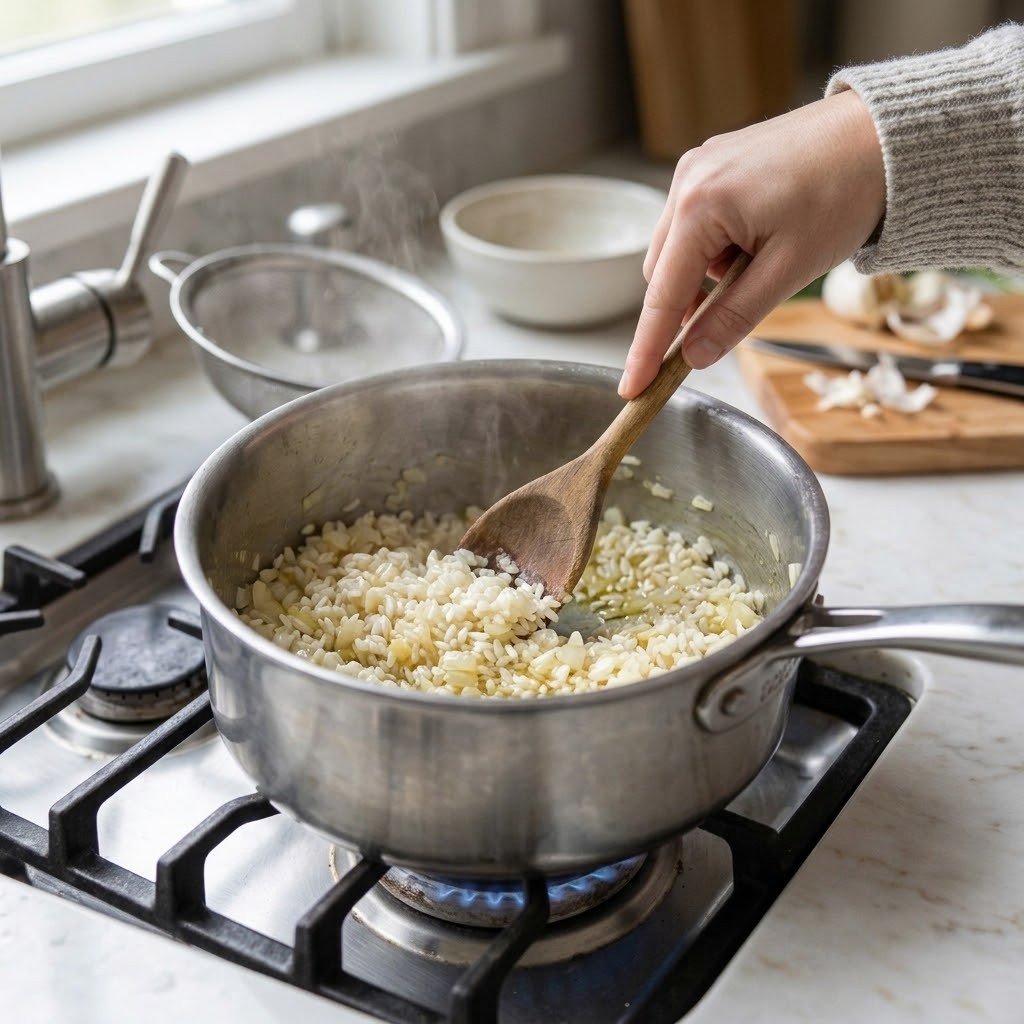
Step 3: Toast the Rice
Add the drained rice and stir for 1 to 2 minutes, until the grains look slightly translucent at the edges and smell faintly nutty.
This coats each grain in oil, which helps them cook separately rather than sticking together.
Step 4: Add the Broth and Zest
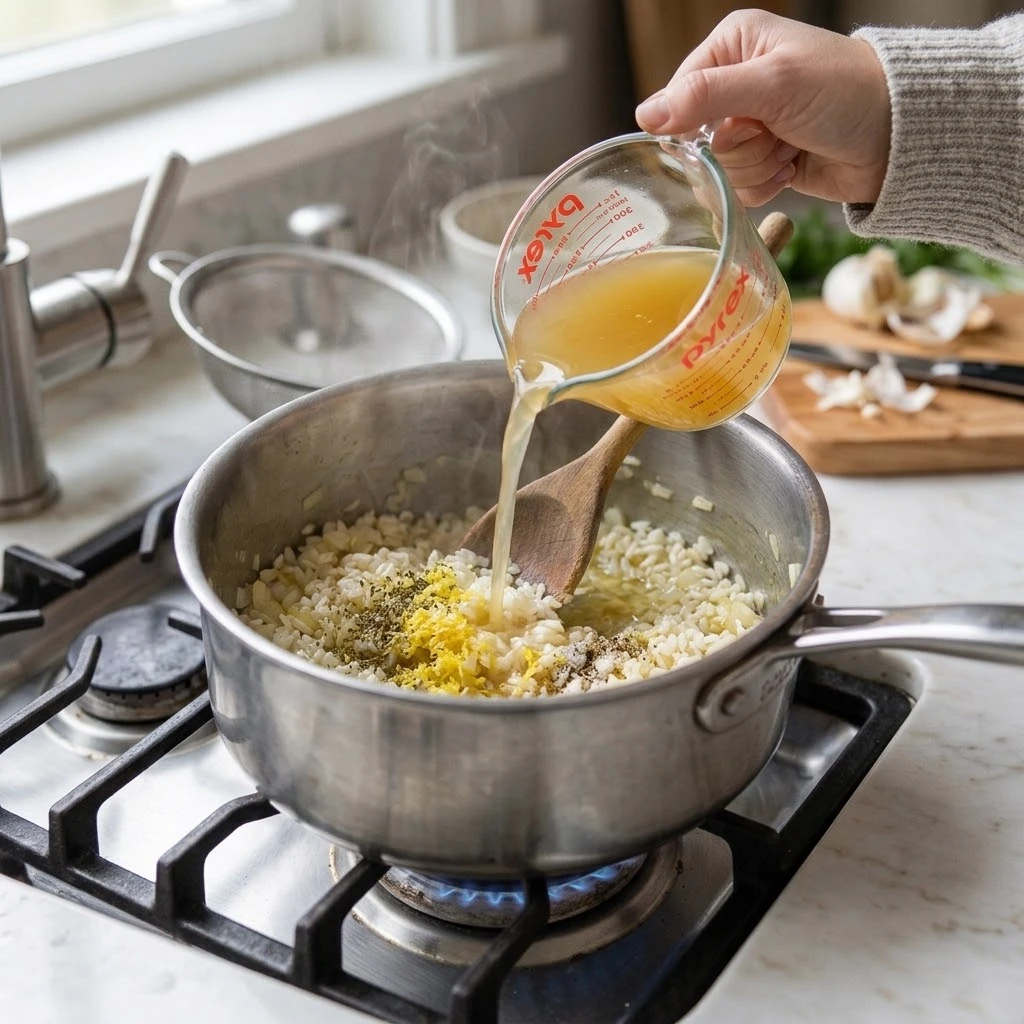
Pour in the broth and add the lemon zest, oregano, salt, and pepper. Stir once to combine.
The lemon juice does not go in yet. Only the zest, which has no acid in it.
Step 5: Simmer, Covered
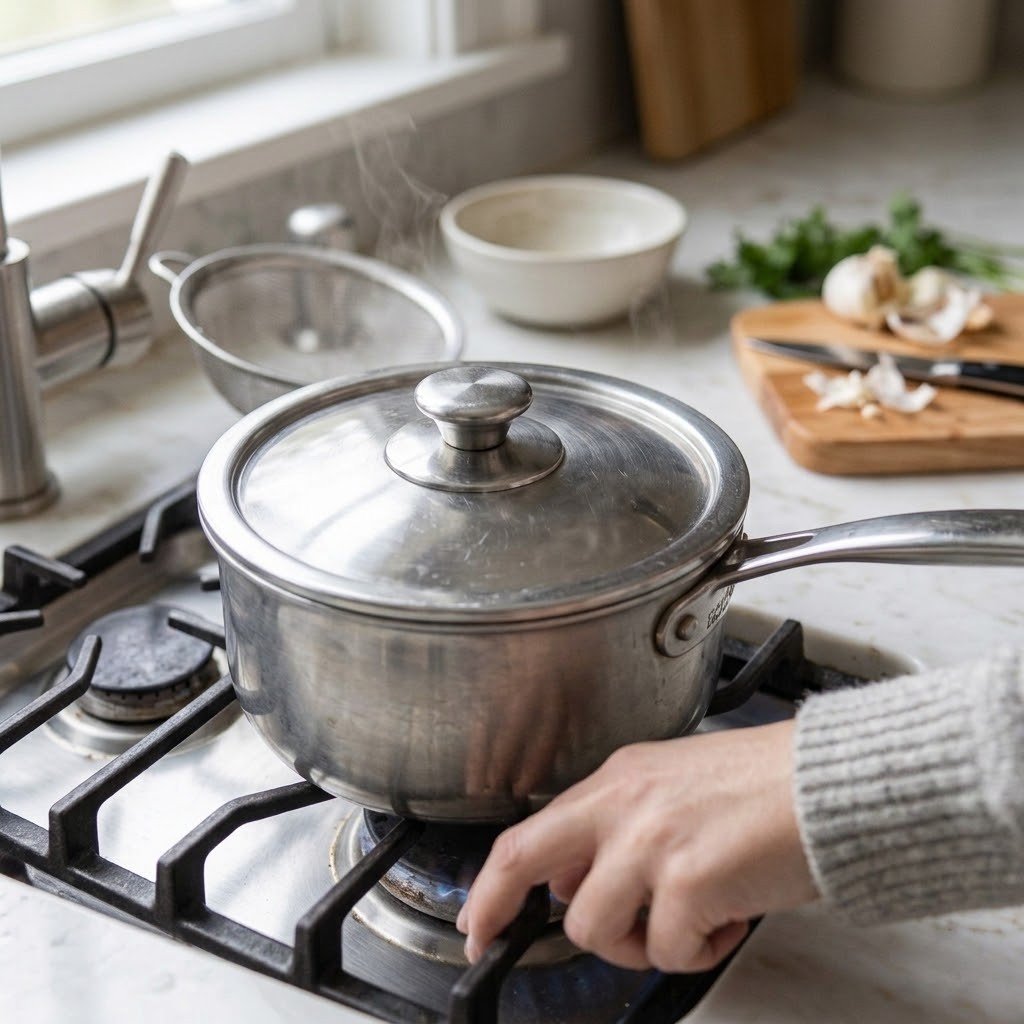
Bring to a boil, then immediately reduce the heat to low. Cover tightly and simmer for 18 minutes.
Do not lift the lid. Every peek releases the steam the rice is cooking in, and it adds several minutes to the cook time.
Step 6: Rest Off the Heat
Take the pan off the heat and leave it covered for 5 minutes.
The rice is still cooking here, absorbing the last of the steam. Skipping this gives you grains that are soft on top and firm at the bottom.
Step 7: Add the Lemon Juice and Fluff
Remove the lid. Pour the 3 tablespoons of lemon juice over the rice, along with the extra tablespoon of olive oil if using.
Fluff gently with a fork, lifting and separating rather than stirring. Stirring breaks the grains and makes the rice gummy.
This is the step the whole recipe was built around. The juice goes in now, when the rice is fully cooked, so the flavor stays bright instead of cooking off.
Step 8: Garnish and Serve
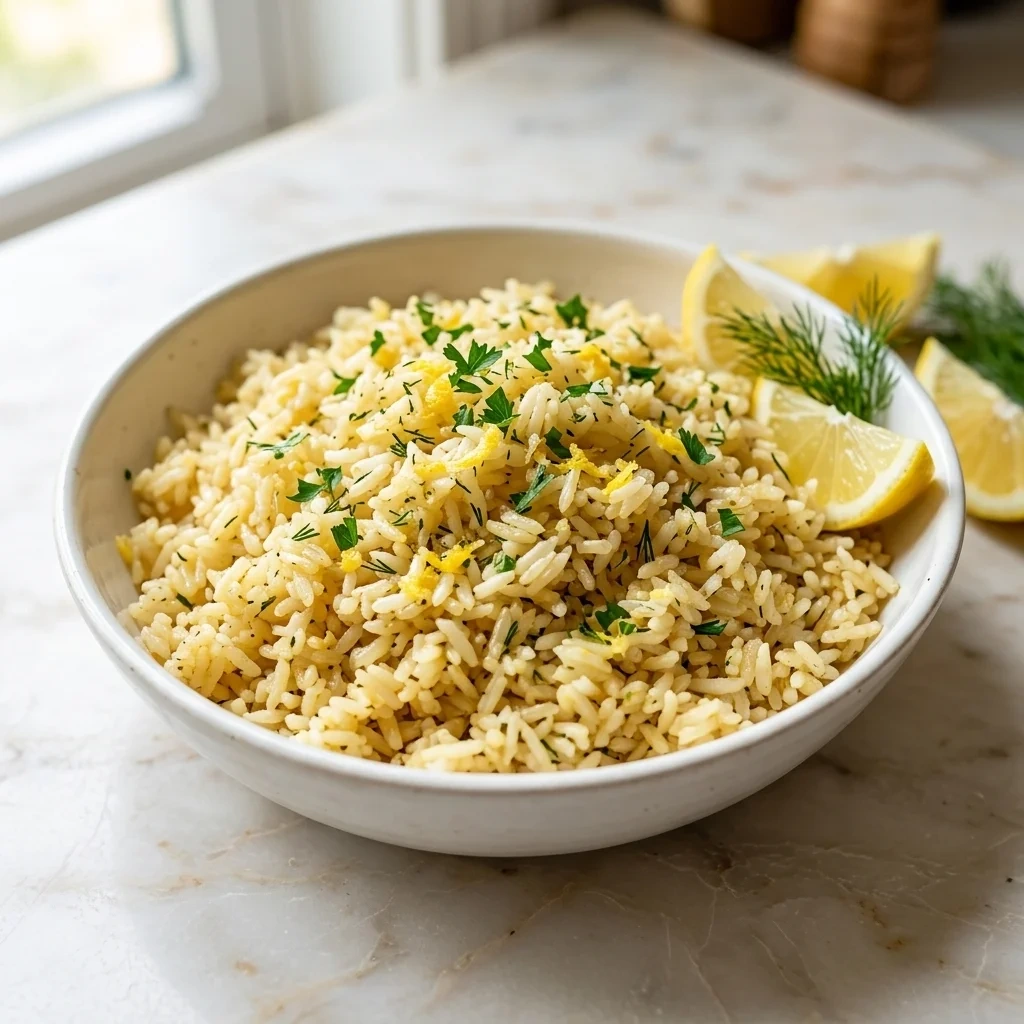
Taste and adjust the salt. Scatter the chopped parsley over the top.
Serve warm. Crumbled feta or a few chopped olives are both good additions here.
Variations
With feta. Crumble ¼ cup over the top after fluffing. Salty and sharp against the lemon, and the most common way this is served in Greece.
With olives. A handful of chopped Kalamata olives stirred through at the end. Adds brine and depth.
With spinach. Two handfuls folded in during the five-minute rest. The residual heat wilts them without overcooking.
With dill. Swap the parsley for fresh dill, or use both. Dill is a more traditionally Greek pairing with lemon than parsley is.
Creamier. Off the heat and after fluffing, fold in 2 tablespoons of room temperature Greek yogurt. Cold yogurt straight from the fridge into hot rice will split.
Orzo instead. Same method, same flavors, using orzo in place of rice. Reduce the broth to 1½ cups and the cook time to about 10 minutes.
Pro Tips for Perfect Greek Lemon Rice
- Use the right rice: Long-grain white rice is ideal for this dish because it remains fluffy and separate when cooked. Basmati rice can also be a great alternative for an extra fragrant flavor.
- Don’t skip the resting time: Allowing the rice to rest for a few minutes after cooking helps it to absorb the remaining steam, making it fluffier.
- Adjust the seasoning: If you prefer a more pronounced lemon flavor, you can add extra lemon juice or zest. For a savory twist, you can also add a pinch of feta cheese or olives as garnish.
- Make it creamy: For a creamier version, stir in a spoonful of Greek yogurt before serving to add richness to the rice.
Storage and Reheating
Refrigerator, 3 days. Cool completely before sealing, since trapping steam makes the rice soggy.
Reheating. Add 1 to 2 tablespoons of water or broth per portion before heating. Rice dries out in the fridge and needs that moisture back. Microwave covered for 90 seconds, or warm in a covered pan on low.

Refresh the lemon. A small squeeze of fresh juice after reheating brings the brightness back. The original lemon flavor fades noticeably overnight.
Freezer, 1 month. Freeze in portions, flat in bags. Thaw in the fridge overnight or reheat straight from frozen with a splash of water.
Food safety note. Cooked rice should be cooled and refrigerated within an hour rather than left on the counter, since rice can harbor bacteria that survive cooking.
Frequently Asked Questions
Why is my lemon rice crunchy or firm?
Lemon juice went in before or during cooking. Acid stops starch absorbing water properly, so the grains never fully soften. Add the juice after the rice is cooked.
Can I use brown rice?
Yes, with adjustments. Use 2½ cups broth and cook for 40 to 45 minutes. The nuttier flavor competes a little with the lemon, so you may want extra zest.
Can I use fresh herbs instead of dried oregano?
Yes. Use 1 tablespoon of fresh oregano, and add it at the end rather than the start, since fresh herbs lose their flavor when simmered.
Do I really need to rinse the rice?
For fluffy, separate grains, yes. Rinsing removes the loose surface starch that otherwise glues the grains together.
Can I make this in a rice cooker?
Yes. Rinse and toast the rice in a pan first, then transfer everything except the lemon juice to the cooker. Add the juice after it finishes and fluff.
Can I add vegetables?
Spinach folded in during the rest works well. Peas and chopped peppers can go in with the broth. Avoid anything watery like zucchini, which throws off the liquid ratio.
How do I make the lemon flavor stronger?
More zest, not more juice. Zest carries the aroma. Extra juice only makes it sharper and risks a wet result.
Final Thoughts
One rule decides this dish: the zest goes in early, the juice goes in at the end.
Rinse the rice, toast it in oil, cook it in broth, and keep the lid on. Then the lemon goes in while you fluff.
That is the whole difference between rice that tastes like lemon and rice that never quite cooked through.
Save this recipe now so it is ready the next time you need a side that takes thirty minutes and goes with almost anything.