Easy Homemade Alfredo Sauce Recipe
Recipe at a Glance
| Prep Time | 5 minutes |
| Cook Time | 12 minutes |
| Total Time | 17 minutes |
| Yield | About 2 1/2 cups |
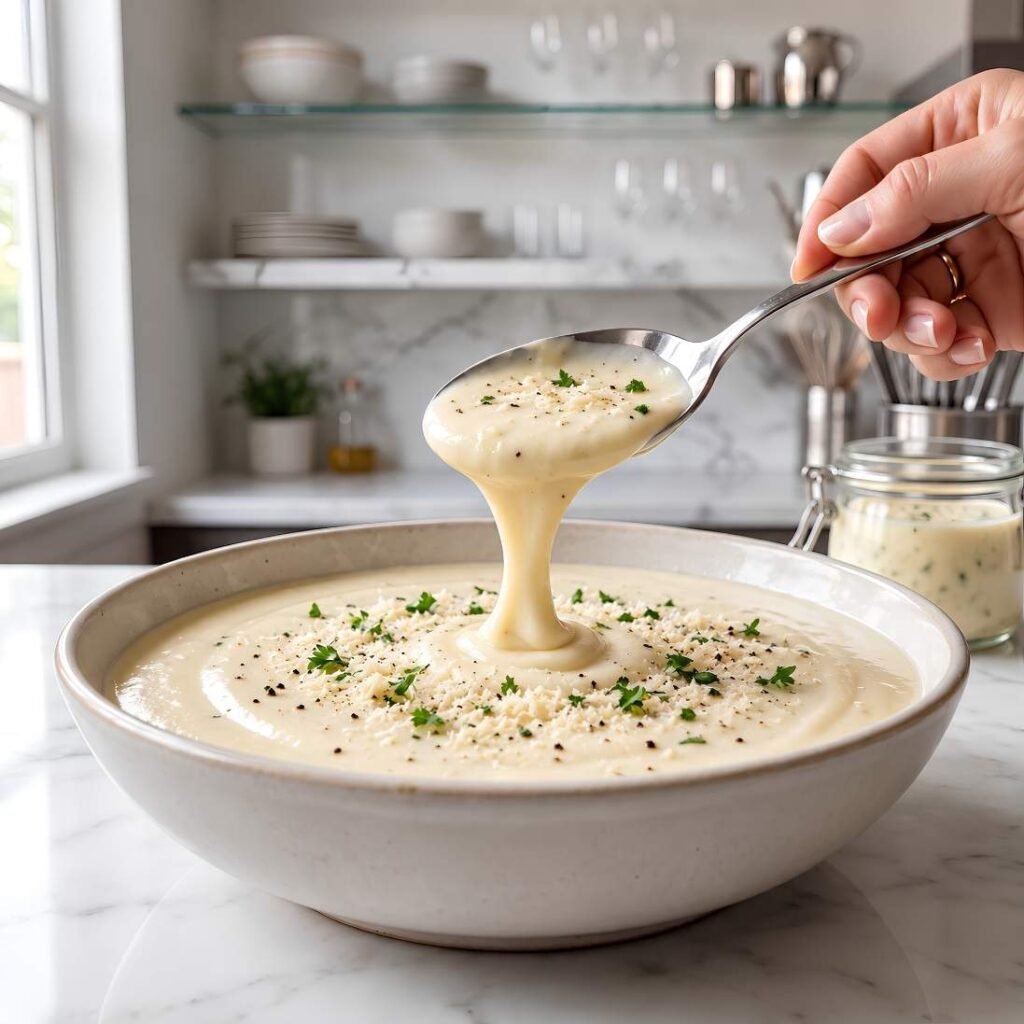
Alfredo is one of the few famous Italian dishes that Italians largely do not recognise. The original, still served in a handful of restaurants in Rome, is three ingredients: butter, Parmigiano-Reggiano, and the starchy water the fettuccine cooked in. No cream.
No garlic. It was invented in 1908 by a restaurateur named Alfredo di Lelio for his wife, who was struggling to eat after childbirth, and it got its reputation when two American film stars ate it there in the 1920s and took the idea home with them.
What came home was not quite what they ate. American kitchens added cream, which makes the sauce far more stable and far harder to ruin, and garlic, which makes it taste like something people wanted. That version is what this recipe is, and it is what almost everyone means when they say, Alfredo.
The advantage of the cream version is that it is a sauce rather than a technique. You can make a batch, keep it in a jar for four days, and use it across several meals. The original has to be built in the pan, eaten immediately, and does not survive being kept at all.
Why You Will Love This Recipe
If you’ve been stuck relying on store-bought alfredo sauce, you are going to fall in love with this method. This homemade alfredo sauce is:
Texturally perfect: A smooth, creamy consistency coats every piece of pasta without feeling overly heavy or greasy.
Highly customizable: You can easily add grilled chicken, sautéed mushrooms, or fresh herbs to make it your own.
Made with basic staples: You only need butter, heavy cream, garlic, and Parmesan cheese to bring this sauce together.
Ready in minutes: This sauce comes together in about 15 minutes, making it just as fast as opening a jar, but far more flavorful.
Equipment You Will Need
A heavy saucepan, 2 to 3 quarts. Not a skillet. A saucepan has depth and straight sides, which means the cream simmers rather than reduces too fast, and it makes the sauce easier to whisk without splashing. A heavy base matters because cream scorches on a hot spot before you smell it.
A balloon whisk. Adding cheese to cream needs constant movement, and a whisk disperses it in one stroke where a spoon takes five. A flat sauce whisk is better still if you have one.
A fine grater. Parmesan needs to be grated finely enough that it melts without heat. A microplane is ideal; the finest side of a box grater works, and a food processor does not, since it produces small chunks rather than shreds.
Glass jars with lids. This is the piece that makes a batch worth making. Two pint jars hold a full batch comfortably. Glass rather than plastic, which holds the smell of garlic and dairy no matter how well you wash it.
A ladle or a jug with a spout. For getting hot sauce into a narrow jar without wearing most of it.
Ingredients You Will Need
The beauty of this recipe lies in its sheer simplicity. To get that perfect creamy, rich flavor, you will need:
- 1/2 cup unsalted butter
- 4 cloves garlic, minced
- 2 cups heavy cream
- 1 1/2 cups Parmesan, finely grated
- 1/4 tsp black pepper, freshly cracked
- Pinch of freshly grated nutmeg
- Salt, to taste at the end only
- 2 tbsp fresh parsley, chopped, for garnish
- Extra Parmesan, for serving
Step-by-Step Instructions for Alfredo Sauce
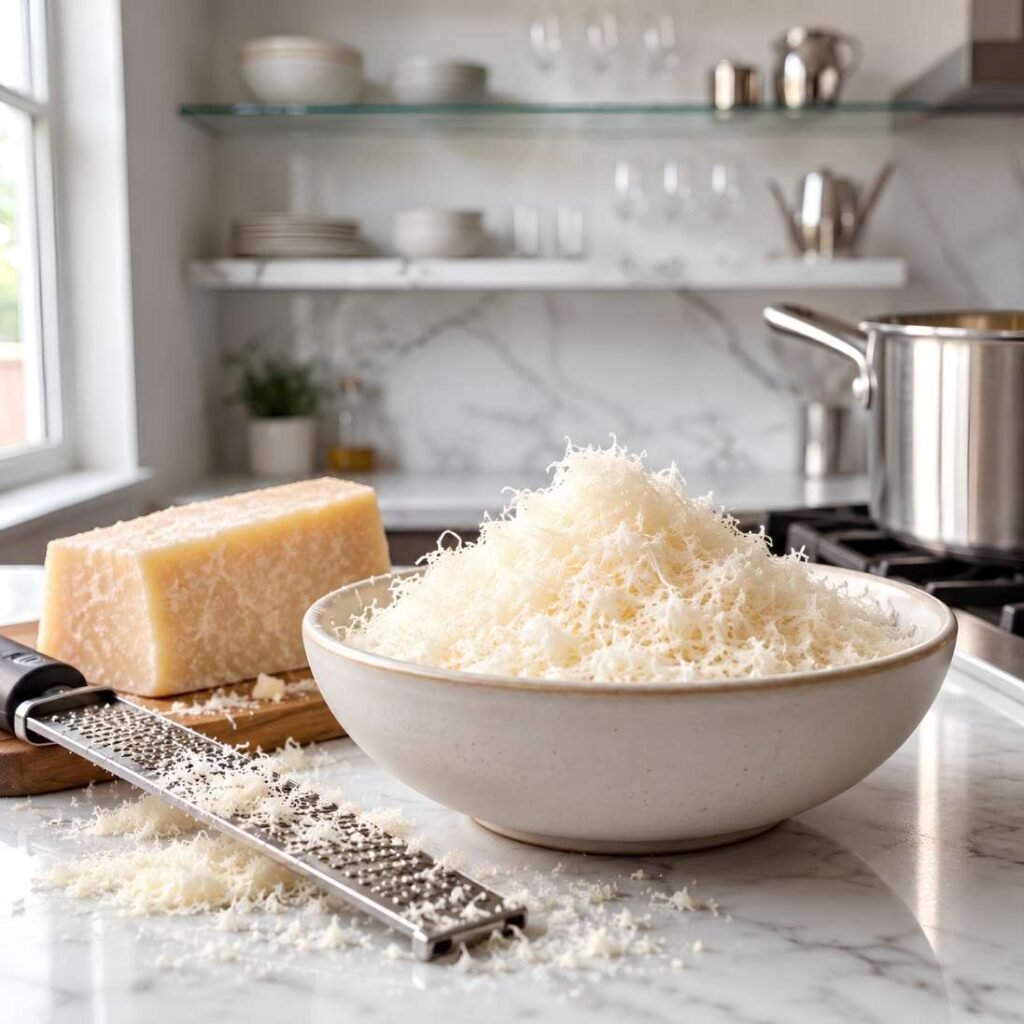
Step 1: Grate the Cheese First. Before anything goes on the heat, grate the Parmesan finely and have it beside the stove. The sauce comes together in under ten minutes once it starts, and cheese grated in a hurry tends to be grated coarsely, which is the main cause of a grainy result.
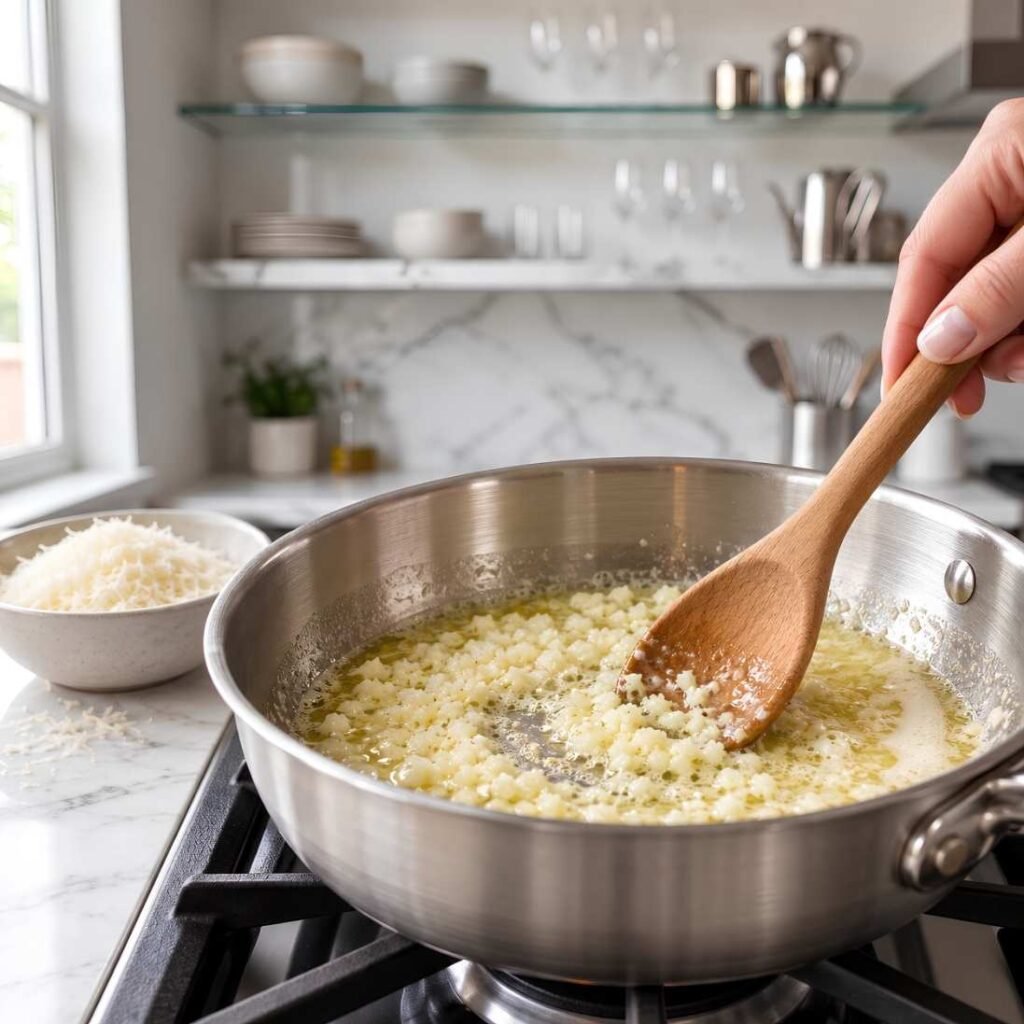
Step 2: Cook the Garlic Gently. Melt the butter in a heavy saucepan over medium-low heat. Add the garlic and cook for 60 to 90 seconds, stirring, until fragrant but with no colour on it at all. Stop before golden. Garlic goes from fragrant to bitter in a matter of seconds, and in a sauce this simple there is nothing to hide that bitterness behind.
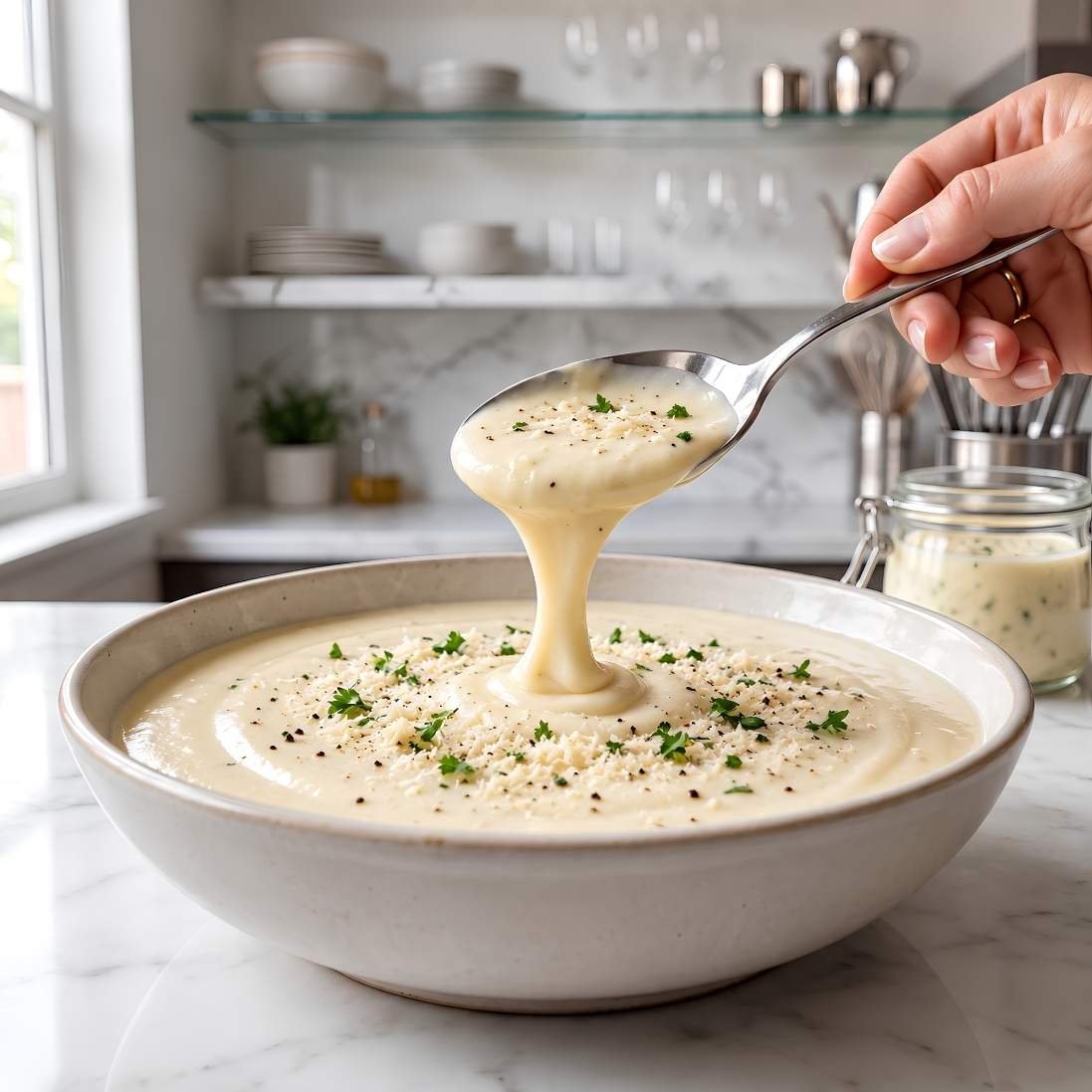
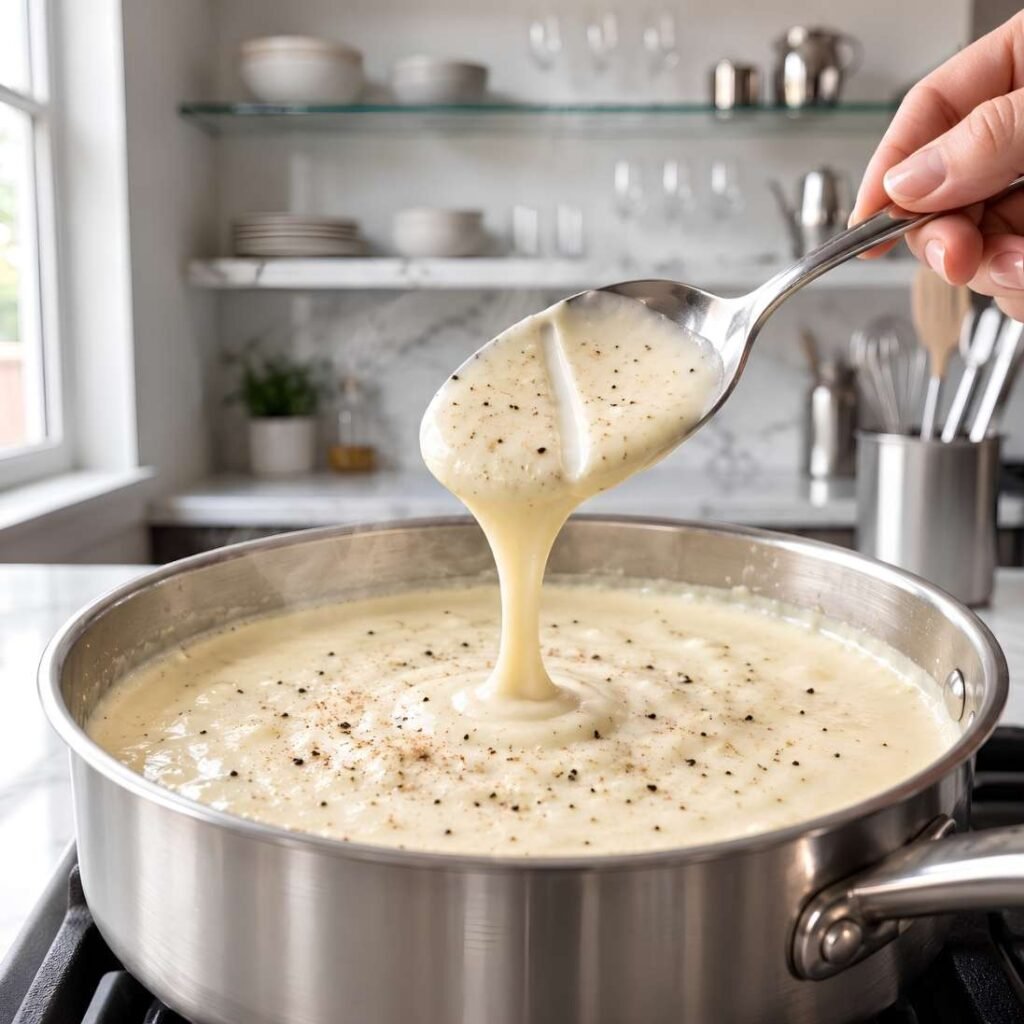
Step 3: Simmer the Cream. Pour in the cream, add the black pepper and nutmeg, and bring it to a gentle simmer. Cook for 4 to 5 minutes, stirring now and then, until it has reduced slightly and coats the back of a spoon so a finger drawn through leaves a clean line. Do not let it boil hard, which destabilises the fat and makes the sauce far more likely to split once the cheese goes in.
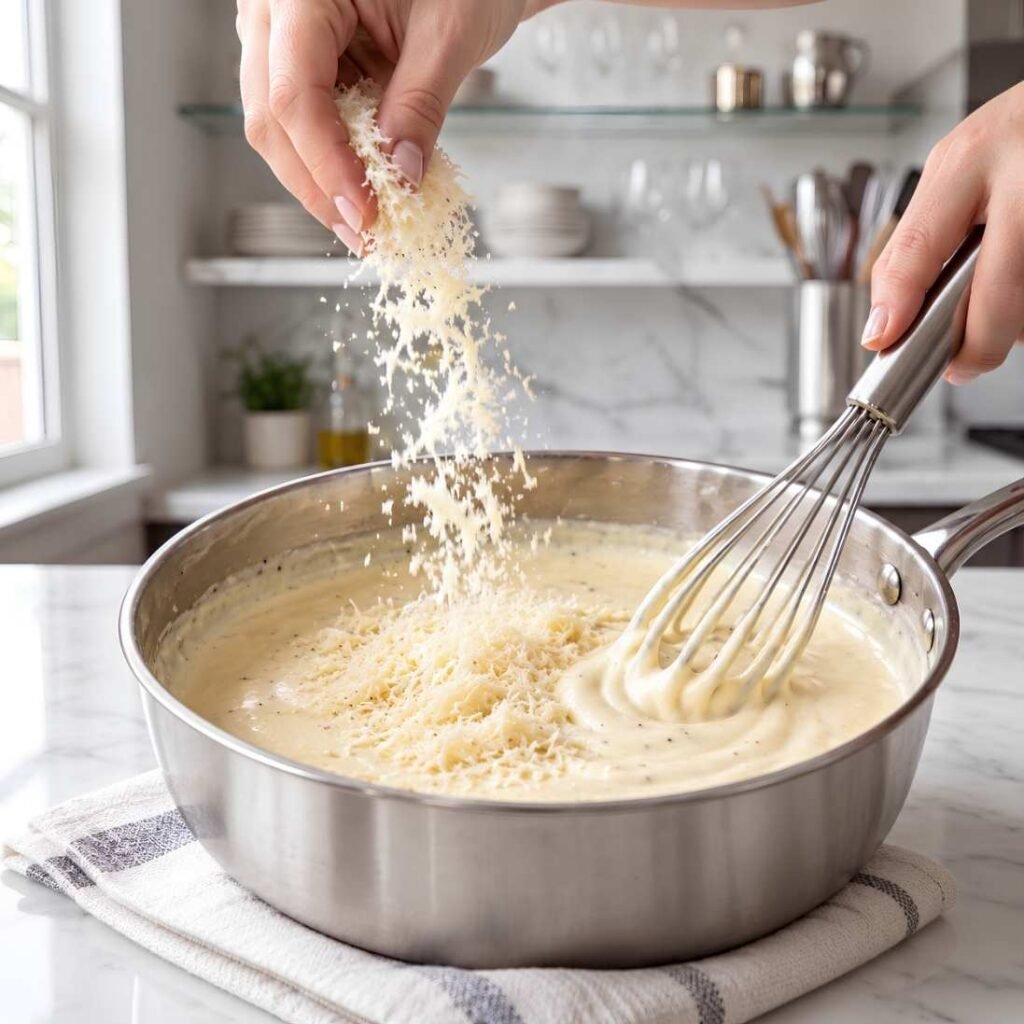
Step 4: Take the Pan Off the Heat, Then Add the Cheese. Move the pan completely off the burner and let it sit for 30 seconds. Add the Parmesan a small handful at a time, whisking after each addition until it has disappeared before adding more.
This is the step the whole recipe turns on. Parmesan added over heat, even the lowest heat, tightens and separates into grainy solids and oil, and residual heat is more than enough to melt cheese that has been finely grated.
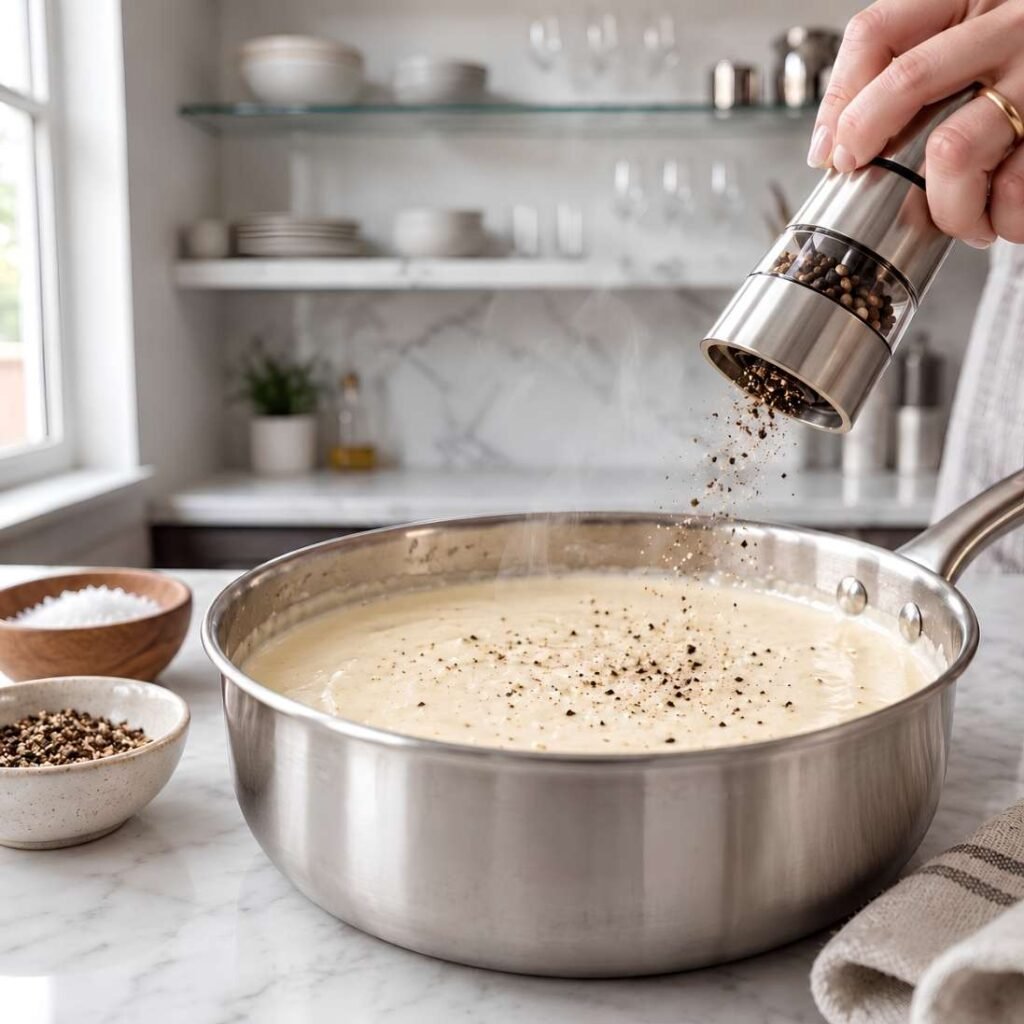
Step 5: Taste, Then Season. Taste the sauce now, before adding any salt. Between a cup and a half of Parmesan and the butter, most batches need none at all. Adjust the pepper if you want it, and add salt only if it genuinely needs it.
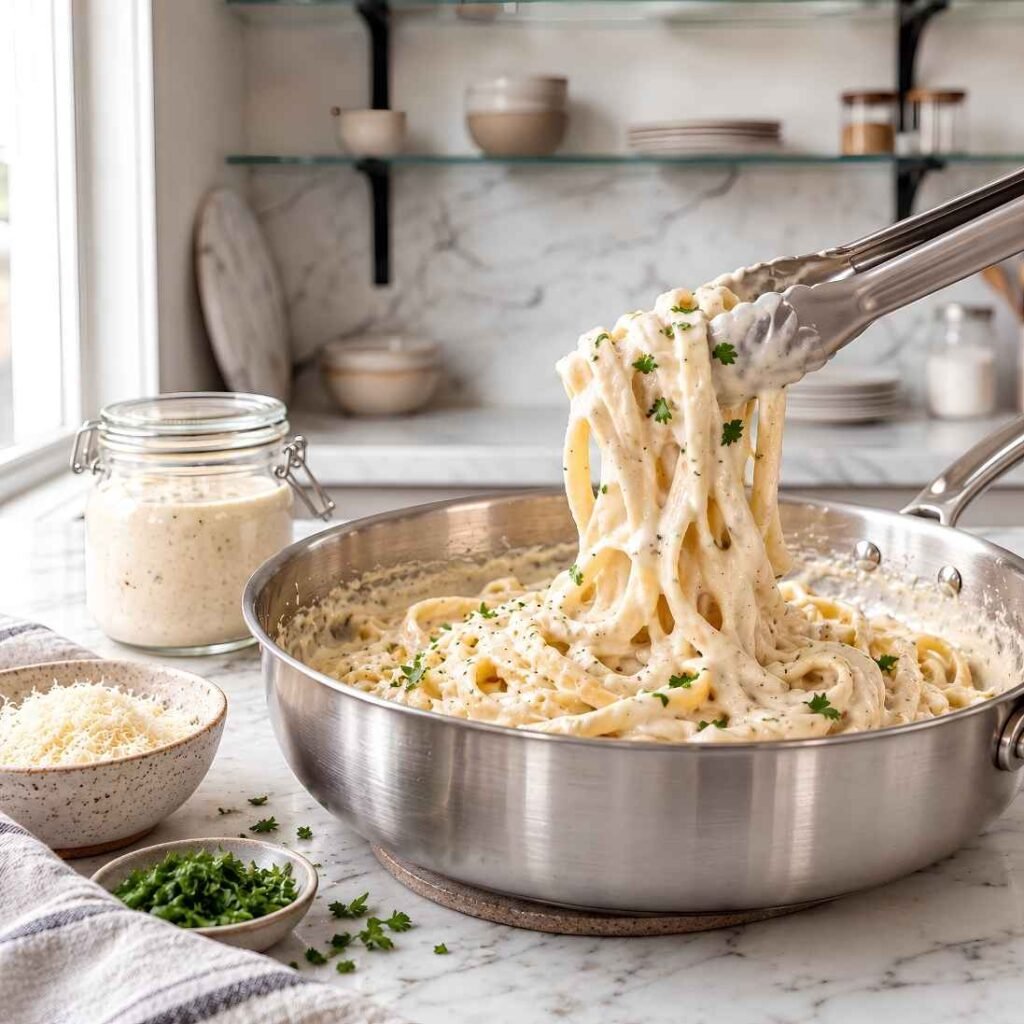
Step 6: Use It or Store It. For pasta, toss it with 1 lb of freshly cooked pasta and a splash of the pasta water, which loosens the sauce and helps it cling. Serve straight away with extra Parmesan and parsley, since the sauce thickens as it cools. To keep it, let it cool for 20 minutes and transfer to an airtight jar. It will set firm in the fridge and reheats gently with a splash of cream.
Pro Tips for the Ultimate Alfredo Sauce
Small adjustments can take your homemade alfredo sauce from good to absolute perfection.
Weigh the cheese if you can. A cup and a half is around 130 grams. Volume measurements of grated cheese are unreliable, and in a four-ingredient sauce the cheese is doing most of the work.
Make a double batch. It costs one extra carton of cream and no extra time, and the second jar is what turns this from a recipe into something you cook around for a week.
Cool it before it goes in the jar. Twenty minutes on the counter. Hot sauce sealed into a jar creates condensation that thins it, and the water sits on top when you open it.
Reheat over the lowest heat you have, with patience. This is where most batches get ruined, not in the making. High heat splits a sauce that came out of the fridge perfectly fine. Low heat and a splash of cream, whisking as it loosens, takes three minutes and works every time.
Keep a little back before you sauce anything. Once it is tossed with pasta, it is gone. A few spoonfuls set aside are tomorrow’s baked potato or a drizzle over roasted vegetables.
Common Mistakes to Avoid
Adding the cheese while the pan is on the burner. The one non-negotiable. Take it off entirely, wait thirty seconds, then add the Parmesan a small handful at a time. Residual heat melts finely grated cheese, and the burner does not have to be involved.
Reheating it too fast. More batches are ruined here than in the making. A sauce that survived four days in the fridge will split in ninety seconds over medium heat. Lowest setting, splash of cream, whisk as it loosens.
Measuring the cheese by eye. Grated cheese packs differently every time. Too little leaves a thin sauce that no amount of simmering will fix, since thickness comes from cheese rather than reduction. Too much turns it stringy.
Sealing it hot. Condensation forms inside the lid and drips back in, which thins the sauce and leaves a watery layer on top. Twenty minutes to cool first.
Ways to Use It Beyond Pasta
This is the section that makes a batch worth making. The sauce keeps for four days, and pasta is only the most obvious thing to do with it.
Chicken Alfredo bake. Toss the sauce with cooked pasta and shredded rotisserie chicken, spread it in a baking dish, top with mozzarella, and bake at 375°F for 20 minutes.
Over vegetables. Spooned over roasted broccoli, cauliflower or asparagus, then finished under the grill for two minutes until it blisters.
As a pizza base. In place of tomato sauce, with chicken, spinach and mozzarella on top. This is what most white pizzas are built on.
Baked potatoes. Split, fluffed, and filled with warm Alfredo, bacon and chives.
What to Serve with Homemade Alfredo Sauce
This rich, comforting sauce pairs beautifully with a variety of dishes.
As a main course: Toss with fettuccine, penne, or your favorite pasta shape for a classic Italian-inspired dinner.
As a topping: Use this sauce over grilled chicken, steamed vegetables, or baked potatoes.
Loaded style: Add sautéed mushrooms, spinach, or crispy bacon directly into the sauce for extra flavor and texture.
How to Store Homemade Alfredo Sauce
This keeps better than most cream sauces, and keeping a jar of it in the fridge is arguably the point of making a batch.
In the fridge. Cool for 20 minutes, then store in an airtight jar for up to 4 days. It sets firm as it chills, almost solid, which is normal and not a sign anything is wrong. Butter and Parmesan both solidify when cold.
How to reheat. Low heat and patience. Warm it in a saucepan over the lowest setting with a splash of cream or milk, whisking as it loosens. Do not rush it with higher heat, which splits a sauce that survived the fridge perfectly well. The microwave works in 20-second bursts with a whisk between each.
About freezing. Possible, but it is the weakest option and worth being honest about. Cream sauces separate when frozen, and the Parmesan in this one comes back grainy more often than not. If you freeze it anyway, thaw it fully in the fridge, reheat very gently, and whisk hard with an extra splash of cream. Expect it to be noticeably less smooth than it was.
A better way to get ahead. Make the sauce up to two days in advance and keep it in the fridge. That much it handles without any loss at all, and it is enough lead time for most occasions.
Frequently Asked Questions
Can I make this sauce lighter? Yes, you can substitute half-and-half for heavy cream, though the sauce will be slightly thinner and less rich.
Can I use a different cheese? Yes, a blend of Parmesan and Pecorino Romano, or even Asiago, can add extra depth and flavor variation.
Can I make this sauce ahead of time? Yes, the sauce can be made up to 2 days in advance and gently reheated with a splash of cream before serving with fresh pasta.
Final Thoughts
The version served in Rome and the version most of us grew up with are two different dishes that share a name. The original is a technique, built in the pan and eaten within minutes. This one is a sauce, which is a more useful thing to have in a kitchen even if it is less pure.
What makes it worth making a full batch is the four days afterwards. A jar in the fridge covers pasta one night, chicken another, and roasted vegetables at the weekend, and none of those evenings involve making a sauce from scratch.
If you make it, leave a note in the comments and tell me what you ended up using it on. That is the part I am always curious about.