Carrot Cake Cobbler Recipe
Recipe at a Glance
| Prep Time | 20 minutes |
| Bake Time | 45 minutes |
| Rest Time | 10 minutes |
| Total Time | 1 hour 15 minutes |
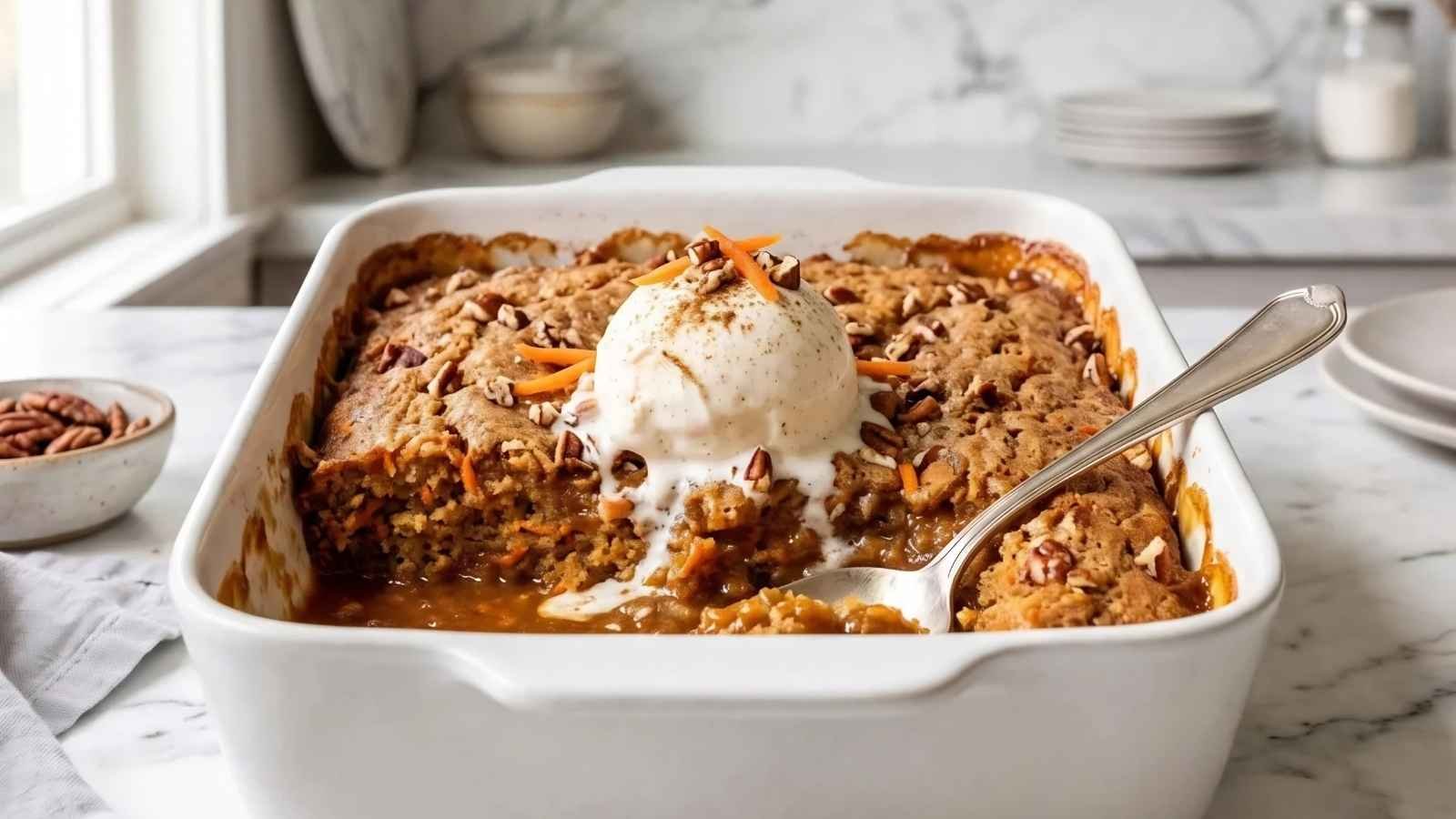
A self-saucing cobbler looks wrong at every stage and then comes out right, which is the whole appeal of it. You spread a thick batter into a dish, cover it with dry sugar, and pour boiling water over the top without stirring any of it together.
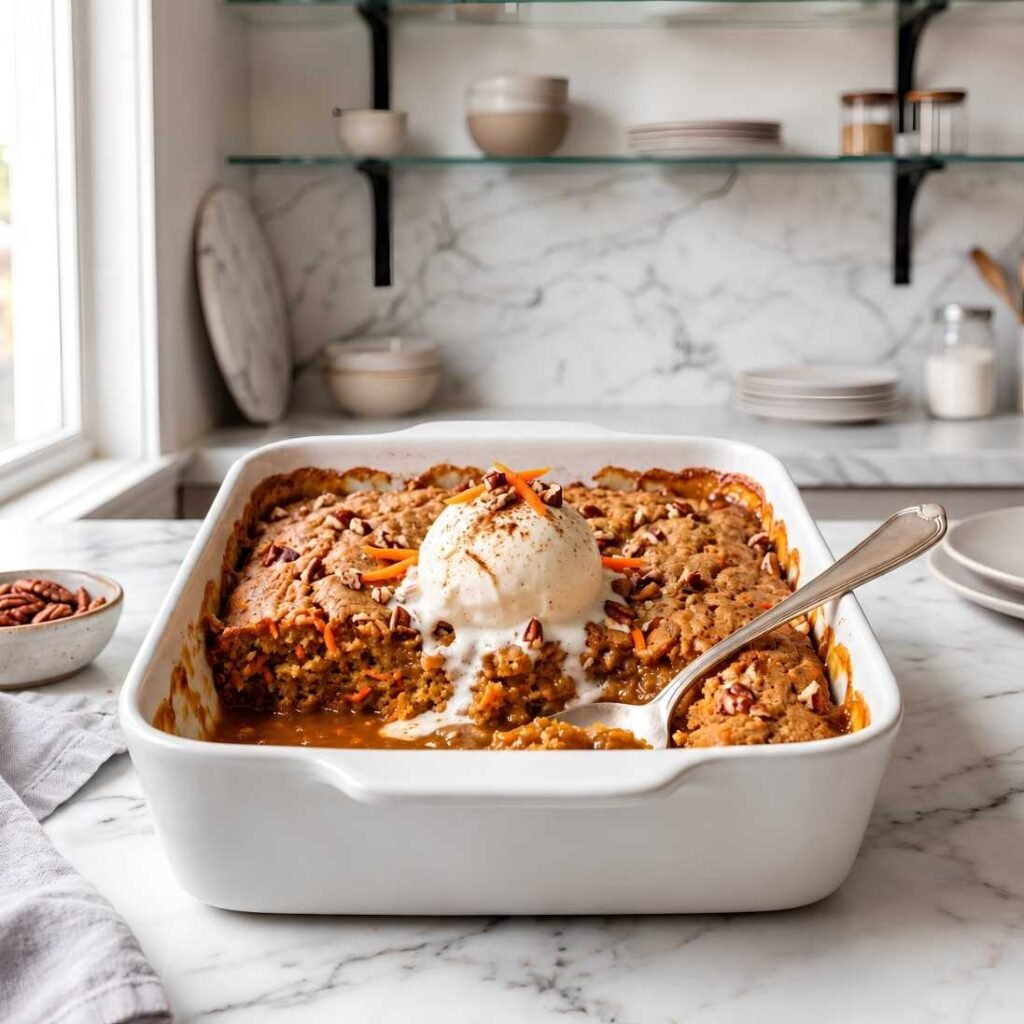
It goes into the oven looking like a mistake. Forty-five minutes later, the batter has risen through the water into a soft spiced cake, and the sugar and water have sunk and turned into a caramel sauce underneath it.
Two things make it work, and both are easy to get wrong. The water has to be properly boiling, not hot from the tap, because it needs to carry the sugar down through the batter rather than sitting on top of it.
And you cannot test it with a toothpick the way you would a cake, because there is a layer of sauce down there and the toothpick will come out wet no matter how well baked the cake above it is.
Why You Will Love This Recipe
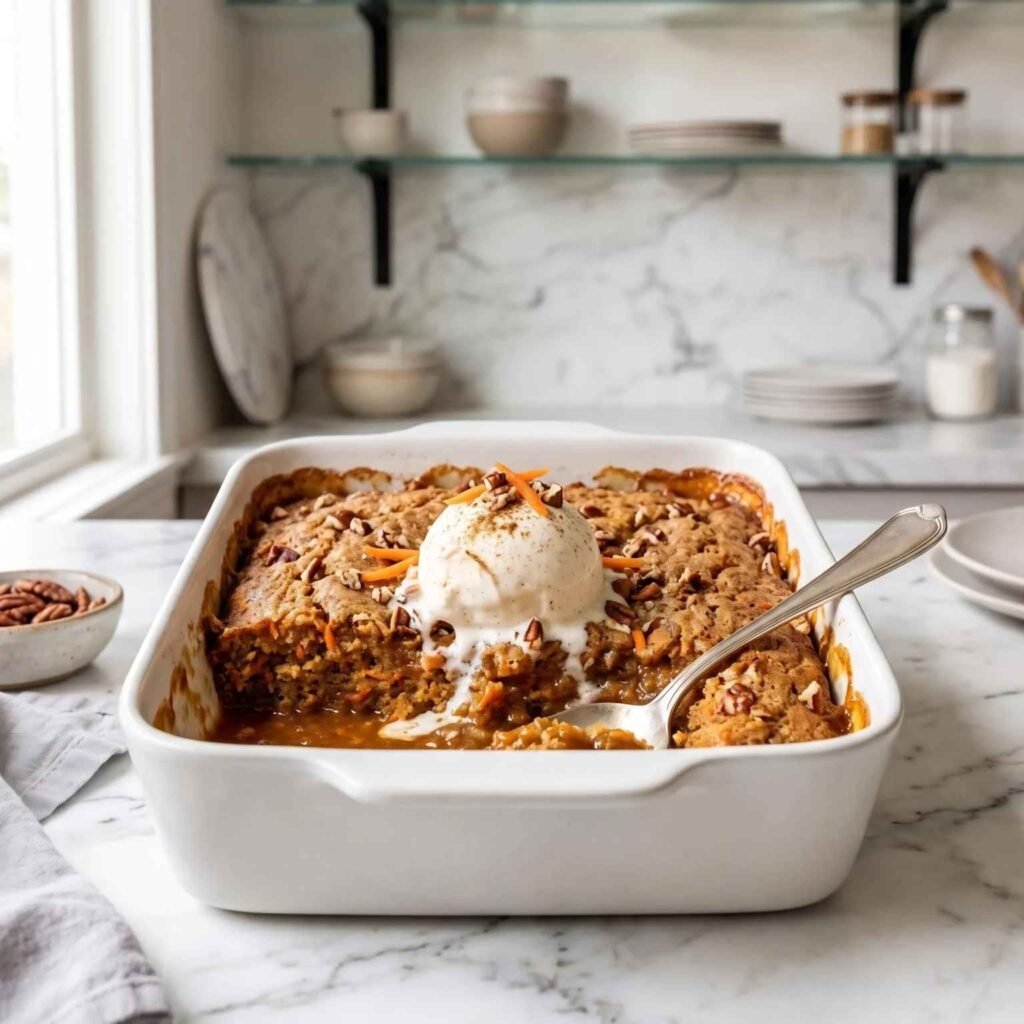
If you’ve been stuck making the same layered carrot cake every time, you are going to fall in love with this method. This carrot cake cobbler is:
Texturally perfect: A soft, spiced cake layer sits on top of a warm, gooey sauce, creating a dessert that’s rich and comforting in every bite.
Highly customizable: You can easily add raisins, swap in walnuts, or top it with a cream cheese glaze for extra indulgence.
Made with basic staples: You only need shredded carrots, flour, warm spices, and a few pantry staples to bring this dessert together.
No frosting required: Unlike traditional carrot cake, this cobbler skips the cream cheese frosting, making it a simpler dessert to prepare.
Equipment You Will Need
A 9×9 inch square baking dish. Or an 8×8, which gives a slightly thicker cake and needs five minutes longer. The size matters more here than in most recipes, because a self-saucing cobbler needs depth. Spread this batter into a 9×13, and you get a thin cake with barely any sauce beneath it. Ceramic and glass both work.
A kettle. The water has to be genuinely boiling when it goes in, not hot from the tap. A kettle is the easiest way to have it ready at the right moment, since water boiled five minutes earlier has already cooled more than you would think.
A box grater, large holes, or a food processor. Two cups of shredded carrot is a lot to do by hand. If you have a food processor with a shredding disc, this is the moment for it.
A small skillet. For toasting the pecans. Four minutes and it changes them completely.
Ingredients You Will Need
The beauty of this recipe lies in its sheer simplicity. To get that perfect warm, spiced flavor, you will need:
For the Cake Layer:
- 2 cups finely shredded carrots (about 4 medium)
- 1 3/4 cups all-purpose flour
- 1/2 cup granulated sugar
- 2 tsp baking powder
- 1 1/2 tsp ground cinnamon
- 1/2 tsp ground nutmeg
- 1/4 tsp ground ginger
- 1/2 tsp salt
- 3/4 cup whole milk
- 1/2 cup unsalted butter, melted
- 1 tsp vanilla extract
- 1/2 cup pecans, toasted and chopped
For the Sauce Layer:
- 1/2 cup granulated sugar
- 1/2 cup brown sugar, packed
- 1 1/2 cups boiling water
To Finish:
- 2 tbsp pecans, toasted and chopped
- 2 tbsp shredded carrot, for garnish
- Ground cinnamon, for dusting
- Vanilla ice cream, for serving
Step-by-Step Instructions for Carrot Cake Cobbler
Step 1: Heat the Oven and Prep. Preheat the oven to 350°F (175°C) and grease a 9×9 inch square baking dish. Toast the pecans in a dry skillet over medium heat for 4 to 5 minutes until fragrant, then chop them. Shred the carrots finely and put the kettle on, but do not boil it yet.
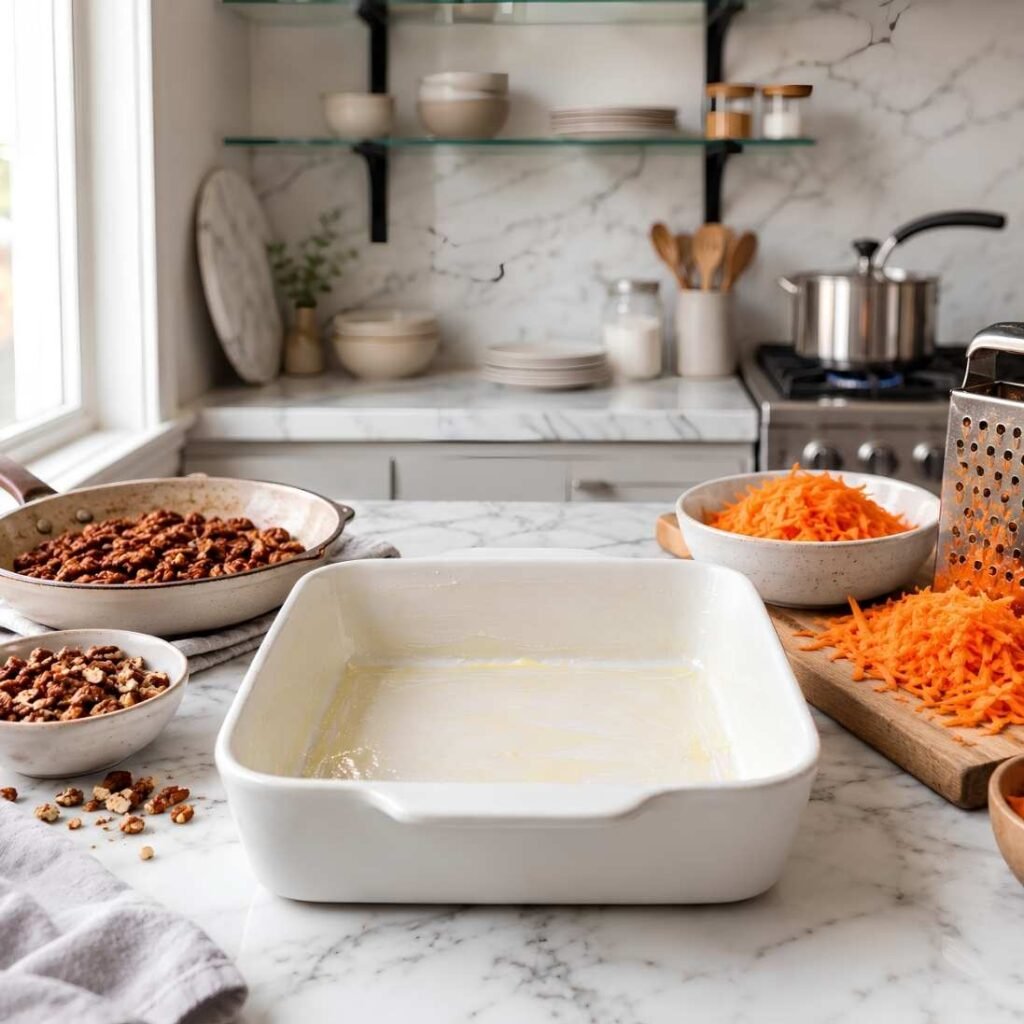
Step 2: Make the Batter. In a large bowl, whisk the flour, 1/2 cup granulated sugar, baking powder, cinnamon, nutmeg, ginger, and salt. Stir in the milk, melted butter, and vanilla just until combined, then fold in the shredded carrots and 1/2 cup of the pecans. The batter will be thick, closer to a cake batter than a pourable one. Spread it evenly into the dish with a spatula.
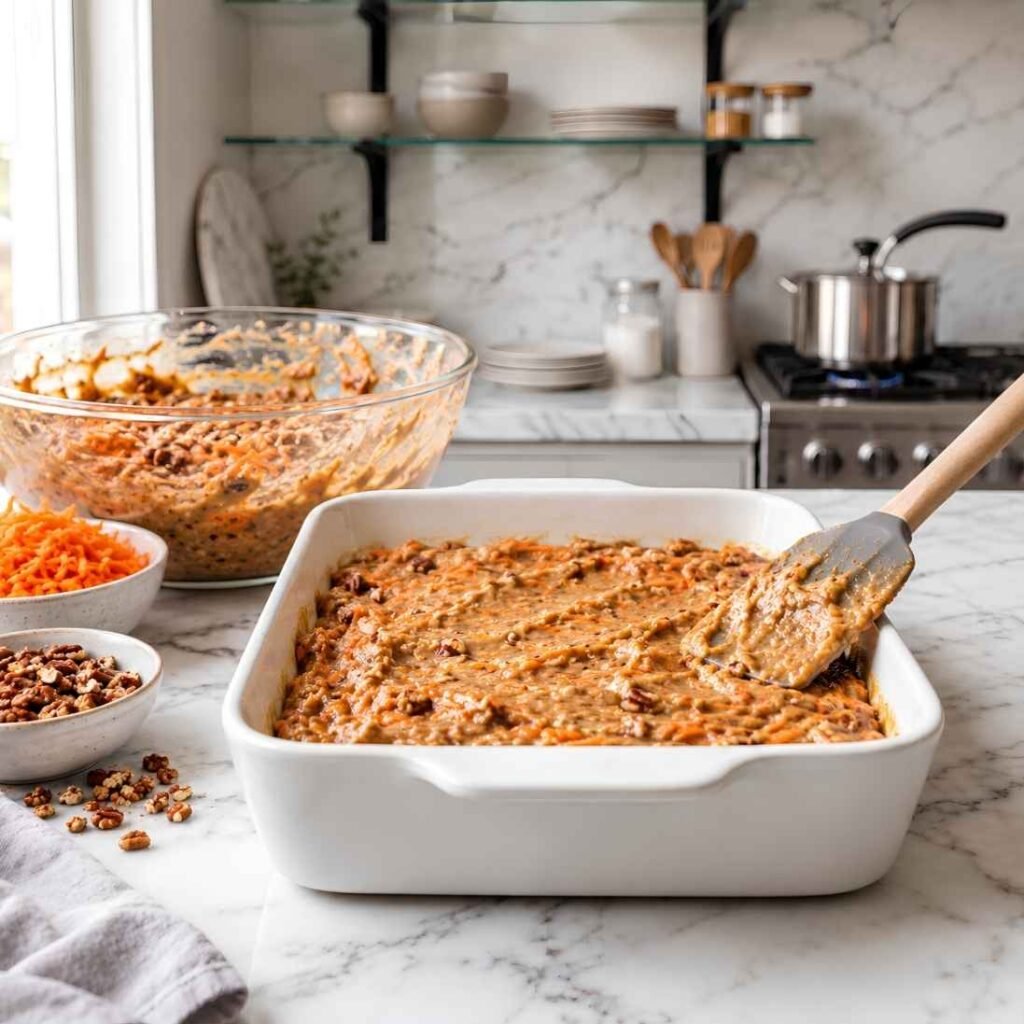
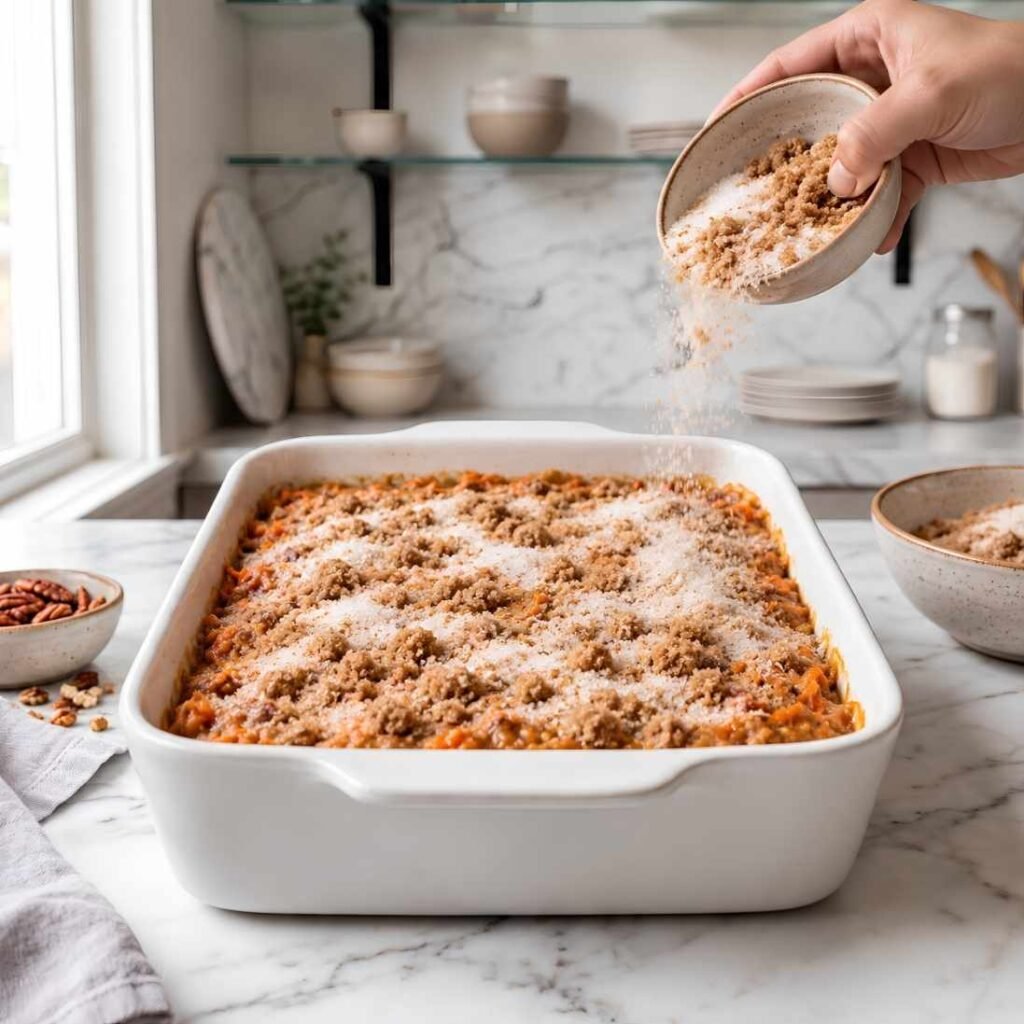
Step 3: Add the Dry Sugar Layer. Mix the remaining 1/2 cup granulated sugar with the brown sugar and scatter it evenly over the batter, right to the corners. Do not stir it in. This dry layer is what dissolves into the boiling water and becomes the caramel sauce underneath the cake.
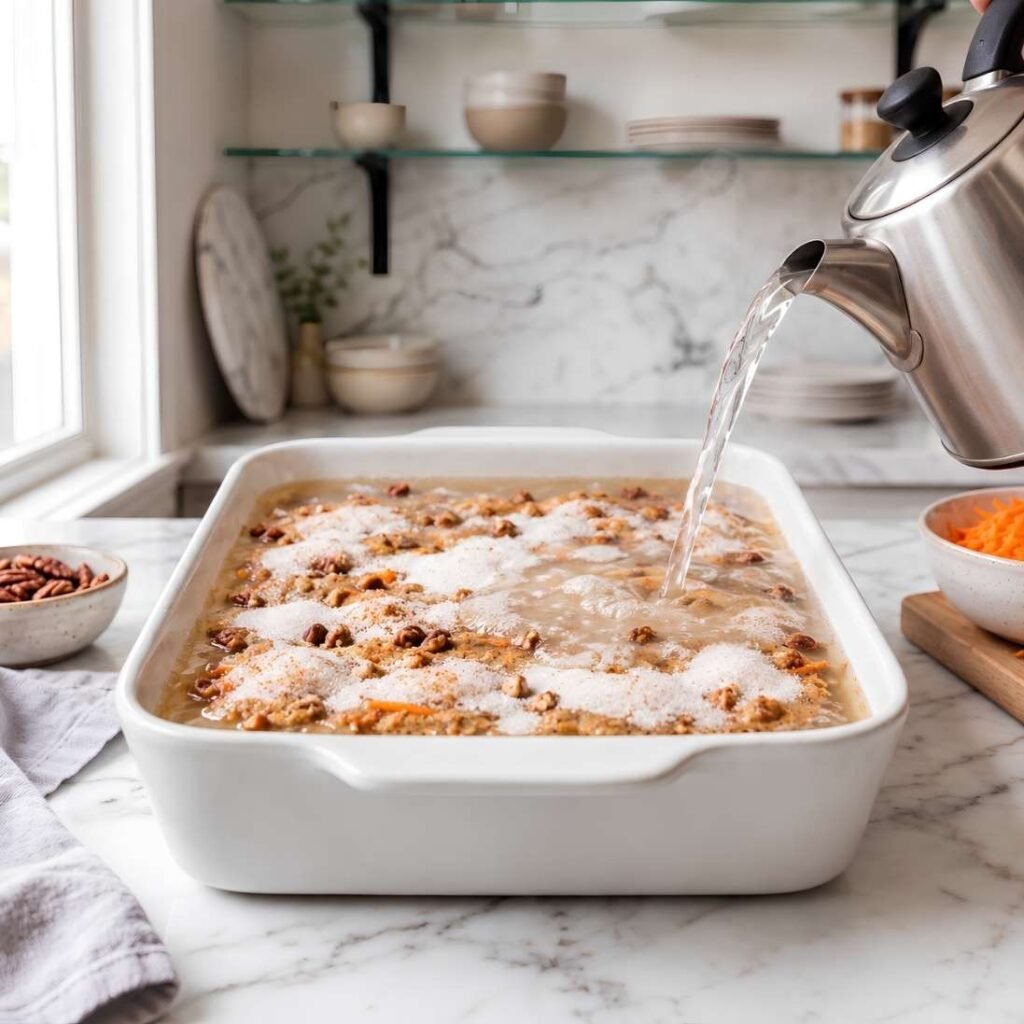
Step 4: Pour Over the Boiling Water. Boil the kettle now. Pour 1 1/2 cups of boiling water slowly and evenly over the whole surface, moving the jug around rather than pouring in one spot.
It will look completely wrong, like a dish of batter floating in water, and that is exactly how it should look. Do not stir. The batter rises through the water during baking while the sugar and water sink and become the sauce.
Step 5: Bake. for 40 to 45 minutes, until the top is deep golden and springs back when you press it lightly in the centre. The edges should be visibly bubbling. Do not test it with a toothpick.
There is a layer of sauce beneath the cake, and a toothpick will come out wet however well baked the cake is, which leads people to keep baking until the sauce has evaporated entirely.
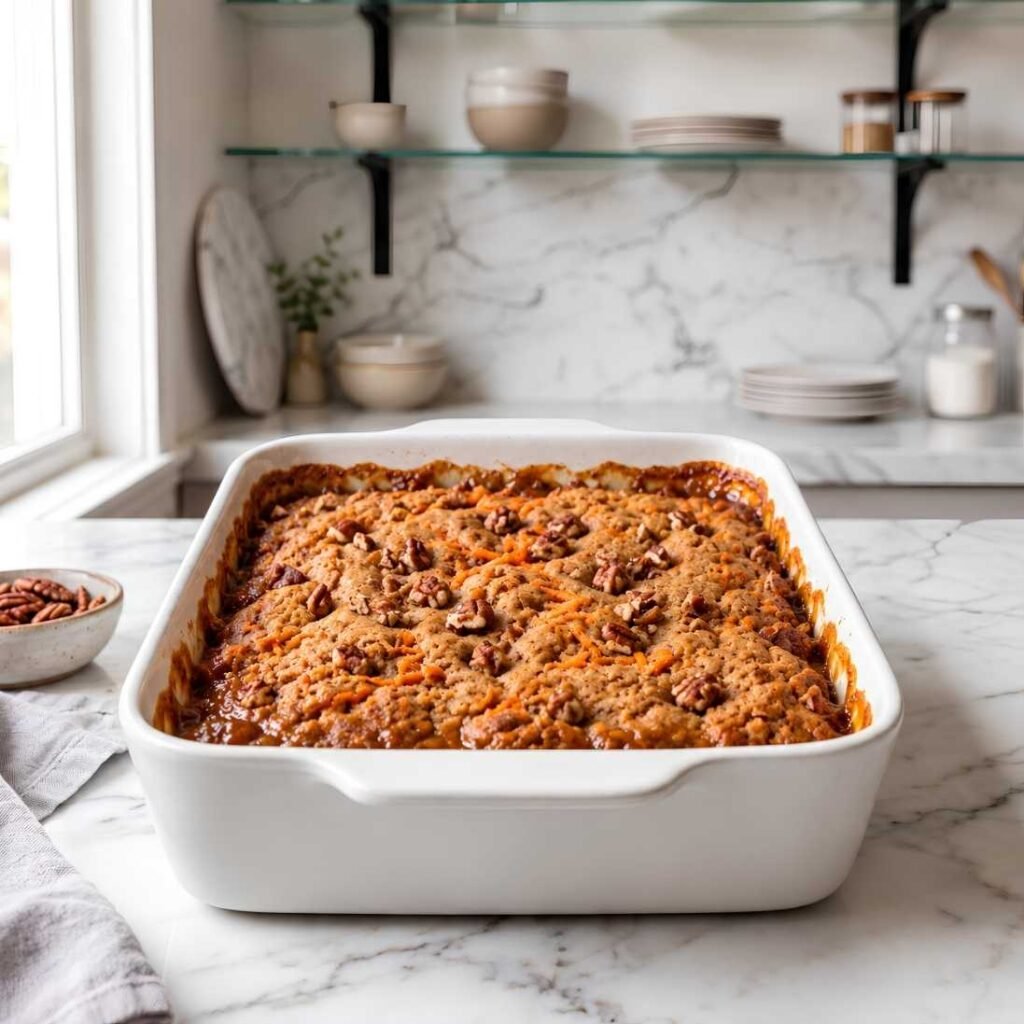
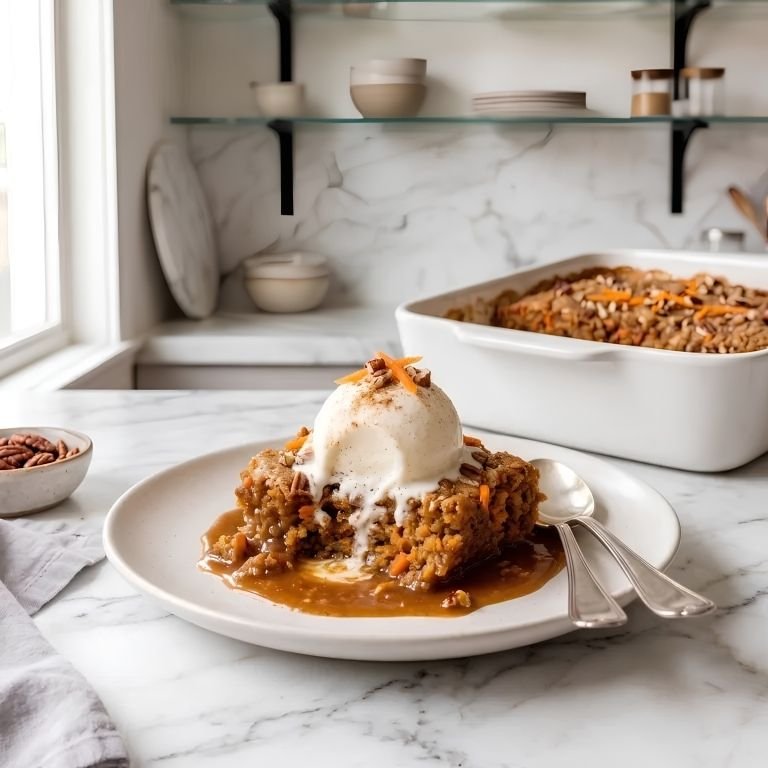
Step 6: Rest and Serve. Let it sit for 10 minutes so the sauce thickens slightly and stops being molten. Scatter over the remaining pecans and the shredded carrot, then serve warm, spooning sauce from the bottom of the dish over each portion. Add a scoop of vanilla ice cream and a dusting of cinnamon.
Pro Tips for the Ultimate Cobbler
Small adjustments can take your carrot cake cobbler from good to absolute perfection.
Boil the kettle last, not first. Water that boiled ten minutes ago has cooled enough to change the result. It needs to be at a rolling boil when it hits the sugar, because that is what carries it down through the batter.
Pour the water over the back of a spoon. Hold a large spoon just above the sugar layer and pour onto it, letting the water spread outward. Pouring straight from the jug punches a hole through the sugar and leaves a patch with no sauce under it.
Never test it with a toothpick. There is sauce down there. The toothpick will come out wet; you will assume it is underbaked, and by the time it comes out clean, you have baked the sauce away. Press the top instead.
Spread the sugar right to the corners. Sauce only forms where the sugar is, and a bare corner bakes into dry cake sitting on the dish.
Serve it from the bottom of the dish. The sauce pools underneath, so a spoon that only takes the top layer gives you cake without the point of the recipe. Dig down and spoon sauce over each portion.
Common Mistakes to Avoid
Testing it with a toothpick. The most common way this dessert gets ruined, and it comes from applying cake logic to something that is not a cake. There is a sauce layer underneath, and the toothpick will always come out wet. People add ten minutes, then ten more, and end up with a dry cake and no sauce at all.
Using hot water instead of boiling. Tap water, or water that boiled a while ago, floats on the batter rather than carrying the sugar down through it. The result is a soggy top and a dish with no sauce underneath.
Stirring after the water goes on. It looks wrong enough that the instinct to mix it is strong. Stirring it together gives you a single wet cake batter and no separation, so no sauce layer forms at all.
Using a 9×13 pan. The batter spreads too thin, the cake bakes through rather than rising above a sauce layer, and what you get is a flat spiced cake with a sticky bottom. A 9×9 or 8×8 is what this quantity of batter needs.
Variations to Try
Cream cheese glaze. Beat 4 oz of softened cream cheese with 1/2 cup powdered sugar, 2 tablespoons of milk, and 1/2 teaspoon of vanilla until smooth and pourable. Drizzle it over the warm cobbler just before serving. This is the version that tastes most like actual carrot cake, since the tang of cream cheese is what carrot cake frosting brings.
With raisins. Half a cup, folded in with the carrots. Soak them in hot water for ten minutes first and drain them well, or they pull moisture out of the batter around them and stay tough.
With crushed pineapple. A drained 8 oz can, folded in with the carrots, and reduce the milk to half a cup to account for what the pineapple brings. Very traditional in carrot cake, and it makes the crumb noticeably softer.
With coconut. Half a cup of sweetened shredded coconut in the batter, and a tablespoon scattered over the top before baking so it toasts.
What to Serve with Carrot Cake Cobbler
This warm, spiced dessert pairs beautifully with a variety of toppings and drinks.
As a classic pairing: Serve with a scoop of vanilla ice cream to balance the warm spices with something cool and creamy.
As a topping: Add a dollop of whipped cream or a drizzle of cream cheese glaze for extra indulgence.
Loaded style: Sprinkle with extra toasted pecans or a dash of cinnamon just before serving.
How to Store Carrot Cake Cobbler
This is a dessert that is genuinely best in its first half hour, and it is worth knowing what happens to it after that.
In the fridge. Cover and refrigerate for up to 4 days. The cake keeps absorbing the sauce as it sits, so by the next day there is noticeably less of it, and by day three there is very little. It still tastes good; it just becomes a moist spiced cake rather than a cobbler.
How to reheat. Individual portions in the microwave for 30 to 40 seconds, which is usually enough to loosen what sauce remains. For a larger amount, cover with foil and warm at 325°F for 15 minutes. Adding a tablespoon of water or milk to the dish before reheating helps bring back some of the sauce.
About freezing. Not the best use of this recipe. The sauce is absorbed into the cake during freezing and thawing, so what you get back is a dense, wet cake with no separate sauce layer. It is edible, but it is not the dish you made. Since this takes twenty minutes to assemble, it is easier to make it fresh.
A better make-ahead. Toast the pecans, shred the carrots, and mix the dry ingredients up to two days in advance and keep them separately. Assembly then takes five minutes, and the cobbler goes in the oven fresh.
Frequently Asked Questions
Can I use pre-shredded carrots from the store? Yes, pre-shredded carrots work well, though shredding your own tends to give a slightly softer texture once baked.
Can I add raisins to this recipe? Yes, folding in a handful of raisins along with the carrots and pecans is a great way to add extra texture and sweetness.
Can I make this cobbler ahead of time? Yes, though it’s best enjoyed fresh out of the oven; if making ahead, simply reheat before serving to restore the warm, gooey texture.
Final Thoughts
Self-saucing cobblers reward following the instructions exactly, because almost every step looks like a mistake while you are doing it. Dry sugar on wet batter looks wrong. Boiling water poured over the top without stirring looks worse. Both are correct, and both are the reason there is caramel sauce under the cake when it comes out.
The one thing to resist is the toothpick. There is sauce down there by design, and a toothpick will come out wet, however well the cake above it has baked. Press the top instead, and if it springs back, it is done.
If you make it, leave a note in the comments and tell me how it went. And if it came out with no sauce, the water was almost certainly not boiling.