12 Difficult Yoga Poses for Flexibility: Advanced Asanas to Work Toward
Deep flexibility doesn’t happen overnight, but for practitioners looking to push their practice further, certain advanced yoga poses offer a benchmark to work toward. This guide rounds up 12 challenging poses known for demanding exceptional flexibility, along with guidance on approaching them safely.
Why These Poses Are Considered So Challenging
The poses on this list typically require years of consistent practice, deep hip and shoulder mobility, spinal flexibility, and often significant core and back strength to support the position safely. They’re not poses to attempt as a beginner or without proper warm-up, and many require the guidance of an experienced teacher to approach safely.
What makes these particular poses so demanding is that they rarely rely on just one area of flexibility. Most combine two or three challenging requirements at once — deep hip opening paired with a backbend, or extreme hamstring flexibility paired with shoulder mobility and balance — which is exactly why they take so much longer to develop than more foundational poses. Even experienced practitioners often spend years working incrementally toward the full expression of poses like these.
That said, working toward these poses, even if full expression takes months or years, can be a rewarding way to deepen a yoga practice and build both physical and mental resilience. The process of gradually opening tight areas of the body, building patience, and learning to listen closely to physical sensations offers value well beyond simply achieving the final pose. Below are 12 of the most demanding poses in terms of flexibility, along with what makes each one so challenging and how practitioners typically build toward them over time.
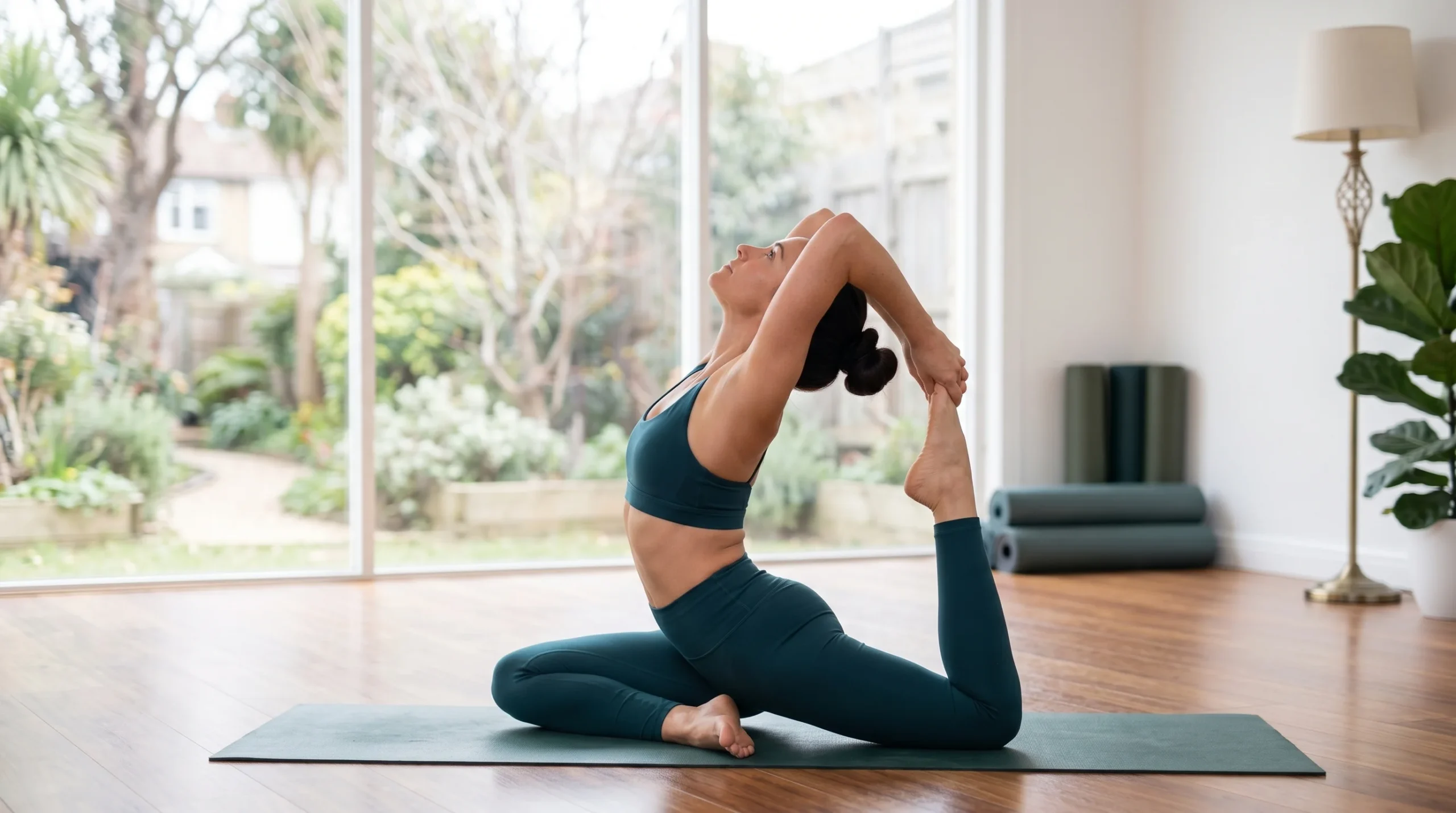
1. King Pigeon Pose (Eka Pada Rajakapotasana)
King Pigeon Pose combines a deep hip opener with an intense backbend, requiring the back leg to bend fully while reaching back to grab the foot, arching the spine dramatically. This pose demands significant flexibility in the hip flexors, quadriceps, and shoulders simultaneously.
Why it’s difficult: Combines two demanding flexibility requirements — deep hip opening and a full backbend — into a single pose. Building toward it: Regular practice of pigeon pose variations and gentle backbends like cobra and bridge pose can help build the necessary mobility over time.
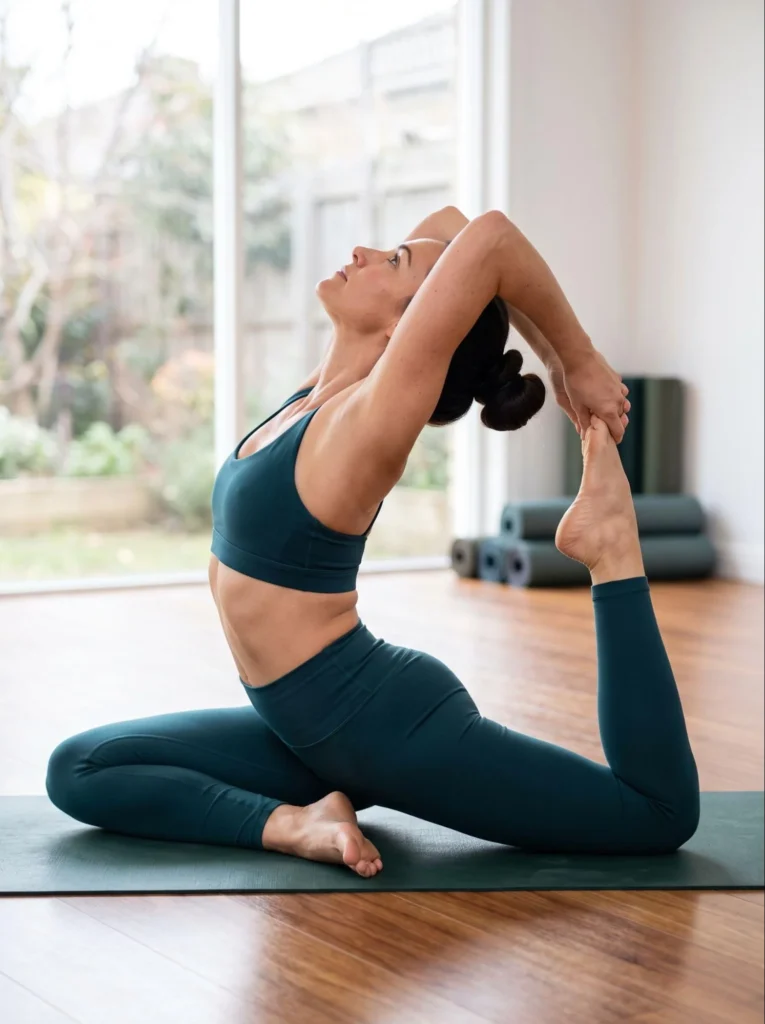
2. Scorpion Pose (Vrschikasana)
Scorpion Pose requires balancing on the forearms while arching the back so dramatically that the feet come down to touch the head. This pose demands a rare combination of shoulder strength, spinal flexibility, and balance.
Why it’s difficult: Very few practitioners have the combination of upper body strength and spinal flexibility needed to safely achieve this pose. Building toward it: Practicing forearm stand against a wall, along with consistent backbend work, helps build the foundational strength and flexibility required.
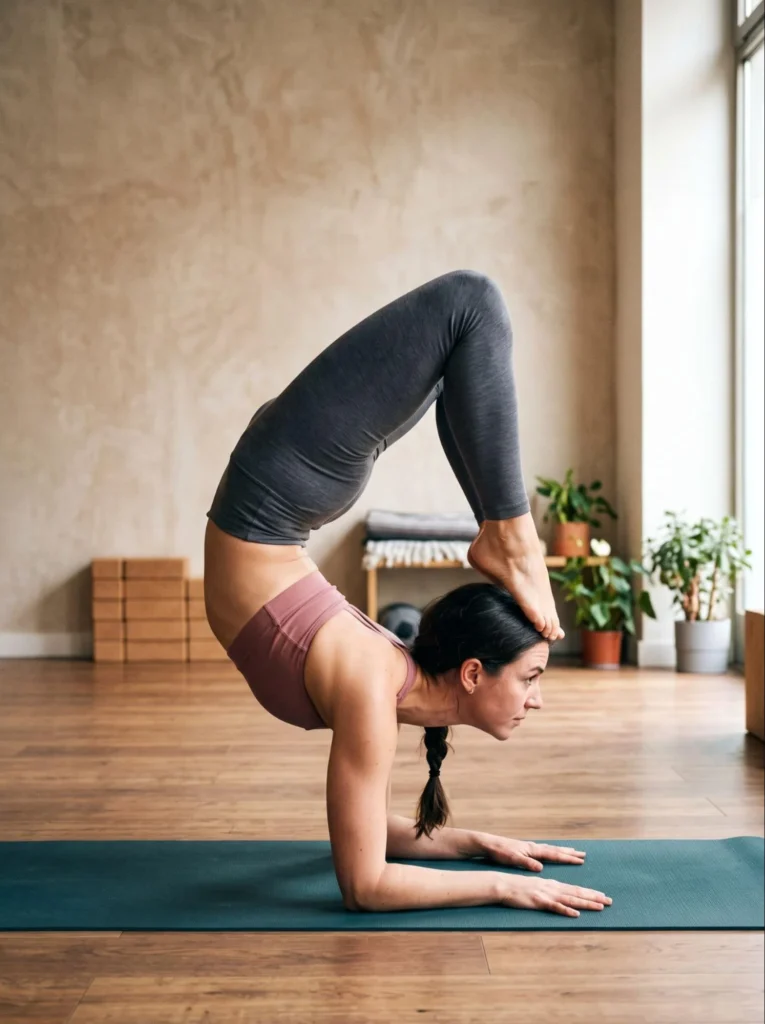
3. Full Splits (Hanumanasana)
Named after the Hindu monkey god known for his powerful leap, Hanumanasana requires the front leg to extend fully forward and the back leg to extend fully backward, both flat against the floor, while the hips stay square.
Why it’s difficult: Requires exceptional flexibility in the hamstrings, hip flexors, and groin simultaneously. Building toward it: Regular hamstring and hip flexor stretching, along with supported splits using blocks or a bolster, gradually builds the range of motion needed.
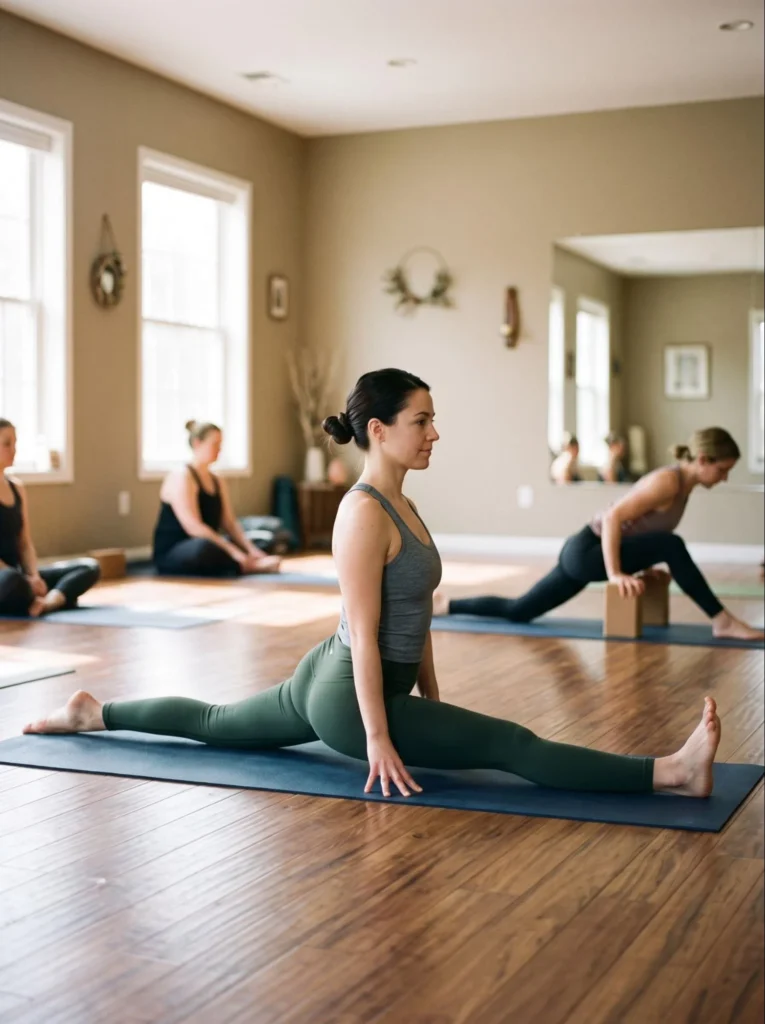
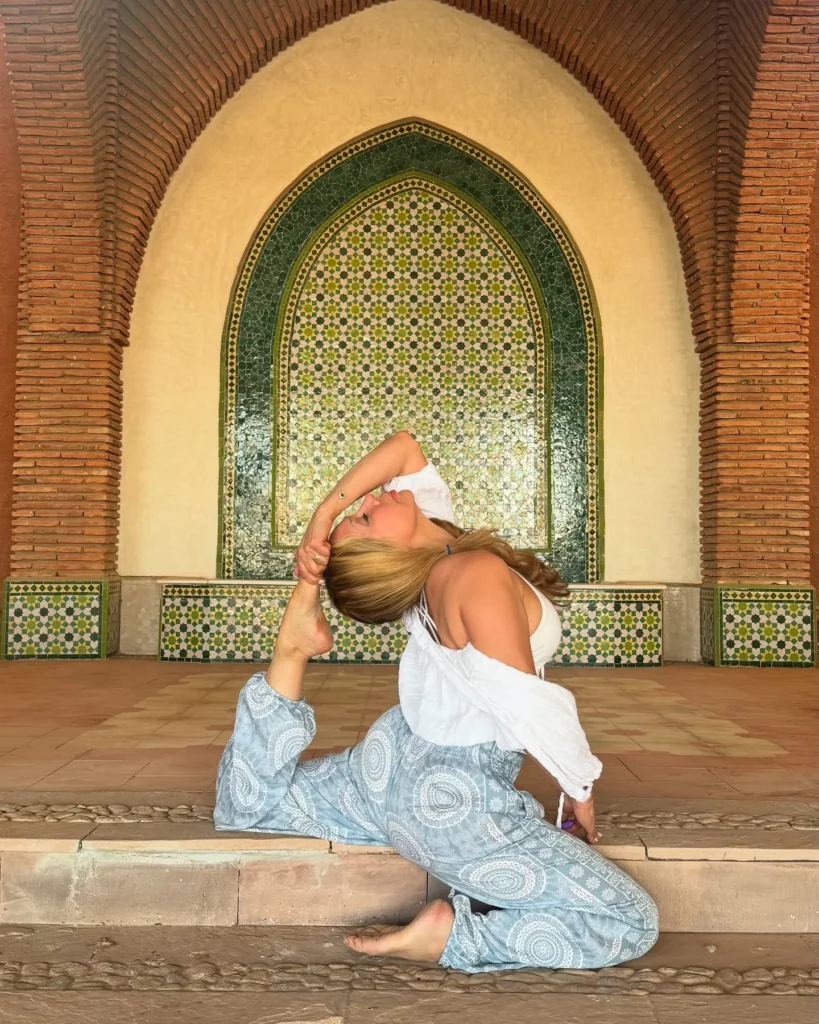
4. Advanced King Pigeon Pose for Deep Flexibility
An advanced king pigeon pose is a challenging yoga position that combines deep hip opening, backbending, and leg flexibility. The front leg remains folded on the floor while the back leg bends upward, with the foot drawn toward the head.
The pose creates a strong stretch through the hips, thighs, shoulders, chest, and spine while requiring balance and controlled movement.This difficult yoga pose is a beautiful example of advanced flexibility, strength, and body control.
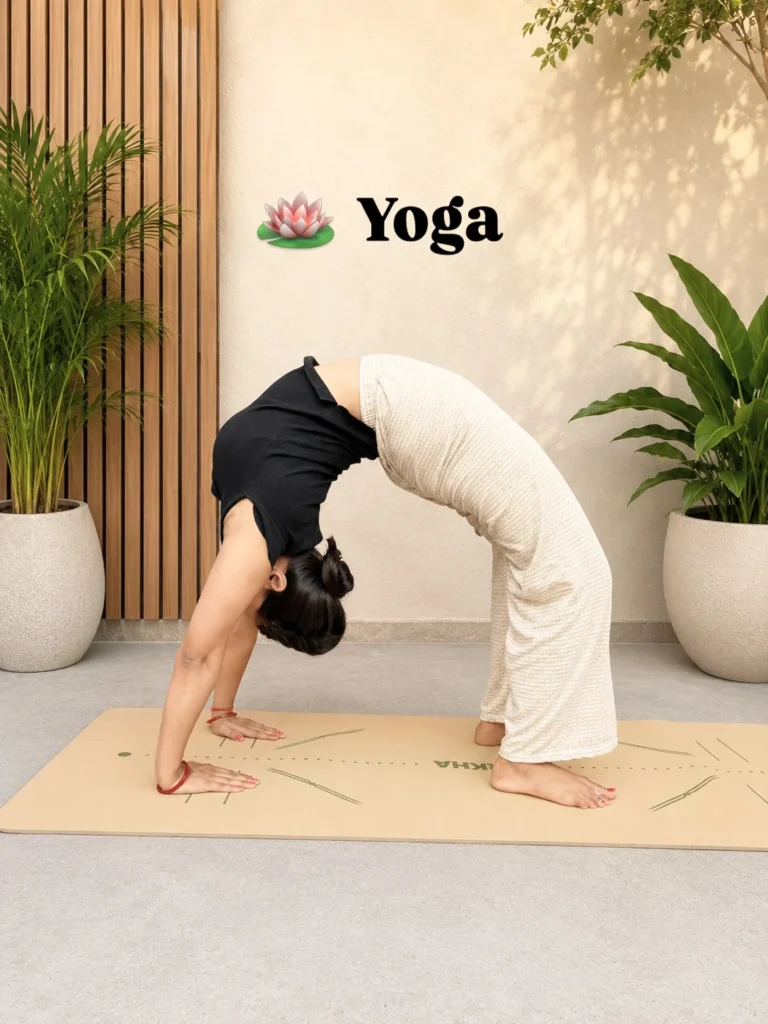
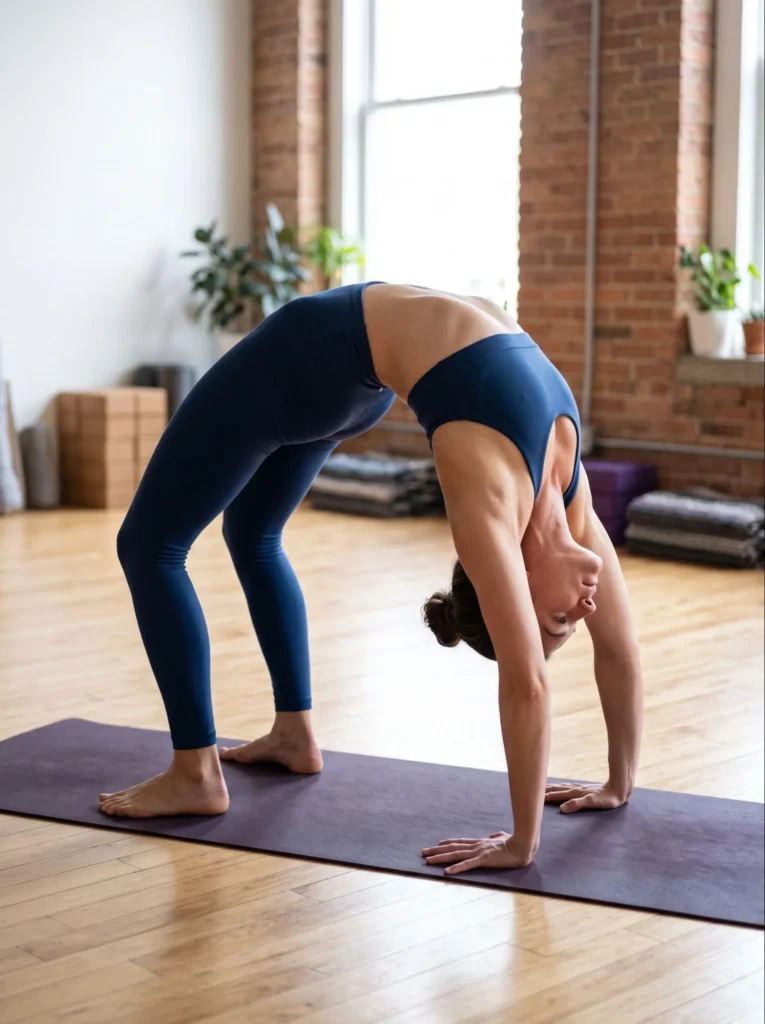
5. Advanced Wheel Pose for Back Flexibility
An advanced wheel pose is a challenging yoga position that creates a deep backbend while supporting the body with both hands and feet. The arms and legs remain strong as the chest and hips lift upward into a curved arch.
The pose creates a deep stretch through the spine, shoulders, chest, hips, and abdomen while requiring strong balance, flexibility, and body control.This difficult yoga pose is a powerful example of advanced back flexibility, strength, and controlled movement.
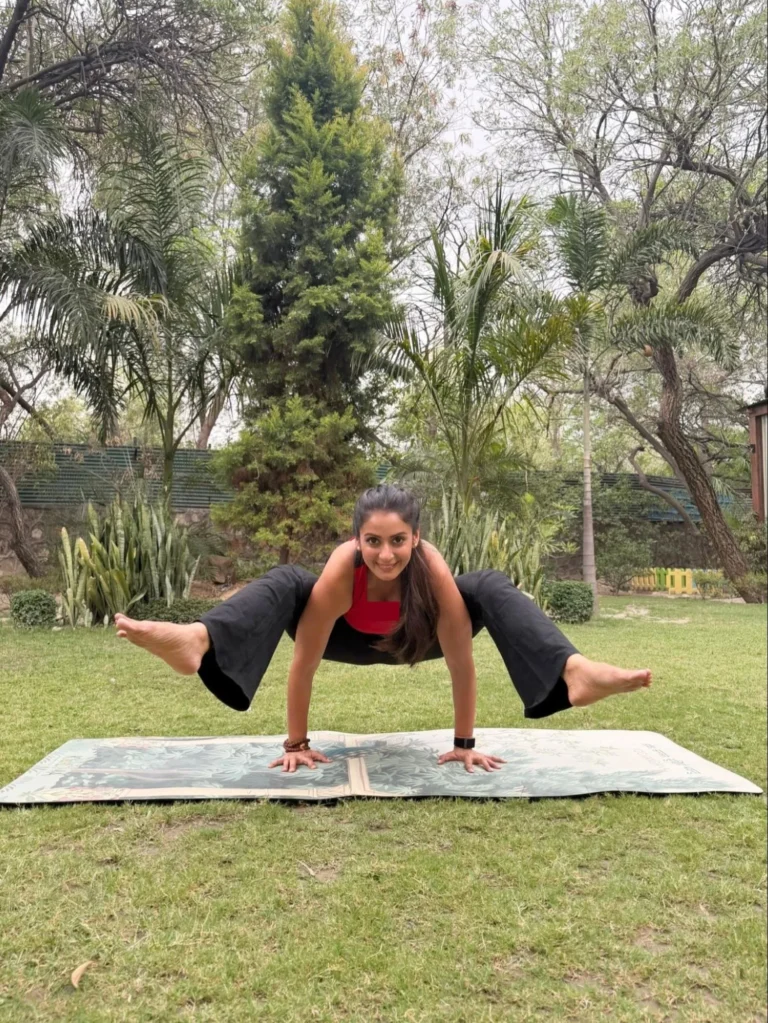
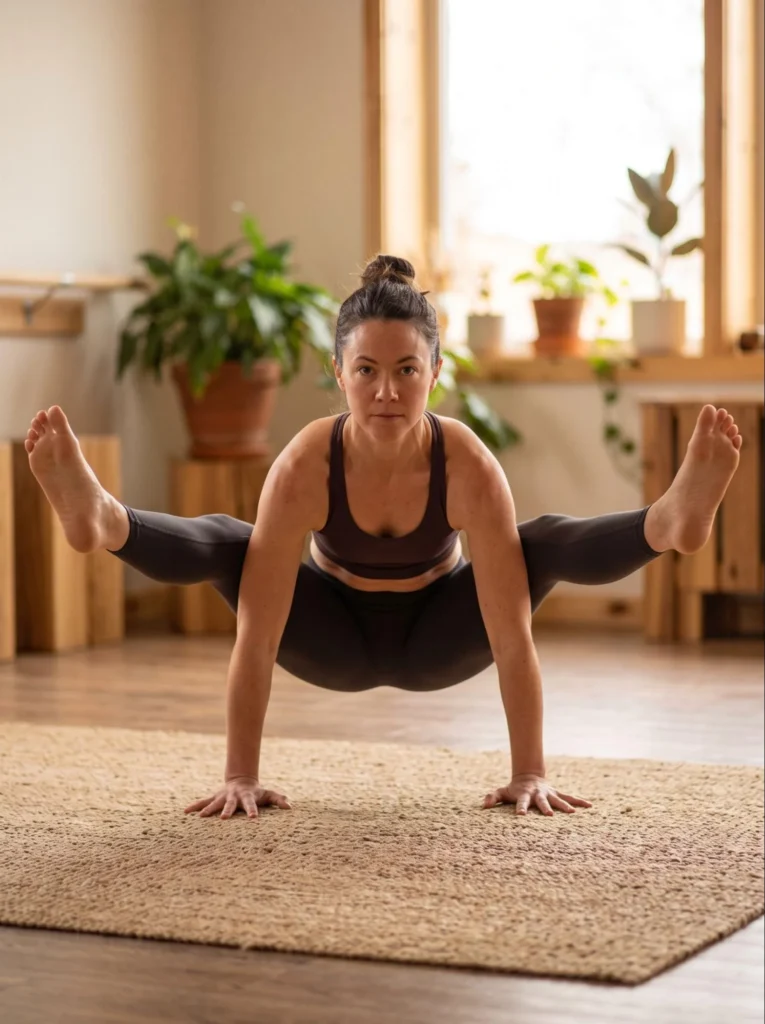
6. Firefly Pose (Tittibhasana)
Firefly Pose requires threading the arms behind the legs while balancing the entire body weight on the hands, with the legs extended straight out to the sides. This arm balance demands significant hamstring and hip flexibility combined with substantial upper body and core strength.
Why it’s difficult: Requires the hips and hamstrings to be flexible enough to thread the legs over the arms while simultaneously supporting body weight. Building toward it: Practicing hip-opening poses alongside arm balance fundamentals, like crow pose, helps build the combined skills needed.
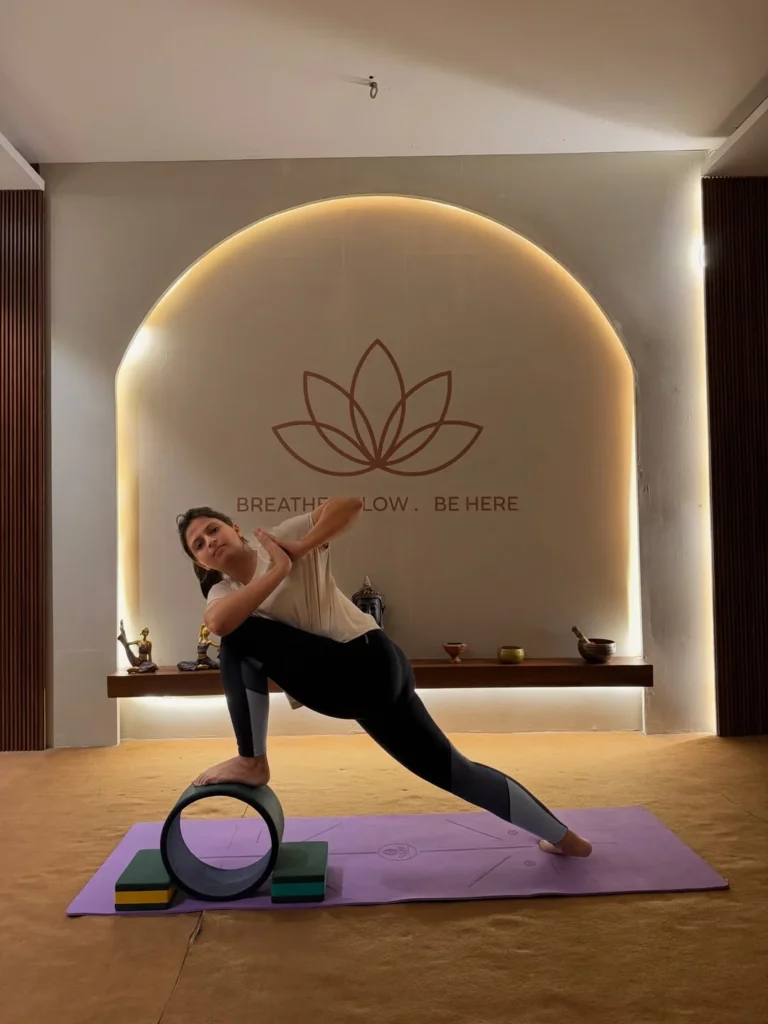
7. Twisted Side Lunge with Yoga Wheel
A twisted side lunge with a yoga wheel is a challenging pose that combines deep hip opening, leg flexibility, balance, and spinal rotation. One foot remains elevated on the yoga wheel while the opposite leg extends outward, creating a strong and controlled stretch.
The prayer-hand twist adds rotation through the upper body while the deep lunge works the hips, thighs, hamstrings, and inner legs.This difficult yoga pose is a strong example of advanced flexibility, balance, and controlled body movement.
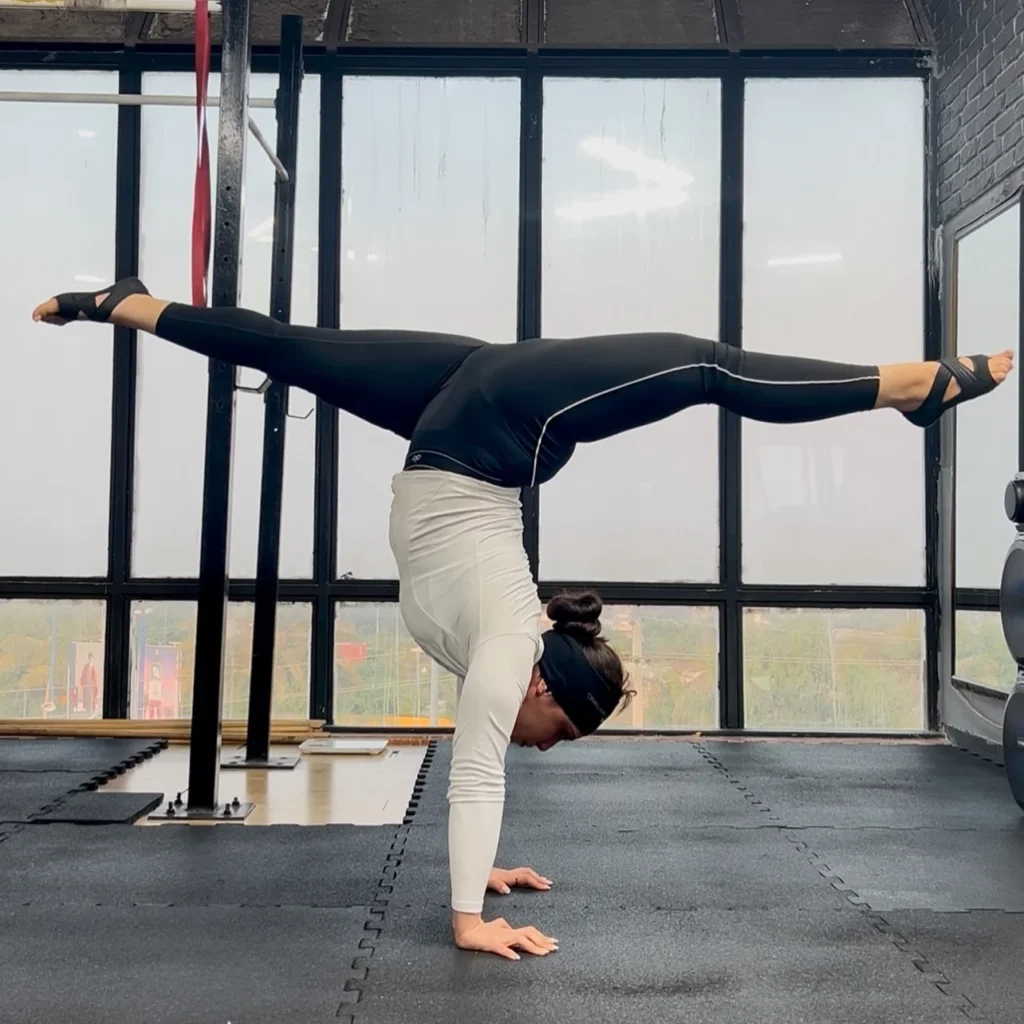
8. Straddle Handstand for Advanced Flexibility
A straddle handstand is a difficult yoga pose that combines upper-body strength, balance, core control, and deep leg flexibility. Both hands stay firmly planted on the floor while the body lifts upside down and the legs extend widely in opposite directions.
The wide split position creates a strong stretch through the hips, hamstrings, and inner thighs while the shoulders, arms, and core work to keep the body stable.This challenging yoga pose is a strong example of advanced flexibility, balance, strength, and controlled movement.
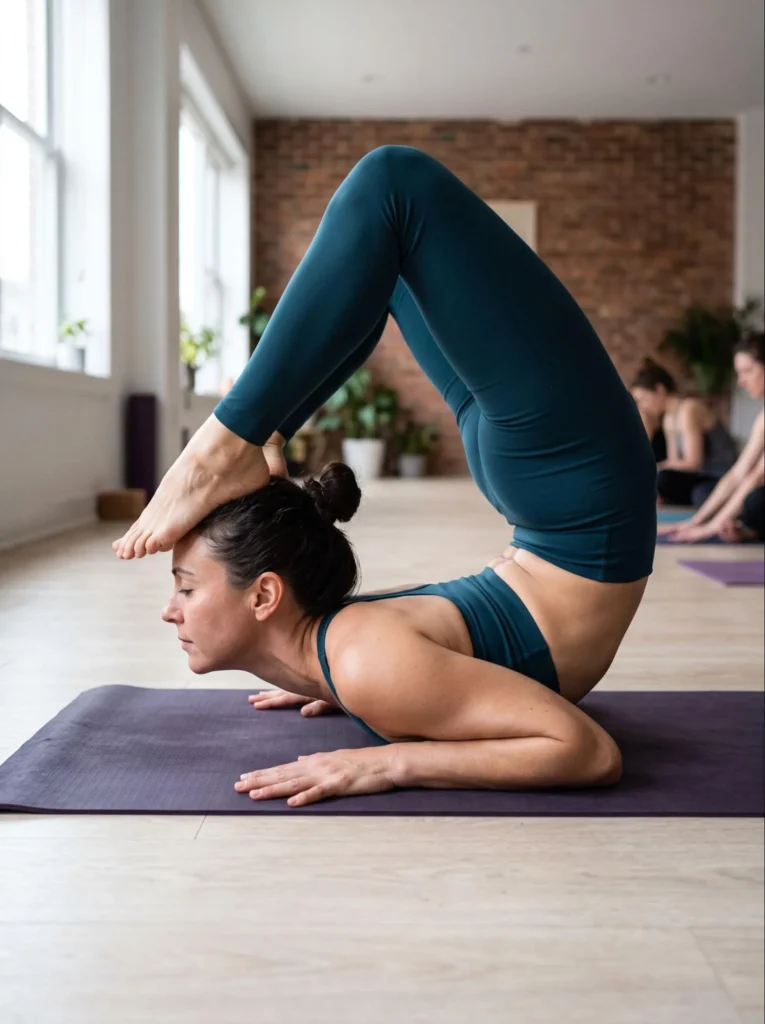
9. Formidable Face Pose / Ganda Bherundasana
Often considered one of the most advanced backbends in yoga, this pose involves lying on the stomach and bending the legs back so dramatically that the feet come down to touch the forehead, while balancing on the chest and shoulders.
Why it’s difficult: Requires an extreme degree of spinal flexibility that takes most practitioners years of dedicated backbend practice to develop, if they can achieve it at all. Building toward it: This pose is generally only attempted by highly experienced practitioners with years of consistent backbend training, ideally under close supervision from an advanced teacher.
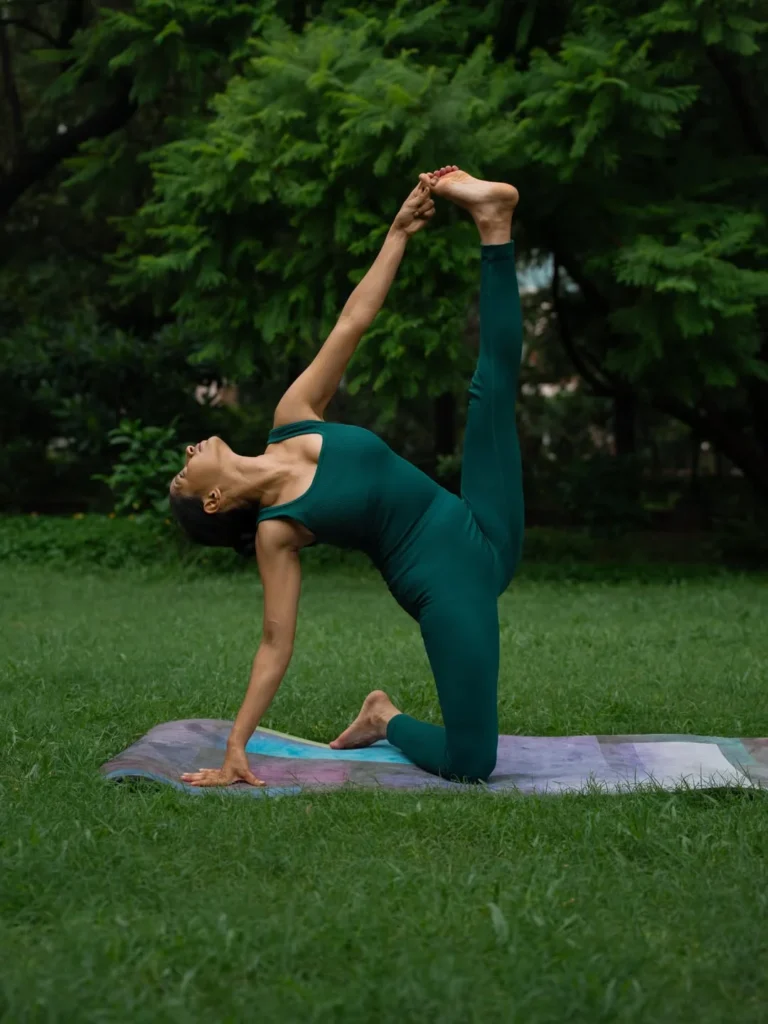
10. Advanced Kneeling Leg Hold for Flexibility
An advanced kneeling leg hold is a challenging yoga pose that combines deep hip opening, leg flexibility, balance, and a strong side stretch. One knee remains grounded while the opposite leg extends vertically upward and the raised foot is held with one hand.
The pose creates a deep stretch through the hamstrings, hips, inner thighs, shoulders, and side body while requiring strong core control and stability. This difficult yoga pose is a beautiful example of advanced flexibility, balance, strength, and controlled movement.
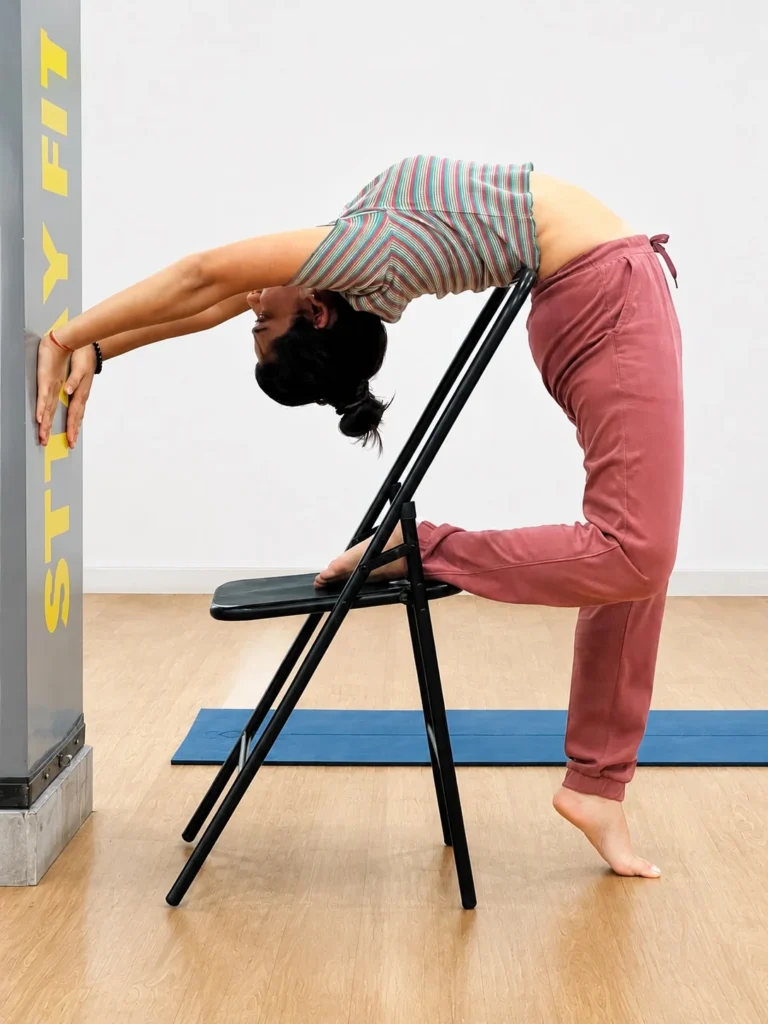
11. Chair-Assisted Deep Backbend for Flexibility
A chair-assisted deep backbend is a challenging yoga pose that uses a chair for support while creating a strong arch through the spine. One foot rests on the chair while the opposite leg stays grounded and both arms extend backward toward the wall.
The supported position creates a deep stretch through the back, shoulders, chest, hips, and thighs while requiring flexibility, balance, and controlled movement.This difficult yoga pose is a strong example of advanced back flexibility, body awareness, and deep stretching.
12. Full Wheel with Hands Walking to Feet (Advanced Backbend Progression)
This advanced backbend progression involves starting in wheel pose and gradually walking the hands closer to the feet, deepening the arch of the spine far beyond a standard wheel pose.
Why it’s difficult: Requires exceptional spinal flexibility built up over consistent, long-term backbend practice, along with significant shoulder mobility. Building toward it: This progression should only be attempted gradually, adding small increments over weeks or months rather than forcing the hands closer too quickly.
How to Safely Approach Advanced Flexibility Poses
Given the demanding nature of these poses, a thoughtful, patient approach is essential for avoiding injury:
- Never skip the warm-up: Cold muscles and joints are far more prone to injury, so always precede advanced pose attempts with a thorough warm-up sequence.
- Work with an experienced teacher: Many of these poses carry real injury risk if attempted with improper alignment, making qualified guidance especially valuable.
- Progress gradually: Rushing toward a full expression of any pose increases injury risk significantly. Consistent, incremental progress over months or years is the safer and more sustainable approach.
- Listen to your body: Sharp pain, as opposed to the sensation of a deep stretch, is a signal to back off immediately rather than push through.
- Use props when needed: Blocks, straps, and bolsters can support safer progress toward many of these poses without forcing the body beyond its current capacity.
Building a Flexibility Foundation Before Attempting Advanced Poses
Rather than jumping straight into these challenging postures, most practitioners benefit from building a solid flexibility foundation first:
- Consistent hip-opening practice: Poses like pigeon, lizard, and butterfly stretch help gradually build the hip mobility required for many advanced poses on this list.
- Regular backbend practice: Starting with gentler backbends like cobra and bridge pose, then progressing to camel and wheel pose, builds the spinal flexibility needed for more advanced variations.
- Shoulder mobility work: Many advanced poses require significant shoulder flexibility, which can be developed through consistent stretching and mobility exercises targeting this area specifically.
- Patience with hamstring flexibility: Since hamstring flexibility tends to develop more slowly than other areas, consistent, gentle stretching over months, rather than aggressive stretching sessions, tends to produce safer, more lasting results.
Common Mistakes When Working Toward Advanced Poses
Even dedicated practitioners can make a few common missteps when pursuing challenging flexibility goals:
- Forcing the stretch: Pushing into a deeper position than the body is ready for increases injury risk significantly, particularly in the lower back and hip joints.
- Neglecting strength training: Many of these poses require substantial strength alongside flexibility, and focusing exclusively on stretching without building supporting strength can leave joints unstable.
- Skipping recovery time: Advanced flexibility work places significant demand on connective tissue, which needs adequate recovery time between intense sessions to adapt safely.
- Comparing progress to others: Flexibility develops at different rates for different bodies, and comparing your own progress to others on social media can lead to unsafe, rushed attempts at advanced poses.
- Ignoring proper alignment: Even when a pose looks similar from the outside, subtle alignment differences can significantly change the safety and effectiveness of the position.
Understanding the Injury Risks Involved
Because these poses push the body toward the extreme end of its range of motion, it’s worth understanding the specific injury risks associated with this kind of advanced flexibility work:
- Lower back strain: Deep backbends like king pigeon, wheel variations, and the formidable face pose place significant demand on the lumbar spine, and rushing into these positions without adequate preparation can lead to strain or more serious injury.
- Hip joint stress: Poses requiring extreme hip opening, like full splits or firefly pose, can place unwanted stress on the hip joint itself if the surrounding muscles aren’t yet flexible enough to support the position.
- Knee strain in lotus-based poses: Poses involving a full lotus position, like the bound lotus forward fold, carry particular risk for the knees if the hips aren’t sufficiently open, since the body may compensate by twisting at the knee instead.
- Shoulder and wrist strain: Arm-balancing poses like peacock pose and scorpion pose place unique demands on the wrists and shoulders that differ from more common yoga postures, requiring dedicated preparation in these specific areas.
When to Seek Professional Guidance
Given the advanced nature of these poses, there are clear situations where working with a qualified teacher becomes especially important:
- If you have any existing injuries: Prior injuries to the back, hips, knees, or shoulders warrant extra caution and professional guidance before attempting any of these poses.
- If you’re new to backbending or deep hip opening: Foundational guidance on proper alignment early on can prevent the development of compensatory habits that become harder to correct later.
- If you plan to attempt poses like scorpion or peacock: These inverted or balancing poses carry a higher risk of falls and should ideally be practiced near a wall or with a spotter until stability is well established.
- If progress feels stalled or painful: A teacher trained in advanced asana can often identify subtle alignment adjustments that unlock progress or reveal underlying tightness that’s harder to notice on your own.
Final Thoughts
These 12 poses represent some of the most demanding flexibility challenges in the broader yoga practice, requiring years of consistent, patient work to approach safely. Rather than viewing them as a checklist to rush through, consider them long-term goals that can guide a sustainable, mindful practice over months or years.
Focus on building a strong foundation of hip, spine, and shoulder mobility, work with qualified guidance when possible, and remember that the journey toward these poses often offers just as much value as achieving the full expression itself. Progress may look different from week to week, and that’s completely normal — the practitioners who eventually achieve poses like these are almost always the ones who approached the process with patience rather than urgency, treating each small gain in mobility as meaningful progress in its own right.