The Best Homemade Loaded Potato Soup: A Comforting Classic
Loaded potato soup is a baked potato that decided to become dinner. All the same parts are there, the potato, the cheese, the bacon, the sour cream, the green onion, just in a bowl instead of a skin.
What makes a good one is texture. The soup should be thick enough to hold a spoon upright but still have actual chunks of potato in it. Blend it too smooth and it turns into a paste. Leave it too chunky and it reads as watery.
This version handles that by mashing part of the pot and leaving the rest whole, which gives you both in the same bowl.
It comes together on the stovetop in about 45 minutes, using one pot from start to finish. The bacon renders first and everything else gets built in that fat, which is where most of the flavor ends up coming from.

What Makes a Loaded Potato Soup Work
Three things decide whether this comes out well, and only one of them is the ingredients.
The potato variety. Russets are starchy and break down partially as they cook, which thickens the soup from the inside. Waxy potatoes like red or new potatoes hold their shape completely, which sounds good but leaves you with potato chunks floating in thin broth.
How much you mash. This is the real control. Mashing about a third of the pot gives you a thick base with recognisable potato still in it. Mashing everything turns it into a purée. Mashing nothing leaves it watery.
When the dairy goes in. Cream and cheese both split if they boil. They go in late, off a rolling boil, and the soup never comes back up to a hard simmer after that point.
Get those three right and the rest is seasoning.
Why Homemade Beats Canned
Canned potato soup exists, and it is one of the bigger gaps between the store version and the homemade one.
Texture. Canned potato soup is uniformly smooth because it has to survive processing and a long shelf life. There is no chunk of potato in it. That texture contrast is most of what makes the homemade version satisfying.
Real bacon. Canned versions use bacon flavoring or tiny reconstituted bits. Six slices rendered in the pot you then build the soup in is a completely different thing.
Sodium. Canned soups routinely run 800 to 1,000 mg per serving. Here you control it, and the bacon and cheese already bring plenty.
Ingredients
The Base
- 2 lb russet potatoes (about 4 to 5 medium), peeled and cut into ¾-inch cubes
- 6 slices bacon
- 1 medium onion, finely chopped
- 3 cloves garlic, minced
- 3 tablespoons butter
- ¼ cup all-purpose flour
- 4 cups chicken broth
- 1 cup heavy cream
- 2 cups shredded sharp cheddar, divided
- Salt and black pepper, to taste
For Topping
- Reserved crispy bacon
- Sliced green onions
- Sour cream
- Fresh parsley, chopped
Ingredient Tips
Russets, not red or Yukon Gold. Russets are high in starch and break down partially as they simmer, which is what thickens the soup naturally. Yukon Golds work but stay firmer, so you will need to mash more. Red potatoes hold their shape entirely and leave you with a thin soup.
Grate the cheese from a block. Pre-shredded cheese is coated in anti-caking starch that does not dissolve. It leaves the soup slightly grainy and can make the cheese clump instead of melting smoothly.
Sharp cheddar over mild. There is a lot of cream and potato in this pot, and mild cheddar disappears into it. Sharp cheddar is the only one that reads clearly in the finished soup.
Thick-cut bacon. It renders more fat, which is what you build everything else in, and the pieces stay substantial enough to notice on top.
Heavy cream, not milk or half-and-half. Lower-fat dairy is far more likely to split when it hits a hot pot. Heavy cream is stable enough to handle it.
Step-by-Step Instructions
Step 1: Prep the Potatoes
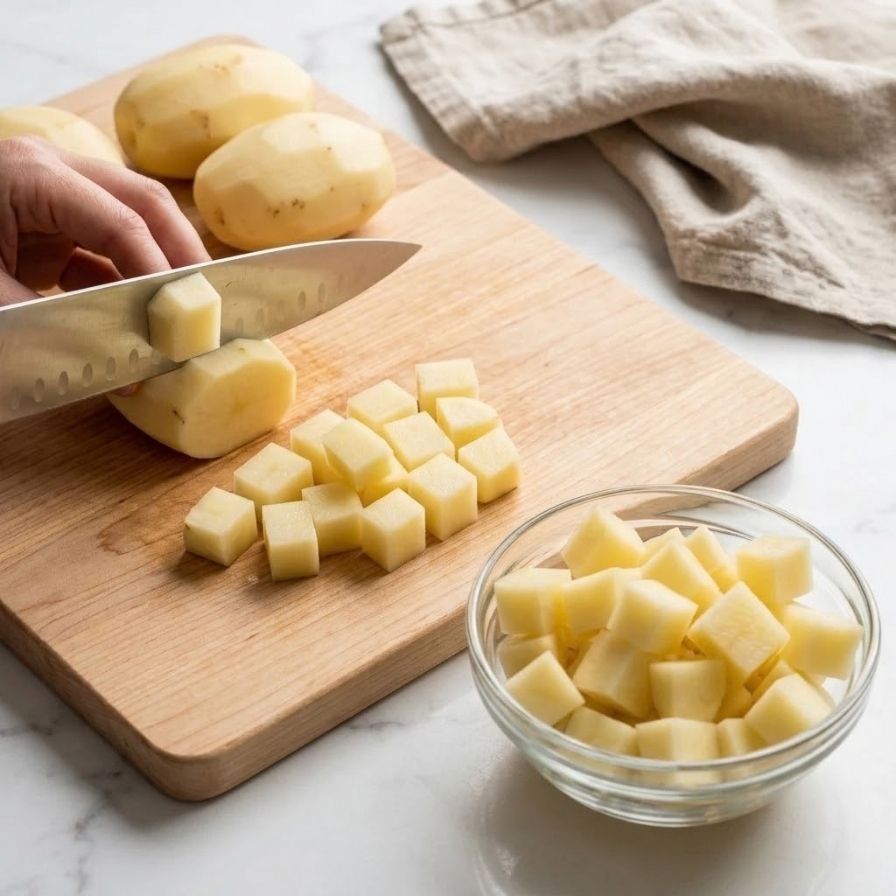
Peel the potatoes and cut them into ¾-inch cubes. Keep them roughly the same size so they cook evenly.
If you are not cooking immediately, hold the cubes in a bowl of cold water so they do not brown. Drain and pat them dry before they go in the pot.
Step 2: Cook the Bacon
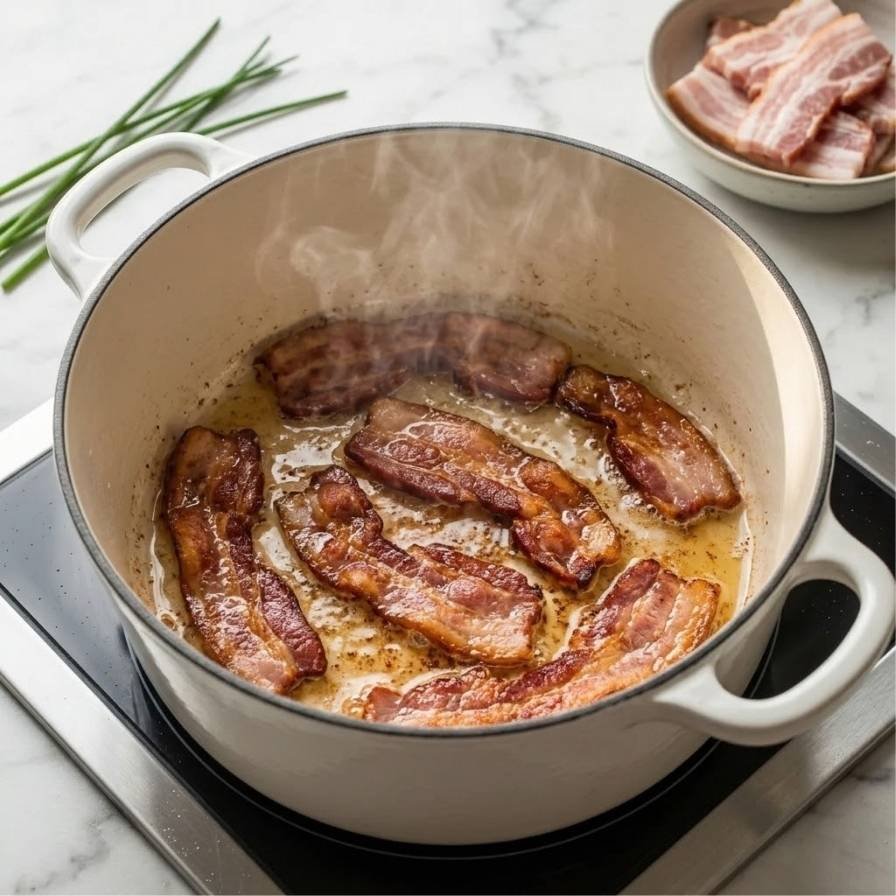
Cook the bacon in a large heavy pot over medium heat until crisp, about 8 minutes, turning once.
Move it to a paper towel-lined plate and chop it once cooled. Leave 2 tablespoons of the fat in the pot and pour off the rest.
That fat is the flavor base for everything that follows, which is why this step comes first rather than cooking the bacon separately.
Step 3: Soften the Onion
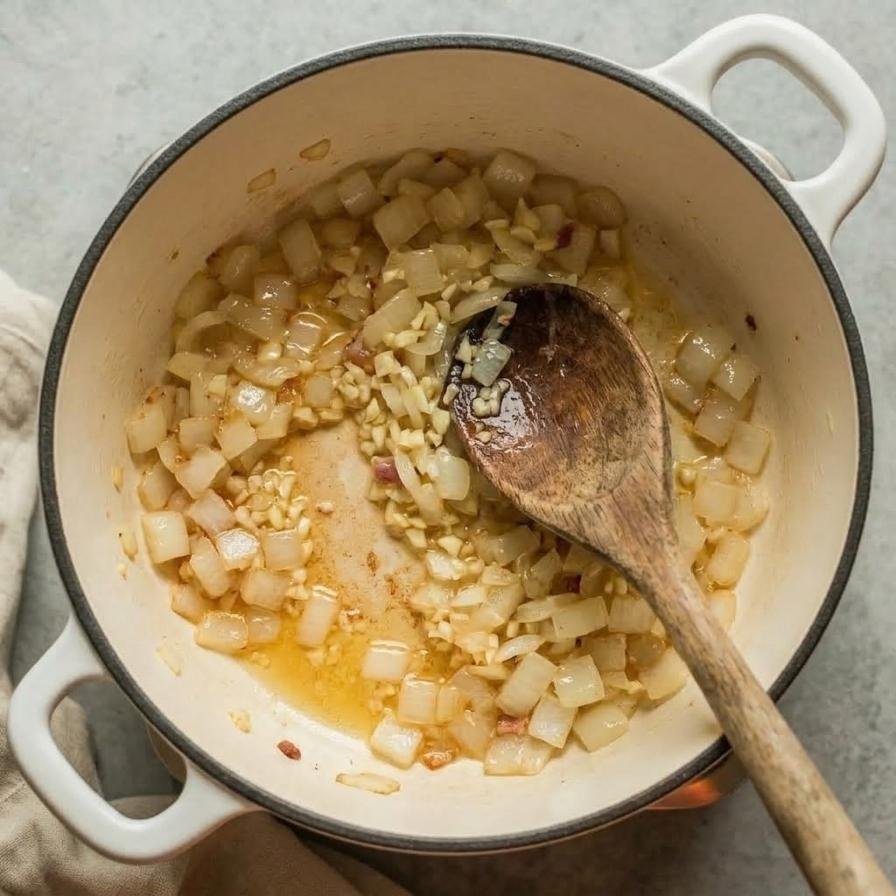
Add the chopped onion to the bacon fat and cook over medium heat for about 5 minutes, until soft and translucent.
Add the garlic and cook 30 seconds more, just until fragrant. Garlic burns fast and turns bitter, so do not walk away here.
Then scoop the onion and garlic out into a small bowl. They go back in shortly. Taking them out now means the roux in the next step whisks smooth instead of catching in lumps around the onion pieces.
Step 4: Make the Roux

Add the butter to the empty pot and let it melt into the remaining bacon fat.
Sprinkle the flour over it and whisk constantly for 1 to 2 minutes, until it looks like wet sand and smells faintly nutty.
That minute matters. Undercooked flour leaves a raw, pasty taste that no amount of cheese covers up.
Step 5: Add the Broth Slowly
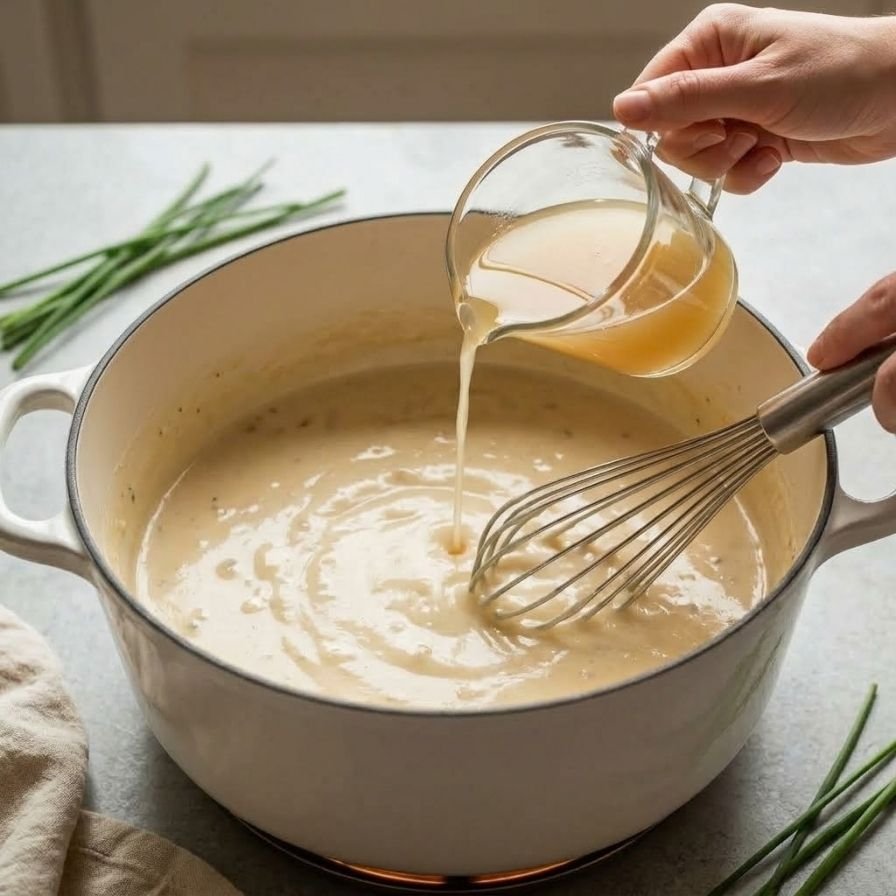
Pour the chicken broth in a thin stream while whisking constantly.
Adding it all at once is the single most common cause of lumpy soup. The flour needs to disperse gradually into the liquid, and a thin stream lets that happen.
Once it is all in and smooth, stir the onion and garlic back into the pot.
Step 6: Simmer the Potatoes
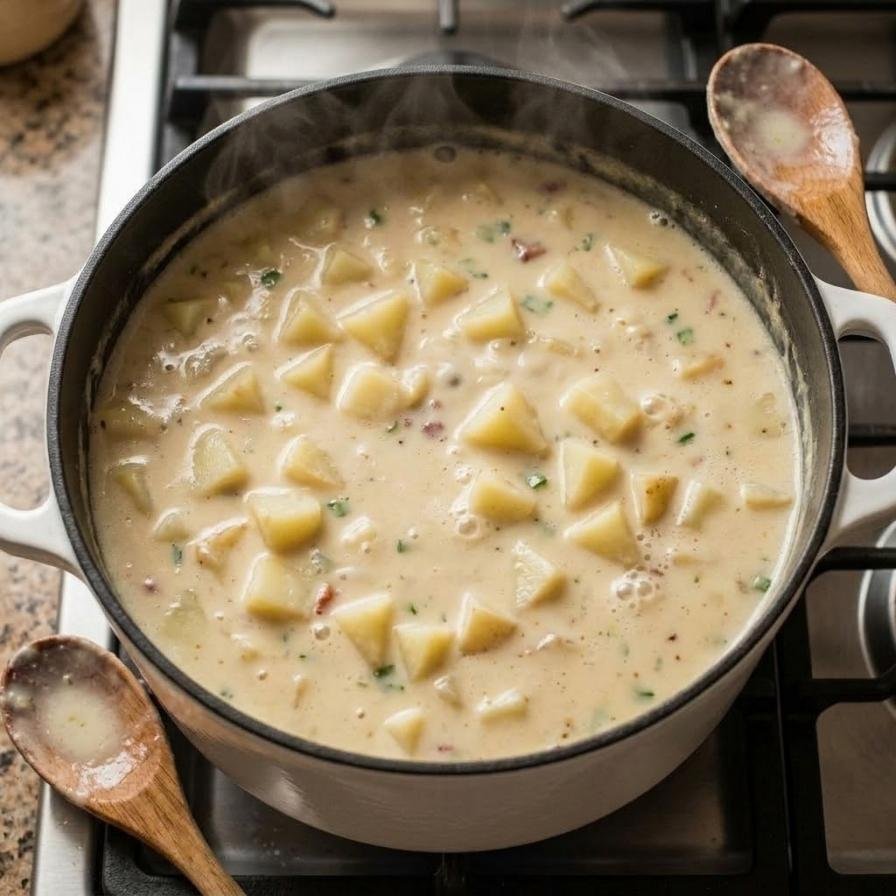
Add the cubed potatoes, bring the pot to a gentle simmer, then cover and cook for 15 to 20 minutes.
They are ready when a fork slides into a cube with no resistance. Underdone potatoes will not mash properly in the next step.
Step 7: Mash About a Third

Turn off the heat. Using a potato masher, mash roughly a third of the potatoes directly in the pot.
Work around the pot rather than in one spot, so you get an even mix of mashed and whole.
Do not use a blender unless you want a purée. An immersion blender for even a few seconds will take you past the point of no return. If you want it smoother, just mash more.
Step 8: Add the Cream and Cheese

With the heat off or on the lowest possible setting, stir in the heavy cream.
Then add 1½ cups of the cheddar, a handful at a time, stirring until each addition melts before adding the next.
The soup must not boil from this point on. Boiling dairy splits it, and cheese added to a boiling pot clumps instead of melting.
Stir in most of the chopped bacon, saving some for topping.
Step 9: Season and Serve

Taste, then season with salt and pepper.
Hold back on salt until now. Bacon, broth, and cheddar all bring their own, and the soup is usually closer to seasoned than you expect.
Ladle into bowls and top with the remaining cheese, reserved bacon, green onions, a spoon of sour cream, and parsley.
Make It Your Own
Vegetarian. Skip the bacon, use vegetable broth, and start the onions in 2 tablespoons of butter instead of bacon fat. Add a teaspoon of smoked paprika to replace the smokiness the bacon was providing.
Lighter. Replace half the cream with whole milk and cut the cheese to 1½ cups total. Mash a little more to make up for the lost body.
Heartier. Add diced carrot and celery with the onion, or stir in a cup of corn with the potatoes.
Spicier. Add a diced jalapeño with the onion, or finish each bowl with hot sauce.
Broccoli cheddar style. Add 2 cups of small broccoli florets during the last 8 minutes of the potato simmer.
Storage and Reheating
Refrigerator. Up to 4 days in an airtight container. It thickens considerably as it chills, which is normal.
Reheating. Low heat on the stovetop, stirring, with a splash of broth or milk to loosen it. Do not let it boil, since dairy splits on reheating exactly the same way it does the first time.
Microwave. Works for a single bowl at 50% power in 60-second bursts, stirring between each. Full power will split it.
Freezing is not recommended. Cream-based potato soups separate badly when frozen and thawed, and the potatoes go mealy. If you want to freeze some, make the base through Step 7 and freeze that, then add the cream and cheese fresh when you reheat.
Frequently Asked Questions
Can I make this in a slow cooker?
Yes, with adjustments. Cook the bacon and make the roux on the stovetop first, then transfer everything except the cream and cheese to the slow cooker. Cook on low for 6 hours, mash, then stir in the dairy during the final 20 minutes with the lid off.
Can I use milk instead of heavy cream?
You can, but it splits more easily and the soup comes out noticeably thinner. If you use milk, keep the heat lower than you think you need to, and expect to mash more potatoes to compensate for the lost body.
Do I have to peel the potatoes?
For a smooth loaded potato soup, yes. Russet skins are thick and turn leathery as they simmer. If you want the skins in for texture, use Yukon Golds instead, which have thinner skins.
Why did my cheese turn stringy instead of melting?
The pot was too hot, or the cheese went in all at once. Add it in handfuls off the heat, letting each melt before the next goes in.
How do I make it thicker without more flour?
Mash more potatoes. Their starch does the job better than flour does and does not risk a pasty taste.
Can I make it ahead for a party?
Make it through Step 7, cool, and refrigerate. Reheat gently and add the cream and cheese just before serving. This also avoids the reheating split risk entirely.
Final Thoughts
This is one pot and about 45 minutes, and most of that is the potatoes simmering while you do something else.
The parts worth remembering are the three that actually decide how it turns out: russet potatoes for the starch, mashing about a third of the pot for the texture, and keeping the heat off once the cream goes in.
Homemade Loaded Potato Soup
Thick, creamy, and loaded with bacon and cheddar. One pot, stovetop, about 50 minutes start to finish.
- 2 lb russet potatoes, peeled and cut into ¾-inch cubes
- 6 slices thick-cut bacon
- 1 medium onion, finely chopped
- 3 cloves garlic, minced
- 3 tablespoons butter
- ¼ cup all-purpose flour
- 4 cups chicken broth
- 1 cup heavy cream
- 2 cups sharp cheddar, grated from a block, divided
- Salt and black pepper, to taste
- Reserved crispy bacon
- Sliced green onions
- Sour cream
- Chopped fresh parsley