Best Homemade Mayonnaise Recipe: Rich, Creamy, and Better Than Store-Bought
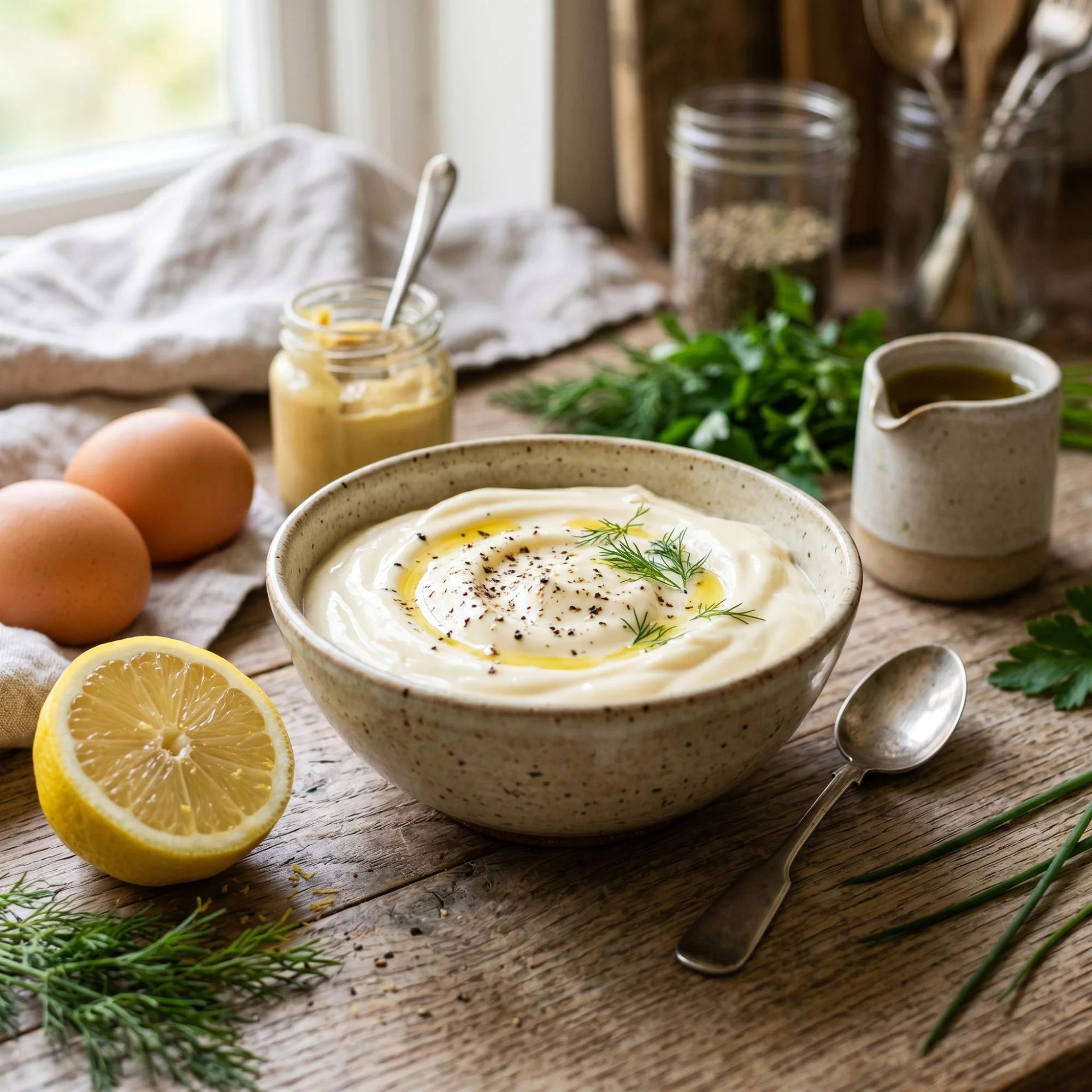
Make every sandwich, salad, and dipping sauce taste better with this Best Homemade Mayonnaise Recipe. Smooth, creamy, and rich in flavor, homemade mayonnaise is surprisingly easy to prepare using a few basic ingredients such as eggs, oil, lemon juice, and mustard.
It comes together in just minutes and tastes fresher than most store-bought versions, without unnecessary preservatives. You can use it as a spread for burgers and sandwiches, a base for dressings, or a creamy addition to potato and pasta salads. Once you try this quick and reliable method, homemade mayonnaise may become a regular kitchen favorite.
Why Make Mayonnaise at Home?
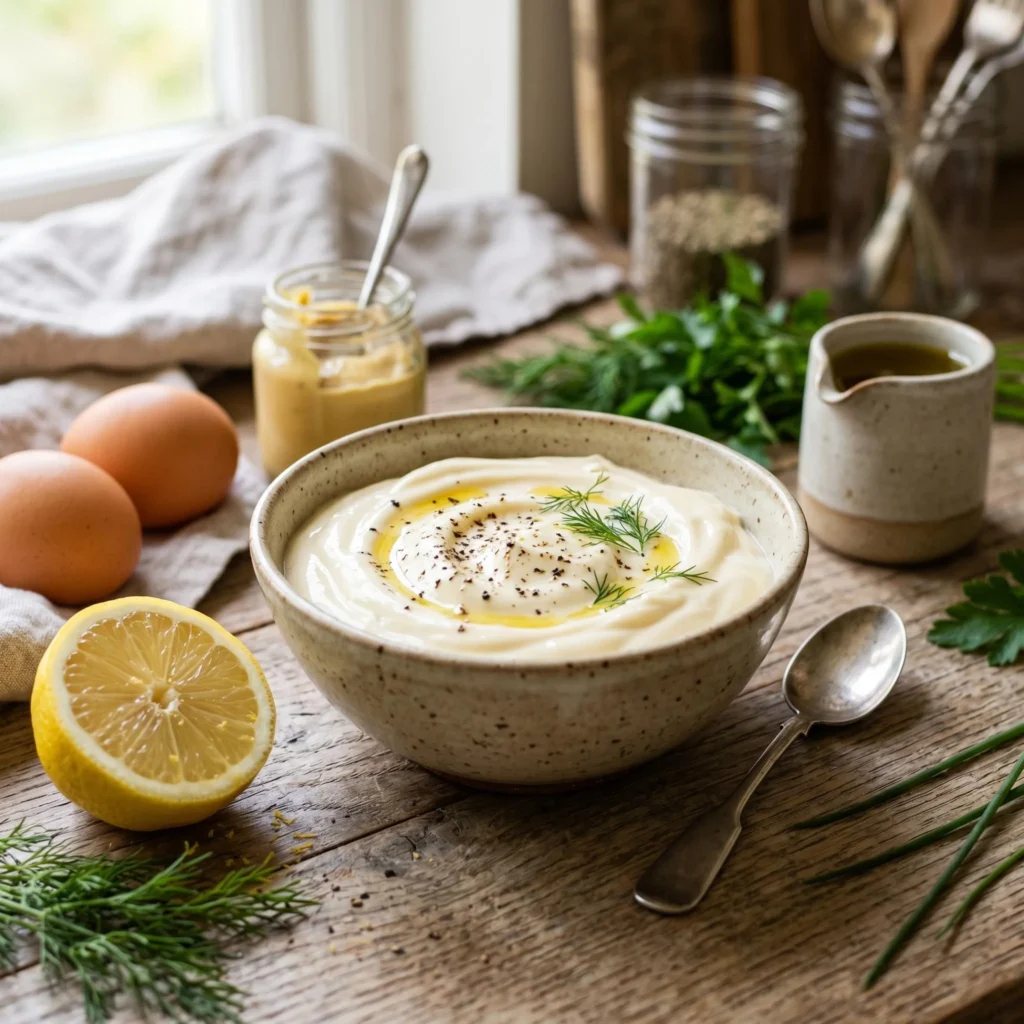
If you’ve only ever bought mayonnaise from the grocery store, you’re in for a massive upgrade. Homemade mayonnaise is:
- Silky smooth and incredibly rich
- Free from artificial preservatives and stabilizers
- Budget-friendly
- Made with simple, recognizable ingredients
- Fresh and highly customizable
And honestly, the flavor difference is undeniable. Fresh mayonnaise has a bright, clean taste and a velvety mouthfeel that packaged versions, which often sit on shelves for months, just can’t match.
Ingredients for the Best Homemade Mayonnaise
One of the reasons this recipe works so flawlessly is its simplicity. You likely already have everything in your kitchen right now. You’ll need:
- 1 large egg (at room temperature)
- 1 tablespoon fresh lemon juice (or white wine vinegar)
- 1 teaspoon Dijon mustard
- 1/4 teaspoon fine sea salt
- 1 cup neutral-tasting oil (like avocado oil, light olive oil, or sunflower oil)
That’s it. No complicated chemical additives, no special commercial equipment,just beautiful, raw ingredients.
Step by Step Homemade Mayonnaise Recipe
Follow these simple steps for thick, creamy, and stable mayonnaise every time.
Step 1: Gather Room Temperature Ingredients This is the most crucial step. Ensure your egg, lemon juice, and mustard have all come to room temperature before you begin. Cold ingredients resist emulsification and can cause your mayonnaise to “break” or remain a liquid soup.
Step 2: Combine the Base In a tall, narrow jar or the cup that came with your immersion blender, add the room-temperature egg, fresh lemon juice, Dijon mustard, and sea salt.
Step 3: Add the Oil Pour the full cup of neutral oil directly on top of the base ingredients. Let it sit for just a moment so the egg and mustard settle at the very bottom of the jar under the oil.
Step 4: Blend and Emulsify Place your immersion blender all the way at the bottom of the jar, ensuring the blades are fully covering the egg yolk. Turn the blender on high speed and do not move it. Keep it pressed against the bottom for about 10 to 15 seconds. You will see thick, white mayonnaise begin to bloom and rise upward.
Step 5: Incorporate the Remaining Oil Once the bottom half of the jar has turned into thick mayonnaise, slowly begin to tilt and raise the immersion blender up and down. This will pull the remaining oil from the top down into the emulsion. Continue blending for another 10 to 20 seconds until all the oil is incorporated and the mixture is thick and luscious.
Pro Tips for Perfect Homemade Mayonnaise
Small details make a big difference when working with emulsions.
- Use the right oil: Avoid extra-virgin olive oil; its robust flavor becomes bitter when blended at high speeds. Stick to neutral oils like avocado or light-tasting olive oil.
- The immersion blender is your best friend: While you can make mayo in a food processor or by hand whisking, the immersion blender method is virtually foolproof and yields the thickest texture.
- How to fix “broken” mayo: If your mixture turns out thin and watery, don’t throw it away! Add a fresh egg yolk to a clean bowl, then very slowly whisk your runny, broken mayonnaise into the new yolk, drop by drop, until it thickens up.
- Taste and adjust: Once blended, taste your mayonnaise. Feel free to add an extra pinch of salt, a dash more lemon for acidity, or even a clove of minced garlic for a quick aioli.
How to Store Homemade Mayonnaise
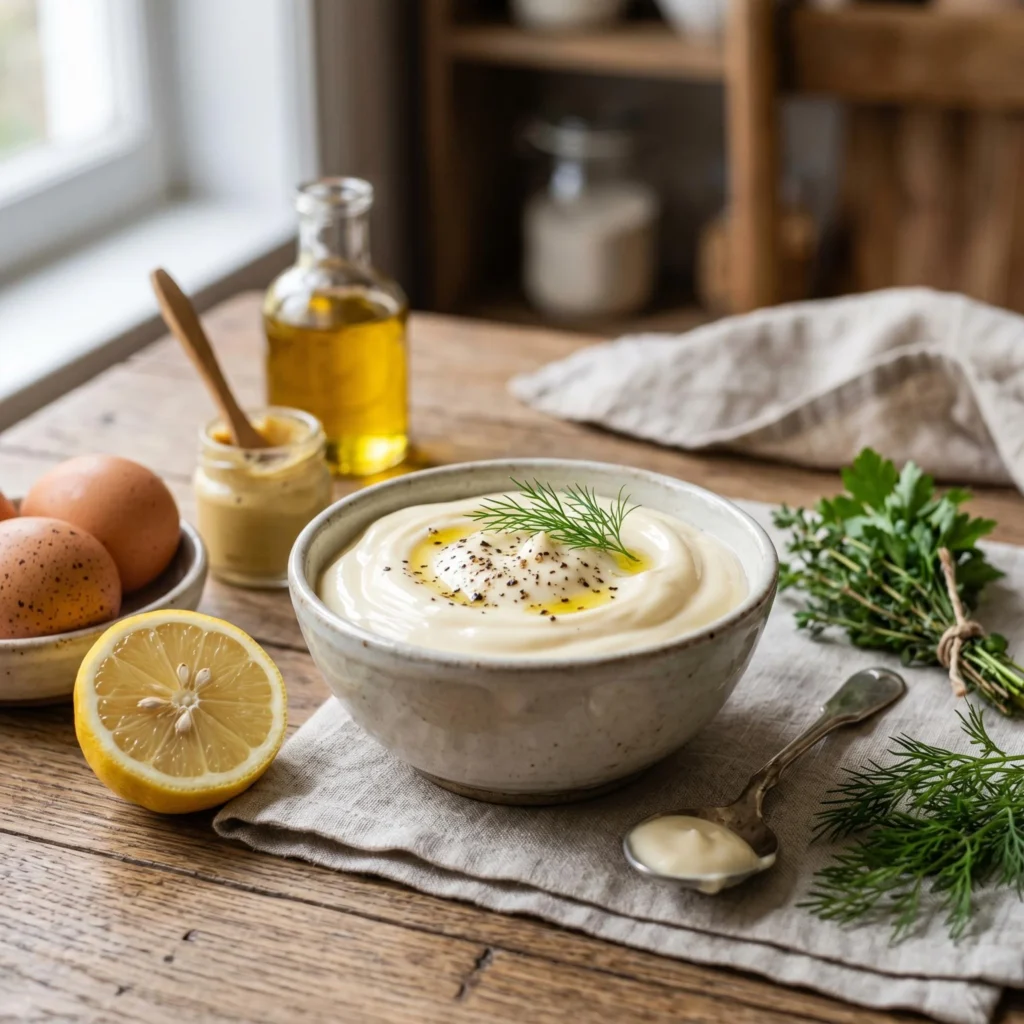
Because this recipe uses fresh, raw ingredients without commercial preservatives, it does not have the shelf life of a store-bought jar.
Transfer your fresh mayonnaise to a clean, airtight glass jar. Store it immediately in the refrigerator. Homemade mayonnaise will keep beautifully in the fridge for up to 1 week. Do not freeze mayonnaise, as the emulsion will break and separate when thawed.
Ways to Use Homemade Mayonnaise
Now comes the fun part. This rich, creamy spread is incredibly versatile and makes everything it touches taste gourmet. Use it for:
- The ultimate binding agent for chicken, egg, or tuna salads
- A premium spread for classic BLTs and club sandwiches
- A base for creamy dressings, like homemade ranch or Caesar
- Dipping crispy, hot French fries or sweet potato wedges
- Spicy sriracha mayo for sushi or fish tacos
Once you start making your own mayonnaise, you’ll find yourself planning your meals and culinary content around it.
Frequently Asked Questions
Is it safe to use raw eggs? Using raw eggs does carry a small risk of foodborne illness. If you are concerned, cooking for pregnant women, or serving the elderly, you can easily use pasteurized eggs in the shell, which are heat-treated to kill bacteria but still perform exactly like raw eggs in this recipe.
Why does my mayo taste bitter? This is almost always due to the choice of oil. Extra-virgin olive oil turns incredibly bitter when the fast-moving blades of a blender break down its polyphenols. Always opt for a neutral oil.
Can I make this without an immersion blender? Yes. You can use a standard blender or food processor. Place the egg, mustard, lemon, and salt in the processor, turn it on, and very slowly drip the oil in through the top chute until it thickens. It takes more time, but it works!
Final Thoughts
This easy homemade mayonnaise recipe proves that making gourmet, scratch-made staples doesn’t have to be complicated or intimidating. With just a few basic ingredients and the right technique, you can create a thick, creamy condiment that completely transforms your sandwiches, salads, and dips. Once you taste that fresh, bright flavor and witness those beautiful, silky peaks, you’ll understand why so many home cooks and food creators swear by homemade. So grab your immersion blender, crack an egg, and enjoy the simple joy of making perfect mayonnaise from scratch.