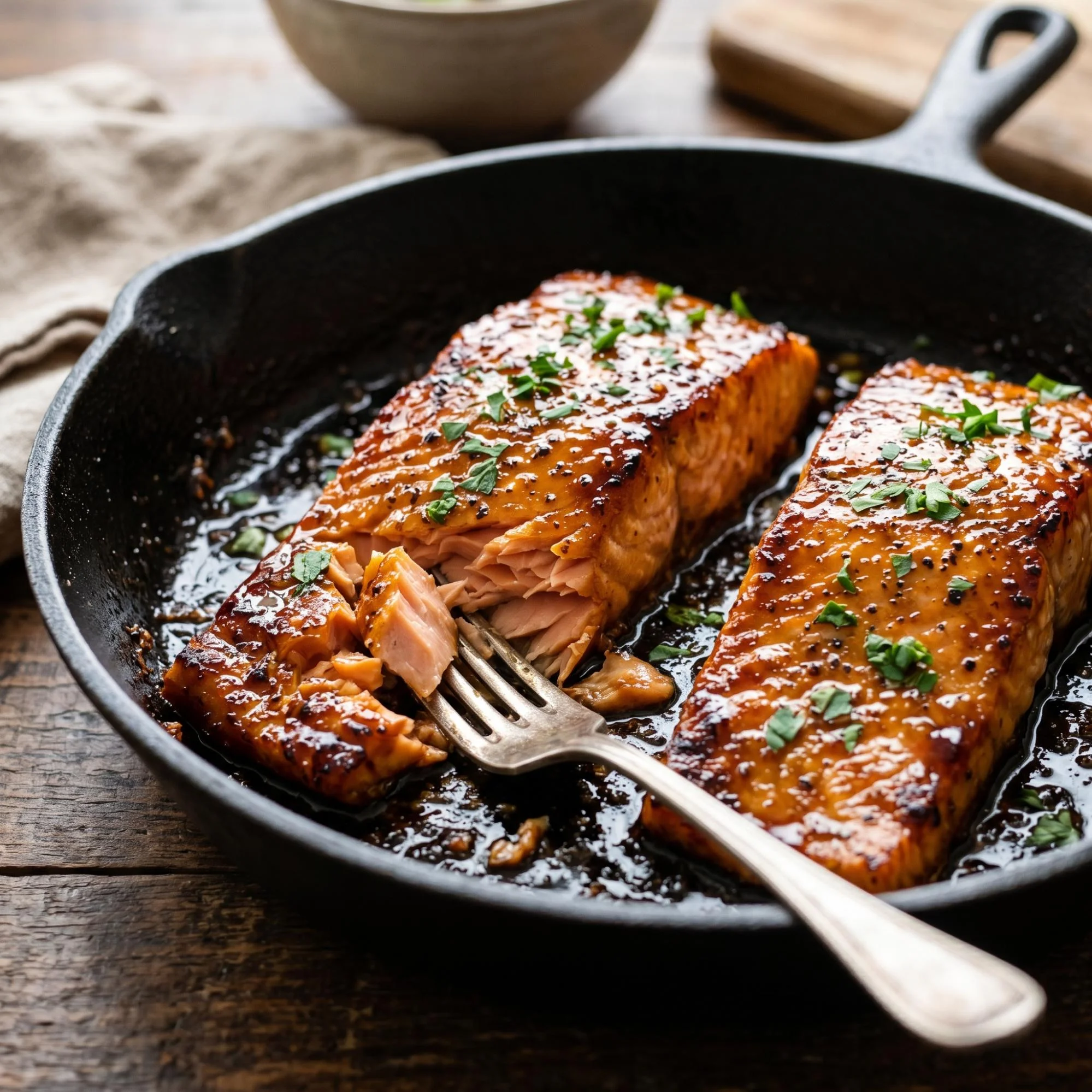
Easy Honey Garlic Glazed Salmon Recipe: Sticky, Sweet, and Better Than Takeout
Make dinner simple and delicious with this Easy Honey Garlic Glazed Salmon Recipe. Tender, flaky salmon is coated in a sticky homemade glaze made with honey, garlic, soy sauce, and a touch of citrus for the perfect balance of sweet, savory, and tangy flavors.
The salmon cooks quickly and develops a beautiful caramelized finish, making it ideal for busy weeknights, family dinners, or even a special meal at home.
Serve it with steamed rice, roasted vegetables, salad, or mashed potatoes for a complete dinner. Easy to prepare and packed with flavor, this salmon recipe is sure to become a favorite.
Why Make Honey Garlic Glazed Salmon at Home?
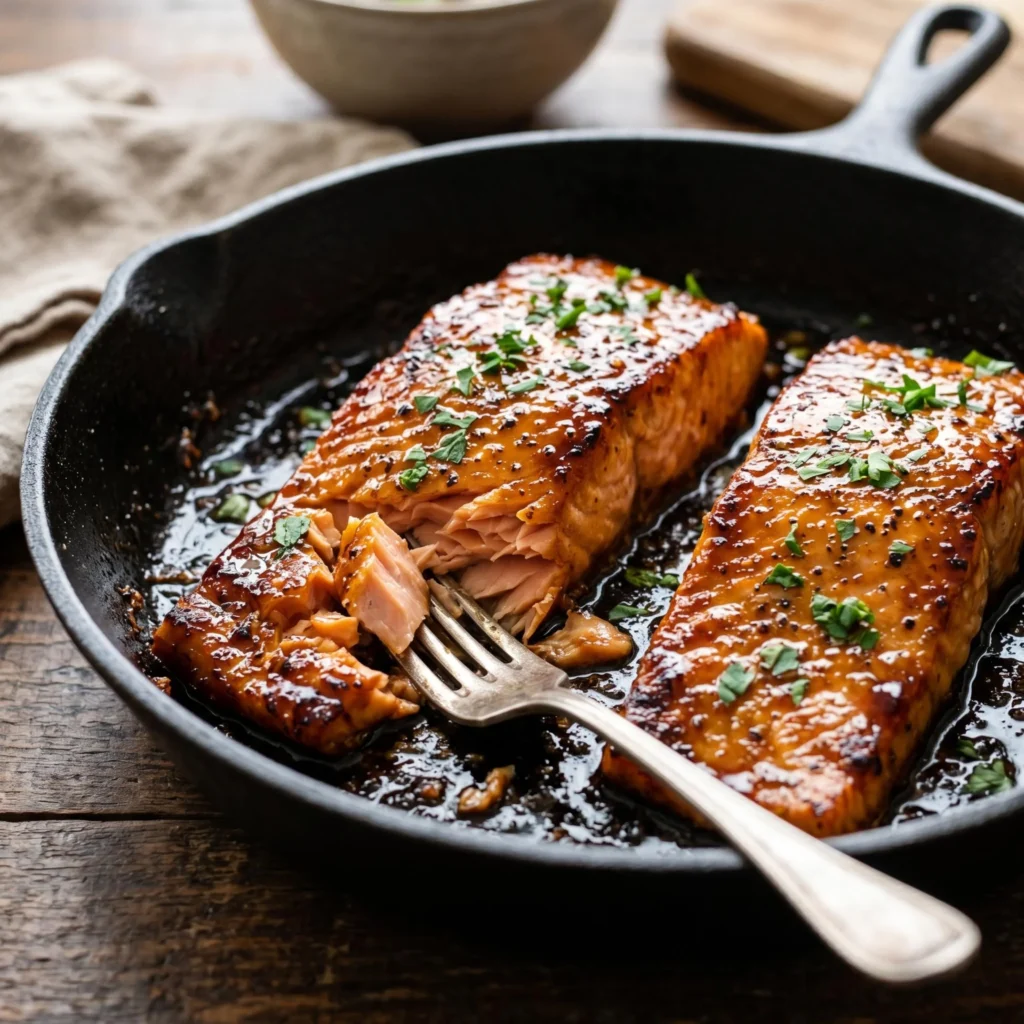
If you’ve only ever ordered glazed salmon at high-end restaurants, you’re in for a fantastic surprise. Homemade honey garlic salmon is:
- Incredibly Fast: Goes from the fridge to the plate in under 15 minutes.
- Budget-Friendly: Elevates simple fillets into a gourmet meal at a fraction of the cost.
- Made with Real Ingredients: Free from the refined sugars, thickeners, and preservatives often found in commercial glazes.
- Perfectly Balanced: You control the exact ratio of sweet honey to savory garlic and salty soy sauce.
And honestly, the flavor difference is undeniable. A fresh batch ensures your salmon remains tender and juicy, avoiding the dry, overcooked texture that often plagues mass-produced seafood dishes.
🐟 Jump to What You Need
How to Pick Good Salmon at the Store
The glaze can only do so much. A dull, thin fillet will taste dull no matter how good your sauce is.
Look at the color. Fresh salmon should look bright and even, not grey or faded at the edges. Wild salmon runs deeper red, farmed salmon runs more orange. Both work fine here.
Check the thickness. Center-cut fillets around an inch thick cook evenly. Thin tail pieces overcook before the glaze has time to thicken, which is the most common reason home-cooked salmon turns out dry.
Skin on or skin off? Skin-on holds together better in the pan and crisps up nicely. Skin-off is easier if you find crispy skin unappealing. Neither is wrong.
Frozen is fine. Most salmon at the counter was frozen at sea anyway. Frozen fillets thawed overnight in the fridge often beat the “fresh” ones that have been sitting out for two days.
Ingredients for Easy Honey Garlic Salmon
One of the reasons this recipe works so flawlessly is its brilliant use of simple, robust aromatics. You likely already have the glaze ingredients sitting in your pantry. You’ll need:
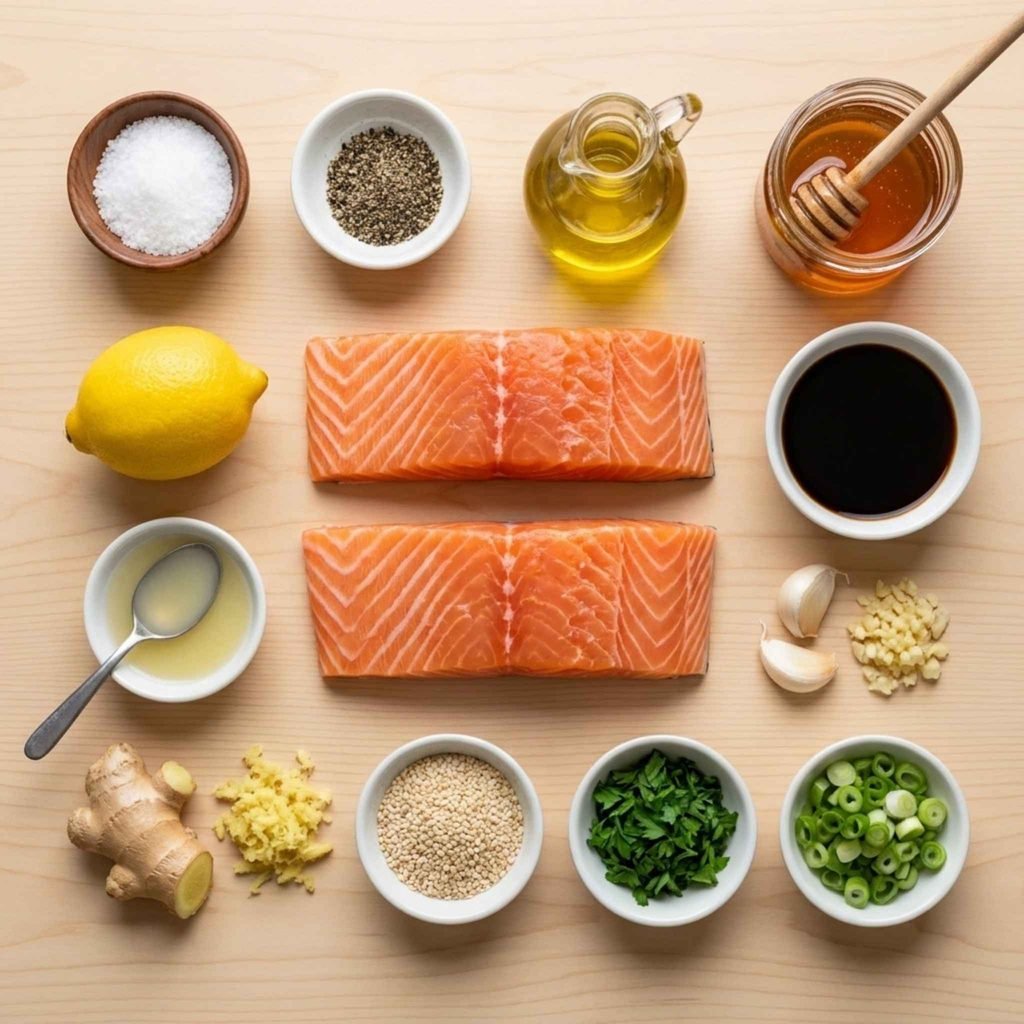
- 4 salmon fillets (about 6 oz each): Center-cut, with or without skin. If you are cooking for two, halve every glaze ingredient as well.
- Salt and black pepper: To taste, for seasoning the raw fish.
- 1 tablespoon olive oil: For the initial pan sear.
- 1/3 cup honey: The base of the sticky glaze.
- 1/4 cup soy sauce (or tamari): Provides the savory balance.
- 1 tablespoon fresh lemon juice: Cuts through the richness.
- 4 cloves garlic: Finely minced.
- 1 teaspoon fresh ginger: Minced or grated.
- Garnishes: Sesame seeds, chopped parsley, or sliced green onions.
- That is it. No long marinade, no waiting around, just quick ingredients that do a lot of work.
That’s it. No complicated marinades that require hours of waiting, just quick, high-impact ingredients.
Step by Step Easy Honey Garlic Salmon Recipe
Follow these simple steps for perfectly tender seafood and a luscious, sticky glaze every time.
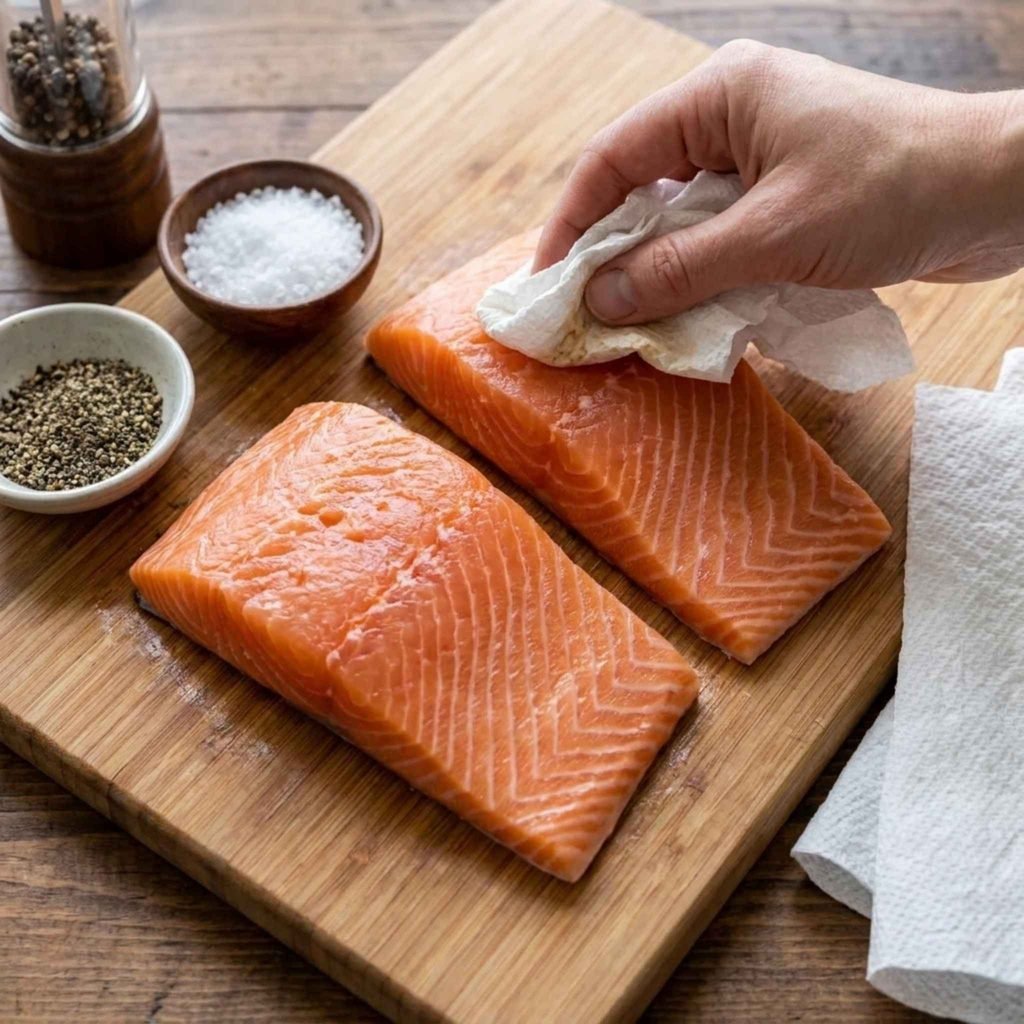
Step 1: Prep the Salmon Take your salmon fillets out of the fridge and pat them completely dry with paper towels. Removing excess surface moisture is the absolute secret to achieving a restaurant-quality sear rather than accidentally steaming the fish. Season both sides lightly with salt and black pepper.
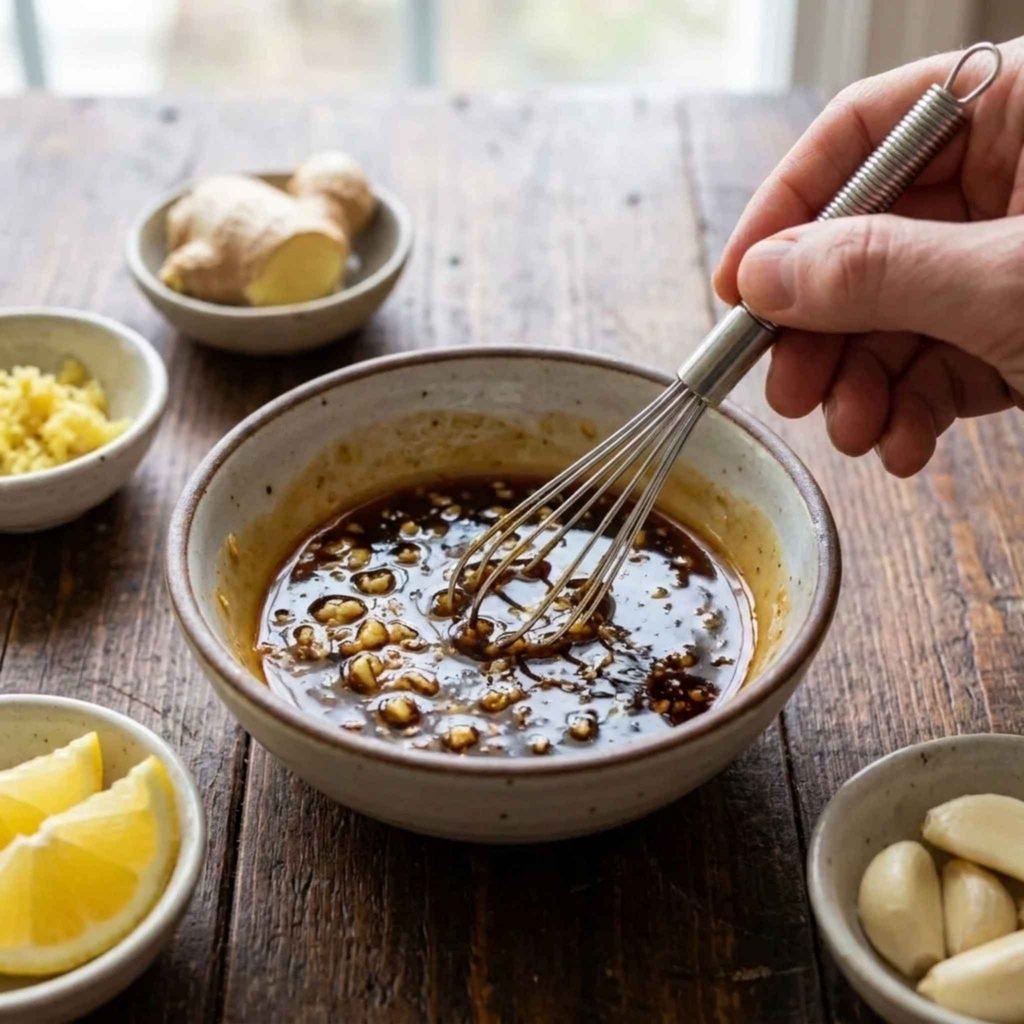
Step 2: Whisk the Glaze In a small bowl, whisk together the honey, soy sauce, lemon juice, minced garlic, and grated ginger. Set this liquid gold aside so it is ready to pour the moment the fish is seared.
🍯 The Glaze Formula
Four ingredients, each doing a specific job. Understand these and you can adjust the glaze to taste.
1/3 cup honey
Provides the sweetness and, more importantly, the stickiness. The sugars caramelize in the pan, which is what turns the sauce into a glaze rather than a liquid.
1/4 cup soy sauce
Brings the salt and savory depth. Without it the glaze tastes like dessert on fish. Use low sodium if you plan to serve this over salted rice.
1 tbsp lemon juice
Cuts through the fat in the salmon and the sweetness of the honey. Skip it and the whole dish tastes heavy after three bites.
4 cloves garlic + 1 tsp ginger
The aromatics. Mince them fine so they distribute through the glaze instead of sitting in clumps on top of the fish.
Step 3: Sear the Fish Heat a large skillet (cast iron works beautifully for heat retention) over medium-high heat. Add the olive oil.
Once the oil is shimmering, carefully place the salmon fillets in the pan (skin-side down if your fillets have skin). Cook undisturbed for 3 to 4 minutes until deeply golden and crispy.
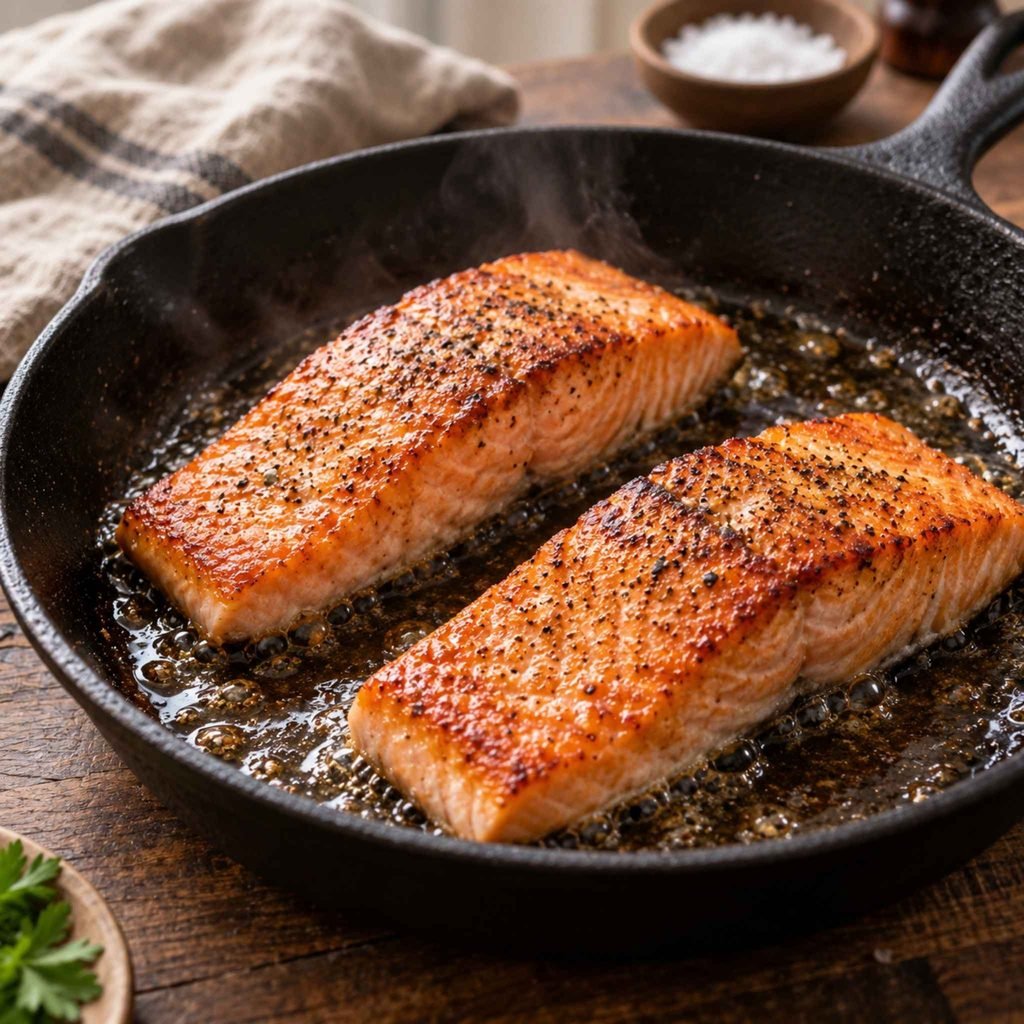
Step 4: Flip and Glaze Carefully flip the salmon fillets using a wide spatula. Immediately pour your honey garlic sauce directly into the skillet.
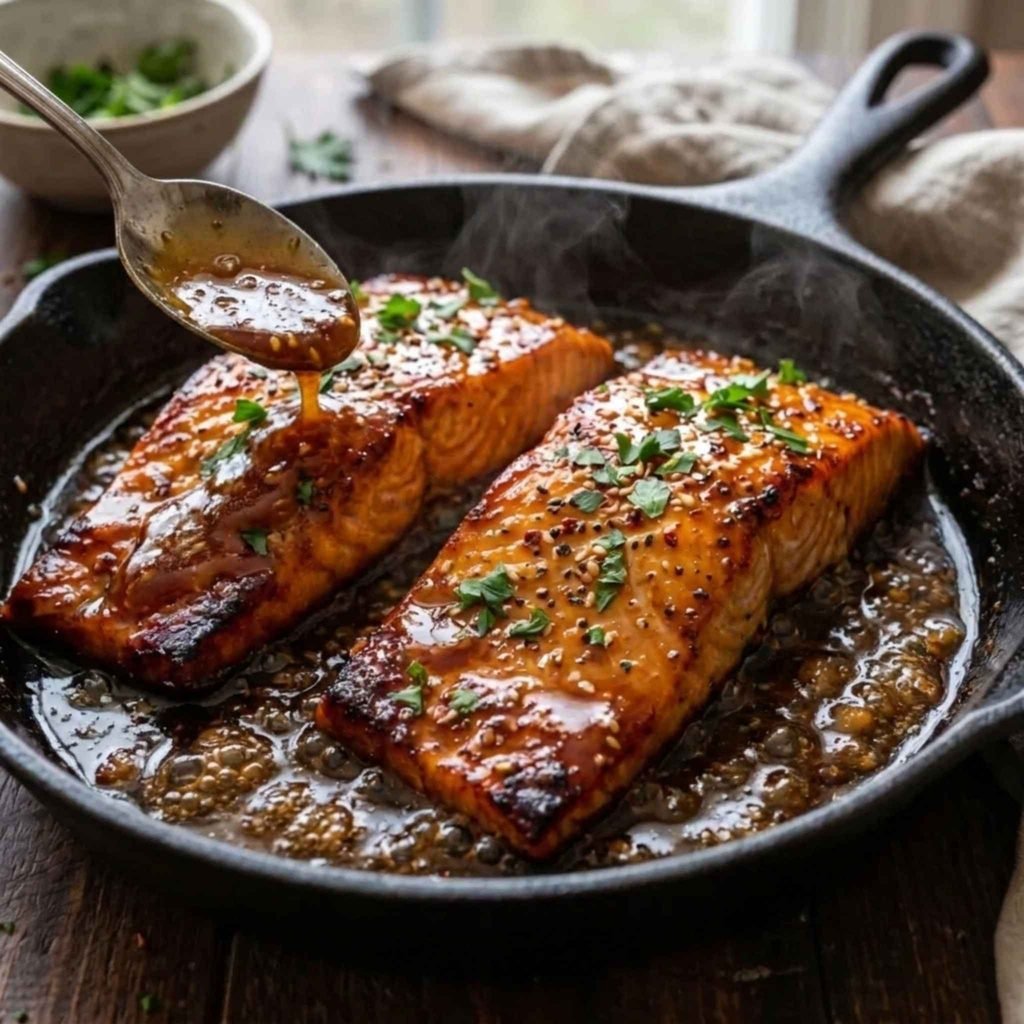
Step 5: Simmer and Baste Let the sauce bubble and simmer around the salmon for another 3 to 4 minutes. As the liquids reduce, the sugars in the honey will caramelize, thickening the sauce into a rich glaze.
Use a spoon to continually baste the salmon, scooping the bubbling syrup over the top of the fillets so they absorb all that incredible flavor.
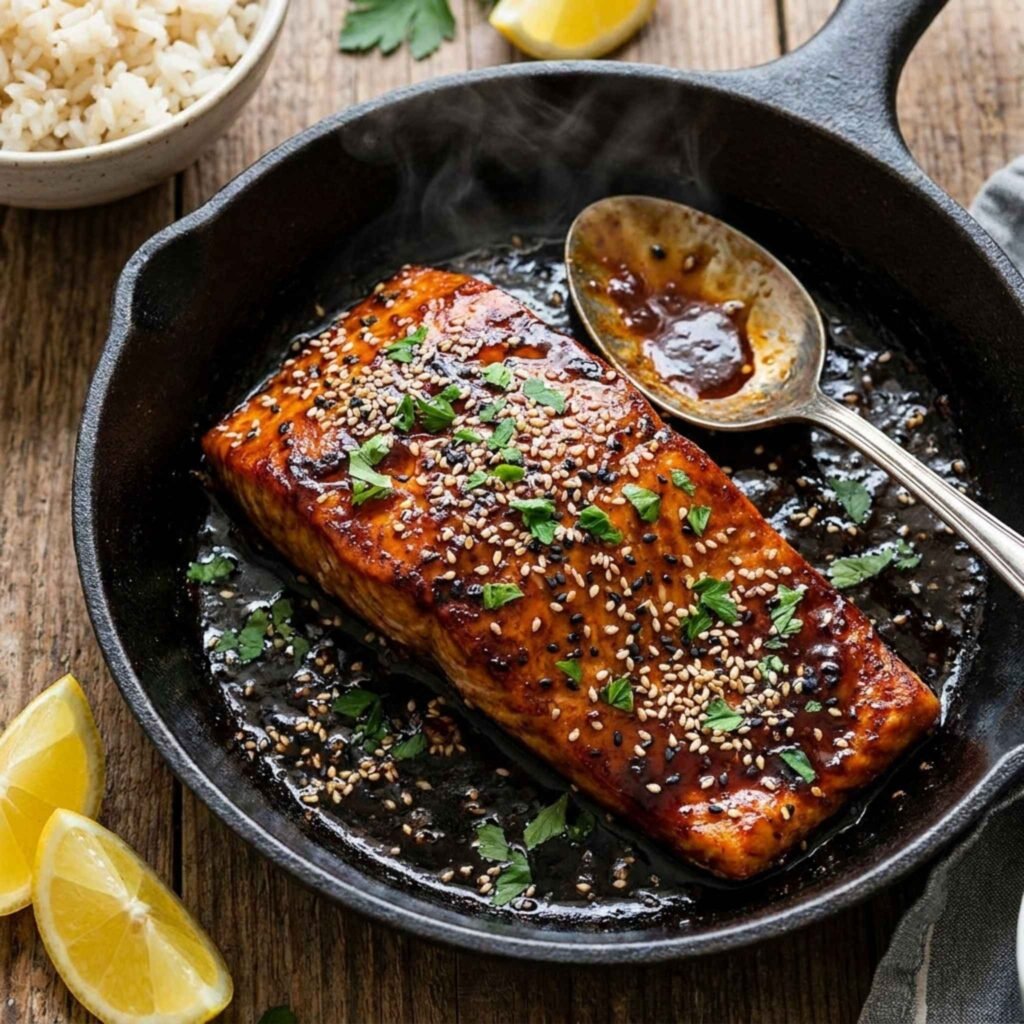
Step 6: Garnish and Serve Once the salmon easily flakes with a fork and the glaze coats the back of a spoon, remove the skillet from the heat. Sprinkle generously with sesame seeds and fresh parsley or green onions, and serve immediately.
🌡️ How to Tell When It Is Done
Salmon goes from perfect to dry in about ninety seconds. These are the markers to watch.
No thermometer? Press the top of the fillet gently with a fork. When the flesh separates into flakes but still looks slightly translucent in the very center, pull it off the heat. Residual heat finishes the job while it rests.
Pan, Oven, or Air Fryer?
The recipe above uses a skillet, but all three methods work. Each trades something for something else.
Skillet (what this recipe uses). Best texture by far. You get a proper sear on the outside and the glaze reduces in the same pan, picking up the browned bits from the fish. Takes about 10 minutes and needs you standing there the whole time.
Oven. Easiest for more than four fillets, since a sheet pan holds what a skillet cannot. Bake at 400°F for 12 to 15 minutes, then broil the last 2 minutes for a sticky top. Watch closely during broiling, because honey burns fast. The tradeoff is you lose the crisp sear.
Air fryer. Fastest option at 380°F for 8 to 10 minutes, but brush the glaze on halfway through rather than at the start. Honey dripping onto a hot air fryer element burns and smokes. The glaze also stays thinner since there is no pan to reduce it in.
Pro Tips for Perfect Glazed Salmon
Small details make a big difference, especially when you want a flawless presentation for your dining table or your camera lens.
- Watch the heat: Honey burns easily due to its high sugar content. Once you pour the sauce into the pan, turn the heat down to medium or medium-low so it bubbles and thickens gently without scorching.
- Don’t overcook: Salmon cooks incredibly fast. It should be slightly translucent in the very center when you pull it from the heat; the residual heat will finish cooking it perfectly.
- Drizzle extra thickened glaze right over the top of the fish just before shooting to maximize the glossy shine, and arrange a side of vibrant green broccoli or asparagus slightly out of focus in the background.
🔧 Troubleshooting
⚠️ The glaze burned and turned bitter
Fix it: turn the heat down to medium-low the moment the sauce goes into the pan. Honey scorches quickly at high heat, and once it burns there is no saving it.
⚠️ The salmon stuck to the pan and tore
Fix it: the fillet went in before the oil was hot enough, or it was moved too early. Wait until the oil shimmers, then leave the fish alone for the full 3 to 4 minutes. It releases on its own once the crust forms.
⚠️ White stuff came out of the salmon
Fix it: that is albumin, a harmless protein, but it means the heat was too high or the fish cooked too long. Lower the heat slightly and pull the salmon earlier next time.
⚠️ The fish tastes dry even though it looked fine
Fix it: it went past 145°F. Salmon keeps cooking after it leaves the pan, so take it off around 125 to 130°F and let residual heat finish it.
How to Store and Reheat Leftovers
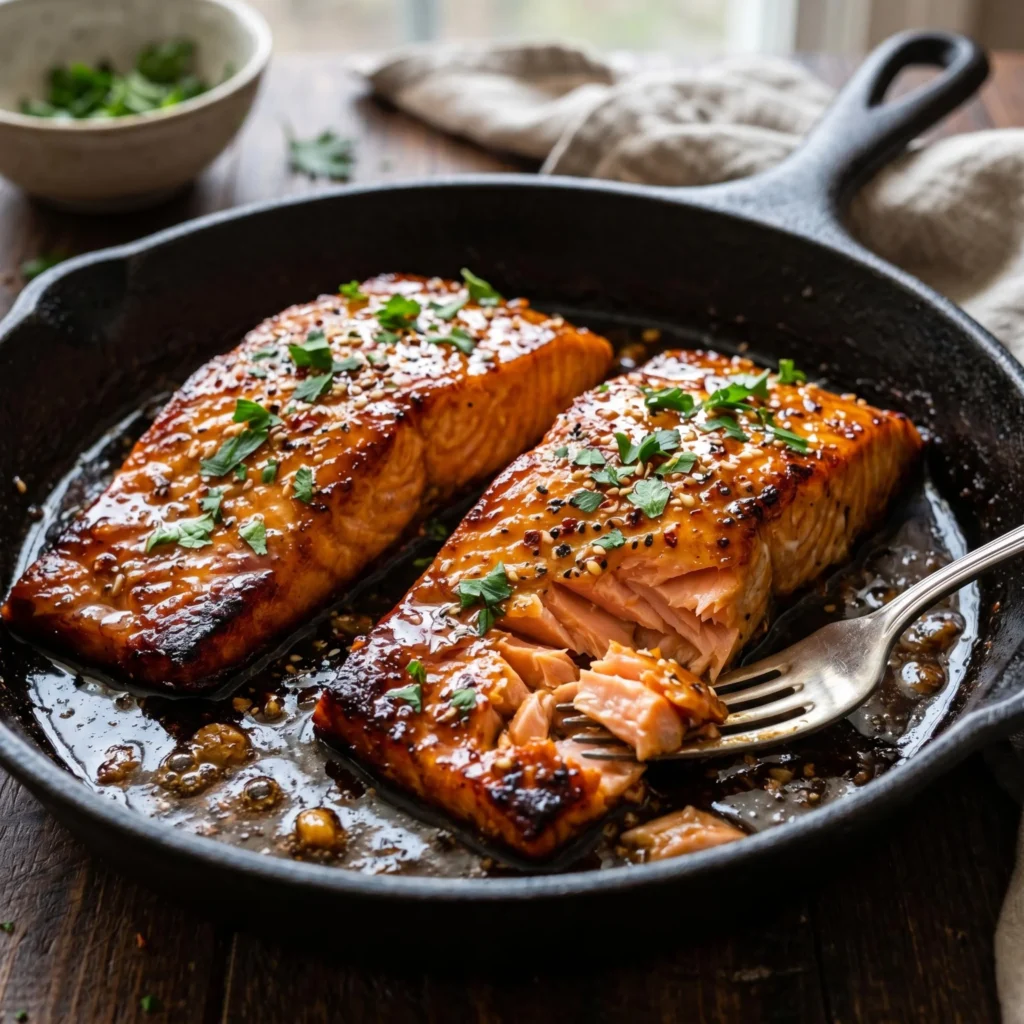
While this dish is, best enjoyed fresh out of the skillet while the glaze is piping hot, leftovers make a next-day lunch.
Store any leftover glazed salmon in an airtight container in the refrigerator for up to 3 days. To reheat without drying out the fish, place the salmon in a skillet over low heat with a tiny splash of water.
Cover it with a lid and let it steam gently for a few minutes until warmed through. Alternatively, enjoy the leftovers cold, flaked over a fresh salad!
Ways to Use Honey Garlic Salmon
Now comes the fun part. This rich, sticky dish demands a great base to soak up all that extra pan sauce. Serve it alongside:
- A bed of fluffy jasmine rice, brown rice, or quinoa
- Stir-fried udon or soba noodles
- Crispy roasted Brussels sprouts or garlic butter asparagus
- A crisp, vibrant Asian-inspired cabbage slaw
- Flaked into a wrap or lettuce cup for a light, high-protein lunch
Once you start making this skillet meal, you’ll find yourself planning your entire weekly menu around it.
Nutrition
Estimated per serving, based on 4 servings
Estimates based on the ingredients listed. Actual values vary by fillet size and how much glaze stays in the pan.
Frequently Asked Questions
Can I use frozen salmon? Absolutely. Just make sure to thaw the fillets completely first. The safest way to thaw frozen salmon is overnight in the refrigerator. Pat them completely dry before searing.
My glaze is too thin, how do I fix it? If your salmon is done cooking but the sauce is still too watery, quickly remove the fish to a plate.
Turn the heat under the skillet up slightly and let the sauce boil and reduce for another 60 seconds until it reaches a syrupy consistency, then pour it over the plated salmon.
Can I bake this instead of pan-frying? Yes! Place the seasoned salmon on a foil-lined baking sheet. Pour the mixed glaze over the top and bake at 400°F (200°C) for 12-15 minutes.
For a sticky top, broil for the last 2 minutes, keeping a very close eye on it so the honey doesn’t burn.
Final Thoughts
This honey garlic glazed salmon proves that a restaurant-style dinner does not need a long ingredient list or a free evening. One skillet, a handful of pantry ingredients, and about fifteen minutes gets you there.
Once you taste the seared, flaky salmon under that sweet and savory glaze, it becomes clear why this combination keeps showing up on menus. Grab your skillet, heat the oil, and get dinner handled.
Save this recipe now so it is ready the next time salmon is on sale.