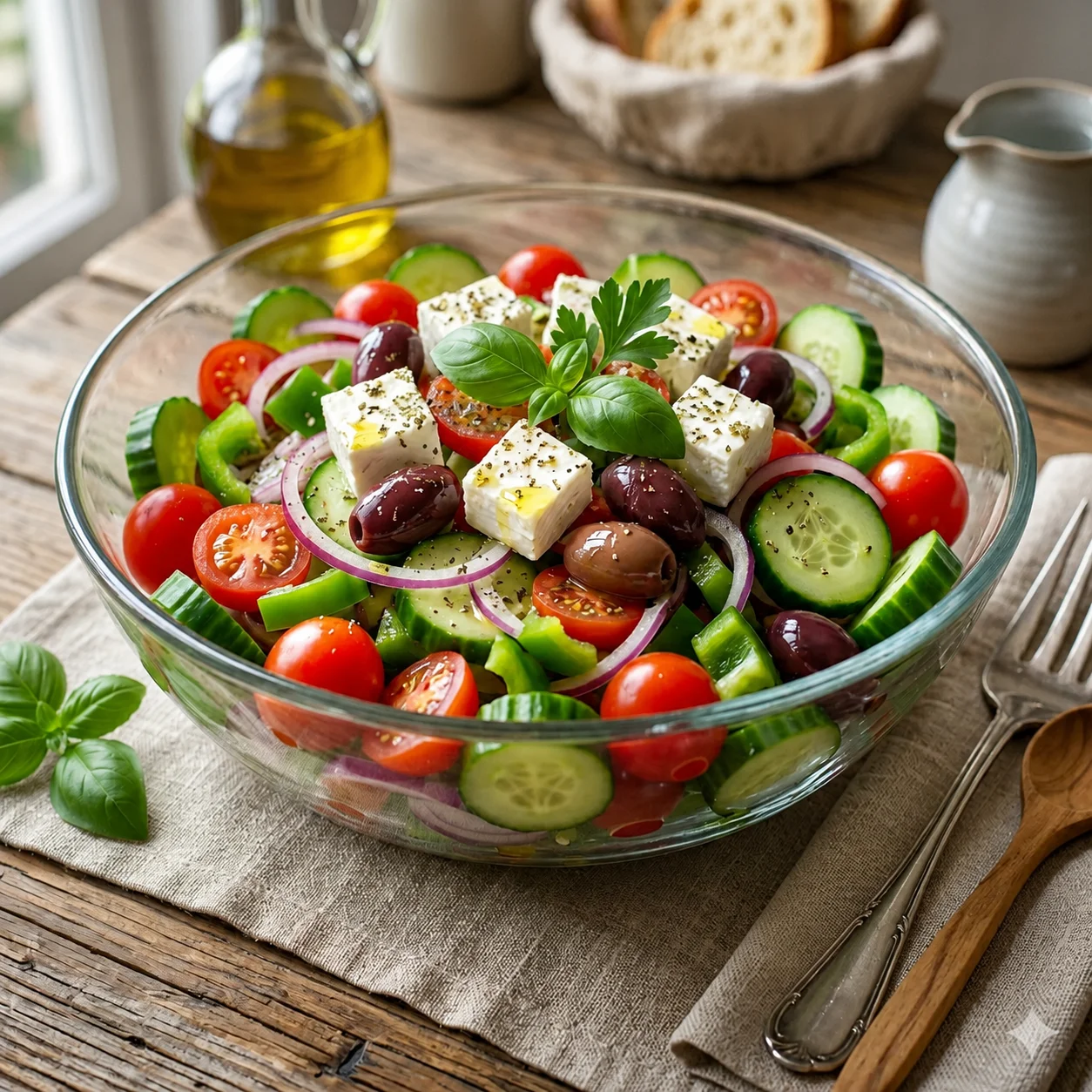
The Best Healthy Greek Salad Recipe: Fresh, Crisp, and Authentic
There is something incredibly refreshing about a giant bowl of crisp, vibrant vegetables tossed in a simple, tangy vinaigrette. Bright, crunchy, loaded with Mediterranean flavors, and bursting with nutrients—this healthy Greek salad recipe is about to become your new favorite go-to meal.
Once you try making this authentic, nutrient-packed Greek salad (known traditionally as Horiatiki) at home, you will realize that you don’t need heavy, creamy dressings or a bed of sad, wilted lettuce to make a salad taste amazing. Whether you are serving it alongside grilled chicken, packing it for a light office lunch, or enjoying it as a fresh summer dinner, this salad elevates every occasion. The best part? You only need a cutting board, a handful of fresh produce, and about 15 minutes. Let’s walk through everything step by step so you can master the perfect healthy Greek salad on your first try.
Why Make This Healthy Greek Salad at Home?
If you have only ever ordered Greek salads from takeout restaurants or diners, you might be used to bowls overwhelmingly stuffed with iceberg lettuce and drowned in heavily processed, salty dressings. Homemade Greek salad is entirely different. Making it yourself means it is:
- Completely customizable: Add more of the veggies you love and skip the ones you don’t.
- Heart-healthy and nutritious: Loaded with antioxidants, healthy fats from olive oil, and vitamins.
- Free from hidden sugars: Store-bought dressings often contain unnecessary syrups and preservatives.
- Authentic: A true Greek salad doesn’t actually use lettuce, allowing the tomatoes and cucumbers to shine.
- Budget-friendly: Buying fresh produce in season is incredibly cost-effective.
And honestly, the flavor difference is undeniable. Fresh vegetables paired with a high-quality block of feta and rich extra virgin olive oil create a taste profile that pre-packaged salads simply cannot match.
Ingredients for the Best Greek Salad
One of the reasons this recipe works so well is its reliance on simple, high-quality, whole-food ingredients. You will need:
- 4 medium vine-ripened tomatoes: Cut into wedges or large chunks.
- 1 large English cucumber: Thickly sliced into half-moons (no need to peel English cucumbers).
- 1 medium red onion: Thinly sliced into half-rings.
- 1 green bell pepper: Sliced into rings or bite-sized chunks.
- 1/2 cup Kalamata olives: Pitted and left whole.
- 7 oz block of Feta cheese: Traditionally served as a large slab on top, or cut into thick cubes.
- 1/4 cup extra virgin olive oil: Use the best quality you can find; it acts as the primary dressing.
- 1-2 tablespoons red wine vinegar: For that essential tangy bite.
- 1 teaspoon dried oregano: Plus a little extra for garnishing the cheese.
- Salt and freshly ground black pepper: To taste.
That’s it. No complicated emulsifiers, no long lists of obscure herbs. Just pure, fresh Mediterranean ingredients.
Step by Step Healthy Greek Salad Recipe
Follow these simple steps for a crisp, vibrant, and perfectly balanced salad every time.
Step 1: Prep the Vegetables Wash all your produce thoroughly. Chop the tomatoes into bite-sized wedges, slice the cucumber into thick half-moons, slice the green bell pepper, and thinly slice the red onion. Placing the red onion slices in a bowl of ice water for 5 minutes before adding them to the salad can help take away their sharp, raw bite.
Step 2: Combine the Base In a large, shallow serving bowl, gently combine the chopped tomatoes, cucumbers, green bell peppers, and red onion. A shallow bowl is better than a deep one so the heavy vegetables don’t crush the ones at the bottom.
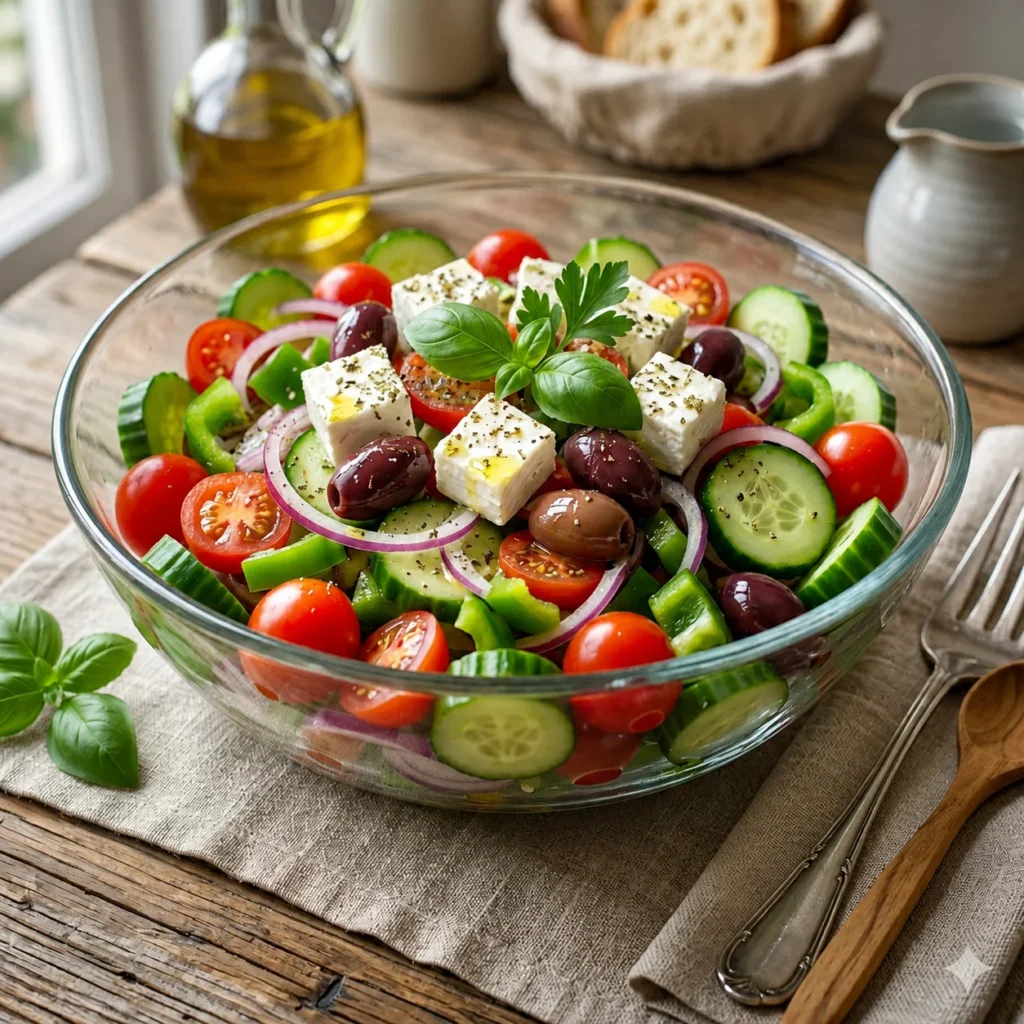
Step 3: Add the olives and cheese and scatter the pitted Kalamata olives evenly over the vegetable mixture. Next, add the feta cheese. For an authentic presentation, place the block of feta whole right on top of the vegetables, or cut it into large, thick cubes as seen in image_e337c4.jpg.
Step 4: Dress the salad in a small jar, shake together the extra virgin olive oil, red wine vinegar, dried oregano, a pinch of salt, and a few cracks of black pepper. Alternatively, you can simply drizzle the oil and vinegar directly over the vegetables in the bowl.
Step 5: Toss and Serve If you cubed your feta, gently toss the salad to distribute the dressing. If you keep the feta block whole, pour the dressing generously over the top of the cheese and the surrounding vegetables. Sprinkle a little extra pinch of dried oregano directly onto the feta cheese. Serve immediately at room temperature.
Pro Tips for a Perfect Greek Salad
Small details make a big difference when working with raw ingredients.
- Use block feta, not pre-crumbled: Pre-crumbled feta is coated in anti-caking agents that make it dry. Block feta in brine is creamier, richer, and far superior in taste.
- Invest in good olive oil: Because the dressing is primarily olive oil, a high-quality, cold-pressed extra virgin olive oil will completely transform the dish.
- Don’t over-salt: Feta cheese and Kalamata olives are already quite salty, so go easy on the added salt until you taste the final dish.
- Serve at room temperature: Tomatoes lose their flavor when they are ice cold. Let your salad sit on the counter for 10 minutes before eating for the best flavor.
How to Store Homemade Greek Salad
While this salad is best enjoyed fresh, you can store leftovers. Place the salad in an airtight container in the refrigerator for up to 2 days.
Keep in mind: The salt in the feta and the acid in the vinegar will draw water out of the cucumbers and tomatoes, making the salad a bit more “soupy” the next day. It will still taste delicious, but the vegetables won’t be quite as crisp. If you are meal-prepping, keep the dressing, olives, and cheese separate from the chopped vegetables until right before eating.
Ways to Serve Greek Salad
Now comes the fun part. This healthy Greek salad is incredibly versatile. Enjoy it alongside:
- Warm, toasted pita bread and hummus
- Grilled lemon-herb chicken breast or souvlaki skewers
- Pan-seared salmon or baked white fish
- A side of roasted lemon potatoes
- Or simply eat a massive bowl of it on its own for a refreshing, low-carb lunch!
Once you start making your own Greek salads, you’ll find yourself craving these fresh flavors weekly.
Frequently Asked Questions
Why is there no lettuce in this recipe? An authentic Greek Horiatiki salad is a “village salad” meant to showcase summer vegetables. It traditionally does not contain lettuce or leafy greens of any kind.
Can I add protein to make it a full meal? Absolutely. Sliced grilled chicken, chickpeas, or even a scoop of quinoa make excellent, healthy additions to bulk up the salad.
Can I use black olives instead of Kalamata? You can, but the flavor profile will change. Kalamata olives are meatier, tangier, and much richer than standard canned black olives. It is highly recommended to stick with Kalamatas for the true Mediterranean experience.
Final Thoughts
This best healthy Greek salad recipe proves that eating well doesn’t have to be complicated or boring. With just a few fresh, vibrant ingredients and simple steps, you can create a bowl full of color, crunch, and authentic flavor that completely transforms your mealtime. Once you taste those crisp cucumbers and juicy tomatoes paired with rich feta and tangy vinaigrette, you’ll understand why this dish is a global classic. So grab your cutting board, whisk up that simple dressing, and enjoy the beautiful, simple joy of making an authentic Greek salad from scratch.