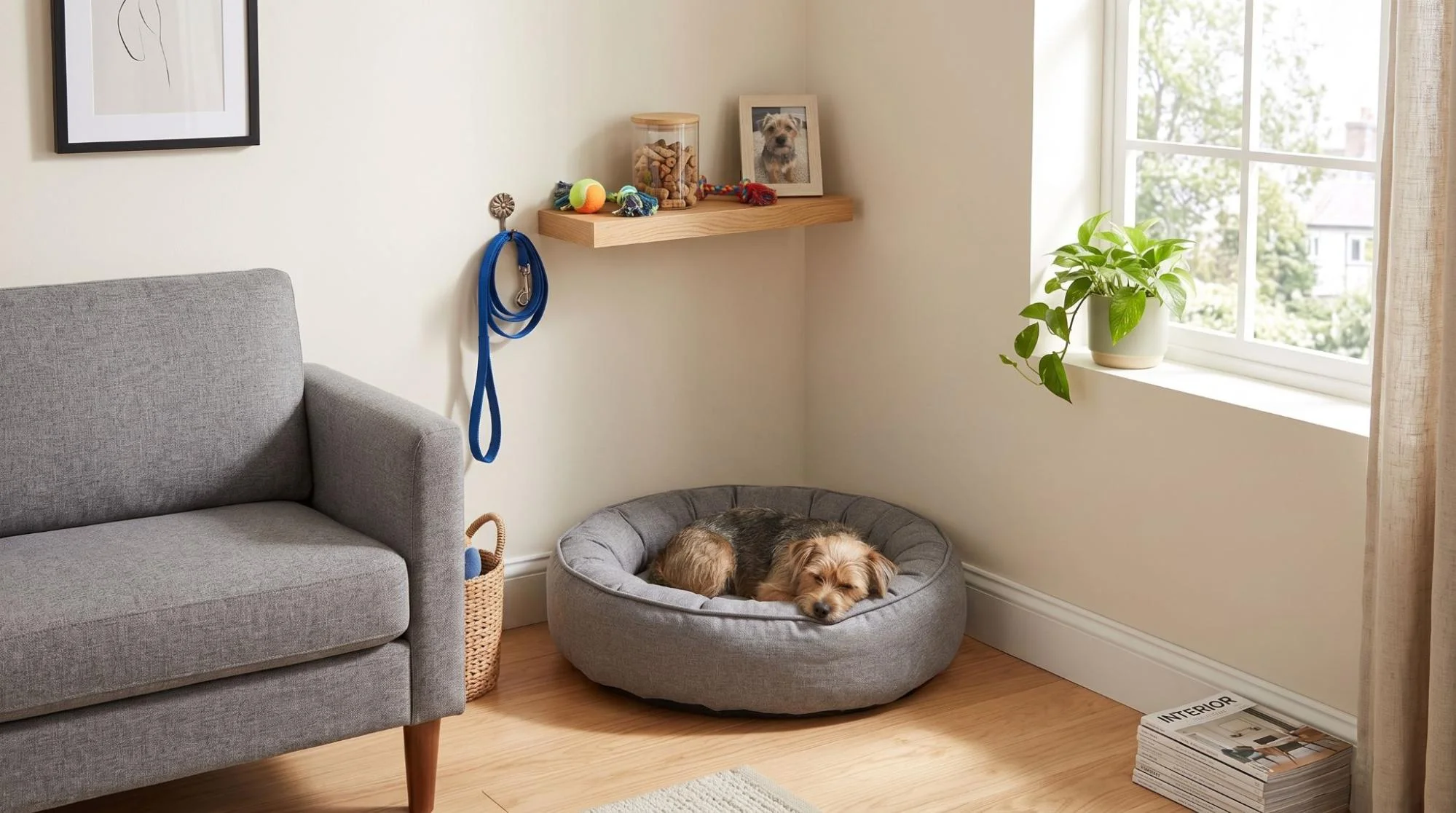
12 Dog Room Ideas for Small Spaces in House: Cozy Corners Your Pup Will Love
Not every home has a spare room to dedicate entirely to a furry friend, but that doesn’t mean your dog can’t have a comfortable, dedicated spot of their own. This guide rounds up 12 clever dog room ideas designed specifically for small spaces, so you can carve out a cozy corner without sacrificing precious square footage.
Why a Dedicated Dog Space Matters, Even in a Small Home
Dogs, like people, benefit from having a consistent, comfortable spot they can call their own, somewhere to retreat for a nap, store their toys, and feel settled within the busier flow of household life.
In smaller homes, this doesn’t need to mean an entire room; it can be as simple as a thoughtfully designed nook, corner, or repurposed piece of furniture that gives your dog a clear sense of place.
A well-planned small-space dog area also helps keep pet supplies contained and organized, rather than scattered throughout the house. Beyond the practical benefits, having a designated spot can genuinely support a dog’s sense of security and routine.
Below are 12 ideas that make the most of limited square footage while still giving your dog a space that feels genuinely their own, along with guidance on materials, durability, and helping your dog adjust to their new spot.
1. Under-the-Stairs Dog Nook
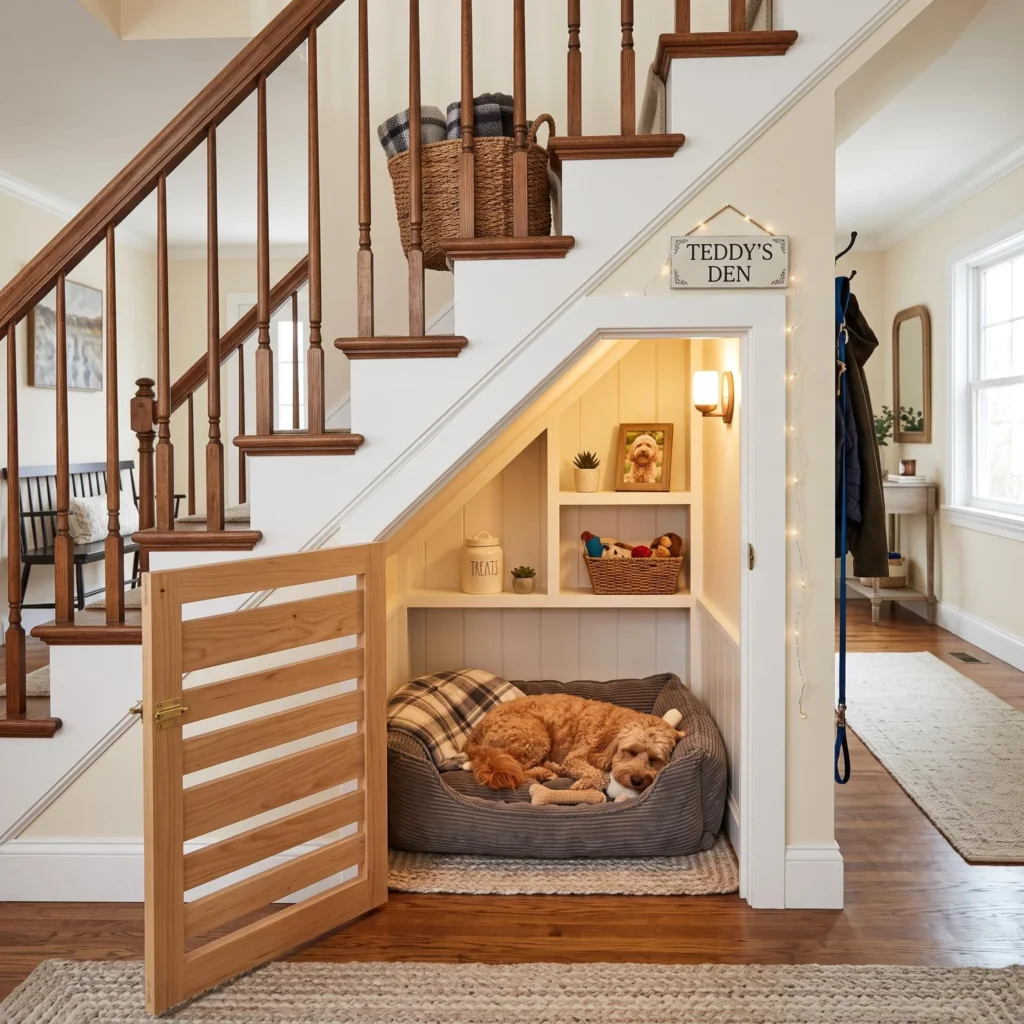
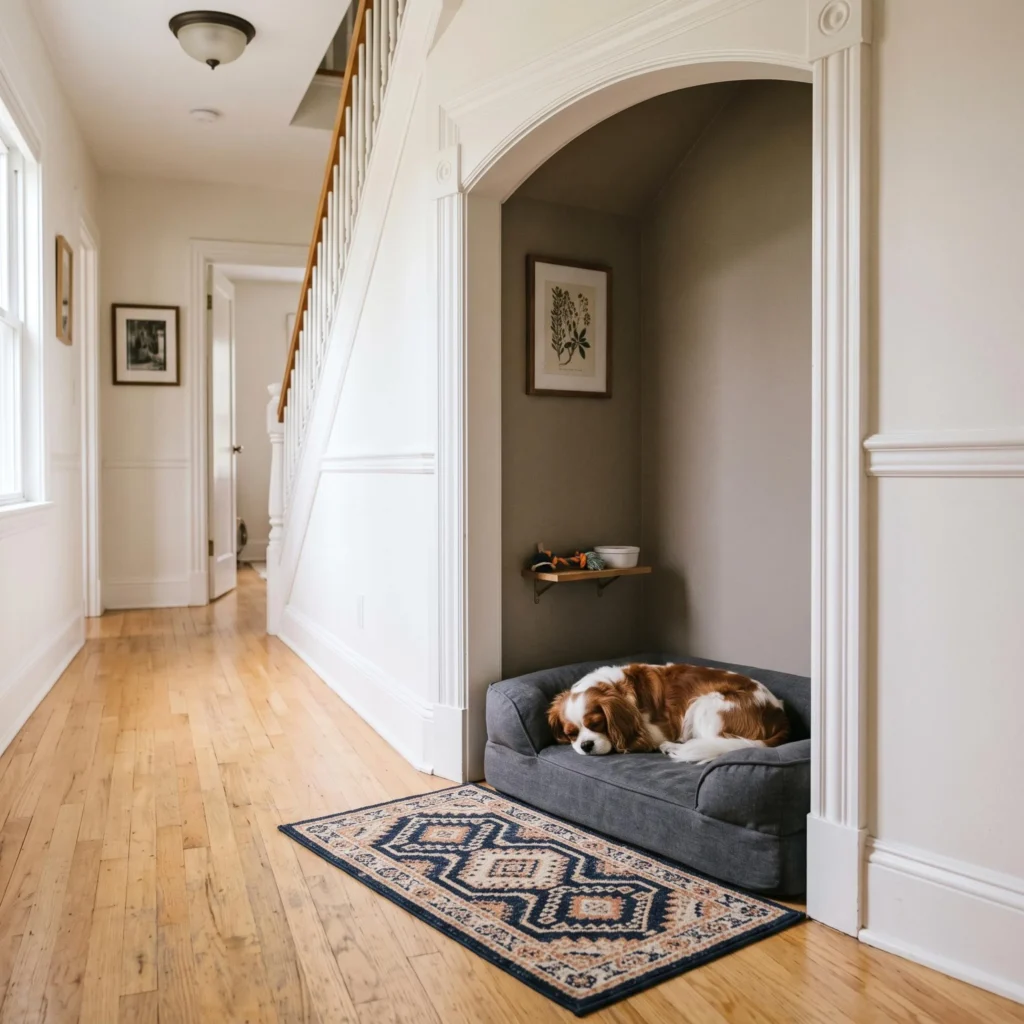
The often-overlooked triangular space under a staircase makes for a surprisingly perfect dog nook. With a bit of built-in shelving, a cozy bed, and perhaps a small gate, this awkward architectural feature can become one of the most charming spots in the house.
Best for: Homes with staircases near common living areas Design tip: Add a small curtain or half-door for a finished look, and include a soft rug or bed cushioned enough for daily naps.
2. Built-In Dog Crate Cabinet
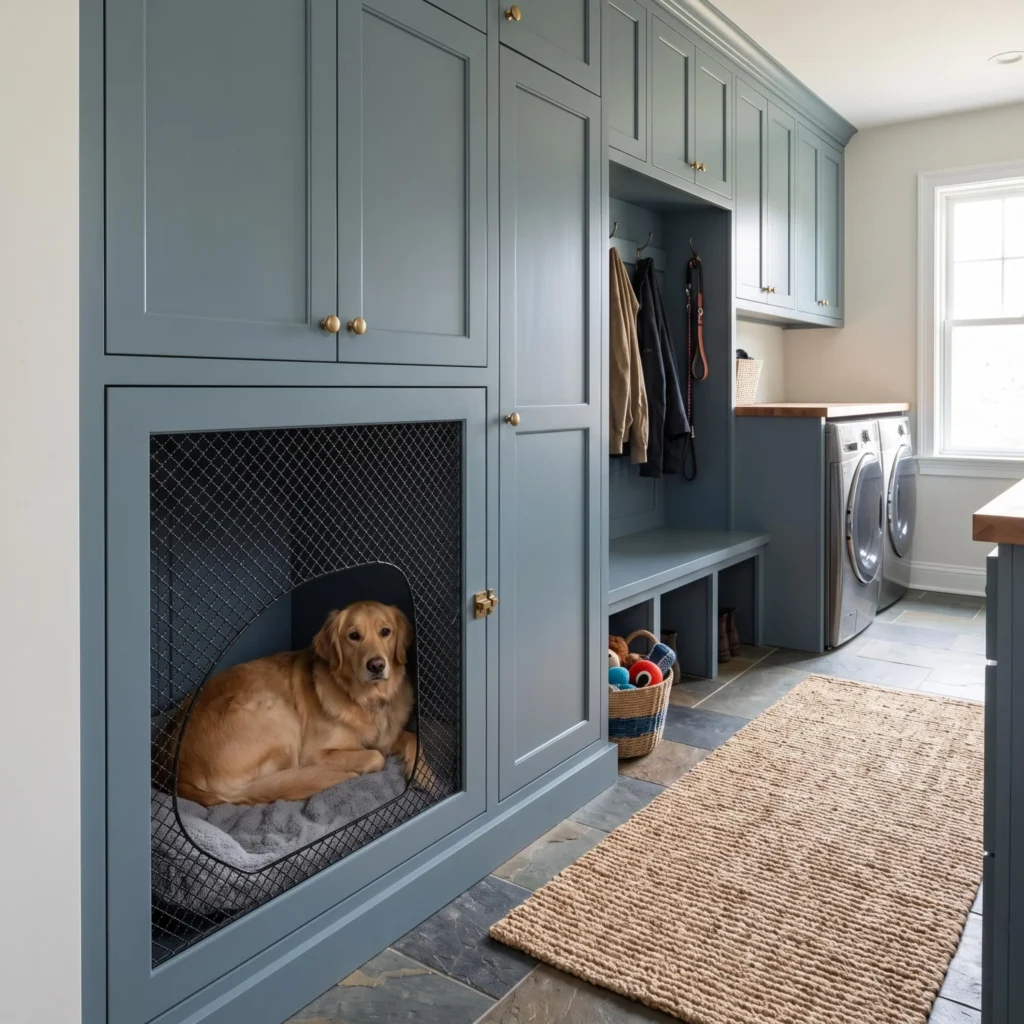
Rather than a standalone wire crate taking up floor space, a built-in cabinet designed specifically to house a crate blends seamlessly into existing cabinetry or furniture. This is a popular choice for kitchens, mudrooms, or living rooms where a visible crate might otherwise clash with the room’s design.
Best for: Integrating crate training into your home’s existing layout Design tip: Choose a cabinet finish that matches surrounding built-ins so the crate space reads as an intentional design feature rather than an add-on.
3. Corner Bed with Shelving Above
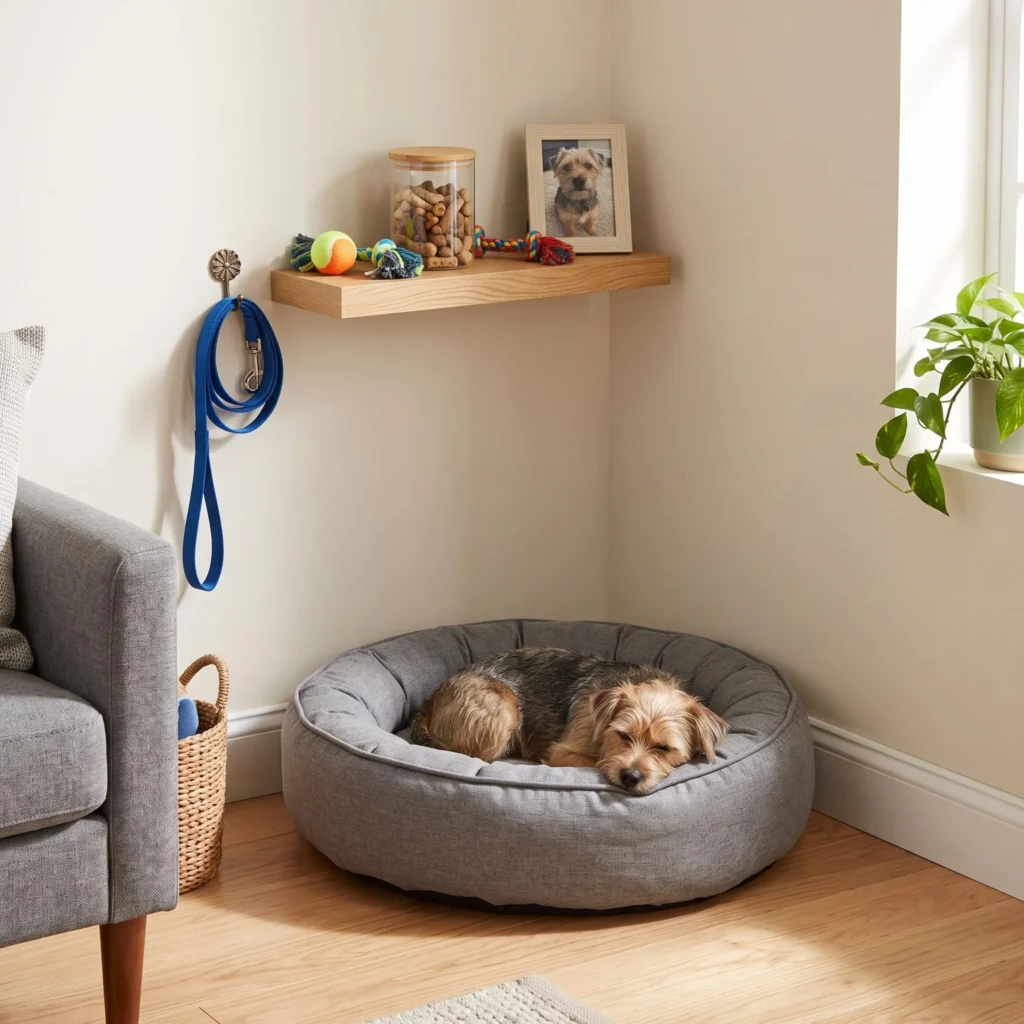
A dog bed tucked into an unused room corner, paired with a small shelf above for storing leashes, toys, and treats, creates a functional, space-efficient setup. This works especially well in living rooms or bedrooms where floor space is limited.
Best for: Small living rooms or bedrooms Design tip: Choose a bed with a slightly raised bolster edge to give your dog a sense of enclosure and security in an open corner.
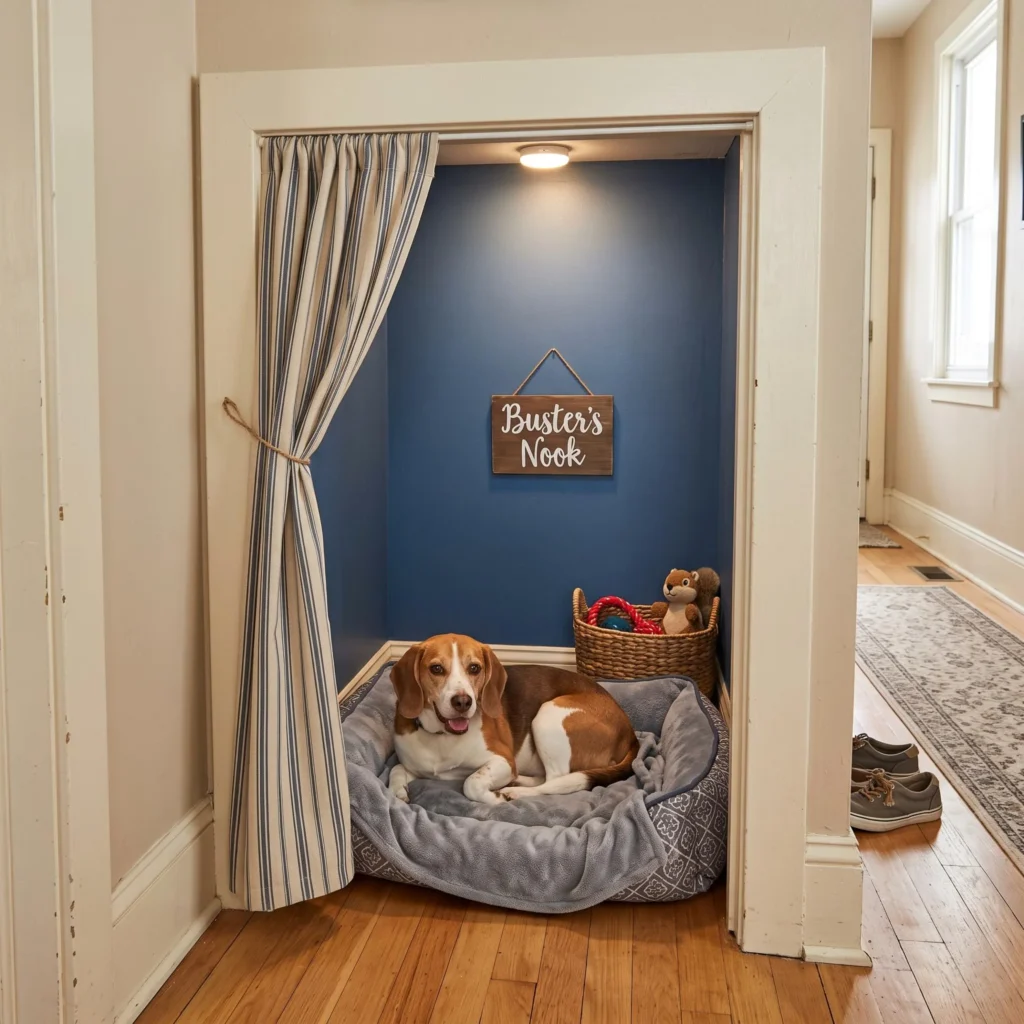
4. Repurposed Closet Nook
An underused closet, especially in a hallway or spare room, can be transformed into a cozy dog den with the doors removed or replaced with a simple curtain. This gives your dog a semi-enclosed retreat without requiring any new construction.
Best for: Homes with extra closet space not being fully utilized Design tip: Add a small battery-operated light inside for visibility, and include a washable bed liner for easy cleaning.
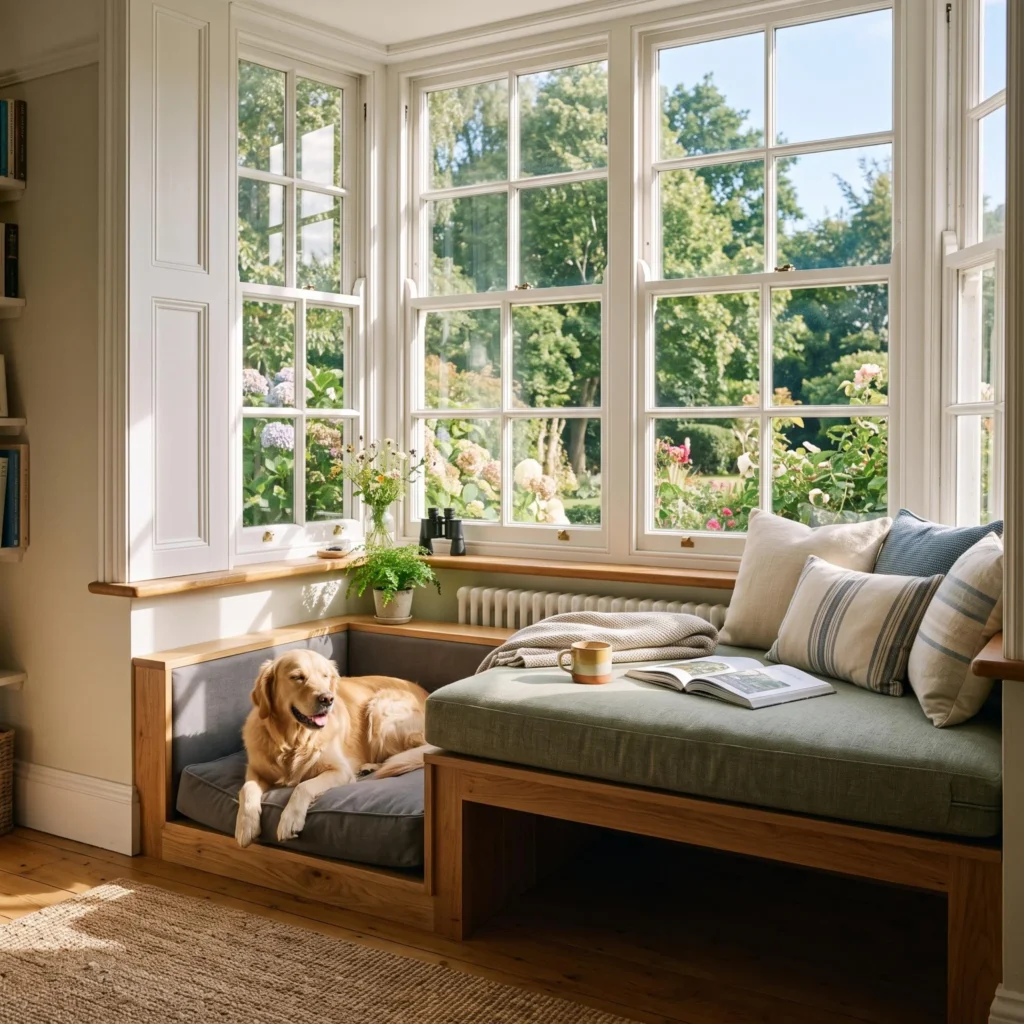
5. Window Seat with Built-In Dog Bed
If your home has a window seat or bay window nook, incorporating a built-in dog bed into this space gives your pup a prime spot for people-watching and sunbathing. This dual-purpose design maximizes an already charming architectural feature.
Best for: Homes with existing window seats or bay windows Design tip: Use a durable, easy-to-clean fabric for the cushion, since window seats often receive more direct sunlight and potential wear.
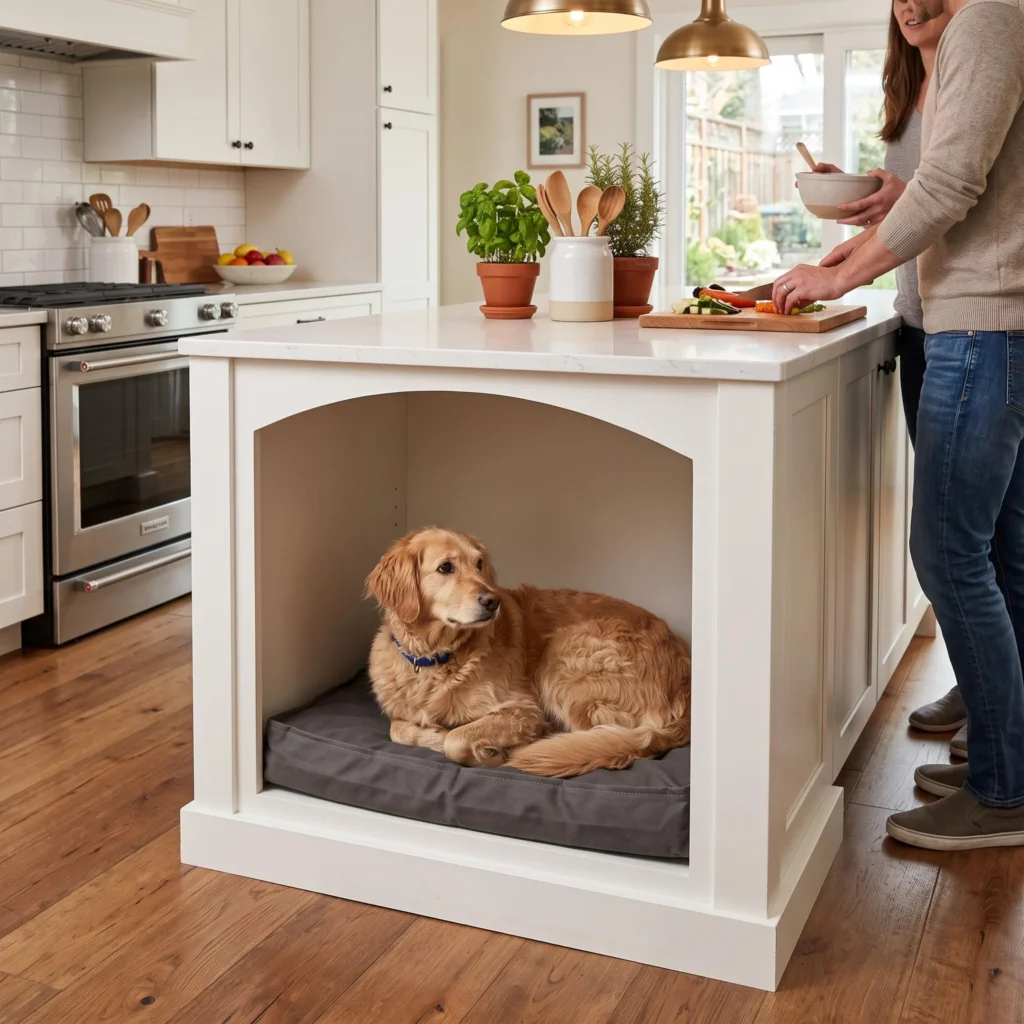
6. Kitchen Island Dog Nook
Some kitchen islands are designed with an open cubby built into the base, offering a built-in spot for a dog bed right where much of the household activity happens. This keeps your dog close to the action without being underfoot.
Best for: Kitchen renovations or new island installations Design tip: Choose a durable, wipeable bed liner given the kitchen’s proximity to food and potential spills.
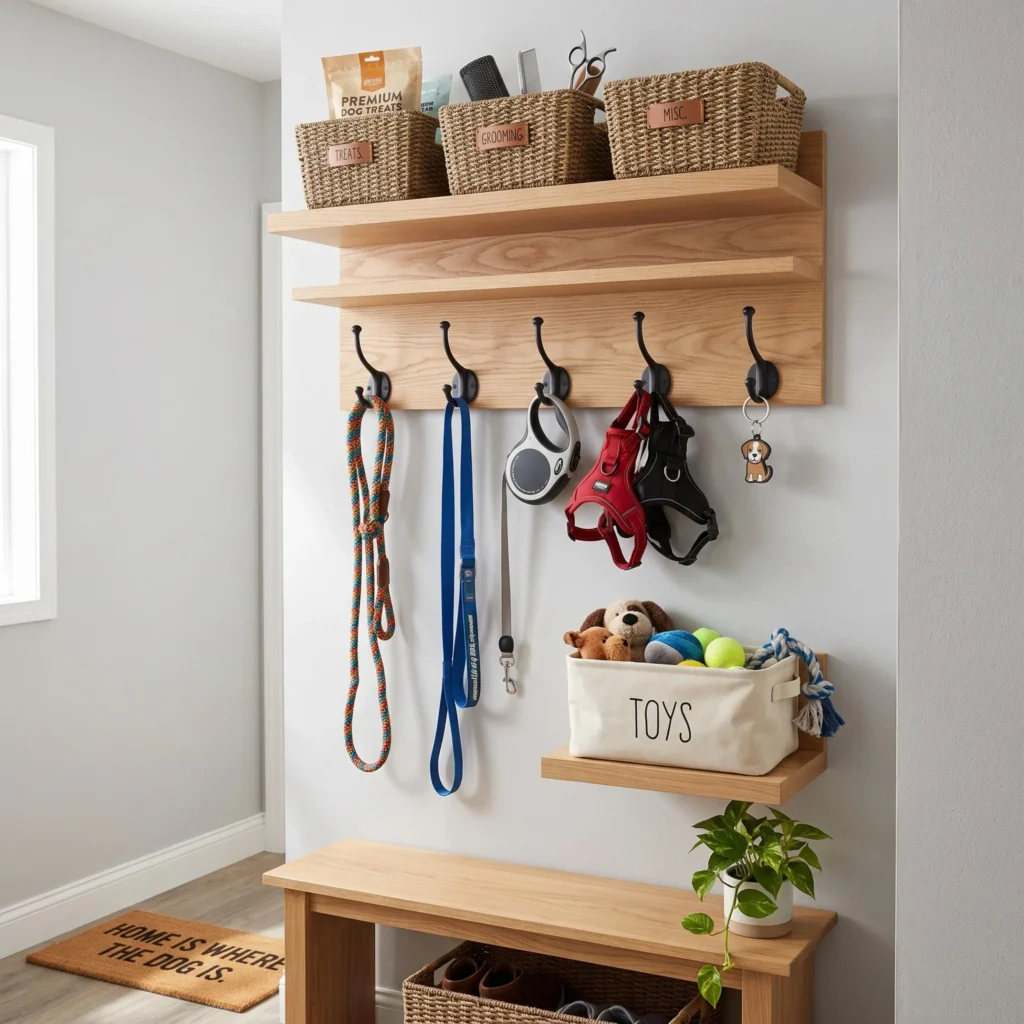
7. Vertical Wall-Mounted Storage
For pet supplies rather than a bed specifically, vertical wall-mounted shelving or hooks can keep leashes, toys, and grooming supplies organized without consuming valuable floor space. This works particularly well in entryways or mudrooms.
Best for: Organizing supplies in small entryways Design tip: Use labeled baskets or bins on the shelving to keep smaller items like treats and grooming tools contained and easy to find.
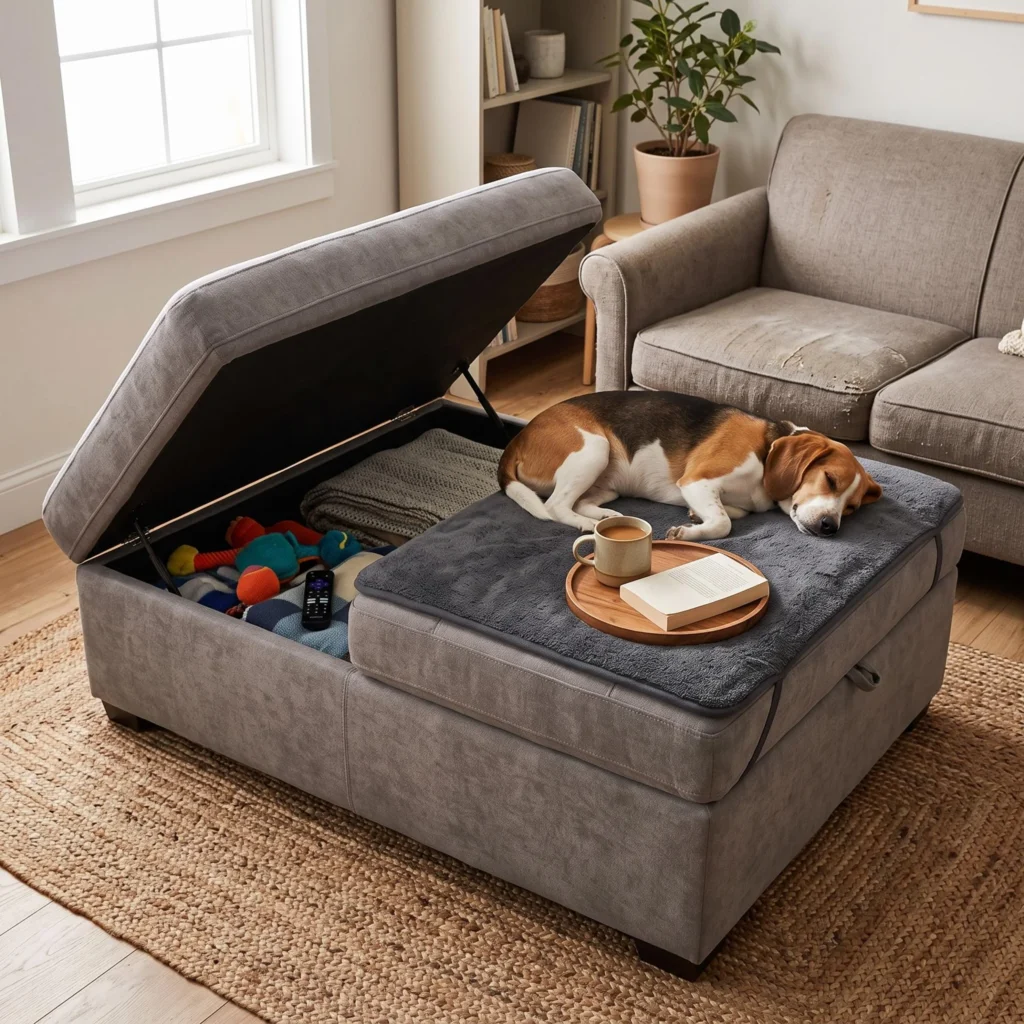
8. Multi-Functional Ottoman with Storage
A storage ottoman that doubles as a dog bed topper or hides supplies inside offers a flexible, space-saving solution for smaller living rooms. During the day, it functions as extra seating or a coffee table, and at night, it can double as your dog’s resting spot.
Best for: Small living rooms needing multi-purpose furniture Design tip: Choose an ottoman with a removable, washable cover to make cleanup after pet use significantly easier.
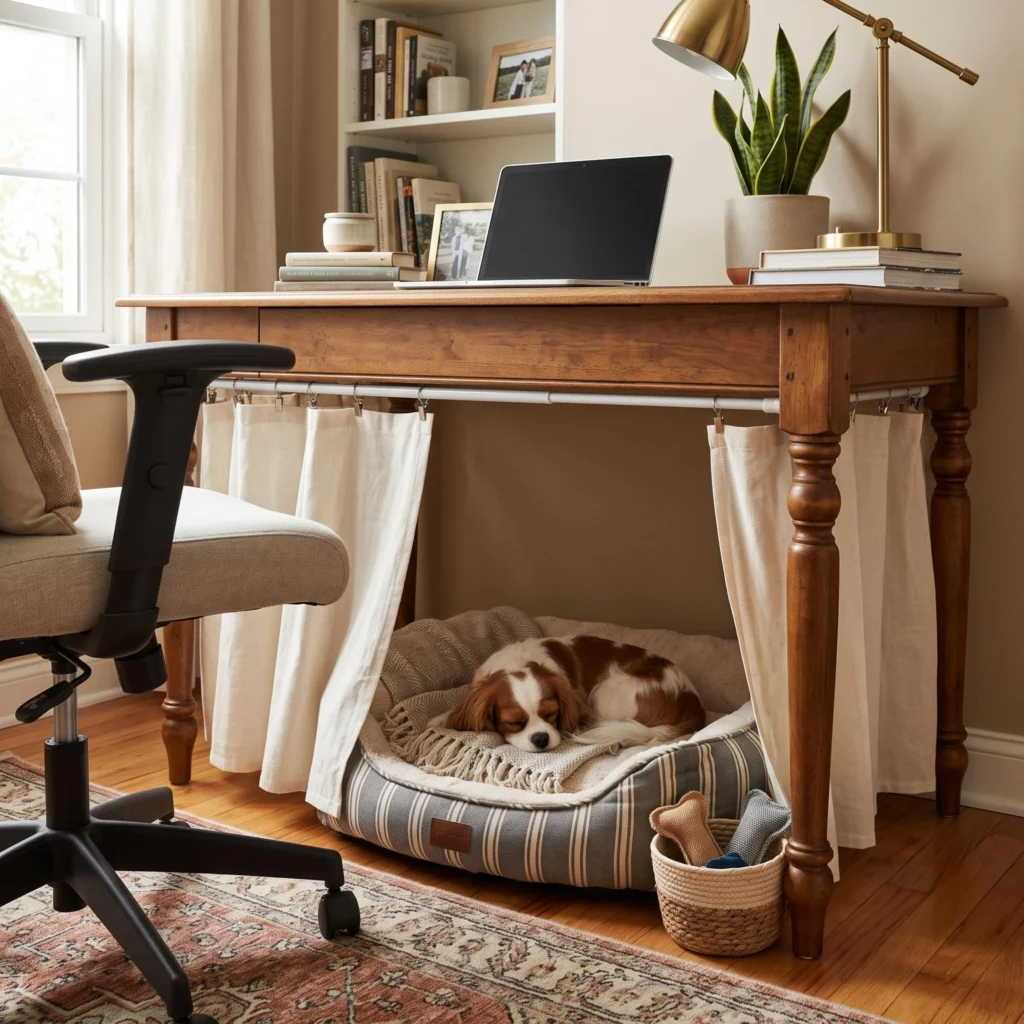
9. Nook Under a Desk or Console Table
The open space beneath a desk or console table, which often goes unused, can be transformed into a cozy dog spot with the simple addition of a bed and perhaps a small curtain for a den-like feel. This works particularly well in home offices or entryways.
Best for: Home offices, entryway console tables Design tip: Choose a bed low enough to fit comfortably under the furniture’s clearance height without your dog needing to duck excessively.
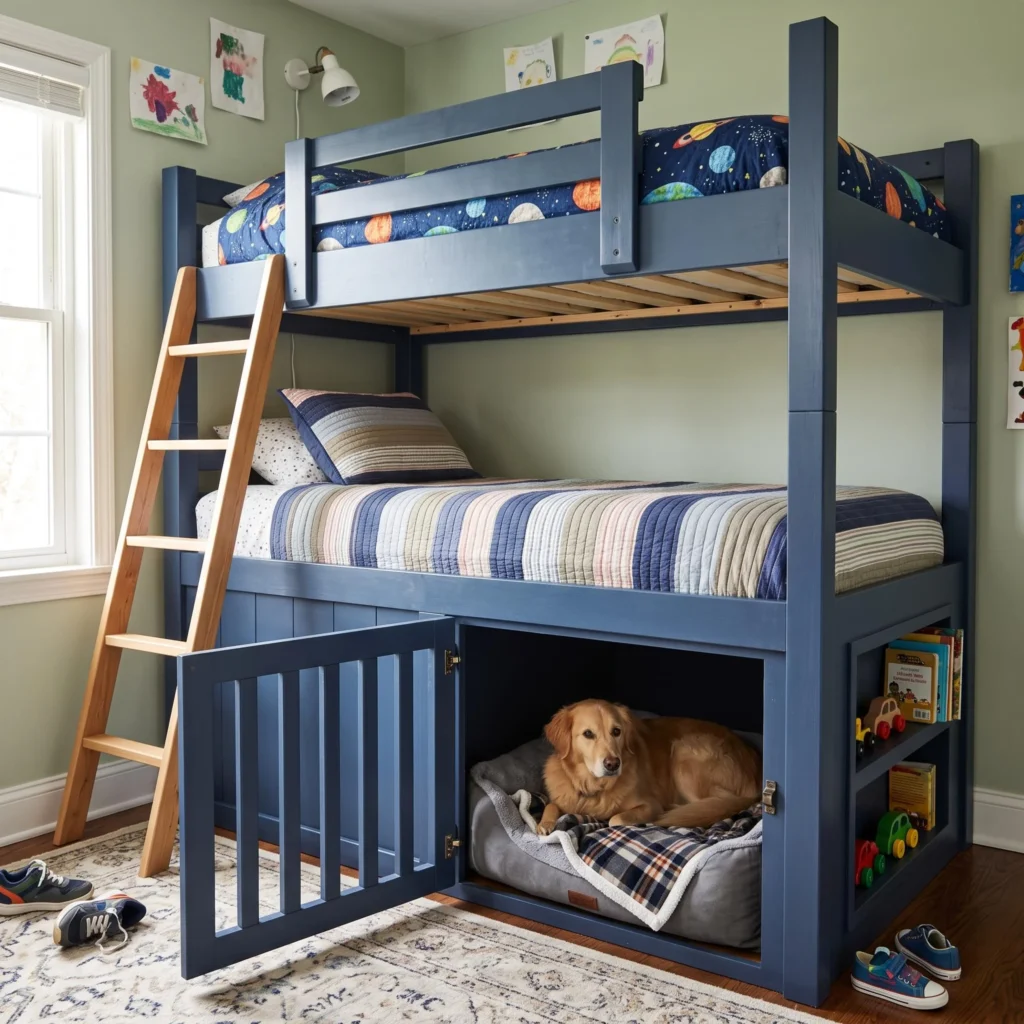
10. Bunk Bed Style Dog Bed Built Into Furniture
For homes with bunk beds or elevated furniture, incorporating a dog bed into the understructure creates a charming, space-efficient sleeping nook. This idea has become increasingly popular in kids’ rooms where the family dog often wants to sleep nearby.
Best for: Bedrooms with bunk beds or loft-style furniture Design tip: Add a small gate or barrier if needed to keep the space exclusively for your dog rather than becoming general storage.
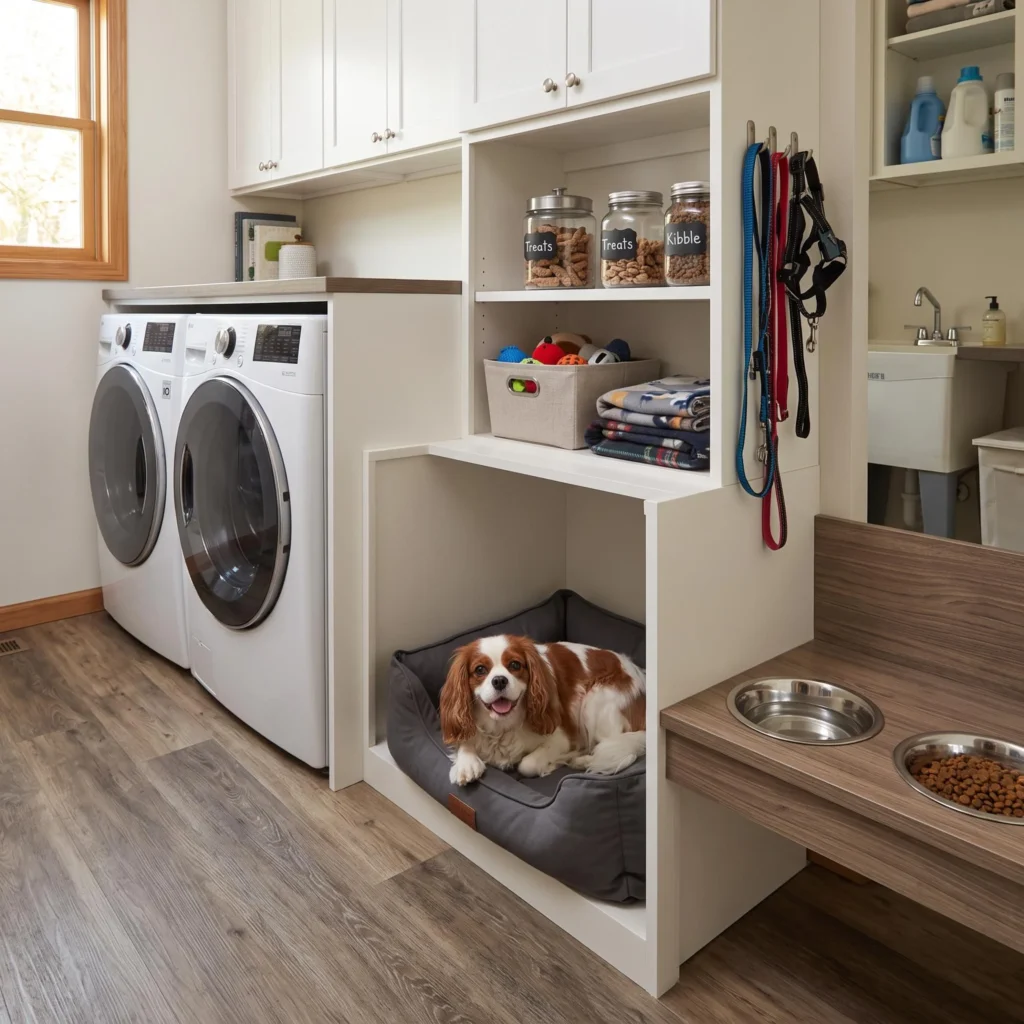
11. Laundry Room Dog Station
A laundry room, often underutilized for anything beyond its primary function, can incorporate a small dog bed, water bowl station, and supply storage into an existing cabinet or corner. This keeps pet care items centralized in a practical, low-traffic area.
Best for: Homes with laundry rooms near the main living space Design tip: Choose moisture-resistant materials for flooring and bedding, given the laundry room’s proximity to water and humidity.
12. Hallway Alcove Dog Bed
Many homes have small, underused alcoves along hallways that can be transformed into a simple dog resting spot with just a bed and perhaps a small runner rug. This makes use of otherwise wasted transitional space.
Best for: Homes with hallway nooks or recessed wall sections Design tip: Keep the setup simple and low-profile to avoid creating a tripping hazard in a high-traffic walkway.
How to Choose the Right Small-Space Dog Area for Your Home
With so many creative options, a few practical considerations can help narrow down the best fit for your specific home and dog:
- Consider your dog’s personality: Dogs who prefer quiet, enclosed spaces may do best with a den-like nook, such as an under-stairs area or closet conversion, while more social dogs might prefer an open corner spot near household activity.
- Assess your available space: Look for underutilized areas in your home, like awkward corners, unused closets, or space beneath furniture, rather than assuming you need to dedicate an entirely new area.
- Factor in your dog’s size: Smaller dogs can often fit comfortably into more compact nooks, like under a console table, while larger dogs may need a more open corner setup with additional clearance.
- Think about maintenance: Choose materials and locations that are easy to clean, particularly if the space is near food, water, or high-traffic areas prone to dirt and pet hair.
Materials and Durability Considerations
Since dog spaces experience daily wear from chewing, scratching, and general use, choosing durable materials makes a meaningful difference in how well a setup holds up over time:
- Washable fabric covers: Removable, machine-washable bed covers make regular cleaning significantly easier, especially important for dogs prone to shedding or occasional accidents.
- Solid wood or laminate cabinetry: For built-in crate cabinets or shelving, sturdier materials hold up better against scratching than more delicate finishes.
- Non-slip flooring or rugs: Adding a non-slip mat or rug underneath a dog bed helps prevent sliding, particularly important on hardwood or tile flooring.
- Moisture-resistant surfaces: For spaces near water bowls or laundry areas, choosing moisture-resistant flooring and materials helps prevent damage from spills or humidity.
Tips for Encouraging Your Dog to Use Their New Space
Even the most beautifully designed dog nook won’t get used if your dog doesn’t feel comfortable there. A few strategies can help with the transition:
- Introduce familiar items first: Placing a well-loved blanket, toy, or bed your dog already associates with comfort helps ease the transition into a new space.
- Use positive reinforcement: Rewarding your dog with treats or praise when they use the new space helps build a positive association early on.
- Keep the space consistent: Avoid using the area for other household storage or purposes, which can create confusion about the space’s intended use.
- Be patient with the adjustment period: Some dogs take to a new space immediately, while others may need a few weeks of gentle encouragement before fully settling in.
Budget-Friendly Ways to Create a Small-Space Dog Area
You don’t need a major renovation or expensive built-ins to create a comfortable dog space. Consider these more affordable approaches:
- Repurpose existing furniture: An old bookshelf, cabinet, or side table can often be adapted into a cozy dog nook with just a cushion and minor modifications rather than purchasing new furniture entirely.
- Use removable, renter-friendly solutions: Tension rods for curtains, adhesive hooks for leash storage, and freestanding gates allow you to create a defined dog space without permanent alterations, ideal for rental properties.
- Shop secondhand for beds and accessories: Gently used dog beds, crates, and storage baskets are often available at a fraction of retail cost through secondhand marketplaces or thrift stores.
- DIY simple structural elements: A basic wooden frame or curtain rod can transform an open nook into a more enclosed, den-like space without requiring professional carpentry skills.
Common Mistakes to Avoid When Designing a Small Dog Space
Even well-intentioned setups can fall short if a few common issues aren’t considered:
- Choosing a space that’s too enclosed or dark: While dogs often enjoy den-like spaces, an area with no light or airflow can feel uncomfortable rather than cozy. Ensure adequate ventilation and at least some natural or artificial light.
- Ignoring your dog’s size as they grow: For puppies, plan ahead for their adult size rather than choosing a space only suited to their current, smaller dimensions.
- Overlooking cleaning access: A nook that’s difficult to reach for regular cleaning can quickly become unpleasant, so prioritize spaces that allow for easy access to remove and wash bedding.
- Placing the space in a high-traffic walkway: Even a small dog bed can become a tripping hazard if placed directly in a busy path, so choose locations that are accessible but out of the main flow of foot traffic.
- Forcing the space without your dog’s input: Not every idea will suit every dog’s personality, so remain flexible and willing to adjust the setup if your dog doesn’t take to it as expected.
Final Thoughts
A dedicated dog space doesn’t require a spare room or a major renovation to feel special and functional. By making creative use of overlooked corners, awkward architectural features, and multi-purpose furniture, even the smallest homes can offer a comfortable, well-organized spot for a furry family member.
Consider your dog’s personality, your home’s available nooks and crannies, and a few practical durability factors, and you’ll be able to create a cozy space your dog will genuinely love to call their own. Start with one idea that feels most achievable for your current layout and budget, observe how your dog responds, and adjust from there, the best small-space dog area is ultimately the one your pet actually chooses to use and enjoy.