Quick Sourdough Discard Naan Recipe
Soft, Flavorful, and Easy to Make
There’s something truly comforting about freshly made naan, soft, fluffy, and perfect for dipping into your favorite curries or enjoying on its own with a little butter.
This quick sourdough discard naan recipe gives you the perfect naan with a slight tang from the sourdough starter, making it even more delicious.
The best part? You can use your leftover sourdough discard, turning something you might throw away into a wonderful homemade bread.
Unlike traditional naan that needs hours of fermentation, this recipe requires just a few simple ingredients and a short prep time, making it perfect for busy weeknights when you want to elevate a simple meal.
What Is Sourdough Discard?
If you keep a sourdough starter, you already know the routine. Every time you feed it, you throw part of it away first. That portion is the discard.
Why it exists. A starter needs a roughly consistent ratio of flour to existing culture to stay healthy. Feed it without removing any, and the volume doubles every day until you are running a sourdough farm. Removing part of it keeps the amount manageable and keeps the yeast and bacteria properly fed.
Why it is not the same as active starter. Active starter is bubbly, risen, and full of gas because it was recently fed. Discard is the deflated version, taken before feeding. It has plenty of flavor but almost no leavening power left.
That is why this recipe uses baking powder. The discard brings the tang. The baking powder does the lifting. Trying to use discard alone would give you a flat, dense flatbread rather than a puffed naan.
Discard is not waste. It is essentially flour, water, and a lot of developed flavor. Pancakes, crackers, waffles, and flatbreads like this one all work well with it.

Why Make Sourdough Discard Naan at Home?
Homemade naan allows you to control the ingredients and customize it to your taste. This sourdough discard naan is easy to make, healthier, and much tastier than store-bought versions.
Homemade sourdough discard naan is:
Soft and fluffy
Made with simple, real ingredients
A great way to use sourdough discard
Customizable with your favorite flavors
Perfect for dipping, wrapping, or enjoying as a side
The subtle tang from the sourdough starter combined with the fluffy texture makes it a perfect accompaniment to any meal.
Ingredients for Quick Sourdough Discard Naan
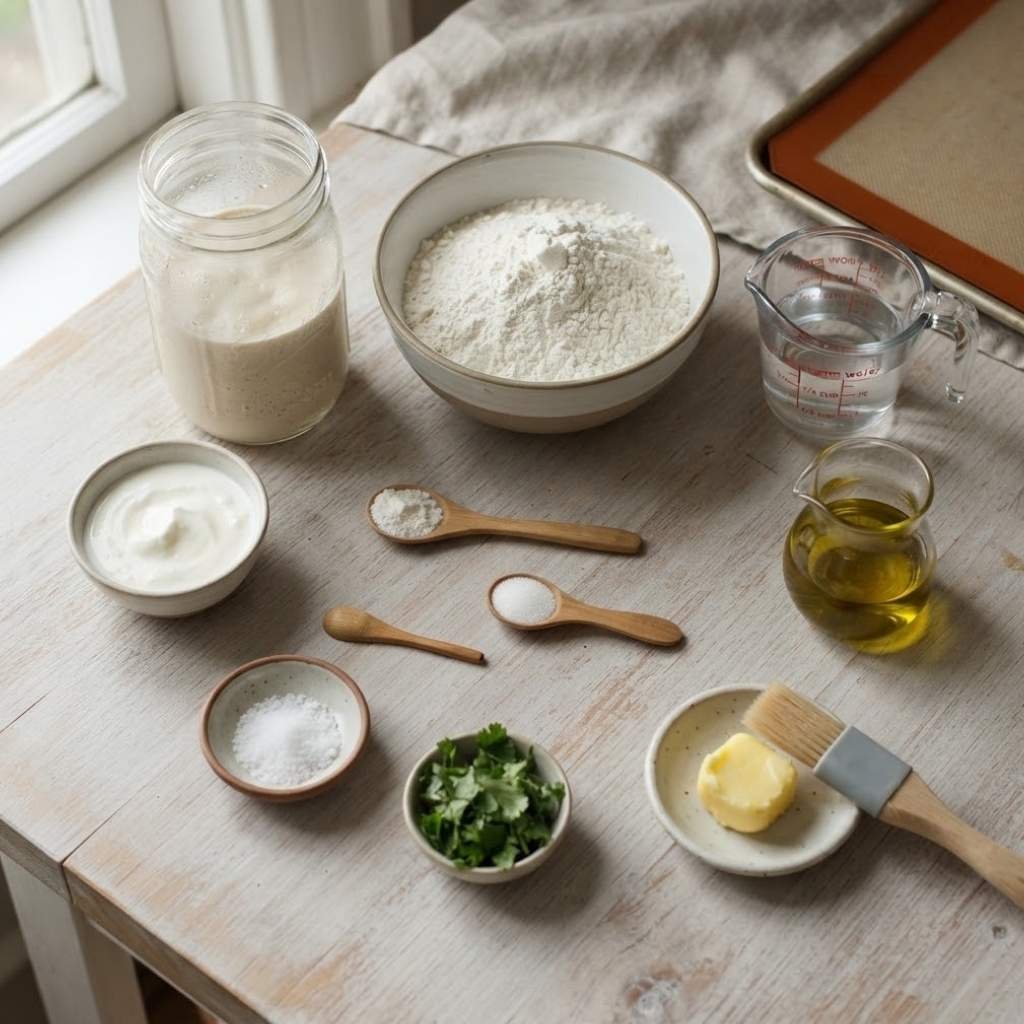
Makes 4 large naan
Butter or ghee, for brushing
1 cup sourdough discard (unfed, straight from the fridge)
1½ cups all-purpose flour, plus more for dusting
1 teaspoon baking powder
1 teaspoon sugar
¼ teaspoon salt
¼ cup warm water
2 tablespoons olive oil or melted butter
2 tablespoons plain yogurt (optional, for extra softness)
2 tablespoons chopped fresh cilantro (optional)
Ingredient Tips
Cold discard straight from the fridge works fine. It does not need to come to room temperature or be fed first. In fact, colder discard is slightly easier to mix into a dough without it getting sticky.
Older discard means more tang. Discard that has been in the fridge a week tastes noticeably more sour than yesterday’s. Anything up to two weeks is fine. If it smells like nail polish remover or has pink or orange streaks, throw it out and start fresh.
Baking powder, not baking soda. People substitute these constantly and they are not interchangeable. Baking soda needs acid to activate and will taste metallic here. Baking powder works on its own.
Yogurt is optional but worth it. The acid tenderises the gluten slightly, which gives you a softer naan. Two tablespoons is enough to notice.
Use a cast iron skillet if you have one. Cast iron holds heat far better than a thin nonstick pan, and that retained heat is what creates the blistered charred spots. A nonstick pan cools down when the dough hits it and you get pale, even naan instead.
Step-by-Step Instructions
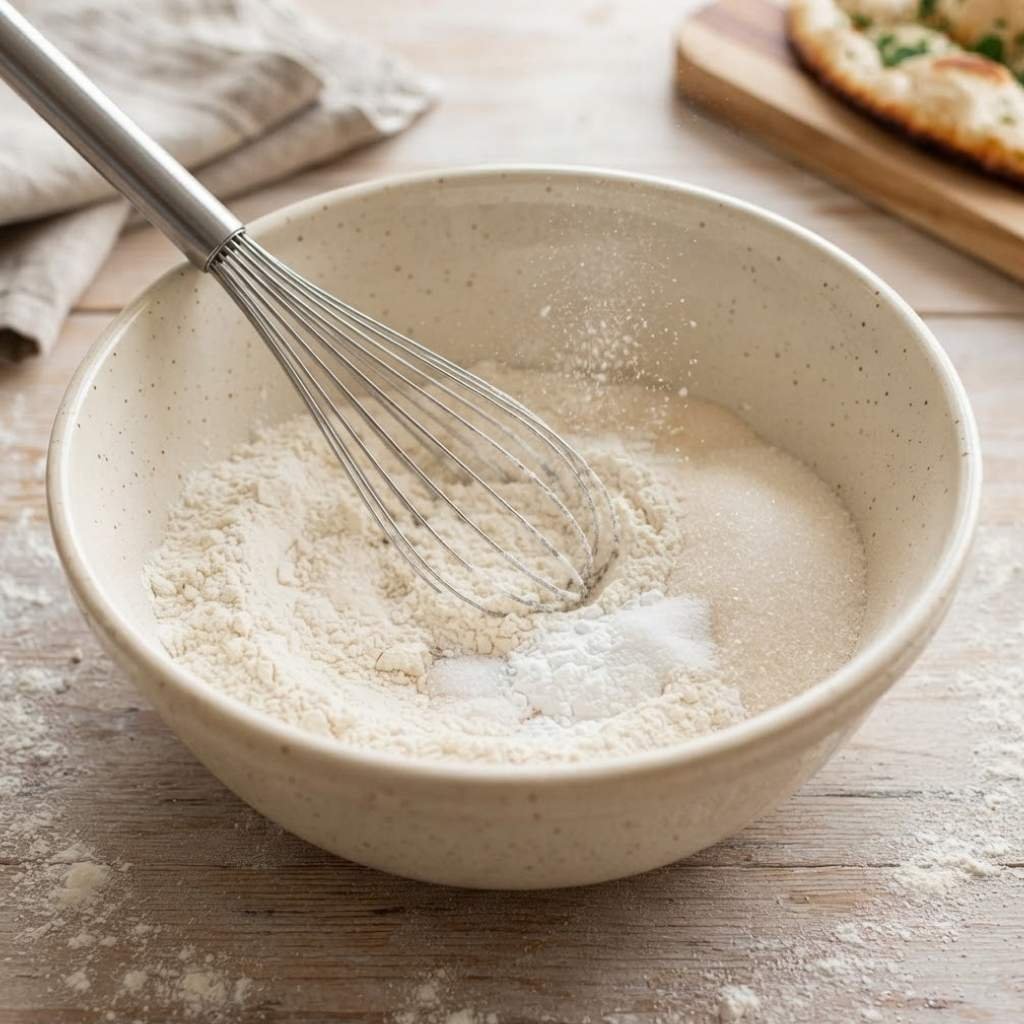
Step 1: Combine the Dry Ingredients
Whisk the flour, baking powder, sugar, and salt together in a large bowl.
Doing this before the wet ingredients go in matters more than it sounds. Baking powder in clumps means some bites puff and others stay flat.
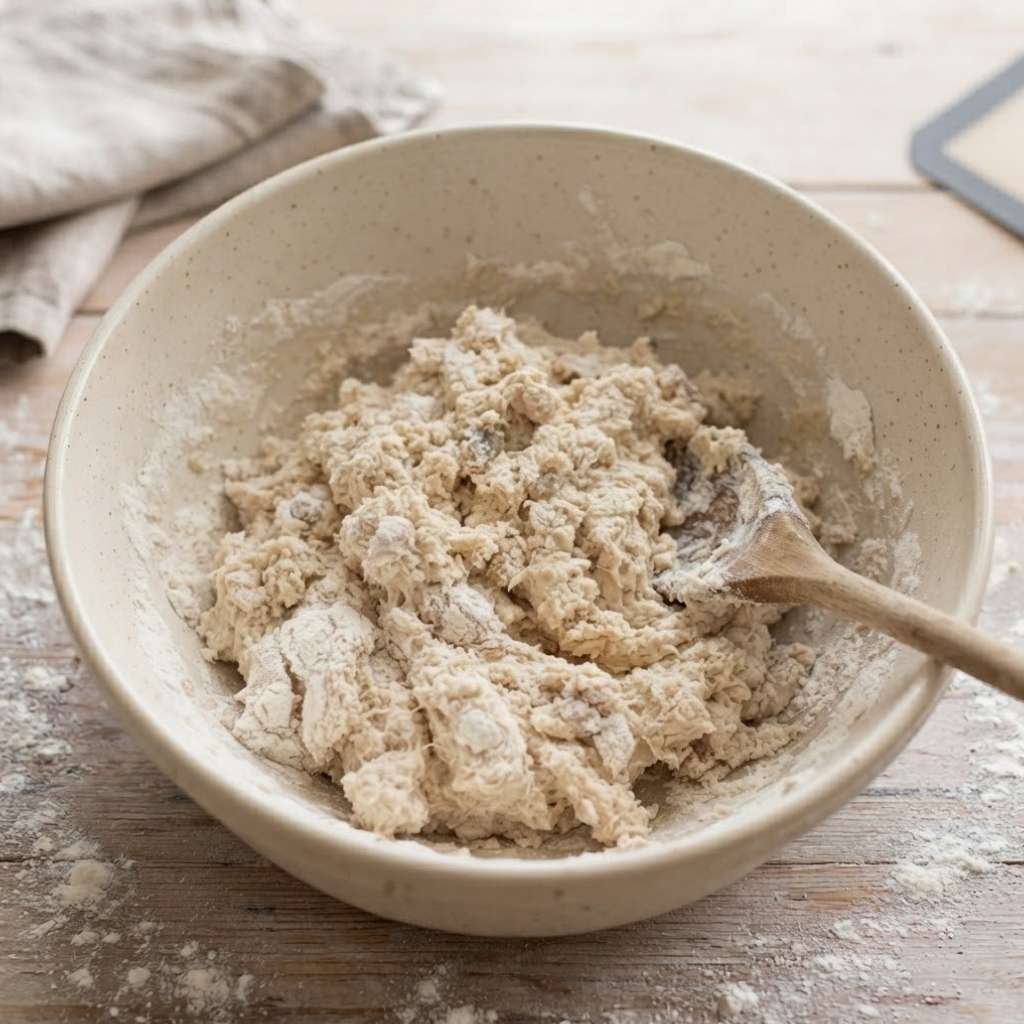
Step 2: Add the Wet Ingredients
Add the sourdough discard, warm water, olive oil, and yogurt if using.
Stir with a wooden spoon or your hand until the dough starts pulling together into a shaggy mass. It will look rough and uneven at this stage, which is correct.
Step 3: Knead Until Smooth
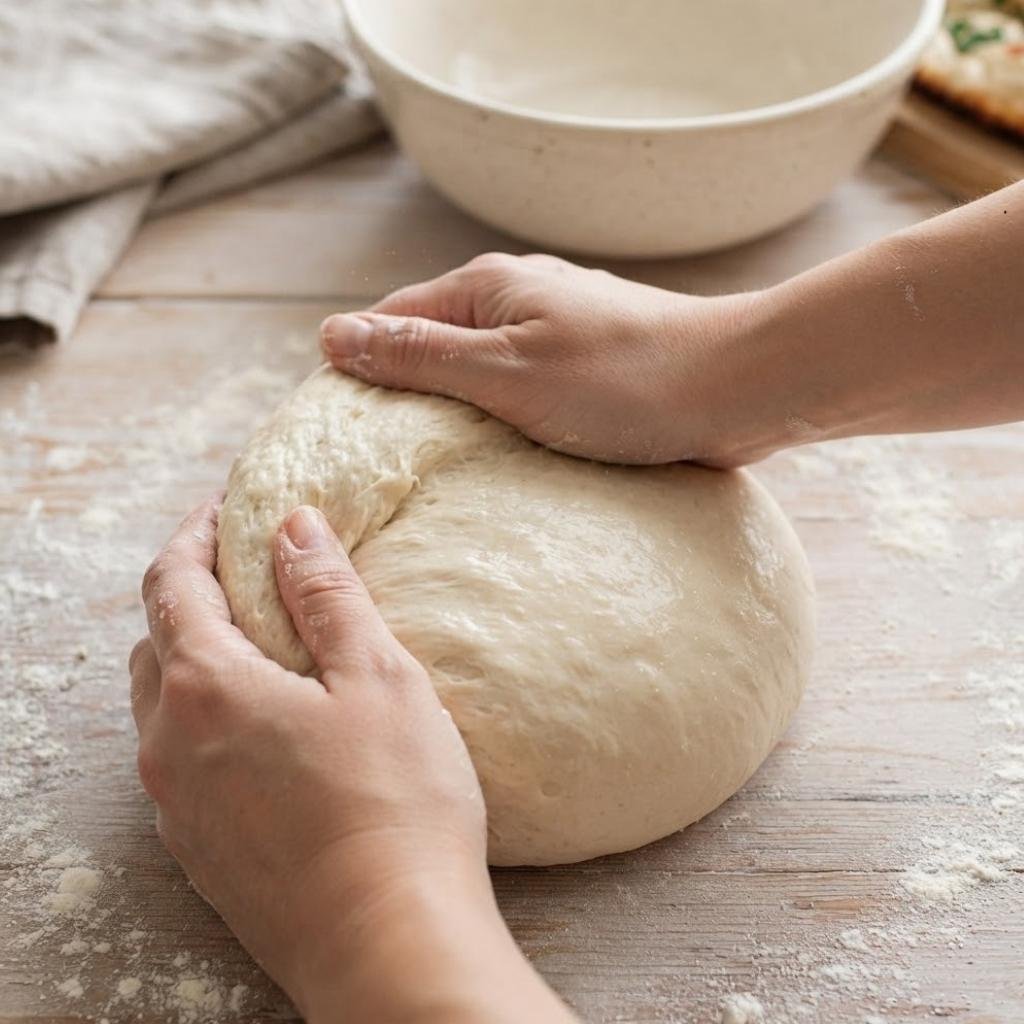
Turn the dough onto a lightly floured surface and knead for 3 to 5 minutes.
Push it away with the heel of your hand, fold it back, turn it a quarter turn, repeat. It should go from rough to smooth and slightly tacky, but it should not stick to your hands.
Too sticky? Add flour a tablespoon at a time. Too dry and cracking? Add water a teaspoon at a time. Discard hydration varies between starters, so some adjustment is normal.
Step 4: Rest the Dough
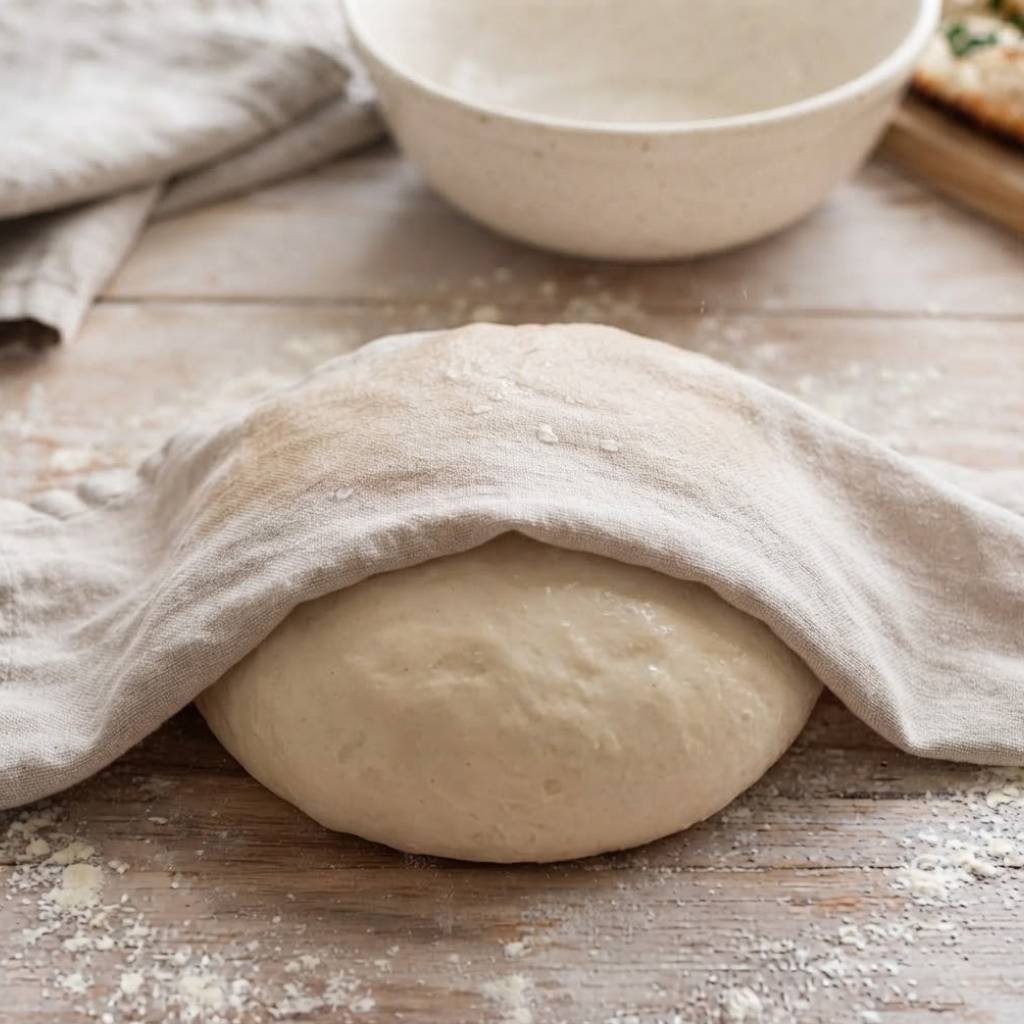
Cover with a damp towel and leave it for 10 to 15 minutes.
This is not proofing, and the dough will not rise much. It is letting the gluten relax so the dough rolls out without springing back. Skip it and you will fight the dough at the rolling stage.
Step 5: Divide and Roll
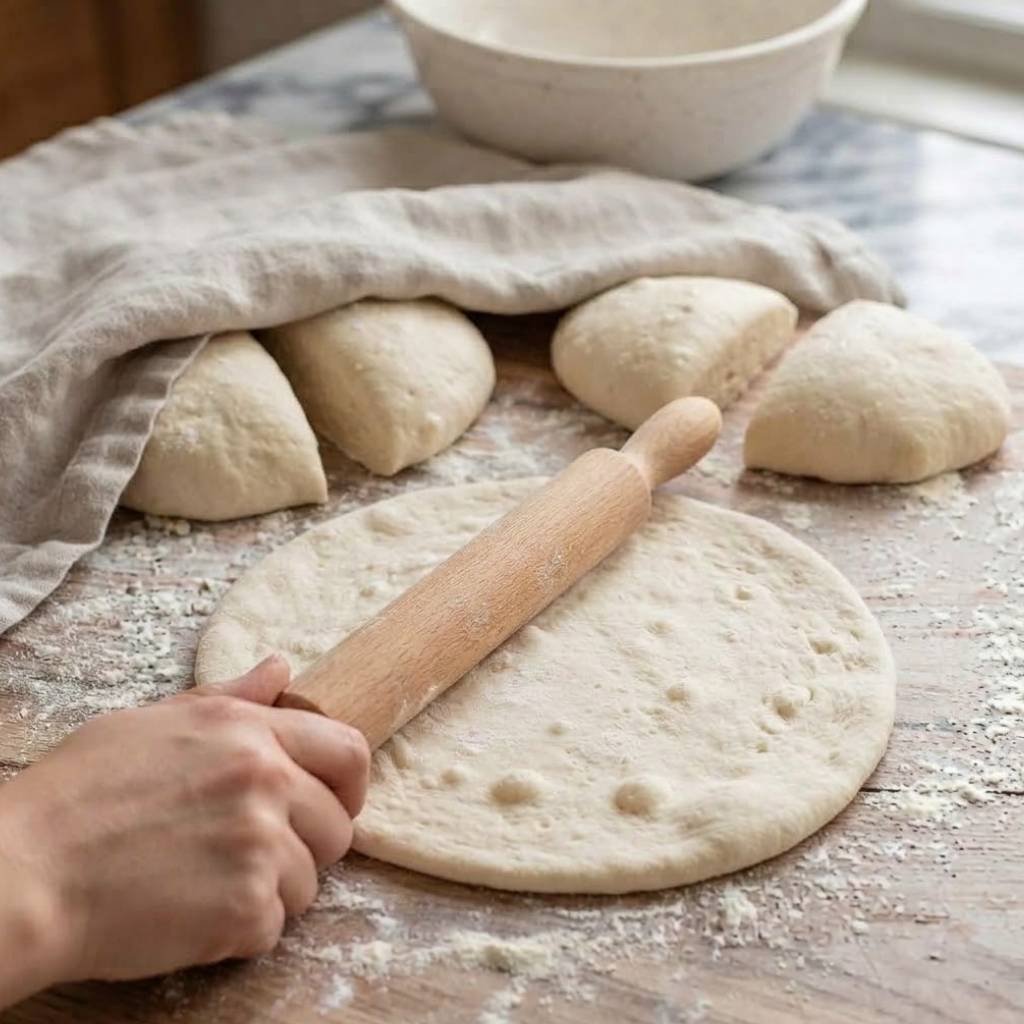
Divide into 4 equal pieces and roll each into a ball.
Working one at a time on a floured surface, roll each ball into an oval or teardrop about ¼ inch thick. Traditional naan is teardrop shaped, but round works exactly the same.
Keep the other pieces covered while you work so they do not dry out.
Step 6: Cook on High Heat
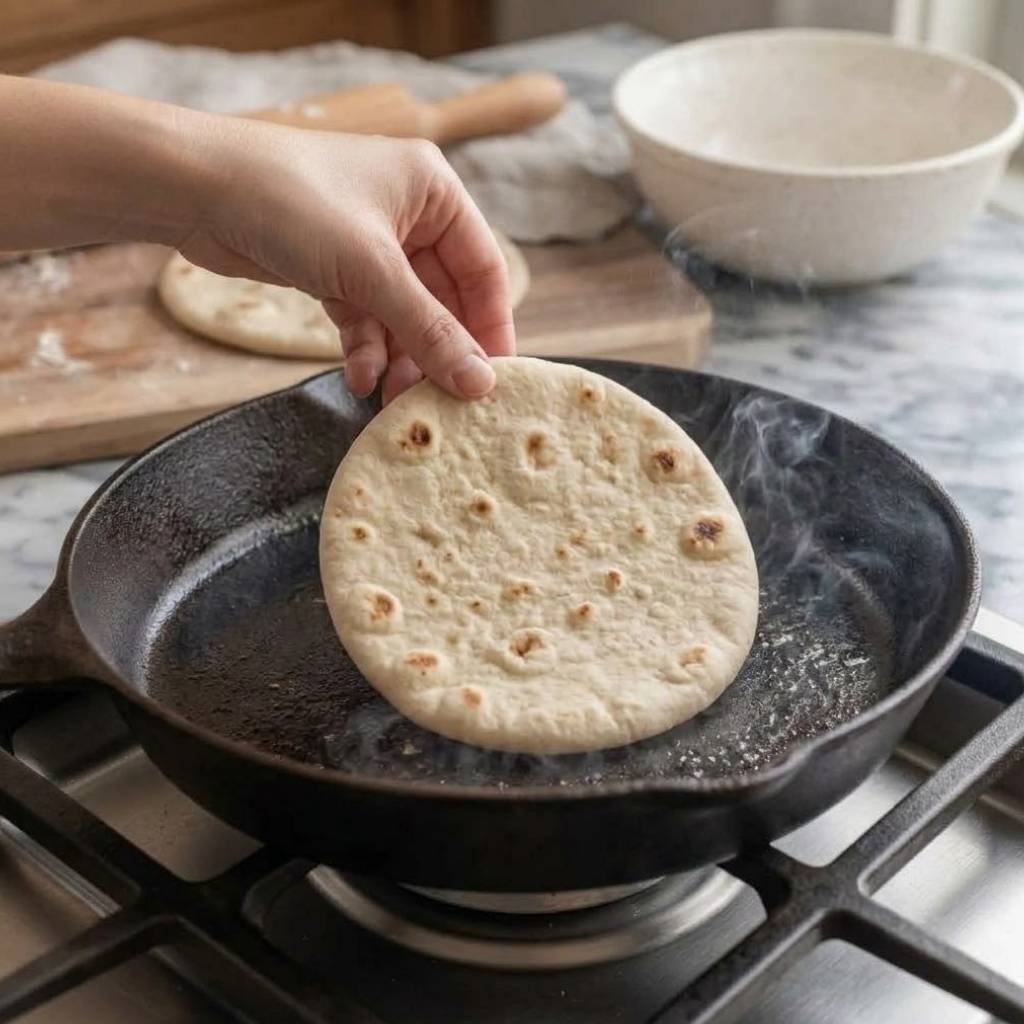
Heat a cast iron skillet over medium-high until a drop of water sizzles and evaporates immediately. A properly hot pan is the single most important part of this recipe.
Lay one naan in the dry pan. Within 60 to 90 seconds you should see bubbles rising across the surface. Once the underside has dark brown spots, flip it.
Cook the second side for another 60 to 90 seconds. Press down gently on any puffed areas with a spatula to help them colour evenly.
Step 7: Brush and Stack
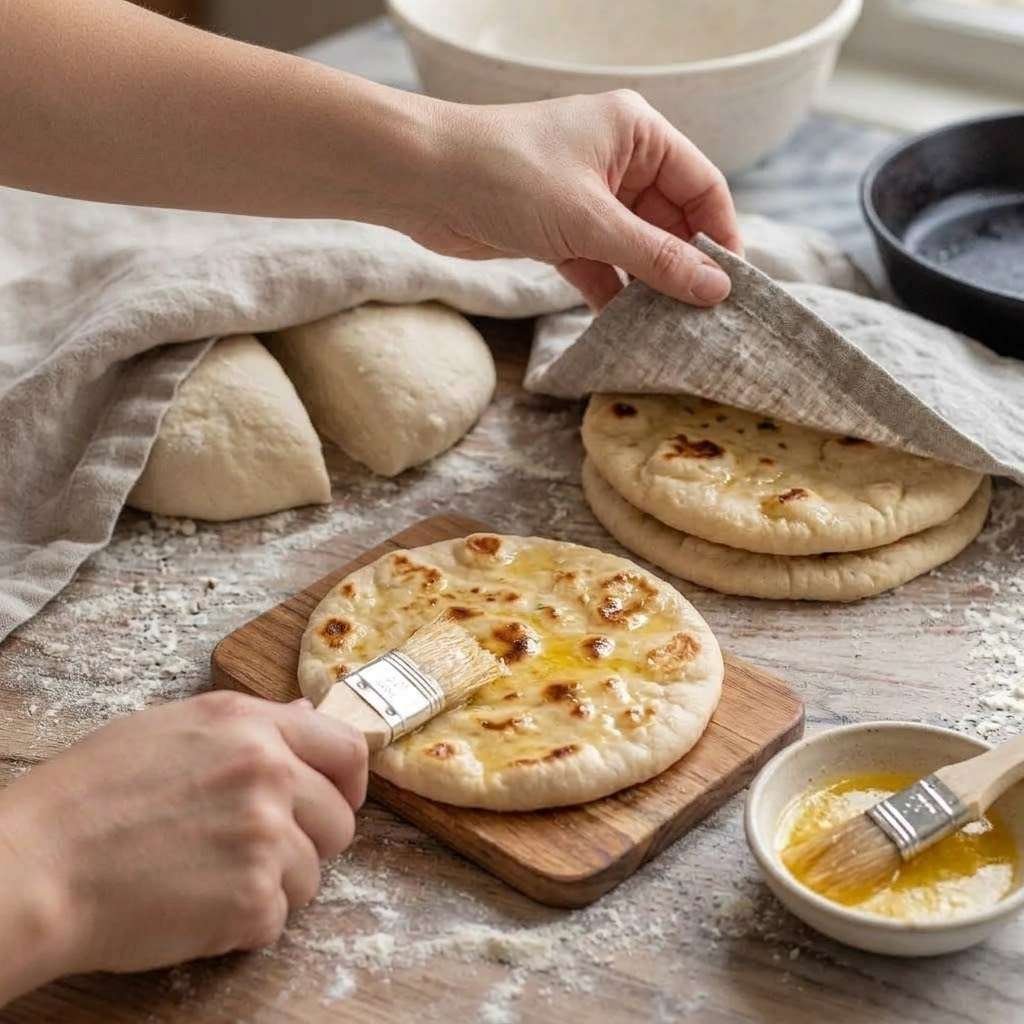
Brush each naan with melted butter or ghee the moment it comes off the pan, while it is hot enough to absorb it.
Stack the finished naan and cover them with a clean towel. The steam trapped between them is what keeps them soft. Left uncovered on a rack, they stiffen within minutes.
Sprinkle with cilantro and serve warm.
Stiff, cracker-like naan is almost always about heat and steam, not the dough itself.
Pro Tips for Perfect Sourdough Discard Naan
Here are a few tips to make your naan even better:
Rest the dough to allow the gluten to relax.
Use a hot skillet for a nice crispy texture on the outside while keeping the inside soft.
If you want a more pronounced sour flavor, increase the amount of sourdough discard slightly.
Brush with ghee for a richer flavor.
These tips will help you achieve the perfect naan every time.
Why Homemade Beats Store-Bought Naan
Packaged naan from the supermarket is convenient, and there are three reasons homemade still wins.
Texture. Shelf-stable naan is baked, cooled, and packaged, which means it goes slightly stiff. Reheating softens it but never brings back the pillowy interior you get straight from a hot pan.
Ingredients. Most packaged naan contains dough conditioners, preservatives, and emulsifiers to survive weeks on a shelf. This recipe has flour, discard, yogurt, oil, and leavening.
Flavor. Naan straight off the skillet has charred blistered spots and steam still escaping. That window is about two minutes long, and it is the whole point. No packaged version can deliver it.
Five Ways to Vary It
Garlic naan. Mince three cloves and stir them into the melted butter. Brush it on the moment the naan comes off the pan so the residual heat cooks the raw edge off the garlic without burning it.
Butter naan. Skip the herbs entirely and brush generously with ghee twice, once right off the pan and once before serving. The plainest version and the one most people actually want.
Cheese naan. Roll each ball out, place a tablespoon of grated mozzarella in the centre, gather the edges over it, pinch shut, and roll out again gently. Cook as normal and the cheese melts inside.
Za’atar naan. Brush with olive oil rather than butter and sprinkle za’atar over the surface before the second flip so it toasts slightly.
Whole wheat. Swap half the all-purpose flour for whole wheat. The naan will be denser and nuttier, and you may need an extra tablespoon of water since whole wheat absorbs more.
Ways to Use Sourdough Discard Naan
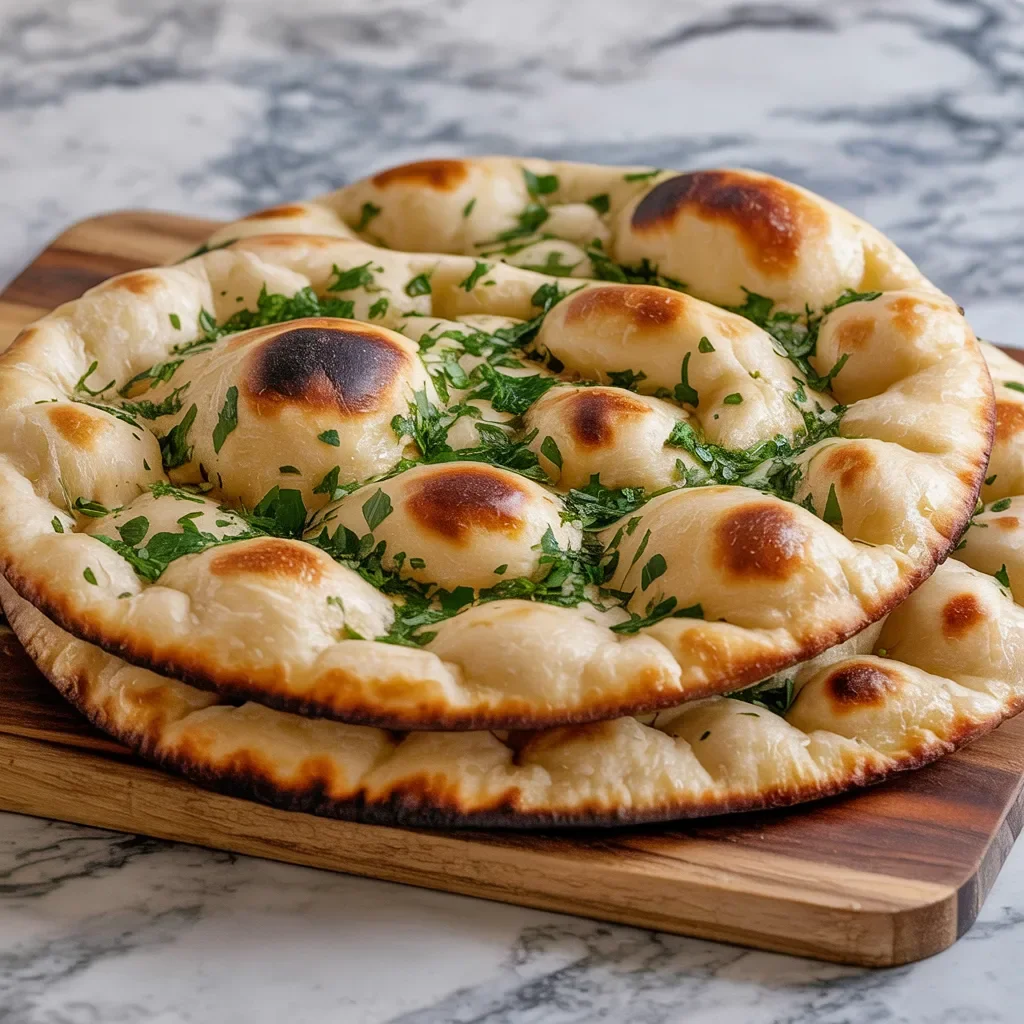
This naan is incredibly versatile and can be used in a variety of ways:
Serve with your favorite curry or dip
Wrap around grilled meats for a sandwich
Use as a pizza base
Serve alongside soups and stews
Enjoy with a dollop of yogurt for a light snack
The possibilities are endless once you start making this naan at home!
Estimates for 4 large naan including butter brushing. Making 6 smaller naan brings this to roughly 245 calories each.
Frequently Asked Questions
Can I make this without sourdough discard?
Yes. Replace the cup of discard with ½ cup plain yogurt plus ½ cup extra flour and 2 extra tablespoons of water. You lose the tang, but the texture holds up.
How old can the discard be?
Up to about two weeks in the fridge is fine, and older discard gives more flavor. Throw it out if it smells like acetone, has any fuzzy growth, or shows pink or orange streaks.
Can I use active starter instead of discard?
Yes, and you can cut the baking powder to half a teaspoon since active starter brings some lift of its own. The flavor will be milder, since active starter is less acidic than discard.
Can I make the dough ahead?
Mix and knead it, then refrigerate for up to 24 hours. Let it sit at room temperature for 20 minutes before rolling. The flavor deepens noticeably overnight.
Do I need a tandoor for proper naan?
No. A tandoor reaches temperatures a home kitchen cannot, which is why restaurant naan has those dramatic char marks. A very hot cast iron skillet gets you most of the way there.
Can I cook these on a grill?
Yes, and it works well. Direct heat, about 90 seconds a side. Brush the grates with oil first and keep a close eye, since naan burns fast over an open flame.
Final Thoughts
This quick sourdough discard naan recipe proves that you don’t have to spend hours preparing naan to enjoy delicious, soft bread. With just a few ingredients and some simple steps, you can make naan that’s perfect for any meal.
The subtle tang from the sourdough discard, combined with the soft texture and flavorful butter, makes this naan irresistible. Try it with your next meal and enjoy the fresh, warm comfort of homemade naan straight from the skillet.