Best Chicken Cacciatore Recipe: Better Than Any Italian Trattoria
Prep Time: 15 minutes Cook Time: 45 minutes Total Time: 1 hour Servings: 4 Course: Dinner | Cuisine: Italian Calories: ~430 per serving (without pasta or bread)
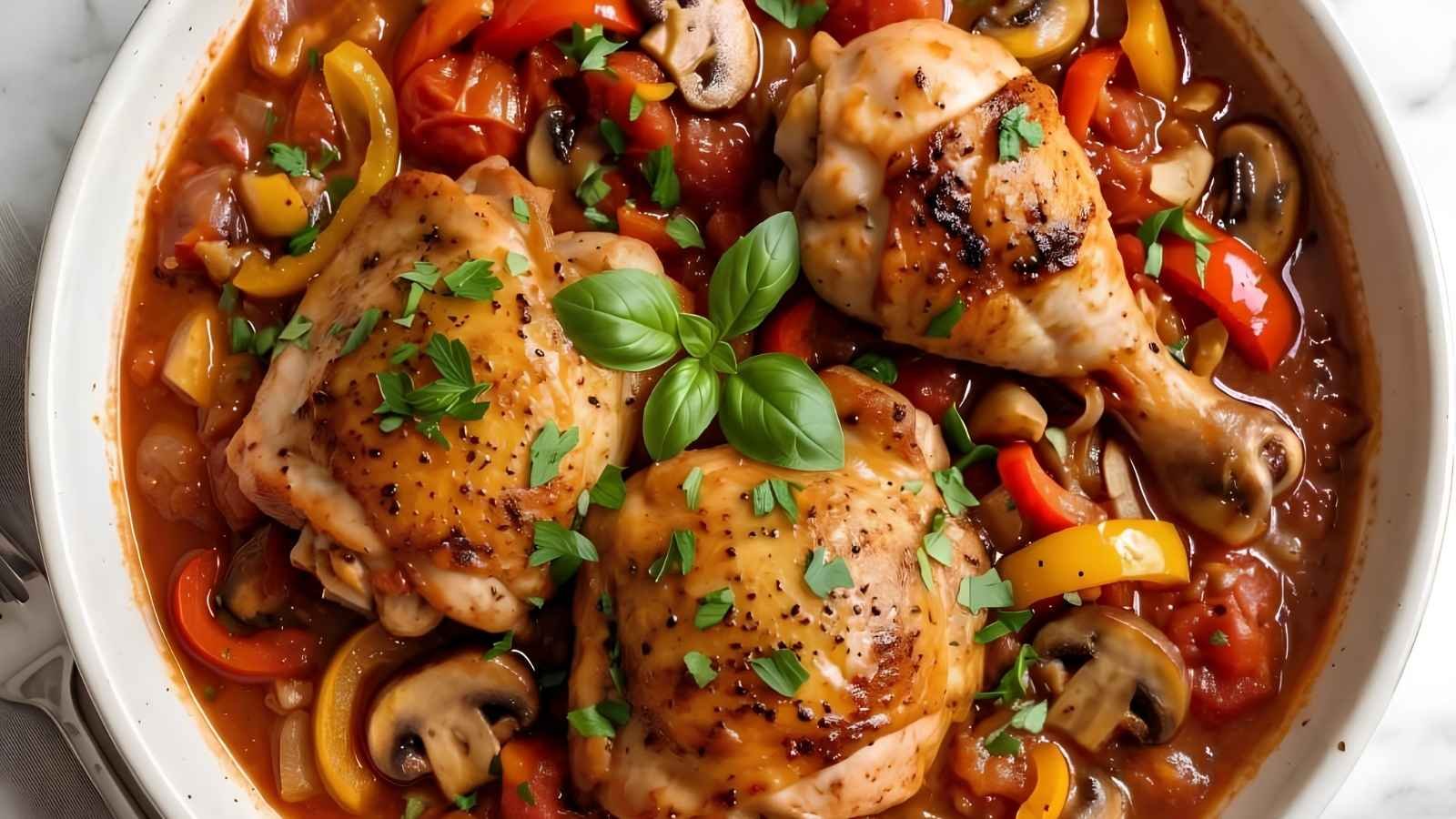
This best chicken cacciatore recipe is the perfect rustic, comforting dinner for anyone craving classic Italian hunter-style cooking at home. It combines seared, bone-in chicken with tender bell peppers, mushrooms, and a rich tomato sauce, all simmered together until deeply flavorful.
Made with just a handful of pantry staples, it is a delicious, hearty, and easy-to-make alternative to an expensive trattoria order. If you are looking for a quick, crowd-pleasing dinner that mostly cooks itself, let’s get right into it.
I first made this on a rainy Sunday when I had nothing but a can of tomatoes and a pack of chicken thighs in the fridge. After testing it more times than I’d like to admit, I landed on one small change that made all the difference: deglazing the pan with wine before the tomatoes go in. That single step is what takes it from “good weeknight chicken” to something that tastes like it simmered all afternoon.
The name “cacciatore” translates to “hunter” in Italian, and the dish is traditionally described as hunter-style cooking a rustic, one-pot meal built from whatever was on hand. Worth noting: tomatoes and bell peppers only reached Italian kitchens after they arrived from the Americas, so the tomato-based version we know today is a later evolution of that older, rustic idea. This modern take keeps the same spirit using easy-to-find grocery store ingredients.
Why You Will Love This Recipe
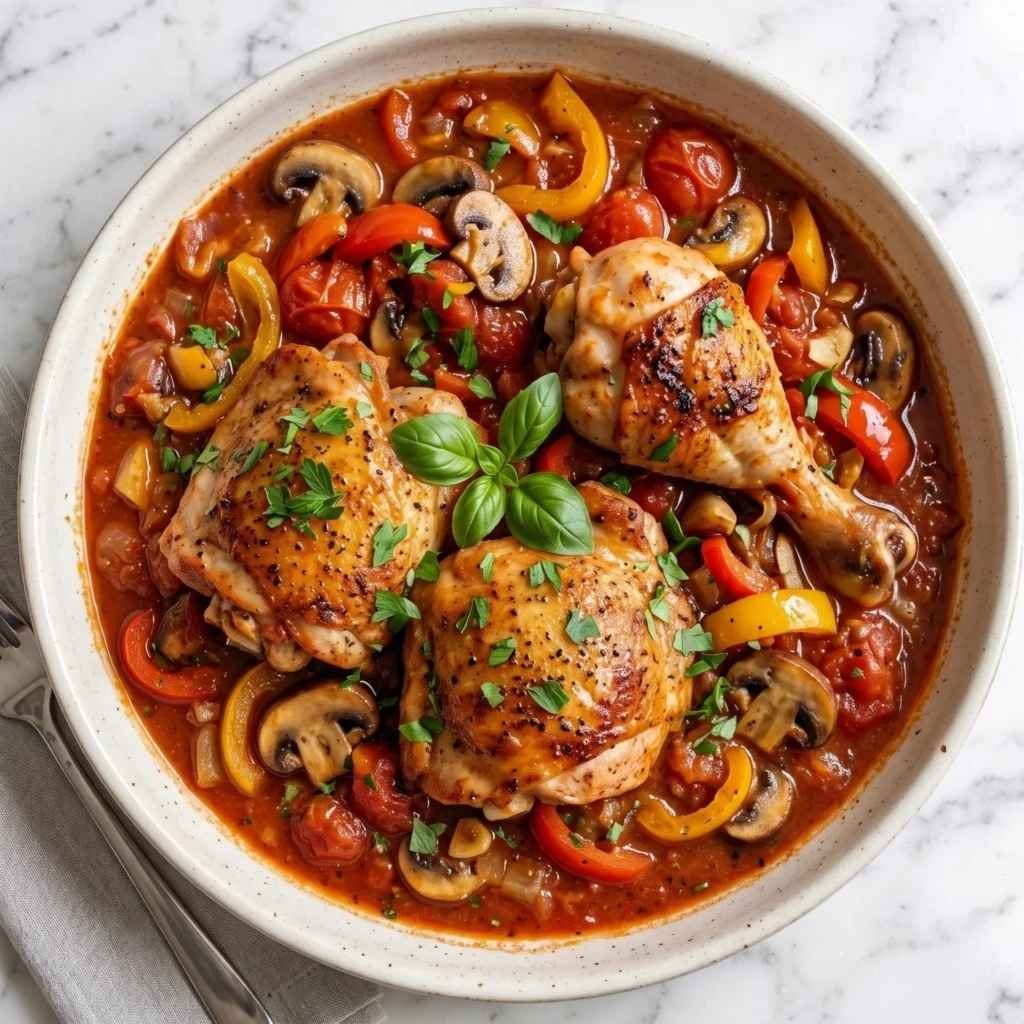
If you’ve been stuck in a rut of the same weeknight chicken breast dinners, you are going to fall in love with this method. This chicken cacciatore is:
Texturally perfect: The chicken turns fall-off-the-bone tender as it simmers, while the vegetables soften into the rich, chunky tomato sauce.
Highly customizable: You can easily load it up with olives, capers, or a splash of red wine for added depth.
Made with basic staples: You only need bone-in chicken, canned tomatoes, peppers, mushrooms, and a few pantry seasonings.
Visually gorgeous: The rustic mix of golden chicken, colorful peppers, and rich tomato sauce looks like it came straight out of an Italian countryside kitchen.
Equipment You Will Need
A 12-inch deep skillet or Dutch oven with a lid. You need enough surface area to sear four thighs without crowding them crowded chicken steams instead of browning.
Tongs for turning the chicken without tearing the skin.
A wooden spoon for scraping up the browned bits from the bottom of the pan.
An instant-read thermometer the most reliable way to know the chicken is done.
Ingredients You Will Need
The beauty of this recipe lies in its sheer simplicity. To get that perfect rustic, hearty bite, you will need:
- 4 bone-in, skin-on chicken thighs (about 2 lbs)
- 1 1/2 teaspoons kosher salt, divided
- 1/2 teaspoon freshly ground black pepper
- 2 tablespoons olive oil
- 1 medium yellow onion, sliced
- 2 bell peppers (1 red, 1 yellow), sliced
- 8 ounces cremini mushrooms, sliced
- 4 cloves garlic, minced
- 2 tablespoons tomato paste
- 1/2 cup dry red or white wine (or substitute chicken broth)
- 1 (28-ounce) can crushed tomatoes
- 1 cup cherry tomatoes, halved
- 1/2 cup chicken broth
- 1 teaspoon dried oregano
- 1 teaspoon fresh rosemary, chopped (or 1/2 teaspoon dried)
- 1 bay leaf
- 1/2 teaspoon red pepper flakes (optional)
- 1/3 cup pitted Kalamata or Castelvetrano olives (optional)
- 1 tablespoon capers, drained (optional)
- Fresh basil and flat-leaf parsley, torn, for garnish
Ingredient Notes and Substitutions
Chicken: Bone-in, skin-on thighs are ideal. Drumsticks work equally well. If you only have boneless thighs, reduce the simmer time to 20 minutes. Chicken breast is the weakest choice here see the FAQ for how to adjust.
Wine: Dry red (Chianti, Sangiovese) gives a deeper, darker sauce; dry white (Pinot Grigio) keeps it lighter and brighter. To skip alcohol entirely, use chicken broth with a teaspoon of red wine vinegar stirred in.
Mushrooms: Cremini have more flavor than white button, but either works. Skip them if you dislike mushrooms add an extra bell pepper instead.
Canned tomatoes: Crushed gives a smoother sauce; whole San Marzano tomatoes broken up by hand give a chunkier, more rustic texture.
Tomato paste: Don’t skip it. Cooking it in the pan for a minute before adding liquid deepens both the color and the flavor of the finished sauce.
Gluten-free and dairy-free: This recipe is naturally both. Just check your chicken broth label.
Step-by-Step Instructions for Best Chicken Cacciatore
Follow these easy steps. I’ve broken them down into quick, bite-sized pieces so you can achieve maximum flavor without any stress.
Step 1: Season and Sear the Chicken
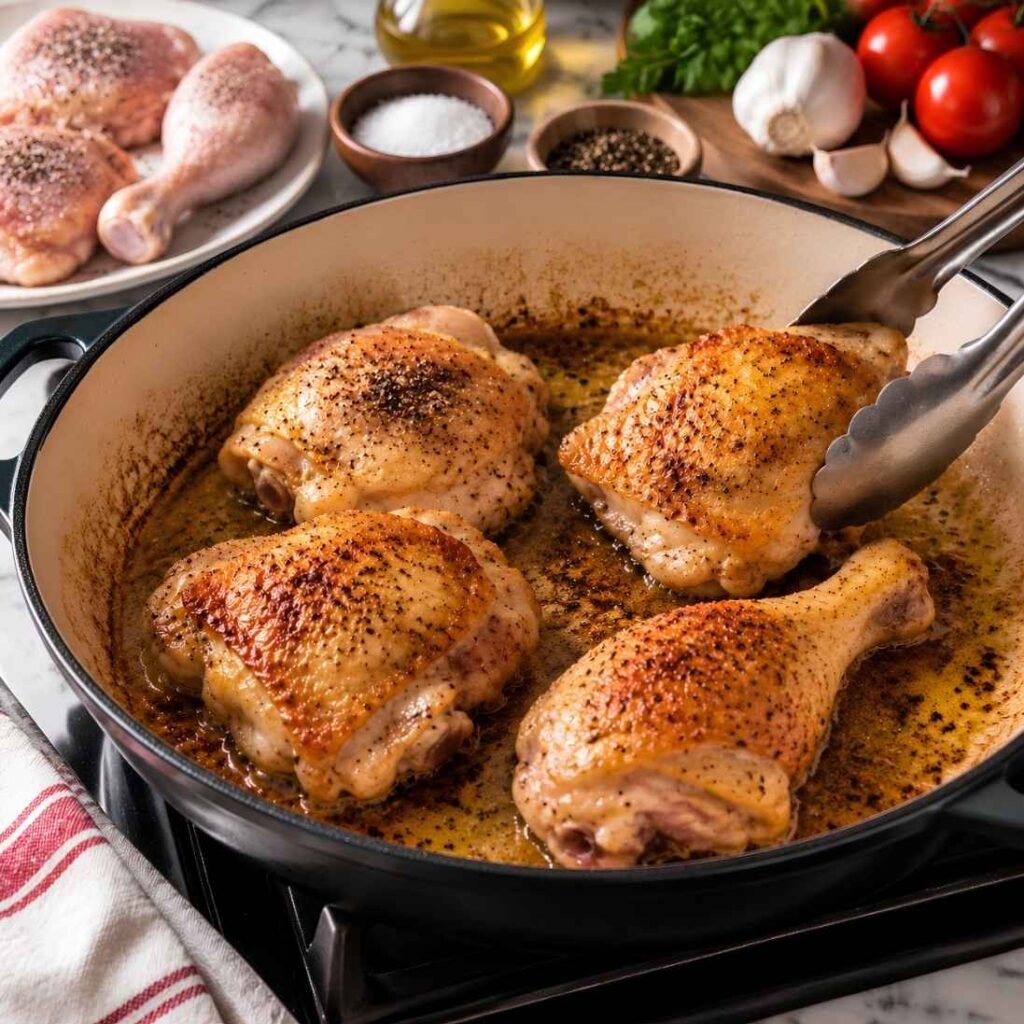
Pat the chicken thighs completely dry with paper towels dry skin is the difference between golden and pale. Season all over with 1 teaspoon of the salt and the black pepper. Heat the olive oil in a large deep skillet over medium-high heat. Sear the chicken skin-side down for 5 to 6 minutes without moving it, until deeply golden, then flip and cook 3 to 4 minutes more. Transfer to a plate and set aside.
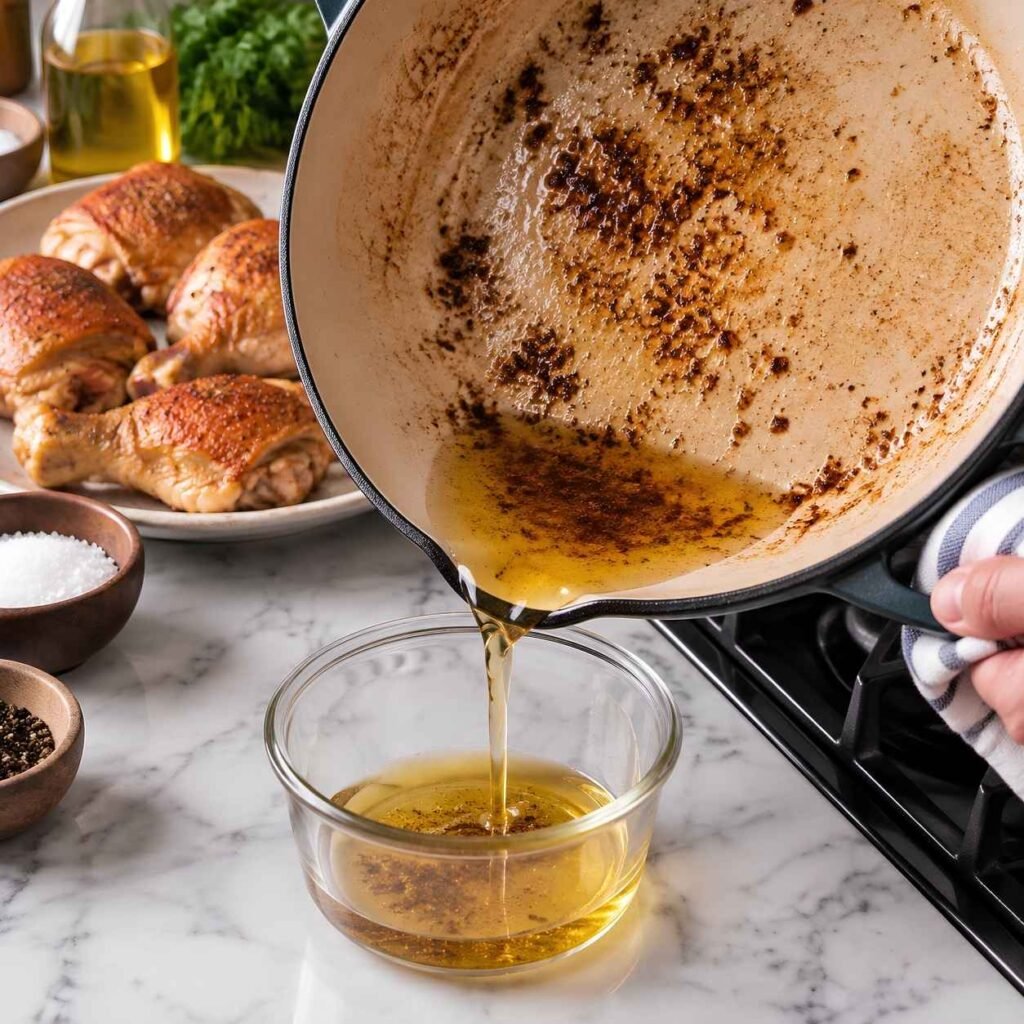
Step 2: Drain the Excess Fat
Pour off all but about 2 tablespoons of fat from the skillet. Skipping this is the number one reason cacciatore turns out greasy.
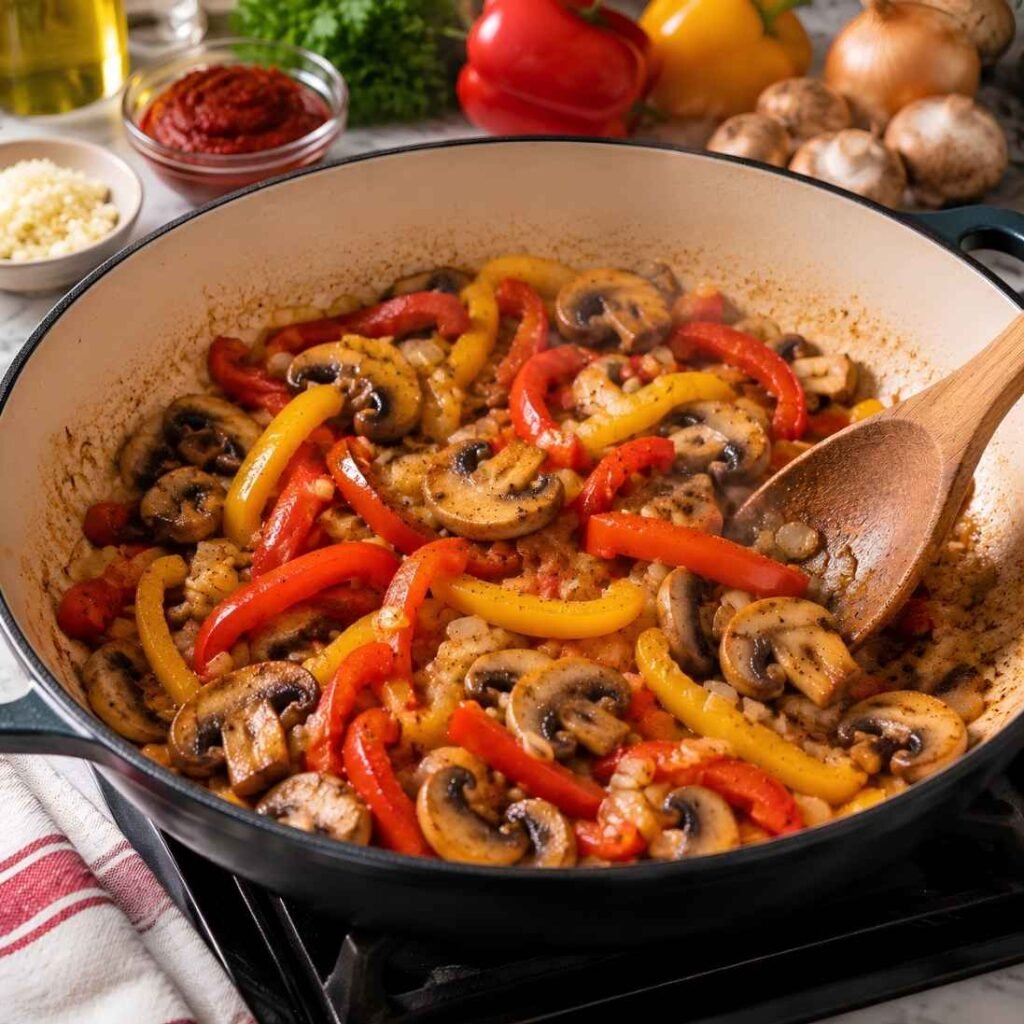
Step 3: Sauté the Vegetables
Add the onion, bell peppers, and mushrooms to the same skillet. Cook for 6 to 8 minutes, until the mushrooms release their liquid and it evaporates. Add the garlic and cook 30 seconds until fragrant, then stir in the tomato paste and cook for 1 minute more, until it darkens slightly.
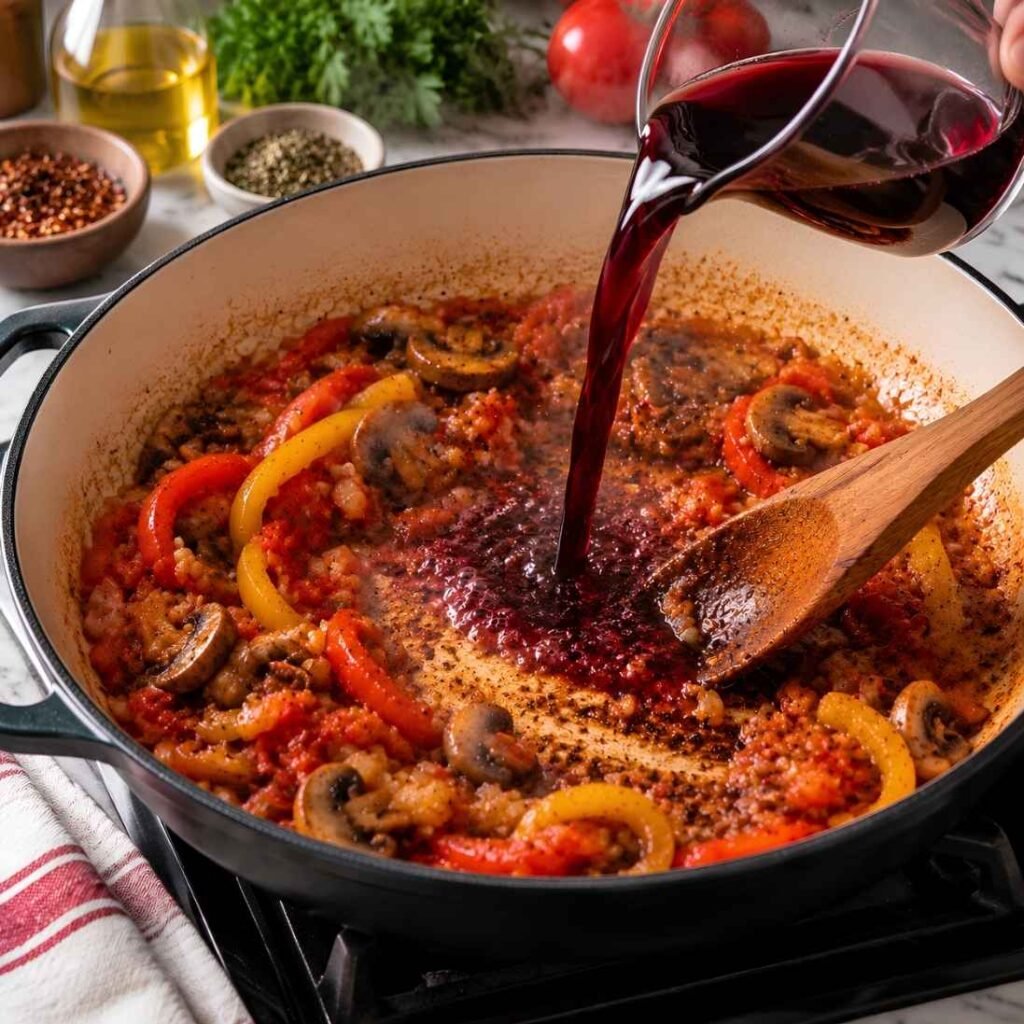
Step 4: Deglaze the Pan
Pour in the wine and scrape the bottom of the skillet with a wooden spoon to lift every browned bit. Let it bubble for 2 minutes until reduced by about half. All the flavor you built during the sear lives in those browned bits this step is where it goes into the sauce.
Step 5: Build the Sauce
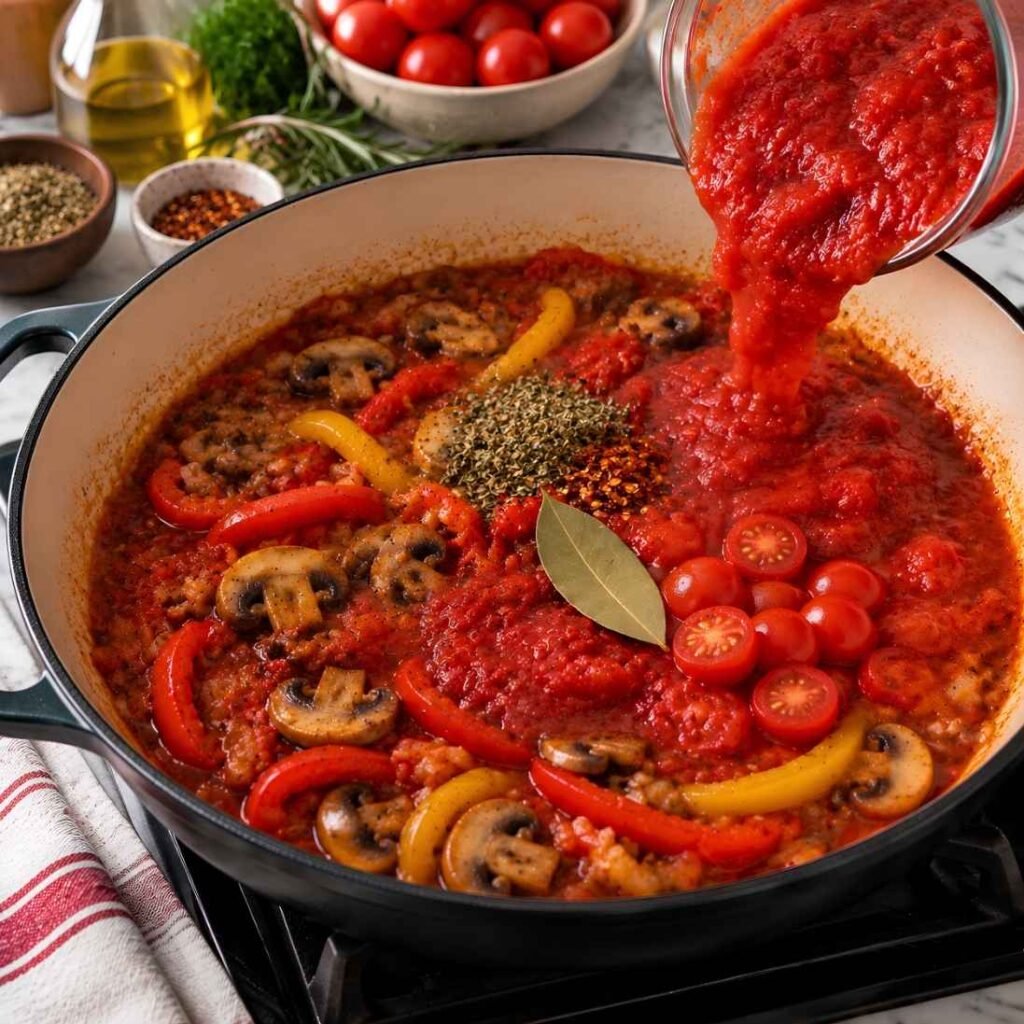
Stir in the crushed tomatoes, cherry tomatoes, broth, oregano, rosemary, bay leaf, red pepper flakes, and the remaining 1/2 teaspoon salt. Bring to a gentle simmer.
Step 6: Simmer with the Chicken
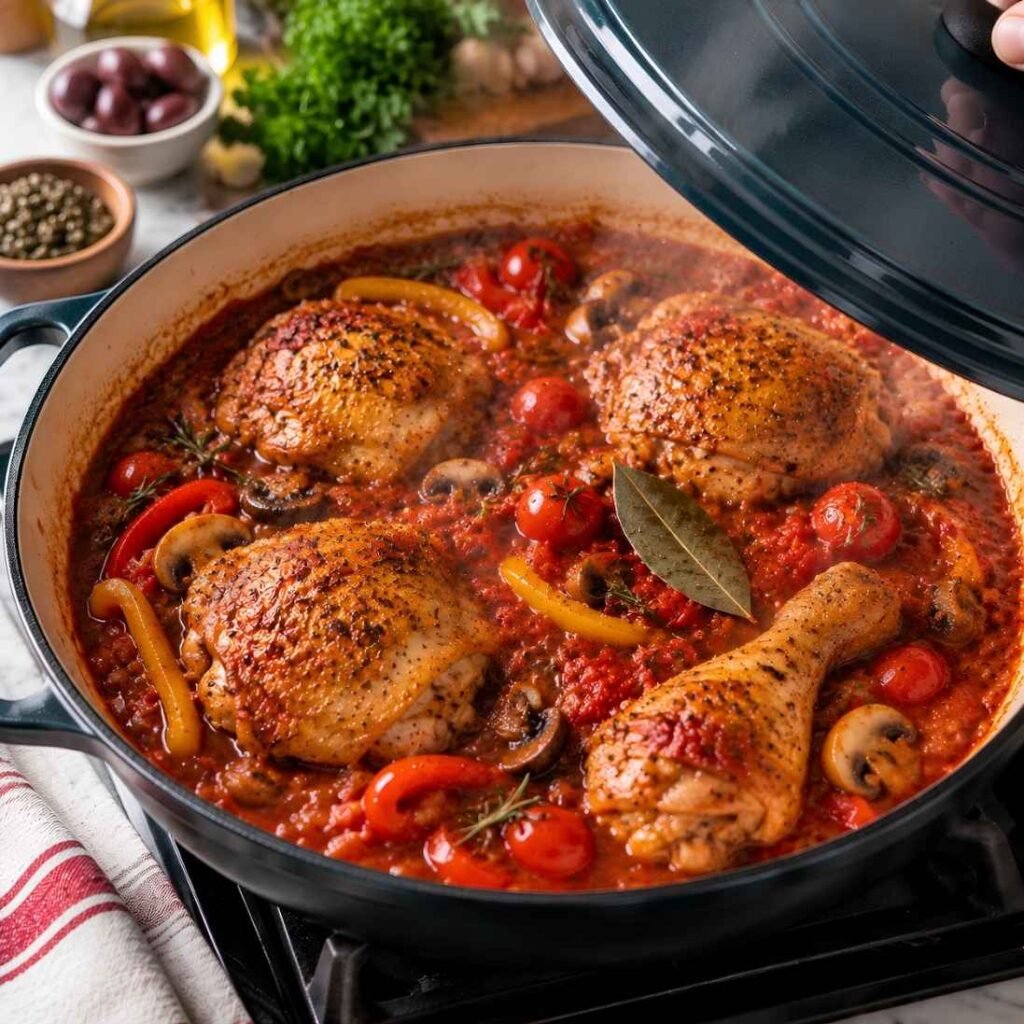
Nestle the chicken back in skin-side up, keeping the skin above the sauce line. Cover partially, leaving the lid slightly ajar so steam escapes and the skin doesn’t go soft. Simmer on low for 30 to 35 minutes, until the chicken registers 175°F (79°C) at the thickest part of the thigh, away from the bone. Thighs are best at 175°F rather than the 165°F minimum, because the extra time breaks down connective tissue and makes the meat more tender.
Step 7: Finish and Serve
Remove the bay leaf. Stir in the olives and capers, if using, and simmer uncovered for 5 minutes to reduce the sauce slightly. Taste and adjust salt. Garnish with fresh basil and parsley just before serving.
Pro Tips for the Ultimate Chicken Cacciatore
Small adjustments can take your chicken cacciatore from good to absolute perfection.
Don’t skip the sear: Getting a deep golden color on the chicken skin before simmering builds significant flavor into the finished sauce, so resist the urge to skip this step.
Use bone-in, skin-on chicken: This cut stays juicier through the long simmer and adds richer flavor to the sauce compared to boneless, skinless chicken breast.
Let the sauce simmer low and slow: A gentle simmer rather than a rapid boil allows the chicken to become tender while the flavors meld together fully.
Add fresh herbs at the end: Stirring in fresh basil right before serving keeps its bright, aromatic flavor intact, rather than letting it dull through a long simmer.
Common Mistakes to Avoid
Crowding the pan. Four thighs need room to brown. If your skillet is on the smaller side, sear in two batches chicken packed tightly together steams instead of searing, and you lose the golden crust entirely.
Leaving all the rendered fat in the pan. Chicken skin releases a surprising amount of fat during the sear. If it all stays in, the finished sauce sits under an orange slick. Pour most of it off before the vegetables go in.
Boiling instead of simmering. A hard boil tightens the muscle fibers and makes the chicken stringy. You want lazy bubbles breaking the surface every few seconds, not a rolling boil.
Submerging the chicken skin. Once the skin drops below the sauce line, it turns soft and rubbery. Keep the thighs nestled so the skin stays above the surface.
Adding fresh herbs too early. Basil and parsley lose their aroma within minutes of hitting a hot sauce. They go in after the heat is off, not during the simmer.
Skipping the deglaze. The browned bits stuck to the bottom of the pan are the single biggest source of flavor in this dish. Scrape them up with the wine, or you leave that flavor behind.
Variations to Try
Cacciatore alla Romana. The Roman version skips tomatoes almost entirely, leaning on white wine, vinegar, garlic, and rosemary instead. The result is sharper and lighter worth trying if you find tomato-heavy braises too rich.
Spicy Calabrian. Stir a tablespoon of Calabrian chili paste in with the tomato paste. It brings a smoky, fruity heat that plain red pepper flakes can’t match.
Extra briny. Double the olives and capers, and melt two anchovy fillets in with the garlic. The anchovies dissolve completely and add savory depth without tasting fishy even people who swear they hate anchovies won’t spot them.
Sausage cacciatore. Brown two Italian sausages alongside the chicken, then slice them back into the sauce before serving. It makes the dish heartier and stretches it to feed six.
Weeknight shortcut. Use boneless, skinless thighs and cut the simmer to 20 minutes. You lose some richness, but dinner lands on the table in 40 minutes total.
What to Serve with Best Chicken Cacciatore
This rustic, hearty dish pairs beautifully with a variety of sides.
Over pasta: Serve over wide egg noodles or pappardelle to soak up the rich tomato sauce.
With polenta: Spoon the chicken and sauce over creamy polenta for a comforting, Italian-inspired dinner.
With crusty bread: A warm, crusty baguette is perfect for mopping up any extra sauce left in the bowl.
With a simple salad: A light arugula salad with lemon vinaigrette on the side helps balance the richness of the tomato sauce and chicken.
How to Store Best Chicken Cacciatore
Have leftovers? It is incredibly easy to save for later.
In the Fridge: Store the completely cooled chicken and sauce in an airtight container for up to 4 days.
How to Reheat: Reheat gently in a covered skillet over low heat, or in a 300°F oven, until warmed through.
In the Freezer: You can freeze the chicken and sauce together in a freezer-safe container for up to 3 months. Thaw overnight in the fridge before reheating.
A note on freezing: The chicken and sauce freeze beautifully, but bell peppers soften considerably after thawing. If you plan to freeze a batch, either accept the softer texture or leave the peppers out and add them fresh when you reheat.
Make ahead: This dish genuinely improves overnight. Cook it fully, cool it completely, and refrigerate. The next day the tomatoes taste rounder and the herbs have settled into the sauce. Reheat gently and add the fresh basil just before serving.
Frequently Asked Questions
Can I use chicken breast instead of thighs?
You can, but the timing has to change. Sear bone-in split breasts as directed, then simmer for only 20 to 25 minutes, until they reach 165°F (74°C). Boneless breasts need even less add them back to the sauce for the final 12 to 15 minutes only. Thighs remain the better choice here because they stay juicy through a long simmer, while breast meat dries out and turns chalky well before the 35-minute mark.
Can I make this in a slow cooker? Absolutely. Sear the chicken and sauté the vegetables as directed, then transfer everything to a slow cooker with the sauce ingredients and cook on low for 5 to 6 hours until tender. On high, cook for 2 1/2 to 3 hours instead. One thing to keep in mind: slow cookers trap steam rather than releasing it, so the sauce won’t reduce the way it does on the stovetop. Use half the broth, or stir in an extra tablespoon of tomato paste at the end to thicken it up.
Can I prep this ahead of time? Yes! Chicken cacciatore actually tastes even better the next day once the flavors have had time to meld. Simply store it in the fridge and reheat gently before serving.
Can I add wine to the sauce? Yes, a splash of dry red or white wine added after sautéing the vegetables, simmered for a minute or two before adding the tomatoes, brings extra depth and complexity to the finished sauce.
How do I thicken the sauce?
Simmer it uncovered for the last 10 minutes and let some of the liquid evaporate. If it’s still thinner than you’d like, stir in a tablespoon of tomato paste, or mash a few of the cherry tomatoes against the side of the pan to release their pulp.
Can I make this in an Instant Pot?
Yes. Use the sauté function for the sear, the vegetables, and the deglaze, then pressure cook on high for 12 minutes with a 10-minute natural release. Finish with the lid off on sauté mode if the sauce needs reducing.
Why did my sauce turn out greasy?
Almost always because the rendered chicken fat stayed in the pan after searing. Pour most of it off before the vegetables go in. If you’ve already finished cooking, skim the surface with a spoon, or chill the dish and lift off the solidified fat.
Is chicken cacciatore healthy?
It’s a vegetable-heavy, protein-rich dish with no cream, butter, or cheese, which makes it lighter than most braises. Removing the chicken skin before serving cuts the fat considerably, and serving it over vegetables instead of pasta lowers the carbs.
Nutrition Information
Per serving one chicken thigh with sauce and vegetables, without pasta or bread:
| Nutrient | Amount |
|---|---|
| Calories | 430 |
| Protein | 30 g |
| Carbohydrates | 22 g |
| Fat | 25 g |
| Saturated Fat | 6 g |
| Fiber | 5 g |
| Sugar | 11 g |
| Sodium | 890 mg |
These figures are estimates calculated from standard ingredient databases. Your actual values will vary depending on the specific brands you use, the size of your chicken thighs, and how much of the rendered fat you pour off. Removing the skin before eating brings the calories down to roughly 350 per serving.
Final Thoughts
What makes this dish work isn’t a long ingredient list or a fancy technique. It’s three small decisions: a proper sear on dry skin, pouring off the fat before the vegetables go in, and scraping the pan with wine so none of that browned flavor gets left behind. Skip those and you get a decent tomato chicken. Do them and you get something that tastes like it came out of a kitchen that has been making this dish for forty years.
The other thing worth knowing is that this recipe is forgiving. Your peppers can be whatever color was on sale. The mushrooms are optional. The olives and capers are there if you want them and no loss if you don’t. Once you’ve made it once, you’ll stop measuring and start cooking by feel, which is exactly how a hunter’s dish is supposed to work.
Make it on a Sunday, eat it Monday when it tastes even better, and let me know in the comments how it turned out. If you tried a variation that worked, I’d genuinely like to hear about it.