Best Philly Cheese Steak Sandwich Recipe Easy (crispy edges, melty cheese, done in 30 minutes)
A Philly cheesesteak has four ingredients and almost no technique, which is exactly why most homemade ones come out wrong.
The problem is never the cooking. It is the slicing. Beef cut thick enough to see through becomes tender in about ninety seconds on a hot griddle. Beef cut like a stir fry strip stays chewy no matter how long you cook it, and no amount of cheese covers that up.
Everything else follows from getting that right. Thin beef, hot pan, cheese melted directly onto the meat rather than laid on the bread, and a roll soft enough to compress without falling apart.
Thirty minutes, one skillet, four sandwiches.

What Makes a Real Philly Cheesesteak
Four things, and the order matters.
Thinly sliced ribeye. Not sirloin, not flank, not pre-cut stir fry beef. Ribeye has the marbling that melts into the meat as it cooks, which is what keeps it tender at the speed this cooks.
A flat, screaming hot surface. The beef should hit the pan and sizzle immediately. Low heat steams it grey instead of browning it.
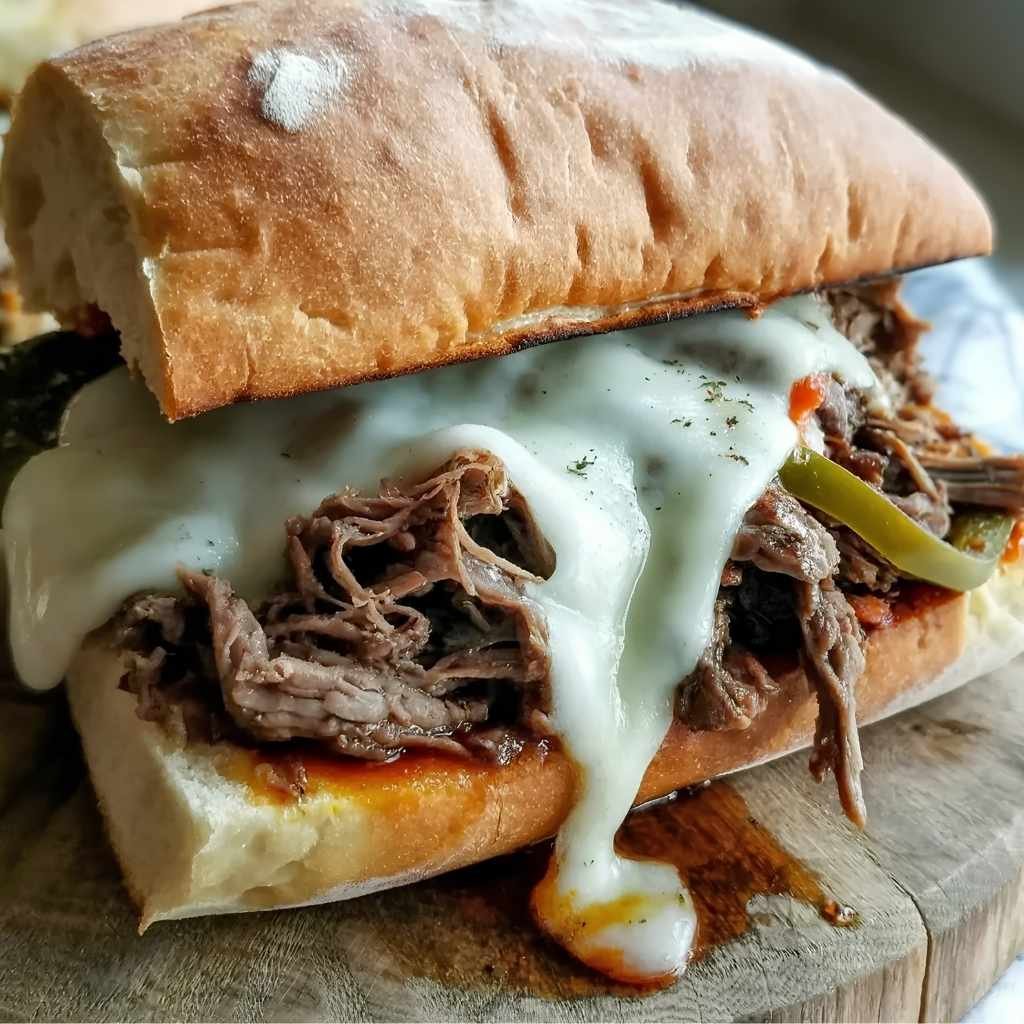
Cheese melted into the meat. This is where most home versions go wrong. The cheese goes onto the beef in the pan and melts into it, then the whole thing gets scooped into the roll as one piece. Laying cold cheese in the bread and piling hot meat on top is not the same thing.
A roll that compresses. You want soft inside with a thin crust, not a crusty baguette. The roll has to squash down around the filling without shattering or going soggy.
Peppers and mushrooms are optional and always have been. In Philadelphia, ordering “wit” means with onions and “witout” means without. Neither answer involves bell peppers.
Why Homemade Beats Most Takeout Versions
Outside Philadelphia, the cheesesteak most places serve has drifted a long way from the original.
The meat. Chain versions use pre-frozen, pre-sliced beef that is often not ribeye at all. At home, you buy one ribeye and control the slicing.
The cheese ratio. Takeout versions are usually light on cheese because it is the expensive part. Eight slices across four sandwiches sounds excessive and is the correct amount.
The timing. A cheesesteak is at its best about forty seconds after it leaves the pan. Anything that sits in a wrapper for a delivery drive has already lost the texture that makes it worth eating.
How to Pick and Slice the Meat
This is the whole recipe. Everything else is assembly.
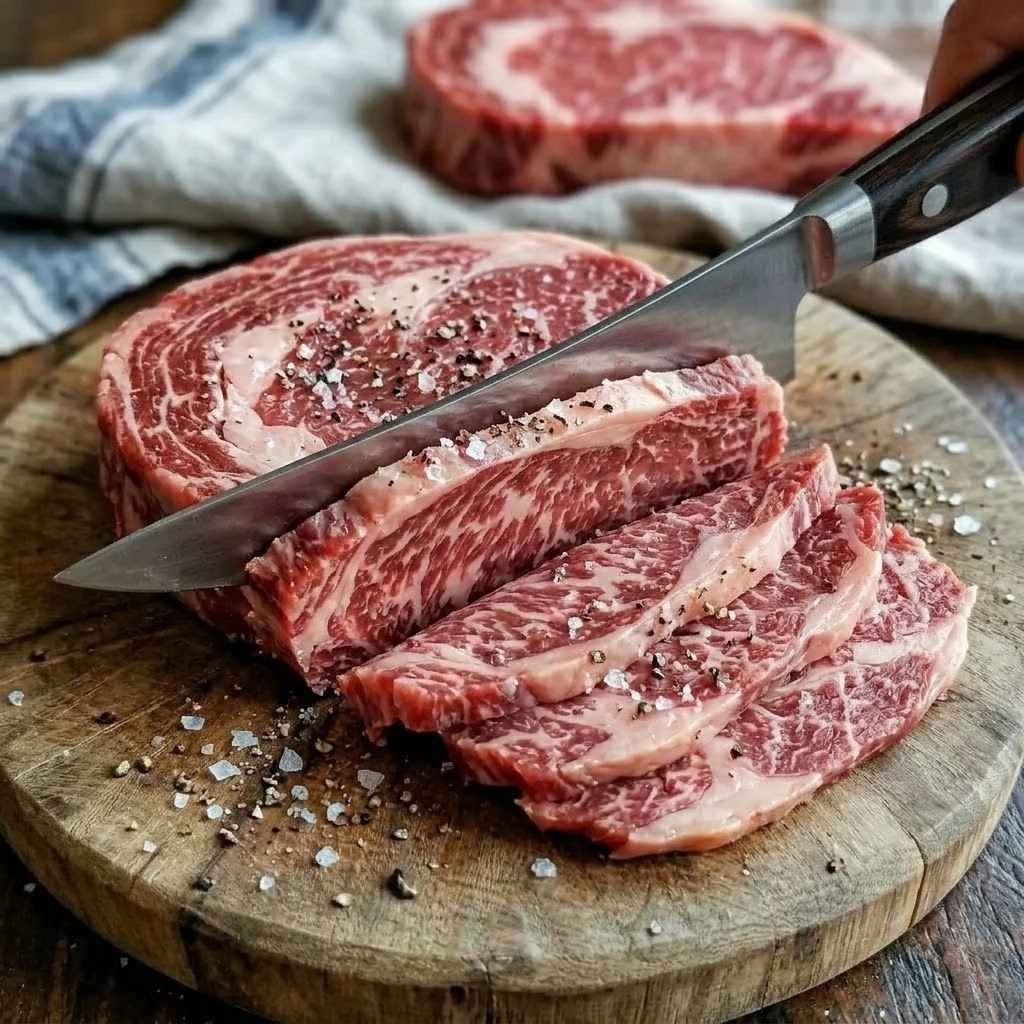
Buy ribeye. Boneless ribeye steak, about 1½ pounds for four sandwiches. The fat marbling melts during the fast cook and bastes the meat from inside. Sirloin is leaner and comes out chewy. Flank and skirt have a grain too coarse for this.
Freeze it first. Put the steak in the freezer for 30 to 45 minutes before slicing. You want it firm at the edges but not frozen solid. Soft room-temperature beef bends away from the knife and you cannot get it thin.
Slice against the grain, as thin as you can. Look at the direction the muscle fibers run and cut across them. Aim for slices you could almost read through. Then stack a few slices and run the knife through them once or twice to shorten the strands.
A sharp knife matters more than skill here. A dull knife tears rather than slices, and torn beef cooks unevenly.
The shortcut. Ask the butcher to slice it on the deli machine. Most will do it, and the result is more consistent than anything you can manage with a home knife.
What to avoid. Pre-packaged “sandwich steak” or “stir fry beef” from the meat case is usually a tougher cut sliced thick. It saves five minutes and costs you the texture.
Ingredients
Makes 4 sandwiches
The Filling
- 1½ lb boneless ribeye steak, frozen 30 minutes then sliced paper thin
- 1 large onion, thinly sliced
- 2 tablespoons neutral oil or beef tallow
- 1 teaspoon salt
- ½ teaspoon black pepper
- 8 slices provolone or white American cheese
The Bread
- 4 hoagie rolls, 8 inches each
- 2 tablespoons butter, softened
Optional
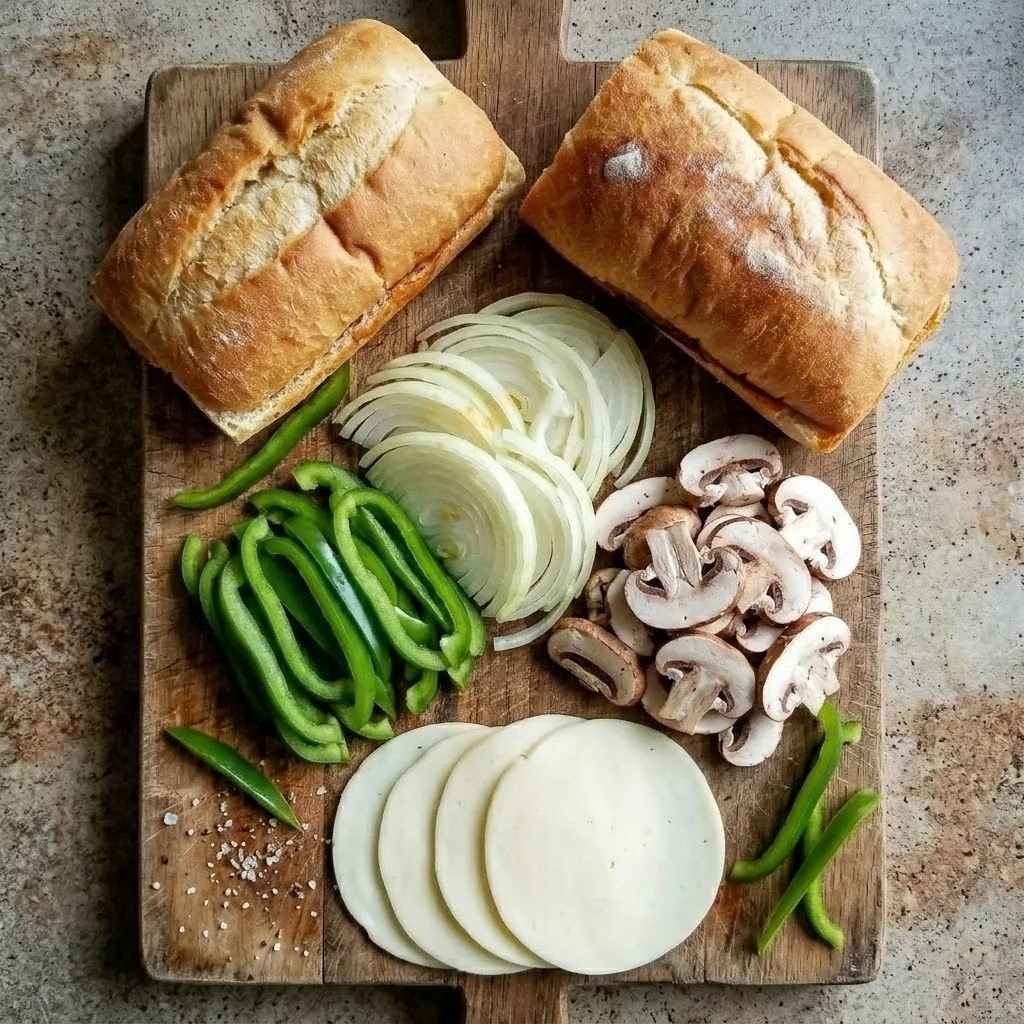
- 1 green bell pepper, sliced
- 8 oz mushrooms, sliced
- Hot cherry peppers
- Ketchup, for serving
Ingredient Tips
Ribeye, not sirloin. The marbling is the point. Lean cuts have nothing to melt and come out dry and chewy at this cook speed.
Slice the onion thin. Thick onion stays crunchy in a ninety-second cook. Thin slices soften and sweeten in the same time the beef takes.
Mild provolone over sharp. Aged provolone has less moisture and tends to separate into oil and solids when it melts.
Hoagie rolls, not baguettes. You want soft interior with a thin crust. A crusty roll shreds the roof of your mouth and refuses to compress around the filling.
Tallow if you have it. Beef tallow instead of oil adds a layer of flavor and is what most griddle shops use.
Step-by-Step Instructions
Step 1: Freeze and Slice the Beef
Put the ribeye in the freezer for 30 to 45 minutes, until firm at the edges but still yielding in the center.
Slice against the grain as thin as you possibly can. Stack several slices and run the knife through them once more to shorten the pieces.
Season the sliced beef with salt and pepper and set aside.
Step 2: Prep Everything Else
Slice the onion thin. Slice the peppers and mushrooms if using. Split the rolls most of the way through, leaving a hinge.
Do all of this now. Once the pan is hot the whole thing takes four minutes and there is no time to be chopping onions.
Step 3: Toast the Rolls
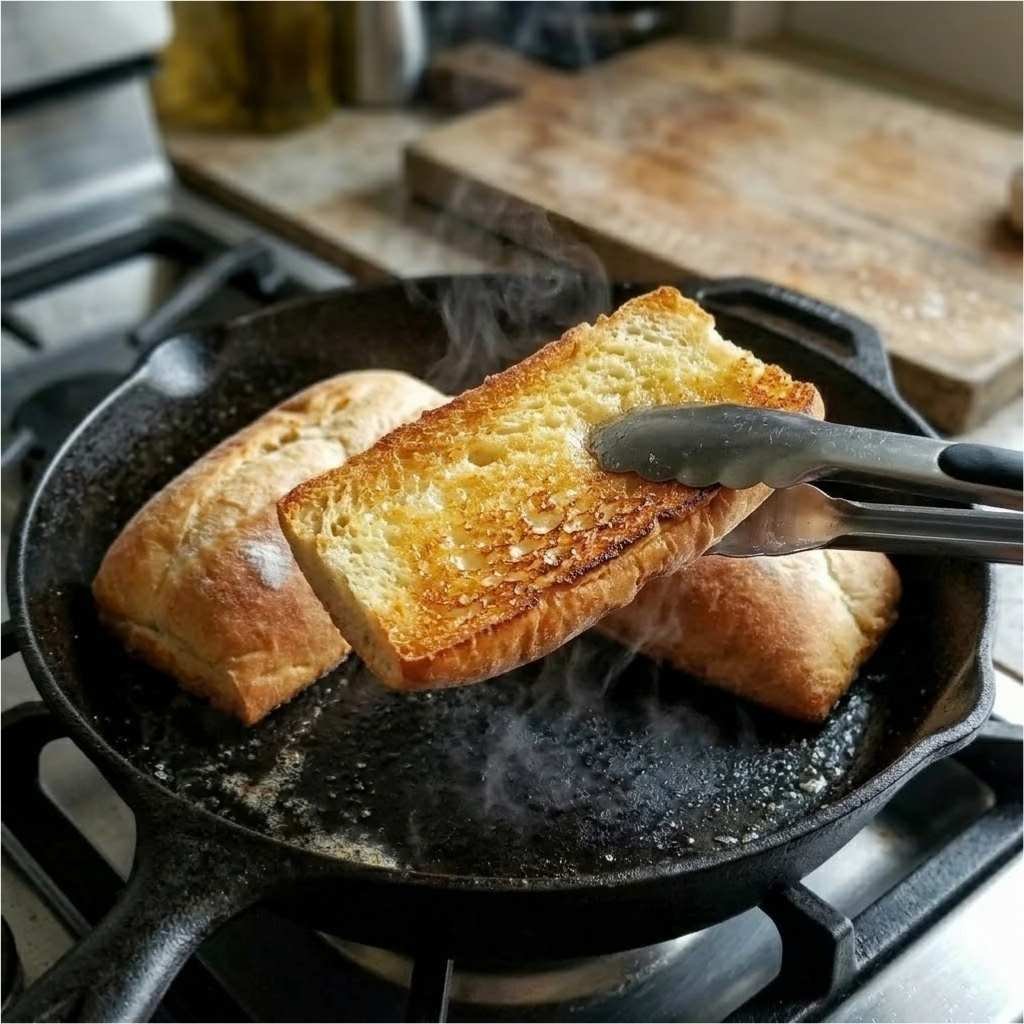
Butter the cut faces of the rolls and toast them face-down in a dry skillet for 1 to 2 minutes, until lightly golden.
This does two things. It adds flavor, and the light crust forms a barrier that stops the roll going soggy under the filling.
Set them aside, open side up.
Step 4: Cook the Onions
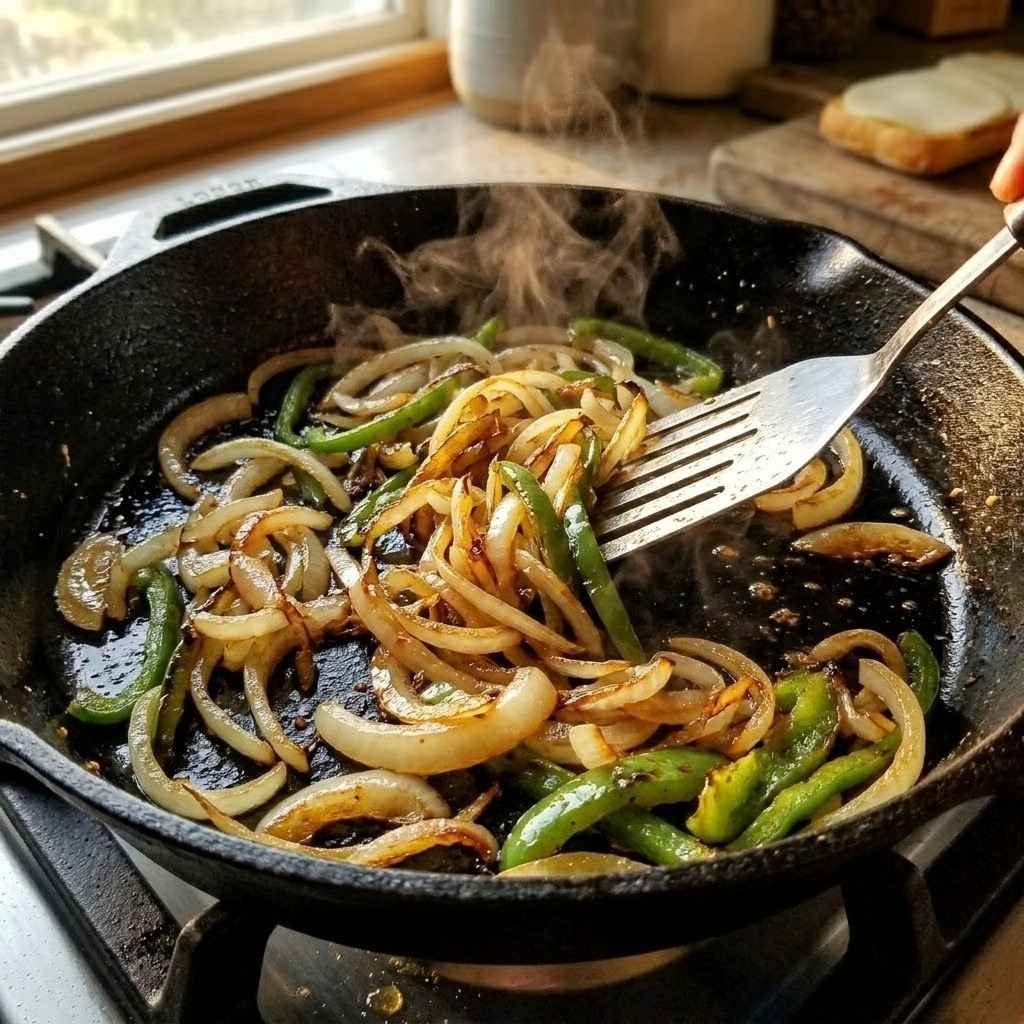
Heat 1 tablespoon of oil in a large cast iron skillet or griddle over medium-high.
Add the onions and cook for 5 to 7 minutes, stirring occasionally, until soft and lightly browned at the edges. Add peppers or mushrooms now if using and cook until softened.
Push everything to one side of the pan, or remove to a plate.
Step 5: Sear the Beef Hot and Fast
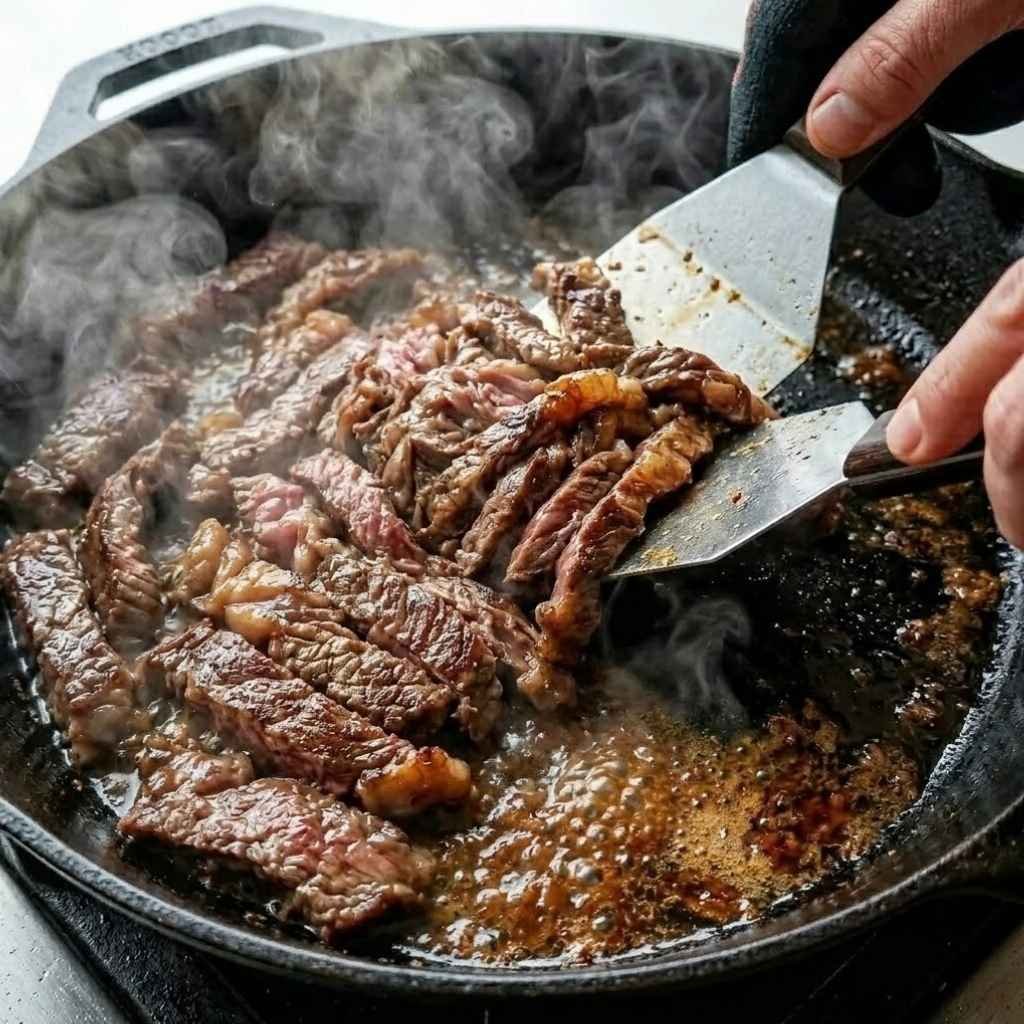
Turn the heat to high and add the remaining tablespoon of oil. Let it shimmer.
Add the beef in a single layer. Do not crowd the pan. If it does not fit in one layer, cook in two batches. Crowded beef steams grey instead of browning.
Let it sit undisturbed for 45 seconds to take on color, then start chopping and turning it with two spatulas or a bench scraper, breaking the slices into smaller pieces as they cook.
Total cook time is about 2 to 3 minutes. The beef is done the moment the pink disappears. Past that it toughens fast.
Step 6: Combine and Melt the Cheese
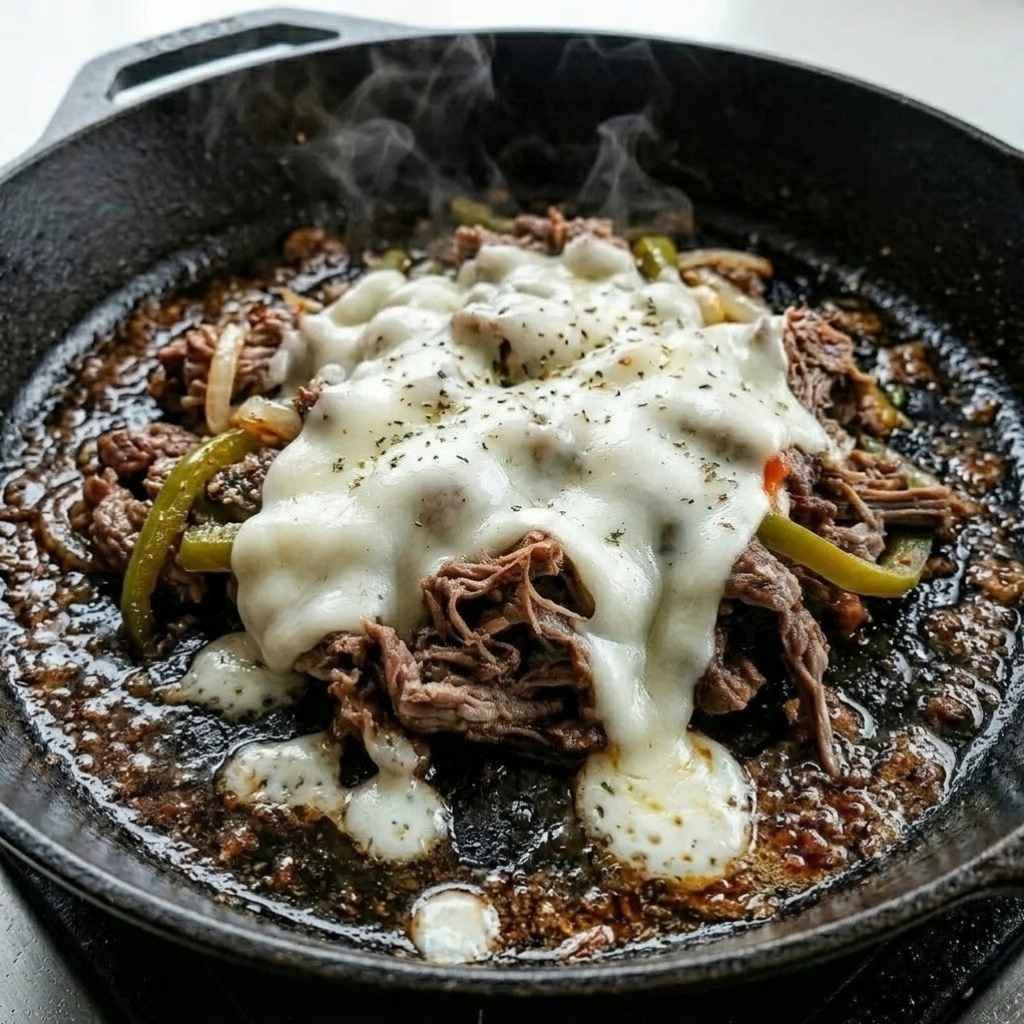
Stir the onions back through the beef and divide the mixture into four portions right there in the pan, shaping each roughly to the length of a roll.
Lay 2 slices of cheese over each portion.
Turn off the heat, cover the pan with a lid or a sheet of foil, and wait 60 to 90 seconds for the cheese to melt completely.
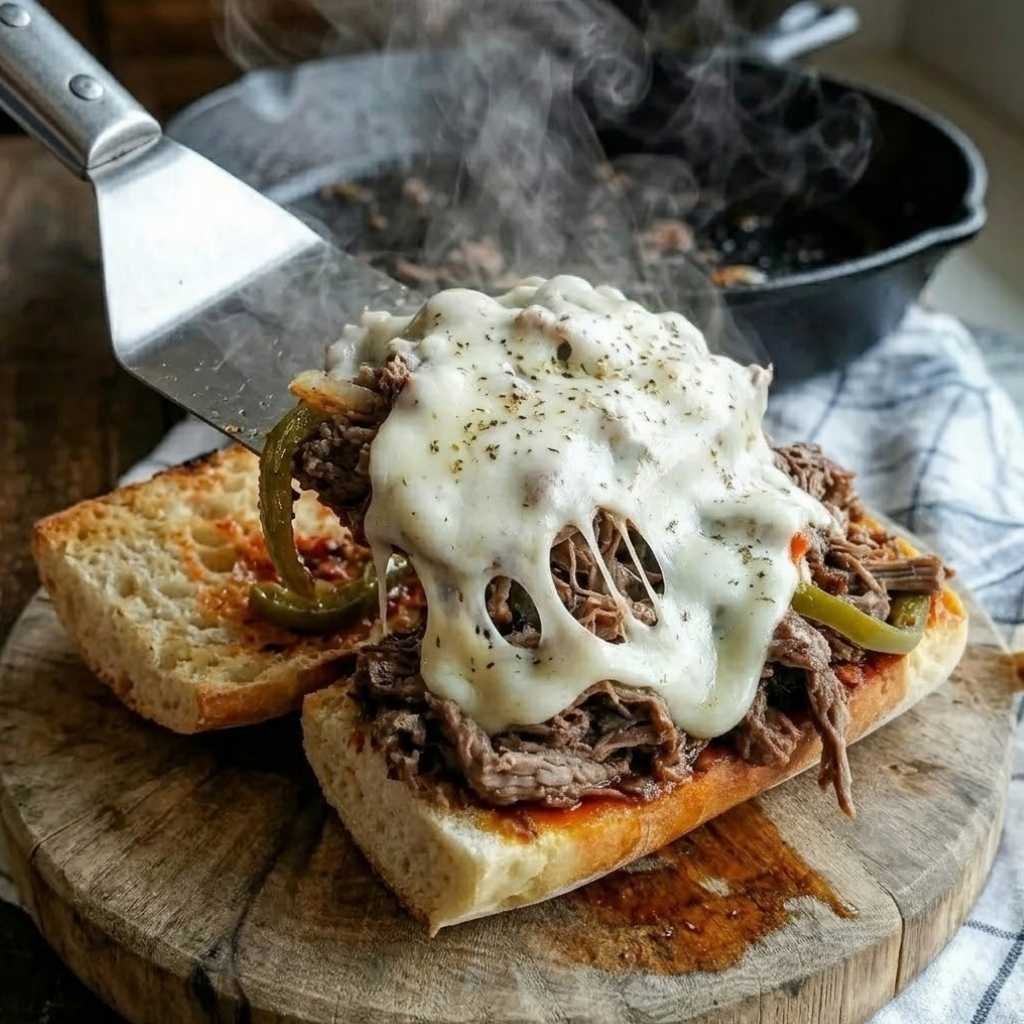
This step is the one that separates a real cheesesteak from a steak sandwich. The cheese has to melt into the meat, not sit on top of it.
Step 7: Scoop and Serve
Slide a spatula under each portion and transfer it straight into a toasted roll, cheese side up, keeping it in one piece.
Serve immediately. A cheesesteak is at its best within about a minute of leaving the pan.
Variations
Wit. With onions, which is the default and the right answer.
Pizza steak. Marinara spooned over the meat before the cheese goes on, finished with mozzarella.
Chicken cheesesteak. Thinly sliced chicken thigh in place of the ribeye. Cook it through, about four minutes, then proceed the same way.
Mushroom steak. Sautéed mushrooms folded in with the onions. Adds moisture and depth without changing the method.
Spicy. Chopped hot cherry peppers stirred through the beef at the end, or long hots sautéed with the onions.
Low carb. Skip the roll entirely and serve the beef, onions, and cheese in a bowl over sautéed peppers. It is not a cheesesteak anymore, but it eats well.b roll.
What to Serve With It
Fries, obviously. Thin cut, salted heavily. The standard pairing and hard to argue with.
A sharp slaw. Vinegar based rather than creamy. The acid cuts through the fat in the beef and cheese.
Pickle spears. Same reason. Something sharp on the plate keeps the sandwich from feeling heavy halfway through.
Nothing at all. A full cheesesteak is around a thousand calories. Many people find a side unnecessary.

Full sandwich with roll and two slices of cheese. Half a roll brings this down by roughly 125 calories.
Storage and Reheating
Keep the components separate. An assembled cheesesteak does not store. The roll absorbs moisture and goes to mush within an hour.
Refrigerator. The beef and onion mixture keeps 3 days in an airtight container. Store rolls separately at room temperature.
Reheating. Hot skillet, two minutes, stirring. Add the cheese at the end exactly as you did the first time. Toast a fresh roll.
Microwave. Works in a pinch at 50% power for 60 seconds, but the beef firms up noticeably.
Freezer. The cooked beef and onion mixture freezes for 2 months. Thaw overnight and reheat in a skillet.
Meal prep. Slice and season the raw beef, then refrigerate up to 2 days. This cuts the active cooking down to about six minutes.
Frequently Asked Questions
What cut of beef should I use?
Ribeye. The marbling melts during the fast cook and keeps the meat tender. Sirloin and flank are leaner and come out chewy at this cooking speed.
Why does my beef come out tough?
Sliced too thick, cut with the grain instead of against it, or overcooked. Freeze the steak for 30 minutes before slicing and pull the beef the moment the pink disappears.
Can I use pre-sliced sandwich steak?
You can, and it saves time. It is usually a tougher cut sliced thicker than ideal, so expect a chewier result. Ask the butcher to slice ribeye on the deli machine instead if that is an option.
What is the authentic cheese?
All three are defensible. Cheez Whiz is the most traditional at the famous Philadelphia shops, white American is what most places actually use because it melts best, and provolone is the sharpest option.
Do real cheesesteaks have peppers?
Not traditionally. Onions yes, bell peppers no. Ordering “wit” means with onions. Peppers are an addition from outside Philadelphia, which does not make them wrong, just not original.
Can I make this on a griddle?
Yes, and a flat griddle is better than a skillet. More surface area means you can cook all the beef in one layer instead of batches.
How do I stop the roll getting soggy?
Toast the buttered cut faces before filling. The light crust is a moisture barrier, and skipping it is the single most common reason the bottom falls apart.
Final Thoughts
This comes down to one thing. Freeze the ribeye, slice it thin against the grain, and the rest of the recipe is almost impossible to get wrong.
Hot pan, uncrowded beef, cheese melted into the meat, toasted roll. Four steps that take fifteen minutes.
Save this recipe now so it is there the next time you want one without driving anywhere.