
Chicken Sandwich Sauce Recipe
A plain chicken sandwich is fine. A chicken sandwich with the right sauce is something you actually look forward to.
That is the whole difference here. This sauce is creamy, tangy, and lightly smoky, and it pulls everything else on the sandwich into line. The chicken tastes richer. The bread stops being dry. The pickles and lettuce stop feeling like separate things sitting next to each other.
Mayonnaise brings the body. Mustard and lemon bring the sharpness that keeps it from feeling heavy. A little honey rounds off the edges, and smoked paprika adds the warm, savory depth that plain mayonnaise never has on its own.
There is no cooking. You stir everything together in one bowl, leave it in the fridge for twenty minutes so the flavors settle, and it is ready.
Use it on grilled chicken sandwiches, crispy chicken burgers, wraps, and sliders. It also works straight from the bowl as a dip for fries and nuggets, which is usually where the leftovers end up.
Why Homemade Beats Bottled
Bottled sandwich sauces work, and they are sitting right there in the store. Three things still make five minutes worth it.
Sugar. Most bottled burger sauces carry 4 to 6 grams of sugar per two-tablespoon serving, because sugar preserves well and appeals to everyone. This recipe uses one teaspoon of honey across the whole batch.
Adjustability. A bottle tastes the way it tastes, forever. Homemade means smokier for fried chicken, tangier for grilled, milder for kids, all from the same base.
Speed. This genuinely takes less time than driving out for a bottle, and everything in it is already in your fridge and spice drawer.

Ingredients
Makes about ¾ cup, enough for 6 to 8 sandwiches
The Base
- ½ cup mayonnaise, full fat
- 2 tablespoons Greek yogurt or sour cream
The Flavor
- 1 tablespoon Dijon or yellow mustard
- 1 tablespoon ketchup
- 1 teaspoon honey
- 1 teaspoon fresh lemon juice
- 1 teaspoon pickle juice, optional but recommended
The Spices
- ½ teaspoon garlic powder
- ½ teaspoon onion powder
- ½ teaspoon smoked paprika
- ¼ teaspoon black pepper
- Salt, to taste
Optional
- 1 teaspoon hot sauce
- 1 tablespoon chopped parsley
Ingredient Tips
Full-fat mayonnaise, not light. Light mayo is thinned with water and starch. The sauce comes out loose and slightly gummy. If you want something lighter, add more Greek yogurt instead of switching the mayonnaise.
Smoked paprika is not optional. Regular paprika brings the color without the smoke, and smoke is what gives this its sandwich-shop backbone. Nothing else quite replaces it, though a few drops of liquid smoke or a teaspoon of barbecue sauce gets you partway there.
Pickle juice from a dill jar. This is the ingredient most home versions leave out and most restaurants quietly use. Bread-and-butter brine is too sweet here. Use the liquid from plain dill pickles.
Garlic powder, not fresh. Fresh garlic keeps developing in a cold sauce and turns harsh by the second day. Powder stays stable and spreads far more evenly through something this thick.
Fresh lemon juice. Bottled tastes dull and faintly metallic in an uncooked sauce, where there is no heat and nothing else to hide behind.
Best Mayonnaise to Use
A good mayonnaise makes a big difference in this sauce. Use a creamy, smooth mayonnaise that you already enjoy. Full fat mayo gives the richest flavour, while light mayo can be used if you want a lighter sauce.
If you want the sauce to taste fresher and less heavy, use half mayonnaise and half Greek yogurt. This gives the sauce a creamy texture with a little extra tang.
Avoid very sweet mayonnaise unless you like a sweeter sauce, because ketchup and honey already add a small amount of sweetness.
Step-by-Step Instructions
Taste after chilling, not before. Cold flattens salt and sweetness, so a sauce that seemed right warm often needs adjusting once it is properly cold.
This is a no-cook sauce, so the order matters more than the technique. Mayonnaise can thin out if acid hits it too fast, and dry spices clump if they go in too early. Work through the steps below and it comes out smooth on the first try.
What you need: one small bowl and a whisk. A whisk beats a spoon here, because it actually breaks up spice clumps rather than pushing them around.
Step 1: Build the Creamy Base
Add the mayonnaise and Greek yogurt to a small bowl. Whisk for about 20 seconds, until the mixture is uniform with no white streaks running through it.
Mayonnaise is an emulsion, which means oil held in suspension. Dumping acid straight into cold mayonnaise can thin it or split it. Starting with the two creamy ingredients gives you a stable base that handles the lemon and mustard better a moment later.
Decide the thickness now. Less yogurt gives a thick sauce that holds its shape on a bun. More yogurt gives something looser, closer to a dressing. Thinning later is easy. Thickening means adding more mayonnaise and rebalancing everything else.
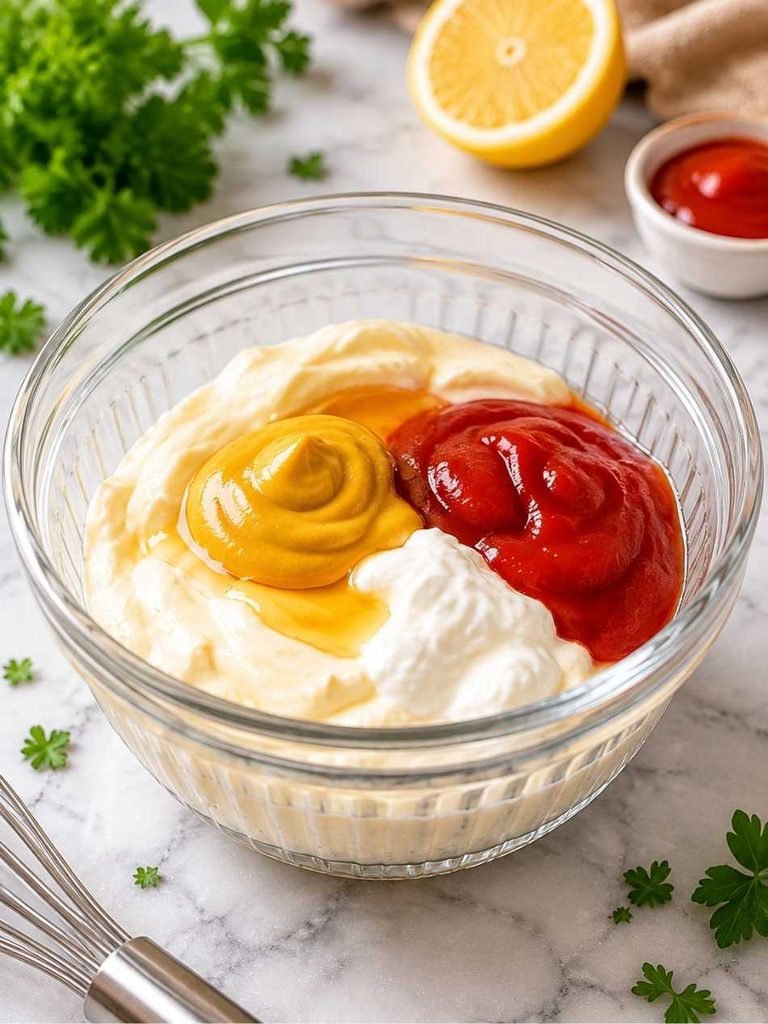
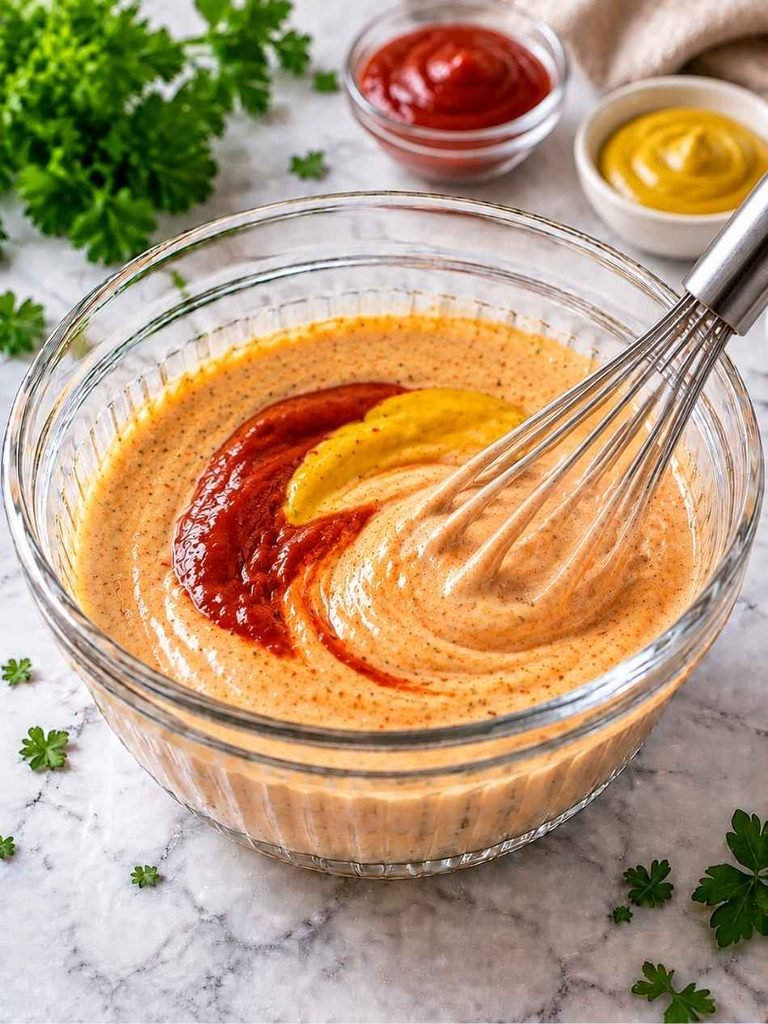
Step 2: Add the Mustard and Ketchup
Add both and whisk until the color turns an even pale orange with no streaks left.
Mustard brings sharpness and also acts as an emulsifier, which helps hold things together as you add liquids. Ketchup contributes sweetness, a little acid, and most of the color.
Dijon or yellow? Dijon is sharper and more complex, and it lands closer to a proper sandwich shop. Yellow is milder and more familiar, which is the better call if kids are eating it. Both work.
Ketchup is thicker than the base and tends to sit in a lump at the bottom, so keep whisking until the color is genuinely even.
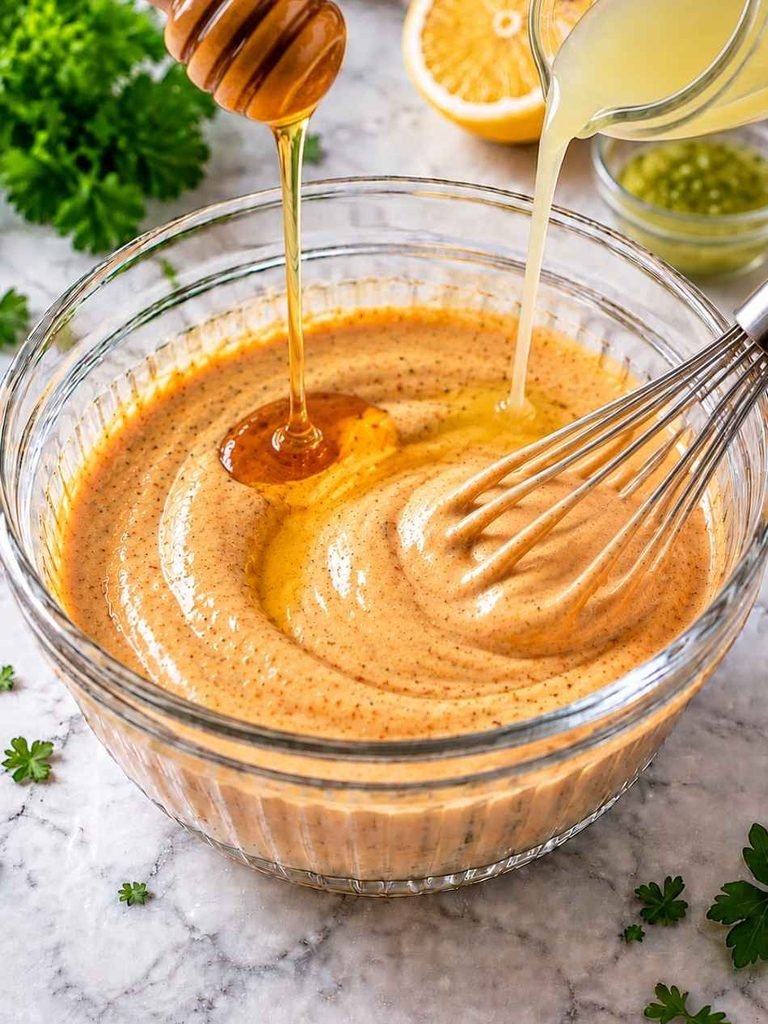
Step 3: Add the Sweetness and Acid
Add the honey, lemon juice, and pickle juice if using. Whisk for another 15 seconds.
Honey is balancing, not sweetening. A teaspoon will not make this taste sweet. What it does is take the edge off the mustard and lemon so they stop sitting sharply at the front. Leave it out and the sauce tastes noticeably harsher.
Lemon juice cuts the fat. Mayonnaise is mostly oil, and without acid the sauce coats your mouth and feels heavy fast. If a sauce tastes flat and greasy, acid is almost always what it needs, not more salt.
If cold honey seizes against the cold mayonnaise, run the measuring spoon under hot water first and it will slide off cleanly.
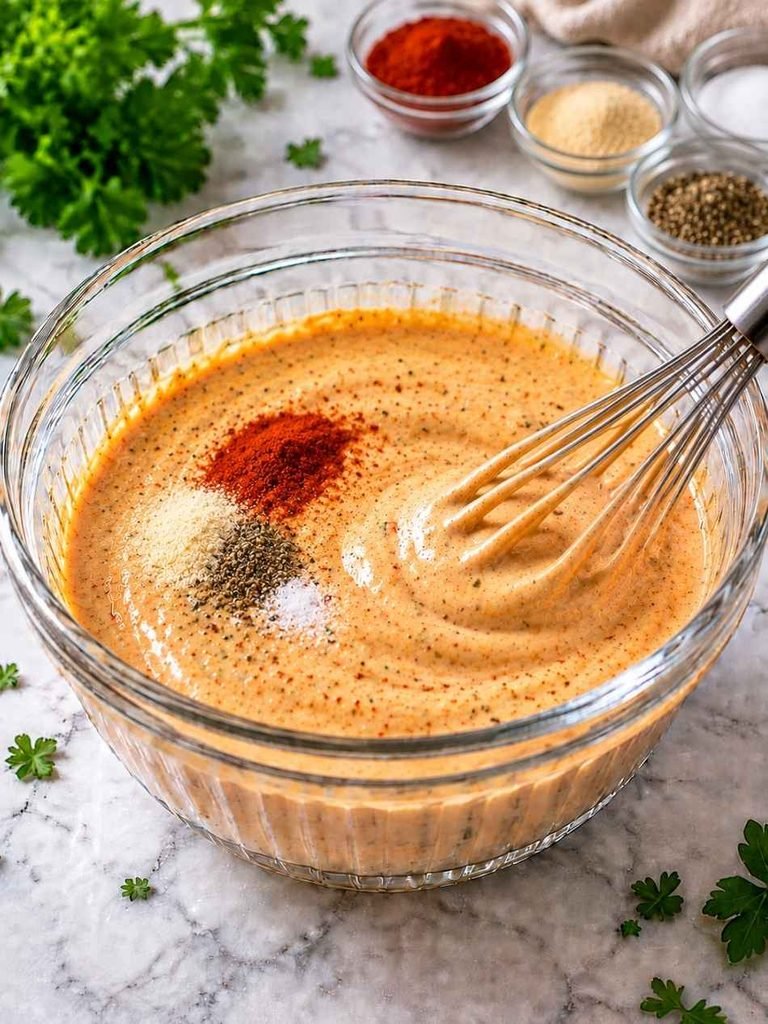
Step 4: Add the Dry Spices
Add the garlic powder, onion powder, smoked paprika, black pepper, and a pinch of salt. Whisk for a full 30 seconds, which will feel longer than necessary.
Why the spices go in this late. Dry powders clump when they hit a thick mixture, and those clumps do not break up on their own. By now there is enough liquid from the lemon and pickle juice to carry them, while the sauce is still thick enough to hold them suspended instead of letting them settle.
Go light on the salt. Mayonnaise, mustard, ketchup, and pickle juice all carry salt already. Add a pinch now and adjust at the end.
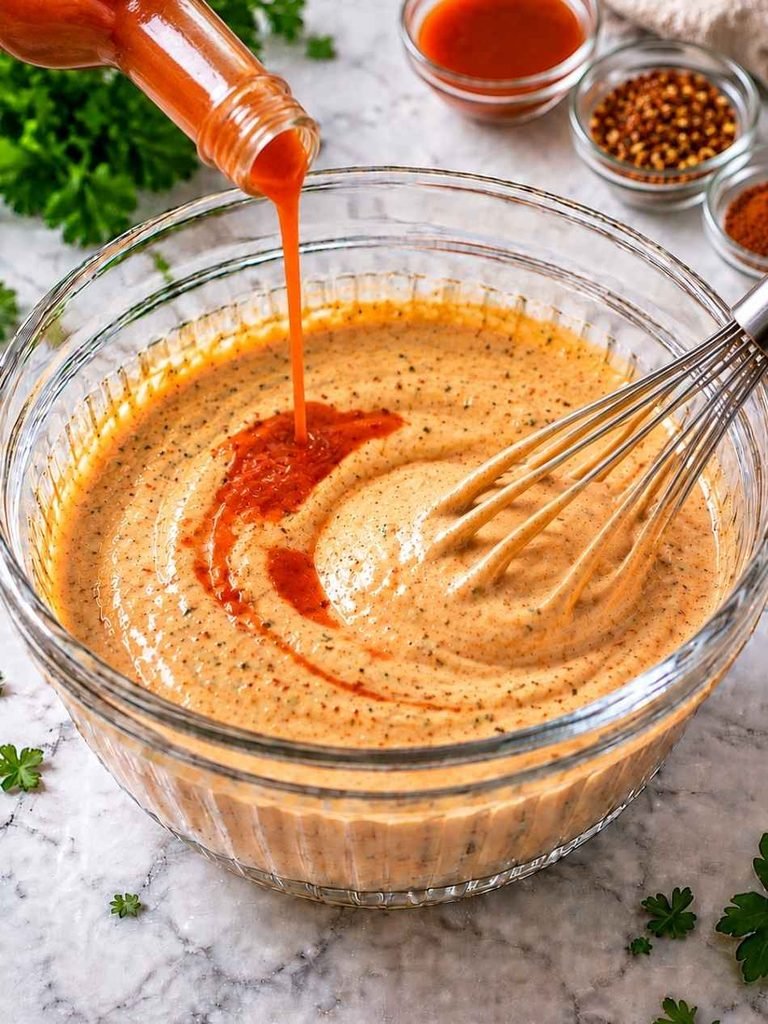
Step 5: Add Heat if You Want It
For a spicy version, add the hot sauce and whisk it through. Taste, then decide about more.
Heat builds as the sauce sits, so something that reads mild now will be a step hotter after chilling.
Which hot sauce changes the direction. A vinegar-based one like Frank’s adds tang along with heat and keeps things bright. Chipotle pushes it smokier. Sriracha brings sweetness and garlic. All three work, they just take it somewhere different.
For heat without extra liquid, use cayenne instead. A quarter teaspoon is roughly a teaspoon of hot sauce, without thinning the texture.
Step 6: Chill It
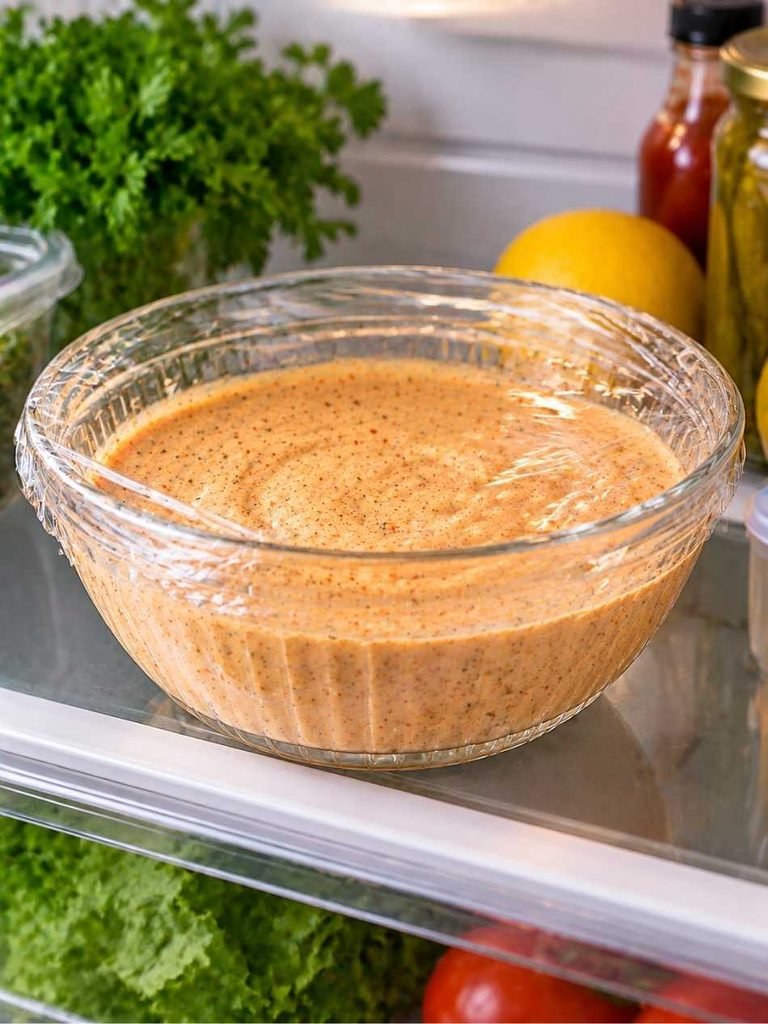
Cover and refrigerate for at least 20 minutes. An hour is better. Overnight is better still.
Three things happen while it sits. The dry spices fully hydrate, so the garlic and onion powder stop tasting dusty. The mustard and lemon mellow against the fat. And the flavors stop reading as separate notes and start reading as one sauce.
Taste again after chilling, not before. Cold dulls both salt and sweetness, so a sauce that seemed perfectly seasoned at room temperature often needs another pinch once it is properly cold. This is the most common reason a homemade sauce tastes fine in the bowl and flat on the sandwich.
Step 7: Serve
Stir once before using, since a little separation is normal.
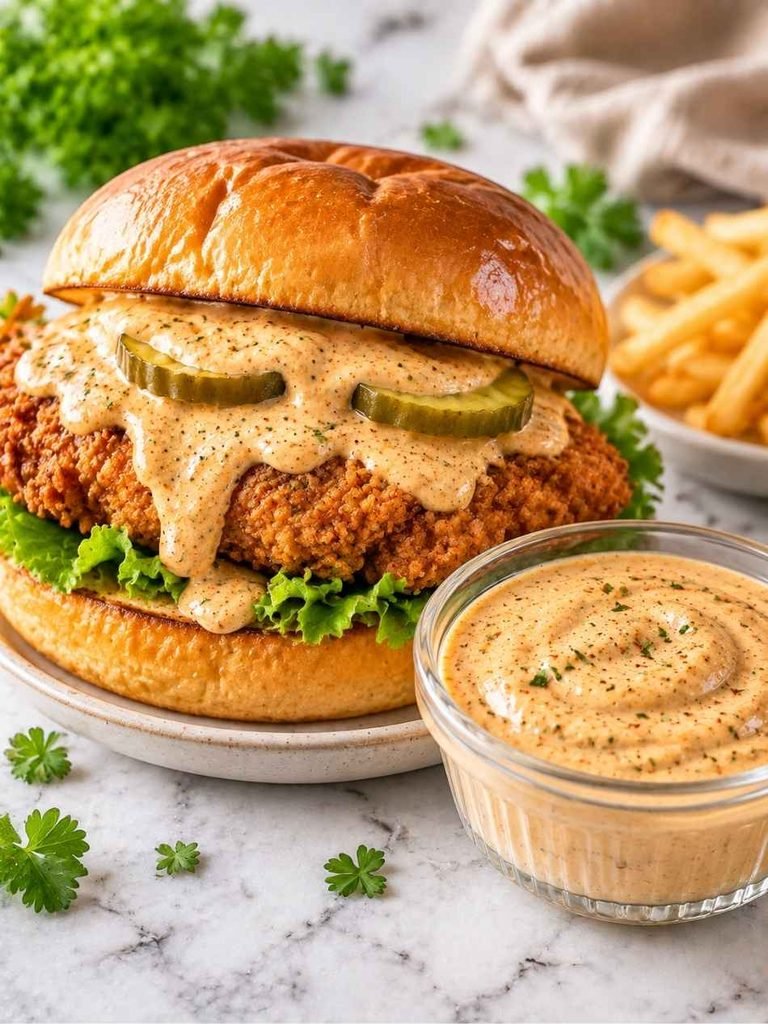
Spread it on both sides of the bun. The bottom side keeps the bread from going soggy against the chicken. The top side carries the flavor into every bite. Most people only sauce one side and then wonder why the sandwich tastes uneven.
Warm bread, cold sauce. Toast the bun first, then spread. The temperature contrast makes both taste better, and cold sauce on hot bread does not soak straight in.
Put the extra in a small bowl on the side. It will get used.
Tips for the Best Chicken Sandwich Sauce
Use good quality mayonnaise for the best creamy texture.
Let the sauce chill before serving so the flavours blend well.
Add lemon juice slowly if you prefer a milder tang.
Use pickle juice for a more restaurant style flavour.
Add hot sauce if you want a spicy version.
Use smoked paprika for a deeper flavour.
Taste and adjust salt at the end because mayonnaise and mustard can already be salty.
Easy Sauce Variations
You can change this chicken sandwich sauce in many simple ways.
For a spicy version, add more hot sauce, cayenne pepper, or chilli flakes.
For a smoky version, add extra smoked paprika or a tiny bit of barbecue sauce.
For a sweeter version, add a little more honey.
For a garlic version, add fresh minced garlic or roasted garlic paste.
For a lighter version, use Greek yogurt instead of some of the mayonnaise.
For a pickle style sauce, add finely chopped pickles or relish.
Best Sandwiches to Use This On
This sauce was built for chicken, but it does not stay there.
Crispy chicken sandwiches are where it works hardest. The acid cuts through fried batter, and the pickle juice echoes the pickles already on the sandwich. If you only use it for one thing, use it for this.
Grilled chicken sandwiches need it for a different reason. Grilled chicken breast is lean and can read dry. The sauce puts the moisture and richness back.
Wraps and sliders work well because the sauce is thick enough not to leak out of the sides, which is the usual problem with thinner dressings.
Chicken salad sandwiches take it as a replacement for plain mayonnaise. Mix it straight into the shredded chicken instead of spreading it on the bread.
As a dip, it holds up against fries, potato wedges, nuggets, onion rings, and roasted vegetables. This is usually where leftovers end up.
What to Serve With Chicken Sandwiches
Chicken sandwiches are filling on their own, so the sides should stay simple.
For a lighter plate, coleslaw, a green salad, pickles, or fresh fruit. Anything with acid works well next to a rich sandwich.
For a fuller plate, French fries, sweet potato fries, potato salad, roasted potatoes, or corn on the cob.
The pairing that always works is fries with extra sauce on the side for dipping. Make a double batch if you are going this route.
How to Store Chicken Sandwich Sauce
Store the sauce in an airtight container or small jar in the refrigerator.
It will stay fresh for up to 5 days. Stir it before using because some ingredients may settle slightly as it chills.
Do not leave the sauce at room temperature for too long, especially if serving it at a party or picnic.
Can You Make This Sauce Ahead of Time?
Yes, this sauce is perfect for making ahead. In fact, it tastes better after resting in the refrigerator for a few hours.
You can make it the night before and keep it chilled until you are ready to assemble your sandwiches.
This makes it a great recipe for meal prep, parties, BBQs, lunch boxes, or quick dinners.
Frequently Asked Questions
Can I make this sauce without mayonnaise?
Yes, you can use Greek yogurt or sour cream instead of mayonnaise. The sauce will be tangier and lighter, but still creamy.
Can I make it spicy?
Yes, add hot sauce, cayenne pepper, chilli flakes, or spicy mustard. Start with a small amount and adjust to taste.
What does this sauce taste like?
It tastes creamy, tangy, lightly sweet, savoury, and slightly smoky. It is similar to a restaurant style chicken sandwich sauce.
Can I use this sauce for burgers?
Yes, this sauce works well on burgers, wraps, fries, nuggets, grilled chicken, and sandwiches.
How long does homemade chicken sandwich sauce last?
It lasts up to 5 days in the refrigerator when stored in an airtight container.
Final Thoughts
This takes five minutes and turns a plain chicken sandwich into something you would order again. Mayonnaise for body, mustard and lemon for sharpness, honey to round it off, and smoked paprika for the depth plain mayo never has.
Once you have made it once, the balance section above means you can adjust it without looking anything up. Spicier for fried chicken, tangier for grilled, lighter with more yogurt.
Prep Time
Chill Time
Makes
Difficulty
Perfect for chicken sandwiches, wraps & fries
• 2 tbsp Greek yogurt or sour cream
• 1 tbsp Dijon or yellow mustard
• 1 tbsp ketchup
• 1 tsp honey
• 1 tsp lemon juice
• 1 tsp pickle juice
• ½ tsp garlic powder
• ½ tsp onion powder
• ½ tsp smoked paprika
• ¼ tsp black pepper
• Salt to taste