Easy Beef and Noodles Recipe:Better Than Any Diner Version
Recipe at a Glance
| Prep Time | 20 minutes |
| Cook Time | 2 hours |
| Total Time | 2 hours 20 minutes |
| Hands-On Time | 30 minutes |
| Servings | 6 |
| Course | Dinner |
| Calories | 610 per serving |
Beef and noodles is the plainer cousin of beef stroganoff, and in some ways the better one. No sour cream, no mushrooms, nothing to curdle or go grey. Chuck beef braised in its own gravy until it falls apart, spooned over wide egg noodles. That is the entire dish, and it has been on diner menus for a century because it works.
This is not a fast dinner and there is no point pretending otherwise. The beef needs two hours in a low oven or on a low burner before it turns tender, and nothing shortens that except a pressure cooker. What it is instead is an easy dinner. Thirty minutes of actual work at the front, then the pot looks after itself while you do something else.
The part worth getting right is the gravy. Most home versions come out thin, because three tablespoons of flour cannot thicken four cups of broth no matter how long it simmers. This one uses enough flour to actually do the job, which is what gives you gravy that clings to the noodles instead of pooling underneath them.
I made this with a packet of pre-cut stew meat the first few times and could never work out why half the beef went tender and the other half stayed chewy. It turns out stew meat is whatever the butcher had left over that day, usually pieces from three or four different muscles, and they do not all braise at the same rate.
Buying a chuck roast and cutting it up myself took five extra minutes and fixed it completely. Every cube comes from the same muscle, so every cube finishes at the same time.
Why You Will Love This Recipe
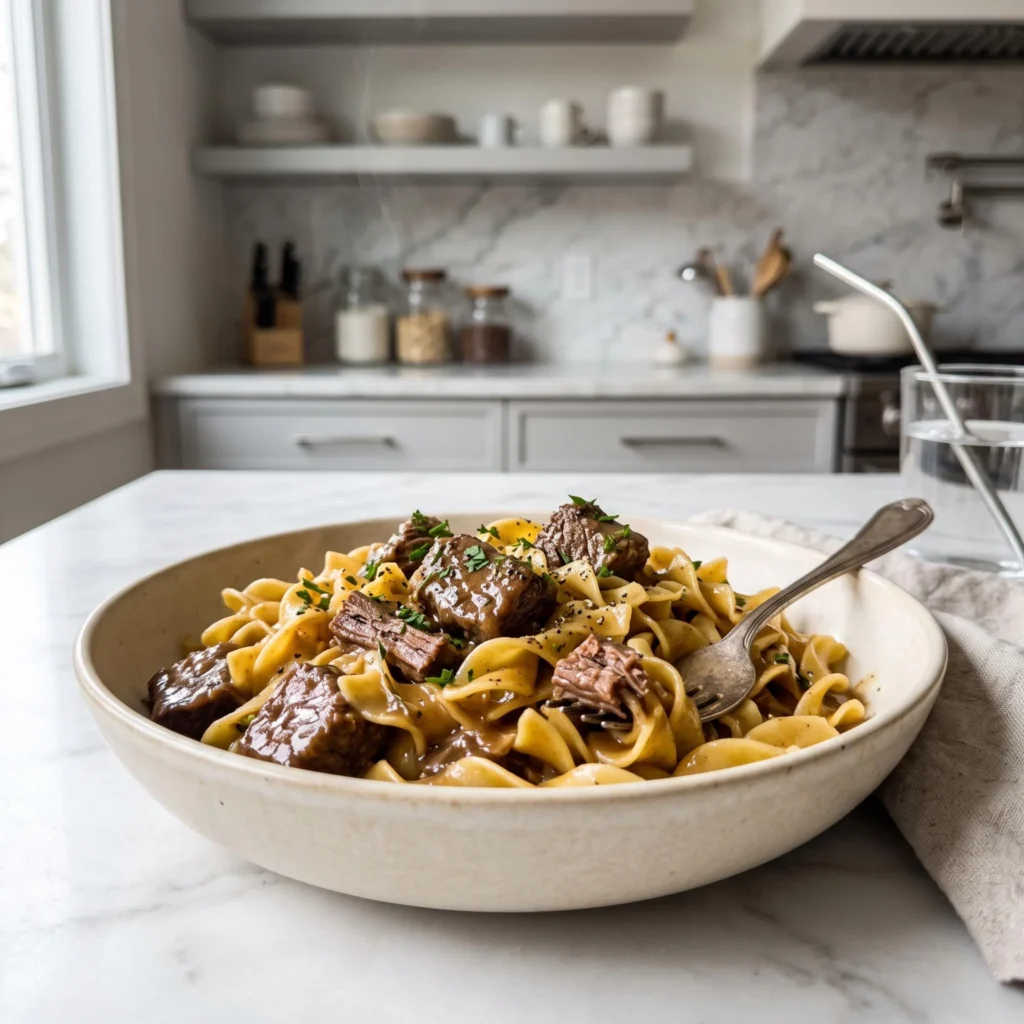
If you’ve been stuck in a rut of plain ground beef dinners, you are going to fall in love with this method. This beef and noodles dish is:
Texturally perfect: The beef turns fork-tender after slow braising, while the egg noodles stay soft and silky, soaking up all that rich gravy.
Highly customizable: You can easily load it up with mushrooms, extra garlic, or a splash of Worcestershire sauce for deeper flavor.
Made with basic staples: You only need beef stew meat, broth, egg noodles, and a few pantry seasonings.
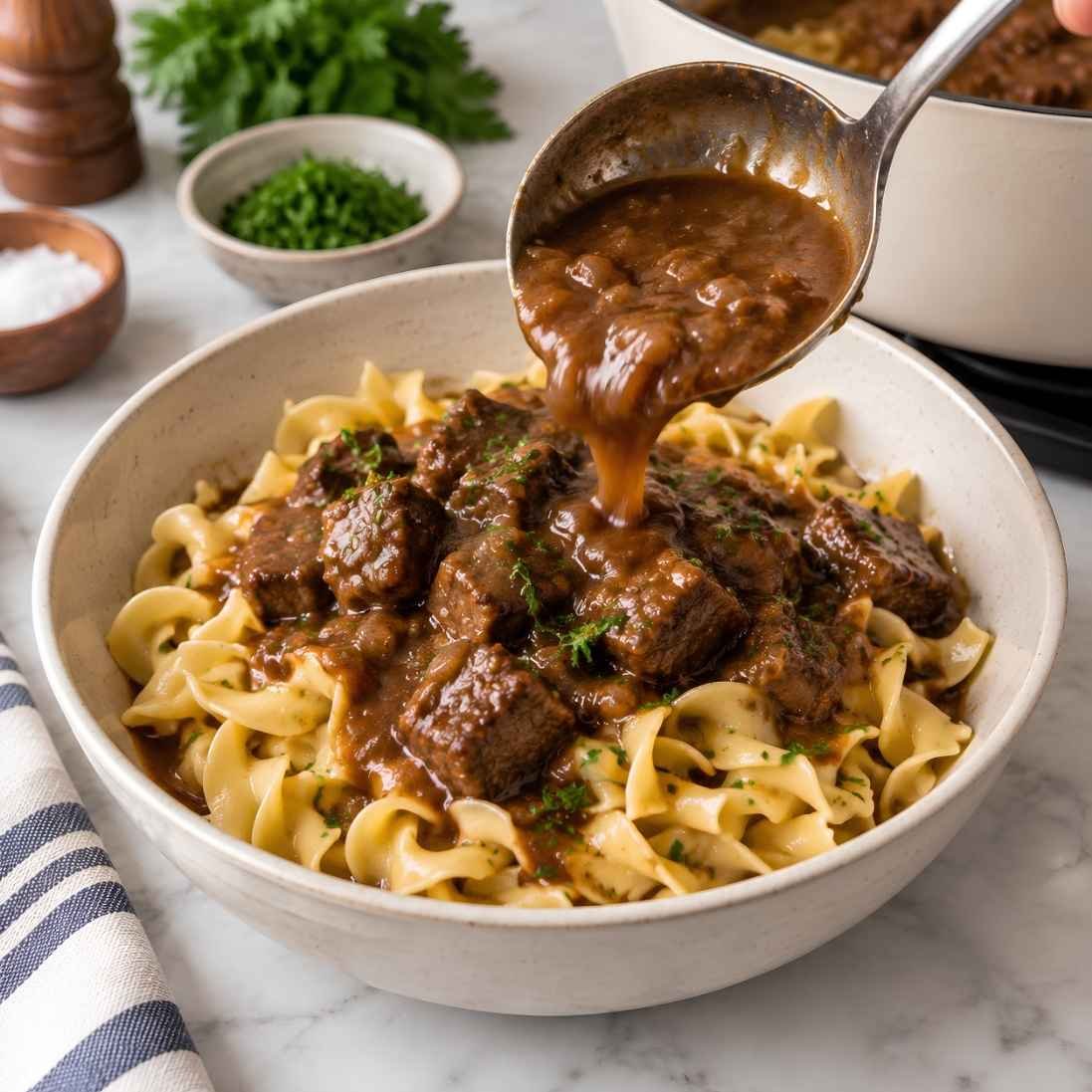
Visually gorgeous: The deep brown gravy clinging to wide, golden noodles and tender beef looks like it came straight out of a cozy diner special.
Equipment You Will Need
A heavy Dutch oven, 5 quarts or larger. This is the one piece that matters. The pot sits over low heat for two hours, and a thin-bottomed pan will scorch the flour and the beef long before the braise is done.
Cast iron or enamelled cast iron holds heat evenly and keeps the bottom from catching. It also needs to be wide enough to sear two pounds of beef in two batches rather than four.
Tongs. For turning the beef during the sear without piercing it and losing the juices.
A wooden spoon. The browned bits stuck to the bottom of the pot after searing are where most of the gravy’s flavour comes from, and a wooden spoon is what gets them up without scratching the pot.
A whisk. When the broth goes in over the flour, a whisk is what keeps it smooth. A spoon leaves lumps that never fully break down.
A separate pot for the noodles. They cook separately and get combined at the table, not in the braise. More on why in the instructions.
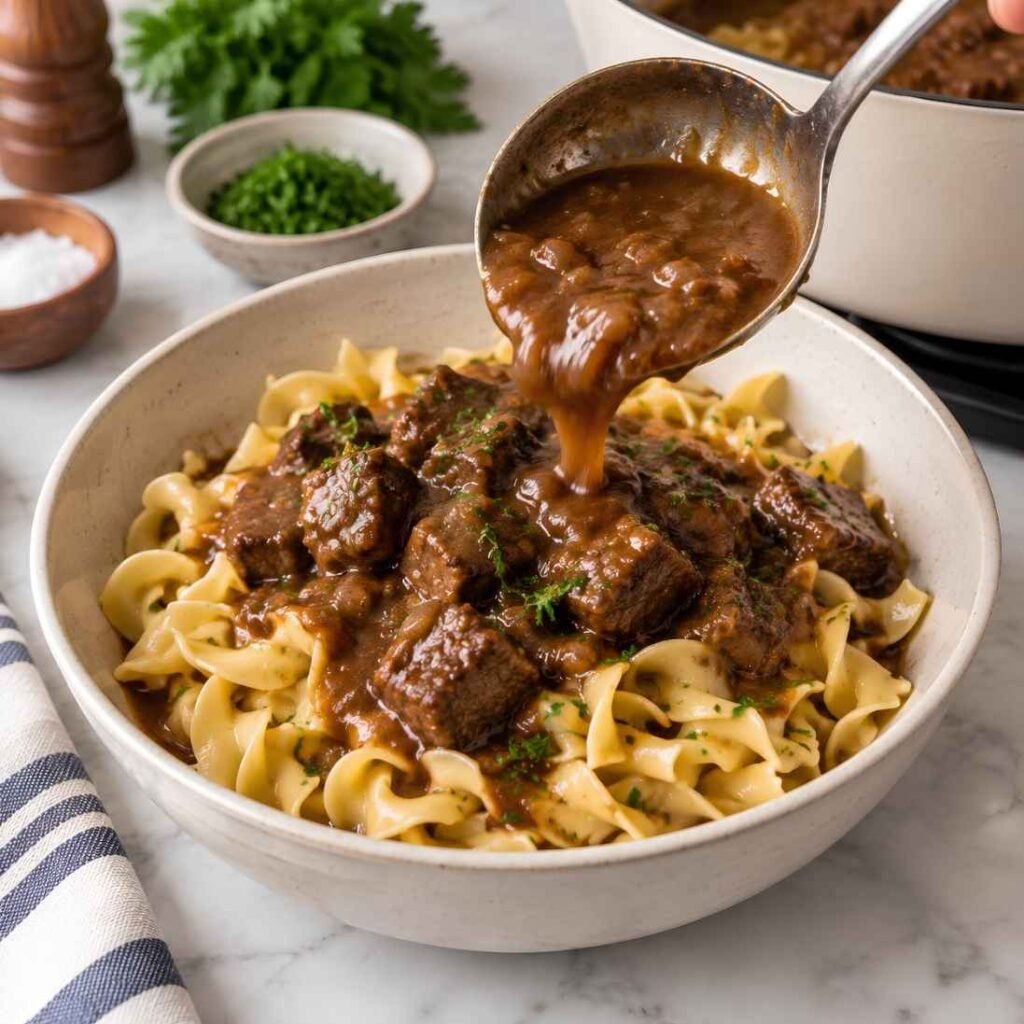
A ladle. For spooning gravy over noodles in the bowl, which is how this is served in a diner and how it holds up best as leftovers.
Ingredients You Will Need
The beauty of this recipe lies in its sheer simplicity. To get that perfect hearty, savory bite, you will need:
- 2 lbs chuck roast, cut into 1-inch cubes
- 1 tsp kosher salt, plus more to taste
- 1/2 tsp black pepper
- 2 tbsp olive oil
- 1 medium yellow onion, diced
- 3 cloves garlic, minced
- 2 tbsp tomato paste
- 1/4 cup all-purpose flour
- 4 cups low-sodium beef broth
- 1 tbsp Worcestershire sauce
- 1 tsp dried thyme
- 1 bay leaf
- 10 oz wide egg noodles
- 2 tbsp butter, for the noodles
- Fresh parsley, chopped, for garnish
Step-by-Step Instructions for Easy Beef and Noodles
Step 1: Season and Sear the Beef
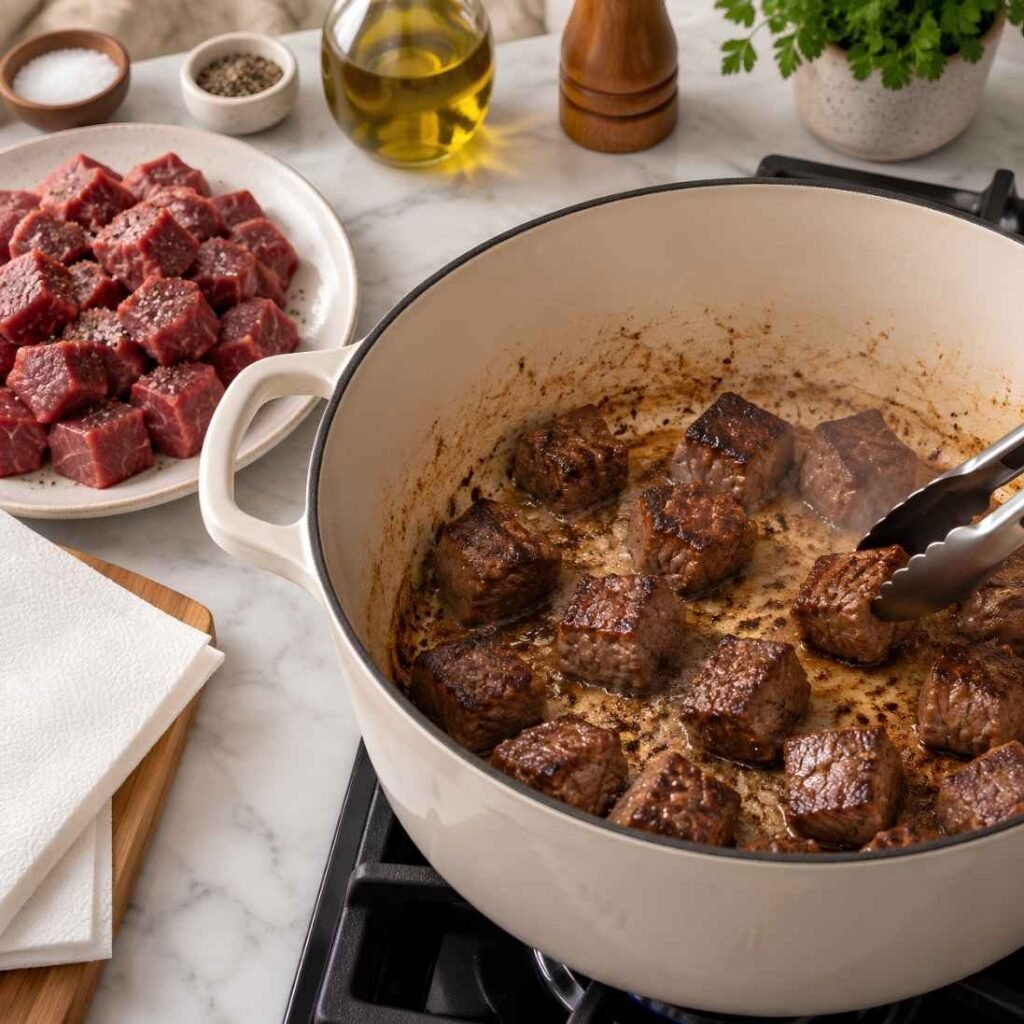
Pat the beef cubes dry with paper towels and toss them with the salt and pepper. Heat the olive oil in a Dutch oven over medium-high heat until it shimmers. Add half the beef in a single layer with space between the cubes and sear for 4 to 5 minutes total, turning two or three times to brown several sides. You are not cooking the beef through, only building colour. Transfer to a plate and repeat with the second batch.
Step 2: Soften the Onion
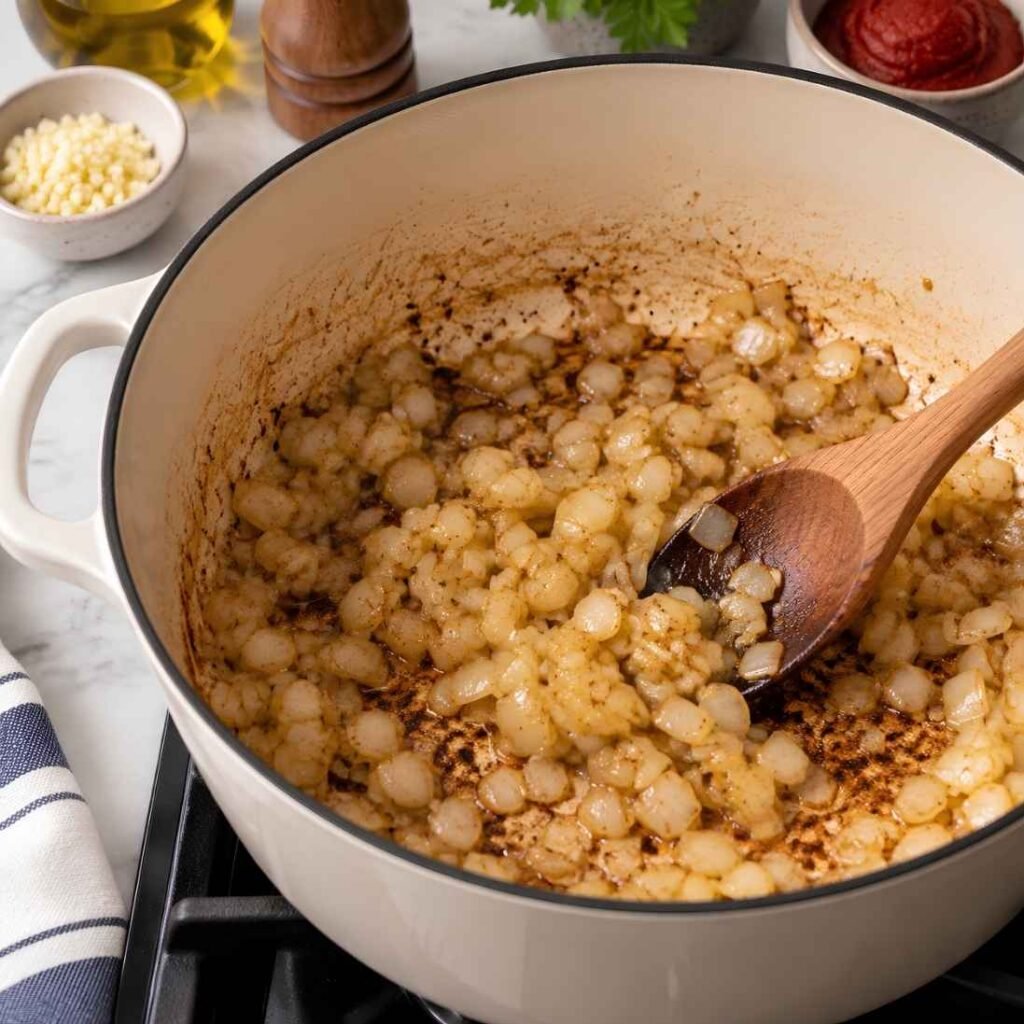
Lower the heat to medium and add the onion to the same pot. Cook for 4 to 5 minutes until softened, scraping the bottom as you go. The onion releases moisture that starts lifting the browned bits stuck to the pot.
Step 3: Garlic and Tomato Paste
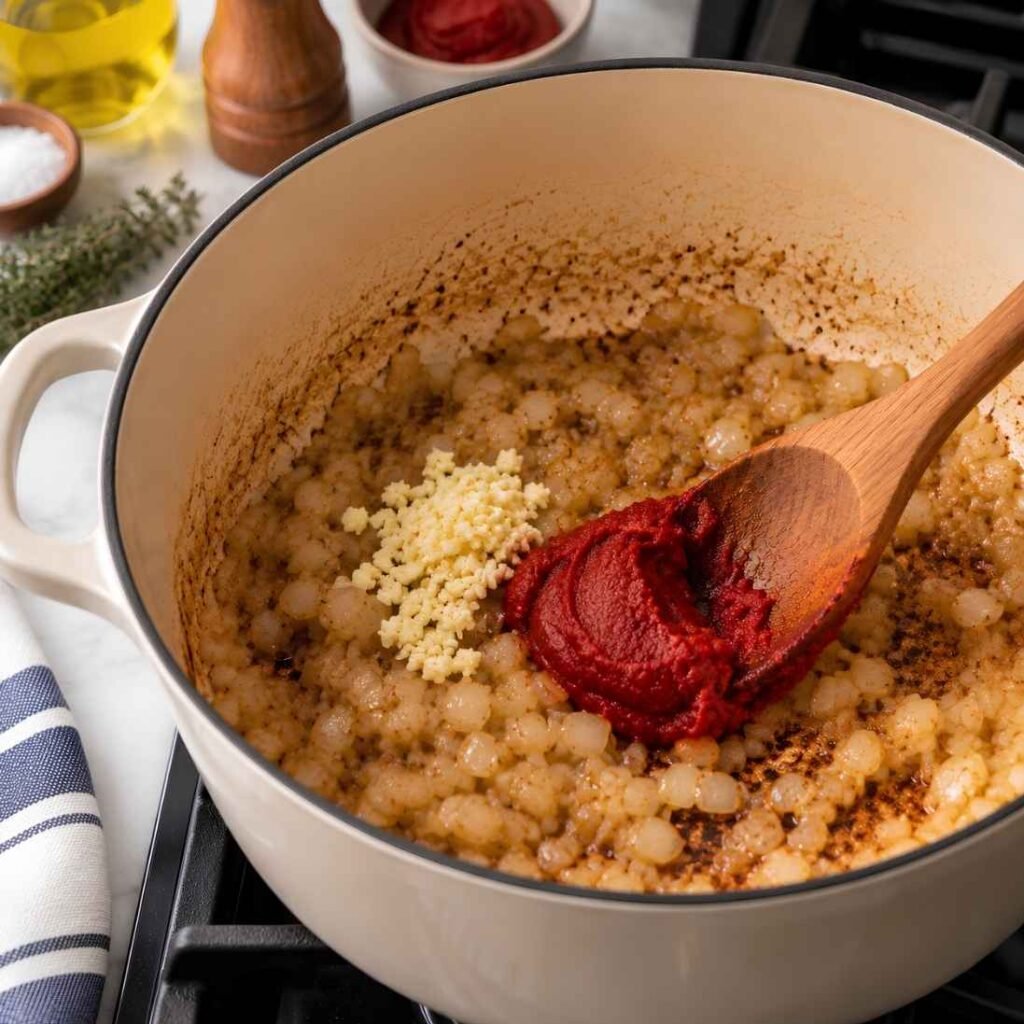
Add the garlic and cook for 30 seconds until fragrant. Stir in the tomato paste and cook for a full minute, until it darkens from bright red to brick. This step is short and easy to skip, and it is where a lot of the gravy’s depth comes from.
Step 4: Make the Roux
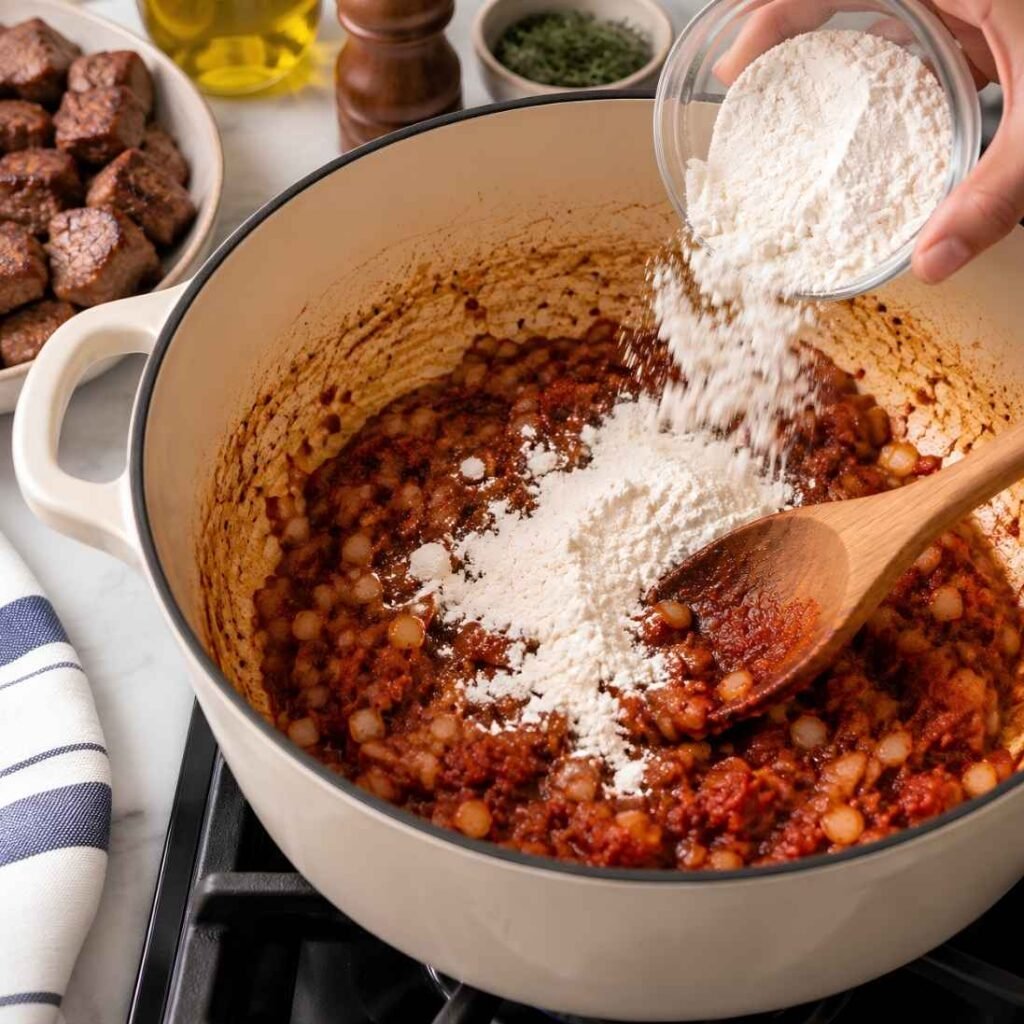
Sprinkle the flour over everything and stir constantly for 1 to 2 minutes. It will look dry and pasty, which is correct. Cooking the flour now removes the raw taste it would otherwise leave in the gravy.
Step 5: Add the Broth and Scrape
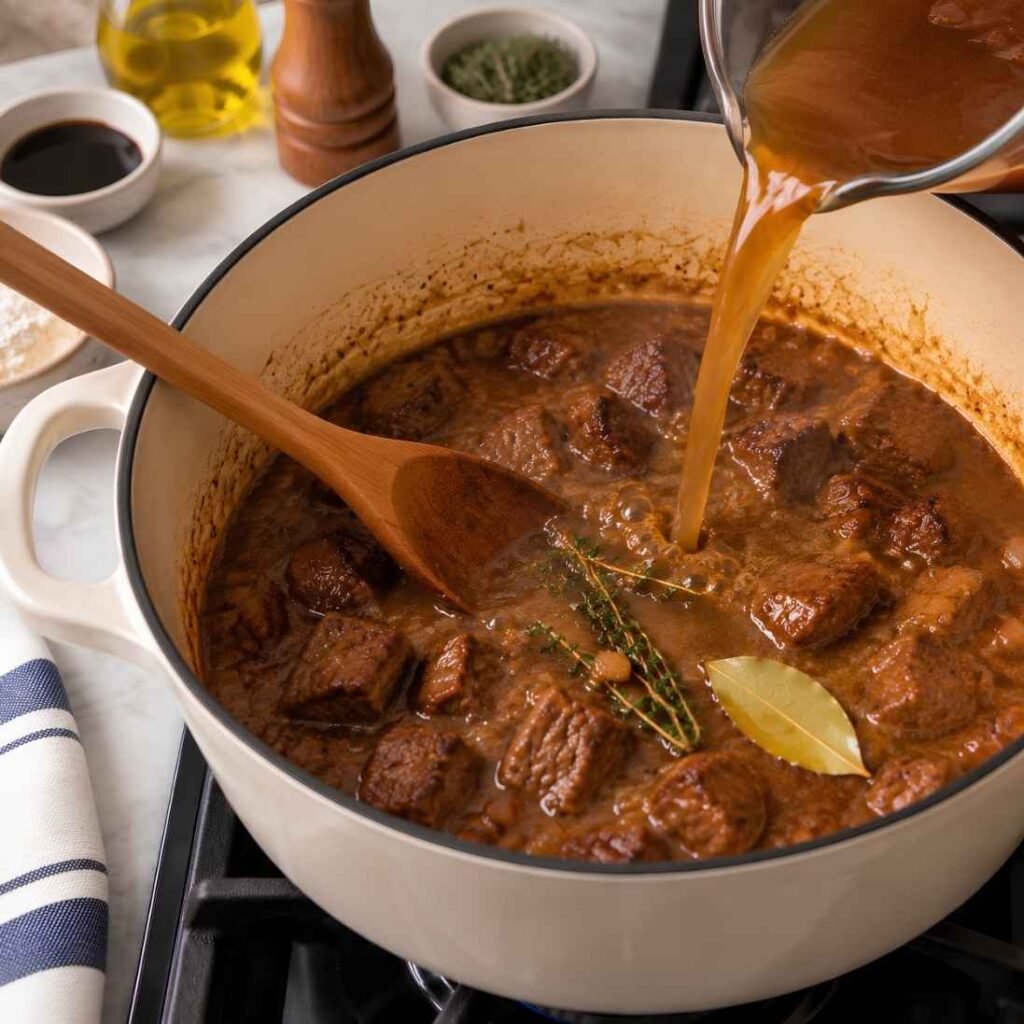
Pour in about a cup of the broth while whisking hard, working out any lumps, then add the rest along with the Worcestershire sauce, thyme, and bay leaf. Scrape the bottom of the pot thoroughly with a wooden spoon. Every browned bit down there is flavour you already paid for during the sear, and this is the only chance to get it into the gravy.
Step 6: Braise
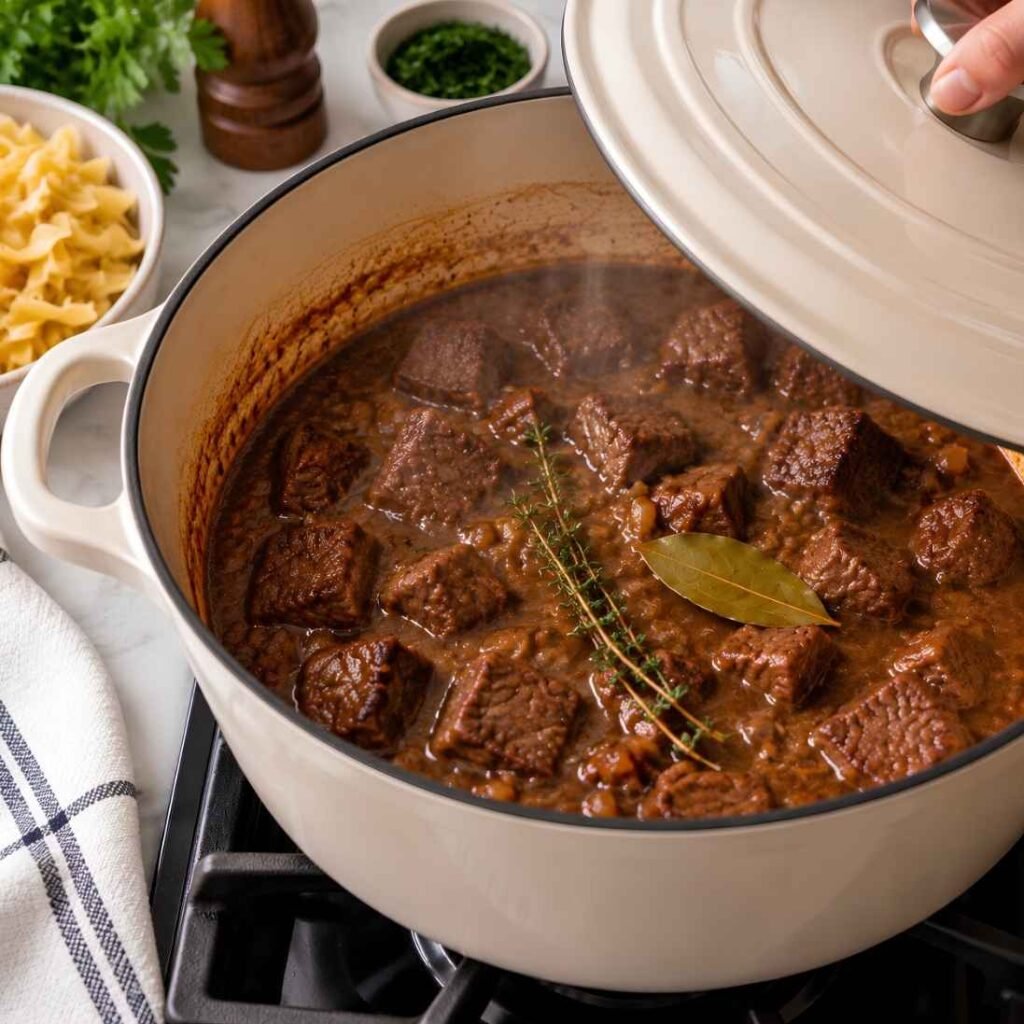
Return the beef and any juices from the plate to the pot. Bring it to a gentle simmer, then cover and cook on low for 1.5 to 2 hours, stirring every 30 minutes and scraping the bottom each time. It is done when a cube gives way under light pressure from a fork with no resistance. If it still feels firm at two hours, it needs longer, not more heat.
Step 7: Skim and Check the Gravy
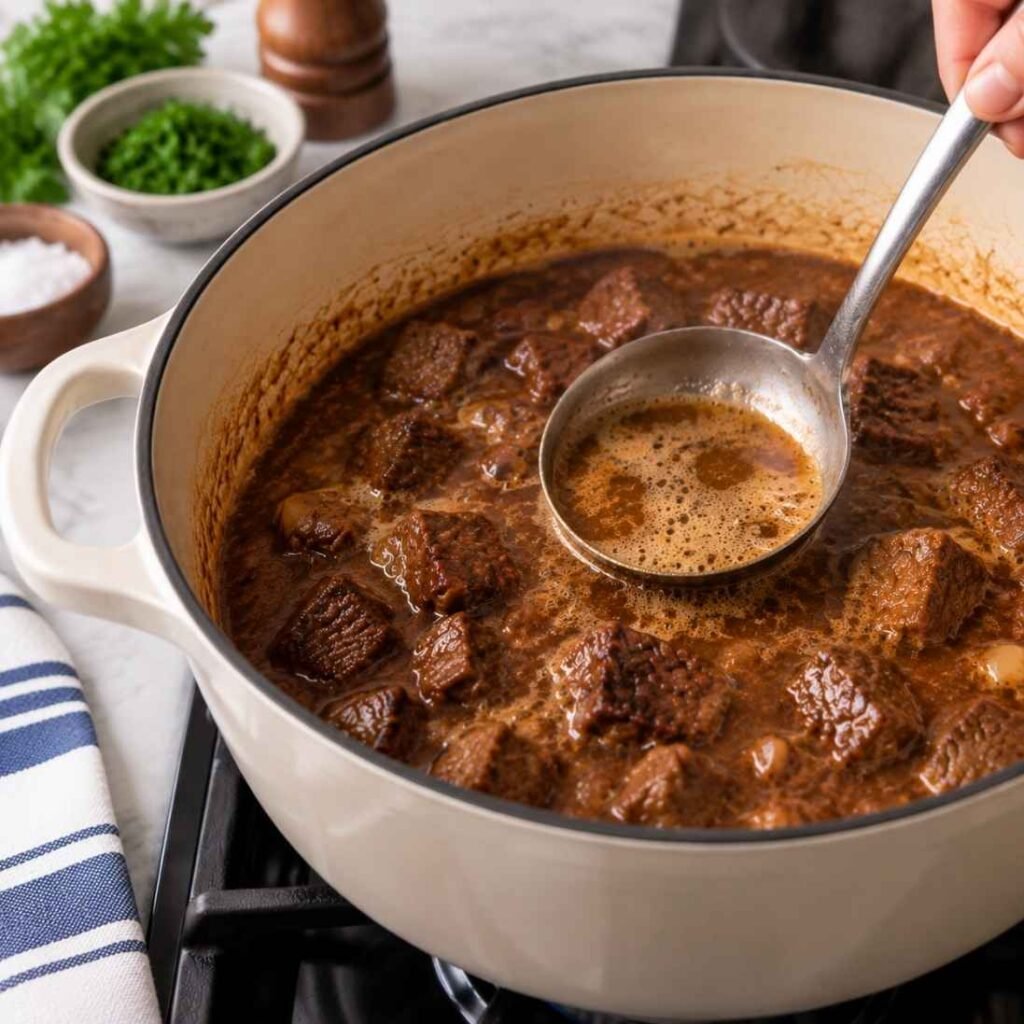
Remove the bay leaf. Tilt the pot and spoon off any fat pooling on the surface. Now check the consistency: the gravy should coat the back of a spoon and hold a line when you draw a finger through it. If it is thinner than that, simmer uncovered for 10 minutes, or stir in a tablespoon of cornstarch mixed with two tablespoons of cold water. Taste and adjust the salt only now, since the gravy has been concentrating for two hours.
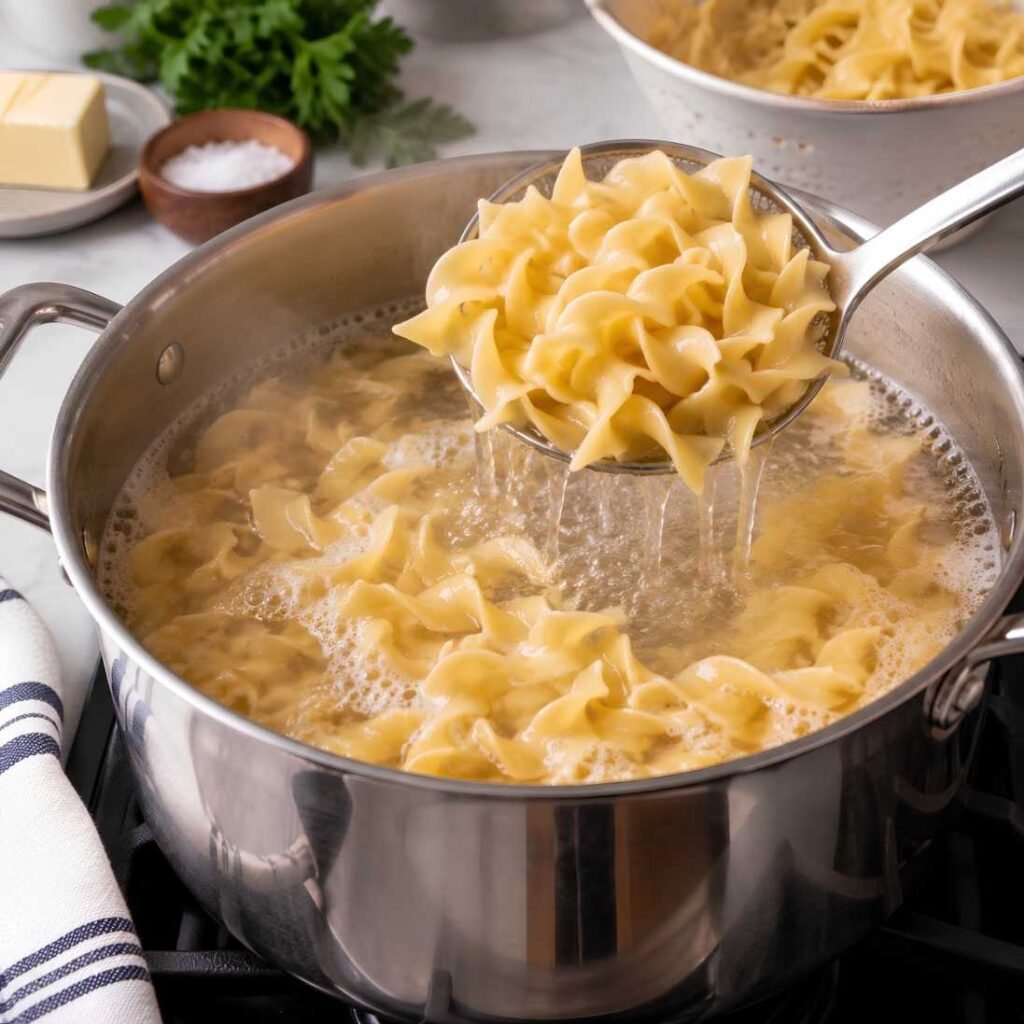
Step 8: Cook the Noodles
While the gravy finishes, cook the egg noodles in well-salted water according to the package, pulling them a minute early since they will sit in hot gravy on the plate. Drain and toss immediately with the butter so they do not stick together.
Step 9: Serve
Spoon the noodles into bowls and ladle the beef and gravy over the top. Do not stir the noodles into the pot. Egg noodles keep absorbing liquid, and within ten minutes they will have drunk the gravy and turned the whole thing into a solid mass. Scatter parsley over each bowl and serve.
Pro Tips for the Ultimate Beef and Noodles
Small adjustments can take your beef and noodles from good to absolute perfection.
Give the beef room in the pot. Two batches, not one. Crowded cubes release moisture faster than it evaporates, so the beef ends up simmering in its own liquid and never browns. The extra five minutes buys you most of the gravy’s flavour.
Braise in the oven if you can. A 325°F oven surrounds the pot with even heat, which means no scorching at the bottom and no stirring every half hour. Same timing, less attention. Lid on, and check it at ninety minutes.
Make it a day ahead. This is one of the dishes that genuinely improves overnight. The gravy thickens, the beef absorbs more of it, and the fat rises and solidifies so you can lift it straight off in the morning.
Do not raise the heat to hurry the beef along. Tough beef at the two-hour mark means it needs more time, not more heat. Higher heat tightens the muscle fibres and makes it worse. Give it another twenty minutes and check again.
Salt the noodle water properly. A tablespoon per four quarts. The noodles are the only unseasoned component on the plate, and bland noodles under good gravy is a noticeable gap.
Keep a cup of broth aside for reheating. Leftover gravy thickens a lot in the fridge, and a splash of broth loosens it back to where it was far better than water does.
Common Mistakes to Avoid
Stirring the noodles into the pot. The single most common one, and it looks harmless. Egg noodles keep absorbing liquid for as long as they sit in it. Ten minutes later the gravy is gone and what is left is a solid mass. Noodles in the bowl, gravy over the top.
Using stew meat from a packet. Those packets are offcuts from several different muscles, and they do not braise at the same rate. Half the beef turns tender and half stays chewy, and there is no fixing it once it is in the pot. Cube a chuck roast yourself.
Not enough flour for the amount of broth. Three tablespoons against four cups is what most recipes call for and it produces a thin, watery gravy no matter how long it simmers. A quarter cup is what actually thickens it.
Crowding the pot during the sear. Two pounds of beef in one layer means the cubes touch, release moisture, and steam instead of browning. Grey beef going into the braise means a pale gravy coming out.
Turning the heat up when the beef is still tough. Tough at two hours means it needs more time. Higher heat tightens the fibres and makes the problem worse rather than better.
Salting at the start and forgetting about it. The pot reduces for two hours and the salt concentrates as it does. Season lightly at the beginning, then taste and adjust once the braise is finished.
Skipping the scrape after the broth goes in. The browned layer on the bottom of the pot is where the flavour from the sear ended up. If it stays stuck to the pot, it never reaches the gravy and the sear was for nothing.
Variations to Try
With mushrooms. Eight ounces of sliced cremini, browned in the pot after the beef comes out and before the onion goes in. Let them release their water and cook it off, which takes about six minutes, or they will thin the gravy later.
Stroganoff-style. Stir a cup of sour cream into the finished gravy off the heat, never over it, or it will split. Add a tablespoon of Dijon with it. This turns the dish into something closer to beef stroganoff without the risk of curdling that comes from simmering dairy.
With red wine. Replace one cup of the broth with a dry red. Pour it in after the tomato paste and let it bubble down by half before the flour goes in. It adds an acidity that cuts through two hours of rich braising.
With root vegetables. Add carrots and celery with the onion, and drop in halved baby potatoes for the last forty-five minutes. At that point you have a beef stew rather than beef and noodles, so serve it with bread instead.
Instant Pot version. Sear on sauté mode, build the gravy the same way, then pressure cook on high for 35 minutes with a 15-minute natural release. Finish the gravy on sauté mode, since pressure cooking does not reduce liquid at all.
Slow cooker version. Sear and build the gravy on the stove first, then transfer everything and cook on low for 7 to 8 hours. Slow cookers trap steam rather than releasing it, so the gravy will not thicken on its own. Stir in a cornstarch slurry during the last twenty minutes.
What to Serve with Easy Beef and Noodles
This hearty dish is filling enough to stand on its own, but a few sides can round out the meal.
As a main course: Serve it alongside a simple green salad with a light vinaigrette to balance out the richness of the gravy.
With bread: A warm dinner roll or slice of crusty bread is perfect for soaking up any extra gravy left in the bowl.
Comfort food night: Pair with a side of roasted green beans or buttered peas for an easy, well-rounded dinner.
Sunday supper style: Serve straight from the pot at the table alongside a pitcher of iced tea for a relaxed, old-fashioned family dinner.
How to Store Easy Beef and Noodles
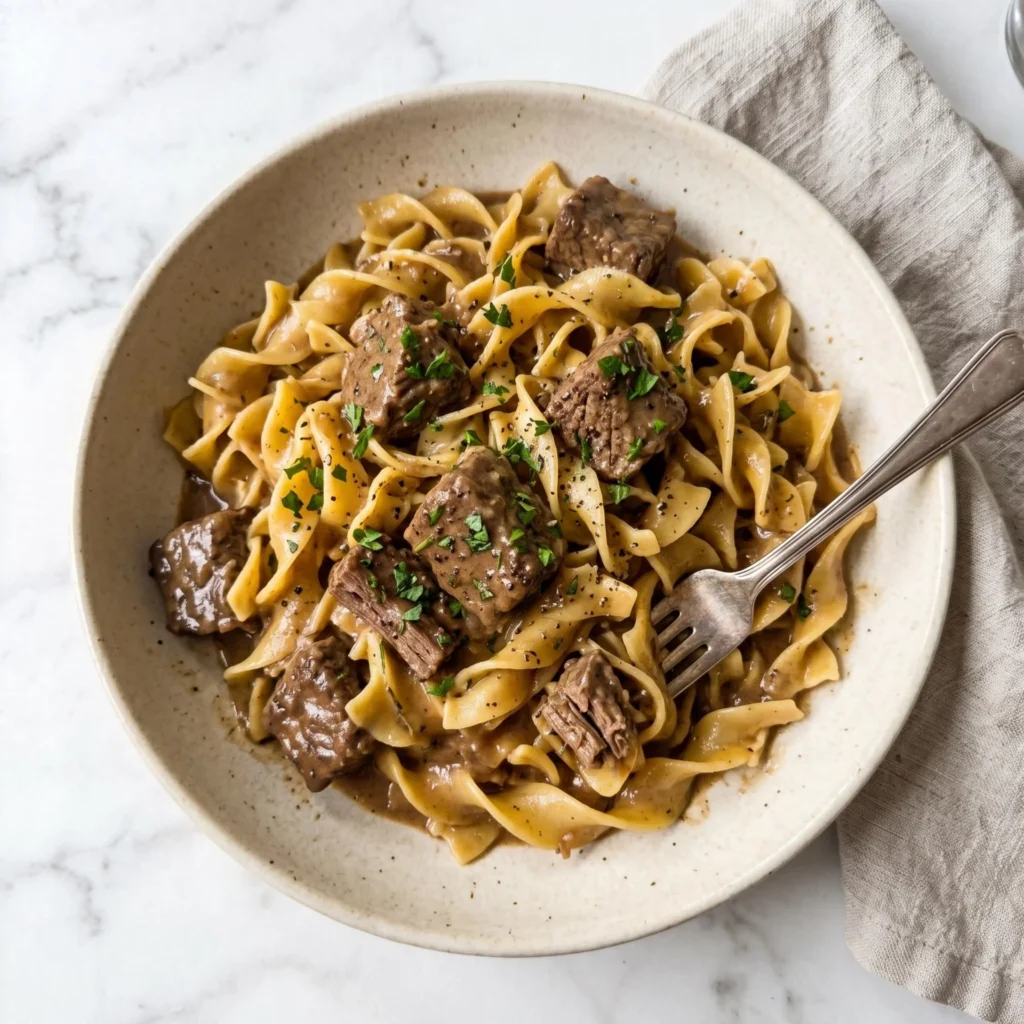
Have leftovers? It is incredibly easy to save for later.
In the Fridge: Store the completely cooled beef and noodles in an airtight container for up to 4 days.
How to Reheat: Reheat gently on the stovetop over low heat with a splash of broth, stirring occasionally, to loosen the gravy back to its original consistency.
In the Freezer: The beef and gravy alone freeze well for up to 3 months, but it’s best to cook fresh noodles when you’re ready to serve, since noodles can turn mushy after freezing and thawing.
Frequently Asked Questions
Can I use a slow cooker for this recipe? Absolutely. Sear the beef and sauté the aromatics as directed, then transfer everything to a slow cooker with the broth and seasonings. Cook on low for 6 to 8 hours, stirring in cooked noodles just before serving.
What’s the best cut of beef to use? Chuck roast, cut into cubes, is ideal since it becomes wonderfully tender after slow braising, though pre-cut beef stew meat works just as well for convenience.
Can I prep this ahead of time? Yes! You can make the beef and gravy a day or two in advance and store it in the fridge. When you are ready for dinner, reheat gently and stir in freshly cooked noodles.
Final Thoughts
This easy beef and noodles recipe is proof that a deeply comforting, restaurant-quality dinner doesn’t have to be complicated. With a good sear, a slow braise, and a pot of tender egg noodles, you get the ultimate hearty, satisfying meal every single time. Try it today, and I promise it’ll become a permanent favorite at your table.