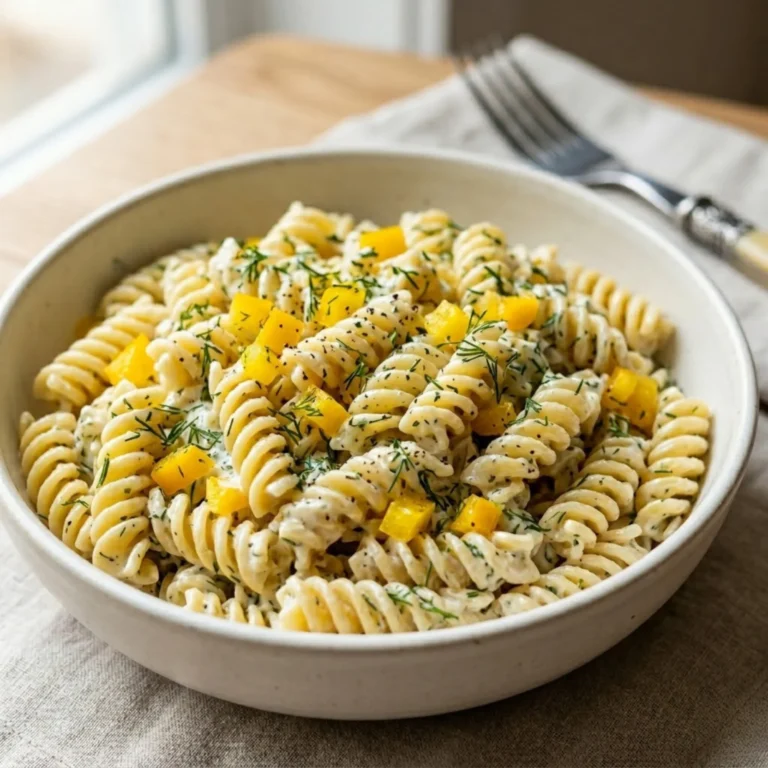
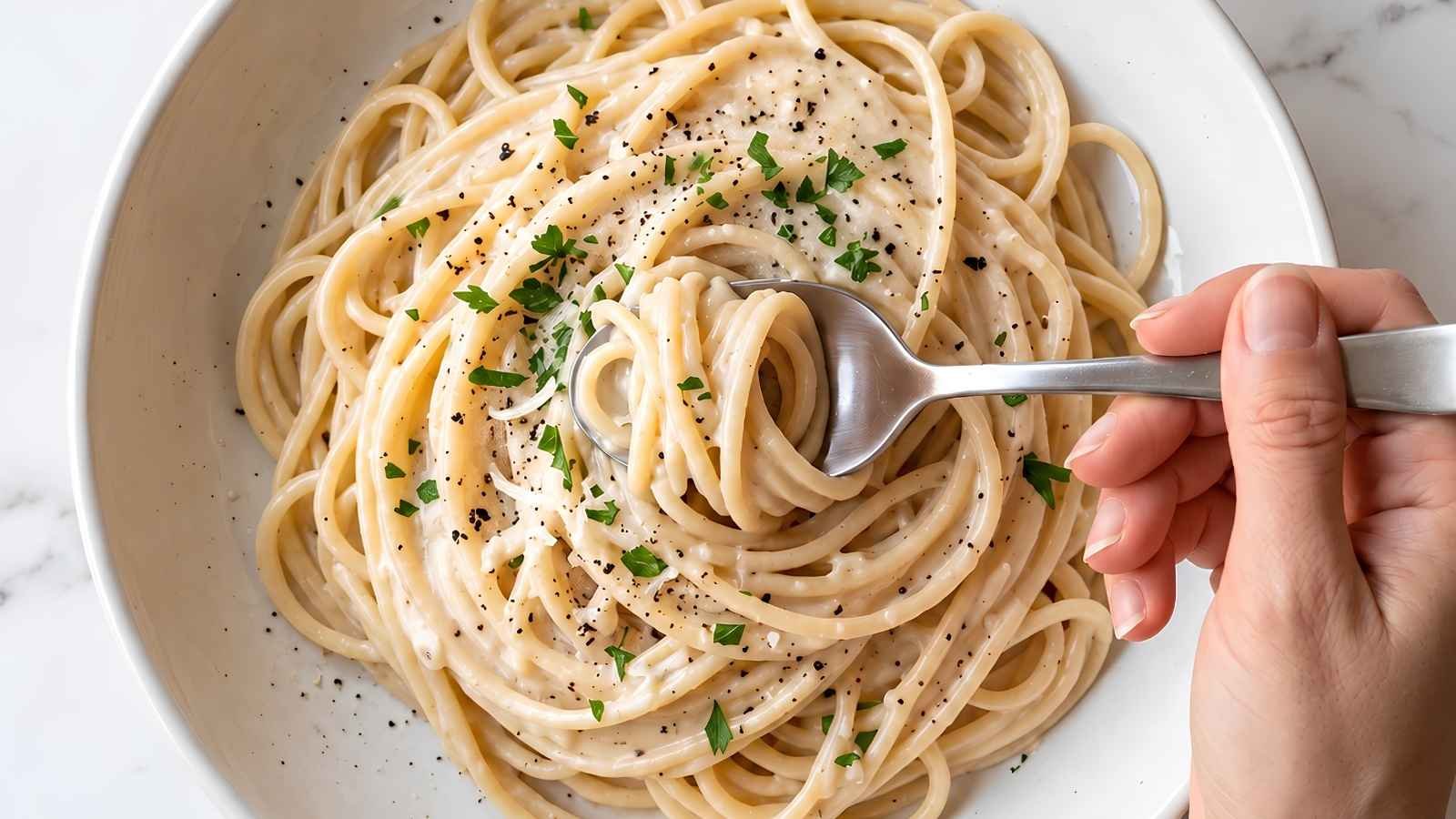
Easy Garlic Parmesan Pasta Recipe
Recipe at a Glance
| Prep Time | 5 minutes |
| Cook Time | 20 minutes |
| Total Time | 25 minutes |
| Servings | 4 |
| Course | Dinner |
| Calories | 680 per serving |
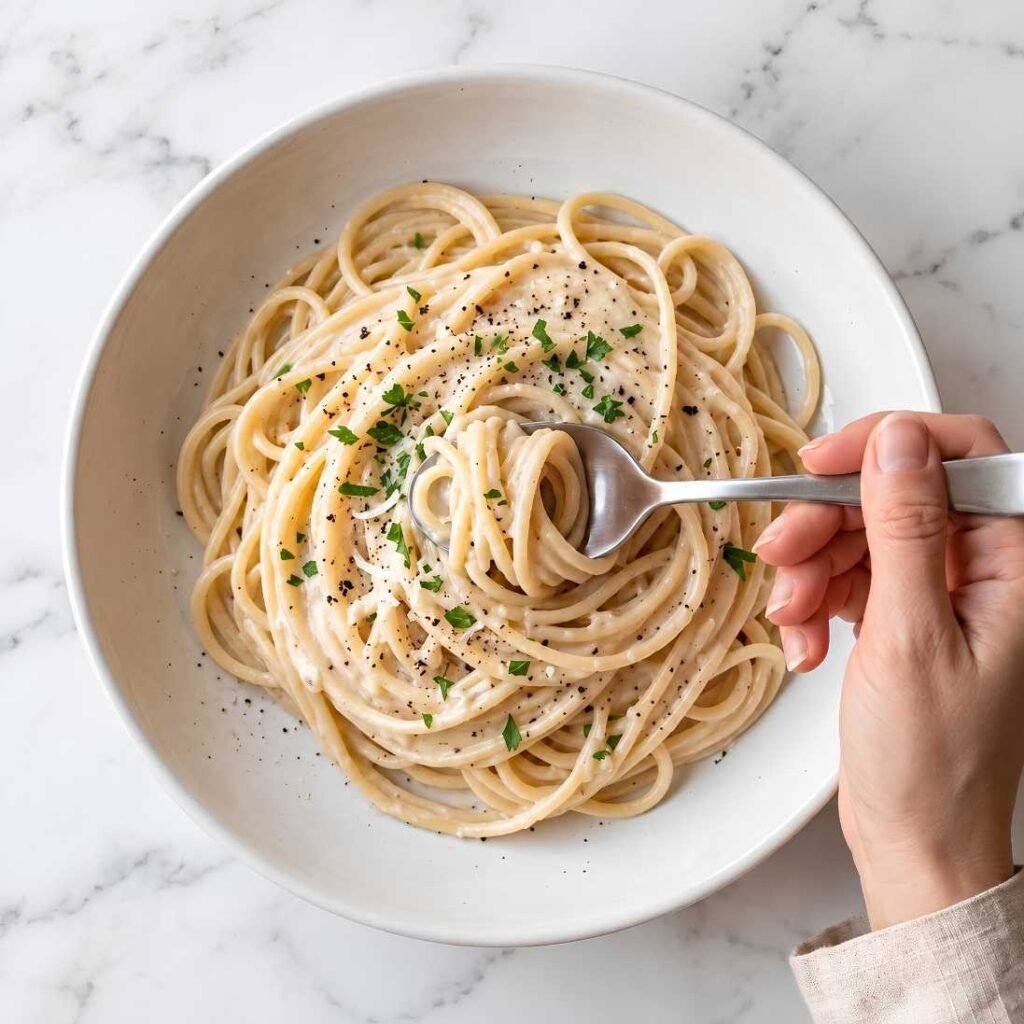
Four ingredients, twenty minutes, and one moment where it all goes wrong. That moment is when the Parmesan goes in. Cheese added to a pan still sitting over heat seizes, the proteins tighten, and what should be a silky sauce turns grainy and separates into oil and solids. Take the pan off the burner first, and the residual heat melts it perfectly.
The other thing worth knowing is that this sauce waits for nobody. Cream and Parmesan thicken as they cool, and within two or three minutes of leaving the pan a glossy sauce turns thick and claggy. Have the bowls out and everyone at the table before the pasta goes into the skillet.
Beyond those two things, it is genuinely as simple as it sounds. Butter, garlic, cream, cheese, and a splash of the water the pasta cooked in.
Why You Will Love This Recipe
If you’ve been stuck reaching for jarred pasta sauce every week, you are going to fall in love with this method. This garlic parmesan pasta is:
Texturally perfect: A silky, creamy sauce clings to every strand of pasta, coating each bite in rich, garlicky flavor.
Highly customizable: You can easily add grilled chicken, red pepper flakes, or fresh herbs to make it your own.
Made with basic staples: You only need pasta, butter, garlic, cream, and Parmesan cheese to bring this dish together.
Ready in minutes: This dish comes together in about 20 minutes, making it one of the fastest homemade pasta dinners you can make.
Equipment You Will Need
A microplane or the finest side of a box grater. This is the piece that decides whether your sauce is smooth. Finely grated Parmesan melts almost instantly in residual heat. Coarse shreds need more heat to melt, which is exactly the heat that makes them seize, so you end up choosing between grainy and unmelted.
A 12-inch skillet with sloped sides. Wide enough to hold 12 oz of cooked pasta and toss it without half of it going over the edge. Sloped sides make tossing far easier than straight ones.
Tongs. For lifting pasta straight from the pot into the skillet, which brings a little cooking water with it and saves draining entirely. Also for tossing, since a spoon pushes pasta around rather than lifting and coating it.
A heatproof mug or jug. For the reserved pasta water. Scoop it out before you drain, because everyone forgets and pours it down the sink.
Warmed bowls. Optional and genuinely useful. This sauce thickens as it cools, and cold bowls speed that up. Run them under hot water and dry them while the pasta cooks.
Ingredients You Will Need
The beauty of this recipe lies in its sheer simplicity. To get that perfect creamy, garlicky flavor, you will need:
- 12 oz spaghetti or pasta of choice
- 1 tbsp kosher salt, for the pasta water
- 4 tbsp unsalted butter
- 6 cloves garlic, thinly sliced or minced
- 1 1/2 cups heavy cream
- 1 1/4 cups Parmesan, finely grated
- 1/2 tsp black pepper, freshly cracked
- 1 cup reserved pasta water
- Zest of 1/2 lemon (optional)
- 2 tbsp fresh parsley, chopped, for garnish
- Salt, to taste at the end only
Step-by-Step Instructions for Garlic Parmesan Pasta
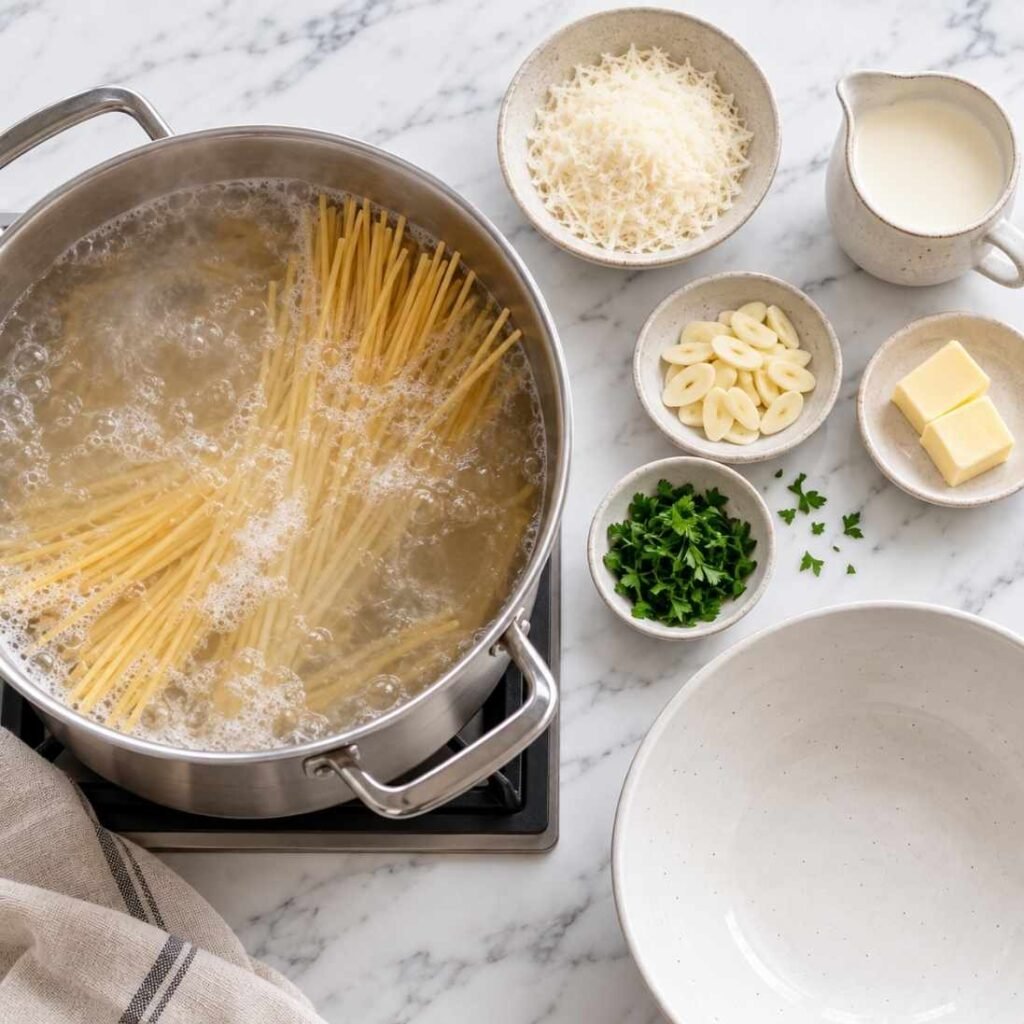
Step 1: Start the Pasta and Get Everything Ready. Bring a large pot of water to a boil and salt it properly, about a tablespoon per four quarts. Add the pasta and cook it to al dente.
While it cooks, grate the Parmesan, slice the garlic, and put your serving bowls somewhere warm. This sauce comes together in under five minutes and thickens as it cools, so everything needs to be ready before you start it.
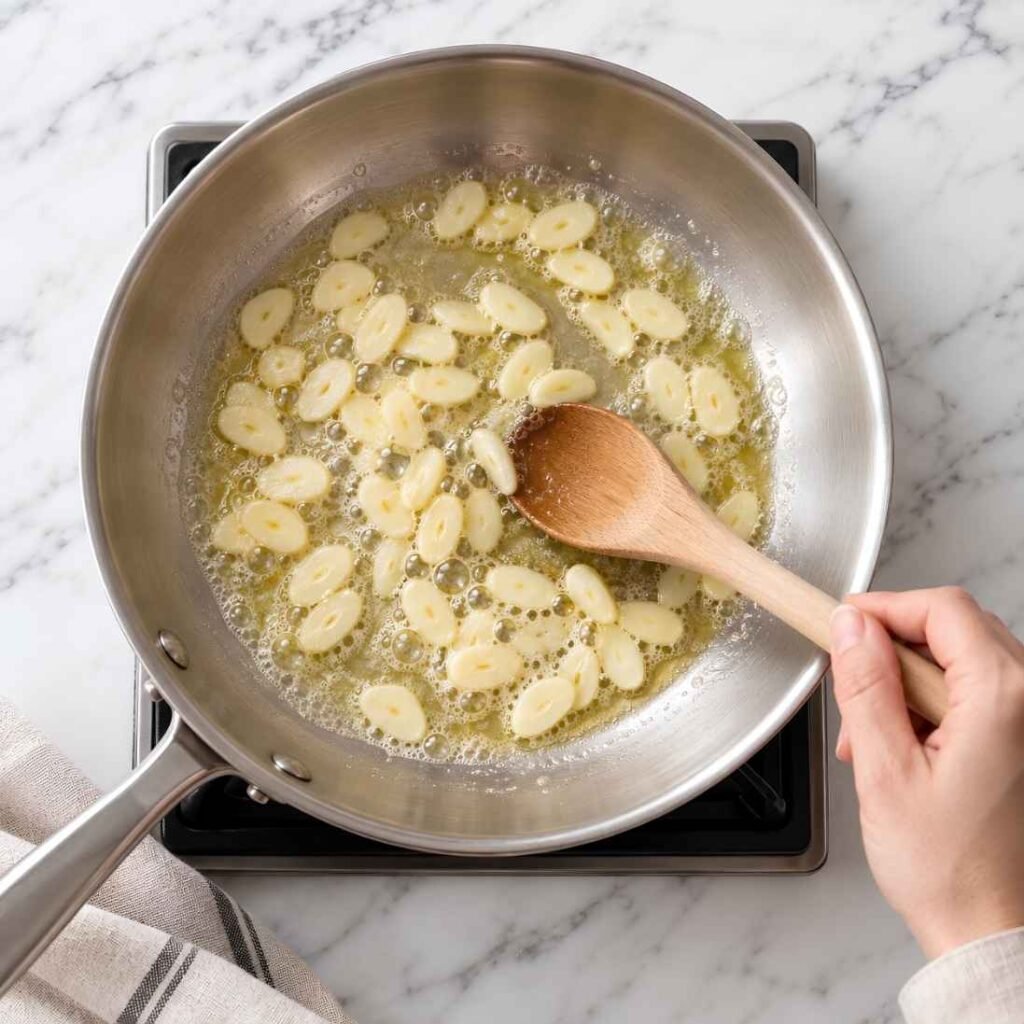
Step 2: Toast the Garlic Gently. Melt the butter in a 12-inch skillet over medium-low heat. Add the garlic and cook for 60 to 90 seconds, stirring, until it smells fragrant but has barely taken any colour.
Stop before golden. Garlic goes from fragrant to bitter in a matter of seconds, and once it does, there is no removing that bitterness from the sauce.
Step 3: Simmer the Cream. Pour in the cream and add the black pepper. Let it simmer gently for 3 to 4 minutes, stirring now and then, until it has reduced slightly and coats the back of a spoon. Do not let it boil hard, which can cause it to split later when the cheese goes in.
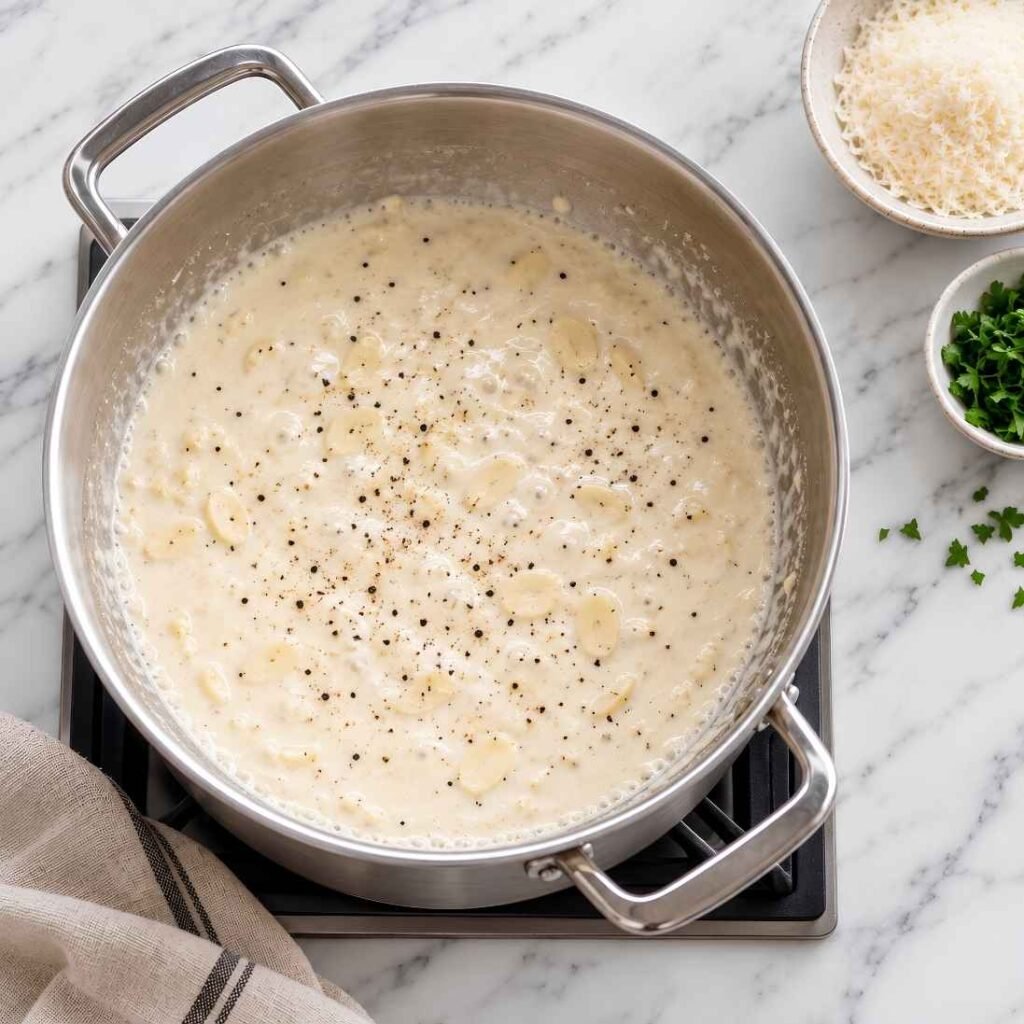
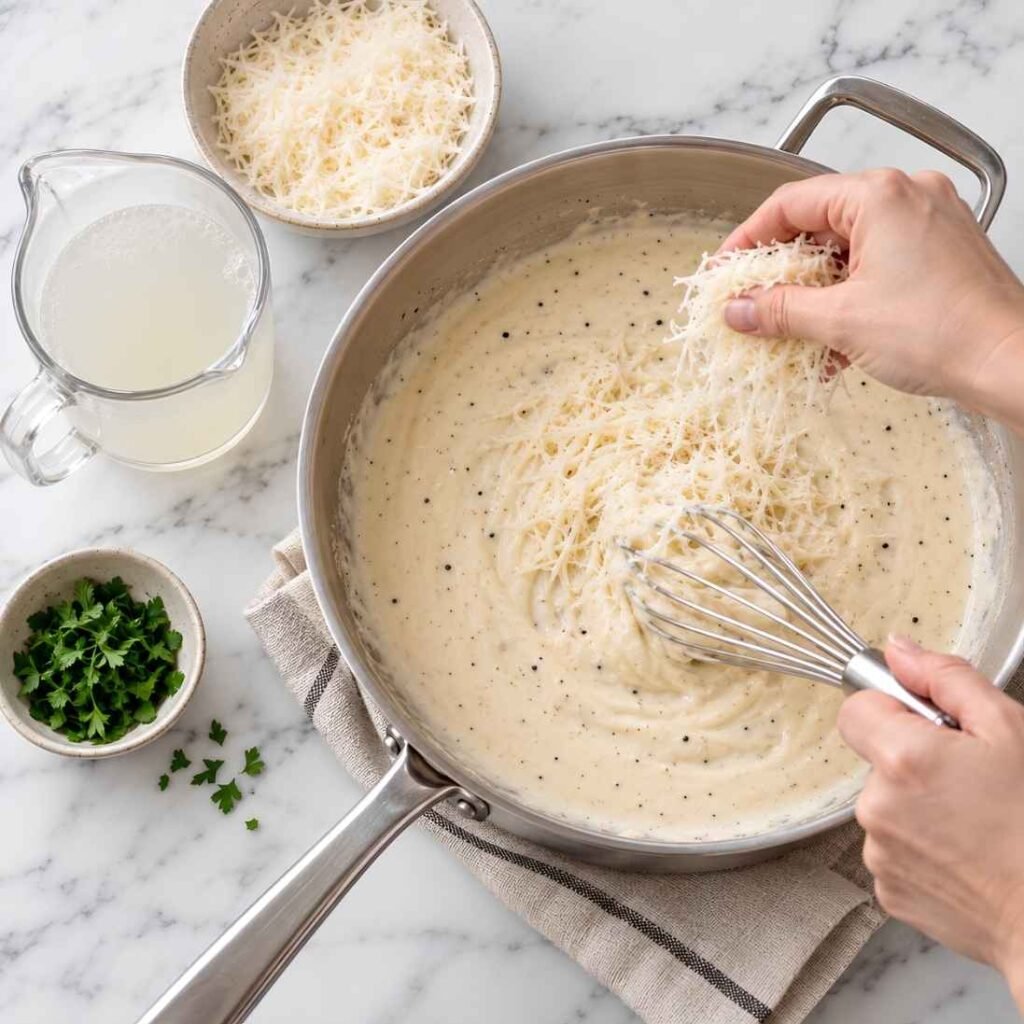
Step 4: Reserve the Water, Then Take the Pan Off the Heat. Scoop out a cup of the pasta water before draining. Then take the skillet completely off the burner and let it sit for 30 seconds. Add the Parmesan a handful at a time, whisking after each addition until it disappears before adding more.
This is the step the whole recipe turns on. Parmesan added over heat, even low heat, tightens and separates into grainy solids and oil, and residual heat is more than enough to melt finely grated cheese.
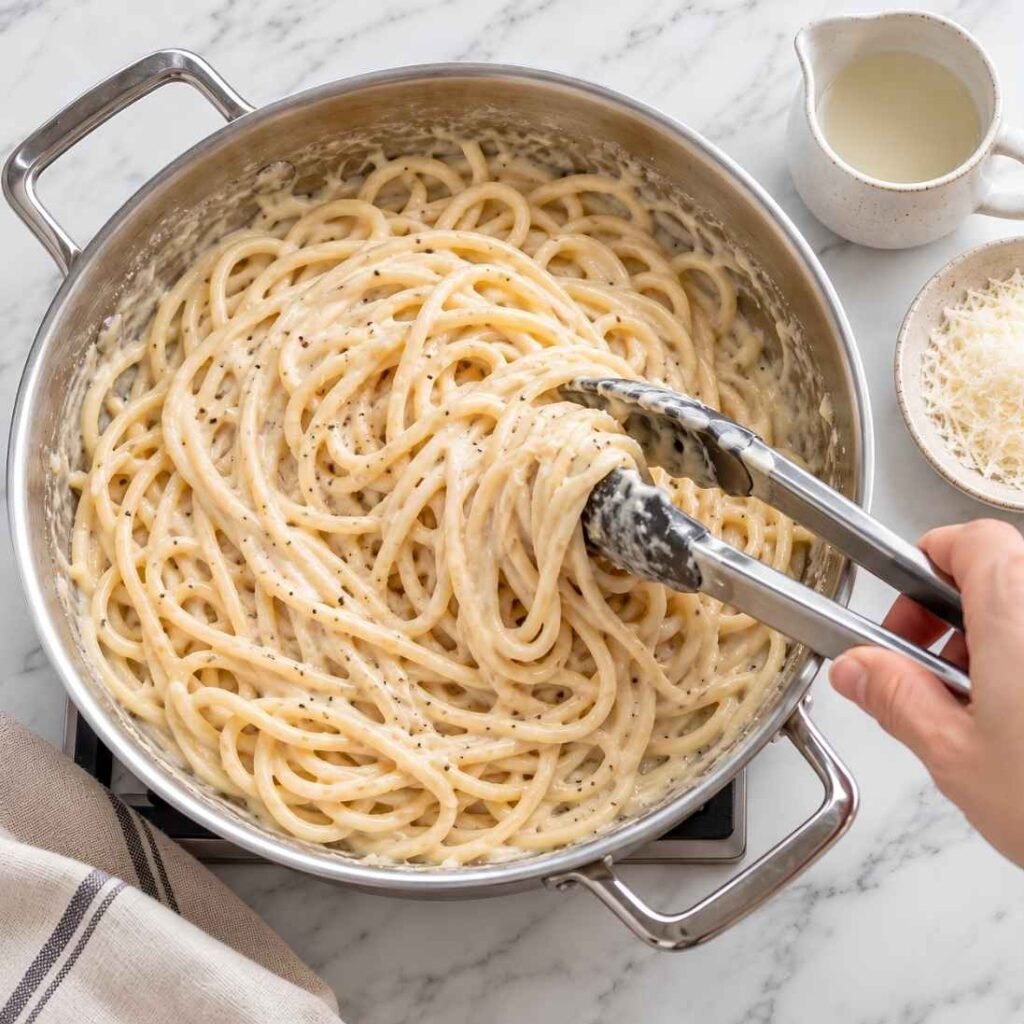
Step 5: Combine with the Pasta. Add the drained pasta to the skillet along with a splash of the pasta water and toss with tongs until every strand is coated. Keep adding pasta water a little at a time until the sauce loosens and clings rather than sitting in the bottom of the pan. It will look slightly thinner than you want, which is right, because it tightens within a minute.
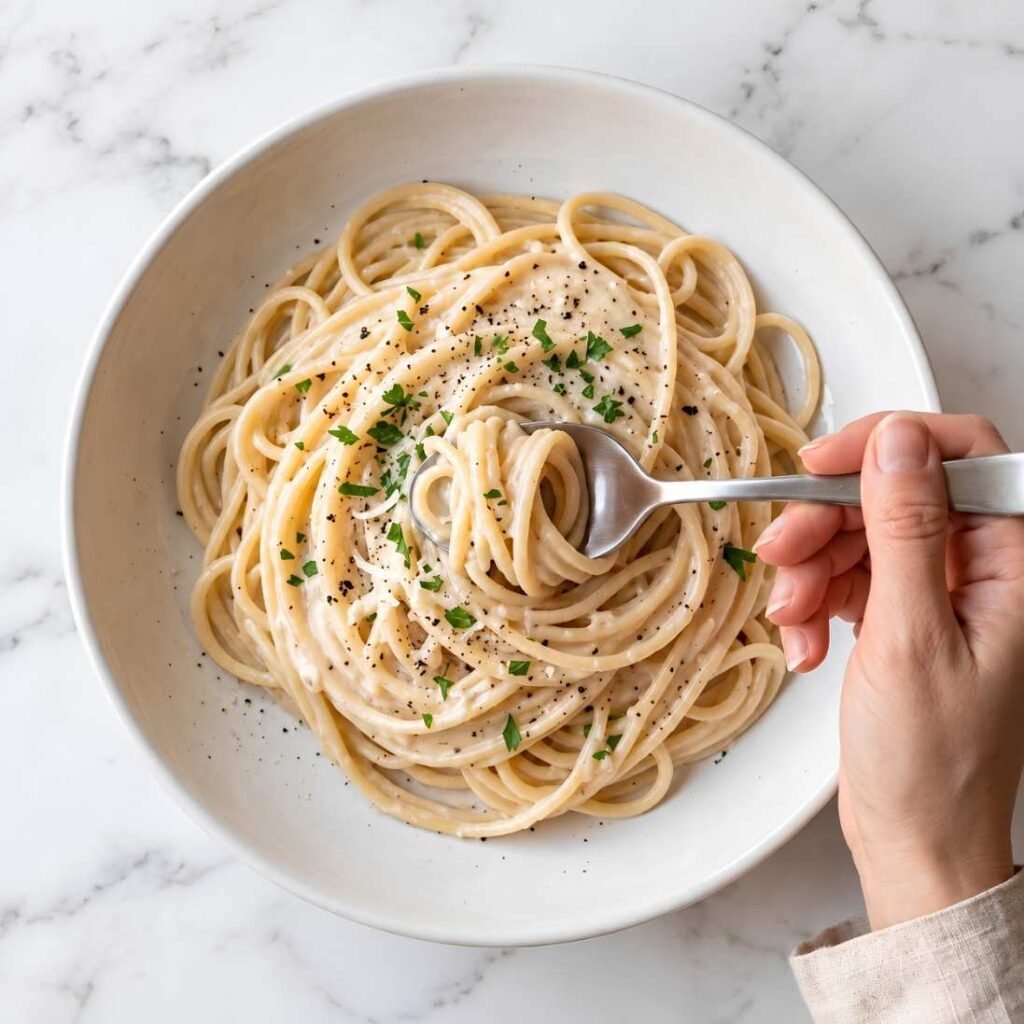
Step 6: Taste, Then Serve Immediately. Taste before you add any salt. Between the salted pasta water and a cup and a quarter of Parmesan, most batches need none at all.
Stir in the lemon zest if using, scatter the parsley over, and serve straight away into the warmed bowls. Cream and Parmesan thicken quickly off the heat, and a sauce that was glossy in the pan turns claggy within a few minutes of sitting.
Pro Tips for the Ultimate Pasta
Small adjustments can take your garlic parmesan pasta from good to absolute perfection.
Take the pan off the heat before the cheese goes in. Not low heat, no heat. This is the single difference between a silky sauce and a grainy one, and it is the step most recipes get wrong.
Grate the Parmesan on a microplane. Fine shreds melt in residual heat alone. Coarse ones need real heat to melt, which is the same heat that makes them seize, so you are stuck choosing between grainy and unmelted.
Salt the pasta water properly, then taste before salting anything else. A tablespoon per four quarts. That water is the only seasoning the pasta itself gets, and between it and the Parmesan the finished dish usually needs nothing more.
Use tongs to move the pasta, not a colander. Lifting it straight from the pot carries a little cooking water with it, which is exactly what the sauce wants. It also saves you a colander.
Common Mistakes to Avoid
Adding the Parmesan over heat. Even low heat. Parmesan proteins tighten well below a simmer, and once they do, the sauce separates into grainy solids and a slick of oil. Off the burner entirely, thirty seconds to cool, then a handful at a time.
Using pre-grated Parmesan. It is coated in cellulose or starch to keep it from clumping in the bag, and that same coating stops it melting into the sauce. It stays slightly gritty no matter what you do.
Letting the garlic go golden. In a dish named after garlic, this feels counterintuitive, but minced garlic turns bitter within seconds of colouring, and there is no way to take bitterness back out of a cream sauce. Fragrant and pale is what you want.
Pouring the pasta water down the sink. Everyone does it once. The starch in that water is what holds the sauce together and makes it cling, and plain water from the tap does not do the same job.
Boiling the cream hard. A gentle simmer reduces it. A rolling boil destabilises the fat and makes the sauce far more likely to split when the cheese goes in.
Variations to Try
Cacio e pepe style. Double the black pepper and toast it in the butter with the garlic for thirty seconds before the cream goes in. Toasting pepper in fat releases far more of its aroma than adding it later does.
With chicken. Season and sear two chicken breasts sliced thin, set them aside while you make the sauce, and add them back with the pasta. See my crispy parmesan chicken if you would rather have it breaded and sitting on top.
With shrimp. A pound of large shrimp, cooked in the butter for 90 seconds a side before the garlic goes in. Take them out, make the sauce in the same pan, and return them at the end so they do not overcook.
Mushroom and spinach. Brown 8 oz of sliced mushrooms in the butter first and cook until the pan is dry, then proceed. Add two handfuls of spinach with the pasta and let it wilt in the residual heat.
What to Serve with Garlic Parmesan Pasta
This simple, comforting dish pairs beautifully with a variety of sides.
As a main course: Serve with a side salad and crusty bread for a complete, satisfying meal.
As a side dish: Pair with grilled chicken, shrimp, or roasted vegetables for a heartier dinner.
Loaded style: Add sautéed mushrooms, spinach, or crispy bacon for extra flavor and texture.
How to Store Garlic Parmesan Pasta
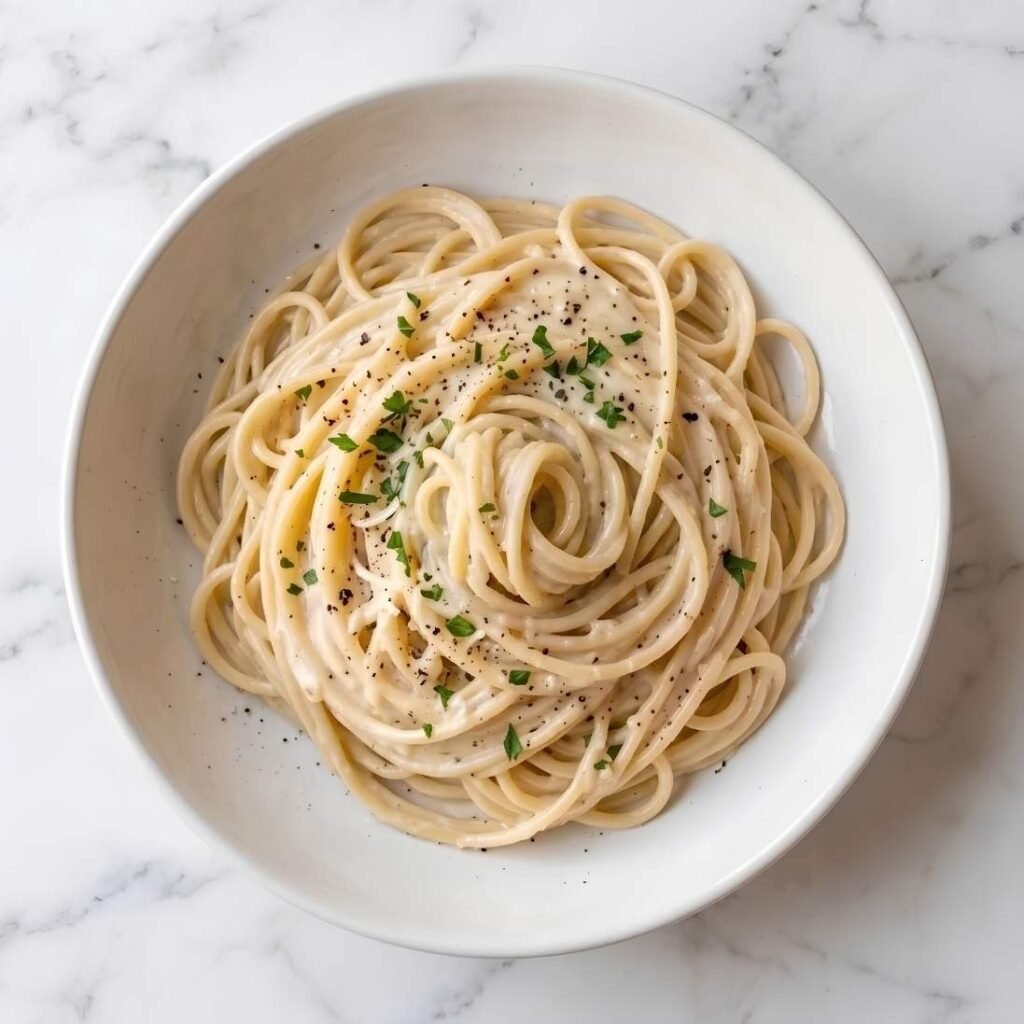
Cream sauces are better fresh than reheated and better reheated than frozen, and it is worth being clear about the difference.
In the fridge. Store in an airtight container for up to 3 days. The sauce sets firm as it chills and the pasta absorbs a good deal of it, so what looked glossy last night will look dry and stiff in the morning. That is normal and fixable.
How to reheat. A skillet over low heat with a splash of milk, cream, or water, tossing gently until it loosens. Do it slowly. High heat breaks the sauce that survived the fridge. The microwave works in 45-second bursts with a stir between each, again with a splash of liquid added first.
About freezing. Honestly, do not. Cream sauces split when frozen: the fat separates from the water and does not come back together on thawing, so what you get is a grainy, oily coating rather than a sauce. Pasta does not survive it well either. This is a twenty-minute recipe, which makes it easier to remake than to rescue.
If you want to get ahead. Cook the pasta and make the sauce separately, keeping them apart in the fridge for up to two days. Reheat the sauce gently, warm the pasta in boiling water for thirty seconds, and combine. This gets far closer to fresh than reheating a finished dish does.
Frequently Asked Questions
Can I use a different pasta shape? Yes, this recipe works well with almost any pasta shape, including penne, fettuccine, or linguine.
Can I add protein to this dish? Absolutely. Grilled chicken, shrimp, or even crispy bacon make great additions to turn this into a more filling meal.
Can I make this dish lighter? Yes, you can substitute half-and-half for heavy cream, though the sauce will be slightly thinner and less rich.
Final Thoughts
There are only four ingredients here and only one thing that can really go wrong. Take the skillet off the burner before the Parmesan goes in, grate it finely, and add it a handful at a time. That is the whole difference between silky and grainy, and it is the step most recipes tell you to do on low heat instead of no heat.
The second thing is timing. This sauce is at its best for about two minutes after it leaves the pan, so have the bowls warm and everyone sitting down before the pasta goes into the skillet.
If you make it, leave a note in the comments and tell me how it went. And if yours came out grainy, it was almost certainly the heat rather than the cheese.