Greek Chicken Lemon Recipe – A Flavorful Mediterranean Delight
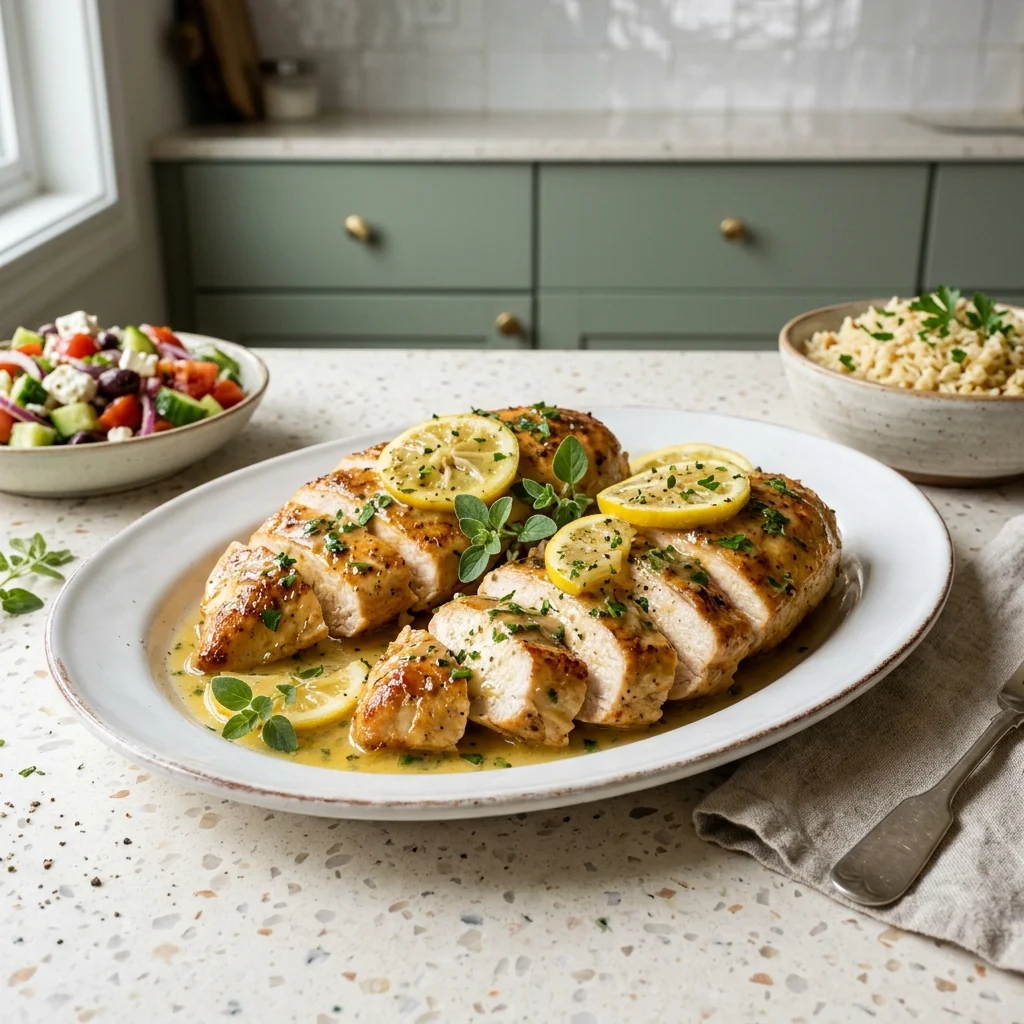
Greek chicken lemon is the kind of dinner that tastes like a holiday and takes about 40 minutes. Golden seared chicken breasts finish in a bright pan sauce made from fresh lemon, garlic, and oregano, and the whole thing comes together in a single skillet.
Lemon does the heavy lifting here. The juice gives the sauce its tang, and the zest adds a fragrant, floral note that bottled juice cannot match.
You need no marinade and no special ingredients. Salt, pepper, and dried oregano season the chicken, and the sauce builds in the same pan, so the browned bits become flavor instead of cleanup.
Spoon it over rice, pile it next to a crisp salad, or tuck it beside roasted potatoes.
THE SAUCE FORMULA
Why This Dinner Works
Lemon, garlic, and oregano are a classic Mediterranean trio, and they suit chicken because they cut through richness without hiding the meat.
Searing first builds a golden crust. Then the sauce picks up every browned bit from the pan, so a few pantry items taste like a lot more.
It is also forgiving. You can use breasts or thighs, serve it with rice, salad, or vegetables, and have leftovers that reheat well.
Breasts or Thighs
Both work, and the choice changes the timing more than the flavor.
Boneless, skinless breasts cook fast and suit a lighter plate. Pound them to an even thickness of about ¾ inch so they cook at the same rate and stay juicy. Boneless thighs take a little longer, but they forgive extra minutes and stay tender, so they are the safer pick if you tend to overcook chicken.
Whichever you choose, pick pieces of similar size and check the chart after the steps.
What You Need:
For the chicken
- 4 boneless, skinless chicken breasts (about 1½ lb), or 6 boneless thighs
- 2 tablespoons olive oil
- 1 teaspoon salt
- ½ teaspoon black pepper
- ½ teaspoon dried oregano
- ¼ teaspoon paprika, optional
For the lemon sauce - 2 lemons, zested and juiced (about ⅓ cup juice)
- 3 cloves garlic, minced
- ¼ cup chicken broth
- ½ teaspoon dried oregano
- Fresh parsley, chopped, for garnish
- Fresh oregano works too. Use about 1½ teaspoons of chopped leaves for each ½ teaspoon of dried.

How to Make Greek Chicken Lemon
Zest and juice the lemons first, since the rest moves fast. After that, it is just searing, saucing, and a short simmer.
Step 1: Dry, Pound, and Season the Chicken
Pat the chicken completely dry with paper towels. Dry meat browns, and wet meat steams. Place each breast between two sheets of plastic wrap and pound gently to an even ¾ inch.
Season both sides with the salt, pepper, ½ teaspoon of oregano, and the paprika if you like a little warmth.

Step 2: Zest and Juice the Lemons
Zest both lemons first, using only the yellow part. The white pith underneath tastes bitter. Then cut the lemons in half and squeeze out about ⅓ cup of juice, catching any seeds.
Set the zest and juice aside in a small bowl, along with the minced garlic.

Step 3: Sear the Chicken
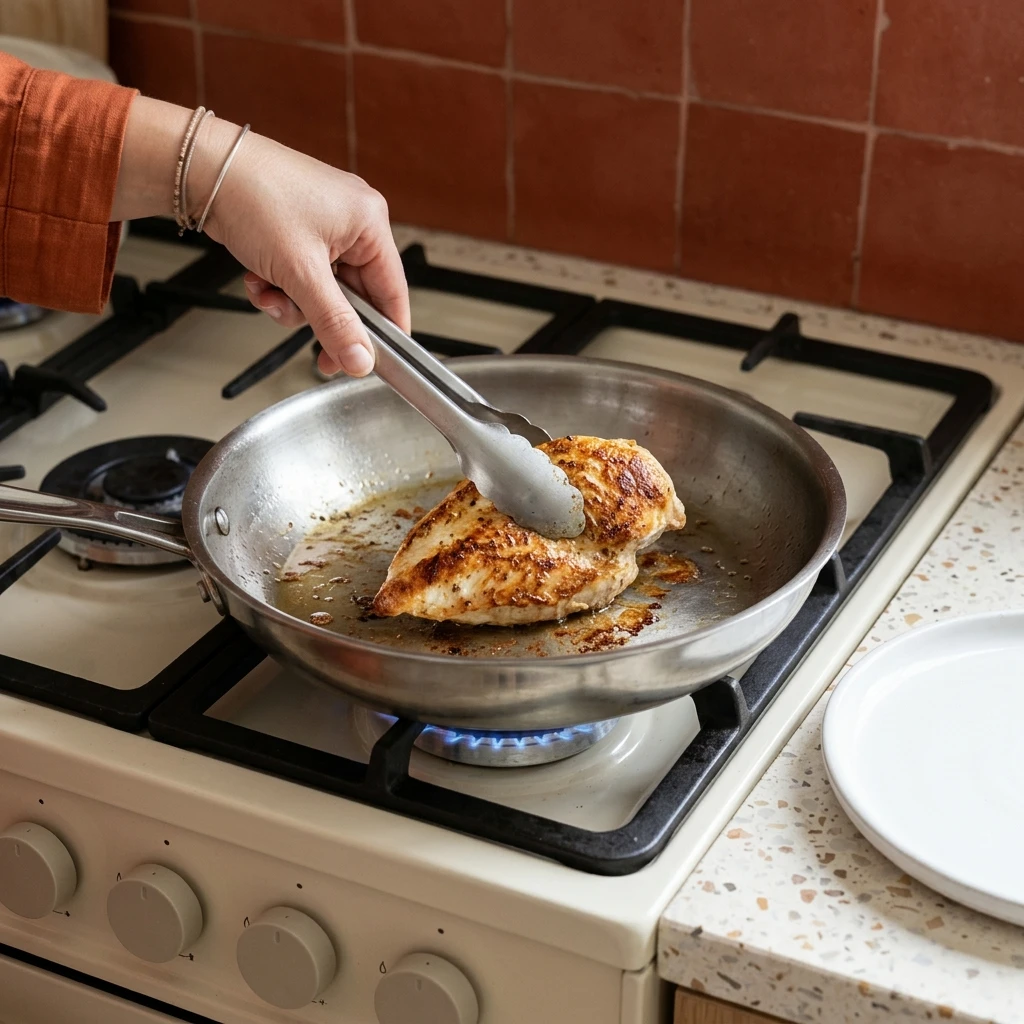
Heat the olive oil in a large skillet over medium-high heat until it shimmers. Lay the chicken in the pan and leave it alone. Breasts need 4 to 5 minutes per side, and boneless thighs need 6 to 7, until deep golden.
The chicken does not need to be cooked through yet. Move it to a plate. Keep the browned bits in the pan.
Step 4: Build the Lemon Sauce
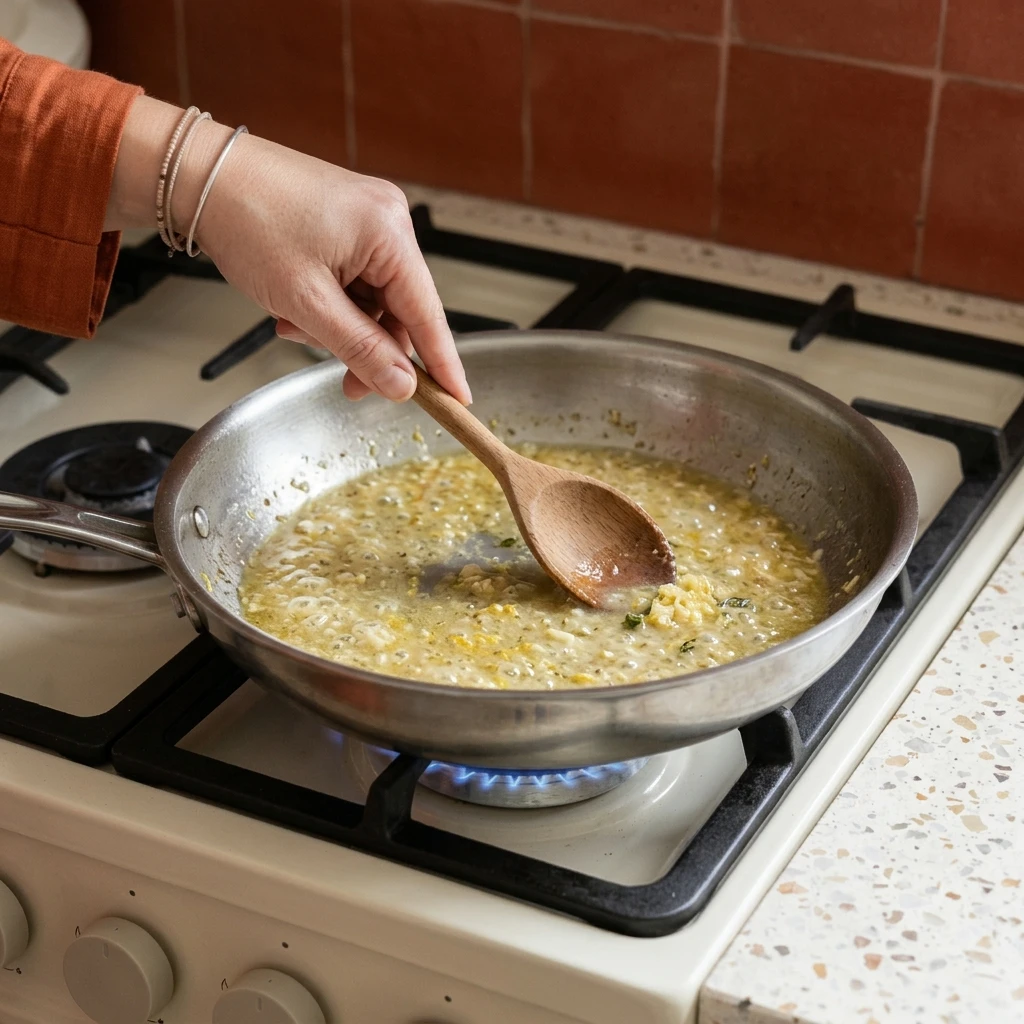
Lower the heat to medium. Add the garlic to the same skillet and stir for about 1 minute, until fragrant, without letting it brown. Pour in the broth and scrape up the browned bits with a wooden spoon.
Add the lemon juice, the zest, and the remaining ½ teaspoon of oregano. Simmer for about 5 minutes, until the sauce is slightly reduced and glossy.
Step 5: Return the Chicken and Simmer
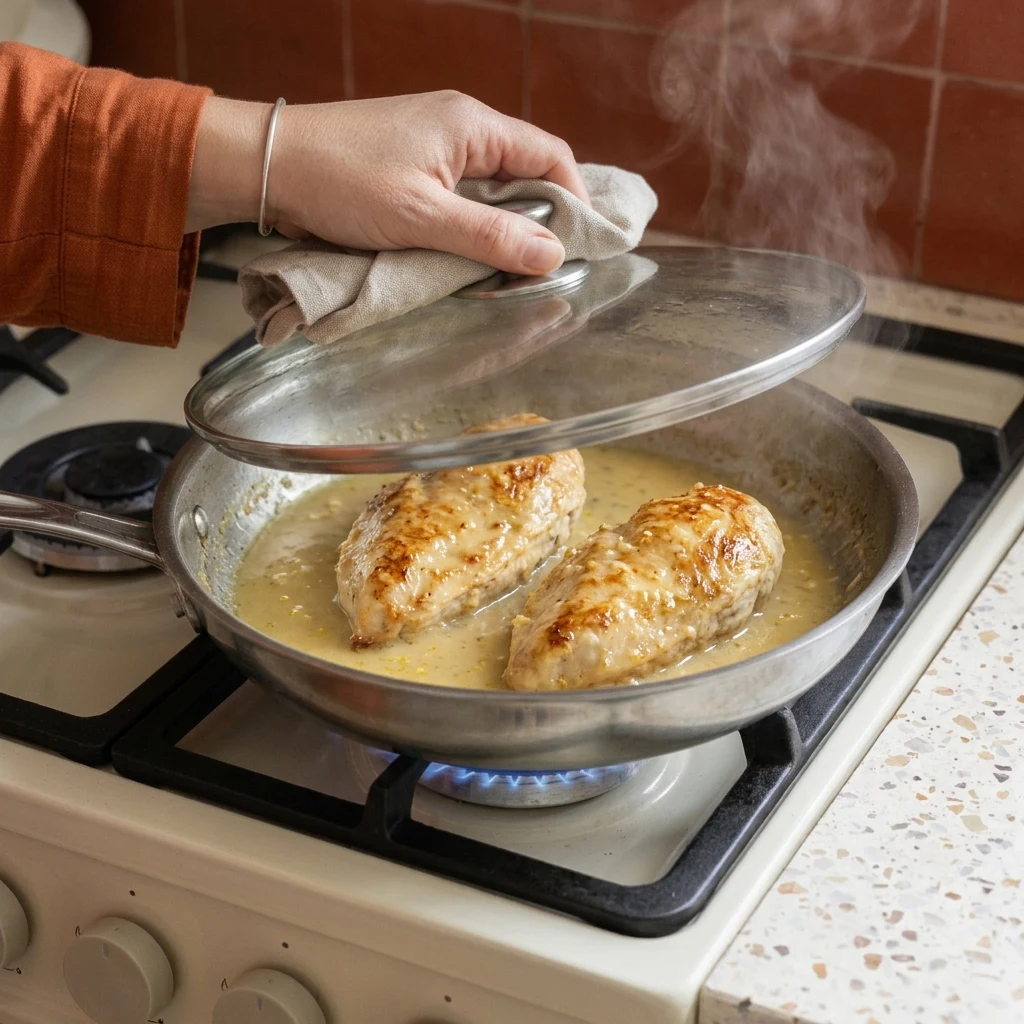
Return the chicken and any juices to the skillet, and turn each piece in the sauce. Cover, lower the heat, and cook gently for 4 to 6 minutes for breasts, or 8 to 10 minutes for thighs.
Check with a thermometer in the thickest part. It should read at least 165°F.
Step 6: Garnish and Serve
Take the skillet off the heat and let the chicken rest for 3 minutes. Spoon the sauce over each piece and scatter chopped parsley on top.
Serve it hot with rice pilaf, a Greek salad, or roasted vegetables.

BREASTS VS THIGHS
Little Things That Matter
- Zest first, juice second. It is much easier to zest a whole lemon.
- Use fresh lemons. Bottled juice tastes flat next to the real thing.
- Do not move the chicken while it sears, or it will tear instead of browning.
- Taste the sauce before serving. If it tastes too sharp, a pinch of salt or a small splash of broth softens it.
- Want it spicy? Add a pinch of crushed red pepper flakes or a dash of cayenne to the sauce.
Make It Ahead With a Marinade
A marinade gives the chicken a stronger lemon flavor, but timing matters. Lemon juice is acidic, and chicken that sits in it too long turns soft and mushy.
Marinate in olive oil, lemon juice, garlic, and oregano for 2 to 4 hours, no longer. If you want to prep the night before, marinate in the oil, garlic, and oregano only, then add the lemon juice in the last 2 hours.
Pat the chicken dry before searing, since wet meat will not brown.
Grill It or Roast It
Grilled. Marinate for up to 4 hours, then grill over medium-high heat for 6 to 7 minutes per side, until it reaches 165°F. Make the lemon sauce in a small pan while the chicken grills, then spoon it over the top.
Roasted. Season the chicken with the same lemon and herb mix, then roast boneless breasts at 400°F for 20 to 25 minutes, or bone-in thighs for 40 to 45 minutes, until they reach 165°F.
What to Serve With It
Rice pilaf. The soft, buttery grains soak up the tangy sauce. A little lemon zest stirred in at the end adds extra brightness.
Greek salad. Cucumber, tomato, red onion, and feta, dressed with olive oil and a sprinkle of oregano. The crunch balances the sauce.
Roasted vegetables. Potatoes, carrots, or bell peppers add color and mop up any extra sauce.
Storing and Reheating
Let the chicken cool, then store it with its sauce in an airtight container in the fridge for up to 3 days.
Reheat gently in a skillet over low heat, adding a splash of chicken broth to loosen the sauce. In the microwave, cover the container with a damp paper towel and heat at 50 percent power in 1-minute bursts, so the chicken stays moist.
You can also freeze the cooked chicken in its sauce for up to 2 months. Thaw it overnight in the fridge before reheating.
Quick Answers
Can I use bottled lemon juice?
You can, but fresh gives a much brighter sauce. If you use bottled, measure about ⅓ cup and still zest one fresh lemon if you can.
Why is my chicken dry?
Overcooking is the usual cause. Pound the breasts to an even thickness, and take them off as soon as they reach 165°F.
Why does my sauce taste bitter?
The zest probably included white pith. Zest only the yellow part, and do not simmer the zest for too long.
How do I thicken the sauce?
Simmer it uncovered for a few more minutes. For a faster fix, whisk ½ teaspoon of cornstarch into 1 tablespoon of cold broth and stir it in.
Can I add cheese or cream?
You can stir in a spoonful of cream for a softer sauce, or top the chicken with crumbled feta. Both are optional.
Final Thoughts
This Greek chicken lemon recipe proves that a few simple ingredients can make a bright, satisfying dinner. A good sear, a lemony pan sauce, and a short simmer are all it takes.
Make it on a busy weeknight, double it for meal prep, or serve it to guests with a big salad. Save this recipe so it is ready the next time you want a fresh, sunny dinner with little effort.