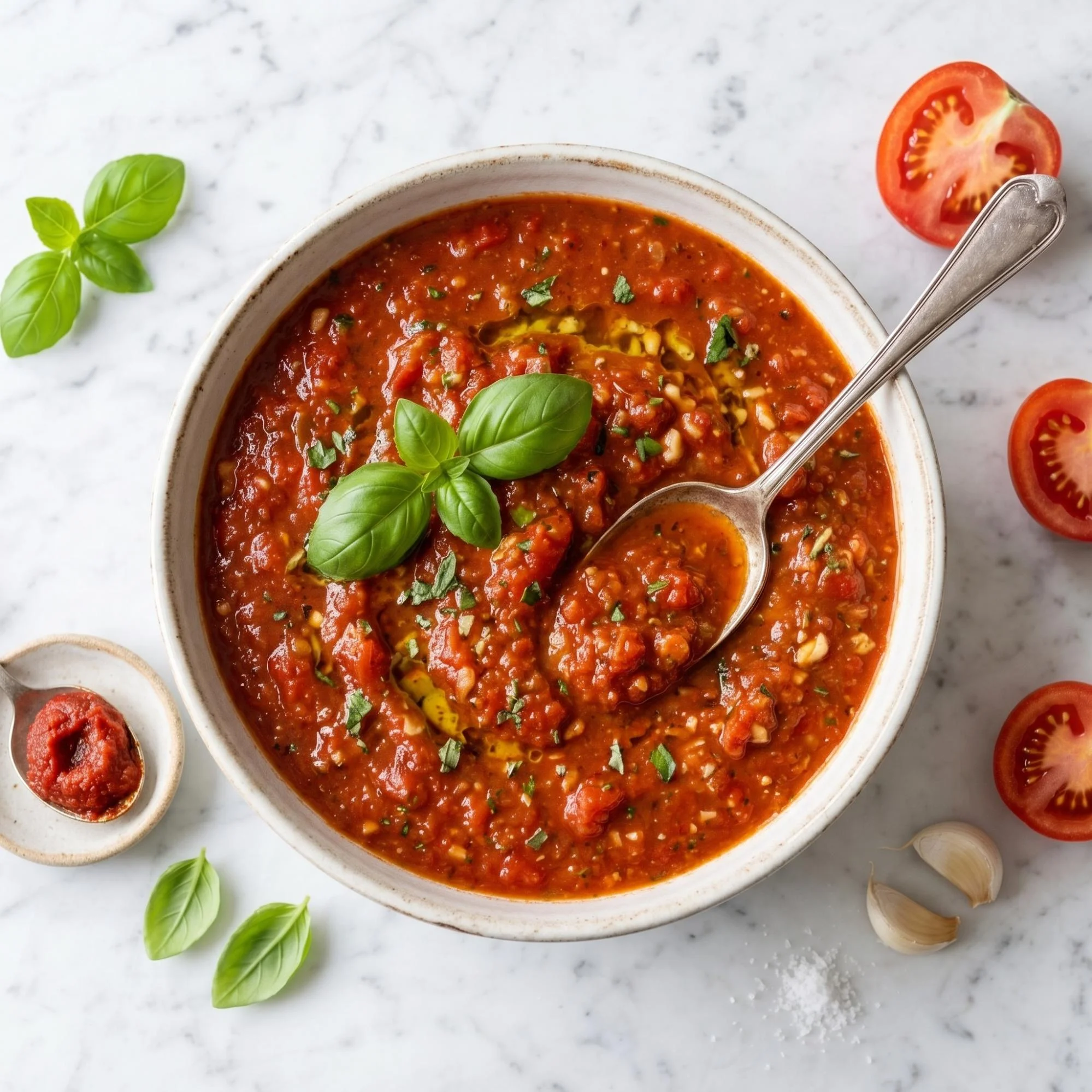
Homemade Marinara Sauce Recipe: Rich, Fresh, and Better Than Any Jarred Version
| Prep Time | 10 minutes |
| Cook Time | 30 minutes |
| Total Time | 40 minutes |
| Yield | About 4 cups (1 quart) |
| Serves | Enough for 1 lb of pasta, 4 to 6 people |
| Course | Sauce |
| Cuisine | Italian |
Marinara is four ingredients and thirty minutes. Olive oil, garlic, canned tomatoes, basil. That is the whole thing, which is exactly why it is worth making yourself: with a list this short, every choice you make shows up in the finished sauce.
Good jarred sauce exists and there is nothing wrong with keeping a few on hand. What you cannot buy in a jar is the version made to your own taste. You decide how much garlic goes in, whether it gets heat, how thick it reduces, and whether it stays chunky or goes smooth. A jar has already decided all of that for you.
There is also the cost. Two cans of decent tomatoes make about a quart of sauce, which works out to roughly half what a comparable jar runs. And a quart is two dinners, or one dinner and something in the freezer for the week you have no time to cook.
I ruined the garlic for years without realising it. I would get the pan properly hot the way you would for anything else, drop the garlic in, and by the time it smelled good it had already gone past golden.
The sauce always came out with a faint bitterness underneath that I blamed on the tomatoes. It was the garlic. Medium-low heat, sliced not minced, and out of the pan before it takes any colour at all. That one change did more for this sauce than switching to expensive tomatoes ever did.
Why You Will Love This Recipe
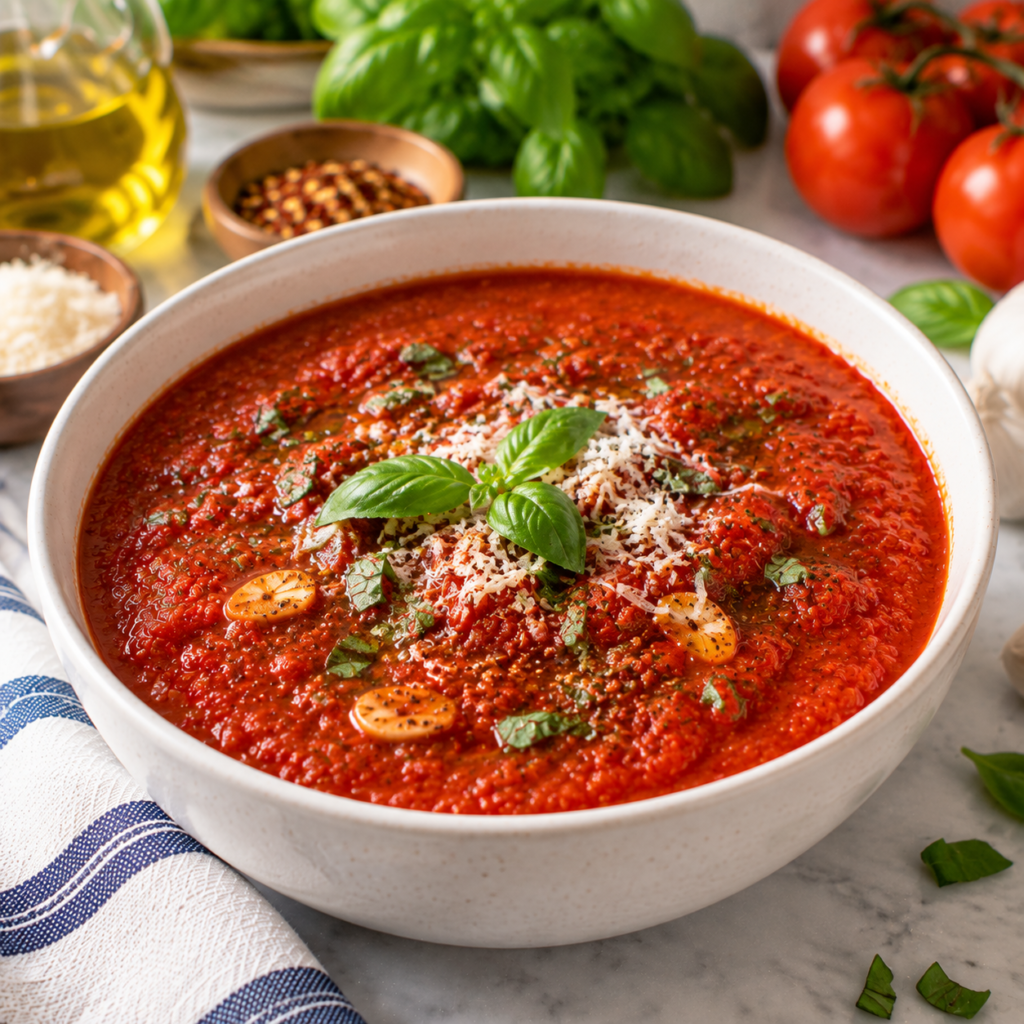
If you’ve been stuck in a rut of relying on the same jarred sauce every week, you are going to fall in love with this method. This marinara sauce is:
Texturally perfect: The sauce simmers down to a rich, slightly chunky consistency that clings beautifully to pasta without being watery or overly smooth.
Highly customizable: You can easily load it up with red pepper flakes, a splash of red wine, or extra fresh herbs depending on your taste.
Made with basic staples: You only need canned tomatoes, garlic, olive oil, and a few basic seasonings.
Visually gorgeous: The deep red color, flecked with fresh basil, looks like it came straight out of an Italian grandmother’s kitchen.
Equipment You Will Need
A wide, heavy saucepan or Dutch oven, at least 3 quarts. Width matters more than depth here. A wide pan gives the sauce more surface area, so water evaporates faster and the sauce reduces in thirty minutes instead of an hour. A heavy base keeps the bottom from scorching during a long simmer.
A splatter screen. Tomato sauce simmering uncovered for half an hour will redecorate your stove, your backsplash, and your forearms. A screen lets steam out while keeping the sauce in. A lid set slightly ajar does the same job if you do not have one.
A wooden spoon. Useful for scraping along the bottom of the pan every few minutes, which is where scorching starts before you can smell it.
An immersion blender. Only if you want a smooth sauce. A few pulses turns this chunky sauce into something closer to a jarred consistency, which is often better for pizza and lasagna.
Freezer-safe containers or bags. This recipe makes about a quart, and most people freeze at least half. Flat-frozen bags stack better than tubs and thaw in a fraction of the time.
Ingredients You Will Need
The beauty of this recipe lies in its sheer simplicity. To get that perfect rich, fresh flavor, you will need:
- 1/4 cup extra virgin olive oil
- 6 cloves garlic, thinly sliced
- 1 (28 oz) can crushed tomatoes
- 1 (14.5 oz) can whole peeled tomatoes, crushed by hand
- 1 tsp dried oregano
- 1 tsp kosher salt, plus more to taste
- 1/2 tsp black pepper
- 1/2 tsp red pepper flakes (optional)
- 1 tsp sugar (optional, only if the tomatoes taste sharp)
- 1/4 cup fresh basil leaves, torn, plus extra for garnish
- 1 tbsp extra virgin olive oil, to finish
Step-by-Step Instructions for Homemade Marinara Sauce
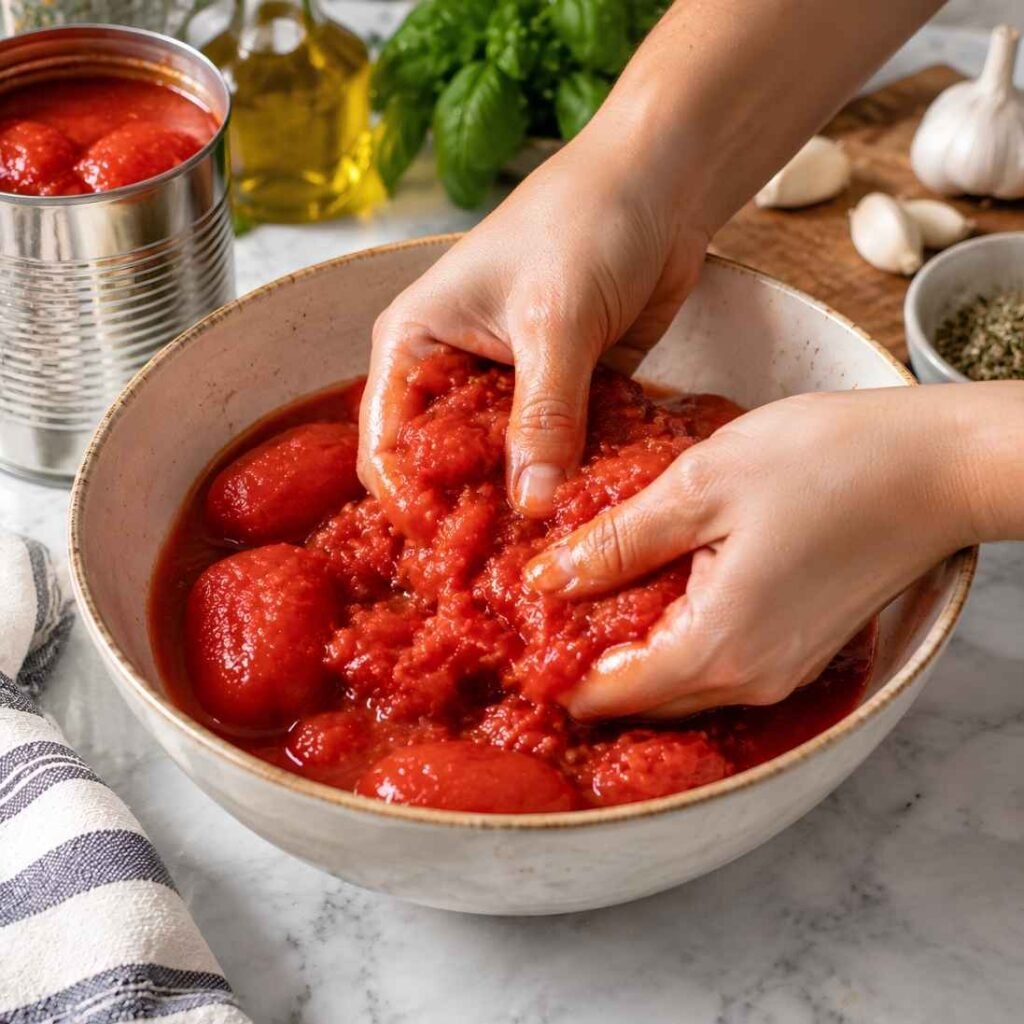
Step 1: Crush the Whole Tomatoes
Open the can of whole peeled tomatoes and crush them by hand in a bowl, squeezing each one until it breaks into rough pieces. Keep the juice. Doing this before the pan goes on means you are not scrambling later, and hand-crushing gives you irregular pieces that a blender cannot replicate.
Step 2: Warm the Garlic Gently
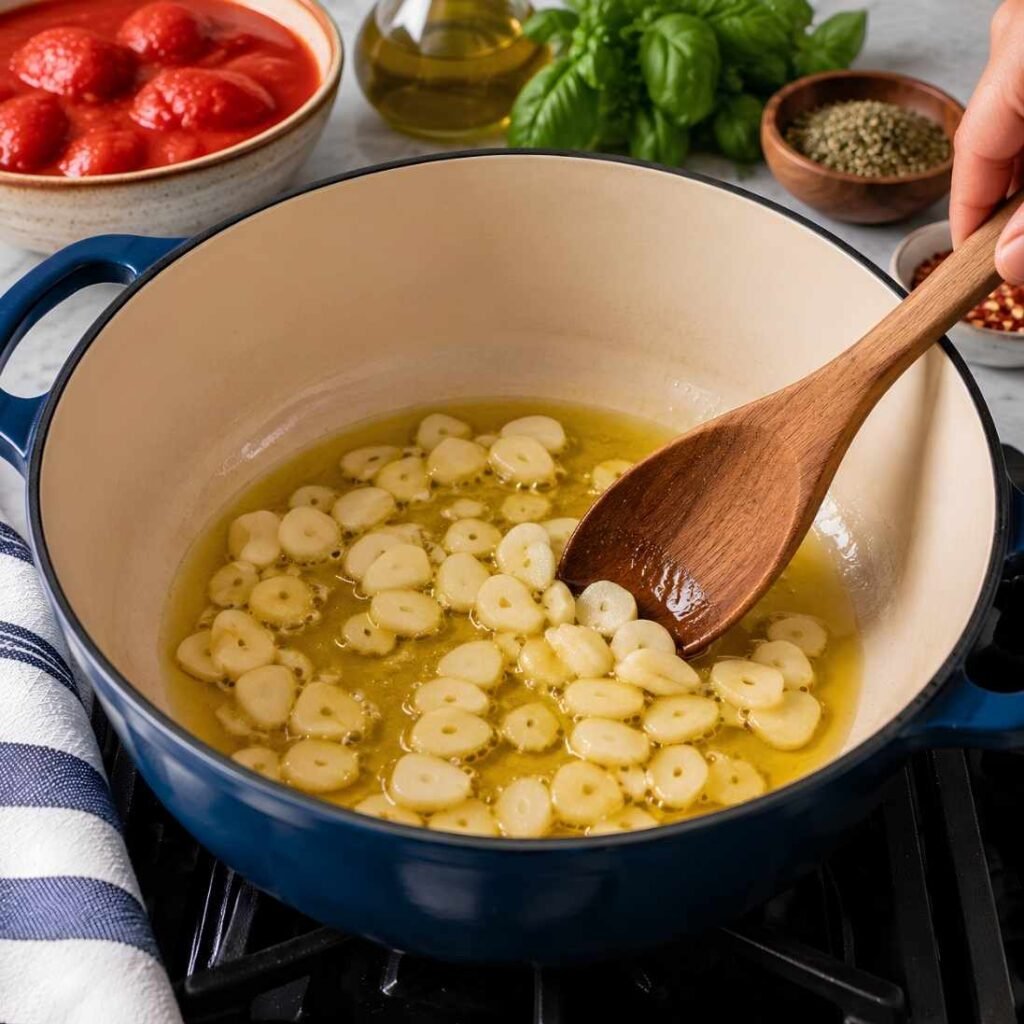
Heat the olive oil in a wide saucepan over medium-low heat. Add the sliced garlic and cook for 2 to 3 minutes, stirring often. You want it fragrant and barely softened, with no colour on it at all.
The moment garlic turns golden it is already heading toward bitter, and that bitterness runs through the whole sauce. If it does brown, start over. It is two minutes and some oil.
Step 3: Add the Tomatoes
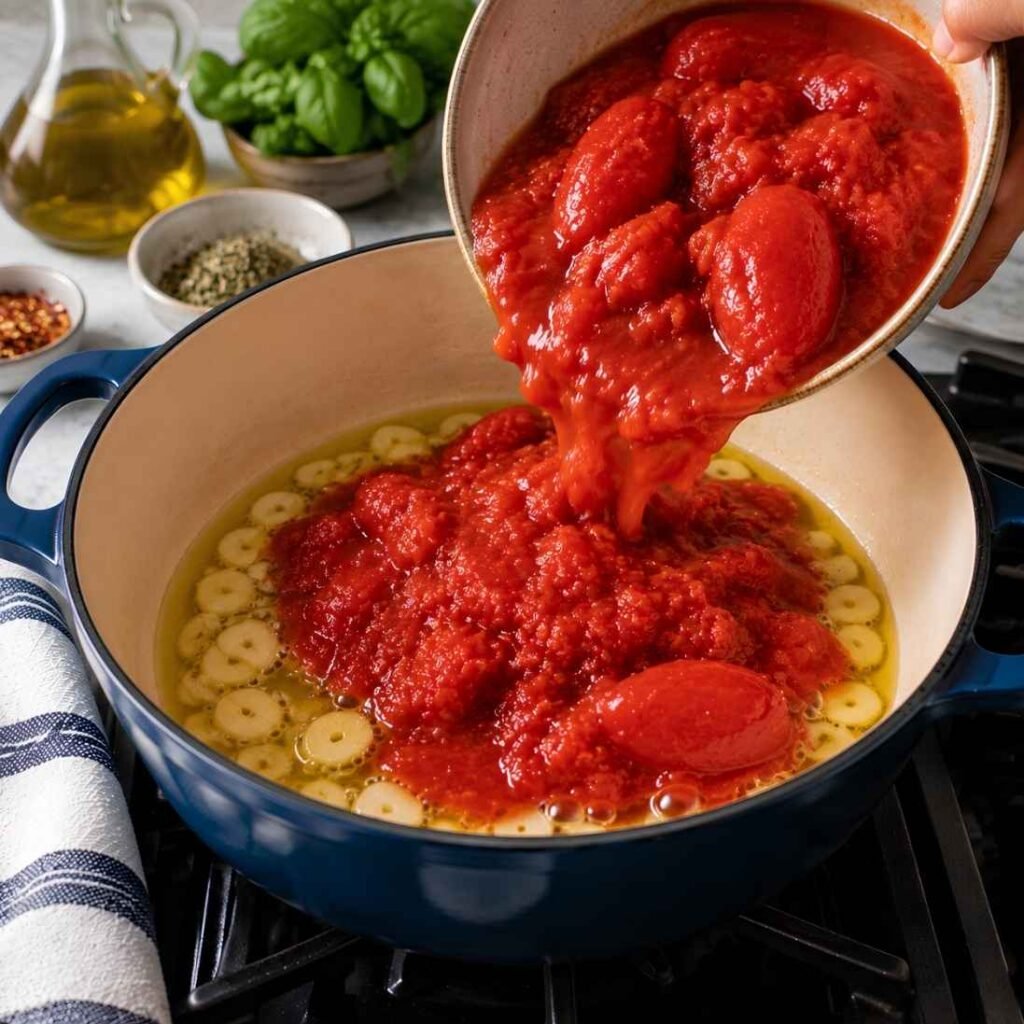
Pour in the crushed tomatoes and the hand-crushed whole tomatoes along with their juice. Stand back as you pour, since cold tomatoes hitting hot oil will spit. Stir to combine.
Step 4: Season
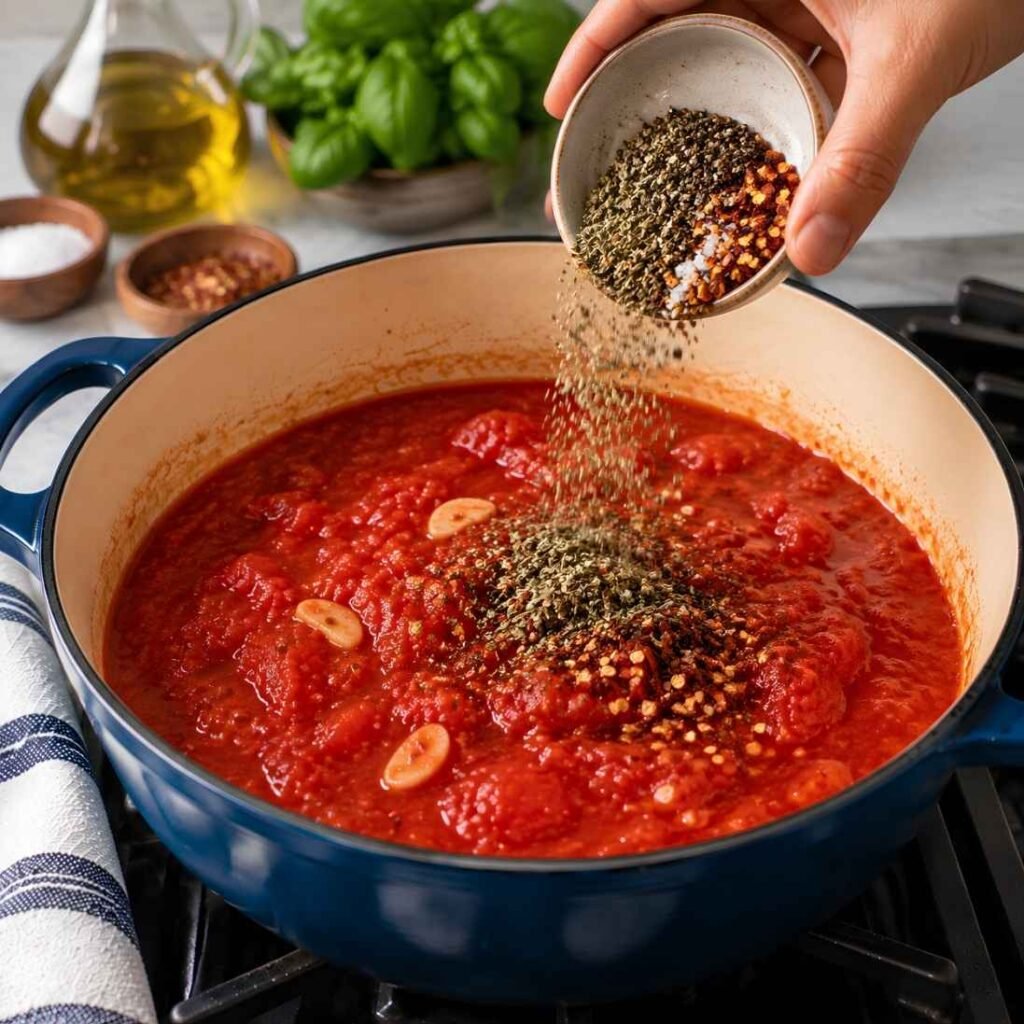
Add the oregano, salt, black pepper, and red pepper flakes if using. Stir well.
Step 5: Simmer
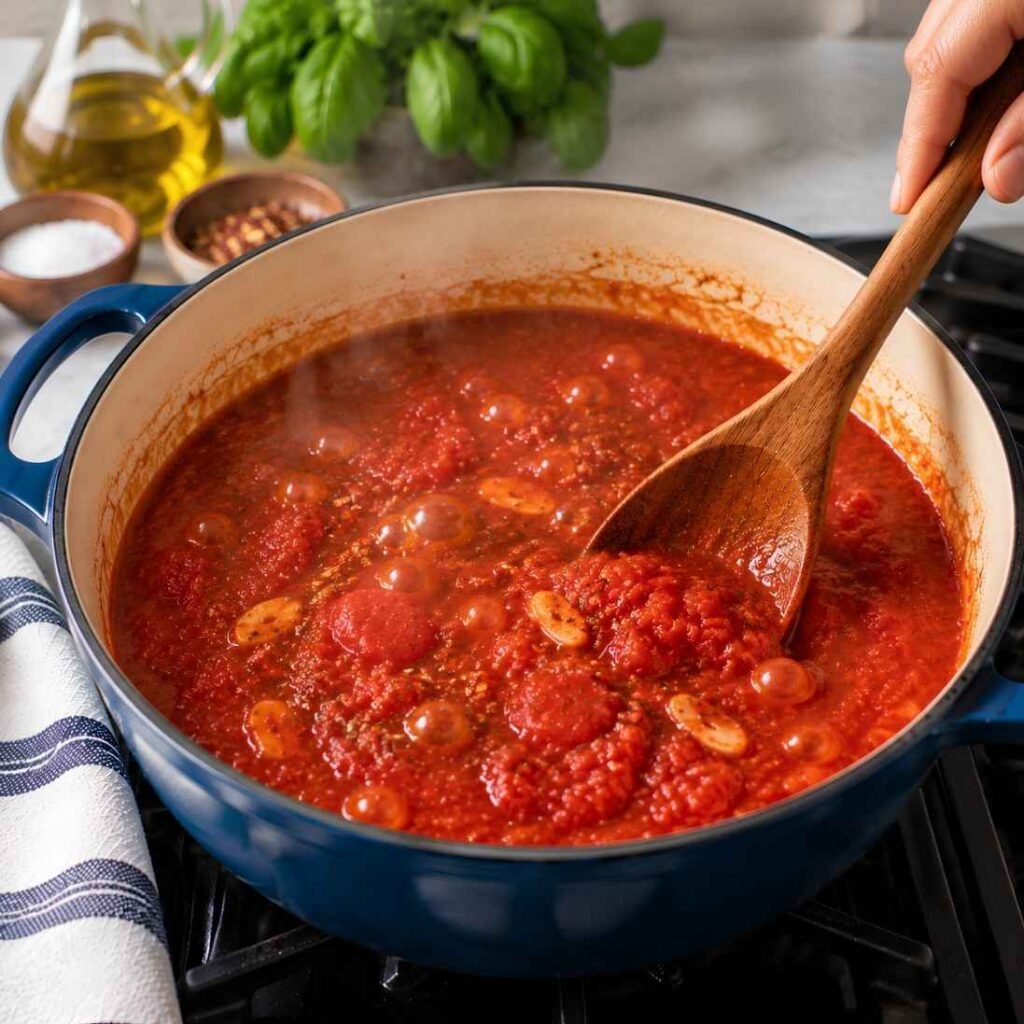
Bring it to a gentle simmer, then lower the heat until the surface bubbles lazily. Cook uncovered for 25 to 30 minutes, stirring every five minutes or so and scraping along the bottom of the pan. Use a splatter screen or set a lid slightly ajar, because uncovered tomato sauce will spit for the entire half hour.
Step 6: Check the Consistency
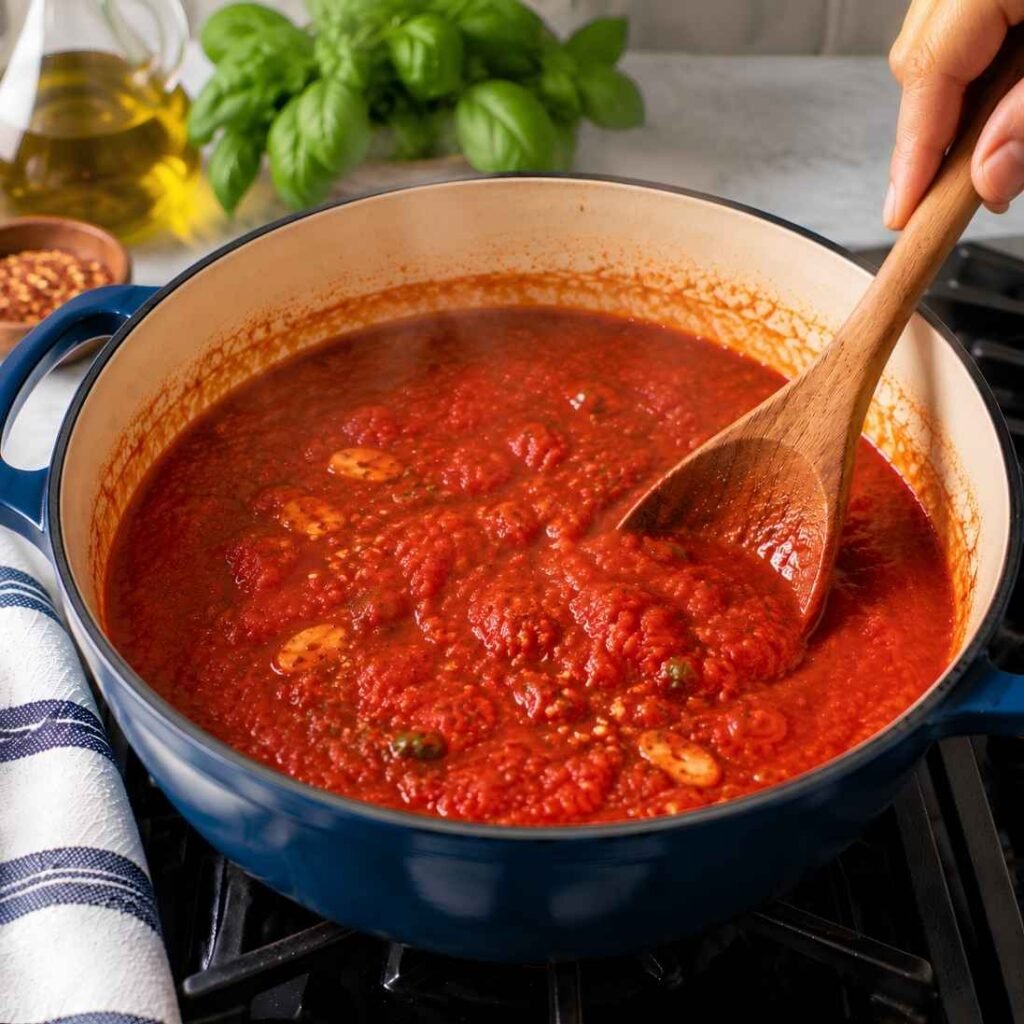
The sauce is ready when a spoon dragged across the bottom of the pan leaves a track that holds for a second before filling back in. It should look thick enough to sit on pasta rather than run off it. If it is still loose, keep simmering and check again in five minutes.
Step 7: Taste, Then Decide on Sugar
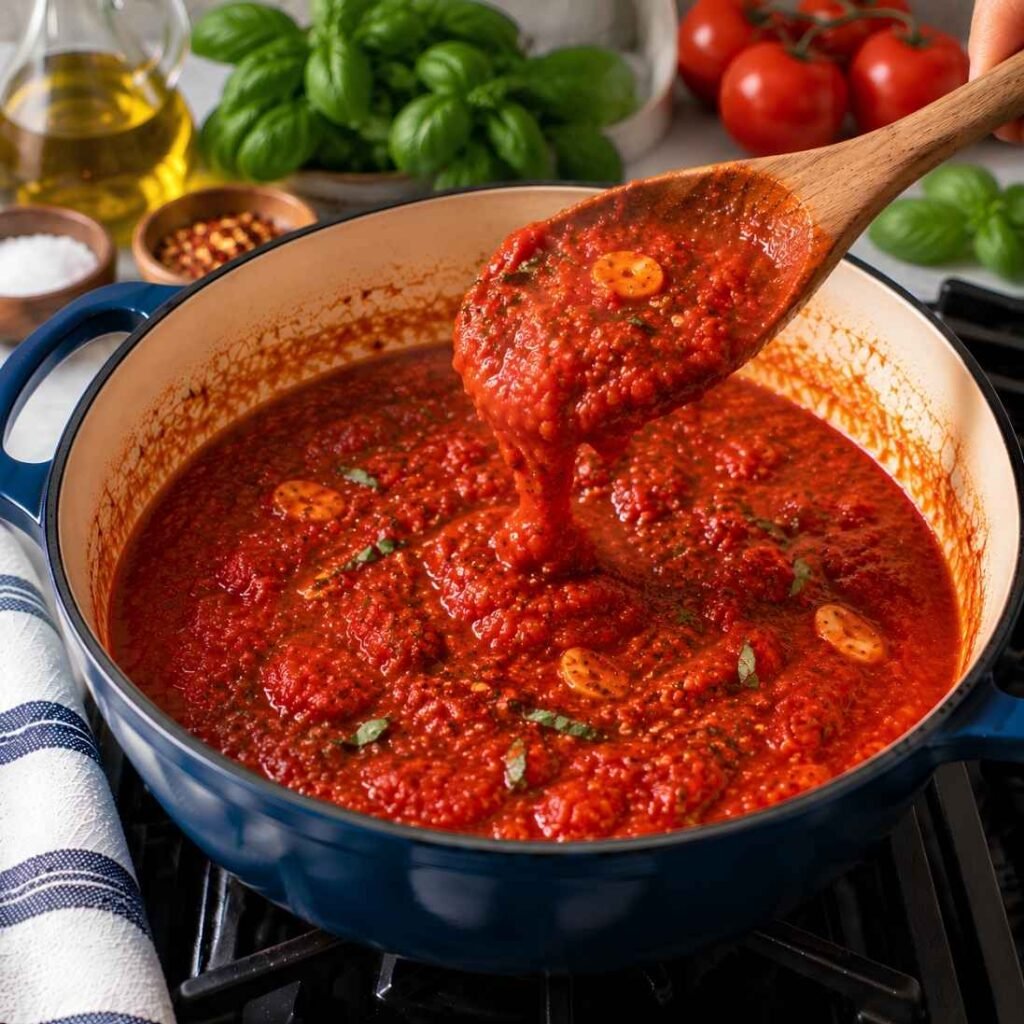
Taste it now, not before. If it tastes sharp or tinny, stir in the sugar and give it two minutes. If it already tastes sweet and round, leave it out. Adjust the salt at this point too.
Step 8: Finish with Basil and Oil
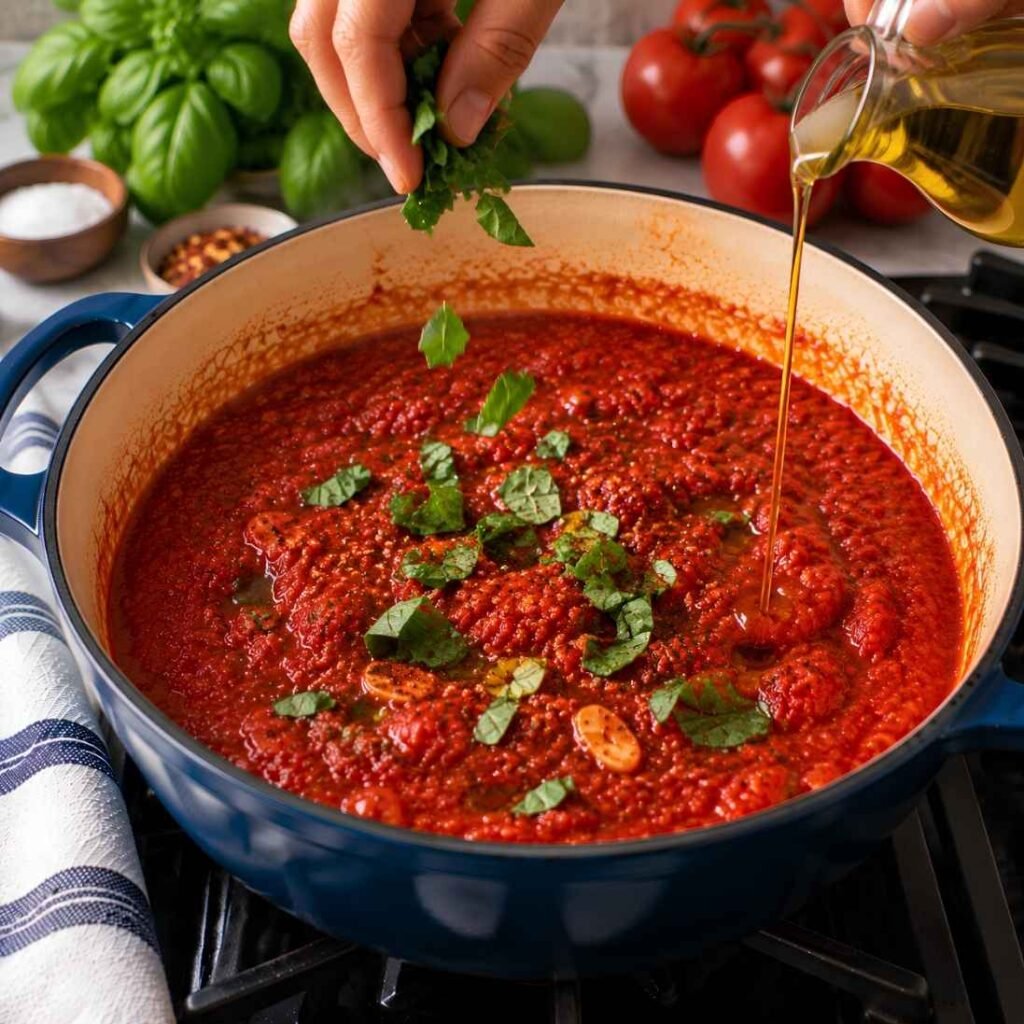
Take the pan off the heat. Stir in the torn basil and the final tablespoon of olive oil. Both are added off the heat on purpose: basil loses its aroma in a hot pan, and raw olive oil adds a richness that cooking it away would destroy. Garnish with extra basil and serve.
Pro Tips for the Ultimate Marinara Sauce
Use a wider pan than you think you need. Reduction happens at the surface, not in the depth. The same sauce that takes thirty minutes in a wide pan takes closer to an hour in a tall narrow one, and spends that extra half hour slowly scorching at the bottom.
Scrape the bottom every few minutes. Tomato sauce catches and burns from underneath, and by the time you can smell it the whole batch already tastes of it. A wooden spoon dragged across the base every five minutes is enough to prevent it.
Let it sit before you judge it. Marinara tastes noticeably better after an hour off the heat, and better still the next day. If it seems slightly flat right out of the pan, that is usually normal rather than a problem to fix with more salt.
Blend it for pizza and lasagna, leave it chunky for pasta. A few seconds with an immersion blender gives you the smooth consistency that spreads evenly on dough or between layers. For tossing with pasta, the chunky texture clings better.
Save the basil stems. Drop them into the sauce at the start of the simmer and fish them out before serving. The stems carry plenty of flavour and would otherwise go in the bin.
Make a double batch. It costs one extra can and the same thirty minutes, and half of it goes straight into the freezer. This is the recipe where doubling actually saves you an evening later.
Common Mistakes to Avoid
Browning the garlic. This is the one that ruins the sauce, and it happens faster than you expect. Garlic goes from fragrant to golden to bitter in under a minute at the wrong heat. Medium-low, sliced not minced, and no colour at all. If it browns, tip it out and start again rather than building a sauce on top of it.
Adding sugar before tasting. Plenty of good canned tomatoes are sweet enough without it. Sugar added out of habit does not correct anything, it just flattens the flavour and makes the sauce taste like the jarred version you were trying to avoid.
Salting early and heavily. The sauce reduces by a fair amount over half an hour, and the salt concentrates as it does. A teaspoon at the start and an adjustment at the end gets you there. A heavy hand at the start gets you a sauce you cannot fix.
Simmering in a narrow pan. It takes twice as long, and while it sits there the bottom scorches. If a wide pan is not an option, stir far more often and expect the timing to stretch.
Walking away from it. Tomato sauce catches on the bottom silently. There is no smell until the damage is already done and the whole batch tastes burnt. Five minutes between stirs is the limit.
What to Serve with Homemade Marinara Sauce
This versatile sauce works well in countless dishes beyond a simple bowl of spaghetti.
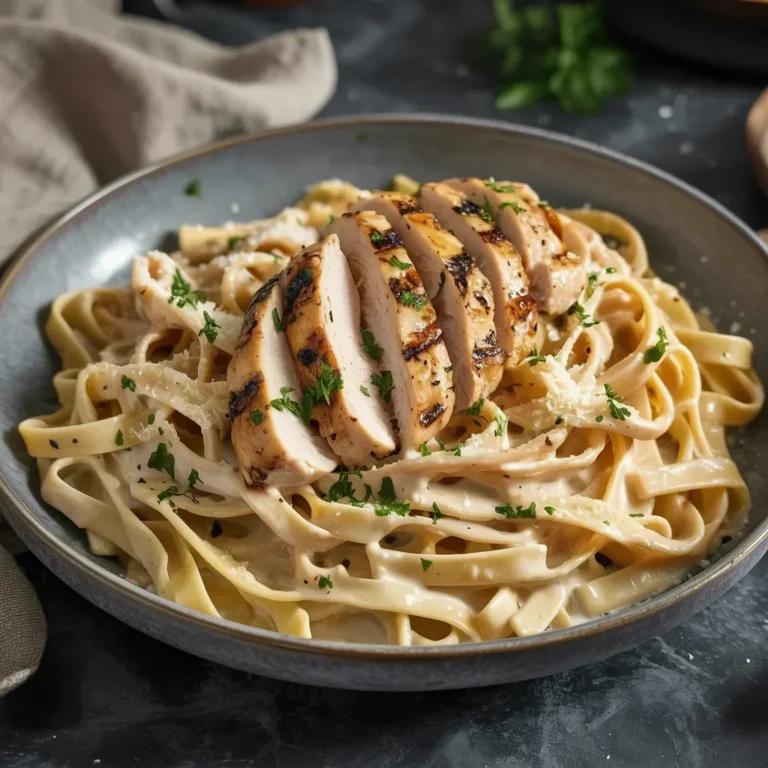
Classic pasta night: Toss with your favorite pasta shape and top with freshly grated Parmesan for an easy, comforting dinner.
As a dipping sauce: Serve warm alongside mozzarella sticks, garlic knots, or crispy breaded zucchini for a simple appetizer.
In baked dishes: Use it as the base for baked ziti, chicken parmesan, or a quick homemade pizza.
As a soup base: Thin the sauce with a bit of vegetable or chicken broth and add white beans or tortellini for an easy, comforting tomato-based soup.
How to Store Homemade Marinara Sauce
Have leftovers? It is incredibly easy to save for later.
In the Fridge: Store the completely cooled sauce in an airtight container for up to 5 days.
How to Reheat: Warm gently on the stovetop over low heat, stirring occasionally, adding a splash of water if the sauce has thickened too much while sitting.
In the Freezer: You can freeze the sauce in a freezer-safe container or bag for up to 3 months. Thaw overnight in the fridge before reheating on the stovetop.
Frequently Asked Questions
Can I use fresh tomatoes instead of canned? Absolutely. Peel and roughly chop about 3 pounds of ripe, in-season tomatoes as a substitute, though the cooking time may need to be extended slightly to reduce the extra liquid.
What’s the best type of canned tomato to use? San Marzano tomatoes are often considered the gold standard for marinara sauce due to their naturally sweet flavor and lower acidity, though any high-quality canned tomato will work well.
Can I prep this ahead of time? Yes! This sauce actually tastes even better the next day, once the flavors have had time to fully meld together. Simply store it in the fridge and reheat when you’re ready to serve.
Do I need to remove the seeds from the tomatoes? Not necessary. Tomato seeds soften completely during the simmering process and don’t add any noticeable bitterness or texture to the finished sauce.
Final Thoughts
This homemade marinara sauce recipe is proof that a truly great pasta sauce doesn’t have to be complicated or store-bought. With a handful of quality ingredients, a slow simmer, and fresh basil, you get the ultimate rich, flavorful sauce every single time. Try it today, and I promise it’ll become a permanent favorite at your table.