How to Make Basil Salt: Fresh, Herbaceous
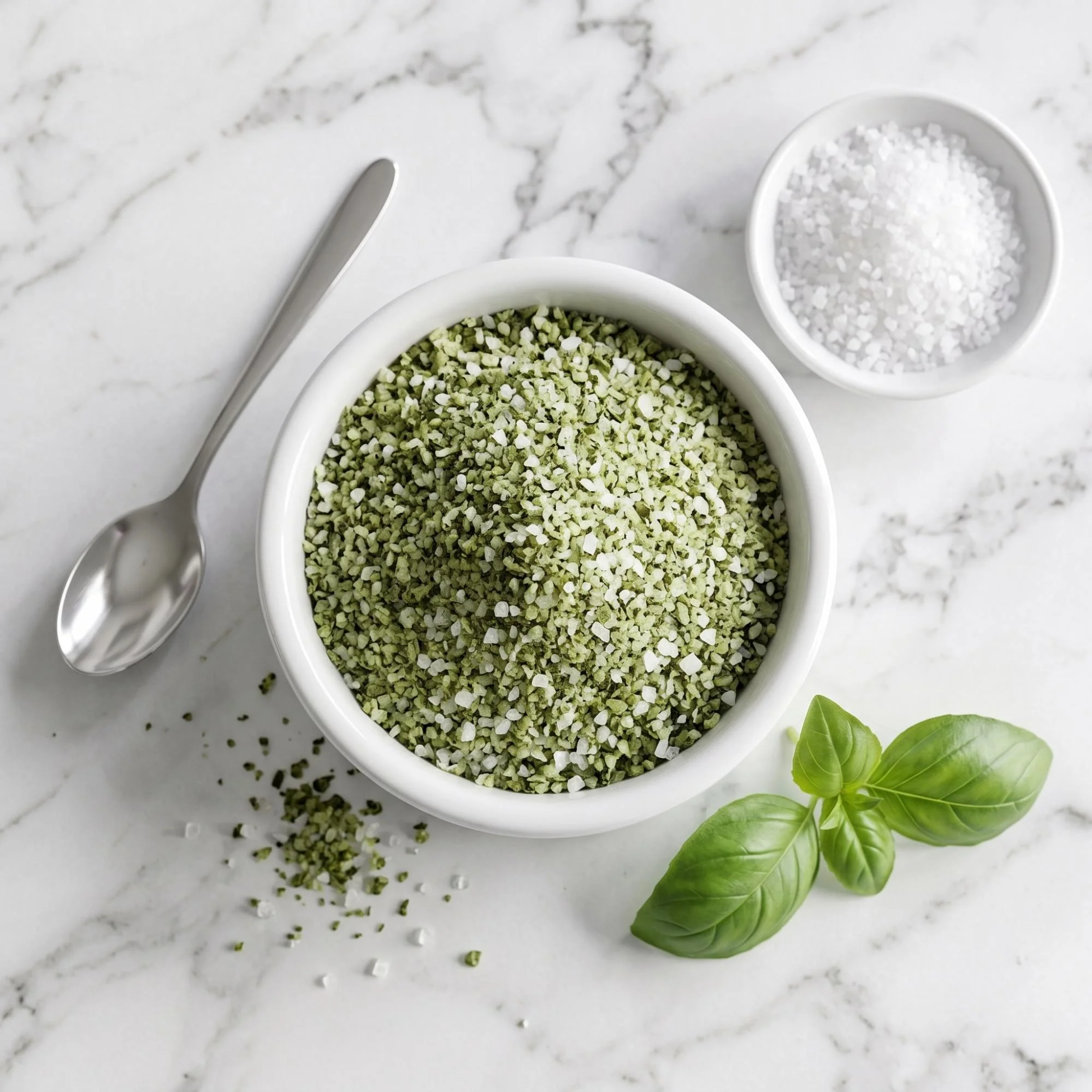
Fresh basil can be turned into a simple flavored salt with very little preparation. The leaves are blended with coarse salt until finely chopped, then mixed with additional salt so some of the larger crystals remain intact.
Drying is the most important part of the process. The basil adds moisture when it is blended, so the mixture needs to dry thoroughly before it goes into a sealed jar. Once ready, the salt carries a light basil aroma and savory flavor that can be sprinkled over tomatoes, chicken, salads, roasted vegetables, or other simple dishes.
Because the recipe uses only two main ingredients, starting with fresh basil and keeping the mixture dry makes the biggest difference in the finished seasoning.
Why You Will Love This Recipe
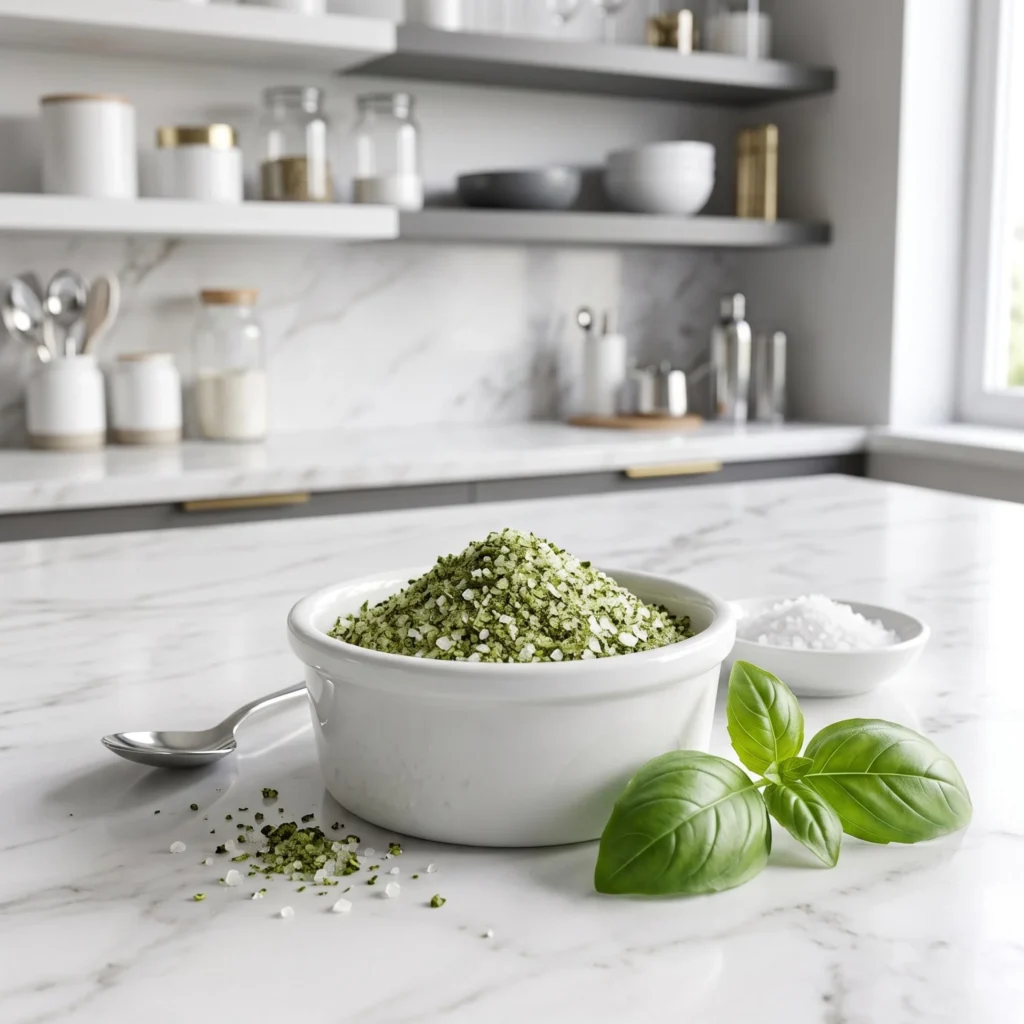
Fresh basil gives this coarse salt a fragrant herbal flavor that works well as a finishing seasoning for many savory dishes.
- Texturally perfect: Blending the fresh herbs with coarse salt makes it incredibly aromatic, while the salt crystals provide maximum crunch without dissolving into a paste.
- Highly customizable: You can easily load it up with fresh lemon zest, a clove of garlic, or a splash of dried chili flakes.
- Made with basic staples: You only need fresh basil leaves and your favorite coarse salt.
- Visually gorgeous: The vibrant, bright-green color looks like it came straight out of a high-end artisanal spice shop.
Ingredients You Will Need
Only fresh basil and coarse salt are needed for the base, so the quality and dryness of both ingredients matter.
- 2 cups fresh basil leaves (packed, washed, and completely dried)
- 1 cup coarse sea salt or kosher salt (divided)
Step-by-Step Instructions for Basil Salt
Follow these easy steps.
- Step 1: Prep the Basil. Wash the fresh basil carefully. Pluck the leaves from the tough stems. Dry them completely with a paper towel or a salad spinner to remove all moisture.
- Step 2: Blend the Herbs. Put the dry basil leaves into a food processor. Add half (1/2 cup) of the coarse salt. Pulse on high for 1 to 2 minutes until the basil is finely chopped and the salt turns green.
- Step 3: Mix the Salt. Pour the blended green mixture into a medium bowl. Add the remaining 1/2 cup of coarse salt. Stir everything together well to keep those larger, crunchy crystals intact.
- Step 4: Dry the Mixture. Spread the wet salt in a thin, even layer on a baking sheet lined with parchment paper. Let it air dry on the counter overnight, or bake it at your oven’s lowest setting for 30 minutes until completely dry.
- Step 5: Store and Serve. Once the salt is completely dry, break up any small clumps with a fork. Pour the basil salt into an airtight glass jar and sprinkle it over your favorite dishes!
Pro Tips for the Ultimate Seasoning
Small adjustments can take your flavored salt from good to absolute perfection.
- Dry the leaves completely: Water is the enemy of preserving salt. Taking an extra minute to ensure the basil is bone-dry prevents the salt from melting and turning into a soggy mess.
- Use coarse salt: Coarse sea salt or kosher salt gives that perfectly crunchy texture, while fine table salt will become too dense and overly salty when blended.
- Pick fresh basil: Look for vibrant green, unbruised leaves with a sweet smell. Fresher basil means you will get a much stronger, longer-lasting flavor in your jar.
What to Serve with Basil Salt
This versatile little seasoning pairs beautifully with almost any savory main course or snack.
- As a finishing salt: Serve it sprinkled generously over sliced heirloom tomatoes, grilled chicken, or a classic Caprese salad.
- As a rimming salt: Use a small amount around the rim of a tomato-based mocktail or a chilled cucumber drink for an herby, savory finish.
- Loaded style: During the blending step, toss in a peeled garlic clove and a tablespoon of fresh lemon zest for an incredible all-purpose savory rub!
How to Store Basil Salt
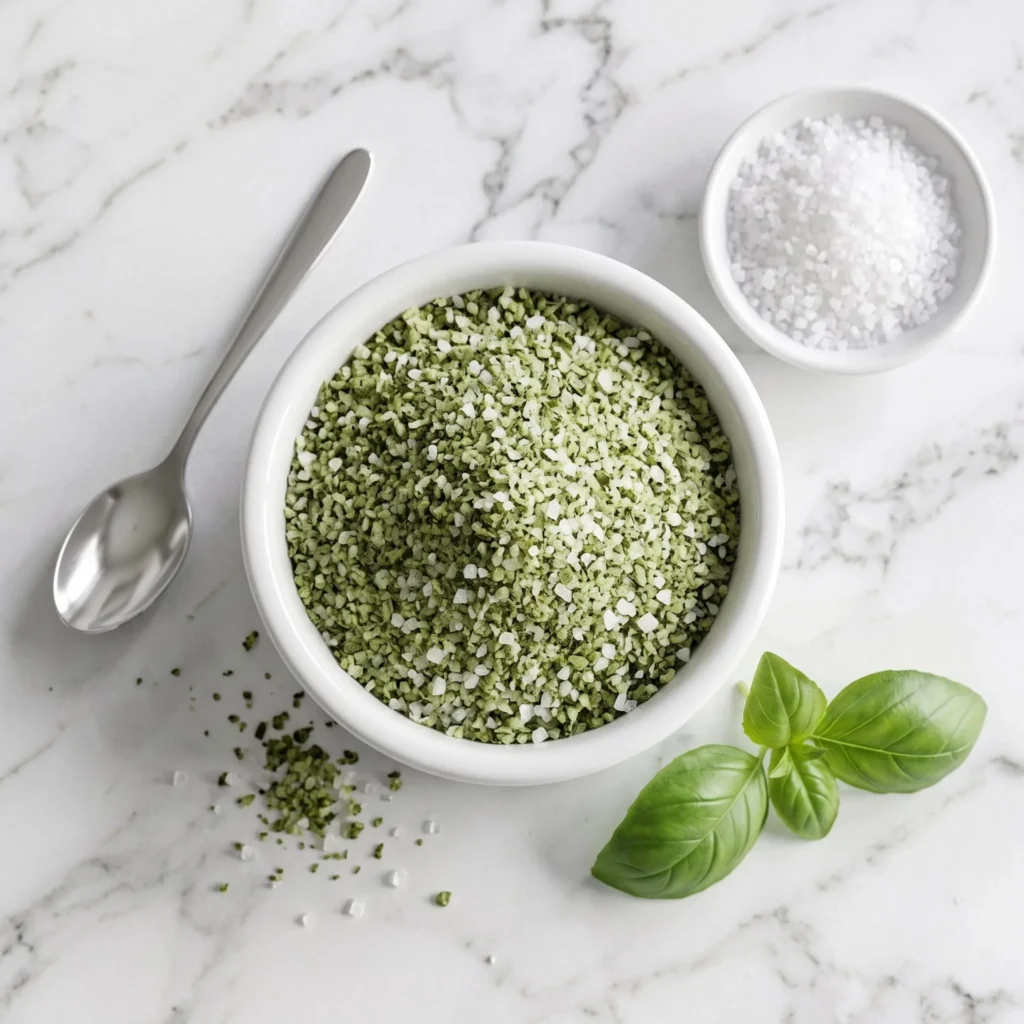
- In the Pantry: Once the basil salt is completely dry, transfer it to an airtight jar and keep it in a cool, dry cabinet. Check for any remaining moisture before storing.
- If the Salt Clumps: Keep the jar away from heat and humidity, and gently shake or stir the salt to loosen any small clumps before using.
- Avoid the Fridge: You do not want to put this in the refrigerator. The moisture inside the fridge will ruin the salt, causing it to clump and spoil the fresh basil flavor.
Frequently Asked Questions
- Can I make this in a blender? Absolutely. Pulse the leaves and salt in short bursts, scraping down the sides as needed, until it is fully combined.
- What are the best salts to use? Coarse sea salt and kosher salt are the absolute best choices because of their naturally crunchy texture. Flaky sea salt is a great second choice for finishing dishes.
- Can I prep this ahead of time? Yes! This is the ultimate prep-ahead recipe. You can blend and dry the salt, then keep it tightly sealed in jars to use all winter long.
Final Thoughts
The success of basil salt comes down to removing moisture before storage. Blend the basil with part of the salt, spread the mixture out well, and do not seal it in a jar until it feels completely dry. Once prepared, a small pinch can add basil flavor and a salty finish to tomatoes, vegetables, chicken, or salads.