Creamy Rasta Pasta Jerk Chicken Recipe
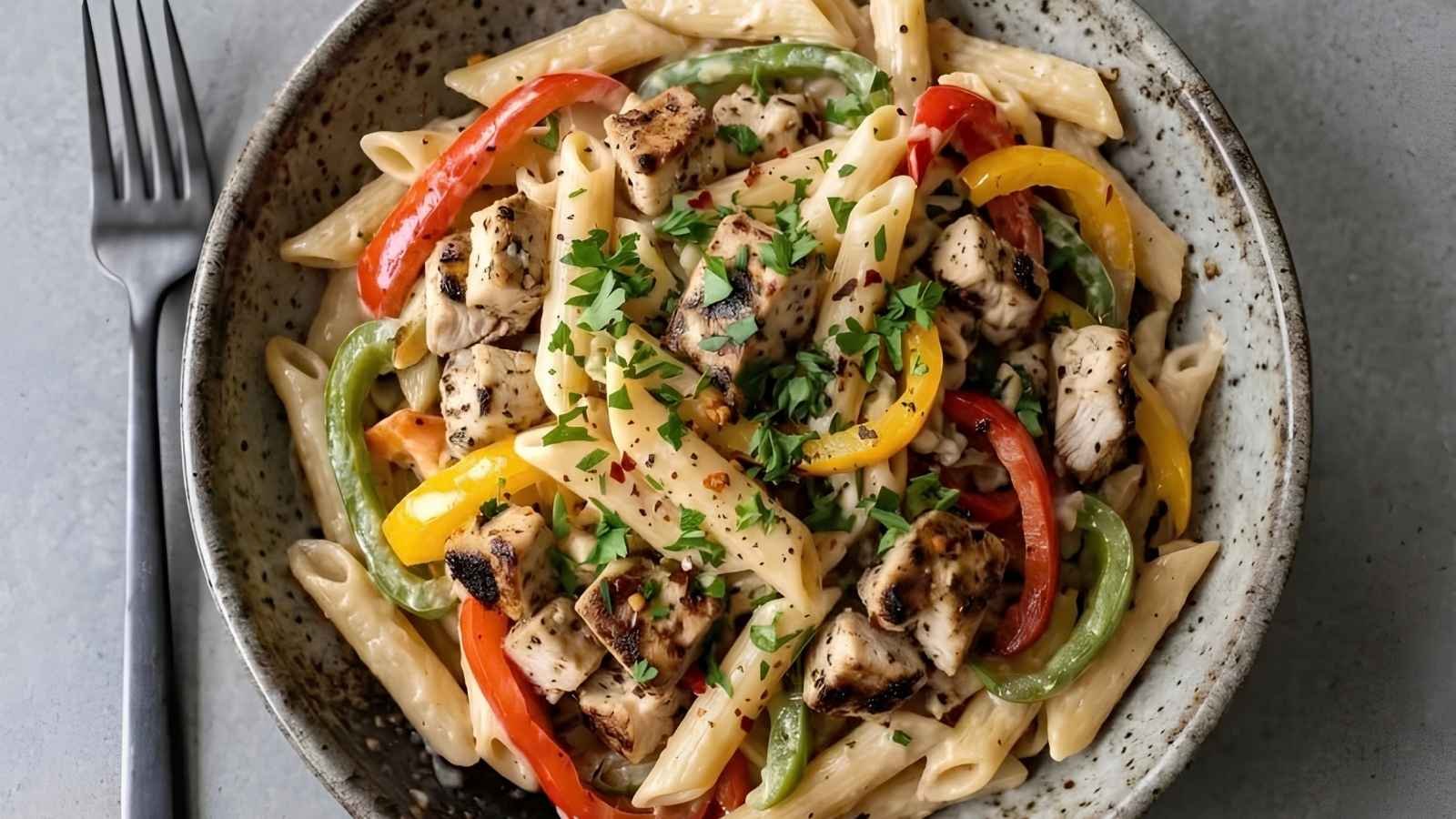
The three peppers in this dish are not a coincidence. Red, green, and yellow are the colours of the Rastafari movement, and that is where rasta pasta gets its name. It is a Jamaican dish, developed in the 1980s, and the story usually told is that a cook improvised a pasta for a group of construction workers using what was on hand, and the colours suggested the name.
So the peppers matter more than they would in most recipes. Leave one out and you still have a good creamy pasta, but you no longer have rasta pasta. All three, sliced rather than diced, kept bright rather than cooked soft.
The rest of it is a straightforward cream sauce carrying a lot of jerk seasoning. Thirty-five minutes, one skillet after the pasta pot, and the heat level is entirely up to which jar you buy.
| Prep Time | 15 minutes |
| Cook Time | 20 minutes |
| Total Time | 35 minutes |
| Servings | 4 |
Why You Will Love This Recipe
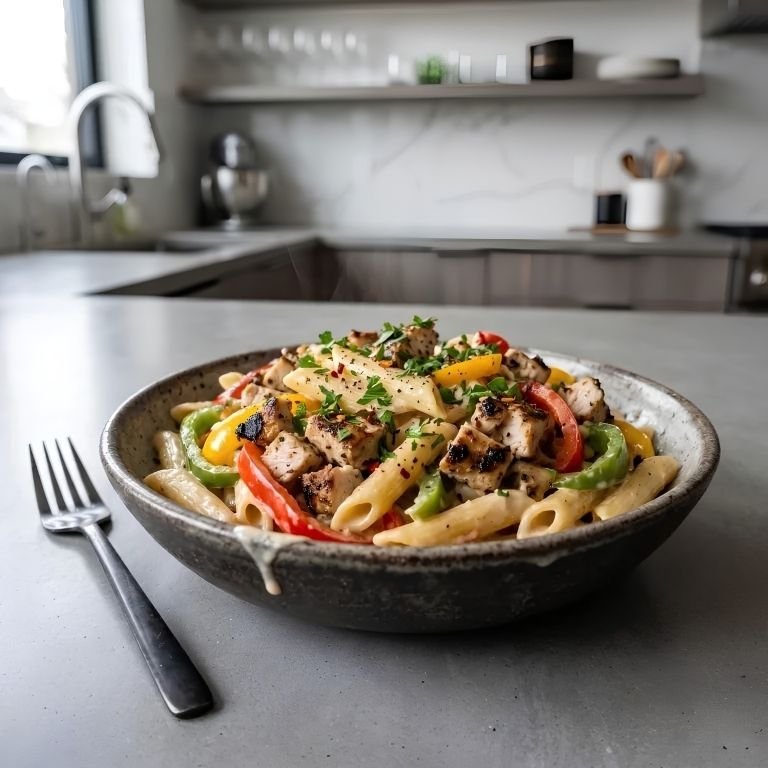
If you’ve been stuck in a rut of serving plain spaghetti or repetitive chicken dinners, you are going to fall in love with this method. This rasta pasta is:
- Texturally perfect: Tossing al dente penne in a thick cream sauce ensures every bite is rich, while the seared chicken and sautéed bell peppers provide a satisfying, hearty crunch.
- Highly customizable: You can easily load it up with succulent shrimp, extra habanero peppers for intense heat, or a splash of coconut milk for subtle sweetness.
- Made with basic staples: You only need dry pasta, heavy cream, parmesan, bell peppers, chicken breasts, and jerk seasoning.
- Visually gorgeous: The vibrant mix of red, green, and yellow bell peppers against the creamy sauce looks like it came straight out of a bustling Caribbean restaurant.
Equipment You Will Need
A 12-inch skillet. Everything ends up in it: a pound of chicken, three sliced peppers, and eight ounces of cooked pasta. A smaller pan means tossing the pasta in the pot instead, which cools the sauce and makes it harder to coat evenly.
A microplane or fine grater. Finely grated Parmesan melts into cream smoothly. Coarse shreds need more heat to melt, and that heat is exactly what makes Parmesan seize into grainy solids.
Tongs. For tossing pasta through sauce. A spoon pushes it around; tongs lift and fold, which is how everything ends up coated rather than sitting in a pool.
A heatproof mug. For the reserved pasta water. Scoop it out before draining, because everyone forgets and pours it away.
Ingredients You Will Need
The beauty of this recipe lies in its incredibly rich foundation. To get that perfect spicy and creamy balance, you will need:
- 8 oz penne, or another short ridged pasta
- 1 lb boneless, skinless chicken breasts, cut into bite-sized pieces
- 2 tbsp Jamaican jerk seasoning, divided
- 2 tbsp olive oil
- 1 small onion, thinly sliced
- 3 cloves garlic, minced
- 3 bell peppers, one red, one green, one yellow, thinly sliced
- 1 1/2 cups heavy cream
- 3/4 cup Parmesan, finely grated
- 1/2 cup reserved pasta water
- 1/2 tsp red pepper flakes (optional)
- 2 tbsp fresh parsley, chopped
- 1 lime, cut into wedges
- Salt, to taste at the end only
Step-by-Step Instructions for Creamy Rasta Pasta
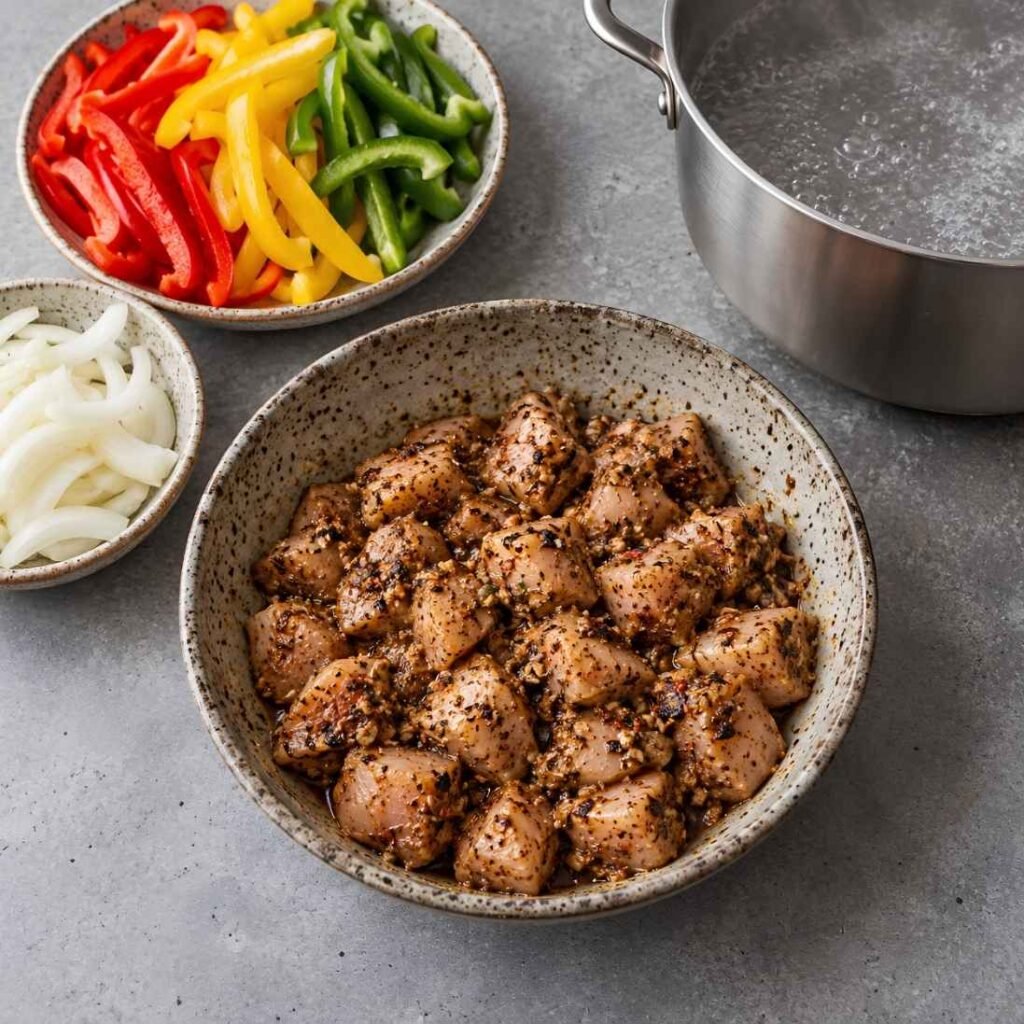
Step 1: Season the Chicken and Start the Water. Toss the cubed chicken with 1 tablespoon of the jerk seasoning until every piece is coated, and leave it while you slice the vegetables. Put a large pot of well-salted water on to boil.
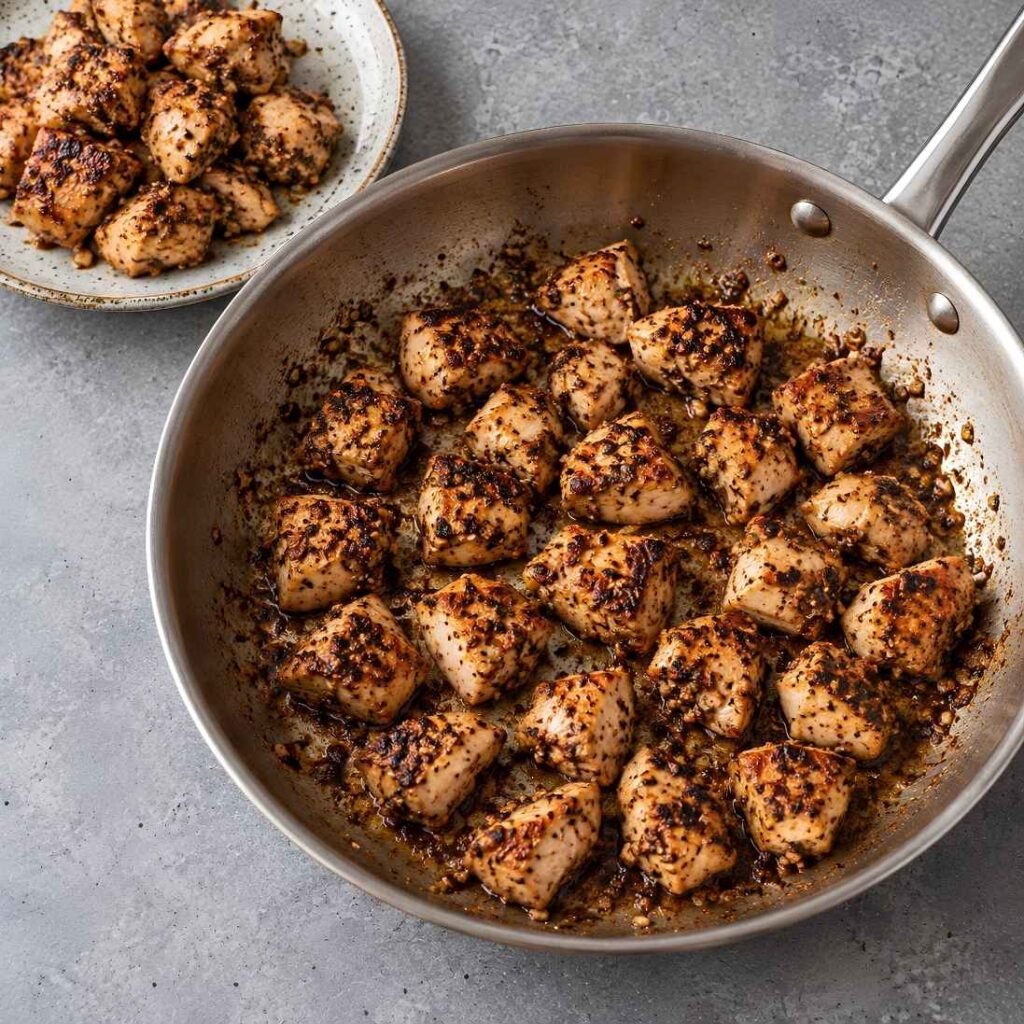
Step 2: Sear the Chicken. Heat 1 tablespoon of the olive oil in a 12-inch skillet over medium-high heat. Add the chicken in a single layer, working in two batches if the pan looks crowded, and sear for 5 to 6 minutes, turning once or twice, until browned and the pieces reach 165°F (74°C). Move to a plate.
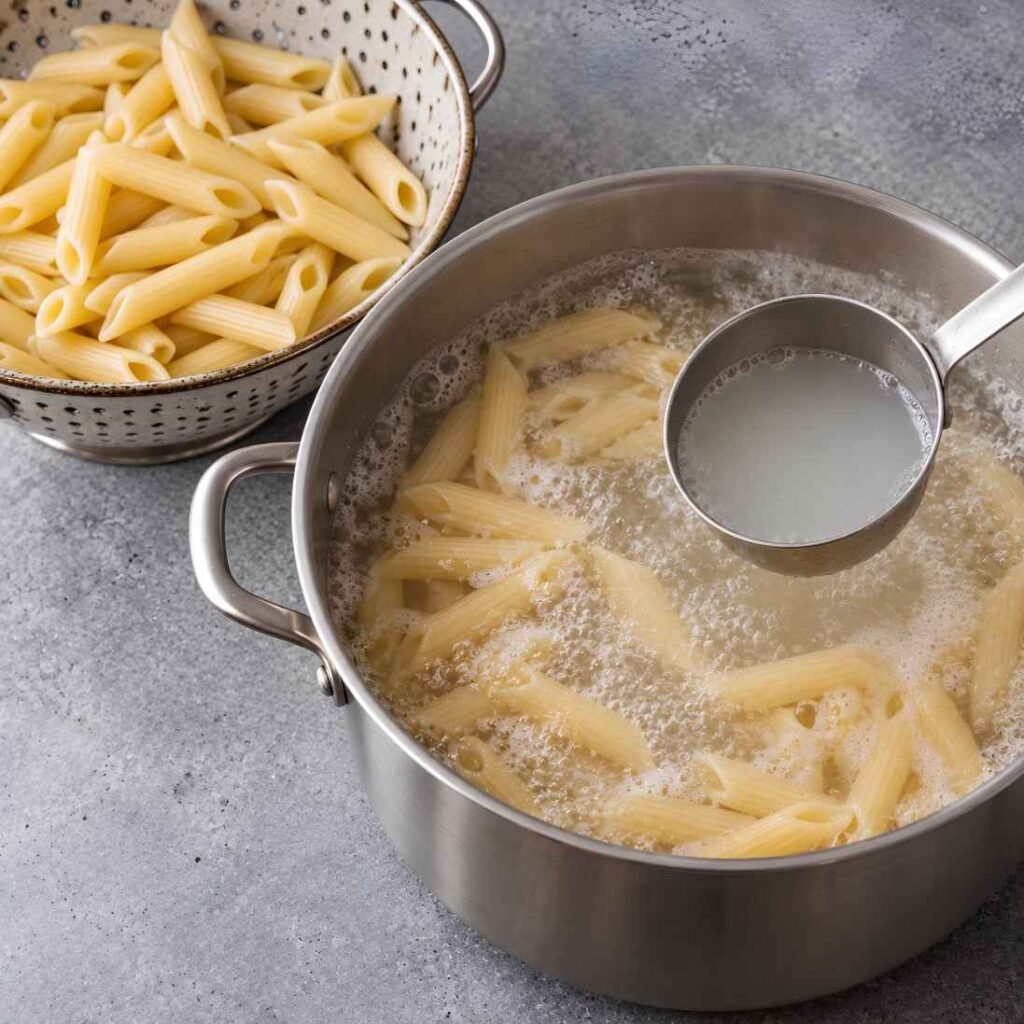
Step 3: Cook the Pasta. Add the penne to the boiling water and cook to al dente. Scoop out half a cup of the cooking water before draining. The starch in it is what makes the sauce cling rather than pool, and this dish has a lot of food for the sauce to cover.
Step 4: Cook the Vegetables. Add the remaining oil to the same skillet along with the onion and cook for 2 minutes. Add the peppers and cook 3 to 4 minutes more, until they have softened slightly but are still bright and have some bite. Add the garlic and red pepper flakes and cook for 30 seconds, until fragrant.
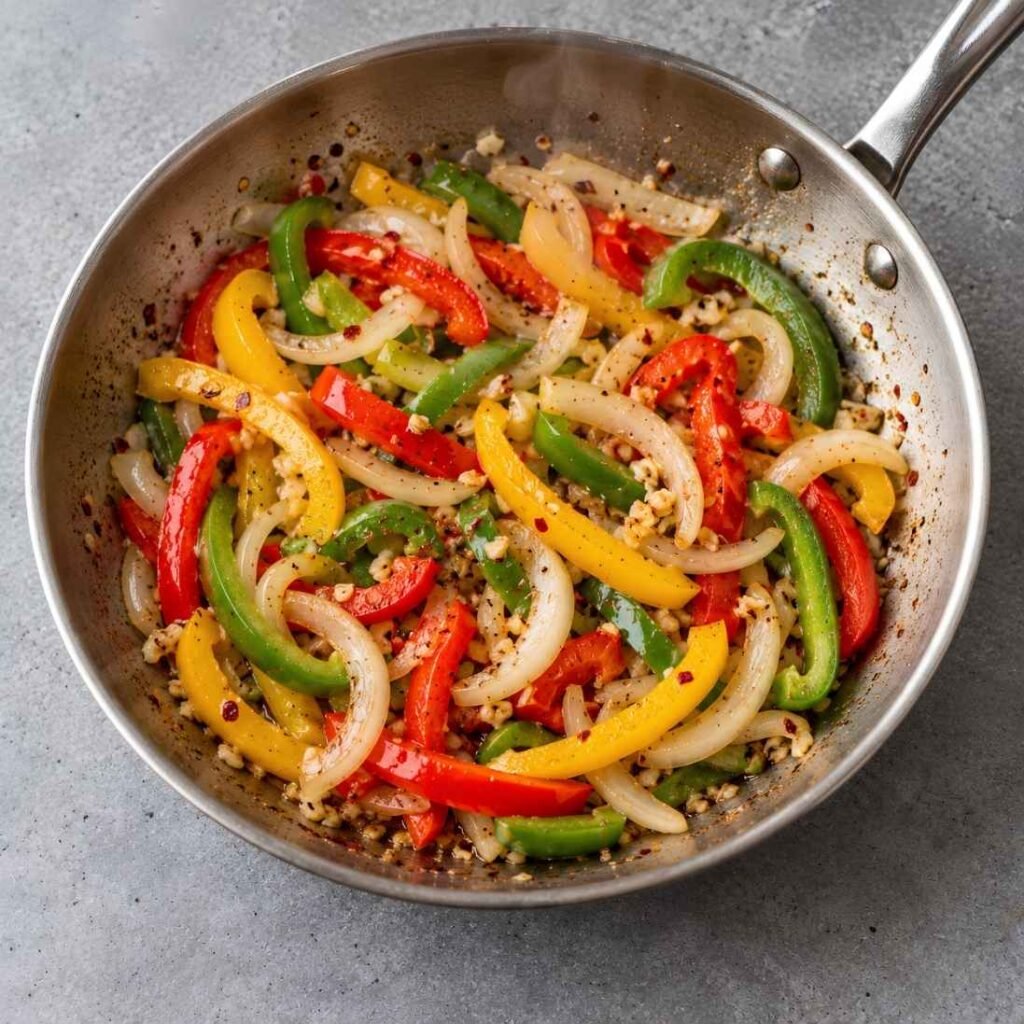
Step 5: Build the Sauce. Pour in the cream and stir in 1 teaspoon of the remaining jerk seasoning, keeping the rest back. Bring it to a gentle simmer for 2 minutes. Now lower the heat right down, or take the pan off it entirely, and whisk in the Parmesan a handful at a time. Parmesan added to a simmering sauce tightens and separates into grainy solids, and there is more than enough residual heat to melt finely grated cheese.
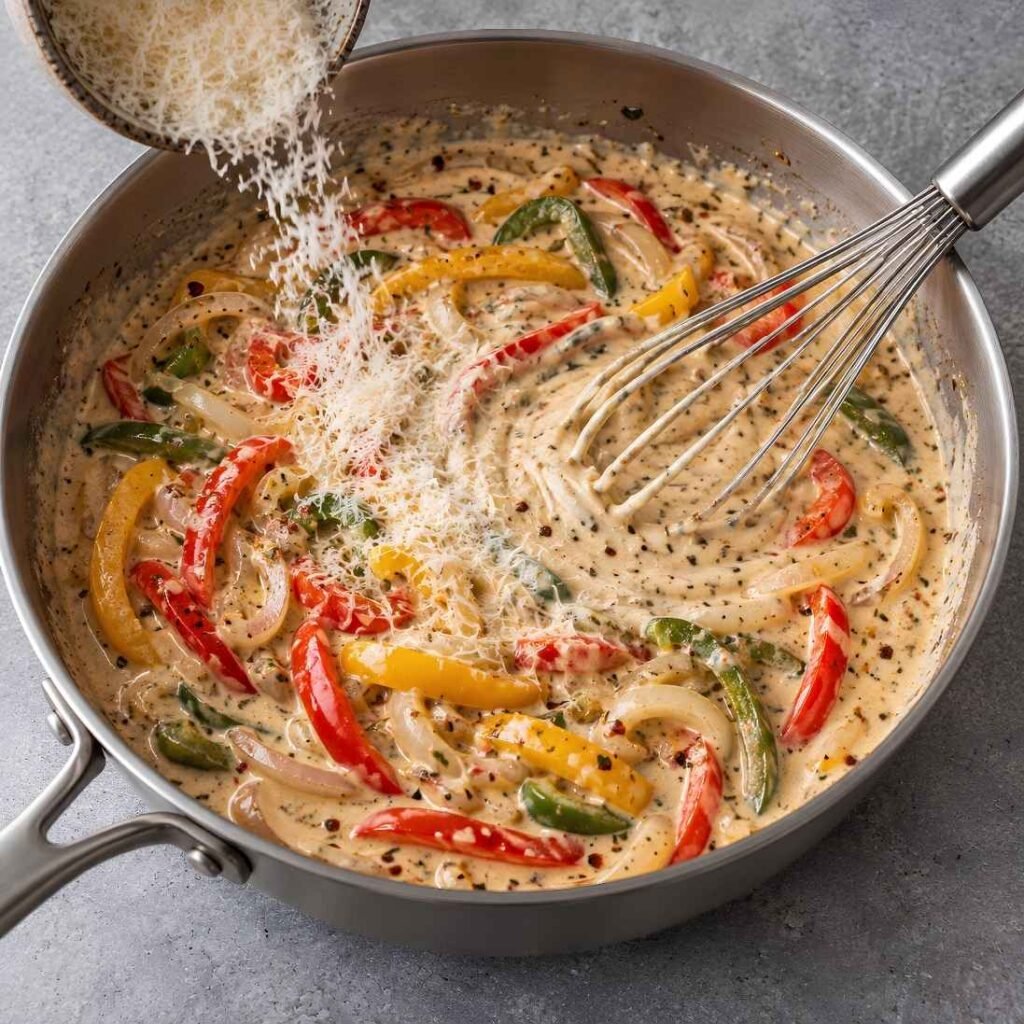
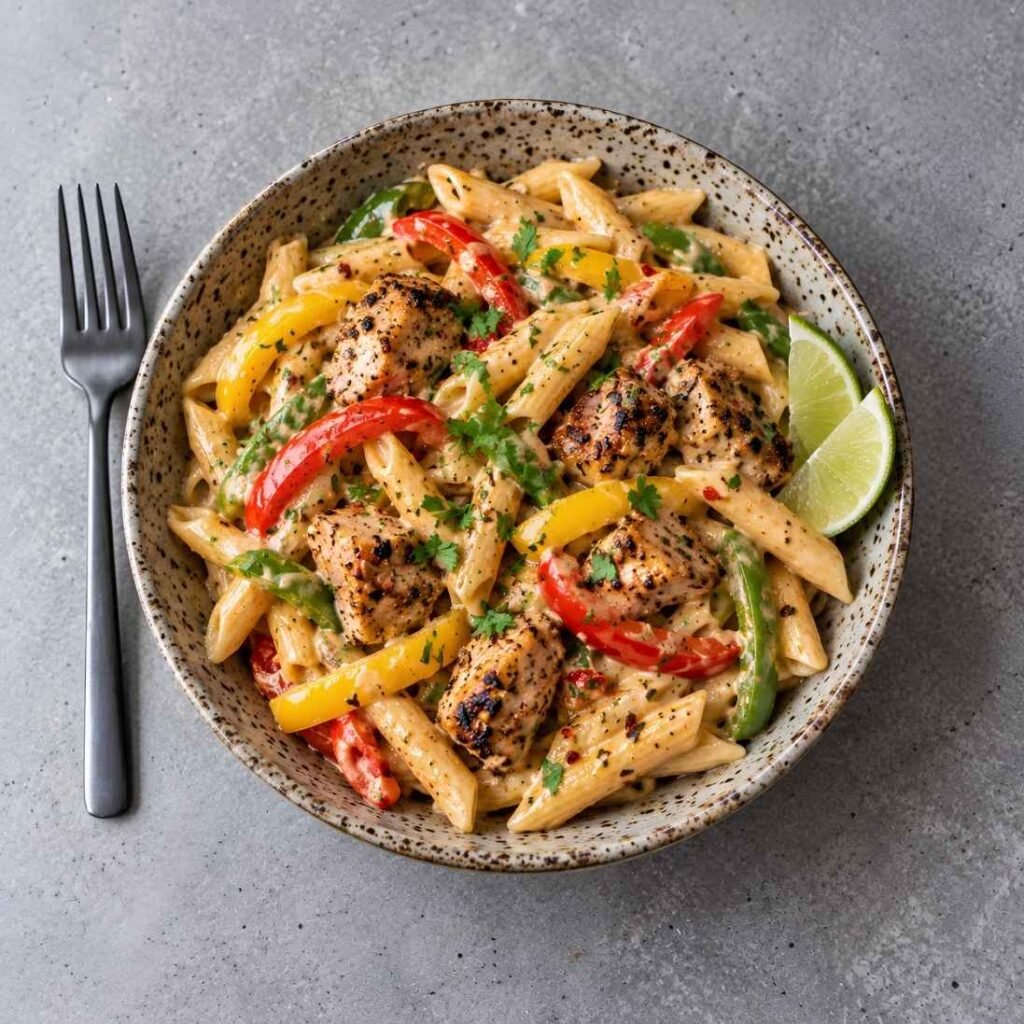
Step 6: Combine, Taste, and Serve. Return the chicken and any juices to the pan, add the drained pasta, and toss with tongs, adding pasta water a splash at a time until the sauce loosens and coats everything. Now taste. Add the last of the jerk seasoning if you want more heat, and salt only if it needs it, since jerk seasoning and Parmesan both bring their own. Scatter the parsley over and serve with lime wedges.
Pro Tips for the Ultimate Pasta
Small adjustments can take your pasta dinner from good to absolute perfection.
Take the pan off the heat before the Parmesan. Not low heat, off the heat. Parmesan seizes well below a simmer, and residual heat is more than enough to melt cheese that has been finely grated.
Slice the peppers; do not dice them. Long strips stay visible against the pasta, which is the entire look of the dish. Diced peppers disappear into the sauce, and you lose the three colours the name comes from.
Hold back half the jerk seasoning for the sauce. Brands differ so much in heat and salt that a fixed amount is a gamble. The chicken gets its full tablespoon because the rub is doing a different job, but the sauce is easier to correct upward than downward.
Use tongs to toss, not a spoon. A spoon pushes pasta around. Tongs lift and fold, which is how everything gets coated rather than the sauce settling at the bottom of the pan.
Common Mistakes to Avoid
Adding the Parmesan to a simmering sauce. It seizes and separates into grainy solids and oil, and no amount of whisking brings it back. Lower the heat right down or take the pan off entirely, then add it a handful at a time.
Using all the jerk seasoning at once. Jars differ enormously in heat and salt. Half in the sauce, taste, then decide. A dish that is too hot cannot be fixed without diluting everything in it.
Salting before tasting. This recipe has no added salt on purpose, because jerk seasoning and Parmesan often bring enough between them. Taste the finished dish before reaching for the salt, or you may not be able to correct it.
Cook the peppers until soft. Rasta pasta relies on the peppers keeping some bite against a rich cream sauce. Three or four minutes is enough, and they will soften further once the sauce goes in.
Variations to Try
With shrimp. A pound of large shrimp tossed in the jerk seasoning and seared for 90 seconds a side, removed while you build the sauce and returned at the very end. Shrimp go rubbery fast, so they need the shortest possible time in the pan.
Coconut rasta pasta. Replace half a cup of the cream with full-fat coconut milk. It is closer to how this is often made in Jamaica; it takes the edge off the heat, and it suits the jerk spices better than dairy alone does.
Hotter. A finely minced scotch bonnet added with the garlic, seeds removed unless you are certain. Scotch bonnet is the pepper that belongs in jerk cooking, where habanero is the usual substitute and is close but slightly less fruity.
With sausage. Sliced smoked sausage or andouille browned alongside the chicken. It is not traditional, and it works, and it makes the dish go further.
What to Serve with Creamy Rasta Pasta
This versatile dish is incredibly hearty on its own, but it pairs beautifully with simple sides that cut through the richness.
- As a hearty dinner: Serve it alongside thick slices of buttery garlic bread to soak up any extra spicy cream sauce left in the bowl.
- With a fresh side: Pair it with a crisp, simple green salad dressed in a light, acidic vinaigrette to perfectly balance the heavy, comforting pasta.
- Loaded style: Right before serving, garnish the bowls with a heavy sprinkle of fresh chopped parsley and a squeeze of fresh lime juice to brighten the deep spices!
How to Store Rasta Pasta
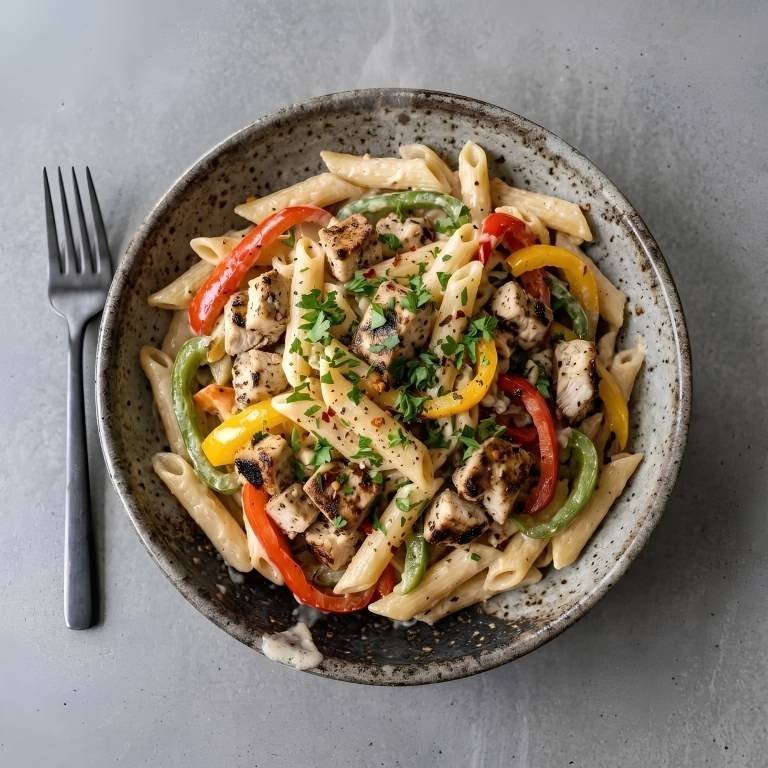
Cream sauces are better fresh, but this one reheats better than most if you go slowly.
- In the Fridge: Store the completely cooled pasta in an airtight container in the fridge for up to 3 days.
- How to Reheat: Please skip heating it on high heat! Cream sauces tend to separate when microwaved aggressively. Instead, reheat it gently in a skillet over low heat with a tiny splash of milk to bring that creamy texture right back.
- Avoid the Freezer: Freezing is not recommended. The heavy cream will separate and become grainy and watery once thawed.
Frequently Asked Questions
- Can I make this dairy-free? Absolutely. Swap the heavy cream for full-fat canned coconut milk and use a dairy-free parmesan alternative. Coconut milk actually pairs perfectly with the Caribbean jerk spices!
- What is the best pasta to use? Penne is the absolute best choice because the ridges and hollow center catch and hold the thick cream sauce beautifully, but rigatoni or fusilli are great second choices.
- Can I prep this ahead of time? Yes! You can slice all the peppers and toss the chicken in the jerk seasoning a day in advance, storing them in the fridge. When you are ready for dinner, the cooking process takes less than 20 minutes.
Final Thoughts
Two things make this dish what it is, and one of them is easy to treat as decoration. The three peppers are the reason it is called rasta pasta, so slice them rather than dicing and keep them bright enough to see. And the jerk seasoning is doing all the work of salt as well as heat, which is why it goes in two stages with a taste in between.
The technique itself has one pitfall. Parmesan added to a simmering sauce turns grainy, and it happens well below a boil. Off the heat, a handful at a time.
If you make it, leave a note in the comments and tell me which jerk seasoning you used. It is the one ingredient here that changes the dish completely depending on the jar.