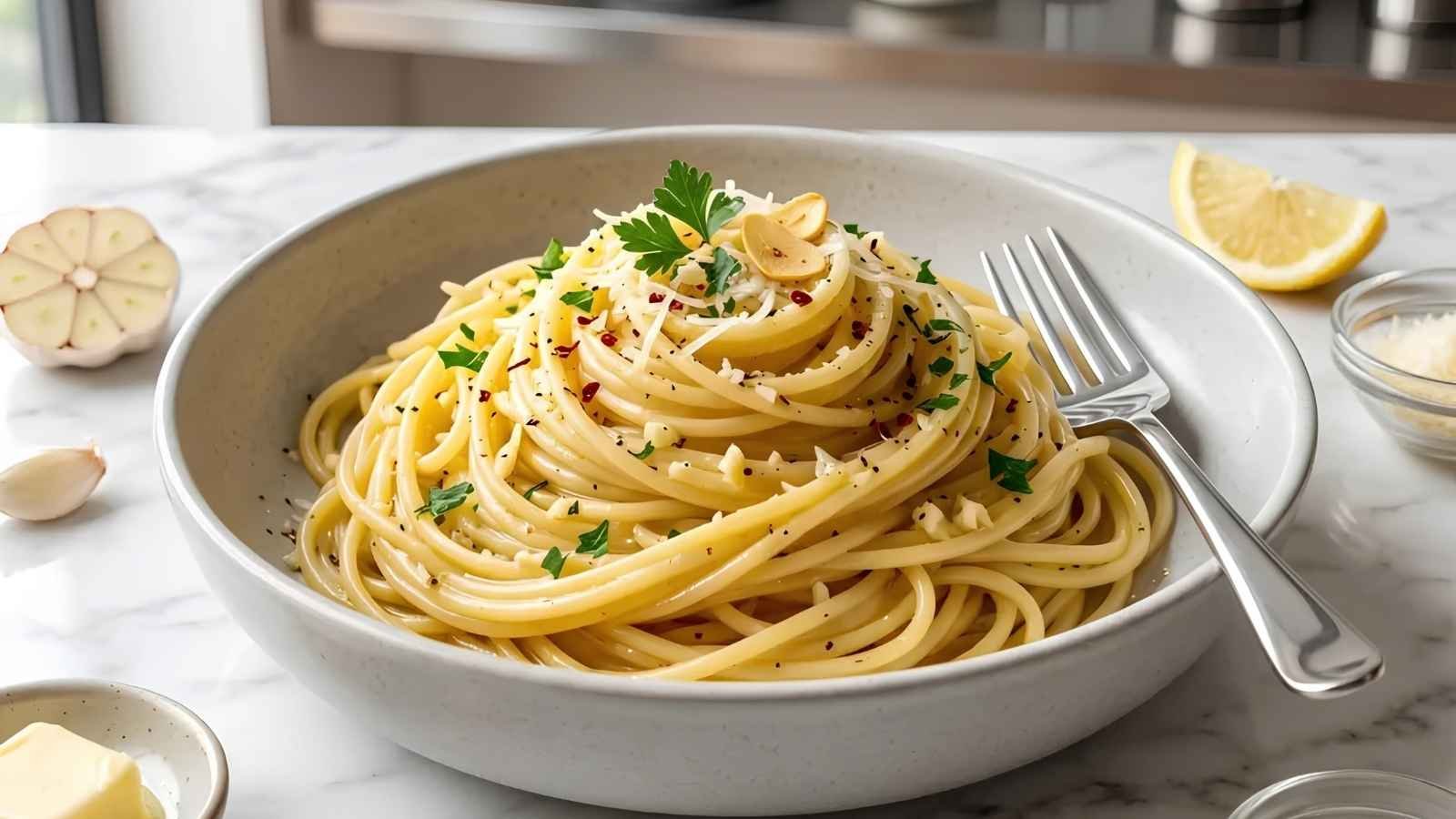
Easy Garlic Butter Pasta Recipe: Simple, Rich, and Better Than Any Restaurant
There is no sauce in this recipe, which sounds like a problem and is actually the whole technique. Butter and water do not mix on their own: left alone, the butter melts, sinks, and sits in a pool at the bottom of the bowl while the pasta above it stays dry.
What turns them into a glossy sauce that coats every strand is emulsion, and emulsion comes from agitation. Thirty seconds of hard tossing in the pan, with the heat on, and the two become one thing.
This is the same idea behind aglio e olio, the Roman garlic and oil pasta that has kept students fed for generations, with butter standing in for the olive oil. Four ingredients, none of them expensive, none of them perishable beyond the cheese.
| Prep Time | 5 minutes |
| Cook Time | 20 minutes |
| Total Time | 25 minutes |
Why You Will Love This Recipe
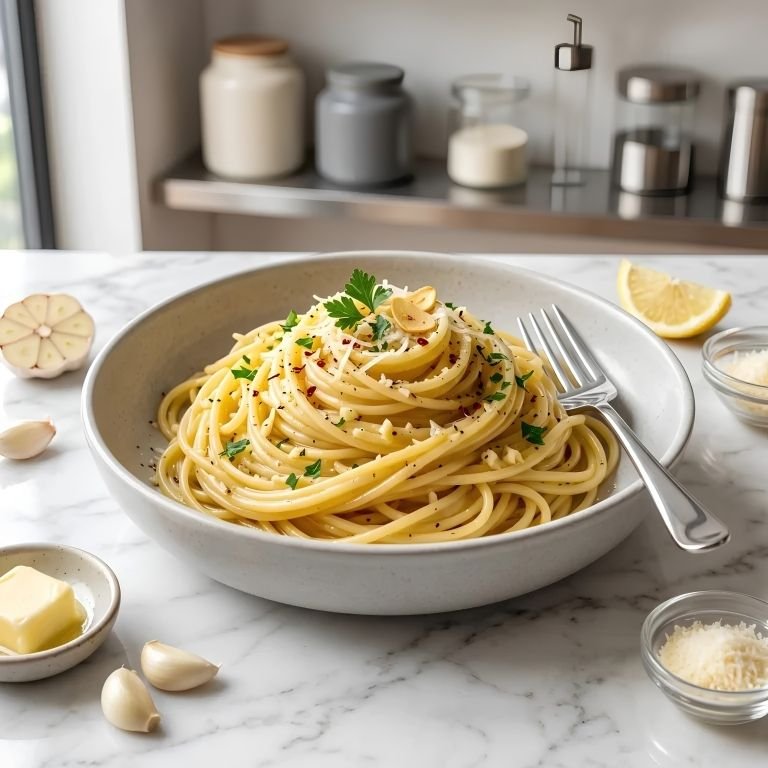
If you’ve been stuck reaching for jarred pasta sauce every week, you are going to fall in love with this method. This garlic butter pasta is:
Texturally perfect: Silky butter and starchy pasta water combine to create a light, glossy sauce that clings to every strand of pasta.
Highly customizable: You can easily add red pepper flakes, fresh herbs, or grilled chicken to make it your own.
Made with basic staples: You only need pasta, butter, garlic, and Parmesan cheese to bring this dish together.
Ready in minutes: This dish comes together in about 20 minutes, making it one of the fastest homemade pasta dinners you can make.
Equipment You Will Need
A 12-inch skillet with sloped sides. The sloped sides are the point. This dish is made by tossing, and a pan with straight walls sends half the pasta onto the hob. Twelve inches is also wide enough that 12 oz of spaghetti can actually move, which it cannot in a 10-inch pan.
Tongs. For lifting pasta from the pot straight into the skillet, which carries a little cooking water with it, and then for tossing. A spoon pushes pasta around the bottom of the pan; tongs lift it through the butter and water, which is exactly the agitation the emulsion needs.
A heatproof mug or jug. For the reserved pasta water. Scoop it out before draining, because this dish depends on it more than most.
A microplane or the finest side of a box grater. Finely grated Parmesan melts into the sauce in residual heat. Coarse shreds need more heat to melt, and more heat is what turns Parmesan grainy.
Ingredients You Will Need
- 12 oz spaghetti or linguine
- 6 tbsp unsalted butter, divided
- 6 cloves garlic, thinly sliced
- 1/2 tsp red pepper flakes
- 1 cup reserved pasta water
- 3/4 cup Parmesan, finely grated
- 1/4 cup fresh parsley, chopped
- 1 lemon, half zested and half cut into wedges
- Black pepper, freshly cracked
- Salt, to taste at the end only
Step-by-Step Instructions for Garlic Butter Pasta
Follow these easy steps. I’ve broken them down into quick, simple pieces so you can achieve maximum flavor without any stress.
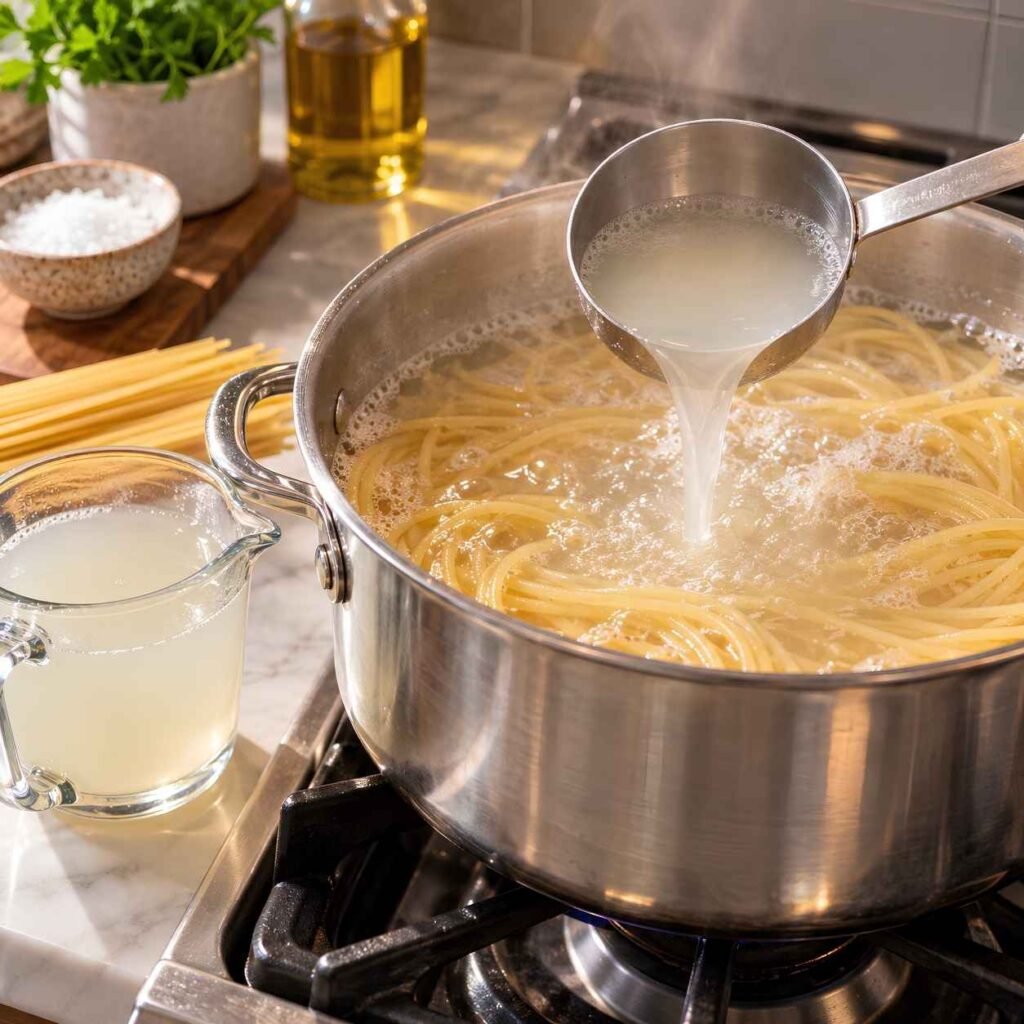
Step 1: Cook the Pasta and Save the Water. Bring a large pot of well-salted water to a boil and cook the pasta to al dente. Scoop out a full cup of the cooking water before draining. That water is not a backup here; it is half the sauce, and the starch in it is what holds the butter together.
Step 2: Toast the Garlic. While the pasta cooks, melt 4 tablespoons of the butter in a 12-inch skillet over medium-low heat. Add the sliced garlic and cook for 2 to 3 minutes, stirring, until the slices turn pale gold at the edges.
Sliced garlic can take this; minced garlic cannot, and would need pulling off at fragrant with no colour. Add the red pepper flakes and cook 30 seconds more.
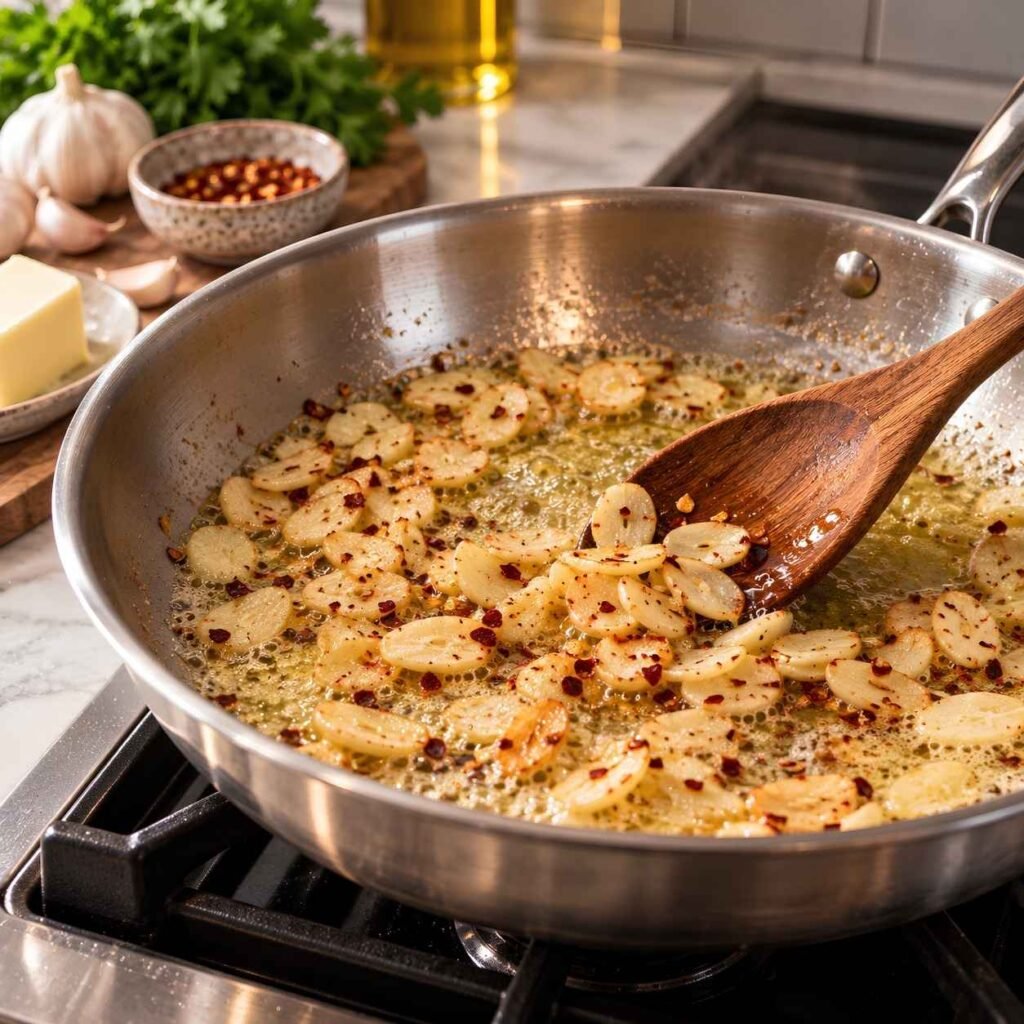
Step 3: Add the Pasta and Half the Water. Add the drained pasta to the skillet along with 1/2 cup of the pasta water. Turn the heat up to medium. Everything will look thin and watery at this point, which is correct and is about to change.
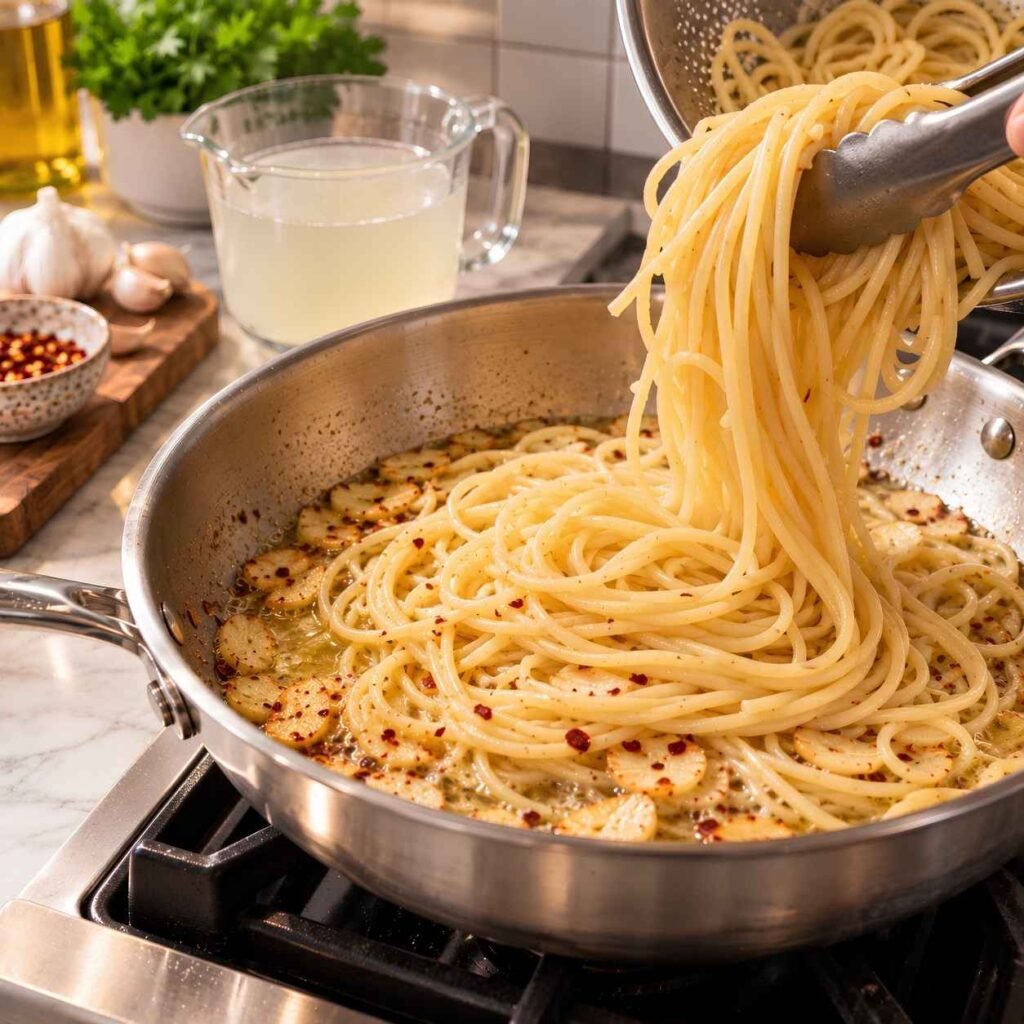
Step 4: Toss Hard, and Keep Tossing. Now toss the pasta continuously with tongs for 30 to 60 seconds, lifting it up out of the pan and letting it fall back. This is the step the whole recipe turns on. Butter and water do not combine on their own; they combine under agitation, and a gentle stir is not agitation.
You will see the liquid go from thin and separated to creamy and glossy, and it happens quite suddenly. Add more pasta water a splash at a time if it tightens.
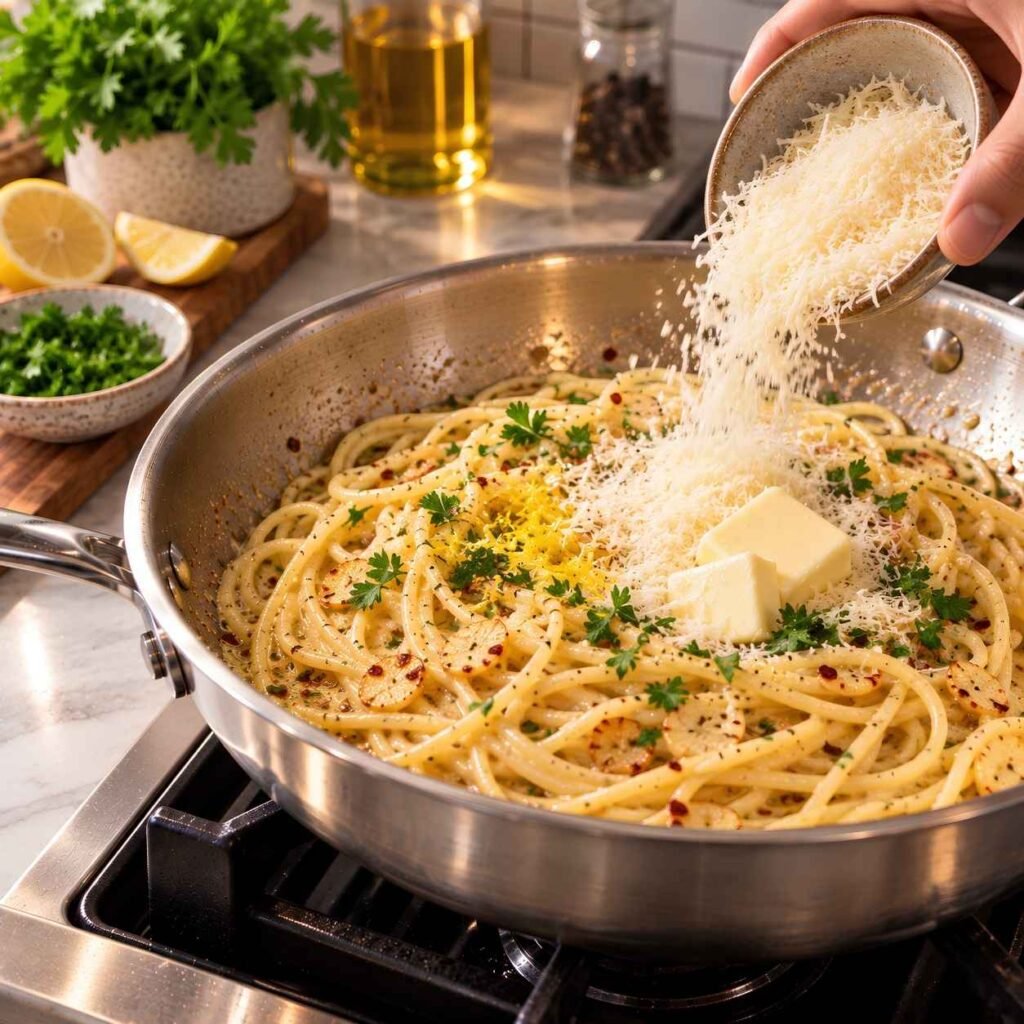
Step 5: Finish Off the Heat. Take the pan off the burner. Add the remaining 2 tablespoons of cold butter, the Parmesan, the lemon zest, and the parsley, and toss again until the butter has melted in and the cheese has disappeared.
Off the heat matters for the cheese: Parmesan seizes into grainy solids in a hot pan, and residual heat melts finely grated cheese perfectly well. Taste, add salt only if it needs it, crack over black pepper, and serve immediately with lemon wedges.
Pro Tips for the Ultimate Pasta
Small adjustments can take your garlic butter pasta from good to absolute perfection.
Toss it harder than feels necessary. This is the whole recipe. Thirty to sixty seconds of lifting pasta up out of the pan and letting it fall back is what turns butter and water into sauce. Stirring gently does not do it, and no amount of extra butter compensates.
Salt the pasta water properly. A tablespoon per four quarts. In most recipes, that water is discarded; here a cup of it ends up in the sauce, so it is seasoning the dish as well as the pasta.
Keep two tablespoons of the butter cold and add it at the end. Off the heat, toss through at the last moment. Cold butter thickens and stabilises the emulsion, and it is the difference between glossy and merely buttery.
Take the pan off the heat before the cheese. Parmesan seizes into grainy solids in a hot pan. Residual heat melts finely grated cheese without any of that risk.
Common Mistakes to Avoid
Stirring instead of tossing. The most common reason this comes out greasy. Butter and water combine under agitation and nothing else, and a spoon moving pasta around the bottom of the pan is not agitation. Tongs, lifting, thirty seconds minimum.
Using too little pasta water. A splash is not enough. Half a cup goes in at the start of the tossing, and more follows if it tightens. The water is not thinning the sauce; it is making it.
Pouring the pasta water down the sink. Everyone does it once, and in this recipe it is fatal rather than inconvenient. There is no sauce without it.
Mincing the garlic and treating it like slices. Minced garlic has several times the surface area and burns within seconds of taking colour. If you mince it, pull it off at fragrant, with no colour at all.
Add the Parmesan to a hot pan. It tightens and separates into grainy solids. Off the heat, and finely grated so residual warmth is enough.
Variations to Try
Cacio e pepe style. Double the black pepper and toast it in the butter with the garlic for thirty seconds before the pasta goes in. Toasting pepper in fat releases far more aroma than adding it at the end.
With shrimp. A pound of large shrimp seared in the butter for 90 seconds on each side before the garlic goes in, then set aside and returned at the very end. Thirty seconds is all they need to warm through.
With spinach. Two large handfuls tossed in with the cheese, off the heat. The residual warmth wilts them in about a minute without turning them grey.
Brown butter version. Instead of simply melting the butter, keep it on the heat until it foams, smells nutty, and the solids at the base turn golden, then add the garlic. It is two extra minutes, and it changes the dish more than any addition does.
What to Serve with Garlic Butter Pasta
This simple, comforting dish pairs beautifully with a variety of sides.
As a main course: Serve with a side salad and crusty bread for a complete, satisfying meal.
As a side dish: Pair with grilled chicken, shrimp, or roasted vegetables for a heartier dinner.
Loaded style: Add sautéed mushrooms, spinach, or crispy pancetta for extra flavor and texture.
How to Store Garlic Butter Pasta
Emulsions are made to be eaten, not stored, though leftovers reheat better than you would expect if you do it right.
In the Fridge: Store in an airtight container for up to 3 days.
In the Freezer: While pasta with a butter-based sauce can be frozen, it’s best enjoyed fresh, as the texture may change slightly upon reheating.
How to Reheat: Warm gently in a skillet with a small splash of water or butter to help revive the sauce’s texture.
Frequently Asked Questions
Can I use a different pasta shape? Yes, this recipe works well with almost any pasta shape, including penne, fettuccine, or linguine.
Can I add protein to this dish? Absolutely. Grilled chicken, shrimp, or even crispy bacon make great additions to turn this into a more filling meal.
Can I make this dish vegan? Yes, substitute a plant-based butter and nutritional yeast or vegan Parmesan for a dairy-free version.
Final Thoughts
There is no sauce to make here, which is why this recipe fools people. You melt butter, toast garlic, add pasta, and none of that produces anything until the last thirty seconds. Butter and water only become a sauce under agitation, so the tossing is not a finishing touch; it is the entire method.
Save more pasta water than you think you need, toss harder than feels necessary, and take the pan off the heat before the cheese. Those three cover almost everything that goes wrong.