
The Best Homemade Salsa Verde
Tomatillos are not green tomatoes, which is the first thing worth clearing up, because the two get confused constantly. They are a different plant entirely, related to the cape gooseberry, and they come wrapped in a papery husk with a sticky film underneath it.
That film is where a lot of first attempts at salsa verde go wrong: it is slightly bitter, water alone does not shift it, and it needs rubbing off under a warm tap.
The second thing is the char. Roasting tomatillos softens them and deepens the flavour, but the blackened spots that give salsa verde its smokiness come from a broiler rather than an oven at 425. Five minutes under a hot grill does what twenty minutes of roasting cannot.
| Prep Time | 10 minutes |
| Roast Time | 20 minutes |
| Total Time | 35 minutes |
| Yield | About 2 1/2 cups |
Why You Will Love This Recipe

If you’ve been stuck buying the same jarred salsa every week, you are going to fall in love with this method. This homemade salsa verde is:
Texturally perfect: A slightly chunky blend gives you the perfect balance between a smooth dip and a heartier, more rustic salsa.
Highly customizable: You can easily adjust the spice level, swap in different chilies, or add extra lime for brightness.
Made with basic staples: You only need tomatillos, jalapeños, garlic, onion, and cilantro.
Bursting with fresh flavor: Roasting the vegetables first adds a deep, smoky char that raw salsa simply can’t replicate.
Equipment You Will Need
A rimmed baking sheet. Not a flat one. Tomatillos release a surprising amount of juice as they roast, and that juice is worth keeping: it carries most of the roasted flavour, and it goes into the blender with everything else. On a flat sheet, it runs off and onto the oven floor.
Foil to line it. Tomatillo juice caramelises onto a baking sheet and is genuinely difficult to remove. Foil also makes it easy to tip everything, juice included, straight into the blender.
A blender or food processor. Either works here, since roasted tomatillos are soft and there is plenty of liquid. A food processor gives a slightly chunkier result, which suits salsa; a blender goes smoother more easily.
A towel for the blender lid. Hot ingredients in a sealed blender build up steam pressure, and lids do come off. Let everything cool for ten minutes, leave the centre cap out, and hold a folded towel over the opening for the first few pulses.
Ingredients You Will Need
The beauty of this recipe lies in its sheer simplicity. To get that perfect tangy, fresh flavor, you will need:
For Roasting:
1 1/2 lbs tomatillos, husked and scrubbed under warm water
2 to 3 jalapeños, stems removed, seeded for milder salsa
1/2 white onion, cut into thick wedges
4 cloves garlic, unpeeled
To Blend and Finish:
3/4 cup fresh cilantro, leaves and stems
2 tbsp fresh lime juice
1 tsp kosher salt
Water, only if needed to loosen
Lime wedges and extra cilantro, to serve
Step-by-Step Instructions for Salsa Verde
Step 1: Husk and Scrub the Tomatillos. Peel off the papery husks and discard them. Run the tomatillos under warm water and rub each one firmly with your thumb for about ten seconds, until the surface stops feeling tacky and squeaks slightly.
This sticky film is bitter, and cold water will not remove it. Cut any large tomatillos in half so everything roasts at a similar rate.

Step 2: Roast or Broil. Line a rimmed baking sheet with foil and arrange the tomatillos, jalapeños, onion, and unpeeled garlic in a single layer. For a smoky char, broil about 6 inches from the element for 5 to 7 minutes.
Turn everything and broil for another 4 to 5 minutes, until blistered and lightly blackened. For a milder roasted flavor, roast at 425°F (220°C) for 15 to 20 minutes, flipping halfway. Remove the garlic early if it starts browning too quickly.
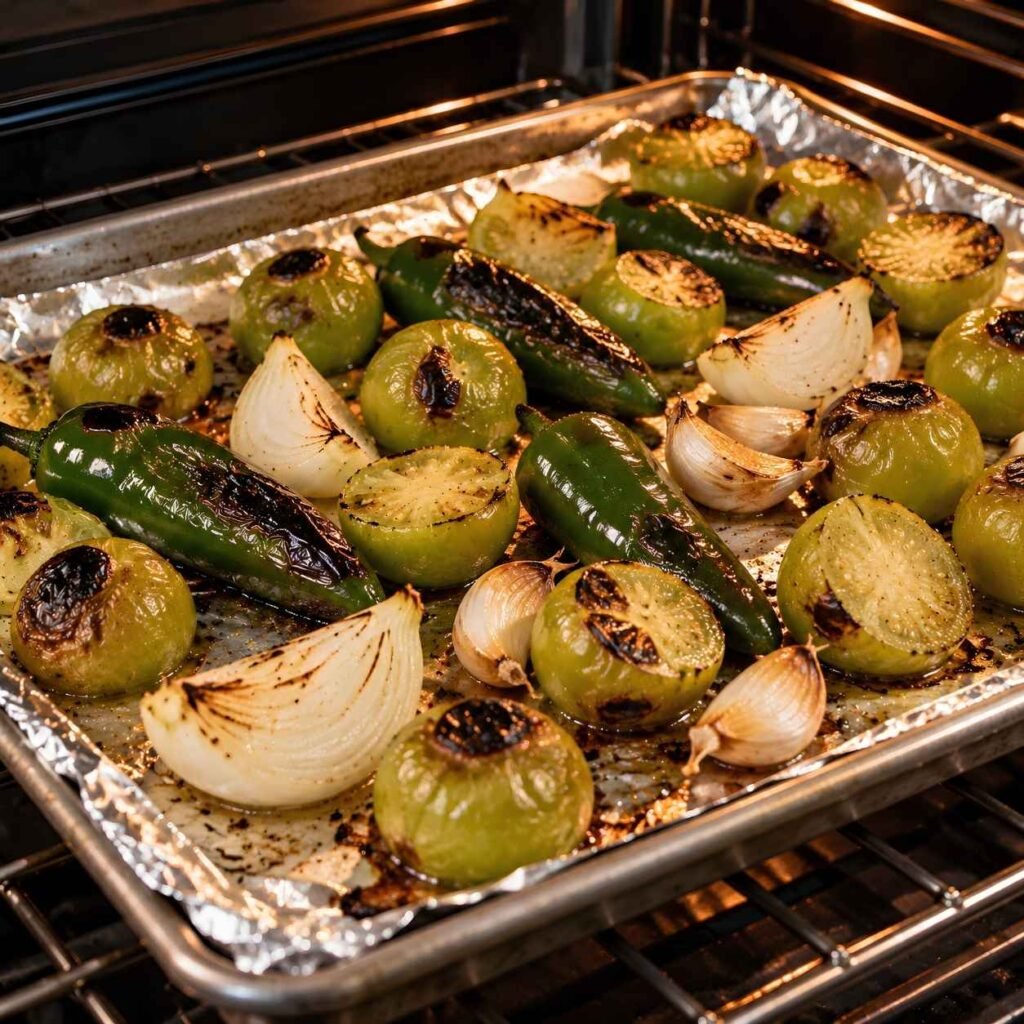
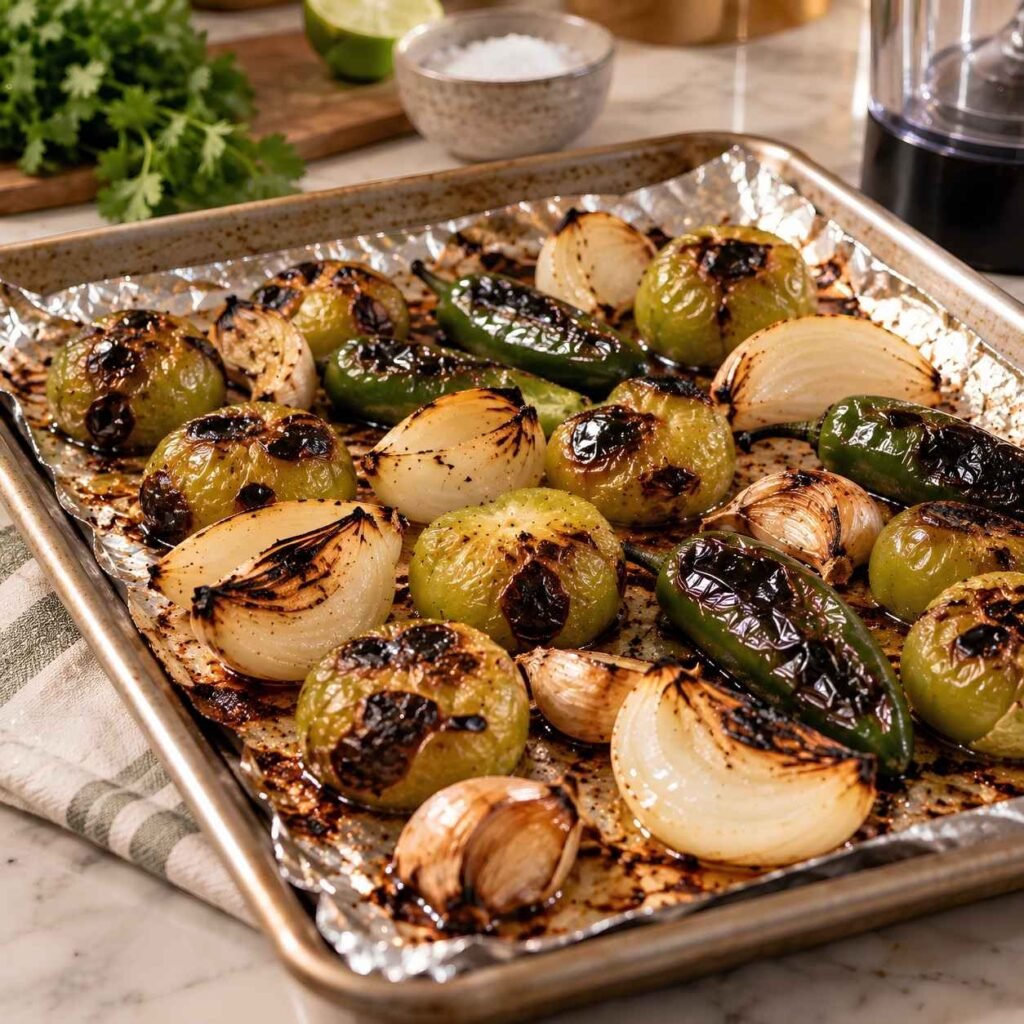
Step 3: Cool Properly. Let everything sit on the tray for 10 minutes. This matters more than it sounds: hot ingredients in a sealed blender build steam pressure and can force the lid off. Squeeze the garlic cloves out of their skins and discard the skins.
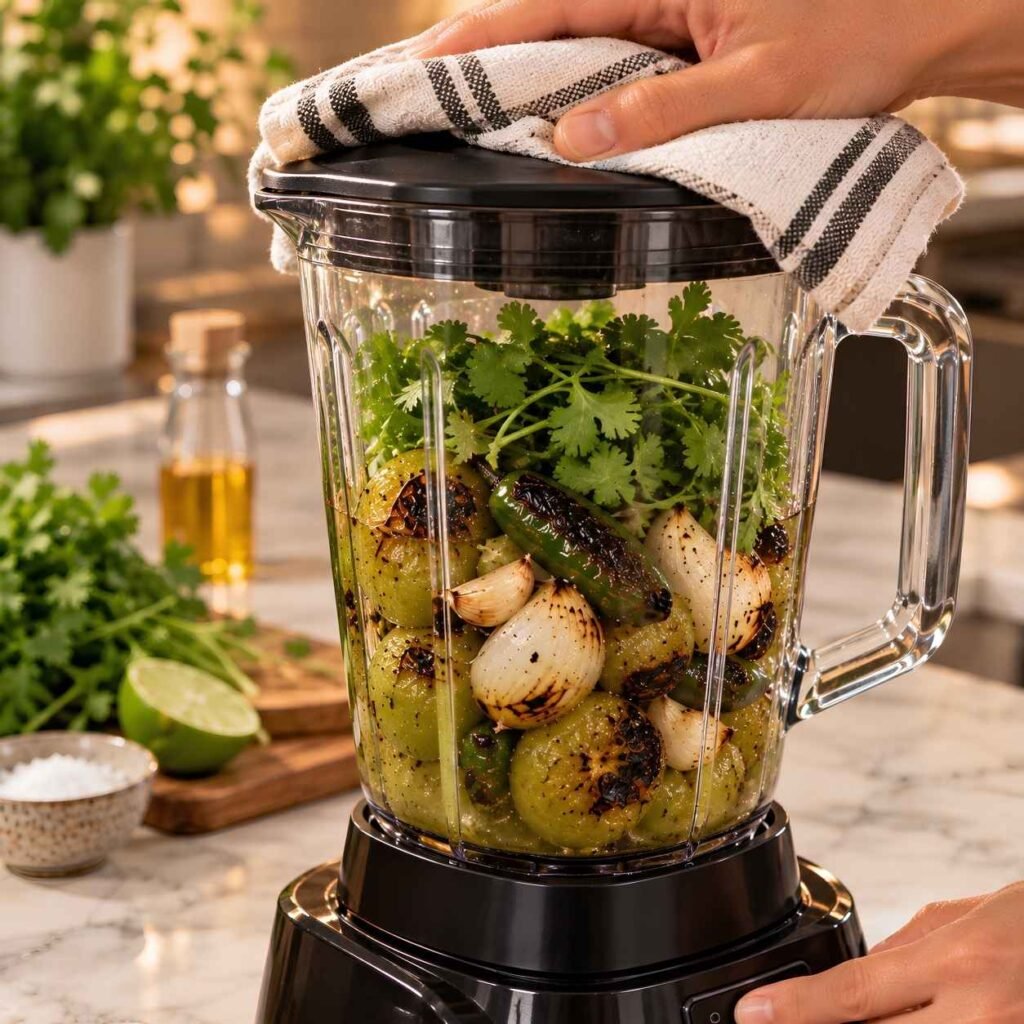
Step 4: Blend. Tip everything into the blender, including all the juice from the tray, which carries a great deal of the roasted flavour. Add the cilantro and lime juice. Remove the centre cap from the lid, cover the opening with a folded towel, and pulse.
A few pulses give a chunky salsa; 20 to 30 seconds gives a smooth one. Only add water if it is genuinely too thick, which with roasted tomatillos it rarely is.
Step 5: Season and Rest. Add the salt and pulse once to combine. Taste, then adjust with more salt or lime. Salsa verde improves noticeably after an hour in the fridge as the flavours settle, so make it ahead if you can. Serve with extra cilantro and lime wedges.

Pro Tips for the Ultimate Salsa Verde
Small adjustments can take your homemade salsa verde from good to absolute perfection.
Scrub the tomatillos; do not just rinse them. The sticky film under the husk is bitter, and cold water leaves it there.
Warm water and ten seconds of rubbing each one is the difference between good salsa verde and salsa verde with a faint bitterness you cannot place.
Use the broiler for real char. An oven roasts at 425. A broiler chars. If smokiness is what you are after, five minutes under a hot element does what twenty minutes of roasting will not.
Keep every drop of juice from the tray. Tomatillos release a lot of it, and it carries most of the roasted flavour. This is why the tray needs a rim.
Let it cool for ten minutes before blending. Not for texture, for safety. Steam builds pressure in a sealed blender and lids do come off. Take the centre cap out and hold a towel over the gap.
Make it an hour ahead. Salsa verde tastes noticeably better once the flavours have settled, and it is one of the few things that genuinely improves in the fridge.
Common Mistakes to Avoid
Rinsing the tomatillos instead of scrubbing them. The sticky coating under the husk is bitter, and a quick rinse under a cold tap leaves almost all of it in place. Warm water and a thumb, ten seconds each.
Expecting char from a 425-degree oven. Roasting softens and sweetens; it does not blacken. If the smoky flavour is the point, the broiler is the tool.
Throwing away the juice on the tray. It looks like waste, and it is the opposite. Most of the roasted flavour is in that liquid, and tipping it into the blender is free.
Adding water by default. Roasted tomatillos are already wet. Water thins the salsa and dilutes the flavour, and most batches need none at all.
Variations to Try
Salsa verde cruda. Skip the roasting entirely and blend everything raw. It is sharper, brighter and more acidic, and it is a genuinely different sauce rather than a lesser one.
This is what is often served alongside tacos in Mexico, where the roasted version is more common as a cooking sauce.
Creamy avocado salsa verde. Blend in one ripe avocado at the end. It turns the salsa pale green and silky and takes the edge off the acidity, which is what goes over carne asada and into taquerias as a table sauce.
Hotter. Serranos instead of jalapeños, membranes left in, or add a single habanero with the seeds removed. Habanero brings a fruitiness that jalapeño does not have and a great deal more heat.
With roasted poblano. One poblano charred alongside everything else, skin peeled off afterwards. It adds body and a mild smokiness without adding much heat.
What to Serve with Salsa Verde
This versatile salsa pairs beautifully with a wide variety of dishes.
As a dip: Serve with tortilla chips for a simple, flavorful appetizer.
As a taco topping: Drizzle over tacos, burritos, or quesadillas for an extra punch of tangy flavor.
As a cooking sauce: Use as a base for enchiladas verdes or simmer with shredded chicken for a flavorful filling.
How to Store Salsa Verde

Salsa verde is one of the few things that is better on day two than on day one.
In the Fridge: Store in an airtight jar or container for up to 1 week. It also needs tasting again after a day in the fridge. Cold dulls salt, so a salsa that was seasoned correctly while warm can taste flat straight from the fridge and often wants a pinch more salt and a squeeze of lime.
In the Freezer: Freeze in small portions or an ice cube tray for up to 3 months, thawing only what you need.
How to Refresh: Give the salsa a quick stir before serving again, since natural separation can occur over time.
Frequently Asked Questions
Can I make this salsa without roasting the vegetables? Yes, you can blend everything raw for a fresher, brighter flavor, though roasting adds more depth and smokiness.
What peppers work best in this recipe? Jalapeños offer a moderate heat level, while serranos provide a spicier kick if you prefer more heat.
Can I make this ahead of time for a party? Absolutely. This salsa can be made up to 3 days in advance and often tastes even better after the flavors have had time to meld.
Final Thoughts
Two minutes of the thirty-five decide how this turns out, and they happen before anything goes in the oven. Husk the tomatillos, then rub each one under warm water until it stops feeling sticky.
That film is bitter; cold water does not shift it, and it is the reason so much homemade salsa verde has an edge to it that nobody can quite name.
The second thing is the broiler. Roasting at 425 softens and sweetens; it does not char. If the smoky flavour is what you want, put the tray under a hot element for five minutes a side instead.