

Homemade Mango Sorbet Recipe: Better Than Store-Bought
Sugar in sorbet is not really about sweetness. It is antifreeze. Sugar lowers the freezing point of water, and that is the only reason a fruit purée comes out of the freezer as something you can scoop rather than as a solid block of ice.
This is worth knowing before you start, because the instinct with a naturally sweet fruit like mango is to cut the sugar right back, and cutting it back is exactly what turns sorbet into a brick.
It is also why commercial sorbet contains as much sugar as it does. That is not a shortcut or a cost-saving; it is the mechanism.
What you get from making it at home is a ripe mango you chose yourself, real lime instead of citric acid, and control over exactly how sweet it ends up within the range that still works.
| Prep Time | 10 minutes |
| Freeze the Mango | 4 hours or overnight |
| Blend Time | 10 minutes |
| Firm Up Time | 3 to 4 hours |
Why You Will Love This Recipe
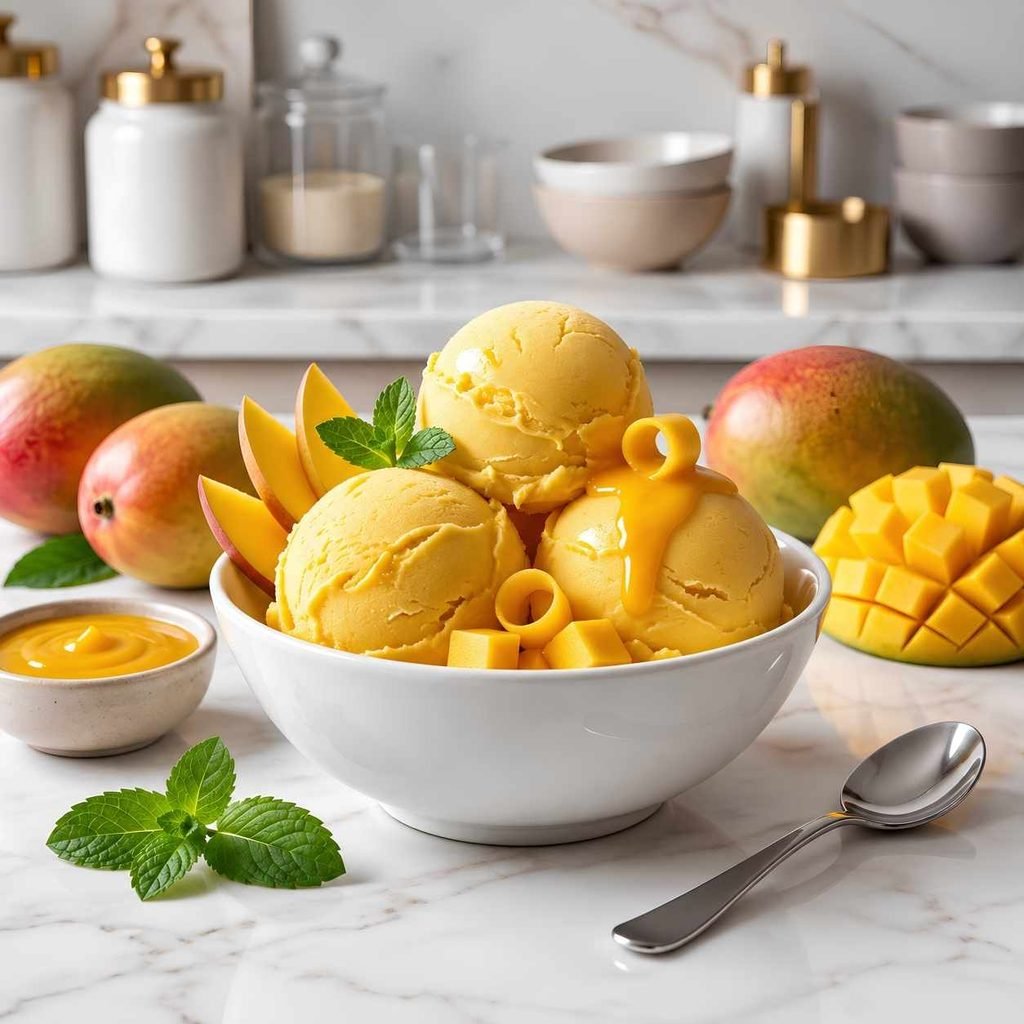
If you’ve been stuck buying pints of sorbet from the freezer aisle, you are going to fall in love with this method. This homemade mango sorbet is:
Texturally perfect: Blending frozen mango creates a smooth, creamy texture without any dairy or heavy cream needed.
Highly customizable: You can easily add a splash of coconut milk, a hint of chili powder, or swap in other tropical fruits.
Made with basic staples: You only need ripe mangoes, sugar, lime juice, and water.
Naturally dairy-free: This sorbet is entirely fruit-based, making it a refreshing option for those avoiding dairy.
Equipment You Will Need
A food processor, not a blender. These are not interchangeable here, whatever most recipes say. A blender needs liquid to create the vortex that pulls food down onto the blades, and this mixture is deliberately low in liquid.
A food processor has a wide flat bowl and a blade that cuts through thick mixtures without needing anything to move them. If a blender is all you have, it will work in a high-powered model with plenty of stopping and scraping, and you may need an extra two tablespoons of water.
A metal loaf pan or shallow container. Shallow and metal beats deep and plastic, because the mixture freezes faster, and fast freezing means smaller ice crystals. A deep tub freezes from the outside in, and the middle takes long enough to form a coarser texture.
Parchment paper. Pressed directly onto the surface before the lid goes on. This is already in your Pro Tips, and it is genuinely one of the better tips in the article.
A sturdy spatula. For scraping down the sides of the processor, which you will do three or four times. Frozen fruit climbs the walls rather than staying near the blade.
Ingredients You Will Need
The beauty of this recipe lies in its sheer simplicity. To get that perfect sweet, tropical flavor, you will need:
For the Sorbet:
4 cups ripe mango chunks, frozen (about 1 1/2 lbs)
1/2 cup granulated sugar
1/2 cup water
2 tbsp fresh lime juice
1/4 tsp salt
1 tbsp light corn syrup or vodka (optional, keeps it softer)
To Serve:
1/2 cup fresh mango, cut into small cubes
2 tbsp mango purée, for drizzling
Fresh mint sprigs
Step-by-Step Instructions for Mango Sorbet
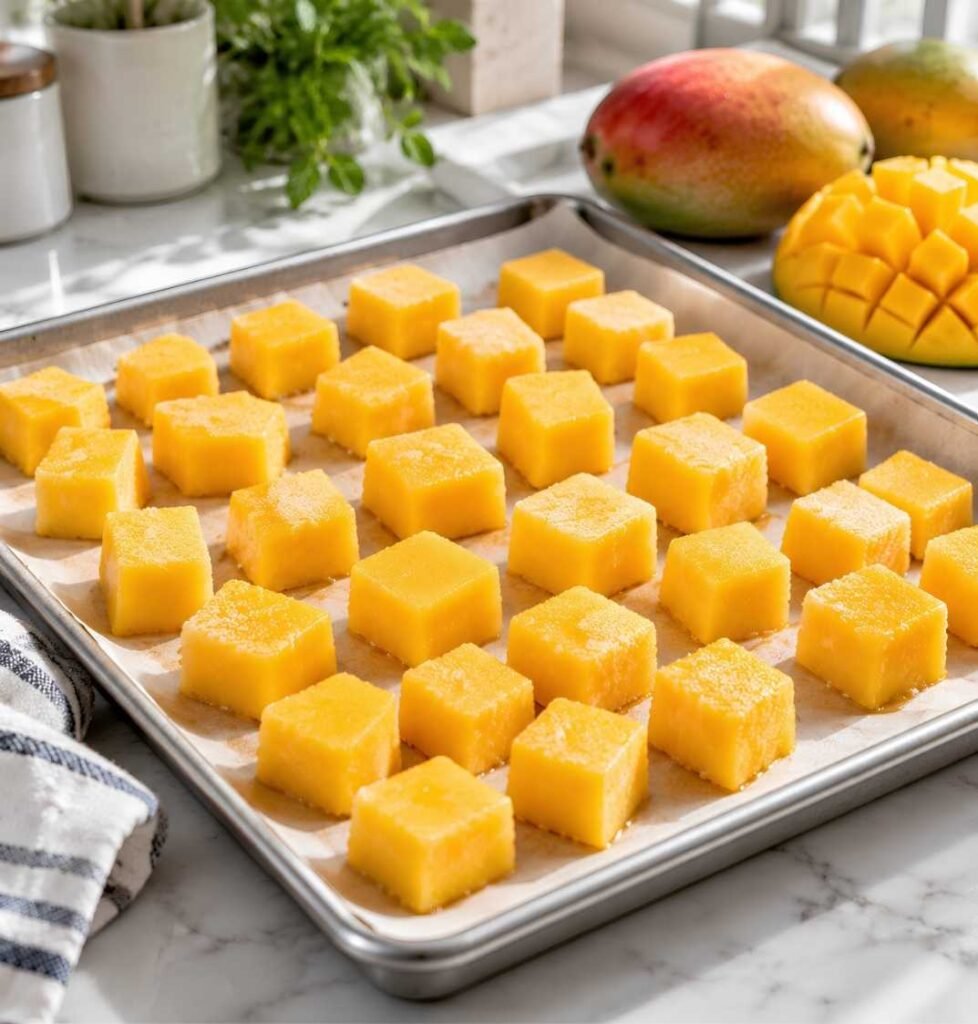
Step 1: Freeze the Mango. If your mango is not already frozen, cut it into 1-inch chunks and spread them in a single layer on a baking sheet. Freeze for at least 4 hours or overnight.
A single layer matters: chunks piled in a bag freeze into one solid mass that a food processor will struggle with. Bagged frozen mango from the shop skips this step entirely.
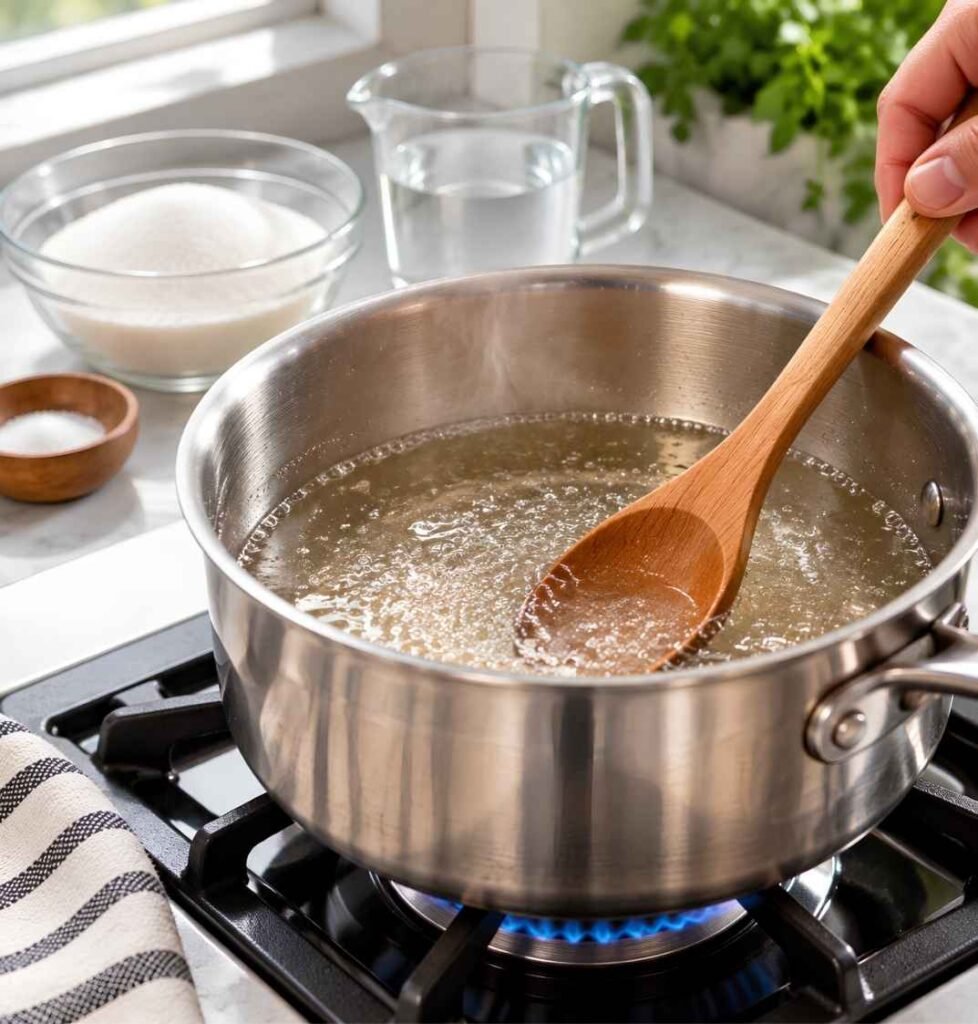
Step 2: Make and Cool the Syrup. Combine the water, sugar, and salt in a small saucepan and heat over medium heat, stirring until the sugar has completely dissolved. Take it off the heat and cool it to room temperature, which takes about 20 minutes, or 10 in the fridge.
Warm syrup poured over frozen mango thaws the edges before the blade reaches them, and partly thawed fruit blends into something closer to a smoothie than a sorbet.
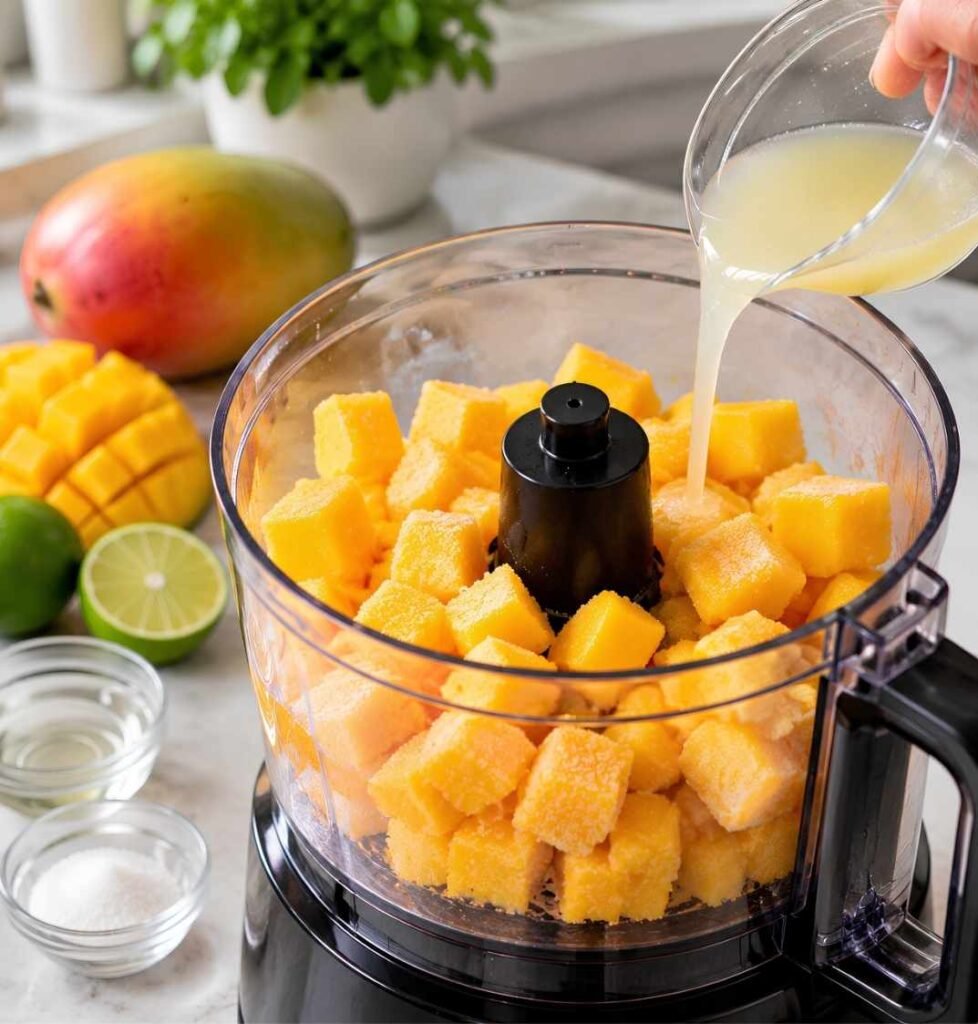
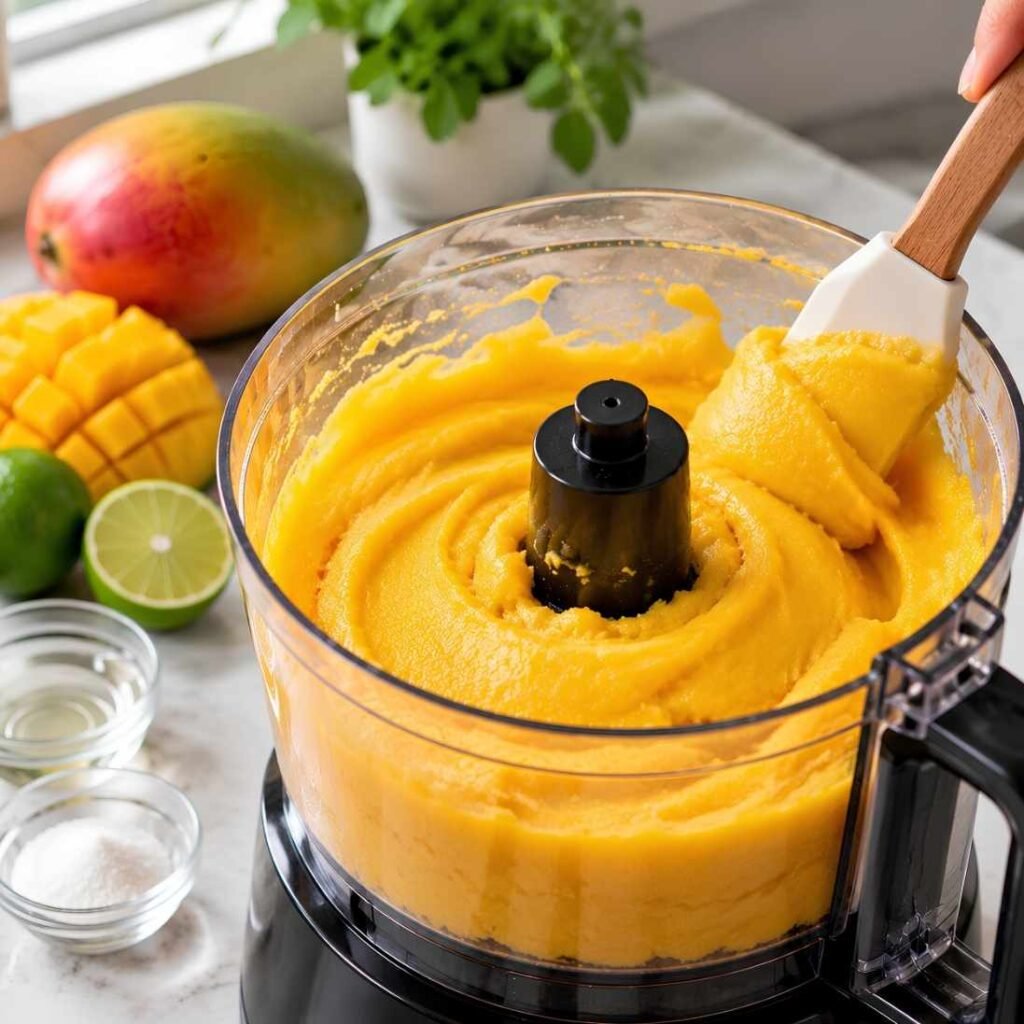
Step 3: Blend. Put the frozen mango, cooled syrup, lime juice, and the corn syrup or vodka if using into a food processor. Blend for 2 to 3 minutes, stopping to scrape down the sides three or four times.
It will look crumbly at first and then suddenly turn smooth and glossy, so keep going past the point where it looks like it is not working. If your mangoes were the fibrous kind, push the mixture through a fine sieve now.
Step 4: Taste and Adjust. Taste it before it goes in the freezer, since this is the only chance to change anything. It should taste slightly sweeter than you want the finished sorbet to be, because cold dulls sweetness considerably. If it needs lifting rather than sweetening, add another teaspoon of lime.
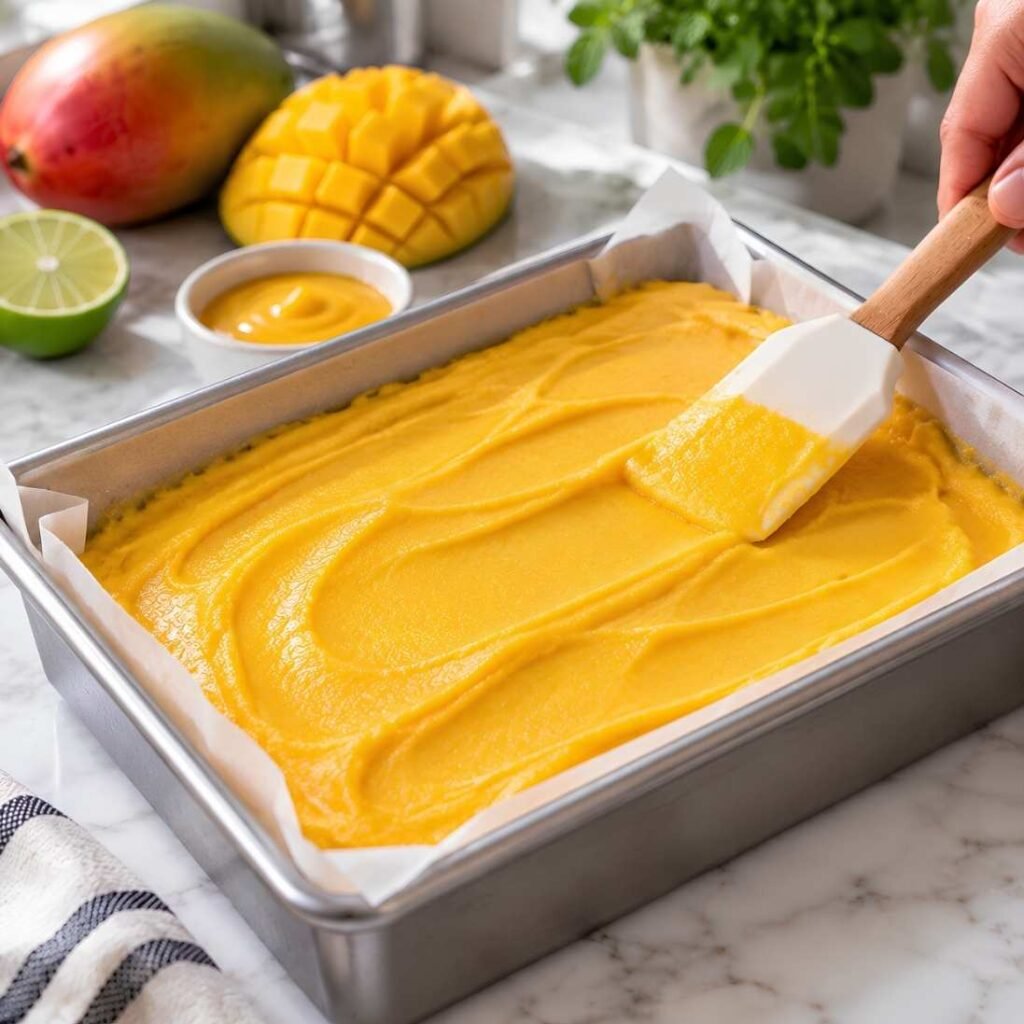
Step 5: Freeze to Firm. Scrape the mixture into a shallow metal container, press a piece of parchment directly onto the surface, and cover. Freeze for 3 to 4 hours. Straight from the processor, it has a soft-serve texture; this is what makes it scoopable.
Before serving, let it sit at room temperature for 5 to 10 minutes and run your scoop under hot water. Serve with the mango cubes, a drizzle of mango purée, and a sprig of mint.
Pro Tips for the Ultimate Sorbet
Small adjustments can take your homemade mango sorbet from good to absolute perfection.
Do not cut the sugar. It is the one change that looks sensible and is not. Sugar keeps sorbet scoopable by lowering the freezing point, and half a cup for four cups of fruit is already close to the minimum. If you want it less sweet, add lime rather than removing sugar.
Use a food processor rather than a blender. A blender needs liquid to create a vortex, and this mixture deliberately has very little. A food processor cuts through thick mixtures without anything to carry them.
Freeze the mango in a single layer. Chunks tipped into a bag freeze into one lump that a processor cannot break down. A baking sheet, then transfer to a bag once solid.
Taste it before it goes in the freezer, and aim slightly too sweet. Cold suppresses sweetness noticeably. A mixture that tastes perfectly balanced at room temperature will taste flat once frozen.
Common Mistakes to Avoid
Cutting the sugar because the mango is sweet. The most common mistake and the most understandable one. Sugar is what stops sorbet from freezing solid, and ripeness has nothing to do with freezing point. Half a cup for four cups of fruit is the floor.
Using a blender instead of a food processor. Blenders need liquid to pull food onto the blades. This mixture has half a cup of syrup and four cups of frozen fruit, which is nowhere near enough, and the machine spins while the fruit sits above it.
Adding water when it will not blend. The instinct when the processor is struggling is to add liquid. Every spoonful of water you add is a spoonful of ice in the finished sorbet. Scrape the sides instead and give it another minute.
Pouring warm syrup over frozen fruit. It thaws the outside of the chunks before the blade reaches them, and partly thawed mango blends into a smoothie rather than a sorbet. Room temperature, which takes about twenty minutes.
Variations to Try
Coconut mango. Replace the half cup of water in the syrup with full-fat coconut milk, warmed with the sugar the same way. It comes out creamier and closer to a sorbet-gelato hybrid, and it suits mango better than dairy would.
Mango chilli. A quarter teaspoon of chilli powder and an extra pinch of salt, blended in at the end. This is how mango is eaten across much of Mexico and South Asia, and the heat against the cold is far better than it sounds.
Mango and passion fruit. Replace one cup of the mango with frozen passion fruit pulp. Sharper and more aromatic, the two are a classic pairing.
Mango lassi sorbet. Add half a cup of full-fat yoghurt to the blender. Technically, it stops being a sorbet and becomes a sherbet, which is the correct name for a frozen fruit dessert with a little dairy in it.
What to Serve with Mango Sorbet
This refreshing dessert pairs beautifully with a variety of occasions.
As a light dessert: Serve on its own after a spicy or heavy meal for a cooling, refreshing finish.
As a party treat: Scoop into small cups and serve at summer gatherings for an easy, crowd-pleasing dessert.
Loaded style: Top with shredded coconut, a drizzle of honey, or a splash of sparkling water for a fun mango float.
How to Store Mango Sorbet
Sorbet keeps well, though it firms up more each week it sits.
In the Freezer: Store in an airtight, freezer-safe container for up to 2 months.
Best Practice: Press a piece of parchment paper directly onto the surface of the sorbet before sealing to help prevent ice crystals from forming.
How to Soften: Let the sorbet sit at room temperature for 5 to 10 minutes before scooping if it becomes too firm in the freezer.
Frequently Asked Questions
Can I use frozen mango from the store? Yes, store-bought frozen mango chunks work perfectly and save you the step of freezing your own.
Can I make this sorbet without added sugar? Yes, if your mangoes are very ripe and sweet, you can reduce or omit the added sweetener entirely.
Do I need an ice cream maker for this recipe? No, this method uses a food processor or blender instead, making it accessible without special equipment.
Final Thoughts
Everything about this recipe is straightforward except one decision, and it is the one almost everybody gets wrong. The sugar is not there for sweetness.
It lowers the freezing point of the water in the fruit, and that is the only thing standing between scoopable sorbet and a block of flavoured ice. Ripe mangoes do not change that, because ripeness affects flavour rather than physics.
If you want it less sweet, add lime. That balances it without touching the texture, and it makes the mango taste more like itself rather than less.