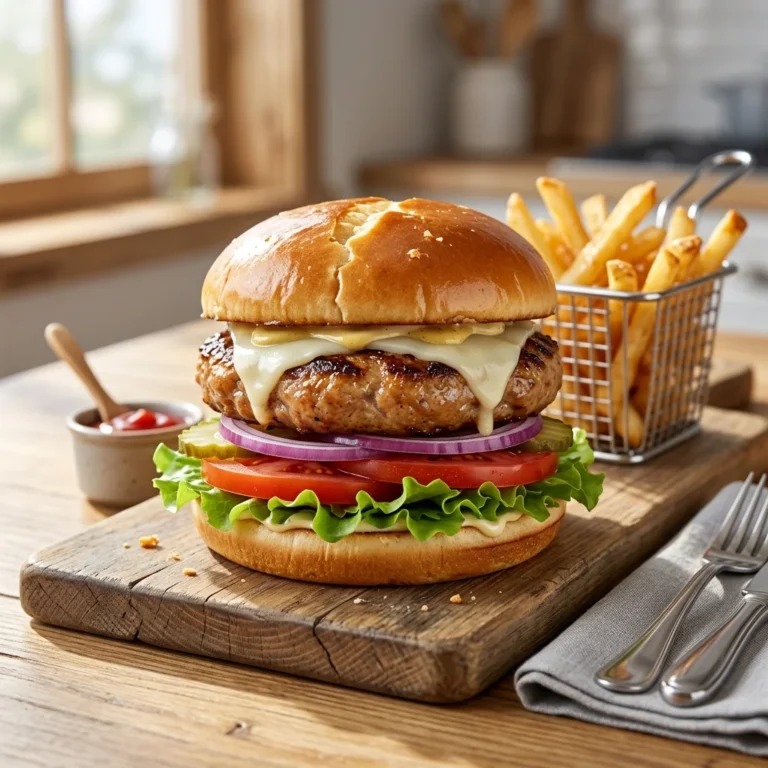

Sugar-Free Jello and Greek Yogurt Recipe: A Creamy, Guilt-Free Delight
This is two ingredients and about ten minutes of work, but it fails more often than it should, and always for the same two reasons.
Too much liquid. A Jello packet sets a fixed amount. Add yogurt on top of the full water measurement and you push past what the gelatin can hold, which gives you something soft and wobbly rather than set.
Yogurt added too cold, too fast. Warm gelatin hitting cold yogurt seizes into small lumps that will not whisk out.
Both have simple fixes, and once you know them this becomes genuinely reliable. About 48 calories and 7 grams of protein per serving, which is unusual for something that eats like a mousse.
Why Make Sugar-Free Jello and Greek Yogurt at Home?
Homemade Jello with Greek yogurt offers several benefits that store-bought alternatives can’t match:
- Low in Sugar: This recipe uses sugar-free Jello to keep the sweetness without all the extra sugar.
- High in Protein: Greek yogurt adds a good dose of protein, helping keep you fuller for longer.
- Customizable: You can change up the flavor of the Jello or add your favorite fruits for variety.
- Quick and Easy: With just a few ingredients, you can whip this dessert up in no time.

Ingredients
Serves 4
- 1 packet (0.3 oz) sugar-free Jello, any flavor
- 1 cup boiling water
- 1 cup plain Greek yogurt, at room temperature
Optional
- Fresh berries, for topping
- A tablespoon of granola, for crunch
Two changes from the original. The cold water is gone, and the yogurt needs to be at room temperature. Together these fix the two things that make this recipe fail.
Check your packet size. The small 0.3 oz box sets 2 cups. The larger 0.6 oz box sets 4 cups, so double everything if that is what you have.
Ingredient Tips
Room temperature yogurt is not optional. Take it out of the fridge about 30 minutes before you start. Cold yogurt is the main cause of lumps in this recipe, and no amount of whisking fixes them afterward.
Full-fat or 2% Greek yogurt. Non-fat works but comes out noticeably more sour and slightly chalky. The small amount of fat rounds the flavor and improves the texture considerably.
Strained, thick Greek yogurt. If yours is runny, the set will be softer. Thick is better here.
Plain, not flavored. The Jello brings all the sweetness and flavor you need. Flavored yogurt on top of that usually pushes it past pleasant into cloying, and it adds sugar back in that you removed.
Any Jello flavor works. Strawberry, raspberry, lime, orange, peach. Berry flavors pair best with the tang of Greek yogurt. Lime is sharper and divides people.
Step-by-Step Instructions
Anchor: steps
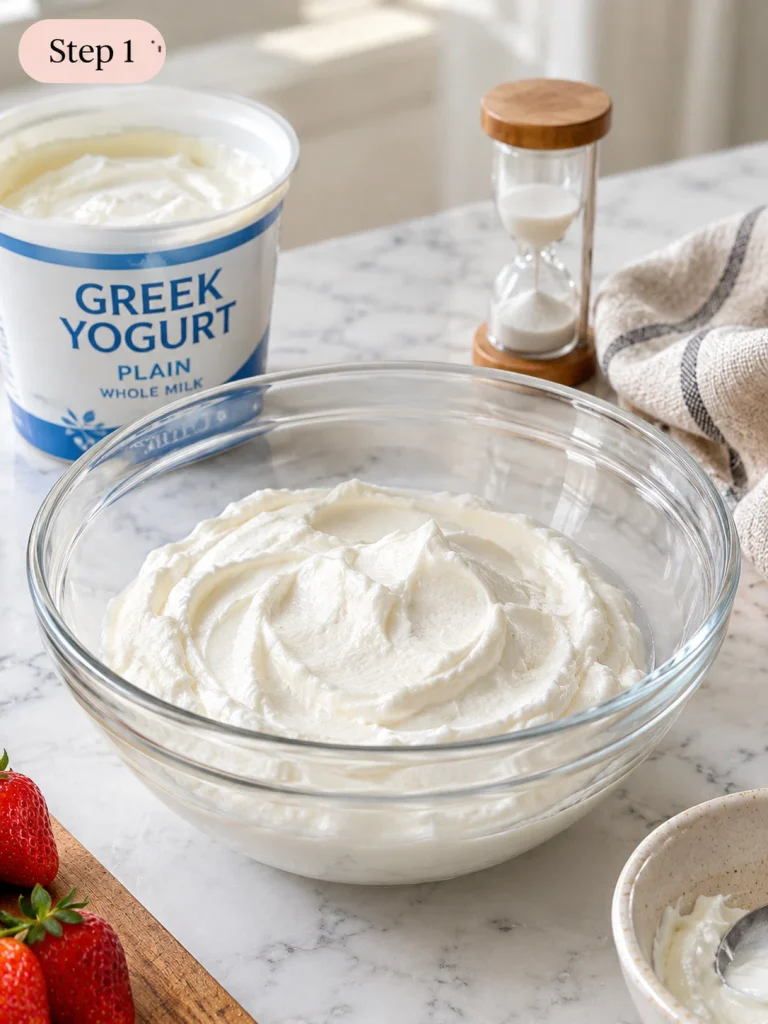
Step 1: Take the Yogurt Out First
Before anything else, measure the Greek yogurt into a bowl and leave it on the counter for 30 minutes.
This is the step everyone skips and it is the one that matters most. Warm gelatin hitting fridge-cold yogurt seizes on contact and forms small lumps that will not whisk out.
If you are in a hurry, microwave the yogurt for 10 seconds and stir. Do not go longer or it will split.
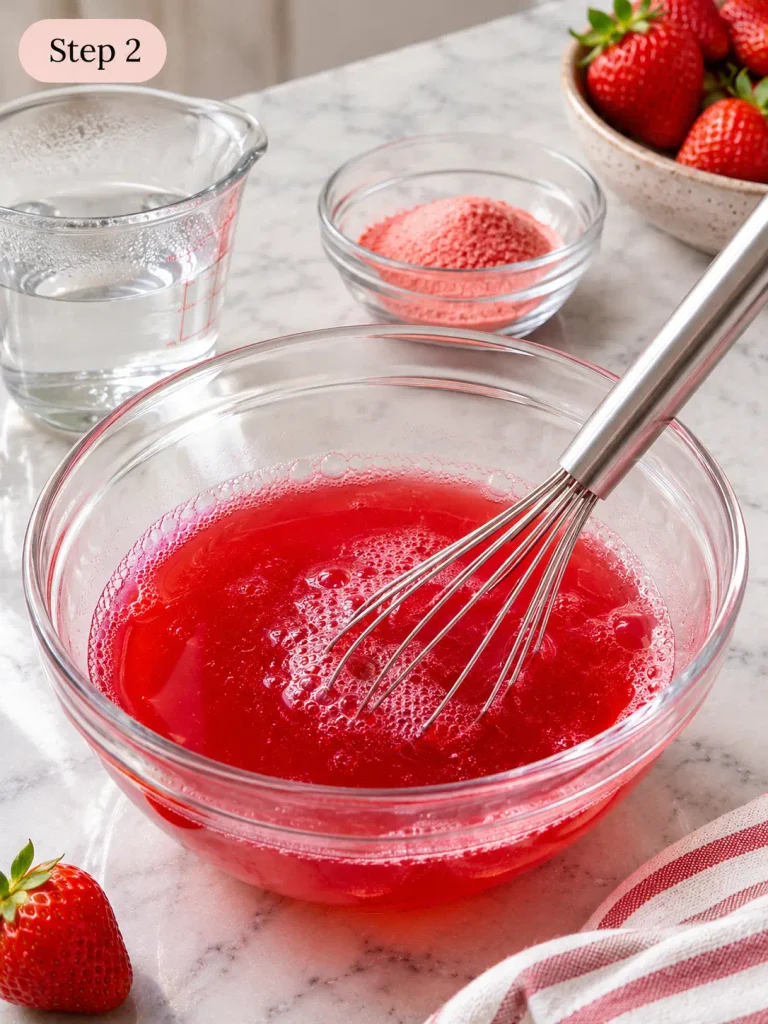
Step 2: Dissolve the Jello
Boil 1 cup of water and pour it into a medium bowl. Add the Jello powder.
Whisk for a full 2 minutes, until there is no grain left at the bottom of the bowl.
Run a spoon along the base and check. Undissolved powder means a gritty texture in the finished dessert, and it also means less gelatin available to set.
No cold water. The yogurt is taking its place.
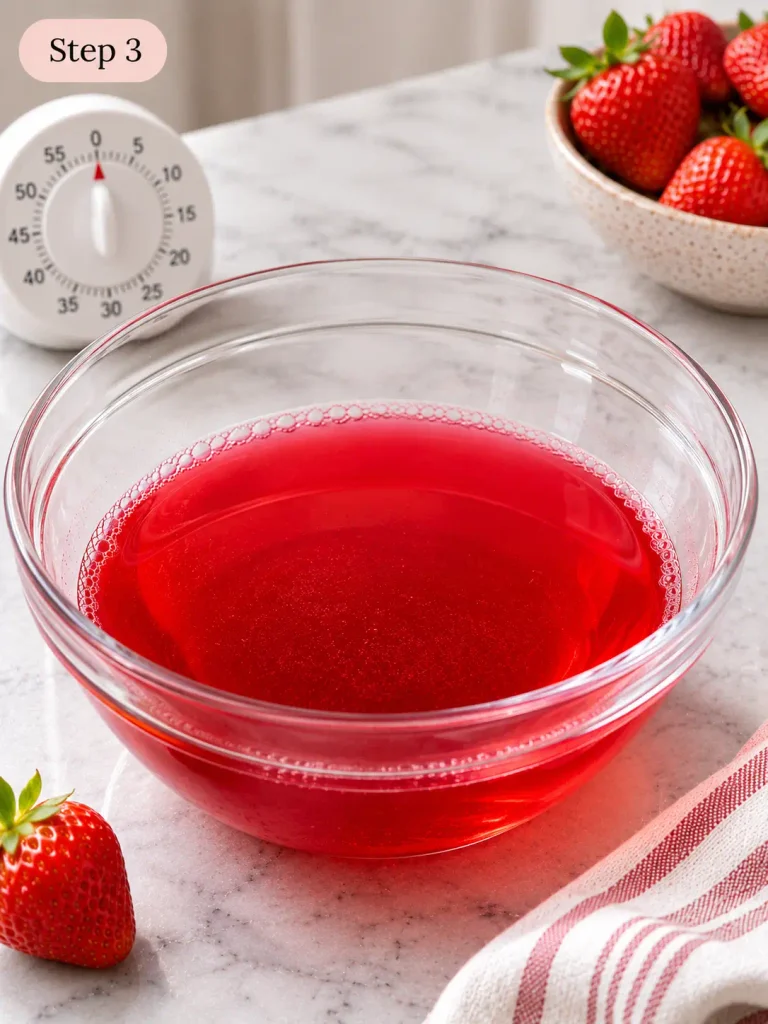
Step 3: Cool It Properly
Leave the Jello mixture on the counter for 20 to 25 minutes, until it feels only barely warm to the touch.
Test it with a fingertip on the outside of the bowl. It should feel neutral rather than warm.
Five minutes is not enough, which is what most versions of this recipe say. After five minutes the liquid is still around 100°F, which is hot enough to seize the yogurt.
It should still be fully liquid at this point. If it has started to thicken at the edges, you have gone slightly too far, but it is still usable if you work quickly.
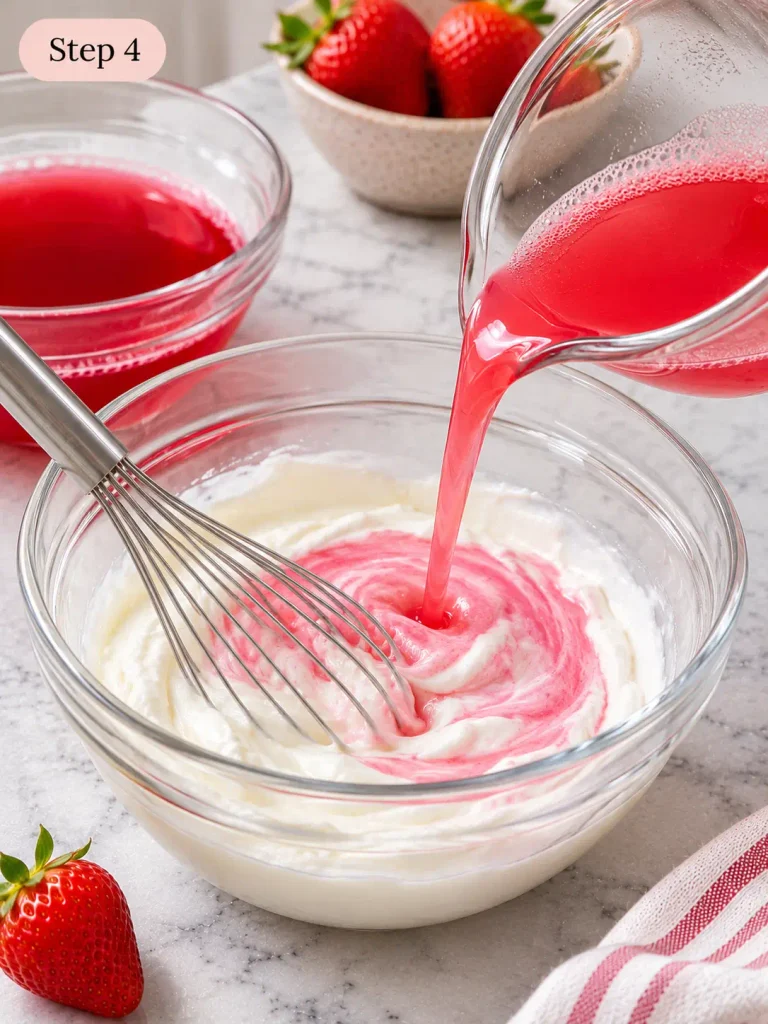
Step 4: Temper the Yogurt
Add about ¼ cup of the cooled Jello liquid to the yogurt and whisk until smooth.
Then add another ¼ cup and whisk again.
This is the professional step that prevents lumps entirely. You are bringing the yogurt up to temperature gradually instead of shocking it all at once.
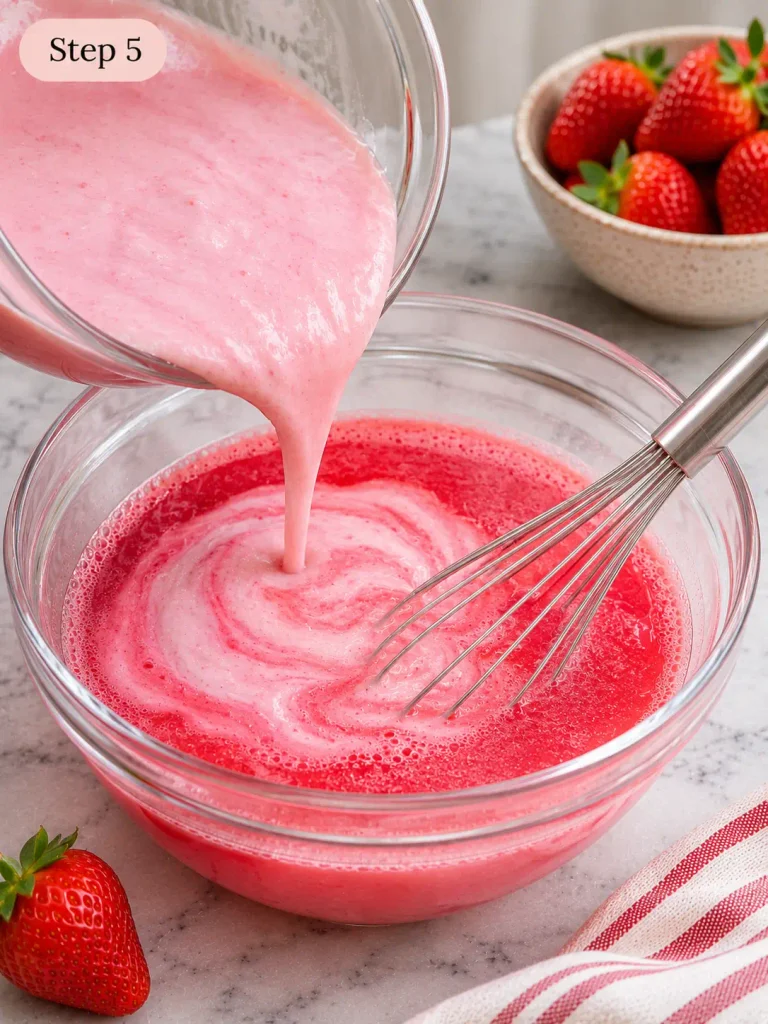
Step 5: Combine
Pour the tempered yogurt mixture back into the main bowl of Jello liquid.
Whisk steadily for about 1 minute, until the color is completely even with no white streaks and no lumps.
The mixture will look thin and slightly frothy. That is correct. It firms up considerably in the fridge.
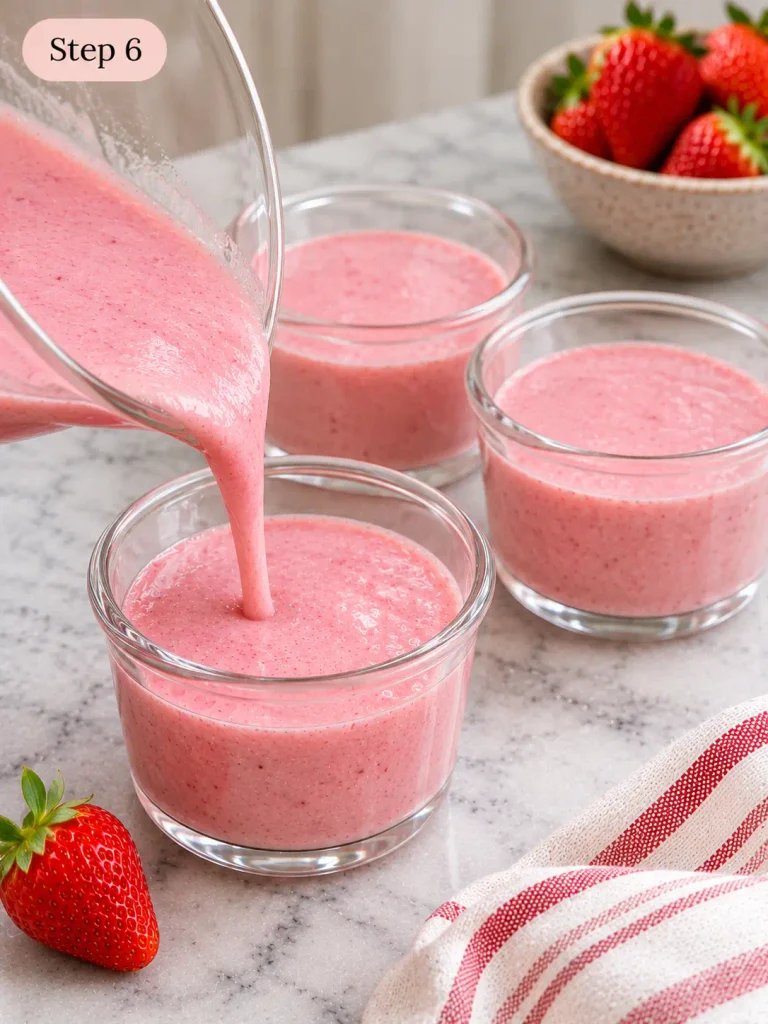
Step 6: Pour and Chill
Divide between 4 small bowls, ramekins, or glasses, or pour into one dish.
Cover and refrigerate
for at least 3 hours, or until firm when you tilt the container.
Individual portions set faster than one large dish, usually by about an hour.
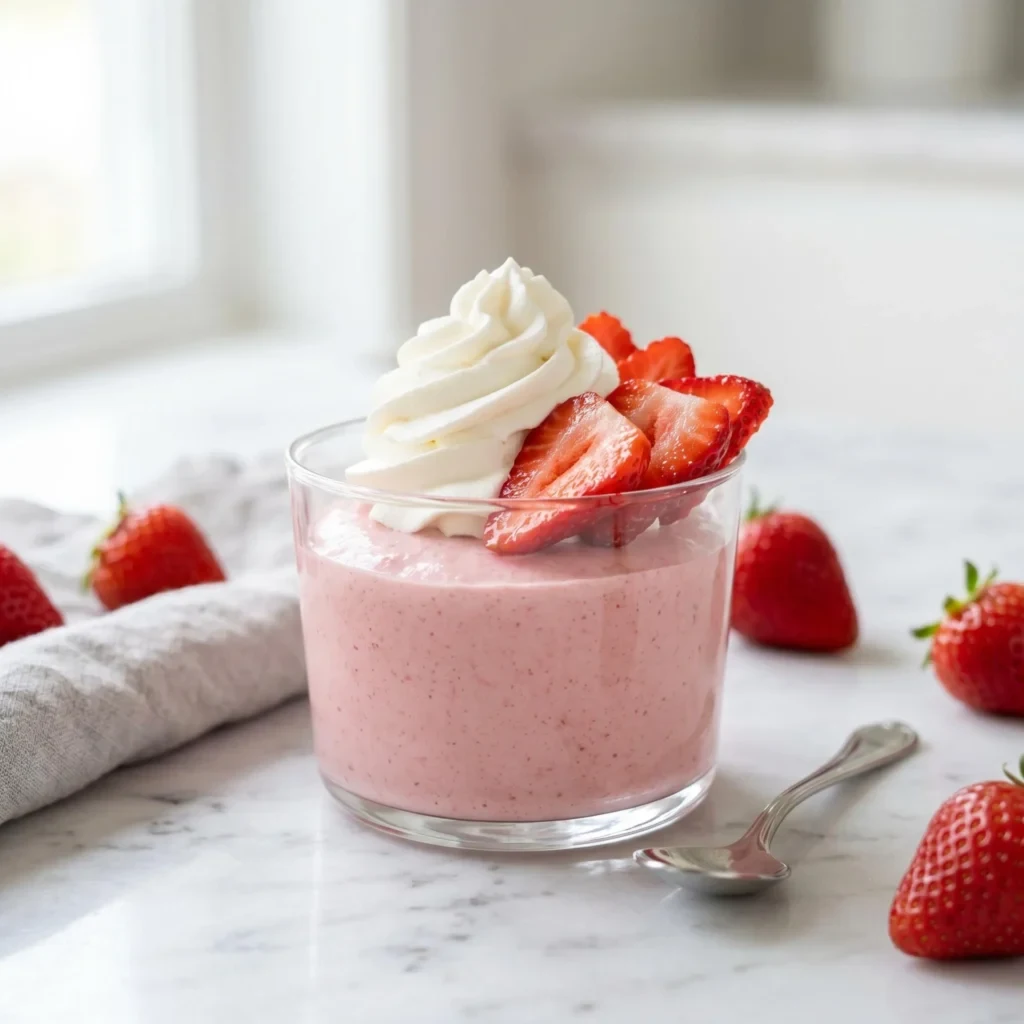
Step 7: Top and Serve
Serve cold, straight from the fridge.
Top with fresh berries, a spoon of granola, or a few chopped nuts. Add toppings just before serving rather than before chilling, since anything crunchy goes soft sitting on a wet surface overnight.
Pro Tips for Perfect Sugar-Free Jello and Greek Yogurt
- Flavor Options: Use any flavor of sugar-free Jello that you enjoy, or experiment with different combinations. Try strawberry with vanilla yogurt, or raspberry with lemon yogurt for a tangy twist.
- Texture Variations: If you prefer a thicker texture, use strained Greek yogurt or double the amount of yogurt in the recipe.
- Toppings: Get creative with toppings. Fresh fruit, a dollop of whipped cream, or a sprinkle of granola will make your treat even more enjoyable.
- Make-Ahead: This dessert can be made ahead of time and stored in the fridge for up to 3 days, making it a great option for meal prep or last-minute gatherings.
Variations
Layered. Make one batch, pour half into glasses, and chill for 90 minutes until just set. Make a second batch in a different flavor, cool it, and pour on top. Two colors, one dessert.
Fruit on the bottom. Drop fresh berries into the glasses before pouring. They suspend in the set mixture rather than sinking, which looks better than it sounds.
Creamsicle. Orange Jello with vanilla Greek yogurt. The one case where flavored yogurt genuinely works, since orange and vanilla belong together.
Higher protein. Add a scoop of unflavored or vanilla protein powder to the yogurt before tempering. Brings each serving to around 12 grams of protein. Whisk it into the yogurt fully before any liquid goes in, or it clumps.
Dairy free. Coconut yogurt works, though it sets softer and tastes noticeably of coconut. Almond yogurt is too thin and will not hold.
Whipped and mousse-like. After combining, beat the mixture with a hand mixer for 60 seconds before chilling. It sets lighter and airier, closer to a true mousse.
Based on 4 servings with 2% Greek yogurt, before toppings. A handful of berries adds roughly 20 calories.
torage
Refrigerator, 3 days. Cover tightly, since gelatin picks up fridge smells quickly.
Some weeping is normal. A thin layer of liquid on top after a day or two is the gelatin releasing water. Pour it off rather than stirring it in, which breaks the set.
Do not freeze it. Gelatin loses its structure entirely when frozen and thawed. It will not re-set, and the yogurt turns grainy on top of that.
Individual portions keep better than one large dish, since there is less surface area for the gelatin to weep from.
Add toppings at serving time. Granola and nuts go soft overnight. Berries release juice that thins the surface.
Frequently Asked Questions
Why did my mixture not set?
Almost certainly too much liquid. One Jello packet sets 2 cups total, and the yogurt counts toward that. Skip the cold water entirely.
Can I use regular Jello instead of sugar-free?
Yes, and it sets the same way. It adds roughly 70 calories and 17 grams of sugar per serving. The method does not change.
Why are there lumps in mine?
Cold yogurt met warm gelatin. Let the yogurt come to room temperature and temper it with a little of the liquid before combining.
Can I use regular yogurt instead of Greek?
You can, but regular yogurt is thinner and the result sets softer and tastes more watery. Greek yogurt is strained, which is why it works better here.
How long does it take to set?
About 3 hours in individual portions, 4 hours or more in one large dish. It will not be firm before that no matter how much you check.
Can I add fresh fruit?
Most fruit is fine. Avoid fresh pineapple, kiwi, papaya, mango, and ginger, which contain enzymes that break down gelatin and stop it setting. Canned versions of those are fine, since the heat of canning deactivates the enzymes.
Can I make it ahead for a party?
Yes, up to 2 days. Make it in individual glasses and add toppings just before serving.
Final Thoughts
Two things decide this one. The yogurt replaces the cold water, and it goes in at room temperature, tempered.
Get those right and you have a dessert that takes ten minutes of work, sets reliably, and comes in under 50 calories with 7 grams of protein.
Save this recipe now so it is there the next time you want something sweet in the fridge.