
The Best Lemon Custard Cake Recipe – Easy Creamy Dessert
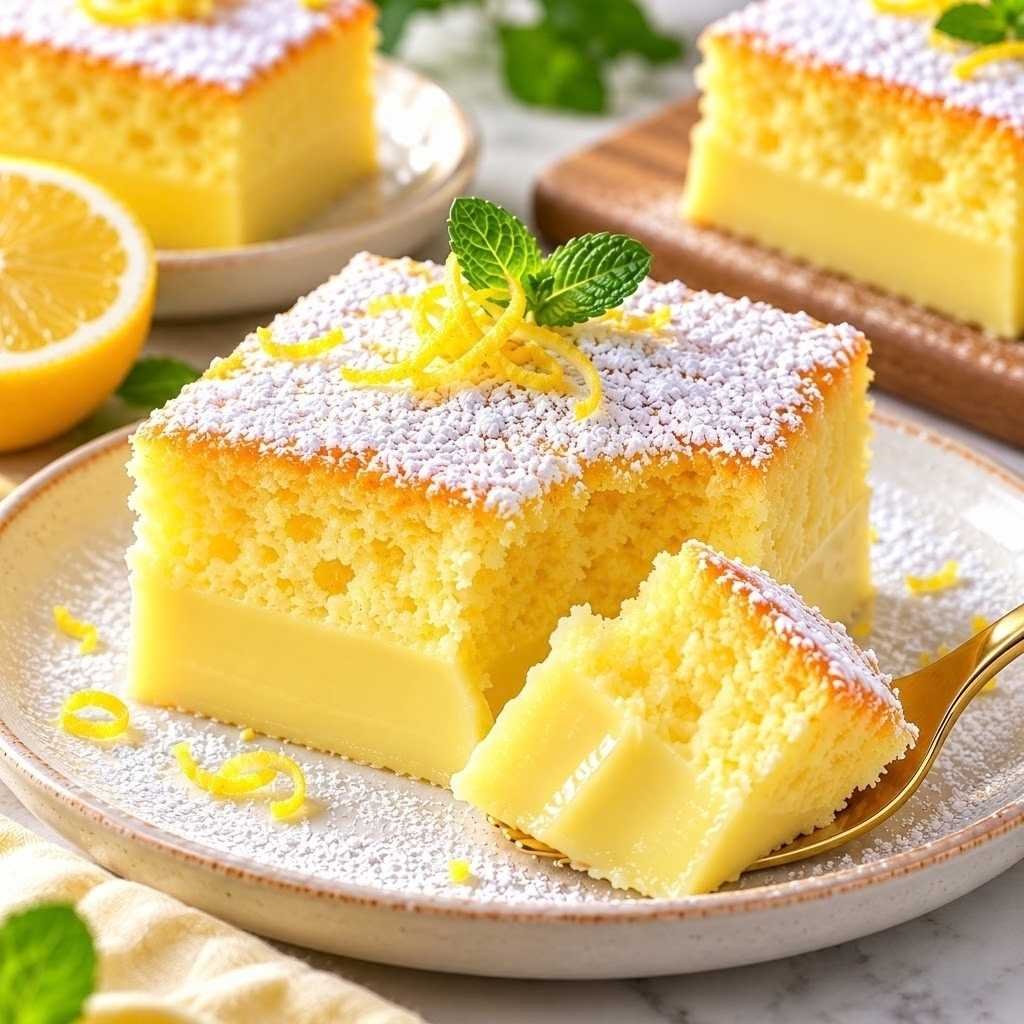
There is something especially satisfying about cutting into a lemon custard cake and discovering what happened inside the oven. What looks like an ordinary golden cake turns into a dessert with a soft sponge-like top and a smooth, creamy lemon custard layer underneath.
This lemon custard cake gets its bright flavor from fresh lemon juice and zest, while melted butter and milk give the batter a rich, delicate texture. The batter is intentionally thin, and gently folded egg whites help create the cake’s signature texture as it bakes. Similar lemon magic cakes use this same separated-egg technique to create distinct layers.
The best part is that you do not need a complicated filling or a separate custard-making step. One batter does the work for you. Let the finished cake cool completely, dust it with powdered sugar, and cut it into squares to reveal those beautiful lemony layers.
Why You Will Love This Lemon Custard Cake
If you like desserts that sit somewhere between cake, pudding, and custard, this recipe is worth saving.
- Two textures in one dessert: The top is light and tender while the bottom becomes silky and custard-like.
- Fresh lemon flavor: Lemon zest adds fragrant citrus oils, while fresh juice brings a clean tartness.
- No separate custard filling: Everything starts in one bowl of thin batter.
- Simple pantry ingredients: You only need eggs, sugar, butter, flour, milk, lemons, and a few finishing ingredients.
- Beautiful enough for guests: A little powdered sugar and lemon zest make the finished squares look bakery-worthy without complicated decoration.
- Make-ahead friendly: The cake needs time to cool and set, which makes it convenient to prepare before serving.
Lemon Custard Cake Recipe Overview
| Detail | Amount |
|---|---|
| Prep Time | 20 minutes |
| Bake Time | 45–55 minutes |
| Cooling Time | 2 hours |
| Total Time | About 3 hours 15 minutes |
| Servings | 9 |
| Pan | 8 × 8-inch square pan |
| Difficulty | Easy |
Ingredients You Will Need
For the Cake
- 4 large eggs, separated
- ¾ cup granulated sugar
- ½ cup unsalted butter, melted and cooled
- 1 teaspoon vanilla extract
- ¾ cup all-purpose flour
- ¼ cup fresh lemon juice
- 1 tablespoon finely grated lemon zest
- 1¾ cups whole milk, lukewarm
- ¼ teaspoon salt
For Finishing
- Powdered sugar, for dusting
- Extra lemon zest, optional
- Fresh mint leaves, optional
Why These Ingredients Matter
Eggs create the structure and help produce the cake’s unusual layers. Separating the eggs is important because the whipped whites add lightness to the upper portion of the cake.
Fresh lemon zest and juice provide a much brighter citrus flavor than lemon flavoring alone. Zest is especially useful because it carries concentrated lemon aroma.
Whole milk keeps the custard portion rich and creamy. Avoid using very cold milk because lukewarm milk blends more smoothly into the batter.
All-purpose flour gives the cake enough structure without making the batter too thick.
Melted butter contributes richness and helps keep the finished cake tender.
Equipment
You will need:
- 8 × 8-inch square baking pan
- Parchment paper
- Two mixing bowls
- Hand mixer or stand mixer
- Whisk
- Flexible rubber spatula
- Measuring cups and spoons
- Fine grater or microplane
- Wire cooling rack
How to Make Lemon Custard Cake
Step 1: Prepare the Pan and Oven
Heat the oven to 325°F (163°C).
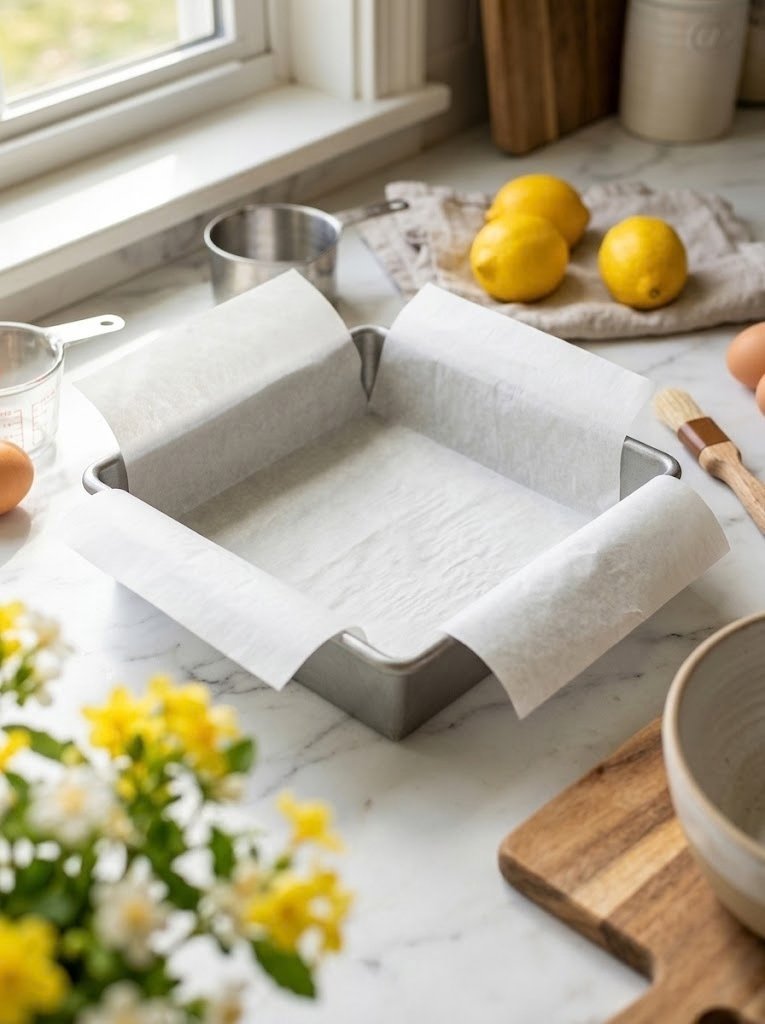
Line an 8 × 8-inch square baking pan with parchment paper, leaving some paper hanging over the sides so the finished cake can be lifted out easily. Lightly grease the parchment.
A properly prepared pan makes a big difference here because the custard layer is delicate and the cake is easiest to remove once completely cooled.
Quick Tip: Use a pan close to the recommended size. A much larger pan can make the batter too shallow and change the baking time.
Step 2: Whip the Egg Whites
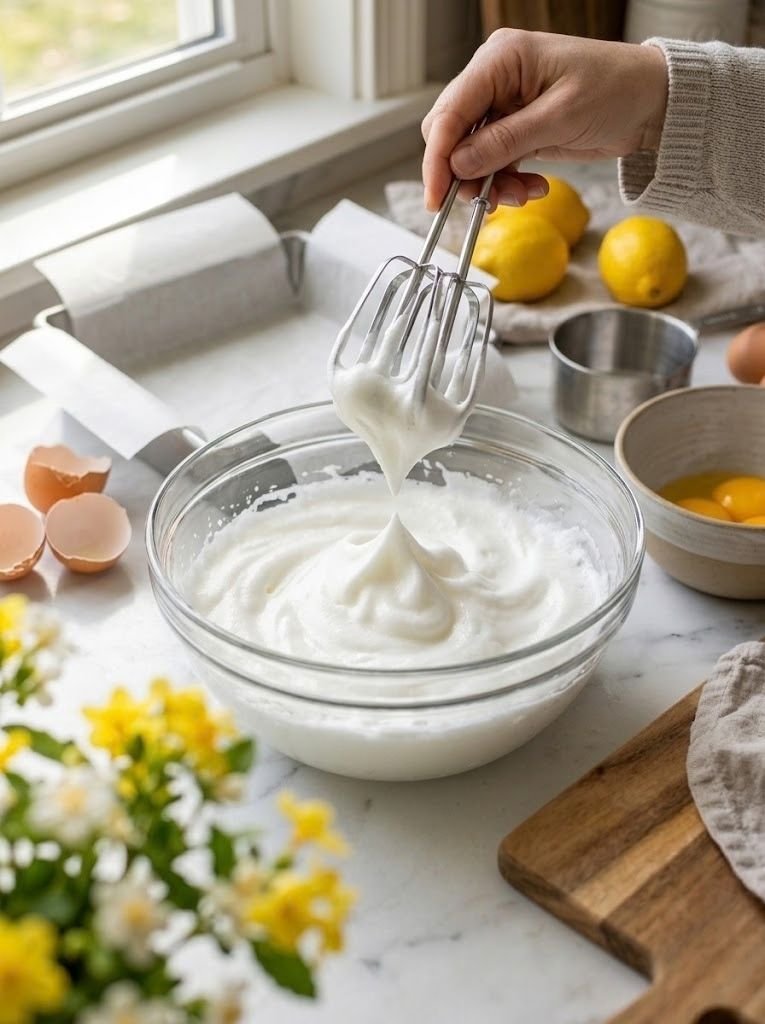
Place the egg whites in a completely clean mixing bowl.
Beat them with a hand mixer or stand mixer until they reach stiff peaks. When you lift the beaters, the peaks should stand upright rather than falling over.
Set the whipped whites aside while you prepare the lemon batter.
Why this matters: The whipped egg whites provide the lightness needed for the upper cake layer. If the bowl contains grease or traces of yolk, the whites may not whip properly.
Step 3: Build the Lemon Batter
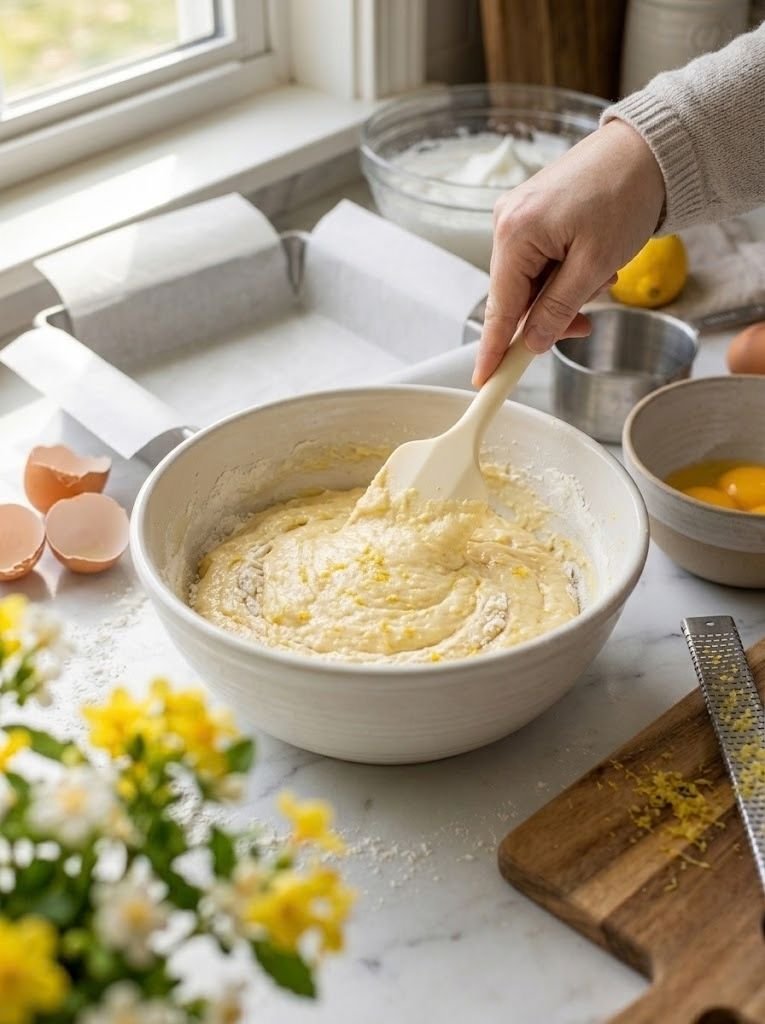
In a separate large bowl, whisk the egg yolks and granulated sugar until the mixture becomes pale and creamy.
Add the melted, cooled butter, vanilla extract, lemon zest, lemon juice, and salt. Whisk until smooth.
Add the flour and mix just until no dry patches remain.
Keep an eye on the texture: At this stage, the mixture will be much thicker than the final batter. The milk will loosen it considerably.
Step 4: Add the Milk
Gradually pour the lukewarm milk into the lemon mixture while whisking continuously.
The batter will become very thin and almost pourable. That is exactly what you want.
Do not try to thicken it with extra flour. The loose consistency is part of what allows the layers to develop during baking.
Baker’s Note: Lukewarm milk incorporates more easily than refrigerator-cold milk and helps keep the melted butter from firming up again.
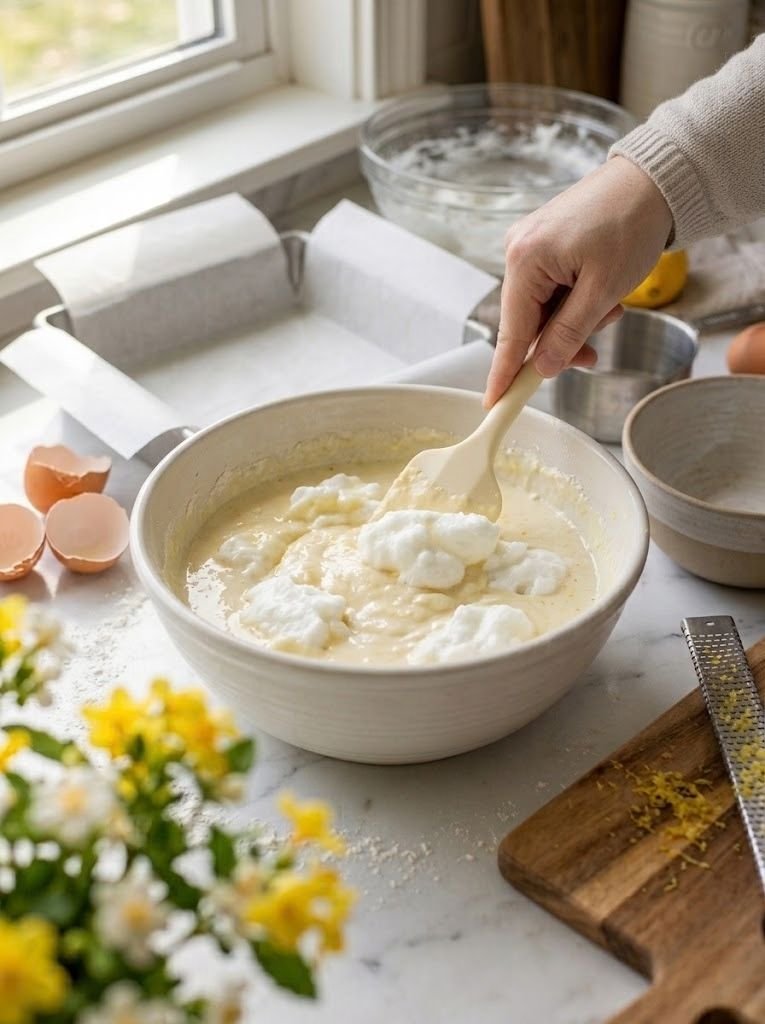
Step 5: Gently Add the Whipped Egg Whites
Add the whipped egg whites to the thin lemon batter.
Use a whisk or flexible spatula to gently fold them in. Do not try to make the mixture completely smooth. A few small white pieces of whipped egg white should remain visible.
This unusual-looking batter is intentional. Similar magic-cake recipes specifically rely on gently incorporating the stiff whites without completely eliminating the lumps.
Most Important Tip: Overmixing can remove too much air from the egg whites and change the final texture.

Step 6: Bake Until the Center Is Just Set
Pour the batter into the prepared pan and smooth the surface lightly.
Bake at 325°F for about 45–55 minutes, checking toward the lower end of the range because ovens and pans vary.
The top should be lightly golden and set, while the center can retain a slight gentle wobble rather than looking completely firm.
For an egg-rich baked dessert, use a food thermometer if desired and make sure the center reaches a safe temperature. Food-safety guidance recommends 160°F (71°C) for egg dishes.
Do not judge this cake like a regular sponge cake. A completely firm center can mean the delicate custard has been overbaked.
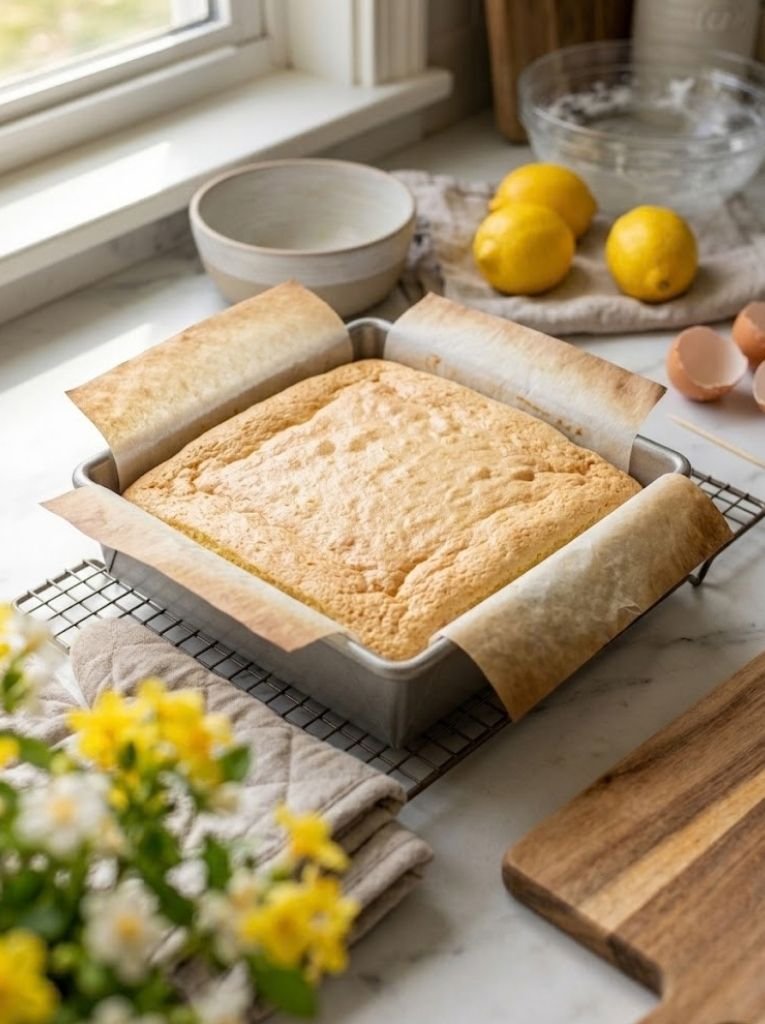
Step 7: Cool Completely Before Cutting
Remove the cake from the oven and place the pan on a wire rack.
Let it cool completely before attempting to slice it. For cleaner pieces and a firmer custard layer, refrigerate the cooled cake for at least 1 hour.
Once chilled, lift the cake out using the parchment and transfer it to a cutting board.
Dust generously with powdered sugar and cut into squares.
The payoff: This is when the two distinct textures become easiest to see, the tender golden top and smooth lemon custard underneath.
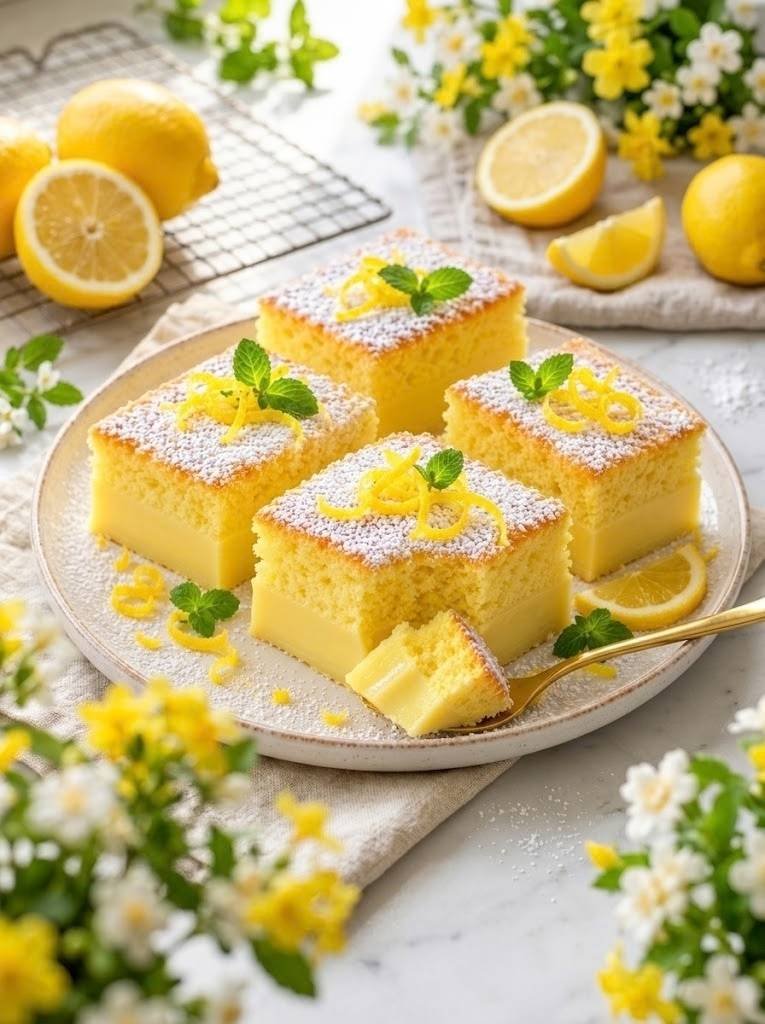
Tips for Getting Clean, Distinct Layers
Keep the Egg Whites Airy
The whipped whites should reach stiff peaks, but they should not be left sitting for a long time before folding.
Do Not Add Extra Flour
The batter looks unusually thin after the milk is added. Resist the temptation to correct it. A thicker batter will not produce the same custardy texture.
Use Fresh Lemons
Fresh zest and juice give the cake its recognizable citrus character. Bottled juice can taste flatter and less fragrant.
Let the Cake Cool
Warm lemon custard cake is extremely soft. Cutting it too early can make the center look loose and cause the squares to lose their clean shape.
Watch the Final Minutes
The exact baking time depends on your pan material and oven. Start checking before the maximum time rather than automatically adding more minutes.
What to Serve With Lemon Custard Cake

This cake is already rich and citrusy, so simple accompaniments work best.
Fresh berries: Strawberries, raspberries, or blueberries add color and a little natural acidity.
Lightly sweetened whipped cream: A small spoonful adds creaminess without overwhelming the lemon.
Fresh lemon zest: A few delicate curls make the citrus flavor stand out and give each serving a fresh finish.
Tea or coffee: The buttery cake and bright lemon flavor pair especially well with a cup of black tea or lightly brewed coffee.
How to Store Lemon Custard Cake
Because this cake contains eggs and milk and has a custard-like layer, it should be refrigerated after cooling.
Place leftovers in an airtight container or cover the pan well and refrigerate for up to 3 days.
For the cleanest texture, serve chilled or let an individual piece sit at room temperature briefly before eating.
Do not leave the finished cake sitting at room temperature for extended periods. Egg-rich and custard-style baked desserts should be handled and refrigerated with food safety in mind.
Troubleshooting
The Cake Looks Too Wet in the Center
It may simply need more cooling time. The custard becomes firmer as the cake cools.
If the center is genuinely liquid rather than softly set, return it to the oven and bake a little longer.
The Top Did Not Rise Much
Check your whipped egg whites. They need to reach stiff peaks, and they should be folded gently rather than vigorously stirred.
The Layers Are Not Very Distinct
The most common causes are overmixing the whipped whites, changing the flour or milk quantities, or using a pan with very different dimensions.
The Cake Cracked on Top
A small crack is not a problem. The powdered sugar will hide minor surface imperfections, and the interior can still have the correct custardy texture.
The Cake Is Difficult to Cut
Chill it longer before slicing. Use a sharp knife and wipe the blade clean between cuts for neater squares.

Frequently Asked Questions
Is lemon custard cake the same as lemon magic cake?
They can refer to very similar desserts. The magic-cake style uses a thin batter and separated eggs so the baked mixture develops different textures or layers.
Can I use bottled lemon juice?
Fresh lemon juice is strongly recommended because it gives the cake a brighter flavor. Fresh zest is also important for the lemon aroma.
Can I make this cake the day before?
Yes. In fact, chilling gives the custard layer more time to firm, so making it several hours ahead can make slicing easier.
Why is my batter so thin?
That is normal. Once the milk is incorporated, the batter should be quite loose. Do not add extra flour simply because it looks thinner than ordinary cake batter.
Can I use 2% milk?
Yes, but whole milk gives the richest texture. For a dessert with a creamy custard layer, whole milk is the better choice.
Should I serve lemon custard cake warm or cold?
For the cleanest layers, serve it chilled or cool. If you prefer a softer, more pudding-like texture, let a piece sit at room temperature for a short time before serving.
Final Thoughts
This lemon custard cake is one of those desserts where the finished slice tells the story. The batter looks surprisingly loose, the egg whites look imperfect after folding, and the center still has a little movement when it comes from the oven. Then, after cooling, everything comes together.
You get bright lemon flavor, a delicate golden cake layer, and a silky custard base without making a separate filling.
Dust the top with powdered sugar, add a little lemon zest, and serve it in simple squares. It is an easy dessert to make when you want something that looks much more elaborate than the actual preparation.
Estimated Nutrition
Approximate per serving, assuming 9 servings and excluding optional garnish:
- Calories: ~285
- Carbohydrates: ~35 g
- Protein: ~6 g
- Fat: ~14 g
- Sugar: ~23 g
Nutrition is an estimate calculated from the listed ingredients and may vary depending on brands, portion size, and substitutions.