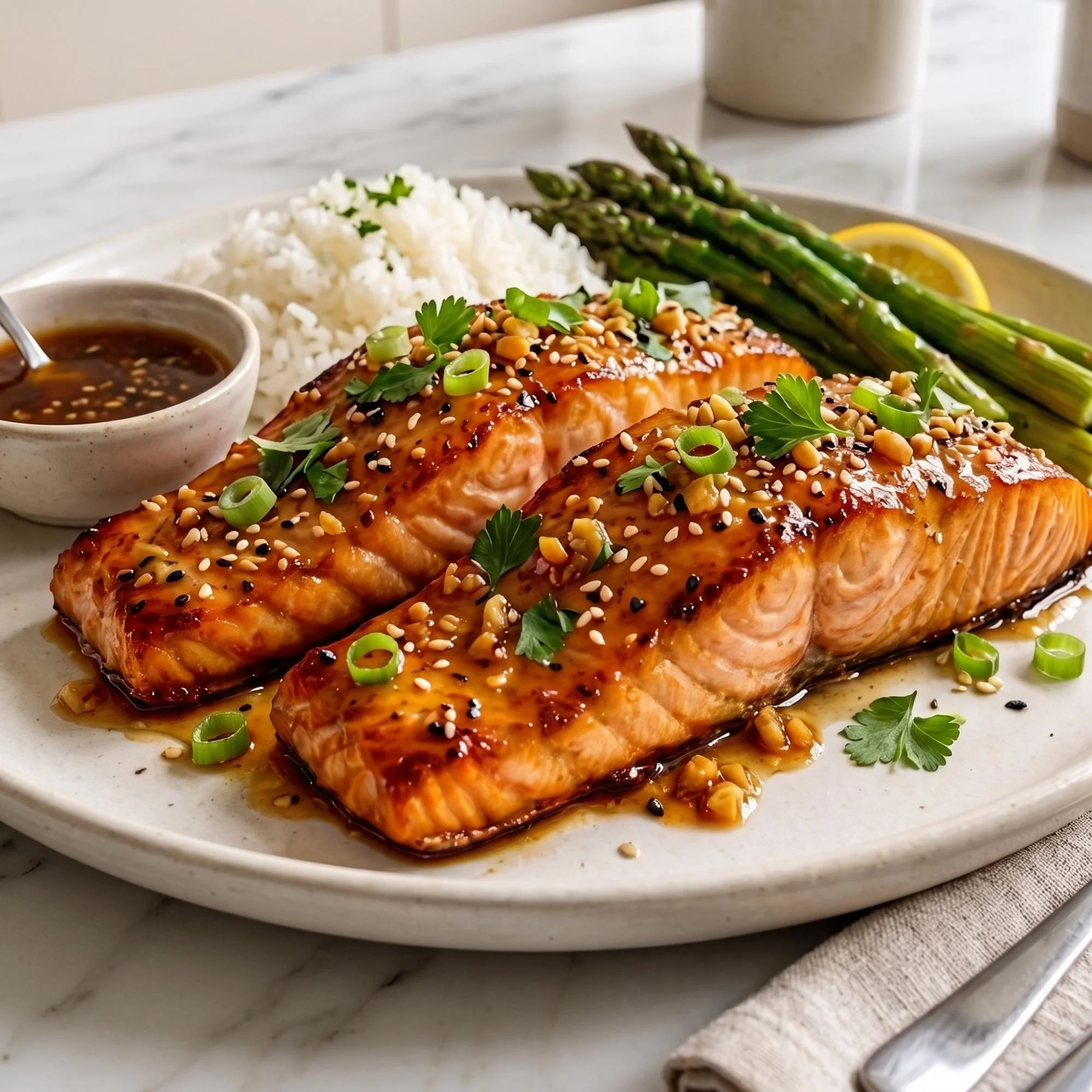
Honey Garlic Glazed Salmon Recipe
Some dinners earn their place in the rotation just by being reliable , good ingredients, minimal fuss, done in about twenty minutes start to finish. This is one of those. Salmon gets seared until the edges crisp up, then finishes cooking in a glaze built from honey, garlic, soy sauce, and a bit of citrus, reducing down into something sticky and deeply savory. It’s the kind of dish that tastes more involved than it actually is.
There’s also something satisfying about how little cleanup it leaves behind. Everything happens in one skillet, from the initial sear through the glazing, which counts for a lot on a weeknight when the last thing you want is a sink full of pans.
What Makes This Worth Cooking Regularly
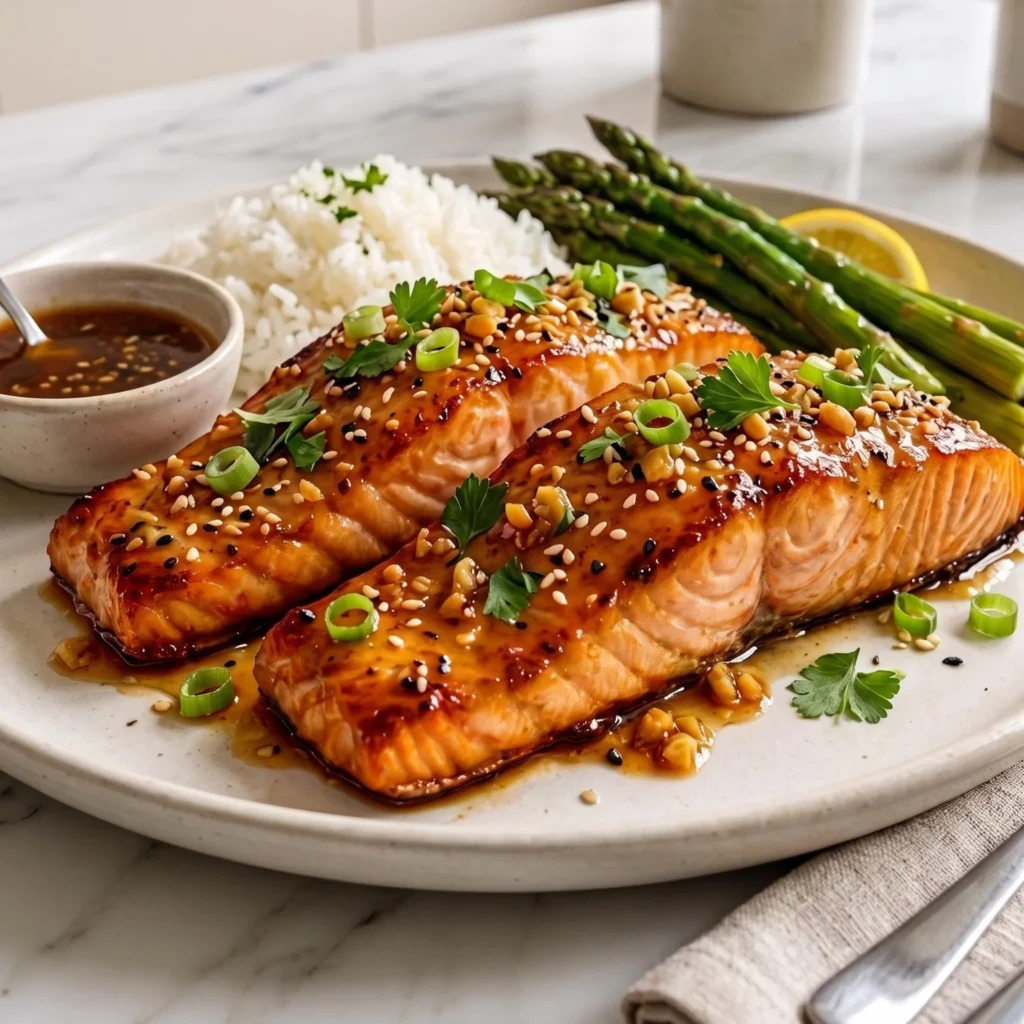
There’s nothing especially unusual about the ingredient list here, which is part of the appeal. Honey, soy sauce, garlic, and ginger are things most kitchens already have on hand, and the technique doesn’t ask for anything beyond a skillet and a bit of attention while the glaze reduces.
The bigger reason it works, though, is the contrast it creates. Salmon has enough natural richness to hold its own against a bold glaze, and the soy sauce keeps the honey from tipping the whole dish into overly sweet territory. A squeeze of lemon at the end does the same job, cutting through the richness just enough to keep each bite interesting rather than heavy.
It also happens to be forgiving. If the glaze reduces a little too far, a splash of water brings it back. If it’s not quite thick enough, another minute over heat usually solves it. There isn’t much room for the dish to go seriously wrong.
Ingredients for Honey Garlic Glazed Salmon
Ingredients for Honey Garlic Glazed Salmon
For the Salmon:
- 4 salmon fillets (about 6 oz each)
- 1 tablespoon olive oil
- ½ teaspoon salt
- ½ teaspoon black pepper
For the Honey Garlic Glaze:
- ⅓ cup honey
- ¼ cup soy sauce (low sodium preferred)
- 2 tablespoons lemon juice
- 4 cloves fresh garlic, minced
- 1 tablespoon fresh ginger, grated
- 1 teaspoon sesame oil (optional)
- 1 teaspoon red pepper flakes (optional, for spice)
For Garnishing:
- 1 tablespoon sesame seeds
- 2 green onions, thinly sliced
- Fresh parsley or cilantro (optional)
- Lemon slices for serving
Equipment Needed:
- Large skillet or frying pan
- Small mixing bowl
- Whisk
- Spatula
- Measuring spoons
How to Make It
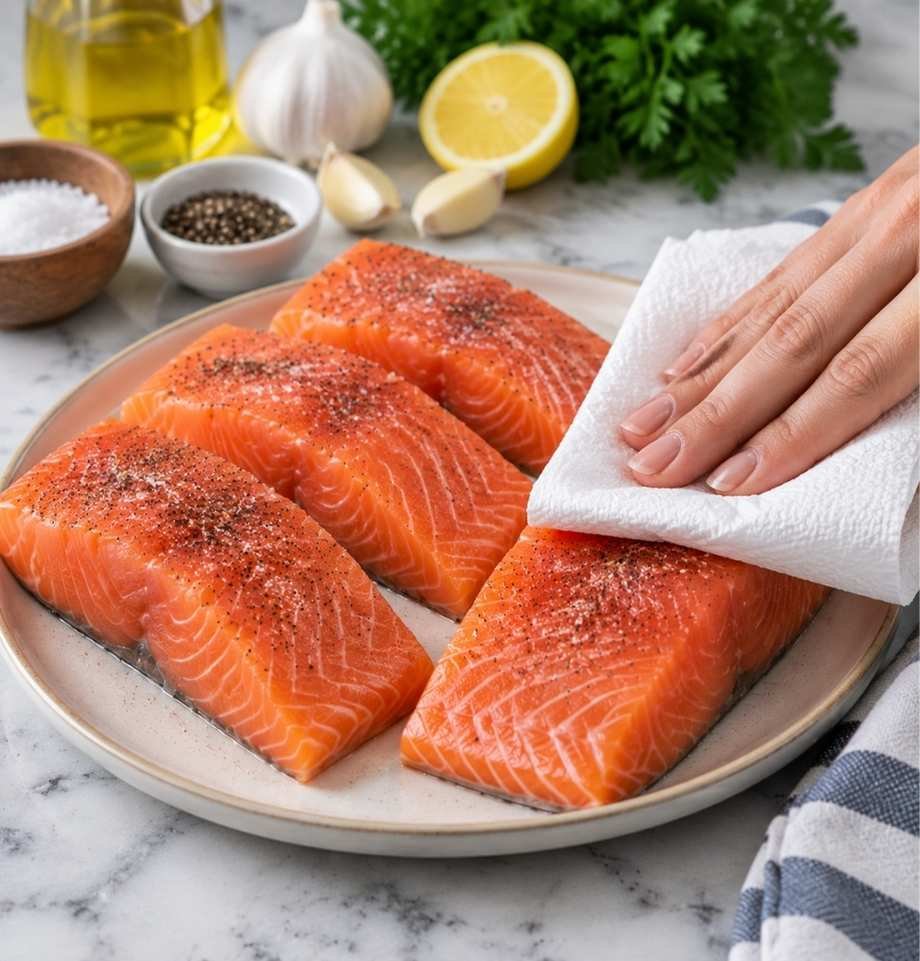
Start with dry fish. Pat the fillets thoroughly with paper towels before doing anything else. Salmon that’s still damp on the surface won’t sear properly , it steams instead, and you lose the browning that gives this dish most of its character. Season both sides with salt and pepper once it’s dry.
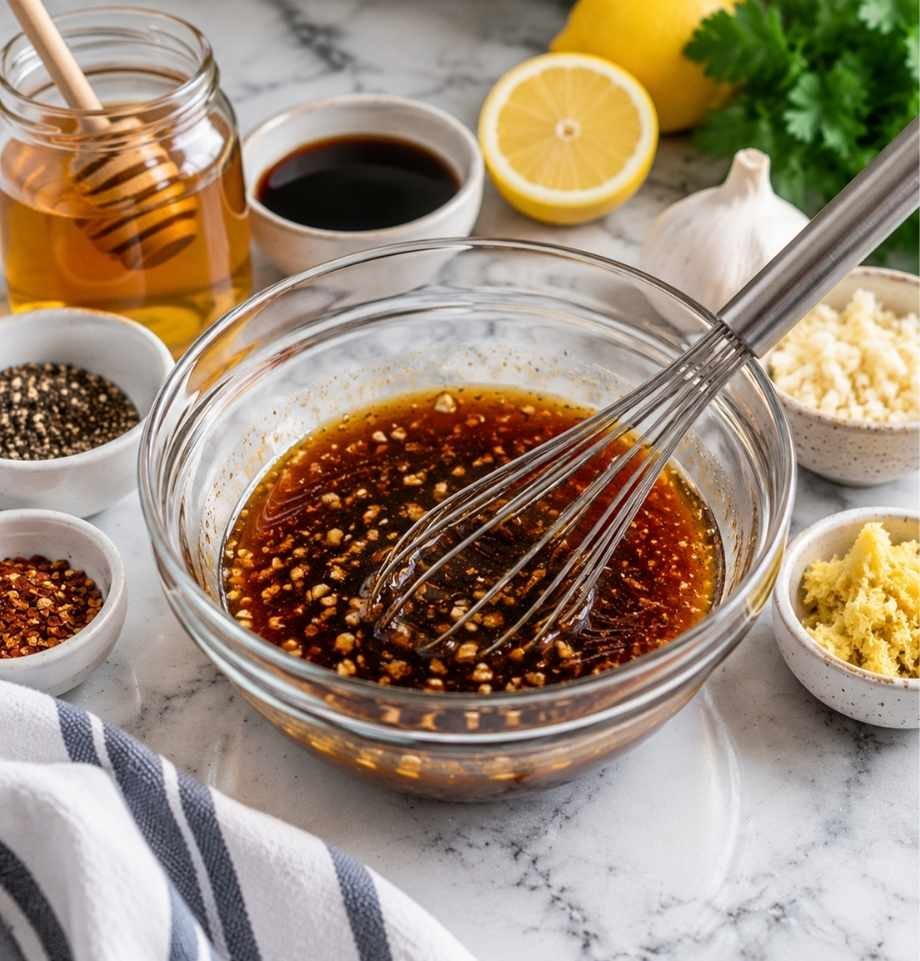
Mix the glaze while the pan heats. Whisk together the honey, soy sauce, lemon juice, garlic, and ginger in a small bowl. Having it ready to go means you’re not scrambling once the fish is already in the pan.
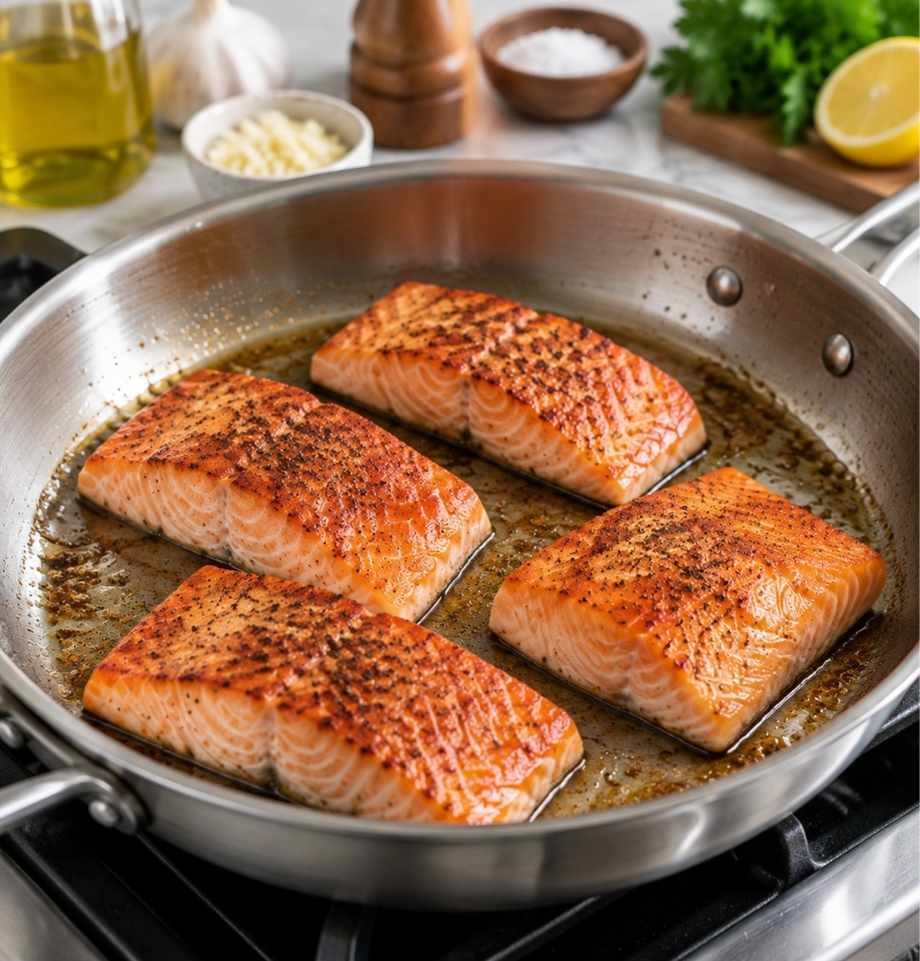
Sear first, glaze later. Heat the olive oil in a large skillet over medium-high heat. Once it’s shimmering, lay the salmon in , skin-side down if there’s skin , and leave it undisturbed for 3 to 4 minutes until it’s deeply golden. Flip carefully with a wide spatula.
Add the glaze to the pan. Pour the honey-garlic mixture directly around the salmon. Reduce the heat to medium-low almost immediately; honey scorches fast, and a pan that’s too hot will burn the sugars before the sauce has a chance to thicken properly.
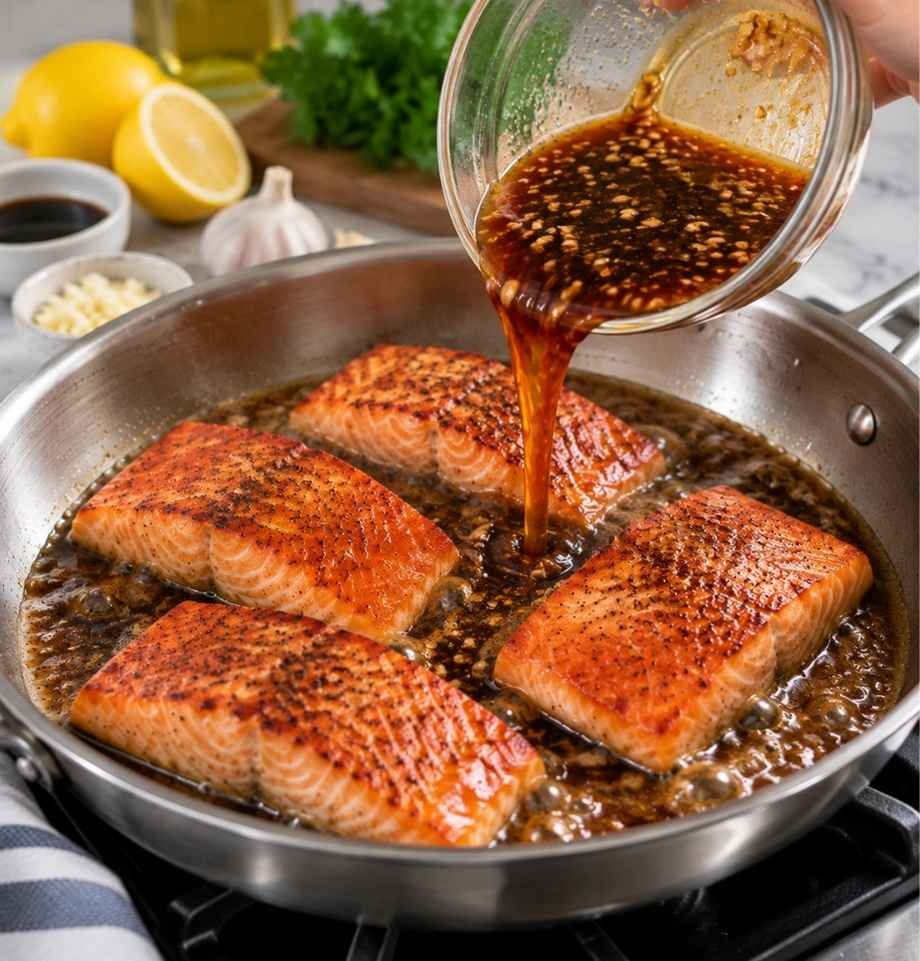
Let it reduce, basting as it goes. Spoon the sauce over the fillets every so often as it bubbles and thickens, which usually takes another 3 to 4 minutes. You’re looking for a glaze that coats the back of a spoon rather than pooling thinly around the fish.
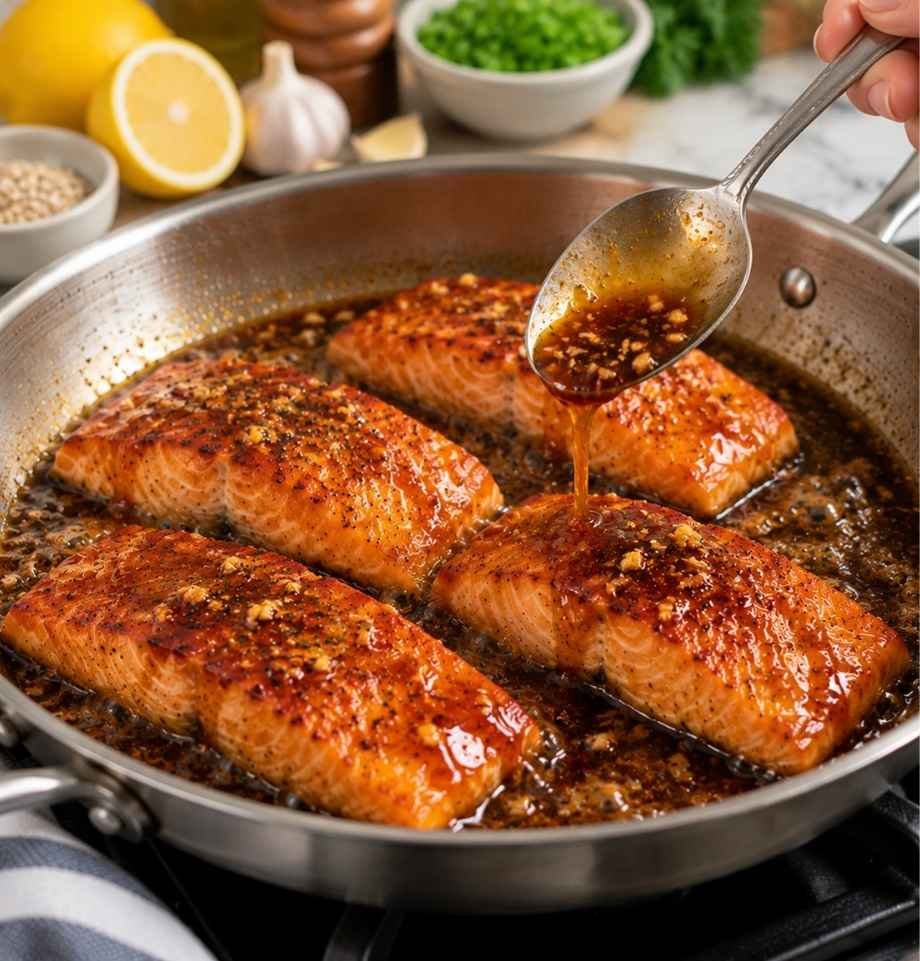
Finish and serve. Once the salmon flakes easily and the glaze has thickened, take the pan off the heat. Scatter sesame seeds and green onion over the top and serve right away, while the glaze is still glossy and warm.
A Few Things Worth Knowing
Watch the heat closely once the glaze goes in. This is really the one place the recipe can go wrong, since honey burns well before soy sauce or garlic would even start to smell off. If it’s darkening too fast, pull the pan off the burner for a moment.
Don’t overcook the fish waiting for the glaze to thicken. If the sauce needs more time but the salmon’s already done, move the fillets to a plate and let the sauce reduce on its own for another minute before pouring it back over.
Fresh garlic and ginger make a real difference here. The glaze is simple enough that pre-minced or dried substitutes tend to flatten the flavor noticeably.
What Goes Well With It
The glaze practically asks for something plain underneath it to soak it up. Steamed rice is the obvious choice, though noodles work just as well. Roasted or steamed vegetables , broccoli, asparagus, or green beans , round out the plate without competing with the sauce. If you want something lighter, flake the leftover salmon over a simple green salad the next day and skip reheating it entirely. A wedge of lime or extra lemon on the side gives anyone at the table the option to add a bit more acidity if they want it.
Storing and Reheating
Leftovers keep in an airtight container in the fridge for up to 3 days. To reheat without drying the fish out, warm it gently in a covered skillet over low heat with a small splash of water, letting it steam for a few minutes rather than blasting it in the microwave. It also holds up well cold, flaked into a salad or grain bowl.
Common Questions
Can I use frozen salmon? Yes, just thaw it fully first, ideally overnight in the fridge, and pat it dry before searing.
Can this be baked instead of pan-seared? It can. Arrange the seasoned salmon on a lined baking sheet, pour the glaze over the top, and bake at 400°F for 12 to 15 minutes. A couple of minutes under the broiler at the end helps the top caramelize.
What if my glaze is too thin? Move the salmon to a plate and let the sauce keep reducing in the pan for another minute or so before pouring it back over the fish.
Final Thoughts
This isn’t a complicated dish, and it doesn’t need to be. A good sear, a well-balanced glaze, and a bit of attention to timing are really all it takes to turn a plain salmon fillet into something worth sitting down for. Keep honey, soy sauce, and garlic on hand, and it’s an easy one to come back to whenever dinner needs to come together fast.