High Protein Buffalo Chicken Bowls
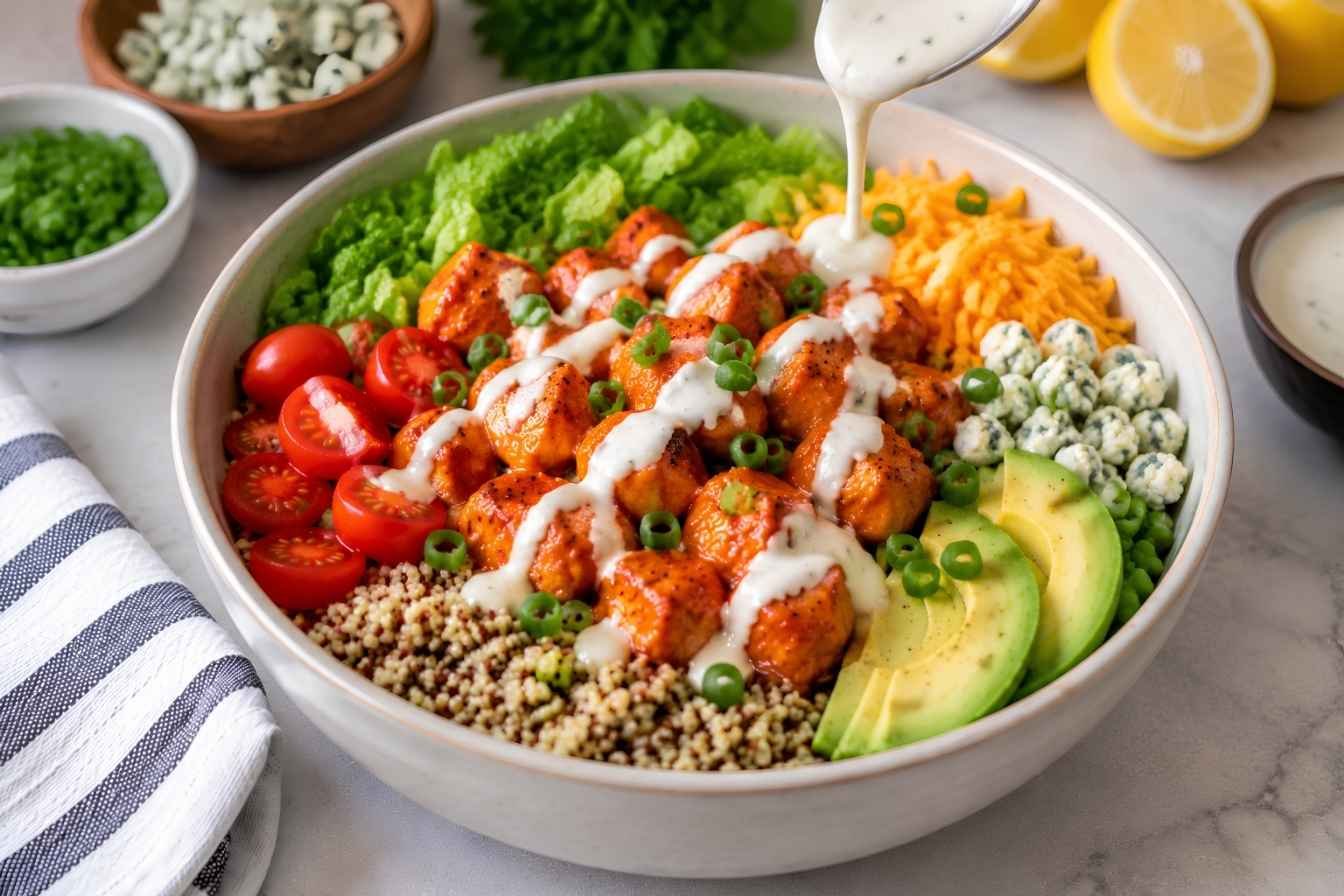
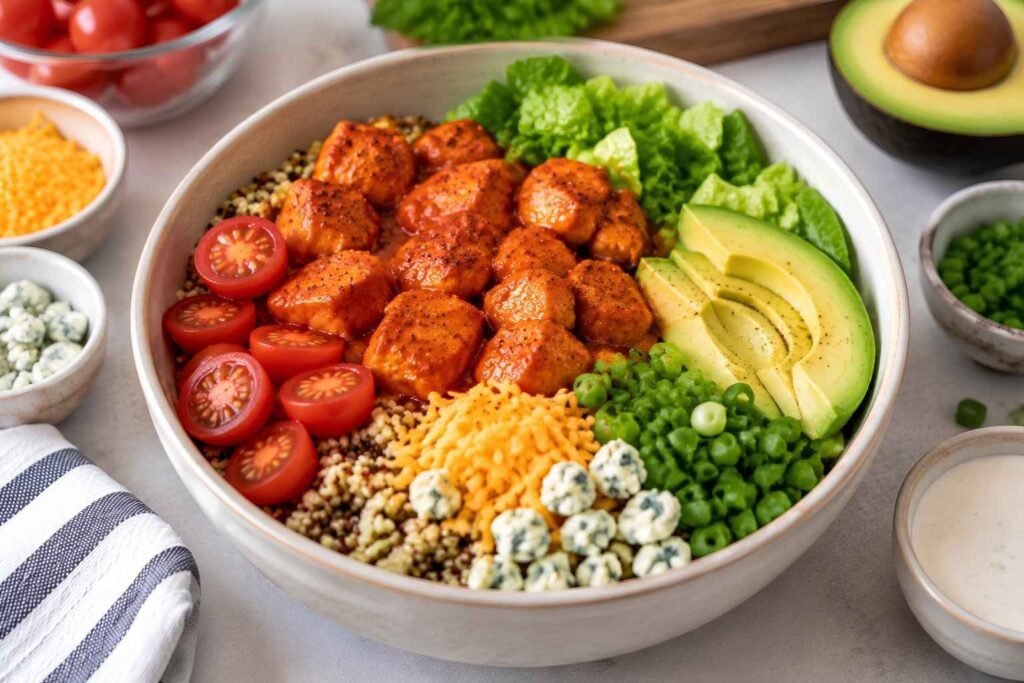
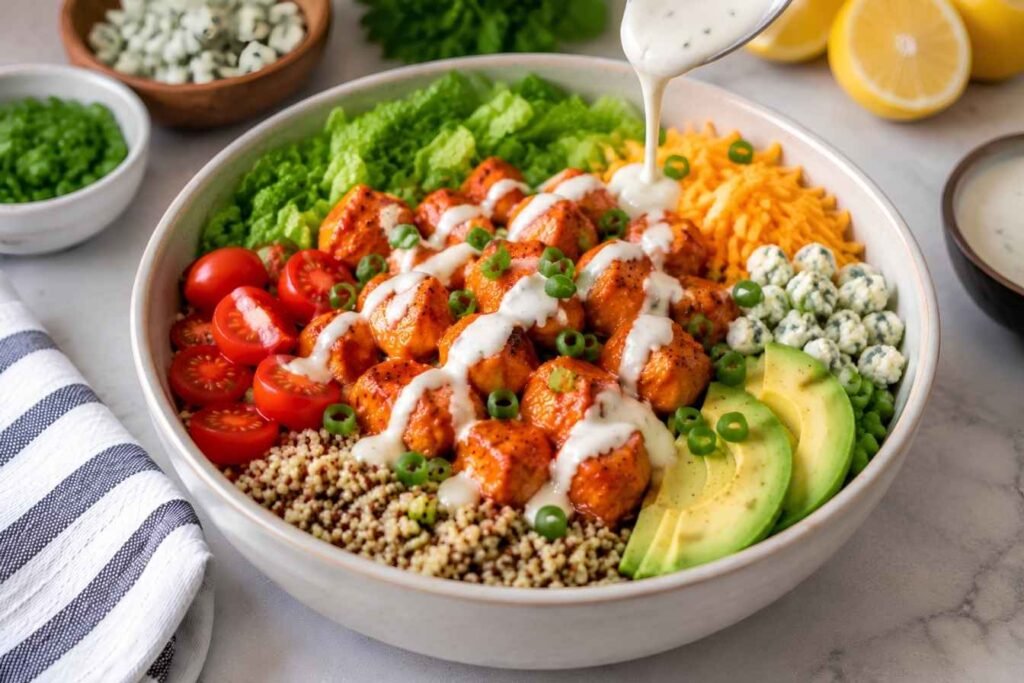
These high protein buffalo chicken bowls combine bold buffalo flavor with fresh ingredients to create a balanced meal that feels satisfying without being heavy. Each bowl brings together tender seared chicken, fluffy quinoa, crisp romaine lettuce, juicy tomatoes, creamy avocado, shredded cheddar, blue cheese, and a cool ranch-style drizzle.
I like this type of meal because every bite has a different texture. The buffalo chicken adds a spicy, savory flavor, while the fresh toppings help balance the heat. The quinoa creates a filling base, and the creamy toppings bring everything together.
This recipe is also a practical choice for meal prep because the chicken and grain base can be prepared ahead of time. Keeping ingredients like lettuce, avocado, and dressing separate helps maintain the fresh texture you see in the finished bowl.
The most important part of this recipe is cooking the chicken correctly. A quick sear creates golden edges and locks in flavor before the buffalo sauce is added at the end.
| Prep Time | 15 minutes |
| Cook Time | 20 minutes |
| Total Time | 35 minutes |
| Servings | 4 bowls |
| Yield | 4 high protein buffalo chicken bowls |
Why You Will Love This Recipe
If you’ve been stuck in a rut of plain grilled chicken and steamed broccoli, you are going to fall in love with this method. These buffalo chicken bowls are:
Texturally perfect: The seared chicken stays juicy under the tangy sauce, while crunchy lettuce, tomatoes, and creamy avocado add contrast in every bite.
Highly customizable: You can easily load them up with quinoa, cauliflower rice, or brown rice depending on your macros for the day.
Made with basic staples: You only need chicken breast, buffalo sauce, a grain base, and a few fresh toppings.
Packed with protein: Each bowl delivers a hearty dose of lean protein, making it an easy way to hit your daily goals without feeling like you’re eating “diet food.”
Equipment You Will Need
Large Skillet: A wide skillet gives the chicken enough space to sear properly. If the pan is too crowded, the chicken releases moisture and starts steaming instead of developing golden edges.
Instant-Read Thermometer: A thermometer helps confirm that the chicken reaches a safe internal temperature of 165°F without overcooking and becoming dry.
Sharp Knife: A sharp knife makes it easier to cut the chicken into evenly sized cubes so every piece cooks at the same speed.
Cutting Board: Use a clean cutting board to prepare the chicken and fresh toppings separately.
Measuring Cups and Spoons: Accurate measurements help keep the buffalo sauce, grains, and toppings balanced.
Ingredients You Will Need
To build these buffalo chicken bowls, you need a balance of protein, fresh vegetables, creamy toppings, and a flavorful base. Each ingredient has a purpose, from the spicy chicken to the cooling toppings that balance the heat.
For the Buffalo Chicken:
- 1 1/2 lbs boneless, skinless chicken breast, cut into 1-inch cubes
- 1 tbsp olive oil
- 1 tsp kosher salt
- 1/2 tsp black pepper
- 1/2 cup buffalo sauce
For the Bowl Base:
- 2 cups cooked quinoa or cauliflower rice
- 2 cups chopped romaine lettuce
- 1 cup cherry tomatoes, halved
- 1 avocado, sliced
- 1/2 cup shredded cheddar cheese
- 1/4 cup crumbled blue cheese
- 2 green onions, thinly sliced
For Serving:
- 1/4 cup Greek yogurt ranch or blue cheese dressing
Step-by-Step Instructions for High Protein Buffalo Chicken Bowls
These bowls come together quickly, but each step affects the final texture. Cooking the chicken properly, preparing the toppings at the right time, and keeping the fresh ingredients separate helps create a bowl that tastes fresh and balanced.
Step 1: Prepare the Chicken
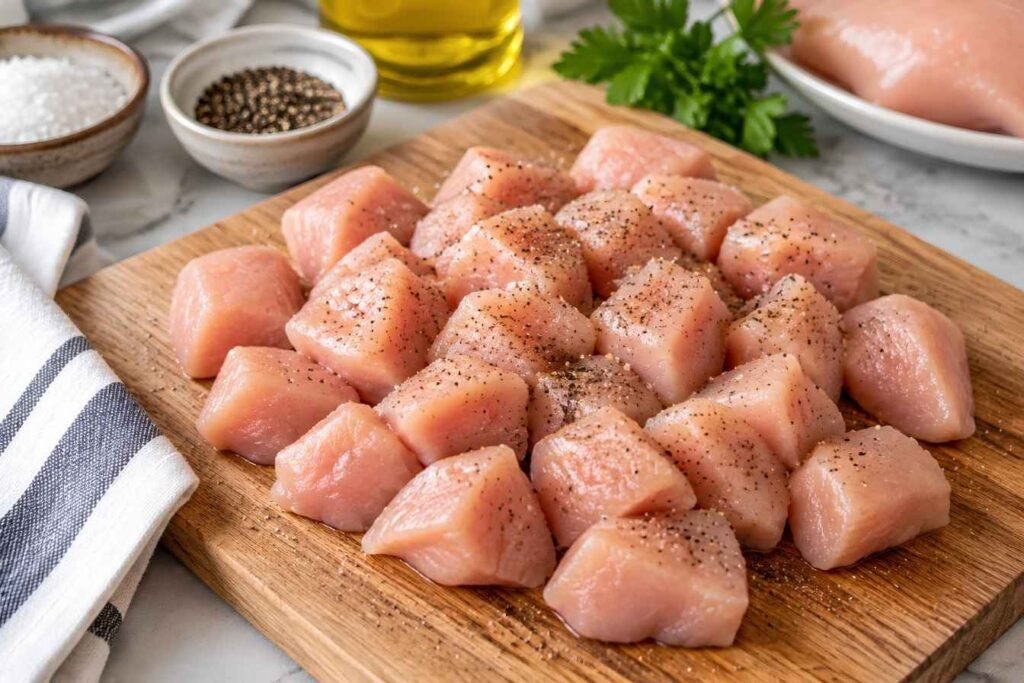
Pat the chicken cubes dry with paper towels. Removing excess moisture helps the chicken develop better color during cooking.
Season the chicken evenly with salt and black pepper, making sure each piece is coated. Heat olive oil in a large skillet over medium-high heat until the oil is warm and ready for cooking.
Step 2: Sear the Chicken Until Golden
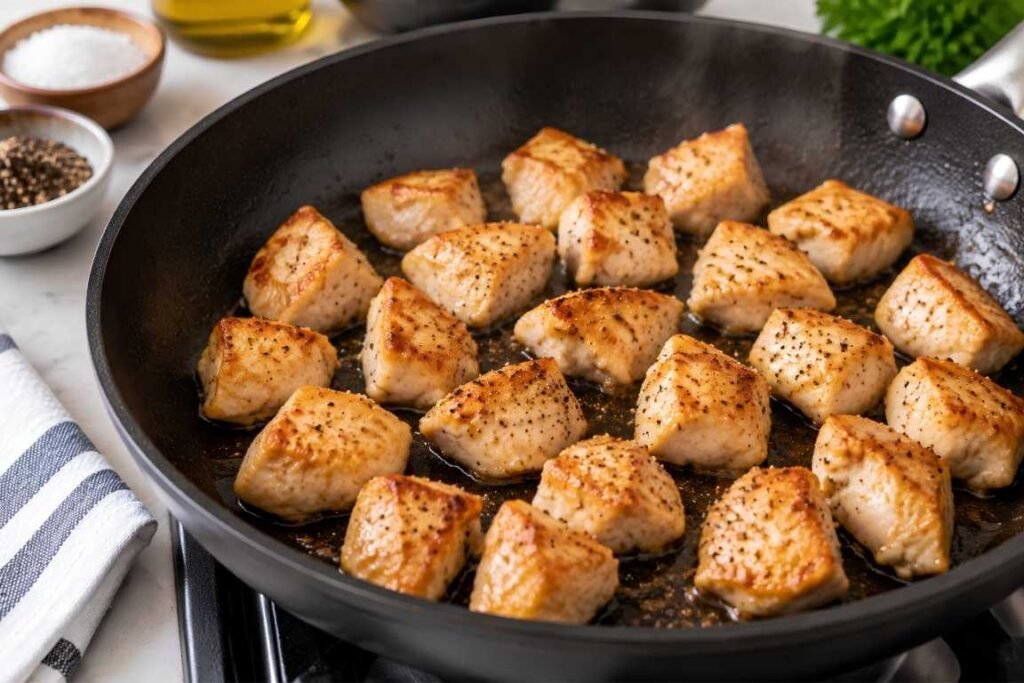
Add the chicken cubes to the skillet in a single layer. Avoid overcrowding the pan because too much chicken at once will release moisture and prevent proper browning.
Cook for 5 to 7 minutes, turning occasionally, until the chicken develops golden edges and reaches an internal temperature of 165°F. If your skillet is small, cook the chicken in two batches for the best texture.
Step 3: Coat the Chicken With Buffalo Sauce
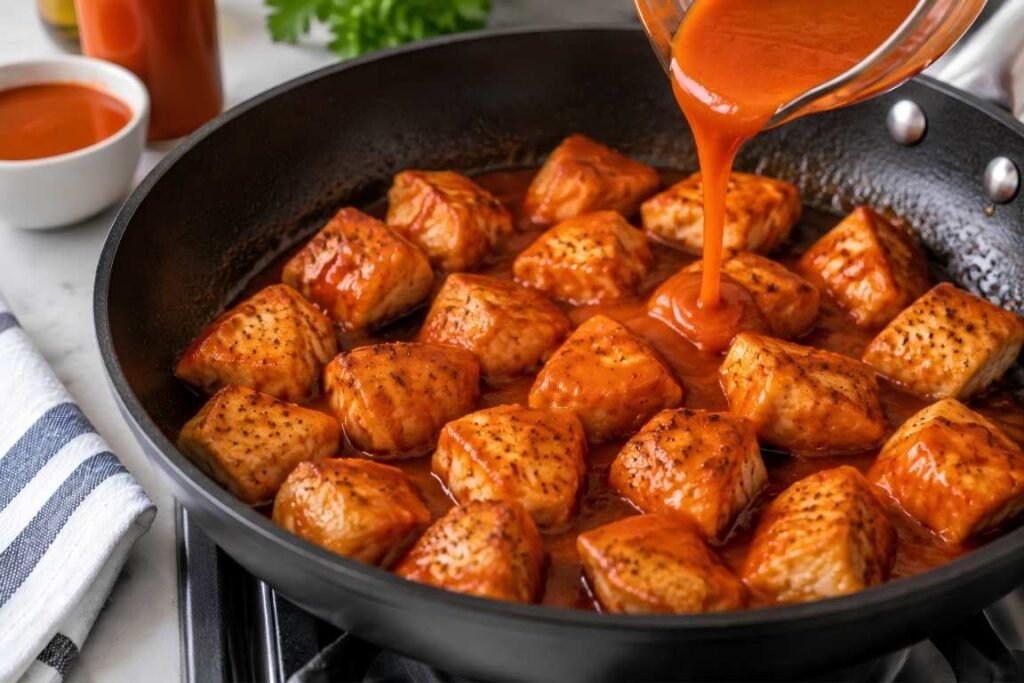
Reduce the heat to low before adding the buffalo sauce. Pour the sauce over the cooked chicken and toss well until every piece is evenly coated. Allow the chicken to cook for another 1 to 2 minutes so the sauce lightly thickens and sticks to the chicken instead of pooling at the bottom of the bowl.
Step 4: Prepare the Bowl Base
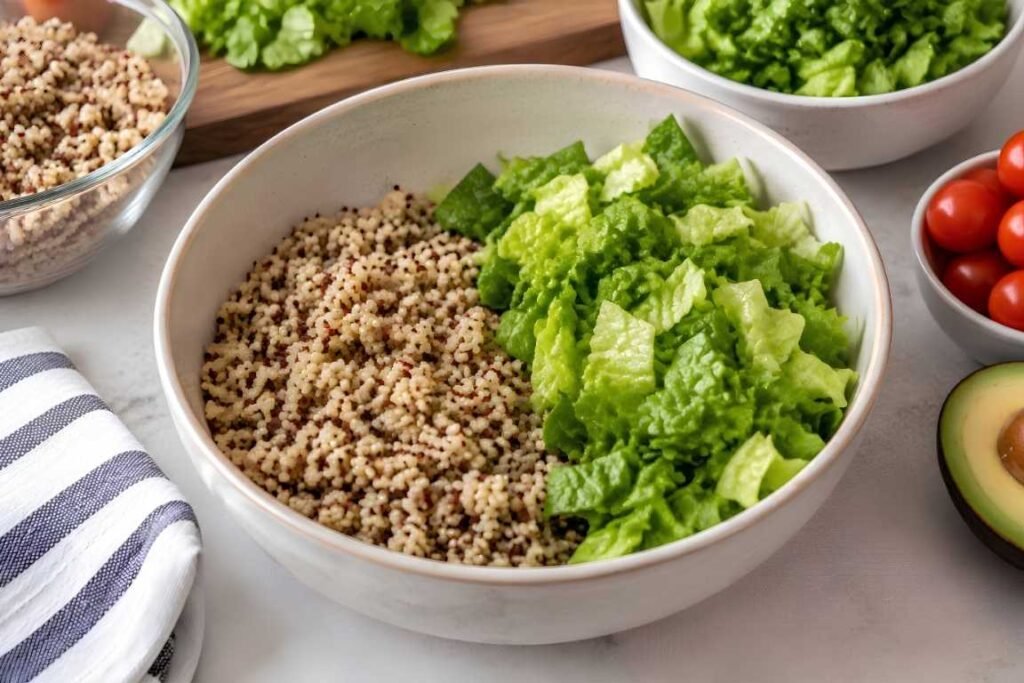
Divide the cooked quinoa or cauliflower rice evenly between four bowls. Add chopped romaine lettuce beside the grain base. Keeping the lettuce separate helps maintain its crisp texture.
Step 5: Add Fresh Toppings
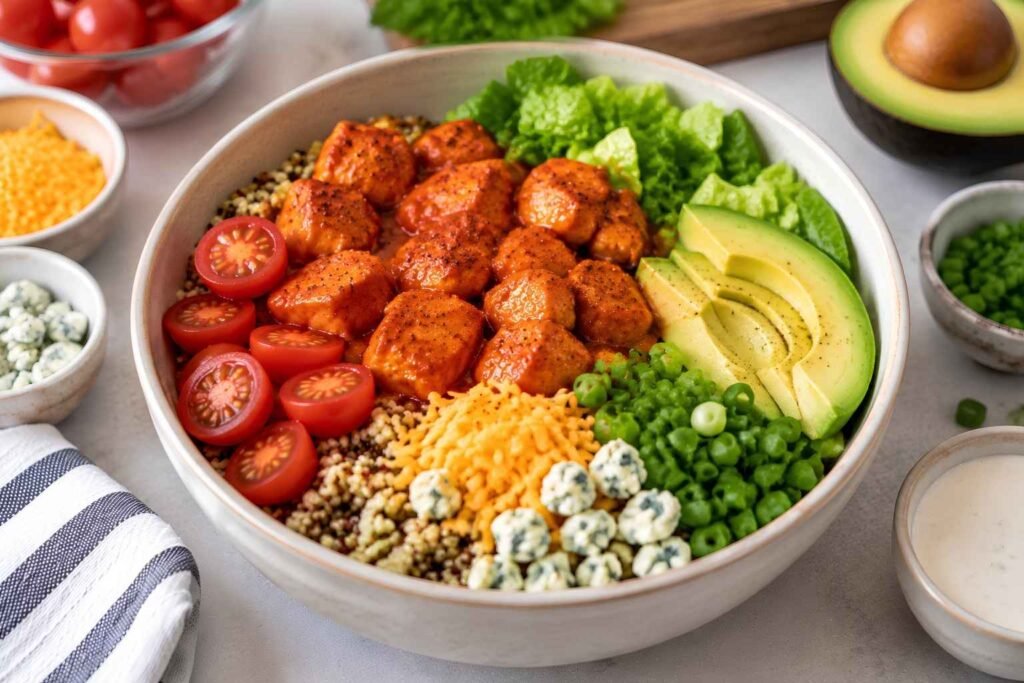
Arrange the buffalo chicken over the bowl base. Add cherry tomatoes, sliced avocado, shredded cheddar cheese, blue cheese crumbles, and sliced green onions around the chicken.
Step 6: Finish and Serve
Drizzle each bowl with Greek yogurt ranch or blue cheese dressing. Add extra buffalo sauce if you prefer more heat. Serve immediately for the best contrast between warm buffalo chicken, creamy toppings, and fresh vegetables.
Pro Tips for the Ultimate Buffalo Chicken Bowls
Small details make a big difference when preparing these bowls. These tips help keep the chicken flavorful, the toppings fresh, and the textures balanced.
Cook Chicken in Batches When Needed: A crowded skillet lowers the cooking temperature and causes chicken to release moisture. Cooking smaller batches creates better browning and a more flavorful crust.
Add Buffalo Sauce After Searing: Buffalo sauce contains liquid, so adding it too early can prevent the chicken from browning. Sear first, then coat the chicken near the end.
Keep Fresh Ingredients Separate for Meal Prep: Store lettuce, avocado, tomatoes, and dressing separately from the warm ingredients. This keeps the vegetables crisp and prevents soggy bowls.
Adjust the Heat Level: Buffalo sauces vary in spice. Add extra sauce for more heat or increase the creamy toppings if you prefer a milder bowl.
Warm the Grain Base Before Serving: Warm quinoa or rice absorbs the chicken juices and sauce better than cold grains, creating a more flavorful bowl.
Common Mistakes to Avoid
Overcrowding the Chicken Pan: Adding too much chicken at once lowers the heat of the skillet and causes the chicken to release water instead of developing a golden sear. If needed, cook the chicken in two batches.
Adding Buffalo Sauce Too Early: Buffalo sauce adds moisture, so adding it before the chicken browns can prevent the pieces from getting a flavorful surface. Always sear the chicken first, then add the sauce near the end.
Overcooking the Chicken: Chicken breast is lean, which means it can become dry if cooked too long. Remove the chicken once it reaches 165°F for the best texture.
Mixing Fresh and Warm Ingredients Too Soon: Warm chicken and grains can soften lettuce and make fresh toppings lose their texture. Keep ingredients separate until you are ready to serve.
What to Serve with Buffalo Chicken Bowls
These buffalo chicken bowls are filling enough to serve as a complete meal, but a few simple additions can make them work for different occasions.
For Lunch: Serve a smaller bowl with extra fresh vegetables or a light soup on the side for a balanced midday meal.
For Meal Prep: Divide the chicken, grains, and toppings into separate containers so each bowl stays fresh throughout the week.
For Game Day: Set out all the ingredients separately and let everyone build their own buffalo chicken bowl with their favorite toppings.
With Extra Vegetables: Add cucumber, shredded carrots, celery, or roasted vegetables for more color, texture, and nutrients.
Variations to Try
Low Carb Buffalo Chicken Bowl: Replace quinoa with cauliflower rice and add extra vegetables for a lighter option with fewer carbohydrates.
Buffalo Chicken Rice Bowl: Use white rice or brown rice as the base for a classic meal-prep style bowl that feels more traditional.
Extra Spicy Buffalo Bowl: Add sliced jalapeños, extra buffalo sauce, or a sprinkle of cayenne pepper if you enjoy stronger heat.
Creamy Ranch Buffalo Bowl: Increase the Greek yogurt ranch dressing and avocado for a creamier version that balances the spice.
Crunchy Buffalo Chicken Bowl: Add shredded carrots, celery, or cabbage for extra crunch and freshness.
How to Store Buffalo Chicken Bowls
Have leftovers? It is incredibly easy to save for later.
In the Fridge: Store the cooked chicken and grains in an airtight container for up to 4 days. Keep fresh toppings like lettuce and avocado separate until ready to eat.
How to Reheat: Warm the chicken and grains in the microwave for 1 to 2 minutes, then add fresh toppings and dressing right before serving.
In the Freezer: The cooked buffalo chicken alone freezes well for up to 2 months. Thaw overnight in the fridge before reheating and assembling fresh bowls.
Frequently Asked Questions
Can I use chicken thighs instead of breast? Absolutely. Boneless, skinless chicken thighs work well and stay extra juicy, though they carry slightly more fat than breast meat.
What’s the best grain base for protein? Quinoa is a great choice since it’s a complete protein on its own, while cauliflower rice is ideal if you’re looking to lower the overall carb count.
Can I prep this ahead of time? Yes! You can cook the chicken and grains up to 4 days in advance and simply assemble fresh bowls with toppings each time you’re ready to eat.
Final Thoughts
These high protein buffalo chicken bowls are a practical way to enjoy bold buffalo flavor in a balanced homemade meal. The combination of juicy chicken, fresh vegetables, creamy toppings, and a filling grain base creates a bowl that feels satisfying without being complicated.
The best part of this recipe is how flexible it can be. Prepare the chicken ahead for quick lunches, change the toppings based on what you have available, or adjust the spice level to match your taste.
Keeping the warm ingredients separate from the fresh toppings makes every bowl taste better when you are ready to serve it. It is a simple meal that works well for busy weekdays, meal prep, or anyone looking for a flavorful protein-packed dinner.